
Matt Henry’s Career-Best 6-27 Powers New Zealand to 244-Run Rout of India in Fourth ODI

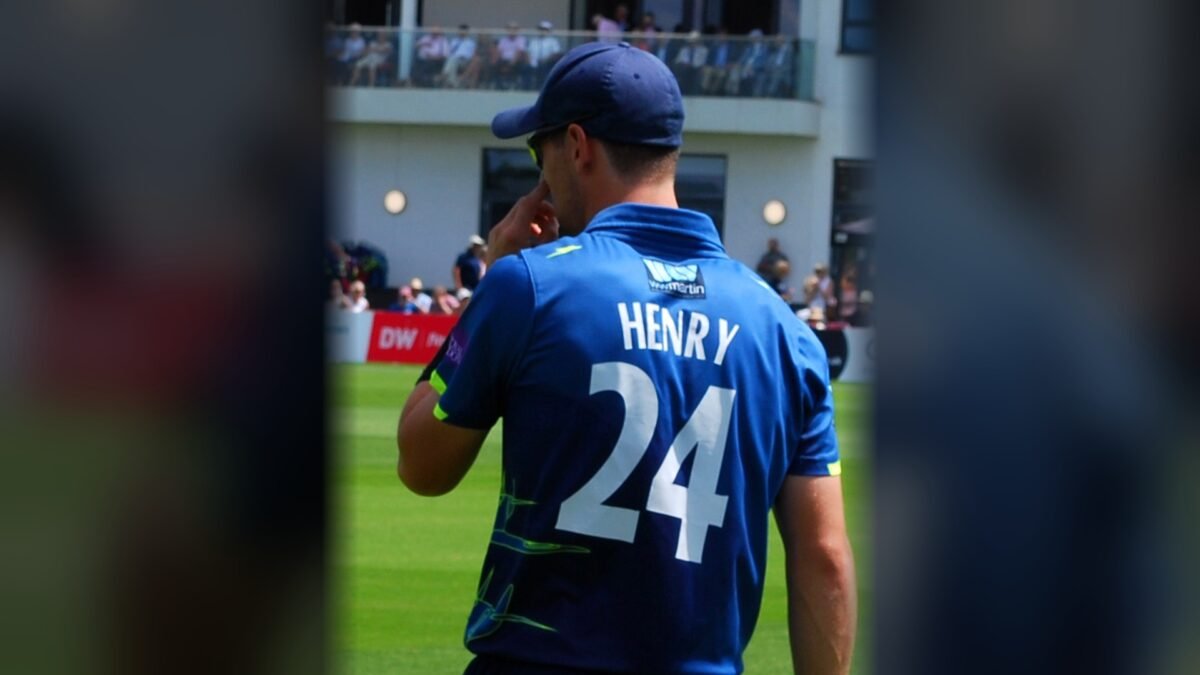
New Zealand produced one of the great one-day turnarounds of recent years at Bay Oval on Friday, bowling India out for 89 and winning the fourth one-day international by 244 runs to keep the five-match series alive. Matt Henry, playing his first match of the series, took a career-best six wickets for 27 runs, including three in a triple-wicket maiden in the very first over of India’s chase, while Will Young scored a superb 125 to set up a total of 333 that proved far beyond India’s reach.
India still lead the series 2-1, but the scale of the defeat — their second-heaviest ever in one-day internationals by runs — has turned Sunday’s final match at the same ground into something far more significant than a dead rubber. New Zealand can no longer win the series, yet they can now draw it 2-2, and after Friday they will believe they can. India, meanwhile, must regroup quickly after a performance their head coach described in blunt terms, with missed chances at the heart of the explanation.
The match was effectively decided inside six balls. Chasing 334 for victory, India lost Rohit Sharma, Virat Kohli and stand-in captain Shreyas Iyer without a run on the board, all to Henry, in an opening over that will be replayed for years. According to ESPNcricinfo, it was the first time India had ever lost their first three wickets without a run on the board in one-day international cricket. By the end of the first powerplay India were 26 for four, and the chase was already a formality. They were eventually dismissed in 26.4 overs, with Ishan Kishan top-scoring with 27.
Henry’s figures of six for 27 from 9.4 overs, including two maidens, were the best of his one-day career, and he was named player of the match. The 34-year-old fast bowler had missed the first three games of the series after a head clash with Devon Conway in training, and his return could hardly have been more emphatic. He will now leave the one-day squad to join New Zealand’s Test party, along with Kyle Jamieson, ahead of the two-match Test series against India that begins in Wellington on 19 November.
Earlier, New Zealand had posted 333 all out in their 50 overs after India won the toss and chose to bowl. Young, the 33-year-old opener, made 125 from 108 balls, his fifth one-day hundred and his first against India, hitting 14 fours and four sixes. Tim Seifert gave the innings its early momentum with a brisk 58, and Finn Allen added 41 from 30 balls in a 90-run partnership with Young that pushed New Zealand past 250. Axar Patel was India’s most economical bowler, taking two for 39 from his ten overs.
The over that ended the match
Cricket matches are rarely decided in six balls, but this one came as close as any in recent memory. Henry began India’s innings with the new ball in his hands, a strong wind blowing across Bay Oval, and a reputation for finding movement with the new ball that India knew well and still could not handle.
His first ball found the edge of Rohit Sharma’s bat and carried to slip. Rohit was gone for a first-ball duck. Three balls later, Virat Kohli, the most prolific one-day batsman of the modern era, was bowled by a delivery that beat him completely, out for a four-ball duck. Then Shreyas Iyer, captaining India in the absence of Shubman Gill, was trapped leg before wicket, pinned on his back leg. Three wickets, no runs, one over. India were nought for three.
According to AFP, Henry described the spell afterwards with typical understatement. “It’s quite funny isn’t it, the wind was quite strong so it was about keeping things simple,” he said. “A bit of luck as well. It was about trying to hit the strings, be as simple as possible, and when it moves sharply like that in the first over it’s pretty tough.” Speaking to cricket.com.au, he added: “With the way the wind was going, I wasn’t too worried about the swing.”
The simplicity of that description hides the quality of the bowling. Henry’s strength has always been his ability to hit a length that traps batsmen on the crease and finds the top of the stumps, and in that first over every ball asked a question India could not answer. Rohit’s edge came from a ball that moved just enough. Kohli’s dismissal came from one that held its line. Iyer’s came from one that came back at him. Three different dismissals, three different problems, one over.
India’s rebuild never happened. Kishan, keeping wicket and batting in the middle order, fought for 27 from 53 balls, and Naman Dhir made 21, but no partnership passed 30, and the innings subsided in little more than half its allotted overs. Henry returned for a second spell and finished the job himself, bowling Kishan with his first ball back, then removing Kuldeep Yadav and Gurnoor Brar to complete the rout. Matthew Fisher supported him with three for 31.
The final margin of 244 runs was, according to cricket.com.au, one run short of India’s worst-ever one-day defeat — the 245-run loss to Sri Lanka at Sharjah in 2000. The Press Trust of India, quoted by NDTV Sports, called it India’s heaviest one-day defeat in 26 years. It was also New Zealand’s second-biggest one-day victory, and India’s total of 89 was their sixth-lowest in the format.
Young’s hundred was built on two dropped catches
New Zealand’s total of 333 owed everything to Will Young, and India will know that they had two chances to stop him before he had scored more than a handful. Young was dropped twice in the second over of the match, when he was on five — first by Rohit at first slip, and then, off the very next ball, by wicketkeeper Kishan. He went on to make 125, and the two reprieves cost India exactly 120 runs.
Young’s innings was a study in controlled acceleration. His first fifty came from 49 balls, his second from just 39, and he reached his hundred from 88 deliveries in the 32nd over. He shared an 85-run opening partnership with Seifert, who played the aggressor with a brisk 58, and after Seifert, Nick Kelly and Dean Foxcroft fell in quick succession, Young found better support in Finn Allen. The pair added 90 runs in just 65 balls, seizing on wayward Indian bowling through the middle overs.
Young was eventually dismissed on the final ball of the 37th over, caught by substitute fielder Kumar Kushagra off the part-time bowling of Naman Dhir, with New Zealand on 256 for four. According to ESPNcricinfo, India would have been reasonably happy with the target of 334 at that stage — a total that looked competitive on a good batting surface. Within one over of the chase, that assessment looked absurd.
India’s bowling was not without merit. Axar Patel’s two for 39 from ten overs was a fine spell of control, and Auqib Nabi took two for 59 while Gurnoor Brar finished with two for 69. But the two dropped catches in the second over, and the way Young and Allen were allowed to accelerate through the middle overs, left India chasing a total that demanded a near-perfect batting performance. They produced the opposite.
India’s head coach, Gautam Gambhir, acknowledged the cost of the missed chances after the match. According to CricTracker, Gambhir said the dropped catches had been decisive. Iyer, the stand-in captain, was equally frank. “We tried almost everything,” he said, according to AFP. “We thought the wicket was pretty tough to bat on. A couple of dropped catches, but that happens.”
India’s collapse, wicket by wicket
The scorecard tells the story of the chase in brutal shorthand. Rohit Sharma caught at slip, nought. Virat Kohli bowled, nought. Shreyas Iyer leg before wicket, nought. Three of India’s most experienced batsmen, three ducks, six balls. Ruturaj Gaikwad, promoted in a reshaped top order, could not steady the innings either, and by the end of the ten-over powerplay India were 26 for four, according to RevSportz.
What followed was not so much a fightback as a slow surrender. Kishan, batting at five and keeping wicket, played the only innings of any substance, making 27 from 53 balls with four boundaries. Dhir, the young all-rounder, made 21. Nobody else reached 15. The lower order offered little resistance, and when Henry returned for his second spell, the end came quickly — Kishan bowled, Kuldeep Yadav dismissed, Brar bowled, and India were all out for 89.
The context makes the collapse harder to explain away. This was not a raging green pitch or a minefield. New Zealand had scored 333 on the same surface a few hours earlier, and Iyer himself described the wicket as tough but not unplayable. India had won the first two matches of the series, both by narrow margins under the Duckworth-Lewis-Stern method, and had looked the better side for most of the tour. The third match was abandoned because of rain in Hamilton. Nothing in the series so far had suggested a collapse of this scale was coming.
That is what makes the defeat so striking. India were not beaten by conditions or by a freak spell of unplayable bowling on a spiteful pitch. They were beaten by a very good bowler bowling very well on a fair pitch, after their own fielding had handed New Zealand 120 extra runs, and after their three most senior batsmen had all failed in the same over. It was, in the old phrase, a bad day at the office — but it was a bad day with a margin that will not be forgotten quickly.
The records behind the rout
The numbers behind Friday’s match place it among the most one-sided one-day internationals India have ever played. The 244-run margin was India’s second-heaviest defeat by runs in the format, behind only the 245-run loss to Sri Lanka in Sharjah in October 2000. Their total of 89 was their sixth-lowest in one-day internationals. New Zealand’s victory was their second-biggest by runs.
Henry’s own figures carry their own history. His six for 27 was his first six-wicket haul in one-day internationals, his fourth five-wicket haul in the format, and his second against India. According to SportsTak, he became only the second New Zealand bowler to take six wickets in a one-day international against India, after Shane Bond’s six for 19 at Bulawayo in 2005. CricTracker noted that Henry now has more four-wicket hauls against India in one-day cricket than any other bowler — four in just 12 innings.
Young’s hundred was his fifth in one-day internationals and his first against India, and it was also a personal best — 125, beating his previous highest score in the format. The 85-run opening stand with Seifert and the 90-run partnership with Allen were the two foundations of New Zealand’s total, and both came after the early reprieves that India will rue.
There was a moment of grace after the match that captured the spirit in which it was played. According to Sportskeeda and CricTracker, Virat Kohli handed Henry a signed India jersey after the match, a gesture of respect for the bowler who had dismissed him for a duck in the first over. The two were seen talking together on the outfield after the presentation. It was a small reminder that even the most crushing defeats in cricket are followed by handshakes, and that the sport’s courtesies survive its humiliations.
Analysis: Why It Matters
One over can still decide a one-day international
Modern one-day cricket is often described as a batsman’s game, shaped by flat pitches, short boundaries and power-hitting through the middle overs. Friday’s match was a reminder that the format still belongs, on its day, to the new ball. Six balls decided a match between two of the best teams in the world, and they decided it before most of the crowd at Bay Oval had settled into their seats.
What made Henry’s over so devastating was not pace or mystery but precision. He bowled three different deliveries to three different batsmen, each one exploiting a different weakness: the edge, the bowled, the leg-before. There was no single trick to decode, no pattern to adjust to, because the over contained three separate problems. That is the hardest kind of bowling to survive, and it is why the over will be remembered as one of the great opening overs in one-day history — ESPNcricinfo called it “among a handful of the greatest first overs ever bowled in an ODI innings”.
The lesson for teams is an old one, and it is worth restating precisely because it keeps being forgotten: in one-day cricket, the first ten overs with the new ball are still the most dangerous passage of the game, and a side that loses three wickets in the first over has almost never recovered. India’s failure was not that they lost early wickets — that happens — but that they lost their three most experienced batsmen, the three players most likely to have rebuilt the innings, all at once.
The dropped catches were the real first over
If Henry’s first over decided the match, India’s fielding decided it first. Young was dropped twice in the second over, on five, and went on to score 125. The arithmetic is stark: 120 runs gifted to the one batsman who went on to dominate the match. Had either catch been taken, New Zealand’s total would very likely have been 40 or 50 runs lower, and India’s chase of under 290 would have been a different proposition entirely.
Dropped catches are the most corrosive error in cricket because they compound. They do not merely cost the runs the batsman goes on to score; they change the shape of the innings, the bowling changes, the field settings, and the confidence of both sides. Young, reprieved twice, grew into his innings and accelerated. Seifert, batting with a partner who had survived, played with freedom. Allen, arriving with the platform set, attacked from the start. One dropped catch is an accident. Two in two balls is a collapse of concentration, and India paid for it with the match.
Gambhir’s acknowledgement that the missed chances cost India is honest, but it raises a question that will follow the team into Sunday’s match and beyond: why does a side with India’s fielding standards drop two straightforward chances in the same over? The answer matters more than the defeat itself, because fielding lapses are correctable in a way that a once-in-a-career bowling spell is not.
India’s top order, and the questions it raises
The three ducks in the first over will dominate the headlines, and rightly so, but they should not obscure the broader question. Rohit Sharma and Virat Kohli are two of the greatest one-day batsmen in history, and Shreyas Iyer was captaining the side. All three were dismissed without scoring in the same over. That is a freak event, and it would be wrong to treat it as evidence of decline in any of them. But it is also the case that India’s batting has looked fragile at the top of the order at times on this tour, and that the side’s reliance on its senior batsmen was exposed brutally when all three failed together.
The deeper issue is structural. India won the first two matches of this series narrowly, both under the Duckworth-Lewis-Stern method, and neither victory was comfortable. The side has been in transition, with Shubman Gill absent from this match and Iyer captaining for the first time in one-day cricket. When the top order fails as completely as it did on Friday, the middle order is asked to do a job it is not built for — rebuilding from nought for three against a swinging new ball — and it could not do it.
Sunday’s final match is therefore more important for India than the series scoreline suggests. A second consecutive heavy defeat would turn a freak result into a pattern, and would raise real questions about the side’s readiness for the Test series that follows. A convincing win would restore the narrative of a side that had one terrible day and put it behind them. The difference between those two outcomes is the difference between a bad week and a genuine concern.
Henry’s return, and what it means for the Tests
For New Zealand, the most significant aspect of Friday’s match may not be the margin of victory but the identity of its architect. Henry missed the first three one-day internationals after a head clash with Devon Conway in training — an incident that, according to AFP, concussed Conway and kept Henry out of the side. His return, in his first match of the series, produced the best figures of his one-day career.
That is a timely reminder of Henry’s quality ahead of the Test series. He is not a bowler who relies on express pace or extravagant swing; he relies on relentless accuracy, subtle movement and the ability to hit the top of off stump again and again. Those are precisely the qualities that succeed in Test cricket in New Zealand conditions, and his performance on Friday was, as ESPNcricinfo put it, a demonstration of “complete Test readiness”.
Henry will not play Sunday’s final one-day international — he leaves the squad with Jamieson to prepare for the Tests — which means New Zealand must try to level the series without the bowler who won them the fourth match. That is a challenge, but it is also an opportunity for the rest of the attack to show that Friday was a team performance and not a one-man show. Fisher’s three for 31 suggests the support is there.
A series decider that is not a decider — Sunday’s strange stakes
Sunday’s fifth and final one-day international, back at Bay Oval, carries an unusual set of stakes. India cannot lose the series; New Zealand cannot win it. The trophy, such as it is, already belongs to India. And yet the match matters more than most series deciders, because of what Friday did to the psychology of both sides.
For New Zealand, a win would level the series 2-2 and turn a tour that began with two defeats and a washout into a drawn series secured by a historic victory. It would also send them into the Test series with momentum and belief. For India, a win would close out a series victory and bury Friday’s humiliation under a more normal result. A defeat would leave them having lost two of the last three matches of the tour, with serious questions to answer before the Tests begin in Wellington on 19 November.
The oddity is that both teams will be without key players. Henry and Jamieson leave New Zealand’s squad for the Tests, while India’s lineup remains unsettled, with Gill’s availability and the captaincy situation both uncertain. Sunday’s match will therefore be played by two sides already thinking about the Tests, and the result may say as much about the red-ball series to come as it does about the white-ball series that is ending.
What to Watch Next
- Sunday’s final ODI at Bay Oval (15 November): India need a win to close out the series 3-1; New Zealand need one to draw it 2-2. Both sides will be without key bowlers, with Henry and Jamieson already gone to the Test squad.
- India’s response: whether the top order — Rohit, Kohli and Iyer — can answer Friday’s three ducks with a statement performance, and whether the fielding standards that cost 120 runs are corrected.
- New Zealand’s attack without Henry: whether Fisher, Jamieson’s replacement and the rest of the pace attack can reproduce Friday’s pressure without the bowler who delivered it.
- The Test series (from 19 November, Wellington): Henry’s form and fitness will be central to New Zealand’s plans, and India’s batsmen will have had two days to think about the deliveries that dismissed them.
- Shubman Gill’s availability: India’s regular captain missed the fourth ODI; his return — or continued absence — will shape both the final ODI and the Test series.
- The pitch at Bay Oval: the same ground hosts Sunday’s match, and India will be hoping the surface offers them a fairer contest with the new ball than Friday’s did.
- The series verdict: a 3-1 win would let India frame the tour as a success with one bad day; a 2-2 draw would let New Zealand claim a moral victory built on one of the great one-day wins.
Sources
- ESPNcricinfo — Matt Henry six-for and Will Young hundred crush India (match report)
- cricket.com.au — NZ trounce India to near-record defeat, keep series alive
- IANS via Cricketnmore — Henry six-for, Young’s century helps New Zealand thrash India by 244 runs
- Sportskeeda — Virat Kohli exchanges jersey with bowler who got him for 0 in NZ vs IND 2026 4th ODI
- MyKhel — Matt Henry to miss 5th ODI against India after match-winning six-wicket haul
- CricTracker — Gautam Gambhir on India’s defeat in 4th ODI: missed chances cost us

About the Author — Abdul Mannan
Related Articles

Harry Kane Breaks England Appearance Record with Winning Goal as Three Lions Beat Croatia to Reach Nations League Quarter-Finals
Harry Kane became England's most-capped men's player with his 126th appearance and marked the night with the winning…
Debutant Saqib Khan Takes Seven Wickets as Pakistan Fight Back Against Sri Lanka in Rain-Hit Rawalpindi Test
Saqib Khan, a 31-year-old fast bowler playing his first Test, took seven wickets for 130 runs as Sri…

Manchester United Sack Michael Carrick After Dismal Start Leaves Club in Relegation Zone
Manchester United have sacked head coach Michael Carrick with the club 18th in the Premier League after their…