
Netanyahu Publicly Rebukes Trump’s Gaza Executive Board as Phase Two of the Peace Plan Begins

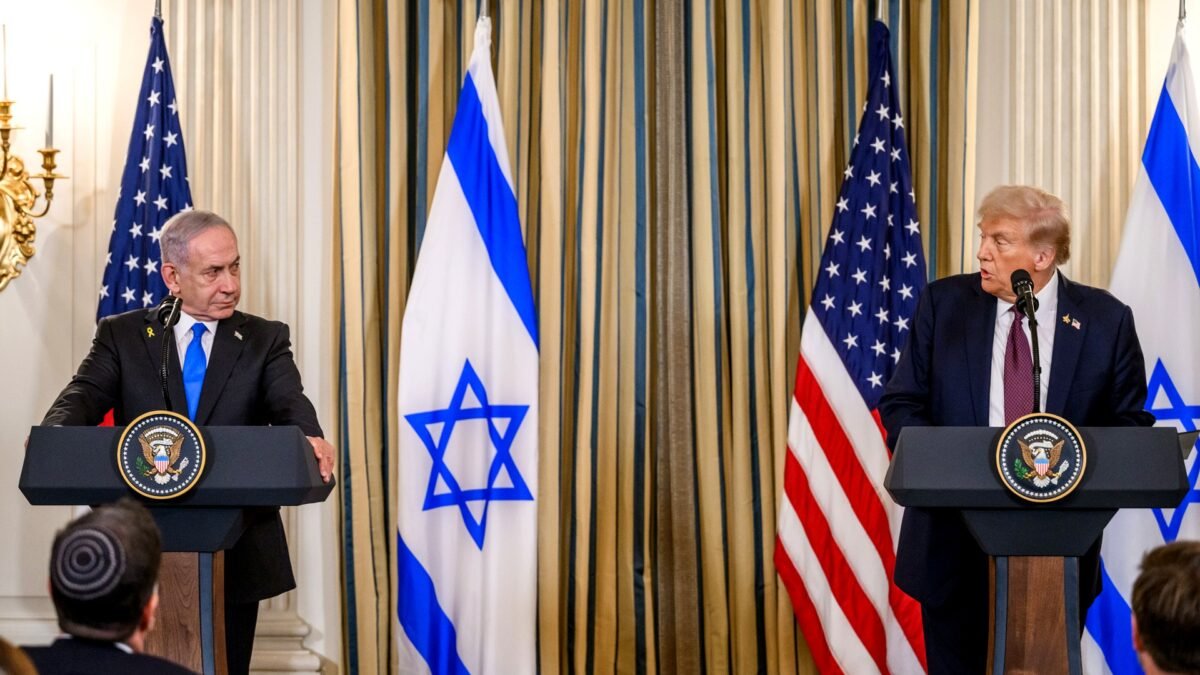
Israeli Prime Minister Benjamin Netanyahu has issued a rare public rebuke of the Trump administration over the make-up of the new body that is supposed to run Gaza after the war, saying its composition was never agreed with Israel and cuts against Israeli policy. The objection, delivered by his office on Saturday, opens the most contentious stage of the Gaza ceasefire with a public disagreement between the two closest of allies over who gets to govern the territory next.
According to Worthy News, which first reported the statement in full, Netanyahu’s office said the composition of the newly announced Gaza Executive Board “was not coordinated with Israel and runs contrary to its policy.” The prime minister directed Foreign Minister Gideon Sa’ar to raise Israel’s concerns directly with United States Secretary of State Marco Rubio, a move that shifts the argument from private channels into the open and puts Washington on notice that Jerusalem does not accept the roster as presented.
The White House unveiled the Gaza Executive Board on Friday as part of Phase Two of President Donald Trump’s 20-point Gaza peace plan, the stage that is meant to move the ceasefire from hostage releases and limited withdrawals into demilitarisation, reconstruction and a new system of government for the Strip. The board is designed to oversee reconstruction, demilitarisation and governance alongside a Palestinian technocratic body, the National Committee for the Administration of Gaza, which held its first meeting in Cairo. The announcement was reported by Worthy News and by the Times of Israel, and confirmed in separate reporting by Fox News.
The timing matters. The ceasefire that took effect on 10 October has now run for more than a year, and the questions it deferred are arriving all at once: who disarms Hamas, who pays for rebuilding, who governs day to day, and who decides when the next phase begins. The board was supposed to answer the governance question. Instead, its first day in public has produced a diplomatic row about its own membership, and that row now sits at the centre of the peace plan’s hardest test.
What the White House announced on Friday
According to the White House statement reported on Friday, the new structure has three layers. At the top sits the Board of Peace, a Trump-chaired international body intended to provide strategic oversight, mobilise funding and ensure accountability as Gaza moves from war to reconstruction. Beneath it sits the Gaza Executive Board, the working body that will handle the practical business of governing the territory. At the bottom sits the National Committee for the Administration of Gaza, a group of Palestinian technocrats charged with running day-to-day affairs inside the Strip.
The United Nations Security Council endorsed Trump’s Gaza plan in November 2025 and supported the creation of the Board of Peace as a transitional international authority to coordinate reconstruction funding and governance. According to the Times of Israel, the Security Council resolution that created the framework restricts the board’s mandate to Gaza and approves it only until the end of 2027. That limit was part of the compromise that won the resolution 13 votes in favour, with Russia and China abstaining.
But the board’s own charter reaches further than its United Nations mandate. According to draft charter language first reported by Bloomberg and cited by Worthy News, countries seeking a permanent role on the Board of Peace may be required to contribute up to $1 billion, a figure that has fuelled speculation that Trump views the body as a potential alternative to traditional United Nations-led mechanisms. Al Jazeera, which has examined the charter, reported that the organisation’s 11-page document, comprising eight chapters and 13 articles, does not mention Gaza once. The charter instead outlines a mandate that could extend to other conflict zones, a prospect that could unsettle powers such as China and Russia, both of which hold veto authority on the United Nations Security Council.
Trump announced the formation of the Board of Peace on his Truth Social platform, calling it “the greatest and most prestigious council ever assembled,” according to Worthy News. The United States is aiming to hold the board’s first meeting on the sidelines of the World Economic Forum in Davos, Switzerland, according to the Times of Israel. Fox News reported that six countries have confirmed receiving invitations to join the board: Jordan, Greece, Cyprus, Pakistan, Hungary and India.
The White House said additional members of both the Board of Peace and the Gaza Executive Board will be announced over the coming weeks, according to Fox News. The administration has signalled it will continue rolling out appointments even as Jerusalem presses Washington to revise the committee’s make-up, according to Worthy News. That sets up a slow-moving standoff: every new name Washington adds is another decision Jerusalem will have to accept or contest.
Netanyahu’s objection, and who drew the line
Israel’s objection centres on the inclusion of Turkey and Qatar on the Gaza Executive Board. Both countries have hosted Hamas political leaders and served as mediators in the ceasefire talks, and senior Israeli officials have repeatedly accused both of helping to sustain Hamas’s political power. For Jerusalem, their presence on the body that will govern Gaza is not a detail to be negotiated later. It is the point of the dispute.
Finance Minister Bezalel Smotrich, a key Netanyahu ally, wrote that “the countries that kept Hamas alive cannot be the ones that replace it,” according to Worthy News. National Security Minister Itamar Ben-Gvir went further, urging Netanyahu to prepare the military to resume combat operations. The language from inside the governing coalition is sharper than the prime minister’s own statement, and it shows the domestic pressure Netanyahu faces: any arrangement that gives Turkey or Qatar a formal role in Gaza will be attacked at home as a reward for the countries Israel blames for keeping Hamas alive.
The Times of Israel reported that Israel sought, unsuccessfully, to block Turkey from the more influential executive panel, even while it did not aggressively oppose Turkish President Recep Tayyip Erdogan being invited to the largely symbolic Board of Peace. The distinction matters. Jerusalem appears willing to tolerate Ankara’s presence on a ceremonial body of world leaders. It is not willing to accept Ankara’s presence on the panel that will make day-to-day decisions about Gaza’s governance, reconstruction contracts and security arrangements.
The American response, as reported, was blunt. After Netanyahu’s statement, an unnamed senior American official was quoted by the Axios news outlet as saying, “This is our show, not his show,” and “If he wants us to deal with Gaza, it will have to be our way,” according to the Times of Israel. The quote, if accurate, captures the new balance of power in the relationship: Washington is writing the roster, and it is telling Jerusalem that the price of American management of Gaza is American control of the arrangements.
Reporting by the Jewish Voice, drawing on Israeli media, added that the episode has already produced a direct and unusually tense exchange between Netanyahu and Rubio over the board’s composition. According to that reporting, Netanyahu instructed Sa’ar to convey Israel’s objections through conventional diplomatic channels, but then bypassed that framework himself and spoke to Rubio directly, an indication of how seriously Jerusalem views the issue. The same reporting said Netanyahu’s sharpest criticism in that conversation was not directed at the identities of the board members themselves, but at the manner in which the decision was announced, with the composition publicised without prior coordination with Israel.
Who sits on the boards
The Gaza Executive Board, as announced by the White House on Friday, brings together American officials, international figures and regional representatives. According to Worthy News, its membership features Trump’s special envoy Steve Witkoff, Trump’s son-in-law Jared Kushner, former British Prime Minister Tony Blair, Apollo Global Management chief executive Marc Rowan, World Bank President Ajay Banga and Trump deputy national security adviser Robert Gabriel. The regional figures are Turkey’s Foreign Minister Hakan Fidan, Qatari diplomat Ali Al-Thawadi, Egypt’s intelligence chief Hassan Rashad and the United Arab Emirates’ Cabinet Minister Reem Al-Hashimy.
Other reporting filled in further names. According to the Times of Israel, former United Nations Middle East envoy Nickolay Mladenov has been named “high representative for Gaza” and is expected to effectively lead the executive board, serving as the link between Trump’s Board of Peace and the Palestinian technocratic body. The same reporting listed former United Nations official Sigrid Kaag and Israeli-Cypriot businessman Yakir Gabay, the only Israeli on the board, among its members. Gabay’s presence does not satisfy Jerusalem, because he is a businessman rather than a government official. The board includes no Israeli government official at all, a fact Worthy News highlighted as central to the dispute.
Alongside the civilian structures sits a military pillar. According to Al Jazeera, United States Major-General Jasper Jeffers will command an “international stabilisation force” whose mandate includes the “permanent disarmament” of Hamas. That force is the enforcement arm of Phase Two: without it, the plan’s central promise, the full demilitarisation of Hamas, has no mechanism. With it, the question becomes which countries contribute troops, under whose command, and with what rules of engagement, none of which has been settled in public.
The Board of Peace itself, the top tier, will be chaired by Trump and composed of world leaders, according to the Times of Israel. Its founding executive council includes Blair, Rubio, Witkoff and Kushner, according to Al Jazeera, alongside Fidan, Al-Thawadi, Rowan, Banga and Gabriel. Trump himself serves as chairman and, according to Al Jazeera’s reading of the charter, as the final authority on the interpretation of the charter, holding veto power over key decisions including membership removal and executive board actions.
A seat at the top table, but not on the working board
Netanyahu has been invited to join the Board of Peace itself, according to the Times of Israel, which reported that the prime minister’s office confirmed that he or a representative of his choice had been invited to the board. The invitation gives Israel a seat on the supervisory but largely symbolic top body. It does not give Israel a seat on the executive board that will run Gaza day to day, and that asymmetry is the heart of the row.
The distinction between the two bodies is the key to understanding why Netanyahu objected to one and not the other. The Board of Peace is a gathering of heads of state and senior figures that will meet occasionally, set strategy and mobilise money. The Gaza Executive Board is the body that will decide who rebuilds what, who administers which services, and how the territory is governed in practice. A seat on the first is a courtesy. A seat on the second is power. Israel has been offered the courtesy and denied the power, and its prime minister has said so in public.
Whether Netanyahu accepts the Board of Peace invitation remains an open question. The invitation itself is a diplomatic instrument: accepting it would signal that Israel can live with the new structure, while refusing it would deepen the rift. For now, his office has confirmed the invitation without saying whether he will take it up, and the decision will be read in Washington, Ankara, Doha and Cairo as a measure of how far Jerusalem is willing to go in its quarrel with the Trump administration.
The Palestinian technocrats meet in Cairo
While the row over the executive board played out, the third layer of the new structure began work. The National Committee for the Administration of Gaza, a Palestinian technocratic body, held its first meeting in Cairo, according to the Times of Israel, chaired by former Palestinian Authority deputy planning minister Ali Shaath. The committee is the body that is supposed to manage Gaza’s internal affairs on the ground, under the supervision of the executive board above it.
The committee’s creation is itself a compromise. The plan aims to remove Gaza from the grip of Hamas while avoiding a return to direct Israeli occupation or a handover to the Palestinian Authority, and a technocratic committee of Palestinians with administrative experience is the instrument chosen to thread that needle. Its members will have to govern a territory where the health system is shattered, where winter is arriving, and where the ceasefire they operate under is violated almost daily. Their first meeting in Cairo was a beginning, not a solution.
The committee’s authority will depend entirely on the bodies above it. If the executive board is paralysed by the dispute between Washington and Jerusalem, the technocrats in Cairo will have no clear instructions, no secure funding channel and no security force to back them. If the executive board functions, they become the civilian face of the new Gaza. Everything about their prospects turns on whether the row at the top can be settled.
The ceasefire on the ground: hospital strike, aid row, winter
The argument about who governs Gaza is taking place against a ceasefire that is fraying on the ground. On Thursday, an Israeli airstrike hit Nasser Hospital in Khan Younis, one of the main hospitals still operating in the Gaza Strip, killing six people and wounding at least 28 more, according to the Associated Press. Gaza’s Health Ministry said the victims included a surgeon, Dr Rizq Abu Sha’ira, and a 13-year-old boy. The Israeli military said the strike targeted Muhammad Abu Ismail, commander of Hamas’s Khan Younis Brigade, and other militants allegedly operating inside the hospital, without providing evidence, according to the Associated Press.
The hospital victims were among 10 Palestinians killed on Thursday in four strikes that the Israeli military said targeted militants, according to the Associated Press. The deaths came amid continued Israeli attacks in Gaza despite a ceasefire agreement that took effect in October 2025. According to Al Jazeera, citing Gaza’s Health Ministry, at least six Palestinians were killed in Gaza over the past 48 hours, bringing the number of people killed since the October 2025 ceasefire to 1,580. The same ministry says more than 74,000 Palestinians have been killed since October 2023.
The United Nations human rights office warned on Friday that Israeli forces in Gaza were continuing to displace Palestinians and that their actions continued to raise concerns of ethnic cleansing, according to Al Jazeera. The warning landed on the same day the White House unveiled the executive board, and it underlines the gap between the institutions being built in Washington and Cairo and the reality being lived in Gaza.
On Thursday, 53 countries and international organisations issued a joint demand calling on Israel’s incoming government to lift restrictions on aid entering Gaza, according to the Eastleigh Voice. The coalition, led by the United Kingdom, Qatar and Jordan, warned that the humanitarian situation is deteriorating rapidly as winter sets in, with displaced Palestinians facing severe threats from hypothermia, respiratory infections and waterborne diseases. Britain’s permanent representative to the United Nations, Sarah MacIntosh, announced the joint statement and pointed to Security Council Resolution 2803, which she said requires full humanitarian access at levels agreed upon on 19 January 2025. “This has not yet been realised,” she said, according to the Eastleigh Voice.
The numbers behind the demand are stark. According to the Eastleigh Voice, the Norwegian Refugee Council warned in early October that 1.65 million people face a fourth consecutive winter in worn-out tents or damaged buildings, and international donors have provided or pledged only 34 per cent of the $283 million needed for the minimum winter shelter response. Gaza’s storm flooding has already swamped tens of thousands of tents, and Gaza’s Health Ministry reports 466 hunger-related deaths since 2024, including 157 children, according to the Eastleigh Voice. The signatories demanded that Egyptian and Jordanian humanitarian corridors be fully opened and operating predictably, that more critical aid items be approved, including materials Israel classifies as “dual-use”, and that medical referrals for patients to hospitals in East Jerusalem and the West Bank be restored.
The Board of Peace itself had already clashed with Israel over the humanitarian situation before the executive board row. Earlier this week, the board publicly called Israel’s humanitarian response to the flooding in Gaza “insufficient”, a rebuke that was reported at the time and that now reads as a preview of the friction that has broken out over the board’s composition. The pattern is becoming clear: the new American-led institutions are willing to criticise Israel in public, and Israel is willing to answer in public.
The wider region is also moving. On Thursday, President Trump said in a social media post that “we don’t need a deal with Iran” and said he wants Vice President JD Vance to focus on rooting out fraud in federal government programs instead, according to the Associated Press. Vance had been the face of an earlier effort to strike a deal with Iran that ultimately collapsed. On the same day, Iran’s Assembly of Experts, the clerical body responsible for overseeing Iran’s supreme leader, said that considering withdrawal from the Nuclear Nonproliferation Treaty is an “unavoidable necessity”, according to Iranian state television cited by the Associated Press. And the United Nations Security Council adopted a resolution unanimously late on Thursday strongly condemning the Houthis’ military escalation and extending sanctions, including travel bans and asset freezes, until 14 November 2027, according to the Associated Press.
France also barred a prominent Israeli settler leader, Yossi Dagan, from entering the country, according to the Associated Press, and Israel’s foreign minister said on Thursday that French presidential candidate Jean-Luc Mélenchon has been barred from Israel for his vocal support of Gaza. The tit-for-tat entry bans are a small detail, but they show how the Gaza dispute is spilling into the diplomacy of countries far from the Strip.
Analysis: Why It Matters
The row over the Gaza Executive Board is not a misunderstanding about a guest list. It is the first open test of who governs Gaza after the war, and the answer Washington has given is that it does, with partners of its own choosing. That answer is what Netanyahu is contesting, and the contest will shape everything that follows: the disarmament of Hamas, the flow of reconstruction money, the fate of the ceasefire, and the future of the American-Israeli relationship itself.
A public rebuke is the message, not the medium
Governments that disagree with Washington usually do so in private. They send an envoy, they make a phone call, they leak their unhappiness to a friendly newspaper and let the administration save face. Netanyahu did none of that. His office issued a public statement, in writing, using the formal language of policy disagreement, and it instructed his foreign minister to raise the matter with the American secretary of state. That is a deliberate choice, and the choice is the message.
A public statement does two things a private complaint cannot. First, it locks the speaker in. Once a prime minister has said in public that a body’s composition “runs contrary to its policy,” he cannot quietly accept the same body a week later without paying a political price at home, where Smotrich and Ben-Gvir have already staked out harder positions. Second, it invites the other side to answer in public, which is exactly what happened when the American official told Axios that this is Washington’s show. The exchange has now been conducted in the open, and both sides have said things they cannot easily unsay.
The decision to go public also tells us something about the state of the private channel. If Netanyahu believed a quiet word with Trump would change the roster, he would have made the quiet call. The fact that he chose a public statement suggests he believed the private channel had already failed, or that the roster was already fixed and the only remaining move was to register dissent for the record. Either way, the public rebuke is evidence that the normal machinery of American-Israeli coordination did not work on this occasion, and that is itself a significant fact about the relationship.
The Turkey and Qatar red line
The substance of the dispute is narrower than the rhetoric suggests, and that narrowness is what makes it so hard to resolve. Israel is not objecting to the Board of Peace, to the idea of an executive board, or to the technocratic committee. It is objecting to two names: Turkey and Qatar. Both countries hosted Hamas’s political leadership, both served as mediators in the ceasefire talks, and both are viewed in Jerusalem as having sustained Hamas’s political power through the war. For Israel, giving them a formal role in governing Gaza is not a compromise. It is a reward for the other side’s patrons.
Washington sees the same two countries differently. Turkey and Qatar are the mediators who delivered the ceasefire, the channels through which Hamas can be reached, and the regional powers whose money and influence will be needed for reconstruction. From the American perspective, excluding the two countries that talk to Hamas from the body that must govern Gaza would be self-defeating. The board needs them precisely because they have the relationships Israel finds objectionable.
This is a genuine conflict of interest, not a failure of communication. Both sides understand the other’s position perfectly well, and both have decided their own position matters more. That is why the dispute is so difficult: there is no form of words that makes Turkey and Qatar both present and absent, and the roster either includes them or it does not. The most likely outcome is a fudge, perhaps a redefinition of their roles or a parallel channel for Israeli concerns, but a fudge will satisfy neither side completely, and the underlying disagreement will resurface at the next decision.
“Our show, not his”: who governs Gaza now
The Axios quote attributed to a senior American official, “This is our show, not his show,” deserves to be taken seriously, because it states plainly what the structure of the new institutions already implies. The Board of Peace is chaired by Trump. Trump is the final authority on the interpretation of its charter and holds veto power over key decisions. The executive board is appointed by Washington. The high representative answers to the board. The stabilisation force is commanded by an American general. At every level, the chain of authority runs to the White House, not to Jerusalem.
That is a remarkable shift in the governance of Gaza. For decades, the question of who controls the territory has been answered by force, by occupation, by blockade, or by Hamas. Now, for the first time, the answer is an international body designed in Washington, funded in part by a proposed $1 billion buy-in for permanent members, and operating under a charter that does not even mention Gaza. The plan treats Gaza as the first test case for a new kind of American-led international administration, and the charter’s silence about Gaza is the clearest evidence that its authors have ambitions beyond the Strip.
For Israel, the shift carries a cost that goes beyond the names on the board. A country that has controlled Gaza’s borders, airspace and waters for decades is being asked to accept that the territory’s government will now be chosen in Washington, with the participation of countries it regards as hostile, and that its own role will be limited to a seat on a ceremonial top body. Netanyahu’s objection is, in that sense, not only about Turkey and Qatar. It is about the transfer of authority itself, and about whether Israel’s security concerns will be treated as a veto or as an opinion. The American answer so far is that they will be treated as an opinion, and that is a change in the relationship that will outlast this particular row.
Phase Two’s hardest test is disarmament
Beneath the diplomatic row sits the practical question that will decide whether Phase Two succeeds or fails: the demilitarisation of Hamas. Phase One was the easy part by comparison. It required hostages to be released, aid to flow and troops to pull back to agreed lines, all of which could be verified by counting. Phase Two requires an armed movement that has governed Gaza for nearly two decades to give up its weapons, and no one has yet explained how that will happen without a fight.
The plan’s answer is the international stabilisation force under Major-General Jeffers, backed by the executive board and the technocratic committee. But the force does not yet exist in any meaningful sense. Its troop contributors have not been announced, its rules of engagement have not been published, and its relationship with the Israeli military, which remains deployed around Gaza, has not been defined. A force that is still being assembled cannot disarm anyone, and every week that passes without it gives Hamas more time to entrench, to hide weapons and to argue that the disarmament demand is a pretext for something else.
The missing body of Ran Gvili, the final Israeli hostage whose remains Hamas has yet to return, hangs over all of this. Netanyahu’s government has maintained that Phase Two should not proceed until all Phase One obligations are fulfilled, and the unreturned body is the most concrete of those obligations. It gives Israel a reason, stated in the language of the agreement itself, to slow the transition. It also gives Hamas a lever: the body is a bargaining chip that can be produced or withheld as the talks require. Until that obligation is settled, Phase Two begins with a dispute about whether it should have begun at all.
The ceasefire is fraying while the institutions are built
The deepest problem with the new structure is not its membership but its timing. The institutions are being built in Washington, Cairo and Davos while the ceasefire they are meant to administer is violated almost daily in Gaza. An airstrike on a hospital, ten people killed in a day, 1,580 dead since the ceasefire took effect, a United Nations warning about displacement and ethnic cleansing, and 53 countries demanding that aid be allowed in before winter: these are the facts on the ground, and they do not wait for a board to be constituted.
There is a real danger that the governance argument becomes a substitute for the governance itself. While Washington and Jerusalem argue about who sits on the executive board, no one is rebuilding the hospitals, no one is sheltering the 1.65 million people facing winter in tents, and no one is answering the question of who protects civilians when the next strike hits a medical facility. The Board of Peace’s own earlier rebuke of Israel’s aid response shows that the new institutions are aware of the gap. But awareness is not delivery, and the people of Gaza are measuring the peace plan in tents, food and medicine, not in charters and committees.
The test of the new structure will not be the elegance of its design or the eminence of its members. It will be whether, by the time winter is at its worst, the aid is flowing, the hospitals are functioning and the killing has stopped. On that test, the plan has not yet begun to pass, and the row over the board’s membership is, for the people living under the ceasefire, a dispute about the furniture in a house that is still on fire.
What to Watch Next
- The Rubio-Sa’ar conversation: whether the foreign ministers’ discussion produces any change to the board’s composition, a redefinition of Turkey’s and Qatar’s roles, or simply a restatement of both positions.
- Whether Netanyahu accepts the Board of Peace invitation: his decision will signal how far Jerusalem is willing to go in its quarrel with Washington, and whether it will work inside the new structure or against it.
- Further appointments: the White House has said more members of both boards will be announced in the coming weeks, and each new name will be read in Jerusalem as a test of whether its objections carry any weight.
- The first meeting in Davos: whether the board meets as planned on the sidelines of the World Economic Forum, who attends, and whether Israel is represented.
- The return of Ran Gvili’s body: the unfulfilled Phase One obligation that Israel cites as a reason to slow the transition, and the clearest early indicator of whether Hamas intends to cooperate with Phase Two.
- The stabilisation force: which countries commit troops, under what rules of engagement, and how the force relates to Israeli forces still deployed around Gaza.
- The winter aid test: whether the 53-nation demand produces a real increase in aid entering Gaza, and whether shelter, fuel and medical supplies reach the 1.65 million people facing a fourth winter in tents before the worst of the cold arrives.
Sources
- Worthy News — “Israel Pushes Back on Trump Administration’s Gaza Executive Board as Ceasefire Enters Phase Two”
- The Times of Israel (via The Free Library) — “Netanyahu invited to Trump’s Gaza Board of Peace alongside European, Mideast leaders”
- Fox News (via Ryan’s District) — “Six countries confirm US invitations to Gaza peace board”
- Associated Press (via Europe Says) — “Israel hits Gaza hospital, France turns away a settler leader, and other Mideast news”
- The Eastleigh Voice — “53 nations demand Israel lift Gaza aid restrictions ahead of winter”
- Al Jazeera — “At least four Palestinians killed in Gaza as Israeli attacks continue”

About the Author — Abdul Mannan
Related Articles
Trump Says Gulf Allies Asked Him to Hold Off New Iran Strikes as He Claims He Could End the War in Three Days
Donald Trump has said Saudi Arabia, Qatar, Kuwait, the UAE and Bahrain asked him to hold off large-scale…
Israel Orders Military to Step Up Preparations for a Possible New Strike on Iran as Tehran Warns Retaliation Could Reach Europe
Israel's security cabinet has ordered the military to step up preparations for a possible new strike on Iran,…
Houthis Deny Targeting Mecca as Saudi Arabia Intercepts Missiles Aimed at Riyadh and the Holy City
Saudi air defences intercepted Houthi cruise missiles and drones aimed at Riyadh, Mecca and other regions on Wednesday,…