
Israel Orders Military to Step Up Preparations for a Possible New Strike on Iran as Tehran Warns Retaliation Could Reach Europe

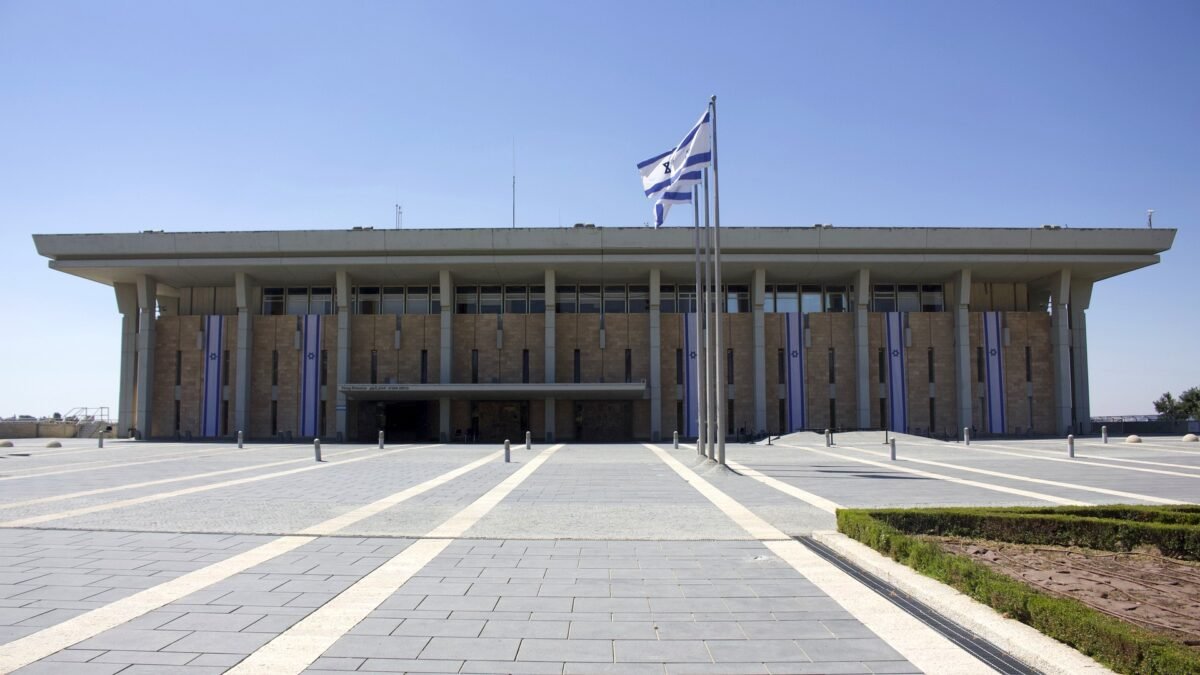
Israel’s security cabinet has ordered the country’s military to step up its preparations for a possible new strike on Iran, according to a report by Israel’s public broadcaster, in the clearest sign yet that the fragile pause in the eight-month war could give way to a second round of fighting. The order, reported by KAN on Wednesday evening, landed within hours of a warning from Tehran that any renewed attack would be answered far beyond the Middle East — and a day before a separate report that the United States military had quietly told Israeli officers to be ready for the war to resume.
According to KAN, the directives issued by the security cabinet, which is chaired by caretaker Prime Minister Benjamin Netanyahu, “could lead it to carry out activities that could trigger a war”. The broadcaster reported that senior security officials had told it the army was keeping up its preparations for a possible renewal of the campaign against Iran in line with decisions by the political leadership, and that the gains made in Iran would erode the longer the stalemate lasted without either military action or an agreement.
No strike has been authorised, and no date, target or timeline has been made public. But the report, carried widely by international media including Al Jazeera, has sharpened a question that has hung over the region since the United States and Israel launched coordinated attacks on Iran on 28 February: whether the war that President Donald Trump declared “effectively over” this week is genuinely ending, or merely pausing while both sides reload.
The timing is politically charged. Netanyahu is governing as a caretaker after his coalition lost its parliamentary majority in the elections of 27 October, and the man President Isaac Herzog has asked to form the next government, opposition leader Gadi Eisenkot, has publicly warned him not to use the armed forces while that process is under way. The security cabinet itself has not met in person since 5 October, three weeks before the inconclusive election, and KAN reported that it would convene on Sunday for the first time since then.
What the security cabinet ordered
The report of the cabinet’s instructions emerged on Wednesday evening, hours after Eisenkot had written to Netanyahu urging him not to deploy the security forces “without a direct and immediate threat” until a government with the confidence of parliament is sworn in. According to Al Jazeera, Netanyahu called the letter an irresponsible move to discuss sensitive security matters in public, saying that “all decisions made by the government were based solely on security considerations and in full coordination with the security establishment”.
Eisenkot replied by asking why Netanyahu had refused his request for operational briefings through official channels and why he was delaying the first meeting of the Knesset’s foreign affairs and defence committee until next week. “I will not allow a vacuum in oversight of a government that has lost the confidence of the Knesset,” he said, according to The Insight International.
The exchange is the latest flashpoint in a transition that has left Israel with two centres of authority. Herzog gave Eisenkot 28 days on Sunday to form a coalition, after lawmakers representing 67 seats recommended him. Netanyahu, who has remained in office as caretaker since the 27 October vote, was backed by 46. Eisenkot, a former military chief of staff, was offered the chance to form a government by Herzog over the weekend, according to Al Jazeera.
The military leadership has also pushed back against the idea of renewed action. Israel’s Channel 12 reported on Tuesday, citing unnamed sources, that military chief of staff Eyal Zamir had again opposed unspecified action that Netanyahu wanted to take against Iran. Netanyahu’s office called that report “biased fake news”, according to The Insight International.
Netanyahu himself has been adamant that the war on Iran will continue until the collapse of the government in Tehran, according to Al Jazeera. Addressing the Knesset on 10 November, he said the only permanent answer was “toppling the ayatollah regime”, according to a weekly assessment of the war published on Thursday that drew on Israeli media reporting.
Tehran widens the map of retaliation
Tehran answered the Israeli report within hours, and its warning was deliberately drawn on a much larger map than the region. Mohsen Rezaei, the secretary of Iran’s Supreme National Security Council, said in a social media post: “If the US launches another war against Iran, every military base involved in the aggression, from West Asia to Europe, will be a legitimate target for Iran’s lethal strikes.” He added: “No safe distance. No safe haven. No immunity.”
The warning was the most expansive Iranian threat since the war began, extending the list of potential targets beyond the Gulf states that host American forces to installations in Europe itself. It also blurred the distinction between American and Israeli action: any base involved in aggression against Iran, whether the strike was launched by Washington or Jerusalem, would be treated as a target.
Al Jazeera’s correspondent in Tehran, Resul Serdar Atas, reported that the Iranian leadership has been discussing whether to appoint the hawkish Rezaei as Iran’s new chief negotiator. Atas said there had been voices in Tehran arguing that if the current state of affairs went on for a long period, Iran “will not wait and might take pre-emptive action”. He added that the current lead negotiator, Parliament Speaker Mohammad Bagher Ghalibaf, had spoken of Iran’s determination to move beyond a state of “no war, no peace” through “sustainable deterrence” if negotiations fail.
Ghalibaf himself gave an exclusive interview to Al Jazeera published on Wednesday, in which he said the Strait of Hormuz would “never return” to its status before the US-Israel war on Iran, and that “the ball is now in the American court”. “What stands in the way of an agreement is our lack of trust in the United States,” he said.
Washington tells Israel to be ready — then calls it speculation
On Thursday, a second KAN report added a new and contradictory element to the picture. According to the broadcaster, the United States Central Command had told Israeli military officers in the United States to prepare for the possibility that the war on Iran could resume. KAN’s Itay Blumenthal cited an unnamed American official who said Gulf states had received a similar message.
When asked about the report, CENTCOM told Al Jazeera that the reports were “mere speculation”. No decision to strike has been reported, and no one has said when any operation might take place. But the report, first carried by the Substack publication Narativ on the basis of KAN’s reporting, runs directly against what Trump and Secretary of State Marco Rubio have said in public this week: that large-scale strikes are no longer needed.
According to KAN, the United States has about 200 aerial refuelling aircraft and two aircraft carriers in the region, with a third carrier expected next week — a force posture that would support either a renewed campaign or a show of deterrence, depending on the decision that follows.
Trump himself, speaking to the radio host Hugh Hewitt on Thursday, said nobody had been killed in the last five months. If things went the other way, he said, “I would not hesitate.” And if Iran killed a senior American official, he added, “They will not exist very long any longer.”
A White House saying two things at once
The public record from Washington this week has been one of restraint. Trump said on Monday, after meeting Qatar’s prime minister, that new military action against Iran did not seem necessary for now, though he said US forces remained “locked and loaded”. Qatar has been mediating contacts between Washington and Tehran, and Trump has said he is prepared to return to waging war if a diplomatic track offered by Qatar fails to facilitate a deal.
Rubio has gone further, arguing that the administration’s economic pressure campaign against Iran is proving so effective that a resumption of large-scale military operations is unnecessary. “Over the last few days, both the president and Marco Rubio have said, effectively, that large-scale military engagement is over. They do not see the need to restart it unless Iran crosses red lines,” Al Jazeera’s Alan Fisher reported from Washington.
Fisher added that the “key issue for this White House is always to be in a position where Trump can declare victory”. Despite the push for peace, US forces “continue to work around the clock” in keeping the Strait of Hormuz open for commercial shipping, while strictly enforcing what CENTCOM calls the “ironclad” naval blockade against Iran, according to Al Jazeera.
The contradiction between the public message of restraint and the private message of readiness reported by KAN is the central uncertainty of the week. It may reflect a deliberate strategy — keeping Iran guessing while negotiations continue — or it may reflect a genuine disagreement inside the administration, or between Washington and Jerusalem, about what comes next. What is clear is that the two messages cannot both describe the same policy, and that the gap between them is where the risk of miscalculation lives.
The uranium question blocking a deal
The most concrete obstacle to a diplomatic settlement is Iran’s stockpile of uranium enriched to 60 percent purity, a level far above what is needed for civilian power and a short technical step from weapons grade. Washington has proposed that the stockpile be transferred to a third country. Tehran has rejected the proposal and insisted on retaining control of its nuclear material, according to reports carried by Al Jazeera and the Pakistani think-tank publication ThinkTank, which summarised the week’s developments on Thursday.
The rejection moved the oil market on Wednesday. Brent futures settled 1.27 dollars, or 1.39 percent, higher at 92.76 dollars a barrel, while US West Texas Intermediate crude gained 49 cents, or 0.57 percent, to 86.53 dollars, according to Al Jazeera. In the previous session, prices had initially fallen by more than 3 dollars a barrel after US officials played down the need for further military strikes against Iran, before paring some of those losses when an Iranian official said no talks were taking place between the two sides.
The oil market’s sensitivity to every statement in this dispute is a measure of how much of the world’s energy still moves through the region. The Strait of Hormuz, which Iran has kept closed to much commercial traffic since the war began, carries about a fifth of global oil supply. Saudi Arabia has rerouted about 4 million barrels per day of crude — equivalent to about 4 percent of global supply — through its East-West Pipeline to the Red Sea port of Yanbu, according to Reuters, precisely because the strait can no longer be relied upon.
That pipeline has itself become a target. On Thursday, Reuters reported that Yemen’s Iran-aligned Houthis said they had attacked a pumping station on the East-West pipeline and an oil facility in Yanbu, amid a sharp escalation in hostilities between the group and Saudi Arabia. Saudi Arabia did not immediately respond to a request for comment, and the Houthis did not specify which day the attacks had been carried out. The claim followed a day in which Saudi air defences intercepted Houthi missiles and drones aimed at Riyadh, Mecca and other regions — an episode this site reported on Wednesday.
The price of the last round
One reason the prospect of a new round of fighting alarms even its supporters is the cost of the last one. The war has already consumed American resources on a scale that has alarmed defence planners in Washington. According to a report published on 10 November by the Center for Strategic and International Studies, American forces expended an estimated 1,060 to 1,430 Patriot interceptors and between 190 and 290 Terminal High Altitude Area Defense, or THAAD, interceptors during the initial 39-day campaign. The same assessment said the United States maintains sufficient munitions to conduct renewed operations against Iran, but that its depleted inventories present serious concerns for a potential confrontation with China.
The financial cost has been put at approximately 47.1 billion dollars through 16 October, according to a US Central Command estimate provided to lawmakers and reviewed by the Associated Press on 28 October. Iranian attacks damaged at least 119 buildings across 13 American military installations during the war’s opening weeks, with total base damage potentially reaching 15 billion dollars, The Wall Street Journal reported on 30 October, citing military estimates and its own analysis of satellite imagery.
Despite those costs, the head of Israel’s state-owned defence industry said on Wednesday that another war was inevitable. Boaz Levy, chairman of Israel Aerospace Industries, told the Israel Hayom Summit in New York that “there will be another war, without a doubt”, and that Israel must strengthen its military partnership with Washington. He claimed that Israel’s Arrow missile defence system had achieved a 92 percent interception success rate against Iranian ballistic missiles, according to the Daily Caller, which reported his remarks. Levy’s assessment does not constitute an official Israeli government announcement of renewed hostilities, and he provided no specific timeline for another confrontation.
The human cost has also continued to mount in the wider region. Israeli attacks have killed at least 4,390 people in Lebanon and wounded another 12,429 since 2 March, according to a 5 November statement from the Lebanese Health Ministry cited by the Daily Caller. In Gaza, Israeli fire killed 11 people on Thursday, according to health officials, including six in a bombing at Nasser hospital in Khan Younis in southern Gaza.
Analysis: Why It Matters
Preparation is not a decision — but it narrows the distance to one
The most important distinction in this story is the one KAN itself drew. A security cabinet ordering the military to step up preparations is not the same as a government ordering a strike. Preparations can be defensive, they can be a signal, and they can be reversed. But they also change the facts on the ground: forces move, fuel is stockpiled, targets are refreshed, and the time between a political decision and a military act shrinks. Every step of preparation makes the next step easier and the decision to take it less momentous. That is why KAN’s warning — that the directives “could lead it to carry out activities that could trigger a war” — matters more than the dry fact of the order itself. The danger is not only that a strike is ordered, but that an incident, a misread signal or a precautionary deployment sets one off without anyone having chosen it.
A caretaker government is deciding the biggest question of all
Israel is in the middle of a political transition, and the timing of this decision is the most troubling part of it. Netanyahu lost his parliamentary majority on 27 October. His successor has not yet been sworn in. The security cabinet has not met in person for more than a month. And yet it is this caretaker government, with its authority openly questioned by the man charged with replacing it, that is directing the military to prepare for a war that could reshape the region. Eisenkot’s letter — asking Netanyahu not to deploy the armed forces “without a direct and immediate threat” until a government with the confidence of parliament is in place — is not a policy disagreement. It is a constitutional warning, and it raises a question that goes beyond this crisis: who has the legitimacy to take a country to war when the voters have just withdrawn their confidence from the government that would order it? Netanyahu’s answer, that all decisions were based solely on security considerations, does not address the legitimacy question at all. It assumes the answer.
Tehran’s warning is aimed at Washington as much as Jerusalem
Rezaei’s threat to strike American bases “from West Asia to Europe” is worth reading carefully, because it is aimed at two audiences at once. For Washington, it is a deterrent: any American involvement in a renewed attack, even logistical support, would bring retaliation against American forces far beyond the Gulf. For the Europeans, it is a warning that hosting the bases from which such an attack might be launched would make them parties to the war. And for Tehran’s own domestic audience, it is a statement of intent that Iran will not accept another round of strikes without answering on a scale that matches. The danger in such sweeping threats is that they commit the speaker. If a strike comes and the promised retaliation does not, credibility collapses; if it does come, the war expands to a geography no one has planned for. Either way, the threat itself has already changed the calculations of every government that hosts an American base between the Gulf and the Mediterranean.
The two messages from Washington cannot both be true
Trump and Rubio say large-scale military engagement is over. CENTCOM, according to KAN, has told Israeli officers to prepare for the war to resume. One of these accounts is wrong, or both are describing different parts of the same policy: a public posture of restraint and a private posture of readiness. That ambiguity may be deliberate — strategic ambiguity is a familiar tool — but it is dangerous in a situation this volatile, because the other side cannot tell the difference between a bluff and a plan. Iran’s leadership, reading the same two messages, must decide whether to take the public reassurance at face value or to act on the private warning. If it guesses wrong in either direction — standing down when an attack is coming, or striking first when none is planned — the result is the war both sides claim to be trying to avoid. The Sunday meeting of the security cabinet, the first in more than a month, will be the first chance to see which of the two messages survives contact with a decision.
The war never really ended; it changed shape
Step back from the week’s headlines and a larger pattern comes into view. Trump declared the war “effectively over” on Tuesday. On Wednesday, the Houthis claimed attacks on Saudi Arabia’s most important oil pipeline. On Thursday, four tankers were reported hit by explosions in the Strait of Hormuz, according to Iran’s military, and Israeli fire killed 11 people in Gaza. The war did not end; it fragmented. The direct American-Israeli campaign against Iran has paused, but the fighting has continued through proxies, through shipping, through Gaza and through the oil infrastructure of the Gulf. That is the real meaning of the “no war, no peace” condition Ghalibaf described. It is a state in which no one declares war, no one signs a peace, and people keep dying in the meantime. A second round of direct strikes would not restart the war. It would simply return it to its most dangerous form.
What to Watch Next
- Sunday’s security cabinet meeting: the first in-person meeting since 5 October. Whether it produces a formal decision, a further round of preparations, or a public statement will be the clearest signal yet of Netanyahu’s intentions.
- The third carrier: KAN reported a third American aircraft carrier is expected in the region next week. Its arrival, or any delay, will be read as a measure of Washington’s seriousness.
- Eisenkot’s coalition talks: with 28 days from Sunday to form a government, every day of delay extends the caretaker period in which Netanyahu is making war decisions without a parliamentary majority.
- The uranium stockpile: whether Tehran moves at all on the American proposal to transfer its 60 percent enriched uranium to a third country — the single most concrete obstacle to a deal.
- Qatar’s mediation: whether the Qatari channel produces a draft that either side can accept, and whether Trump treats its failure as a trigger for renewed force, as he has warned.
- The Houthi campaign against Saudi Arabia: whether the attacks on the East-West pipeline and Yanbu continue, and whether Riyadh’s answer is military retaliation or a renewed push for a settlement in Yemen.
- Oil prices: Brent settled at 92.76 dollars on Wednesday on the uranium news alone. Any further escalation — a strike, a tanker incident, a pipeline shutdown — will move the market faster than any statement.
Sources
- Al Jazeera — “Iran warns of expanded retaliation as Israel reportedly readies to attack” (via Barbados Gazette)
- The Insight International — “Israel’s security cabinet ordered the army to prepare for a possible Iran strike, Kan reports”
- Narativ — “Reports: US Told Israel to Ready for Possible Iran War” (KAN, 12 November)
- Defence Talks — “Israel Prepares for Iran Strikes as Tehran Threatens Wider War Beyond Middle East”
- Daily Caller — “Israel Defense Industry Chief Predicts Another Iran War Despite Staggering US Costs”
- Reuters — “Yemen’s Houthis say they attacked pumping station on Saudi Arabia’s East-West oil pipeline”

About the Author — Abdul Mannan
Related Articles

Houthis Deny Targeting Mecca as Saudi Arabia Intercepts Missiles Aimed at Riyadh and the Holy City
Saudi air defences intercepted Houthi cruise missiles and drones aimed at Riyadh, Mecca and other regions on Wednesday,…
Iran Attacks Navigation Systems on Oman’s Didamar Island in the Strait of Hormuz as Oman Disputes the Damage
Iran says it destroyed navigation systems on Oman's Didamar Island in the Strait of Hormuz, but Oman disputes…
Israel’s New Parliament Sworn In as Eisenkot Moves to End Netanyahu’s Rule and Cancels Unity Talks With Likud
Israel's 26th Knesset was sworn in without a new government on Tuesday, as Gadi Eisenkot — tasked with…