
Iran Warns of ‘Immediate’ Retaliation at the UN as Gulf States Demand Compensation for War Damage

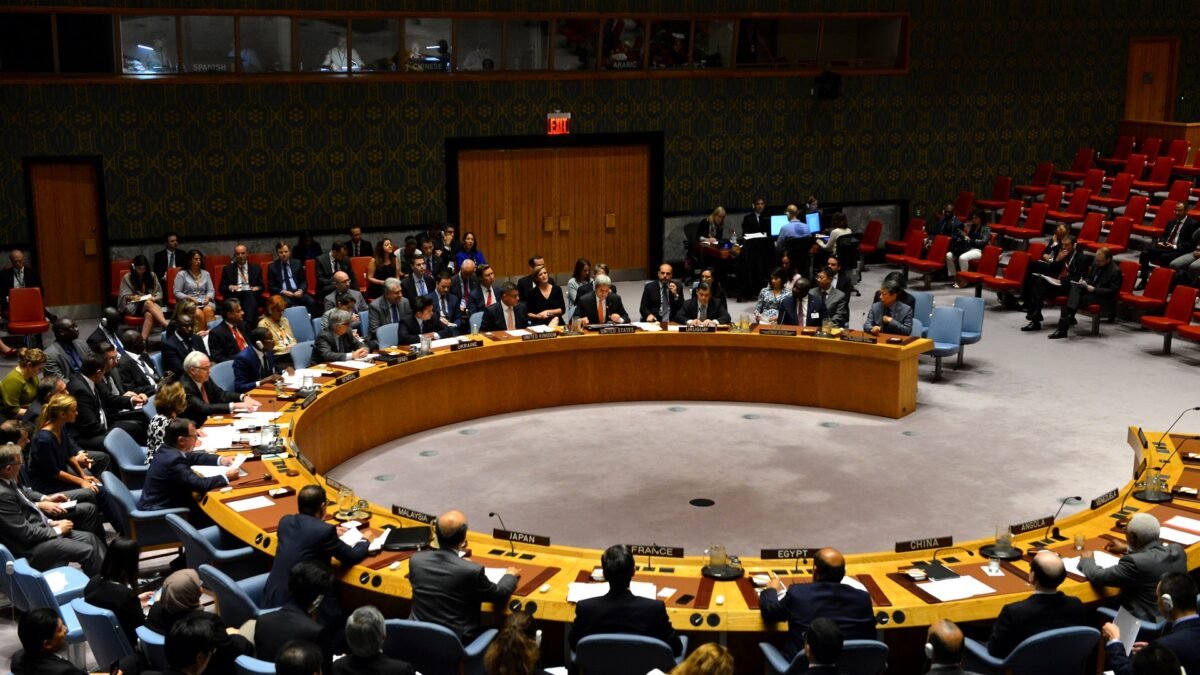
Iran warned the United Nations Security Council on Friday that any renewed American or Israeli attack on its territory would be met with an “immediate and decisive response”, while the Gulf Arab states used the same session to demand that Tehran pay full compensation for months of missile and drone strikes on their soil. The confrontation, at a meeting called at Bahrain’s request, laid bare how little the region’s war has actually been settled, even as diplomats insist a pause in the fighting is holding.
“Any renewed war of aggression by the United States and the Israeli regime will be met with an immediate and decisive response, without hesitation,” Gholamhossein Darzi, Iran’s deputy permanent representative to the United Nations, told the Council, according to Middle East Eye. He added that any Iranian response would be “directed against the source of aggression, wherever it may be.”
The warning came only hours after the United States military said it had shot down two Iranian drones launched toward Bahrain and denied an Iranian claim that a United States early-warning radar in the kingdom had been destroyed. The clash of accounts, the compensation demands flying in both directions, and a blunt exchange between Iran and Bahrain inside the Council chamber all pointed to the same conclusion: the war that began on 28 February is paused, not finished, and the Gulf states caught in the middle are now pressing their own case at the world’s highest diplomatic table.
Jasem Albudaiwi, the secretary-general of the Gulf Cooperation Council, told the Council that Iran had launched thousands of missiles and drones at Gulf states since 28 February, striking airports, ports, oil and gas facilities, power stations, desalination plants and homes, according to The Insight International. “The GCC holds Iran fully responsible for these attacks and their consequences,” he said, demanding full compensation and an immediate and unconditional end to Iranian attacks on GCC members and Jordan, whether carried out directly or through allied groups.
A senior United Nations official, Assistant Secretary-General Khaled Khiari, told the meeting that energy exports from the Gulf had largely recovered, partly through alternative routes, but that this “should not be mistaken for a return to normality.” Shipping volumes remain below prewar levels, he said, and October saw the highest monthly number of incidents against commercial vessels since February. As of 11 November, the International Maritime Organization had recorded 134 confirmed incidents in the Strait of Hormuz and the wider region, and 25 seafarers had been killed, according to Khiari.
What happened at the Council
The meeting was held at Bahrain’s request, on behalf of the six Gulf Cooperation Council states, and it was framed around the situation in the Persian Gulf and the Strait of Hormuz. But it quickly became something broader: a public airing of grievances from every side of a war that has now run for more than eight months, with no peace agreement, no ceasefire document and no agreed end state.
Albudaiwi’s briefing set the Gulf states’ position out in full. He rejected Iran’s argument for striking states that, he said, were not party to the war and had worked to keep the region out of it. He called for guarantees that the attacks would not be repeated, and for full implementation of Resolution 2817, which the Council adopted in March to condemn Iran’s attacks and its threats to shipping. China and Russia abstained on that vote, a split that would be visible again in Friday’s session.
He also said shipping in the Strait of Hormuz must return to the conditions that existed before 28 February, and rejected any attempt to block passage or impose transit fees. Any future agreement with Iran, he said, must deal with Gulf concerns over its nuclear programme, ballistic missiles, drones and support for armed groups. And he called for an end to Houthi attacks on Saudi Arabia and on merchant ships, and for strict enforcement of the United Nations arms embargo on the Yemeni group.
Darzi’s reply was uncompromising. He accused some Gulf countries of allowing their territory, airspace and military facilities to be used for American and Israeli attacks, and argued that they should be held accountable and compensate Iran for the resulting damage. In an exchange with Bahrain’s representative, he singled out the kingdom, saying it had facilitated United States military operations against Tehran. Bahrain rejected the accusation, saying Iran could not invoke its right to self-defence to justify attacks on neighbouring countries, according to Middle East Eye.
Darzi demanded that Washington end its military operations, lift its blockade and provide guarantees against further strikes. He firmly rejected Resolution 2817, calling it a politically motivated abuse of the Council’s authority that legitimised aggression and denied Iran’s inherent right to self-defence under Article 51 of the United Nations Charter, according to Press TV. He also accused Western members of the Council of double standards, telling them their statements reflected “a familiar pattern of double standards and blatant hypocrisy.”
China and Russia backed Iran’s call for the war to end. China’s Ambassador Fu Cong said the conflict must be decisively ended, noting that “there are no winners in war and conflict,” and stressed that the precondition for resolving regional issues is an immediate ceasefire, the cessation of the illegal use of force, and a halt to unilateral military actions, according to Press TV. He praised the mediation efforts of Qatar and Pakistan, and encouraged the United States and Iran to choose peace and resume dialogue to reach a comprehensive agreement.
Russia’s Deputy Ambassador Anna Evstigneeva was more direct about the cause. “The root cause of these developments is clear. In late February, the US and Israel launched an aggression against Iran,” she said, according to Press TV, adding that only fair and honest negotiations could resolve the crisis and that Russia was ready to provide assistance to achieve tangible results.
The United States, France and the United Kingdom took the opposite line. Jennifer Lockett, the United States deputy representative to the United Nations, blamed Iran for regional instability, said Iranian missiles, drones and naval mines in the Strait of Hormuz threatened global energy and food security, and urged the Council to hold Iran accountable, according to Press TV. The French and British ambassadors aligned with Washington, accusing Iran of destabilising activities.
Khiari, speaking for the United Nations secretariat, struck a different note from all of them. He noted that there had been no major military exchanges since early September, but said the United Nations was deeply concerned by talk of renewed confrontation, and welcomed the resumption of diplomatic contacts in Doha and elsewhere. It was the only part of the session that sounded like a path forward rather than a charge sheet.
The Bahrain flashpoint
The Council met against the backdrop of a fresh incident that neither side could agree on, and that illustrated why the session had been called in the first place.
Hours before the meeting, Iran’s Islamic Revolutionary Guard Corps said its aerospace forces had “targeted and destroyed” a United States early-warning radar in Bahrain, in retaliation for what it described as an enemy air attack on a telecommunications tower in the southern Iranian port of Sirik, according to CNN. The Guards called the strike “a serious warning” to Washington, according to the semi-official Tasnim news agency. It was Iran’s first report of targeting a facility in Bahrain since September, according to the Associated Press.
United States Central Command, known as CENTCOM, later said American forces had shot down two Iranian drones launched toward Bahrain, reporting no injuries or damage, and called the claim that Iran had attacked a radar system false, according to CNN. “The IRGC launched two one-way attack drones toward Bahrain and both were shot down by US forces. There were no injuries or damage,” CENTCOM said, according to the Associated Press.
The two accounts agree on only one thing: that Iran launched an attack toward Bahrain. Whether anything was hit, and whether the drones were the whole of the attack, remains unverified. Bahrain’s government did not immediately comment, according to the Associated Press. No independent evidence has been published for either version, and satellite images published by Iranian media purporting to show a radar site have not been independently verified.
The episode matters for three reasons. First, it was Iran’s first attempt to strike a military facility in a Gulf state in more than two months, according to CNN, breaking a lull that had held since early September. Second, it was aimed at Bahrain, the host of the United States Navy’s Fifth Fleet headquarters and the state that had requested Friday’s Council meeting. Third, it showed that the pattern of claim and counter-claim that has defined this war is still operating in full: each side announces a version of events, and the truth sits, unverified, between them.
The Revolutionary Guards also said on Friday that a liquefied petroleum gas tanker had struck a mine and exploded east of the Strait of Hormuz after ignoring repeated warnings, and separately that two oil tankers had exploded and caught fire after striking sea mines while attempting to cross the strait without coordination with Iranian authorities, according to Reuters, which reported the claims without independent confirmation. No details of casualties or damage were given, and no independent verification of either incident has been published.
Two compensation claims, in opposite directions
The most striking feature of Friday’s session was that both sides arrived demanding money from the other. The Gulf states want Iran to pay for the damage its missiles and drones have done to their airports, ports, energy plants and homes since February. Iran wants the Gulf states to pay for the damage it says American and Israeli strikes, launched with Gulf help, have done to Iran.
Neither claim is likely to be paid. But the demands themselves reveal how each side now understands the war. For the Gulf states, the war is an Iranian aggression against countries that tried to stay out of it. Albudaiwi’s insistence that the Gulf states “were not party to the war and had worked to keep the region out of it” is the heart of their case: they see themselves as victims of a conflict they did not choose, and they want the Council to treat them as such.
For Iran, the war is an American and Israeli aggression in which the Gulf states were complicit, not bystanders. Darzi’s argument, that states which provided territory, airspace and bases “bear international responsibility” and are “legally obligated to fully compensate Iran,” turns the Gulf states’ victimhood claim inside out. In Tehran’s telling, hosting American forces made the Gulf states participants, and participants owe reparations.
The Council, as it has throughout this war, did neither side’s bidding. Resolution 2817, adopted in March, condemned Iran’s attacks and threats to shipping, but China and Russia abstained, and no enforcement mechanism followed. Friday’s session produced no resolution, no vote and no agreed statement. It produced, instead, a public record of positions that are further apart than they were in the spring.
That record matters because it will shape whatever negotiation eventually happens. When diplomats in Doha, or in any other channel, sit down to discuss an end to the war, the first questions will be the ones raised on Friday: who attacked whom, who enabled whom, and who owes whom. None of those questions has an agreed answer, and Friday showed that the parties are not even close to agreeing on the facts, let alone the money.
Hormuz: recovering, but “far from normal”
The Strait of Hormuz, the narrow waterway through which around a fifth of the world’s oil and liquefied natural gas passes, was the other subject of Friday’s session, and the picture presented there was mixed in a way that should worry energy markets.
On the one hand, energy exports from the Gulf have largely recovered, partly through alternative routes, according to Khiari. Tankers are moving, and the catastrophic shutdown that many feared in the first weeks of the war did not happen. On the other hand, shipping volumes remain below prewar levels, October saw the highest monthly number of incidents against commercial vessels since February, and the International Maritime Organization has recorded 134 confirmed incidents in the strait and the wider region, with 25 seafarers killed, as of 11 November.
Iran has kept up the pressure on shipping even during the lull in state-to-state fighting. Its Revolutionary Guards say tankers that cross the strait without coordination with Iranian authorities risk mines, and Friday’s claims of two tankers striking mines and a gas tanker exploding, whether true or not, are designed to keep that threat in the minds of shipowners and insurers. The Gulf states, for their part, insist the strait must return to prewar conditions, with no blocking and no transit fees, and Albudaiwi made that demand explicit on Friday.
The economics of the war are visible in the oil price. Brent crude rose about 3 per cent on Thursday to around $95.82 a barrel, according to the Associated Press, as traders priced in the risk of renewed fighting. That is a long way from the panic pricing of the war’s opening weeks, but it is also a long way from normal. Every incident in the strait, every claim of a mine strike, every drone launched toward Bahrain adds a risk premium that consumers ultimately pay.
The United States has responded to the shipping threat with enforcement as well as force. Darzi complained on Friday about American measures including a naval blockade and enforcement operations he named as “Operation Economic Outcast” and “Task Force Iron Gate”, a United States unit targeting weapons, dual-use technology and sanctioned goods moving across Iran’s land borders and the Caspian Sea. The message from Washington, repeated by Secretary of State Marco Rubio on Friday, is that further large-scale military action is unnecessary because the economic pain being inflicted on Iran is already so great. That is a bet that sanctions and interdiction can do the work of bombs. Friday’s session showed that Tehran does not accept the premise, and that the Gulf states, who live with the consequences of both the sanctions and the strikes, are not convinced either.
The wider war: a pause, not a peace
Friday’s Council session cannot be understood without the wider picture, which is of a war that has stopped escalating without stopping. There have been no major military exchanges since early September, according to the United Nations. But the ingredients of the next round are all still in place.
The war began on 28 February 2026, when the United States and Israel launched strikes on Iran. Darzi told the Council on Friday that the root causes were what he called unprovoked wars of aggression launched on 13 June 2025 and 28 February 2026, and he condemned what Tehran describes as the assassination of its leader, Ayatollah Ali Khamenei, and senior officials and nuclear scientists. The June 2025 war, a twelve-day conflict, had ended in a ceasefire; the February 2026 war did not. Instead it settled into a pattern of strikes, retaliation, blockades and threats, punctuated by diplomatic contacts that have so far produced no agreement.
In the days before Friday’s session, the signals from Washington were contradictory. President Donald Trump said in an interview released on Thursday that Saudi Arabia, Qatar, Kuwait, the United Arab Emirates and Bahrain had asked him to hold off on further large-scale attacks against Iran, and that he was holding back “at the request of the nations that I’m looking to protect”, while also claiming the United States could destroy Iran’s energy, bridges and manufacturing in three days. Mr Rubio, meanwhile, said on Friday that further military action was unnecessary because of the economic pressure already being applied. And the United States military, through CENTCOM, was telling Israeli officers to prepare for the possibility that the war could resume, a report CENTCOM later described as “mere speculation”.
Israel, for its part, is openly preparing. Its security cabinet, chaired by Prime Minister Benjamin Netanyahu, directed the military on Wednesday evening to increase its readiness for a potential attack on Iran, according to the public broadcaster KAN. Senior security officials told KAN that the army was keeping up preparations in line with political decisions, and that the gains made against Iran would erode the longer the stalemate lasted without military action or an agreement. The chairman of Israel Aerospace Industries said at a summit in New York on Wednesday that “there will be another war, without a doubt.”
At the same time, diplomacy has not stopped. Khiari welcomed the resumption of diplomatic contacts in Doha, and China’s ambassador praised the mediation efforts of Qatar and Pakistan. Iran has put forward proposals, including an offer to end its Hormuz blockade in exchange for an end to the American blockade, some sanctions relief and a halt to bombing, which Mr Rubio has called “outrageous and ridiculous”. Tehran has also rejected an American proposal to transfer its stockpile of uranium enriched to 60 per cent to a third country. The gaps are wide, but the channels are open, and the fact that both sides are still talking, even while threatening each other at the Security Council, is itself significant.
Next week will add another element. The White House announced on Friday that President Trump will meet jointly with China’s leader Xi Jinping and Russian President Vladimir Putin on Thursday, on the sidelines of the Asia-Pacific Economic Cooperation summit in Shenzhen, in a first-ever trilateral meeting of the leaders of the world’s three biggest nuclear-armed states. The meeting will focus on nuclear non-proliferation, and officials said Iran would also be discussed, though Ukraine would not. No agreement is expected. But the fact that the three leaders are meeting at all, with Iran on the agenda, shows how far the war has moved from a regional conflict to a question of global order.
Analysis: Why It Matters
The Council has become the war’s courtroom, and nobody is winning there
Friday’s session was not a negotiation. It was a trial, with each side presenting its case to an audience that cannot enforce a verdict. The Gulf states want the Council to declare Iran the aggressor and make it pay. Iran wants the Council to declare the United States and Israel the aggressors and make the Gulf states pay. The Council, split between Western members who back the American position and China and Russia who back Iran’s, can do neither. What it can do, and what it did on Friday, is create a public record. That record matters because it fixes the positions each side will have to move from if a negotiation ever begins, and Friday’s record shows those positions hardening, not softening. The longer the Council functions as a courtroom rather than a negotiating table, the harder a settlement becomes.
Bahrain is now the front line, and it did not choose to be
The most consequential fact of the week may be the simplest: Iran launched an attack toward Bahrain. Bahrain hosts the United States Navy’s Fifth Fleet, and that makes it a target in Tehran’s eyes, whatever Manama says about not being a party to the war. The Gulf states’ long-standing strategy, to host American forces for protection while insisting they are not belligerents, is being tested to destruction. Darzi’s argument, that hosting the forces makes Bahrain a participant, is one Iran will keep making, and every drone launched toward the island strengthens it in Tehran’s telling, even if the drones are shot down. Bahrain asked for Friday’s Council meeting precisely because it understands this. It wants the world to affirm that it is a victim, not a participant. The Council did not do so, and the ambiguity leaves Bahrain exposed.
The “immediate response” warning is aimed at Washington, not at the Council
Darzi’s warning was delivered in the Council chamber, but its audience was in Washington and Jerusalem. “Any renewal of the aggressive war” will be met with a response “directed against the source of aggression, wherever it may be”. That last phrase is the point. Iran is telling the United States and Israel that it will not limit its retaliation to the forces that strike it, and it is telling the Gulf states, by singling out Bahrain, that their territory is within range of that retaliation. The warning is also a response to the week’s other signals: Israel’s preparations for a possible strike, the American talk of resuming the war, and Mr Trump’s claim that he could end Iran’s energy and manufacturing in three days. Tehran is saying, in the most public forum available, that it has heard those threats and is ready. Whether it is ready is a different question, and one that Friday’s session did nothing to answer.
The compensation demands show the war has already changed shape
Wars that are still being fought are not usually argued about in terms of reparations. The fact that both sides arrived at the Council demanding compensation suggests that both are already thinking about the war’s aftermath, and about who will pay for it. The Gulf states’ demand is, in effect, a claim that Iran owes them for a war they did not start. Iran’s demand is a claim that the Gulf states owe it for a war they helped to wage. Neither will be paid soon, if ever. But the demands reframe the conflict from a military contest into a legal and financial one, and that reframing matters. A war argued over money is a war that can, in principle, be settled with money. A war argued over survival cannot. The danger is that the compensation claims become another reason not to settle, another bill that must be paid before anyone can stop fighting.
Hormuz is the quiet crisis underneath the loud one
While the Council argued about blame, the numbers Khiari presented told their own story. Shipping volumes are below prewar levels. October had the most incidents against commercial vessels since February. One hundred and thirty-four confirmed incidents, twenty-five seafarers killed. These are not the figures of a waterway returning to normal. They are the figures of a waterway being slowly strangled, by mines, by threats, by insurance premiums and by the caution of shipowners who would rather take the long way round than risk the strait. The world’s attention is on the Council chamber and on the drones over Bahrain. But the slow strangulation of Hormuz may do more lasting damage to the global economy than any single strike, and it is happening while the diplomats talk.
What to Watch Next
- Whether the Bahrain incident escalates or fades. The drones were shot down and no damage was reported. The question is whether Iran tries again, and whether the United States responds with more than a denial. A second attempt, or an American retaliatory strike, would end the lull that has held since early September.
- Israel’s security cabinet meeting on Sunday. The cabinet is due to meet in person for the first time since 5 October. What it decides about the preparations it ordered on Wednesday will be the clearest signal yet of whether a new Israeli strike is coming.
- The Doha diplomatic channel. The United Nations welcomed the resumption of contacts in Doha, and China praised the mediation of Qatar and Pakistan. Any sign of a substantive proposal, on uranium, on Hormuz, or on the blockade, would be the first real movement toward a settlement in months.
- The Trump–Xi–Putin meeting on Thursday in Shenzhen. Iran is on the agenda of the first-ever trilateral meeting of the three leaders. What the three say about the war, and about nuclear arms, will shape the diplomacy around it for weeks.
- Oil prices and shipping through Hormuz. Brent rose to around $95.82 on Thursday. If incidents in the strait continue, or if insurers raise premiums further, the economic pressure on all sides will grow, and with it the pressure for a settlement, or for escalation.
- Whether the Council takes any further action. Friday produced no resolution and no agreed statement. Watch for any new draft resolution, any request for a further briefing, or any move by Bahrain or the Gulf states to return to the Council with evidence of damage and a formal claim.
- The Houthi front. Albudaiwi called for an end to Houthi attacks on Saudi Arabia and merchant ships, and for enforcement of the arms embargo. The Houthis have continued to claim attacks on Saudi targets. A major Houthi strike would widen the war again, just as the Council was told it was narrowing.
Sources
- The Insight International – Gulf states demand Iran pay full compensation for attacks as UN warns Hormuz shipping is far from normal
- Middle East Eye (via Hatha Alyoum) – Iran warns of ‘immediate response’ to any US-Israeli attack, slams Gulf nations
- CNN – Iran targets US military site in Gulf for first time in two months as hopes for a deal fade
- Press TV – Iran tells UN Security Council to stop reversing roles of aggressor and victim
- Reuters – Iran’s IRGC says two tankers hit sea mines in Hormuz
- Associated Press (via Europe Says) – Rubio says further US military action is not needed against economically weakened Iran; US says it intercepted Iranian drones after Iran claims strike in Bahrain

About the Author — Abdul Mannan
Related Articles
Netanyahu Publicly Rebukes Trump’s Gaza Executive Board as Phase Two of the Peace Plan Begins
Benjamin Netanyahu has publicly objected to the make-up of Donald Trump's new Gaza Executive Board, saying it was…
Trump Says Gulf Allies Asked Him to Hold Off New Iran Strikes as He Claims He Could End the War in Three Days
Donald Trump has said Saudi Arabia, Qatar, Kuwait, the UAE and Bahrain asked him to hold off large-scale…
Israel Orders Military to Step Up Preparations for a Possible New Strike on Iran as Tehran Warns Retaliation Could Reach Europe
Israel's security cabinet has ordered the military to step up preparations for a possible new strike on Iran,…