
Israel Kills Hamas Rafah Brigade Commander Samir Abu Younis in Gaza Tent-Camp Strike

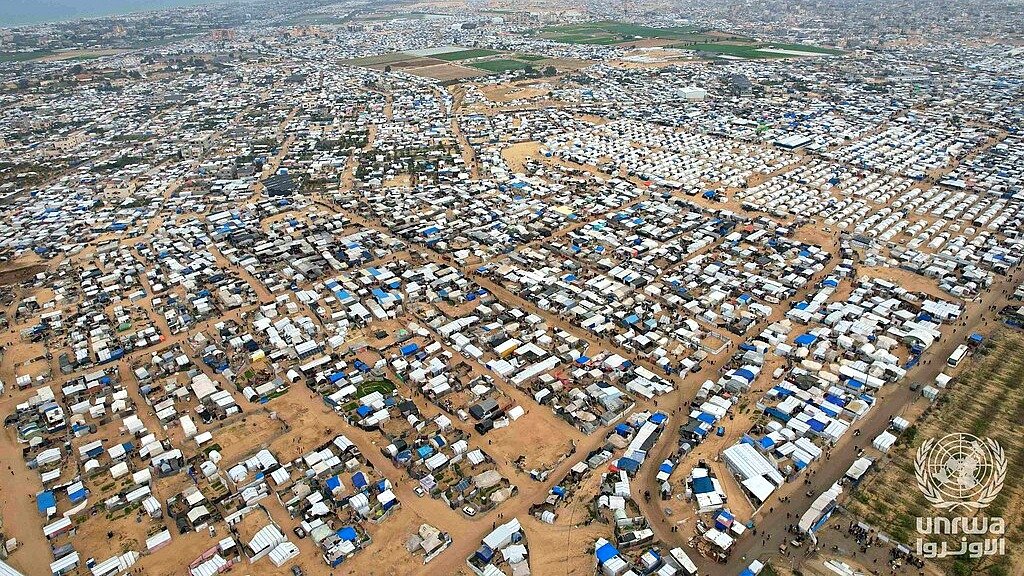
Israel has killed the commander of Hamas’s Rafah Brigade in an Israeli air strike on a tent camp for displaced people in southern Gaza, in a killing confirmed by both sides on Sunday and described by Israel as the removal of one of the men who planned the 7 October 2023 attack.
Samir Mahmoud Hassan Abu Younis, 53, also known as Abu Mahmoud, was killed in the strike in the al-Mawasi area of Khan Younis, according to Hamas’s armed wing, the Al-Qassam Brigades, which announced his death on Sunday. Israel’s military and the Shin Bet security agency had said in a joint statement in the early hours of Sunday that they had struck a senior member of Hamas’s military wing, and later confirmed that the man killed was Abu Younis, according to Reuters.
Abu Younis had commanded the Rafah Brigade for only about two months. He took over the post on 15 September, after his predecessor, Nael Abu Obeid, was killed in an Israeli strike the same day. He is the third commander of the Rafah Brigade to be killed in roughly eighteen months, according to the Times of Israel.
The strike was carried out just after midnight on Saturday, according to the Associated Press. It hit a tent in the Al-Waha camp in al-Mawasi, a coastal strip crowded with displaced Palestinians living in tents, and set the tent on fire, according to witnesses cited by the BBC. The Israeli military described the operation as a drone strike in Khan Younis, according to Al Jazeera.
Medical personnel told Al Jazeera that two other people were wounded in the strike and that the casualties were taken to Nasser Medical Complex in Khan Younis. A medical source at the same hospital told the BBC that three injured people and one body had arrived there. The small difference in the reported number of wounded has not been reconciled by the outlets reporting it, and the civilian toll of the strike has not been independently established.
Video footage verified by Al Jazeera and posted by Palestinian journalists from the vicinity of the hospital showed ambulances inside the grounds and stretchers that appeared to be stained with blood, according to Al Jazeera.
The announcement, in two voices
The killing was announced in two very different voices, and the contrast between them is itself part of the story. The Israel Defense Forces and the Shin Bet, in a statement published on Telegram, said they had “eliminated” Abu Younis and described him as “a central figure among Hamas’s senior figures”, according to the BBC. The statement said he had acted “with the aim of trying to restore the strength of the brigade and the Hamas terrorist organisation” and that he had directed fighters to advance and carry out attacks against Israeli civilians and Israeli troops.
The Israeli military said that before the strike “steps were taken to mitigate harm to civilians”, according to the BBC. It has not publicly provided independent evidence for all of its claims about Abu Younis’s operational role, the Times of Israel reported.
Hamas’s Al-Qassam Brigades, in its own Telegram statement, confirmed Abu Younis’s death and called the killing a “cowardly assassination”, according to the BBC. The brigades said he had “participated in numerous high-profile operations and resisted enemy incursions” and described him as “one of the most important commanders involved in planning and overseeing the 7 October attack”.
A local Hamas official also confirmed his death, according to the BBC. Hamas said his funeral would be held on Sunday afternoon in Khan Younis.
That both sides confirmed the death within hours matters, because it removes the usual fog around a targeted killing. In many such strikes, the target’s identity is claimed by one side and denied or left unconfirmed by the other for days. Here, the Israeli military named the operation and Hamas named the dead man, and the two accounts agree on the essential facts: the place, the day, the man, and the outcome. What they disagree about is what the killing means, and that disagreement is the argument that will now play out in Gaza and beyond.
Who was Samir Abu Younis
Abu Younis was, by Hamas’s own account, a veteran of its armed wing. He joined the Al-Qassam Brigades in 1991, served as a member of its General Military Council, and held several senior operational roles in Rafah before becoming the brigade’s commander, according to Hamas’s statement as reported by Reuters and the Times of Israel.
He was 53 years old. The Israeli military said he had served about two months as brigade commander, having succeeded Abu Obeid in September, according to the Times of Israel.
The claim that matters most about him, and the one both sides have put at the centre of their announcements, is his connection to the Hamas-led attack on southern Israel on 7 October 2023, in which about 1,200 people were killed and 251 others were taken hostage, according to the BBC. Hamas itself credited him with a leading role in planning and overseeing that attack. Israel cited the same role as the reason he was targeted.
It is worth being precise about what is established here and what is not. The fact of his seniority is confirmed by Hamas’s own account of his career. The claim that he helped plan the 7 October attack comes from Hamas’s tribute and from the Israeli military’s statement, and neither side has published the underlying evidence. That does not make the claim false, but it means it rests on the word of the two parties to the conflict, not on independent documentation. The article reports it as their claim, which is what it is.
A brigade that keeps losing its commanders
The Rafah Brigade is the Hamas military formation named after Gaza’s southernmost city, on the border with Egypt. It has now lost three commanders in about eighteen months, according to the Times of Israel.
The first of the three, Muhammad Shabana, was killed in May 2025 in a strike in Khan Younis that also killed Muhammad Sinwar, the head of Hamas’s military wing. He was succeeded by Nael Abu Obeid, who was killed on 15 September 2026. Abu Younis, who replaced him, held the post for barely two months before he too was killed.
The pattern is striking, and it raises a question that neither side has answered. Israel’s campaign of targeted killings has repeatedly removed the brigade’s senior leadership, yet the brigade has continued to function, to appoint successors, and to be treated by Israel as a target worth striking again. Each killing is presented by Israel as a blow to Hamas’s ability to rebuild. Each succession is presented by Hamas as proof that the organisation endures. Both claims can be true at the same time, and the eighteen-month record suggests that they are.
There is also a geographical detail that tells its own story. The Rafah Brigade is still led from the nearby Khan Younis area, the Times of Israel reported, while Israel controls Rafah itself. The brigade named after a city its commanders no longer operate from is a measure of how much the map of Gaza has changed since the war began, and of how the fighting has moved into the places where displaced people are sheltering.
A strike on a tent camp
The place where Abu Younis was killed is as important as the man who was killed. Al-Mawasi is a narrow coastal strip in southern Gaza that Israel once designated a humanitarian zone, and it is now crowded with displaced Palestinians living in tents. Al Jazeera noted that Israel has repeatedly attacked the area despite having previously designated it a humanitarian zone.
Witnesses told the BBC that four missiles struck a tent at the Al-Waha camp, which shelters hundreds of displaced people, and started a fire. The strike hit a tent sheltering displaced people and wounded two others, according to medical personnel cited by Al Jazeera. The casualties were taken to Nasser Medical Complex in Khan Younis.
That a senior commander was sheltering, or hiding, among displaced families in a tent camp is the claim Israel’s account implies and Hamas’s account does not dispute. That a strike on a single tent in a crowded camp wounded other people, and that the number of wounded is reported differently by different outlets, is the part of the story that cannot be settled from the available reporting. The Israeli military said precautions were taken to limit harm to civilians. The fact that the strike hit a tent in a camp full of displaced people, and that people other than the target were hurt, is not in dispute.
Al-Mawasi has become one of the most densely crowded places in Gaza, and one of the most exposed. Its tents have been battered in recent days by heavy rain and flooding, and the families living in them are facing the onset of winter with almost no shelter that can withstand it. The United Nations humanitarian agency OCHA reported that flooding between 6 and 9 November affected more than 46,000 families, about 226,000 people, and damaged more than 40,000 shelters, in a report covered by NEXA on 15 November. The strike on a tent in that camp, on a Saturday night in November, lands in the middle of that wider emergency.
The toll around the killing
Gaza’s Ministry of Health said in its latest update on Saturday that Israeli attacks had killed 16 people and injured 68 others over the preceding 48 hours, according to Al Jazeera. Since the ceasefire in Gaza took effect on 11 October 2025, Israel has killed at least 1,643 Palestinians and injured 5,964, the ministry said. At least 850 bodies have been recovered from under the rubble. Since Israel began its war on Gaza in October 2023, at least 74,695 people have been killed and 176,093 injured, according to the Health Ministry figures cited by Al Jazeera.
A later update from the ministry, reported on Sunday, said four Palestinians had been killed in Gaza in the past 24 hours, among them Abu Younis, and put the number killed since the ceasefire began at 1,647, with 5,969 wounded.
The ministry also reported that the number of deaths related to cold has risen to 11 after a nine-month-old baby died from hypothermia, the first death of its kind this winter, according to Al Jazeera. Gaza’s residents, most of whom have been displaced, are living in tents and damaged buildings as water damage from recent heavy rains has set in, Al Jazeera reported.
These figures come from Gaza’s Health Ministry, whose casualty counts have been treated by the United Nations and by international news organisations as the most complete available record, while noting that they do not distinguish between combatants and civilians. They are reported here as the ministry’s figures, which is what they are.
The strike three days earlier
The killing of Abu Younis was not an isolated strike. Three days earlier, on Thursday 11 November, an Israeli strike on the Nasser Hospital complex in Khan Younis killed six people, including a child and a surgeon, according to Médecins Sans Frontières. That strike targeted the commander of Hamas’s Khan Younis Brigade, according to reporting on the operation.
The Associated Press reported that the Israeli military said it had targeted other Hamas fighters in a further strike on Sunday, but provided no details. The pattern is a sustained one: Israeli strikes on Hamas commanders in the Khan Younis area, several days apart, each presented as a targeted operation, each killing other people alongside the intended target.
A ceasefire was reached in October 2025, but Israel has continued to carry out strikes that it says target remaining Hamas fighters, according to the BBC. Israel argues that the ceasefire agreement allows it to carry out the strikes. Hamas calls them violations of the agreement. The two sides have accused each other of breaking the ceasefire since it took effect, and the killing of a brigade commander in a tent camp is the latest, and the most prominent, example of the gap between the word “ceasefire” and the reality on the ground.
The BBC, in its reporting of the killing, quietly corrected its own earlier language. An update to its article noted that an earlier version had referred to Israel carrying out “occasional” strikes in Gaza following the ceasefire in October 2025, and that the word had been removed “to better reflect the frequency of Israeli strikes on Gaza since the ceasefire”. It is a small editorial change, and it says a great deal about how the ceasefire is now understood.
Analysis: Why It Matters
When both sides agree, the argument is about what the agreement means
The most important fact about this killing is not the death itself but the speed with which both sides confirmed it. Within hours of the strike, the Israeli military had announced that it had killed a senior Hamas commander, and Hamas had named the dead man, confirmed his rank, and announced his funeral. There was no period of denial, no competing claim about who had died, no days of uncertainty.
That agreement is rare in this war, and it is worth asking why it happened here. For Israel, naming the target quickly serves a purpose: it presents the strike as a precise, intelligence-led operation against a man it holds responsible for the 7 October attack, and it invites the public to judge the strike by the identity of the man killed rather than by the place where he was killed. For Hamas, confirming the death quickly also serves a purpose: it allows the movement to mourn its commander publicly, to claim his record as its own, and to frame the killing as an assassination rather than a battlefield death. Both sides want the same fact known, for opposite reasons.
The agreement on the facts does not extend to the meaning of the facts, and that is where the argument now lies. Israel says it removed a commander who was rebuilding his brigade and planning attacks. Hamas says Israel murdered a commander in a tent camp full of displaced families. Both statements can be quoted accurately, and both are advocacy. The reader’s job is to hold the confirmed facts — the man, the place, the day, the wounded — apart from the competing interpretations, and to notice how quickly each side moved to supply its own.
A tent camp is now the battlefield
The second thing that matters is where this happened. Al-Mawasi was designated by Israel as a humanitarian zone, a place where displaced people were told to go for safety. It is now one of the most crowded places in Gaza, a dense sprawl of tents on the coast, and it has been attacked repeatedly. The strike that killed Abu Younis hit a single tent in the Al-Waha camp, among hundreds of displaced families, and set it on fire.
This is not an accident of geography. It is the geography of the war as it is now fought. Hamas’s commanders operate from within the civilian population because there is almost nowhere else in Gaza to operate from, and because the population itself has been displaced into camps like al-Mawasi. Israel strikes them there because that is where they are. The result is a pattern in which a targeted killing and a strike on a civilian shelter are the same event, and the distinction between them depends entirely on whose account you accept.
The timing sharpens the point. The tents of al-Mawasi have just been battered by flooding that affected more than 226,000 displaced people, according to OCHA, and winter is arriving with almost no adequate shelter. A nine-month-old baby has already died of hypothermia, the first cold death of the winter. The families in those tents are not only in the path of the fighting; they are in the path of the weather, the flooding, and the failure of the aid system to get shelter to them. The strike on a tent in al-Mawasi sits at the intersection of all of those emergencies at once, and any account of it that mentions only the commander misses most of what happened.
The third commander in eighteen months
The third thing that matters is the pattern. Three commanders of the same brigade, killed in eighteen months. Muhammad Shabana in May 2025. Nael Abu Obeid in September 2026. Samir Abu Younis in November 2026, two months after taking the post. Each killing was announced as a blow to Hamas. Each succession was announced as proof of continuity. Both claims have now been made three times, and neither has yet been proved wrong.
This is the honest limit of what a campaign of targeted killings can claim. It can remove individuals, and it has done so repeatedly and effectively. What it has not done, on the evidence of the last eighteen months, is remove the brigade. The Rafah Brigade still exists, still appoints commanders, and is still treated by Israel as a target worth striking. The question is not whether Israel can kill the next commander — the record suggests it can — but whether killing commanders degrades the organisation faster than the organisation can replace them.
There is a further detail that cuts against the idea of a decisive blow. The brigade is still led from the Khan Younis area while Israel controls Rafah, the city it is named after. Its commanders are already operating away from their own territory, in the same crowded camps as the displaced population. A military formation that has adapted to that extent is not one that depends on a single headquarters or a single man, and the rapid succession of its commanders may be evidence of resilience as much as of vulnerability. The next appointment will be the test: if a fourth commander is named quickly, the pattern will have repeated itself for a fourth time.
The ceasefire’s arithmetic
The fourth thing that matters is the number. At least 1,643 Palestinians have been killed since the ceasefire took effect on 11 October 2025, according to Gaza’s Health Ministry, and a later update put the figure at 1,647. Sixteen people were killed and 68 wounded in the 48 hours before Saturday’s update. Four more were killed in the past 24 hours, including Abu Younis.
Those numbers are the measure of what the word “ceasefire” now means in Gaza. It does not mean the fighting has stopped. It means the large-scale war has been replaced by a lower-intensity campaign of strikes, presented by Israel as permitted by the agreement and described by Hamas as violations of it, in which people continue to be killed every day. The BBC’s decision to remove the word “occasional” from its description of these strikes is a small, telling correction: even the language used to describe the ceasefire had understated how often it is broken.
This matters because the ceasefire is also the framework for everything else that is supposed to happen next: the second phase of the agreement, the unrestricted flow of aid, the reconstruction of Gaza, the return of displaced people to their homes. None of that has materialised. The United Nations humanitarian agency reported in November that the second phase, which was supposed to bring unrestricted aid from January 2026, had never materialised, and that 150,000 tents were waiting outside Gaza while families inside it faced winter in damaged shelters. A ceasefire that does not stop the killing and does not deliver the aid is a ceasefire in name only, and the killing of a brigade commander in a tent camp is the latest evidence of that gap.
What the funeral will tell us
The fifth thing that matters is what happens next, and the first sign will come quickly. Hamas said Abu Younis’s funeral would be held on Sunday afternoon in Khan Younis. Funerals of senior commanders in Gaza are public events, and they are also political ones: they are where the movement displays its continuity, names its martyrs, and signals its intentions. The size of the funeral, the language used at it, and whether Hamas promises retaliation will all be read closely in Israel and by the mediators.
The second sign will be the succession. Who is named as the fourth commander of the Rafah Brigade, and how quickly, will show whether Hamas still has a bench of senior officers to draw on, or whether the repeated killings have begun to thin it. The third sign will be Israel’s tempo: the strike on the Nasser Hospital complex three days earlier, the killing of Abu Younis on Saturday, and a further strike on Sunday reported by the Associated Press suggest a sustained campaign rather than a single operation, and the question is whether that tempo continues or pauses.
And the fourth sign will be the one that has nothing to do with commanders at all: whether the winter kills more people in the tents of al-Mawasi than the strikes do. Eleven people have already died of cold, including a baby. More than 226,000 displaced people have been affected by flooding. The tents are not a safe place to be, and the fighting is not the only danger in them. That is the context in which this killing happened, and it is the context in which its consequences will be felt.
What to Watch Next
- Hamas’s funeral for Abu Younis in Khan Younis on Sunday afternoon, and the language used by the movement about retaliation.
- Who is named as the fourth commander of the Rafah Brigade, and how quickly the appointment is announced.
- Whether Hamas responds with rocket fire or attacks on Israeli forces in Gaza, and how Israel answers.
- Whether Israel’s strike tempo in the Khan Younis area continues after the Nasser Hospital strike, the al-Mawasi strike, and the further strike reported on Sunday.
- Any movement on the ceasefire’s second phase, including the flow of aid and shelter into Gaza and the position of the mediators in Egypt, Qatar, and the United States.
- The winter toll in the tent camps, including further deaths from cold and flooding, and whether shelter supplies held outside Gaza are allowed in.
- International reaction to the killing, including from the United Nations and from governments that have pressed both sides to preserve the ceasefire.
Sources
- Reuters — Israeli military says it struck senior commander in Hamas’ military wing
- Al Jazeera — Israeli air strike kills senior Hamas commander in Gaza
- BBC News — Israel kills Hamas commander in strike on Gaza camp, officials say
- Associated Press — Israel kills a top Hamas commander as Jordan sentences 3 in church attack, and other Mideast news
- Anadolu Agency — Hamas military wing says Rafah Brigade commander killed in Israeli strike on southern Gaza
- The Times of Israel, via Wrivid — Israel and Hamas confirm death of Rafah Brigade commander

About the Author — Abdul Mannan
Related Articles

Bahrain Says It Intercepted Iranian Drones Targeting a US Base as Tehran Claims a Radar Hit
Bahrain said its air defences shot down several Iranian drones over the capital early on Sunday, the second…

Zelenskyy Says Starshield Limits Are Still Crippling Ukraine’s Drone Defences as Kushner Pushes Direct Europe–Russia Talks
Ukraine says speed limits on SpaceX's Starshield system are still throttling its drone defences over occupied territory, as…
South Sudan Delays Its First-Ever Elections Again, Pushing the Vote to February 2027 as War Fears Grow
South Sudan has pushed its first national elections since independence to 11 February 2027, the latest delay to…