
Bahrain Says It Intercepted Iranian Drones Targeting a US Base as Tehran Claims a Radar Hit

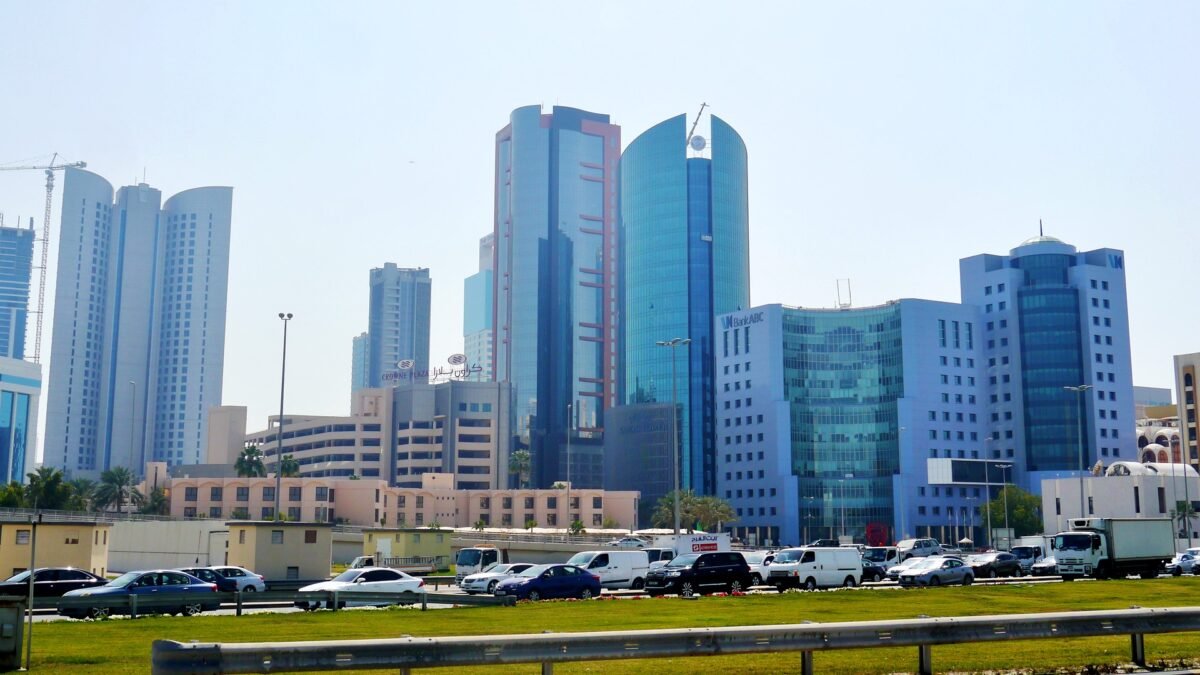
Bahrain said its air defences intercepted and destroyed several Iranian aerial attacks over the capital early on Sunday, the second Iranian attack on the Gulf kingdom in three days, as Tehran claimed its drones had struck an American radar system at a United States military base in the country. The two accounts cannot both be true, and neither Washington nor Manama has confirmed the Iranian claim, according to Reuters.
Explosions were heard over Manama at around 4am local time, an Agence France-Presse journalist reported, with residents describing a second series of blasts at about 6.30am, according to France 24. Sirens sounded across the capital, and Bahrain’s interior ministry issued two public warnings, its first such alerts since September, urging citizens and residents to remain calm and to proceed to the nearest safe location.
The General Command of the Bahrain Defence Force said the kingdom’s air defence systems had intercepted several Iranian aerial attacks before they reached their intended targets, accusing Tehran of continuing its “systematic hostile approach” towards the kingdom, Reuters reported. Bahrain’s foreign ministry said air defence systems had shot down Iranian drones, condemned the attacks as a resumption of Iran’s aggression against Bahrain and other countries in the region, and held Iran fully responsible.
No damage and no casualties have been reported by any official source. But the attack, coming two days after a similar Iranian claim and on the same day that Yemen’s government forces gave up ground overlooking one of the world’s busiest shipping straits, has broken a lull that had held since September and put the region’s fragile pause in its nine-month war under its sharpest strain yet.
What happened over Manama
The attack began in the dark. According to France 24, an AFP journalist heard explosions at around 4am local time, or 1am GMT, and residents reported a second series of blasts at about 6.30am. Bahrain television reported that the air defences had shot down an Iranian drone. The interior ministry’s two warnings were the first of their kind since September, a measure of how unusual the morning was for a capital that has lived for months under the shadow of a war it insists it is not part of.
Bahrain’s military statement was short and categorical. Its air defences, it said, had intercepted and destroyed several Iranian aerial attacks before they reached their targets. It did not say how many drones or missiles were involved, and it did not name the weapons. The foreign ministry’s statement went further in tone, condemning the attacks and praising the readiness of the defence force, according to France 24.
What Bahrain did not say is as important as what it did. Its statements contain no confirmation that anything was hit, no report of damage, and no casualty figures. That silence is the first of two gaps in the story, and it is the gap that makes the second account, Tehran’s, so difficult to assess.
Two accounts that do not agree
Iran’s Islamic Revolutionary Guard Corps said its Aerospace Force had targeted the United States air-defence radar system at the al-Riffa helicopter base in Bahrain with six drones, according to a statement carried by Iranian state media and reported by Reuters and France 24. The Guards described the attack as retaliation for “hostile US actions”, and, according to Bloomberg, called it a response to the “blatant aggression of the US military”.
The claim, as reported, is specific: six drones, one target, a radar system at a named base. Bloomberg reported that the Guards also claimed a “successful impact”. But no United States or Bahraini authority has confirmed that the radar was hit, and Bahrain’s account, that the attacks were stopped before they reached their targets, directly contradicts it. As of the latest reports, Washington had not responded to Sunday’s claim at all.
This is not a new pattern. It is the defining feature of this war’s information landscape. Each side announces a version of events, and the truth sits, unverified, between them. The radar in question is a legitimate military target in Tehran’s telling, and a symbol of American power in the Gulf; whether it was actually struck matters enormously, because it would mean Iranian drones had penetrated the defences of a host nation and hit American equipment on the ground. Until American or Bahraini authorities provide independently verifiable evidence of damage, or satellite imagery or other material emerges, the alleged radar strike remains an unconfirmed Iranian military claim, and it should be read as one.
There is also a question of numbers. The Guards said six drones. Bahrain said “several” attacks were intercepted. Neither side has said how many drones Bahrain’s defences actually engaged, or whether any got through. The reports reviewed do not establish whether the blasts heard over Manama were interceptions or impacts, and that distinction, which residents cannot make from the ground, is the whole story.
The second attack in three days
Sunday’s attack was the second aimed at Bahrain in three days. On Friday, the Revolutionary Guards said their forces had targeted a United States early-warning radar facility in Bahrain, the first strike against a Gulf country since early September, according to France 24. The United States military’s Central Command denied that claim, saying American forces had shot down two Iranian one-way attack drones heading towards Bahrain, and reporting no casualties or damage.
The Friday episode set the template for Sunday. Tehran claims a hit on an American radar. Washington says its forces shot the drones down. Bahrain says its defences held. No independent evidence settles the question, and the cycle repeats. What has changed is the tempo: two attacks in three days, after more than two months in which no Gulf state was struck, according to CNN’s reporting on the Friday incident.
Iran has returned to Bahrain before. Tehran has repeatedly claimed to have hit American radar in the kingdom, including in the first days of the war and again in July. That repetition is itself the point. Iran keeps returning to Bahrain because Bahrain is where American power in the Gulf is most visible, and most vulnerable, at the same time.
Why Bahrain is the target
Bahrain is the smallest of the Gulf Arab states, an island kingdom of fewer than two million people, and it hosts the headquarters of the United States Navy’s Fifth Fleet, the command responsible for American naval operations across the Middle East. Its military installations are central to the American presence in the region, and its territory sits a short flight across the Gulf from Iran.
That combination, a major American base on a small and exposed island, is what makes Bahrain the natural target for Tehran. Striking at the Fifth Fleet’s home is a way of striking at the United States without striking American soil, and of reminding every Gulf state that hosts American forces that the protection those forces offer comes with a price. It is also, from Tehran’s perspective, a way of answering the American naval blockade of Iranian ports, which President Donald Trump has said he will maintain even as he weighs whether to hold off from further attacks on Iran.
Bahrain’s position has always been that it is not a party to the war. Its government has insisted that hosting American forces does not make it a belligerent, and it asked for Friday’s meeting of the United Nations Security Council precisely to press that case. Iran’s argument is the opposite: that a state which allows its territory, airspace and military facilities to be used for American and Israeli attacks is a participant, and should be held accountable. Every drone launched towards the island strengthens that argument in Tehran’s telling, even if the drones are shot down.
A war in its ninth month
The war began on 28 February 2026, when the United States and Israel launched strikes on Iran. It has now run for more than eight months, with no peace agreement, no ceasefire document and no agreed end state. American and Israeli attacks killed senior Iranian officials, including the late Supreme Leader Ayatollah Ali Khamenei, according to Reuters, and the campaign, which the Pentagon calls Operation Epic Fury, has killed thousands of people and displaced millions.
The conflict did not begin in February. It followed a twelve-day war in June 2025, which ended in a ceasefire. The February war did not end. Instead it settled into a pattern of strikes, retaliation, blockades and threats, punctuated by diplomatic contacts that have so far produced no agreement. In the war’s opening phase, according to Bloomberg, Iran fired thousands of drones and missiles at American allies in the region, including the United Arab Emirates, Bahrain, Saudi Arabia, Qatar, Kuwait, Jordan, Oman and Iraq.
Reuters, in its report on Sunday’s attack, described diplomatic efforts to end the almost nine-month conflict as having yet to produce a breakthrough, “with sporadic attacks continuing despite a broader lull in fighting between the US and Iran”. That lull, such as it was, is now visibly fraying. Two attacks on Bahrain in three days, Houthi missiles fired towards Riyadh on the same day, and a government retreat in Yemen that hands a shipping chokepoint to an Iran-aligned movement, all on a single Sunday, do not look like a lull at all.
The diplomacy that stalled
The attacks come at a moment when the diplomatic track has effectively collapsed. On Thursday, President Trump wrote on Truth Social that the United States no longer needed a deal with Iran, and said he had asked Vice-President JD Vance to stop leading the negotiations and focus instead on crime and corruption in American cities run by Democrats. “We don’t need a deal with Iran. Those days have long since passed! We’ve got their money, Hundreds of Billions of Dollars, and we’ve got their Strait!” Mr Trump wrote, according to the Associated Press, CNN and USA Today, which all reported the post in full.
Mr Vance had been the administration’s chief negotiator, the official who had carried the talks and, in the view of some in Tehran, represented the more pragmatic wing of the administration. The Wall Street Journal had reported the day before that he was weighing a possible re-engagement with senior Iranian negotiators, including face-to-face talks with a top Iranian security official. According to the Associated Press, which cited a person familiar with the matter, Mr Trump was aware of Mr Vance’s deliberations and believed the Iranians were not acting in good faith.
Hours after the post, Mr Trump told the conservative radio host Hugh Hewitt that the American military was “locked and loaded” and was watching Pickaxe Mountain, a site linked to Iran’s nuclear programme, for signs of activity. “If something does not work out, I would not hesitate” to act, he said, according to the Associated Press. In the same interview, CNN reported, he conceded that it would “absolutely” be a defeat to walk away from the confrontation with Iran’s current government still in power.
The contradiction is the story. Within a single day, the president said the war was effectively over, said no deal was needed, said his forces were ready to strike, and said leaving Iran’s government in place would be a defeat. Allies, mediators and Tehran are now trying to work out which of those statements is the policy, and whether the man who had been doing the negotiating is still in the room at all.
Secretary of State Marco Rubio, speaking on Friday evening, underscored the administration’s argument that economic pressure had already done the work. “The economic pain that we are inflicting on that regime is so great that there’s no need for military action because we’ve weakened them so much,” he said, according to the Associated Press. Earlier in the week, Mr Rubio had stressed that the United States was not opposed to mediators continuing their efforts. “If there’s a deal to be done, the president will be the first one to be in favor of it,” he said. “But it’s not going to be a stupid deal. It’s not going to be a bad deal.”
Reuters reported on Saturday that Mr Trump had said in recent days that he might hold off from attacking Iran if the United States faced no new provocations from Tehran or the Iran-backed Houthis in Yemen, but that he would maintain the American naval blockade. Sunday’s drones, if they are what Tehran says they are, are precisely the kind of provocation that tests that line.
Tehran, for its part, has not closed the door. Iran’s Parliament Speaker, Mohammad Bagher Ghalibaf, said on Sunday that the path to ending the conflict was open if the United States accepted Iran’s “logical conditions”, according to the semi-official Fars news agency, as reported by Bloomberg. What those conditions are, and whether Washington would ever accept them, remains unanswered, and the drones over Manama arrived on the same day as the offer.
A warning delivered at the United Nations
Two days before Sunday’s attack, the same confrontation played out in public at the United Nations Security Council. At a meeting on Friday called at Bahrain’s request, Iran warned that any renewed American or Israeli attack on its territory would be met with an “immediate and decisive response”, while the Gulf Arab states used the same session to demand that Tehran pay full compensation for months of missile and drone strikes on their soil.
“Any renewed war of aggression by the United States and the Israeli regime will be met with an immediate and decisive response, without hesitation,” Gholamhossein Darzi, Iran’s deputy permanent representative to the United Nations, told the Council, according to Middle East Eye. He added that any Iranian response would be “directed against the source of aggression, wherever it may be”.
The warning came only hours after the United States military said it had shot down two Iranian drones launched towards Bahrain and denied the Iranian claim that a United States early-warning radar in the kingdom had been destroyed. The clash of accounts, the compensation demands flying in both directions, and a blunt exchange between Iran and Bahrain inside the Council chamber all pointed to the same conclusion: the war that began on 28 February is paused, not finished, and the Gulf states caught in the middle are now pressing their own case at the world’s highest diplomatic table.
Jasem Albudaiwi, the secretary-general of the Gulf Cooperation Council, told the Council that Iran had launched thousands of missiles and drones at Gulf states since 28 February, striking airports, ports, oil and gas facilities, power stations, desalination plants and homes, according to The Insight International. “The GCC holds Iran fully responsible for these attacks and their consequences,” he said, demanding full compensation and an immediate and unconditional end to Iranian attacks on GCC members and Jordan, whether carried out directly or through allied groups.
A senior United Nations official, Assistant Secretary-General Khaled Khiari, told the meeting that energy exports from the Gulf had largely recovered, partly through alternative routes, but that this “should not be mistaken for a return to normality”. Shipping volumes remain below prewar levels, he said, and October saw the highest monthly number of incidents against commercial vessels since February. As of 11 November, the International Maritime Organization had recorded 134 confirmed incidents in the Strait of Hormuz and the wider region, and 25 seafarers had been killed, according to Mr Khiari.
Mr Albudaiwi also called for full implementation of Resolution 2817, which the Council adopted in March to condemn Iran’s attacks and its threats to shipping. China and Russia abstained on that vote. He said shipping in the Strait of Hormuz must return to the conditions that existed before 28 February, and rejected any attempt to block passage or impose transit fees. Any future agreement with Iran, he said, must deal with Gulf concerns over its nuclear programme, ballistic missiles, drones and support for armed groups.
The wider region: two chokepoints under pressure
Sunday was not only about Bahrain. On another front, the Houthis and the Saudi-led coalition fighting them continued to exchange attacks, with the coalition saying on Sunday that it had intercepted two Houthi ballistic missiles launched towards the Saudi capital, Riyadh, and three drones in the kingdom’s oil-rich Eastern Province, according to Reuters.
And in Yemen itself, forces fighting for the internationally recognised, Saudi-backed government said on Sunday that they were withdrawing from an area overlooking the strategic Bab el-Mandeb Strait, leaving the Iran-aligned Houthis in control, according to Reuters. The government’s retreat hands the Houthis greater leverage over the maritime chokepoint, creating a potent pressure point on global shipping while Iran continues to disrupt traffic through the Strait of Hormuz on the other side of the Arabian Peninsula.
The Southern Armed Forces said in a statement that they were carrying out a redeployment of their troops from Dhubab Airport and the Bab el-Mandeb area, west of Taiz Governorate, towards Aden, where the government is based. The move reverses gains from a government counteroffensive launched in October, which had retaken Mokha and the Dhubab area after the Houthis pushed south in September in a lightning advance that squeezed oil exports and brought them within reach of the strait.
The Bab el-Mandeb Strait is one of the world’s most important and busiest routes for global seaborne commodity and goods shipments, particularly from Asia to Europe via Egypt’s Suez Canal. The Houthis, who control much of the north, including the capital Sanaa and Yemen’s most populous areas, have been increasing pressure on the southern areas still under government control. The government forces said the redeployment did not signal an end to military operations, and said protecting Aden and the southern governorates remained the priority, but the withdrawal leaves the Houthis in command of a narrow passage through which a large share of Asia-to-Europe seaborne trade passes.
Taken together, the two developments describe a single strategic picture. On the same day, Iran’s allies and proxies pressed on both of the world’s great oil chokepoints: the Strait of Hormuz, where the International Maritime Organization has recorded 134 incidents and 25 seafarers killed, and Bab el-Mandeb, where a government retreat has handed the Houthis the coast. That is not a coincidence of timing. It is the shape of the war as it is now fought: not a single front, but pressure applied at every point where the world’s energy and trade must pass through a narrow gap.
Analysis: Why It Matters
The claim is the weapon
The most important thing about Sunday’s attack may not be what the drones did, but what Tehran said they did. The Revolutionary Guards’ claim, six drones, one radar, a successful impact, is precise, vivid and entirely unverified. Bahrain’s counter-claim, that the attacks were intercepted before they reached their targets, is equally categorical and equally unproven in public. Between the two accounts sits a radar system whose fate nobody outside the two governments can confirm, and that uncertainty is itself a weapon.
Iran does not need to destroy a radar to gain from claiming it did. The claim alone forces Washington to respond, forces Bahrain to deny, and forces every Gulf capital to ask whether American air defences can protect them. It also forces a choice on the United States: confirm the claim and admit a vulnerability, or deny it and be accused of hiding a failure. This is the pattern that has defined the war’s information landscape from the start, and it works precisely because the truth is so hard to establish in the hours after an attack, when satellite imagery has not yet been analysed and official statements are the only evidence available.
The honest position, and the only one the evidence supports, is to treat the radar claim as a claim. That is not neutrality for its own sake. It is the recognition that in this war, the first casualty of every attack is the ability to know what actually happened, and that reporting a claim as a fact would do Tehran’s work for it.
Bahrain is the front line now
Bahrain did not choose this role, and it has spent months trying to avoid it. It is the smallest Gulf state, the most exposed, and the one that has most insistently argued that hosting American forces does not make it a party to the war. It asked for Friday’s Security Council meeting precisely because it understands its exposure. It wants the world to affirm that it is a victim, not a participant. The Council did not do so, and the ambiguity leaves Bahrain exposed.
That exposure is now a nightly reality. Two attacks in three days, sirens over the capital, residents told to seek shelter: this is what it means, in practice, to host the Fifth Fleet in a war with Iran. The Gulf states’ long-standing strategy, to host American forces for protection while insisting they are not belligerents, is being tested to destruction, and Bahrain is where the test is being run. If Tehran can strike at Bahrain repeatedly and with impunity, even if the drones are shot down, the question every other Gulf capital will ask is whether hosting American forces makes them safer or simply makes them targets.
There is also a domestic dimension that should not be overlooked. Bahrain is a monarchy with a Shia majority population, and Iran has long sought to present itself as the protector of Shia communities across the region. An Iranian attack on Bahrain is therefore not only a military act but a political one, aimed at a population that Tehran hopes will see the kingdom’s rulers as American clients rather than as defenders of the island. The sirens over Manama are heard by everyone, and they carry a message that has nothing to do with radar.
The lull is over
For more than two months, no Gulf state had been struck. Reuters described the period as a broader lull in fighting between the United States and Iran, even as diplomatic efforts stalled and the blockade continued. That lull is now over, and it ended not with a single dramatic escalation but with a steady quickening: a claim on Friday, an attack on Sunday, missiles towards Riyadh on the same day, and a retreat in Yemen that hands a chokepoint to the Houthis.
The significance of the lull’s end is that it removes the one argument that had kept the war from widening. While the Gulf was quiet, it was possible to argue that the conflict was contained, that the blockade and the sanctions were doing the work, and that diplomacy, however stalled, still had time. The moment Iranian drones are flying over Manama twice in three days, that argument collapses. The war is no longer something that happens elsewhere. It is happening over the capital of the state that hosts America’s Fifth Fleet, and it is happening while the president who ordered the war says he no longer needs a deal to end it.
Trump’s mixed messages meet Tehran’s test
Sunday’s attack is, among other things, a test of the line Mr Trump drew on Saturday: that he might hold off from attacking Iran if the United States faced no new provocations from Tehran or the Houthis. The drones over Manama are a provocation by any definition, and they arrived three days after the president publicly pulled his chief negotiator off the talks and declared that no deal was needed.
Tehran will have understood the timing. The attack tests whether the president’s restraint is a policy or a posture, and whether the “locked and loaded” language of the Hewitt interview is a warning or a bluff. If Washington does not respond, Tehran will conclude that the line can be crossed at low cost, and the attacks will continue. If Washington does respond, the lull is over in a different and more dangerous way, and the war that has been fought in the shadows for nine months returns to the open.
The deeper problem is that the president’s own statements make it hard for either side to know what the response will be. He has said the war is effectively over, that no deal is needed, that his forces are ready to strike, and that leaving Iran’s government in place would be a defeat, all within a single day. That is not a strategy. It is a set of contradictory positions, and Tehran’s drones are a way of forcing a choice between them. The attack on Bahrain is, in that sense, a question posed in the only language this war has consistently used: what, exactly, will you do about it?
Two chokepoints, one war
The most consequential fact of the weekend may be the one that has nothing to do with Bahrain. On the same day that Iranian drones flew over Manama, Yemen’s government forces withdrew from the Bab el-Mandeb Strait, leaving the Houthis in control of the southern mouth of the Red Sea. At the same time, the International Maritime Organization’s count of incidents in the Strait of Hormuz and the wider region stood at 134, with 25 seafarers killed, and October had seen the highest monthly number of incidents against commercial vessels since February.
Put those facts together and the shape of the war becomes clear. It is not fought on a single front. It is fought at the two narrow passages through which the world’s energy and trade must travel: Hormuz, where Iran can threaten shipping directly, and Bab el-Mandeb, where its Houthi allies now command the coast. Pressure at both points at once is not a coincidence. It is a strategy, and it is aimed at the same target: the global economy’s dependence on sea lanes that pass within range of Iranian and Iranian-backed weapons.
That is why the stakes of Sunday’s attack extend far beyond Bahrain. Every incident in the Gulf raises insurance costs, reroutes shipping, and reminds the world’s energy markets that the region’s stability is not a given but a choice that armed actors make daily. The war’s ninth month has not produced a peace agreement, and it has not produced a victor. What it has produced is a new normal in which drones fly over a Gulf capital on a Sunday morning, and the world’s shipping lanes are held hostage by two chokepoints at once.
What to Watch Next
- The American response: Whether United States Central Command issues a statement on Sunday’s attack, and whether it confirms or denies the Iranian radar claim, will determine how the story develops. Silence would be as significant as a denial.
- Independent evidence of damage: Satellite imagery, commercial or otherwise, of the al-Riffa base in the coming days will be the first check on Tehran’s claim that the radar was hit, and on Bahrain’s claim that nothing got through.
- Whether the attacks continue: Two attacks in three days is a pattern, not an incident. A third attack this week would confirm that Tehran has chosen escalation over the lull, and would force Washington to answer the question Sunday’s drones posed.
- The Shenzhen summit: Mr Trump travels to Asia this week for a summit with China’s President Xi Jinping and Russia’s President Vladimir Putin, with the war with Iran reported to be on the agenda. The timing of the Bahrain attacks, days before that meeting, is unlikely to be accidental.
- Tehran’s “logical conditions”: Parliament Speaker Ghalibaf said the path to ending the conflict was open if Washington accepted Iran’s conditions. What those conditions are, and whether any mediator takes them up, will show whether diplomacy has any life left.
- The Gulf states’ next move: Bahrain asked for the Security Council meeting. The Gulf Cooperation Council has demanded compensation and an end to the attacks. Whether the Gulf states now seek stronger guarantees, from Washington or from the Council, will show how far their patience extends.
- The Bab el-Mandeb coast: The Houthis now control the ground overlooking one of the world’s busiest shipping lanes. Whether they use that position to threaten shipping, and whether the Saudi-led coalition responds, will determine whether Sunday’s retreat becomes a wider crisis.
Sources
- Reuters, “Bahrain intercepts Iranian aerial attacks as Tehran says it attacked US base”, via BusinessWorld, 15 November 2026
- France 24 with AFP, “Iran claims attack on US military airbase in Bahrain”, via EuropeSays, 15 November 2026
- Bloomberg, “Iran strikes Bahrain base, repeats path to US deal still open”, via BusinessMirror, 15 November 2026
- Reuters, “Yemen government forces withdraw from area near Bab el-Mandeb Strait, Houthis in control”, 15 November 2026
- France 24 and Anadolu Agency, as summarised by VoceMundi, “Iran’s Revolutionary Guards say drones targeted US radar in Bahrain; Bahrain reports interceptions”, 15 November 2026

About the Author — Abdul Mannan
Related Articles
Israel Kills Hamas Rafah Brigade Commander Samir Abu Younis in Gaza Tent-Camp Strike
Both Israel and Hamas confirmed the killing of the Rafah Brigade's commander in a strike on a displaced…

Zelenskyy Says Starshield Limits Are Still Crippling Ukraine’s Drone Defences as Kushner Pushes Direct Europe–Russia Talks
Ukraine says speed limits on SpaceX's Starshield system are still throttling its drone defences over occupied territory, as…
South Sudan Delays Its First-Ever Elections Again, Pushing the Vote to February 2027 as War Fears Grow
South Sudan has pushed its first national elections since independence to 11 February 2027, the latest delay to…