
Zelenskyy Says Starshield Limits Are Still Crippling Ukraine’s Drone Defences as Kushner Pushes Direct Europe–Russia Talks

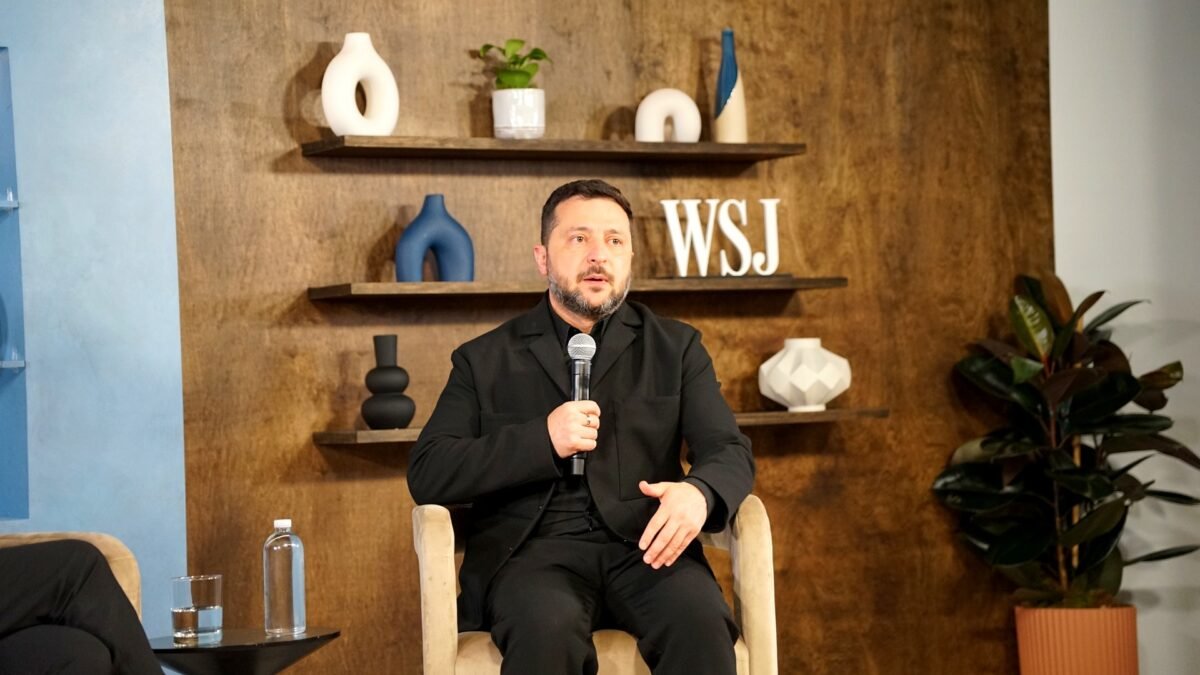
Ukraine says the satellite system its forces rely on to guide drones and shoot down Russian attack drones is still being throttled over Russian-occupied territory, entering a sixth day on Saturday, and President Volodymyr Zelenskyy has accused SpaceX of not telling the truth about why. The dispute, which Kyiv says is costing it the ability to intercept jet-powered Russian drones near the front line, has erupted in the middle of the most intense round of peace diplomacy of the war — and it has put a single private company, and the question of who really controls the battlefield’s most important communications network, at the centre of the argument over how the war ends.
According to Radio Free Europe/Radio Liberty, Denys Sienik, Ukraine’s top diplomat in Washington, said on Saturday 14 November that the restrictions affecting Ukraine’s use of SpaceX’s Starshield satellite communications system remained widespread, despite repeated tests by Ukrainian forces in multiple directions. “As of today, I can confirm that the restrictions are effective. These are not isolated cases; they are widespread,” Sienik told RFE/RL.
Zelenskyy had told reporters on Friday that terminals operating in temporarily Russian-occupied Ukrainian territory had been subject to speed restrictions of approximately 161 kilometres per hour — about 100 miles per hour — for five days. The New York Times reported that the limits took effect on Monday and were being enforced over occupied territory rather than across all of Ukraine, and that it was the second time in recent weeks that Ukraine’s Starshield connectivity had been throttled. The Institute for the Study of War, in its assessment of 14 November, said Ukrainian officials had reported a sixth day of speed restrictions on the network.
SpaceX has denied imposing any restrictions. According to Ukrainian officials who spoke to RFE/RL on condition of anonymity, the company told Ukraine’s defence ministry: “We are not imposing any restrictions.” The company referred to technical issues but did not answer a follow-up question about the situation in the temporarily occupied territories, the officials said. The New York Times reported that SpaceX had earlier told Axios that the Ukrainian claim about throttled connectivity was false, and that Musk and SpaceX did not respond to its requests for comment on Friday evening.
Zelenskyy does not accept the explanation. “We do not believe” the disruptions are simply technical problems, he said, according to RFE/RL, describing the decision to impose speed limits as appearing “political” rather than “technical”. He said he had instructed senior military and foreign ministry officials to pursue the issue with SpaceX and to seek the restoration of unrestricted service.
The limits Ukraine says are still in place
The speed limit matters because of the way Ukrainian forces use the system. Starshield is the military version of SpaceX’s Starlink satellite internet network, built for government and national security use. Ukraine uses Starlink for communications, while it uses Starshield for certain kinds of air defence and to guide drones operating over Russian-occupied territory, according to the New York Times. When a drone moves faster than the permitted speed, it risks losing its connection to the system — and a drone that loses its connection falls from the sky.
That is what happened in October, when the restrictions first appeared. The New York Times reported that Ukrainian drones suddenly lost their video feeds and fell from the sky after the limits were imposed, and that one Ukrainian commander, identified only as Oleh, said his units had lost more than one million dollars’ worth of drones and had to stop almost all operations for three days, including attacks on Russian command posts and fuel facilities. According to the Times, the initial disruption in October affected drones travelling at speeds as low as 40 miles per hour, although connectivity later improved and the restriction settled at about 100 miles per hour. Brigadier General Andriy Biletsky told the newspaper that Starshield-connected drones had previously been able to operate at speeds of up to 250 miles per hour without losing their connection, and that the official limit had already been 100 miles per hour but had not previously been enforced.
The October episode lasted about ten days. Service was reportedly restored on 24 October, according to RFE/RL. SpaceX said in a letter to Congress last month that no changes had been made to Starshield because it was under the control of the United States government, the New York Times reported. Then, on Thursday this week, Serhiy Beskrestnov, a Ukrainian military expert who advises Zelenskyy on weapons technologies, wrote on social media that “the operating speed of Starshield while in motion has been restricted again,” according to the Times. By Friday, Zelenskyy was telling reporters that the limits were back, and by Saturday his ambassador in Washington was confirming that they were still in force.
What Kyiv says it can no longer do
The most immediate consequence, according to Kyiv, is felt in the air. Sienik told RFE/RL that Ukrainian forces could now intercept Russian jet-powered drones only after they entered territory controlled by Ukraine. “Because of this, we can intercept Russian jet-powered UAVs only after they enter the territory controlled by Ukraine. Hence, we can’t shoot them down immediately near the front line. This gives Russians more leverage which they haven’t had so far,” he said.
He gave a concrete example. “For example, our Bars units operate using Starshield. They shoot down jet-powered Shaheds. Now we can’t shoot them down there, near the front line,” Sienik said. Instead, Ukrainian forces must wait until the drones reach other defensive lines, giving Russian forces more opportunities to attack, according to RFE/RL. The Institute for the Study of War reached the same conclusion in its 14 November assessment, saying the restrictions were inhibiting Ukraine’s ability to defend effectively against the jet-powered drones that Russian forces launch from occupied Ukraine, and warning that if they were left in place they would continue to enable Russia’s devastating winter strike campaign.
Zelenskyy made the same point in his nightly address, saying the Starshield limits hurt Ukraine’s ability to use newly developed interceptors to protect its cities from Russia’s jet-powered drones, according to the New York Times. The timing matters: Russia has been striking Ukraine’s energy infrastructure, and Kyiv suffered power outages on Friday 14 November after Russian attacks on energy facilities, according to RFE/RL. A war that is increasingly fought in the dark, against drones that fly faster than the old propeller-driven Shaheds, is a war in which the speed at which a defending drone can move is not a technical detail. It is the difference between an interception over the front line and an interception over a city.
For Zelenskyy, there is also a political charge in the geography of the restriction. The limits apply over territory that Russia occupies but that Ukraine and most of the world still regard as Ukrainian. “If you impose restrictions there, you are already partially recognizing the temporarily occupied territories as not ours,” Zelenskyy said in remarks released by his office on Friday, according to RFE/RL. It is the same argument, in miniature, as the one at the heart of the peace talks: whether the map of Ukraine can be redrawn by force, and whether the world will quietly accept the new lines.
SpaceX denies any restrictions — and the question of who controls Starshield
The dispute is made harder to resolve by a basic disagreement over who is even in a position to impose a restriction. SpaceX’s founder, Elon Musk, has maintained that Starshield is controlled by the United States government, with the military determining restrictions on speed and use and the final authority resting with President Donald Trump, according to RFE/RL. Trump has denied involvement in the restrictions. The New York Times reported that SpaceX said in its letter to Congress that no changes had been made to the system because it was under American government control.
That account has not settled the matter in Washington. The Times reported that Secretary of State Marco Rubio has previously said that SpaceX determines access to both Starlink and Starshield, and has disputed Ukraine’s account of its access to the military service. The contradiction — the company says the government controls it, the government says the company controls it — is precisely what has made the episode so difficult for Kyiv to navigate. When Zelenskyy said on Friday that his defence ministry had spoken to SpaceX and been told that no restrictions were in place, he added that the responsibility for the decision to restrict Ukraine’s ability to fully use Starshield was unclear, according to the Institute for the Study of War.
Paul Poast of the University of Chicago told RFE/RL that he doubted the disruption was simply a glitch. While acknowledging that technology outages can occur, he said he questioned whether the latest disruptions could be connected to diplomatic efforts involving Ukraine and Russia, and raised the possibility that they could have served as an indirect means of increasing pressure on Kyiv during negotiations — although he offered no evidence establishing such a connection. He also noted Musk’s previous comments that an earlier slowdown resulted from SpaceX’s interpretation of its terms of service.
Retired United States Army Lieutenant Colonel Amos Fox, a fellow at Arizona State University’s Future Security Initiative, told RFE/RL that the episode illustrated the risks of relying on a single provider for essential military capabilities. “A challenger to Musk’s dominance of this space would help insulate states like Ukraine from the political games of people like Musk,” Fox said. He also pointed to the influence that individuals outside government can exercise over national security decisions when states depend heavily on their companies and resources.
Washington’s response — and the letters to Musk
The dispute has drawn growing concern in Washington, where lawmakers from both parties have questioned the extent of private control over the communications systems used in Ukraine’s defence, according to RFE/RL. Democratic Senators Jeanne Shaheen and Chris Coons, both members of the Senate Foreign Relations Committee, have formally asked Musk to preserve all records related to restrictions on Ukraine’s use of Starlink and Starshield. In a letter made public on 13 November, the senators requested documents and communications dating back to 1 September, including exchanges involving Musk, SpaceX executives, Ukrainian officials, the White House and the Pentagon. They also asked Musk to confirm by 30 November that appropriate safeguards were in place. Senators Shaheen and Thom Tillis have separately demanded a formal investigation into the restrictions, according to The Hill.
In the House of Representatives, Gregory Meeks, the ranking Democrat on the House Foreign Affairs Committee, and Adam Smith, the ranking Democrat on the House Armed Services Committee, said any restrictions on Ukraine’s use of Starshield in occupied territories and along the line of contact would be unacceptable if confirmed, according to RFE/RL. They argued that previous limitations had contributed to Ukrainian civilian casualties, including the deaths of children, and strengthened Russia’s position, and they pledged to continue pressing for answers and accountability.
The White House and the Pentagon had not responded to requests for comment on the latest Starshield disruptions as of late on 14 November, according to RFE/RL. That silence is itself part of the story. The administration is simultaneously the party conducting the peace negotiations, the party that — on Musk’s account — holds the final authority over Starshield, and the party that has denied any involvement in the restrictions. Until it speaks, Kyiv is left arguing with a company that says it is not responsible and a government that says it is not involved.
The talks move on: Kushner and the next phase
The Starshield dispute comes as the Trump administration seeks to advance negotiations to end Russia’s full-scale war against Ukraine, with questions over territorial concessions and European security remaining contentious, according to RFE/RL. The diplomacy has moved quickly this week. Two days of United States-brokered talks between Ukraine and Russia concluded on Wednesday in Abu Dhabi — the first direct talks of their kind in nine months — without a major breakthrough, although the sides agreed to a prisoner exchange involving more than 1,000 people, according to Reuters.
United States special envoy Steve Witkoff and Jared Kushner, the president’s son-in-law, then met President Vladimir Putin in Moscow on Thursday, and met Zelenskyy in Ireland the same day. On Saturday, Kushner said in a social media statement that the next phase of negotiations would focus on facilitating direct engagement between Russia and European governments and on preparing another round of trilateral talks, according to RFE/RL. He said several new ideas were being explored and stressed that any eventual agreement must include credible security guarantees for Ukraine. “President Trump will only support arrangements that strengthen Ukraine’s and Europe’s security and make future conflict less likely,” Kushner wrote.
The Guardian’s Ukraine war briefing reported that Kushner said the United States was focused on facilitating direct engagement between Russia and European nations on the Ukraine war, after trilateral meetings involving Washington, Moscow and Kyiv this week. Washington and NATO have not commented on some of the most sensitive ideas raised in the talks, including the question of whether Ukraine might trade territory for NATO membership.
That question was put to Zelenskyy in Abu Dhabi, and it is the most explosive element of the negotiations so far. Reuters reported that Zelenskyy said United States negotiators had floated the idea of Ukraine’s potential withdrawal from its eastern Donbas region in exchange for joining NATO, and that it was the first time the question of linking NATO membership to territorial concessions had been raised during the talks. “The Americans raised a question: ‘What if Ukraine joins NATO? Would Ukraine withdraw from Donbas?'” Zelenskyy said in remarks to reporters released by his office on Saturday. He said he believed NATO was “back on the agenda” as a result, but he also warned that the suggestion could allow Russia to weaken NATO and reshape borders. “This is dangerous because, in my view, it is precisely things like this that lead to wars or escalations,” he said.
Zelenskyy reiterated that Kyiv was not ready to concede territory, but said that if it received a comprehensive package including security guarantees, the right to a strong and well-funded Ukrainian army and funds to rebuild, he would put the question to a national referendum, according to the Guardian. He also rejected the possibility of Ukraine committing to neutrality, something that could only happen if the country’s constitution was changed. “If Putin expects Ukraine’s neutrality to be enshrined, that’s not going to happen,” he said. “We’re not in Nato right now anyway.”
The Russian side has its own demands, and they go beyond Ukraine. The New York Times reported on 13 November that it had obtained a copy of an unofficial “non-paper” of demands that the Russian delegation circulated during the Abu Dhabi talks, representing Moscow’s opening negotiating position, according to the Institute for the Study of War. The Times reported that Russian officials in Abu Dhabi made clear that Moscow sees the Cold War-era divide between NATO and the Soviet-led Warsaw Pact as a model for the future of Europe. United States Senator Tom Cotton rejected one reported Russian demand — that NATO withdraw forces from Eastern Europe — in terms that left no room for doubt. “NATO nations withdrawing from their own borders is a preposterous demand by Russia,” Cotton said, according to RFE/RL, adding that Moscow would stop fighting only when it understood it could not win.
Zelenskyy also dismissed Russia’s call for a broad agreement on European security architecture to be reached before the specifics of ending the war are agreed, echoing comments made by European leaders at a summit in Dublin on Friday. “We cannot turn everything upside down and start by talking about changing the security framework in the world or across the continent overall, and only then talk about ending this war. This war must be ended first,” he said, according to the Guardian.
Europe’s warning — and its own divisions
European leaders have warned against pressuring Kyiv into territorial concessions. French President Emmanuel Macron said on Saturday that countries seeking to limit assistance to Ukraine were effectively trying to impose an unjust peace, warning that such an approach could lead to another war. “Those who want to ration aid to Ukraine wish underneath it all to force an unjust peace on it” and, by extension, all of Europe, Macron said on social media, according to the Guardian. “That is a recipe for another war. That cannot be France’s position.”
But Europe’s own unity is under strain, and the strain was visible at the informal European Union summit in Dublin on Friday. Bulgaria’s Rumen Radev said on the sidelines of the summit that Bulgaria would no longer supply weapons and ammunition from its military stockpiles to Ukraine and could not provide further financial aid, according to Bulgarian National Television and the Bulgarian News Agency. Radev said Bulgaria was under a European Union excessive deficit procedure and faced problems with its financial reserves, and that in the current circumstances it could not provide financial assistance — although he added that Bulgaria would not block other member states from providing military or financial support to Ukraine.
The position is not new: Radev’s government decided on 21 October to stop financing purchases of lethal weapons for Ukraine through the European Peace Facility, limiting future contributions to non-military assistance, and Radev said in June that the government was ending transfers of armaments from the Bulgarian Army, saying Sofia had “already provided enough”. But the Dublin restatement matters because it came on the same day that European leaders agreed their team for the next round of peace talks — Britain, France, Germany, Italy and Poland, plus European Union institutions — and because it was made in the same week that leaders were discussing a proposed new European financing package for Ukraine worth about 70 billion euros.
Radev also said Bulgaria did not support the deployment of military units on Ukrainian territory as part of the coalition of the willing, and that the country’s parliament had decided Bulgarian troops would not participate in such missions, according to Bulgarian reports. He added that Bulgaria was prepared to discuss arrangements ensuring that any funds it might later contribute would go to humanitarian work, electricity supplies and medical assistance rather than weapons, and that Sofia still supports Ukraine through electricity exports, infrastructure repair and aid to Ukrainian families.
The contrast between Macron’s warning and Radev’s limits captures the argument inside Europe. One camp says that cutting aid now would force Ukraine into an unjust peace and invite the next war. Another says that its own budgets and stockpiles are exhausted and that it has already given enough. Both positions were on display in Dublin on the same day, and both will shape whatever Europe is able to offer when the next round of talks begins.
The battlefield while the talks continue
While the diplomats talk, the war has not paused. Russian forces struck a cargo vessel in the Ukrainian port of Chornomorsk on Saturday, the RIA news agency cited the Russian defence ministry as saying. The ministry said the ship was being used to supply the Ukrainian military. Ukrainian strikes on the Samara oil pipeline station near the village of Prosvet in Russia’s Samara region on Friday set several oil storage tanks on fire, Ukraine’s General Staff said. The facility is a key part of the network exporting Russian oil to global markets, according to the General Staff. Separately, 22 people were injured in a Russian attack on the south-east Ukrainian city of Zaporizhzhia on Friday, Ukraine’s Emergency Service said. All three incidents were reported in the Guardian’s Ukraine war briefing of 15 November.
The strikes on energy infrastructure and on the oil trade are part of the same war of attrition that the peace talks are supposed to end — and they are also part of the pressure that shapes the talks. The New York Times reported that the October Starshield restrictions were first imposed for about ten days as President Trump and his administration were pressuring Ukraine’s leaders to stop attacking Russian oil refineries, hoping to lower diesel prices before the United States midterm elections. Whether or not the two episodes are connected — and no evidence has been published that establishes a connection — the pattern is one that Kyiv’s supporters in Washington have noticed, and it is why the letters from Senators Shaheen and Coons ask not only for the records of what happened, but for the communications between SpaceX, the White House and the Pentagon.
How Ukraine got here — October’s warning
Ukraine’s dependence on Starlink and Starshield did not begin with this war, but the war made it total. SpaceX’s satellite network gave Ukrainian forces resilient communications when Russian attacks destroyed ground infrastructure, and it gave drone operators a link that could not easily be jammed or cut. That dependence was always a bargain with a private company whose owner has his own politics, his own business interests and his own relationship with the American president. The bargain worked while the interests aligned. The question raised by the last two months is what happens when they do not.
There have been earlier moments of friction. In 2023, Musk refused to enable Starlink coverage near Crimea for a Ukrainian drone attack on the Russian Black Sea fleet, a decision he later defended on the grounds that it would have made SpaceX complicit in a major act of war. The October restrictions were the first time the limits had been imposed on the scale reported this month, and the first time they had been linked by Ukrainian officials to the diplomatic pressure surrounding the war. The restoration of service on 24 October suggested the episode was over. Its return this week suggests it was not.
The deeper history matters too. Ukraine has been fighting Russia’s full-scale invasion since February 2022, and a war in the Donbas since 2014. The Abu Dhabi talks were the first direct United States-mediated talks between the two sides in nine months. The prisoner exchange they produced — more than 1,000 people, according to Zelenskyy — is the largest single humanitarian result of the diplomacy so far, and it is a reminder that the talks can deliver something even when they do not deliver a ceasefire. But no ceasefire has been agreed, and the fighting, the strikes on energy infrastructure and the drone war over the front line have continued throughout.
That is the context in which the Starshield dispute must be understood. It is not a technical argument about satellite speeds. It is an argument about whether a country at war can depend on a system it does not control, owned by a man who does not answer to it, governed — on the company’s own account — by a government that will not say what it has decided. And it is an argument that is taking place while the same government is asking Ukraine to consider the most consequential territorial concession of the war.
Analysis: Why It Matters
The speed limit is the whole story
It is easy to hear “speed restrictions” and think of a minor technical inconvenience. It is not. A drone that cannot move faster than 100 miles per hour while connected to Starshield is a drone that cannot chase a jet-powered Shahed, cannot operate over the territory where those drones are launched, and cannot do the job it was built for. The Bars interceptor units exist precisely to shoot down fast drones near the front line, before they reach Ukrainian cities. When Sienik says his forces must now wait until the drones enter Ukrainian-controlled territory, he is describing a defensive line that has been pushed backwards by a decision nobody will own. Every mile of that retreat is a mile in which a Russian drone flies unopposed, and every minute of it is time in which a city has less warning. The technical detail is the military fact.
Nobody will own the decision — and that is the point
The most remarkable feature of this dispute is that no one admits to being responsible for it. SpaceX says it is not imposing restrictions. Musk says the United States government controls the system. Trump denies involvement. Rubio has said the company determines access. Each statement, taken alone, is plausible. Taken together, they describe a system in which a decision with direct consequences on a battlefield can be made by no one and answered for by no one. That is not a communications failure. It is a governance failure, and it is the inevitable result of handing a critical military capability to a private company while leaving the question of who controls it deliberately vague. Ukraine cannot appeal a decision that no one admits making, and it cannot plan around a restriction that no one admits exists. The letters from Senators Shaheen and Coons are an attempt to break that circle by forcing the record into the open. Until the record is open, Kyiv is arguing with a shadow.
The geography of the restriction is a political statement in itself
Zelenskyy’s sharpest line was not about drones. It was about recognition. “If you impose restrictions there, you are already partially recognizing the temporarily occupied territories as not ours.” The point is precise. Starshield works across the rest of Ukraine. It is restricted only over the territory Russia occupies. A system that treats occupied land differently from the rest of the country is a system that has already, in its technical configuration, accepted the map that Russia is trying to impose by force. That is why the dispute resonates far beyond the military question. The same week that American negotiators asked whether Ukraine would trade the Donbas for NATO membership, the satellite network began treating the Donbas as if it were not Ukraine. The two events may be entirely unrelated. But from Kyiv’s side of the table, they look like two halves of the same message, and that is why Zelenskyy has chosen to make the Starshield question public rather than handling it quietly.
Europe is being asked to step forward while its own members step back
Kushner’s statement that the next phase will focus on direct engagement between Russia and European governments is a significant shift. For most of this year, Europe has been asking for a seat at the table. Now it is being offered one — and the offer comes at the moment when Europe’s own unity is most visibly fraying. The Dublin summit produced a negotiating team of five nations plus the European Union institutions, which is a real achievement. It also produced Bulgaria’s public declaration that it will give no more weapons and no more money, and a debate over a 70-billion-euro financing package that has not yet been agreed. Macron’s warning that rationing aid would impose an unjust peace was aimed, in part, at his own allies. The test of the next round of talks will not only be whether Russia and Ukraine can agree. It will be whether Europe can arrive as a single actor, with money and weapons behind its words, or as a collection of governments that have each reached the limit of what they are willing to give.
The talks are producing movement — but not yet peace
It would be wrong to dismiss the diplomacy. The Abu Dhabi talks produced an agreement on a prisoner exchange of more than 1,000 people, the first direct talks in nine months, and a European seat at the next round. Kushner’s statement suggests a structured next phase rather than a collapse. The Trump-Xi-Putin trilateral meeting expected in Shenzhen on 19 November could add a further dimension. But movement is not the same as progress, and the movement so far has been on process — who sits at the table, who talks to whom — rather than on substance. No ceasefire has been agreed. No territorial question has been settled. The fighting continues, the energy strikes continue, and the drone war over the front line continues. The Starshield dispute is a reminder that the war is not waiting for the diplomats. It is being fought, every day, with tools that can be switched off by decisions taken in rooms that Ukraine cannot enter.
What to Watch Next
- Whether the restrictions are lifted. Zelenskyy has instructed his defence and foreign ministries to pursue the issue with SpaceX and with the American side. The first test is simple: do Ukrainian forces report, in the coming days, that the speed limits over occupied territory have been removed? A restoration like the one on 24 October would defuse the immediate military problem. A continuation would confirm that this is a policy, not a glitch.
- What the White House and the Pentagon say. Both declined to comment as of late on 14 November. Any statement that clarifies who controls Starshield — and whether the American government ordered, approved or even knew about the restrictions — would answer the central question of the dispute.
- SpaceX’s response to the Senate letters. Senators Shaheen and Coons have asked Musk to preserve all records back to 1 September and to confirm by 30 November that safeguards are in place. Whether SpaceX complies, and what the records show, will determine whether the episode becomes a congressional investigation.
- The next round of trilateral talks. Kushner said the next phase would include direct engagement between Russia and European governments and another round of trilateral talks. The date, the venue and the composition of the European team agreed in Dublin will show whether the process is accelerating or stalling.
- Whether the Donbas-for-NATO idea advances. Zelenskyy said the question was raised for the first time in Abu Dhabi and that he would put it to a referendum only as part of a comprehensive package. Watch for any sign that Washington is pressing the idea, or that Moscow is responding to it, and for the reaction of European capitals.
- Europe’s financing decision. Leaders in Dublin discussed a proposed new package worth about 70 billion euros for Ukraine. Whether it is agreed — and whether Bulgaria’s refusal is an isolated case or the start of a wider retreat — will shape what Europe can offer at the negotiating table.
- The winter strike campaign. Russia’s attacks on Ukraine’s energy infrastructure have already caused power outages in Kyiv. The Institute for the Study of War has warned that continued Starshield restrictions would enable Russia’s winter campaign. Watch whether Ukrainian air defences can keep pace as the cold deepens and the nights lengthen.
Sources
- Radio Free Europe/Radio Liberty — “Ukraine Says Starshield Restrictions Persist, Hampering Drone Defenses” (via EuropeSays)
- The New York Times — “Ukraine’s Starshield Access Is Being Restricted Again, Zelensky Says” (via EuropeSays)
- The Guardian — “Ukraine war briefing: US proposes Kyiv cede land to Russia for Nato membership, Zelenskyy says” (via EuropeSays)
- Reuters — “US floated idea of Ukraine ceding Donbas for NATO membership, Zelenskiy says”
- Institute for the Study of War — “Russian Offensive Campaign Assessment, November 14, 2026”
- Bytes Europe — “Bulgaria cannot provide financial aid to Ukraine but is not obstructing decisions by other states – PM”

About the Author — Abdul Mannan
Related Articles

South Sudan Delays Its First-Ever Elections Again, Pushing the Vote to February 2027 as War Fears Grow
South Sudan has pushed its first national elections since independence to 11 February 2027, the latest delay to…
US Floated Trading Donbas for NATO Membership, Zelenskyy Says — the First Time the Two Have Been Linked
President Volodymyr Zelenskyy says US negotiators asked for the first time whether Ukraine would withdraw from Donbas in…
Trump, Xi and Putin to Hold First-Ever Three-Way Summit in Shenzhen as Nuclear Arms Top the Agenda
The White House has confirmed the first-ever three-way meeting of the leaders of the United States, China and…