
Houthis Take Control of Bab el-Mandeb as Yemeni Forces Pull Back to Defend Aden

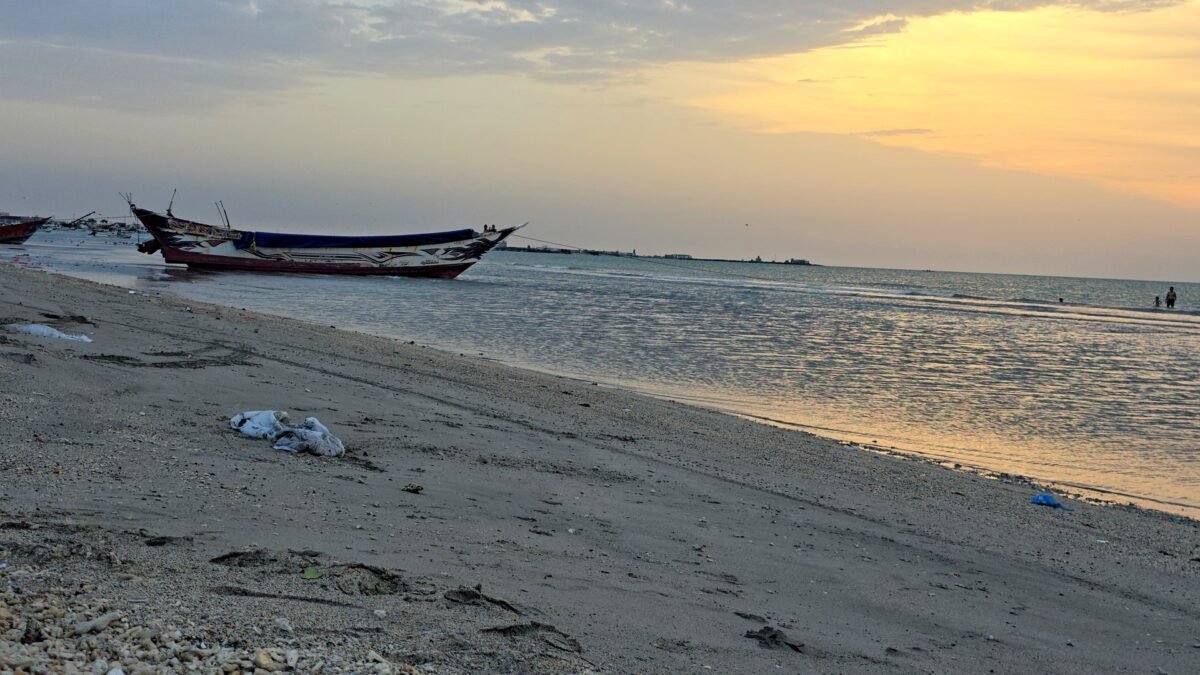
Yemen’s Saudi-backed government forces announced on Sunday that they were pulling out of the area around the Bab el-Mandeb Strait, leaving the Iran-aligned Houthi movement in control of the narrow waterway that guards the southern entrance to the Red Sea. The announcement, reported by Reuters, marks the apparent end of a six-week government counteroffensive to retake the coast and hands the Houthis greater leverage over one of the world’s most important shipping routes at the very moment Iran is disrupting traffic through the Strait of Hormuz on the other side of the Arabian Peninsula.
The Southern Armed Forces, the main military force fighting for Yemen’s internationally recognised government in the south of the country, said in a statement that they were carrying out “a redeployment operation for its forces from Dhubab Airport and the Bab el-Mandeb area, west of Taiz Governorate”. The statement said the move was taken “based on the priority of securing the capital, Aden, and the neighbouring governorates, as well as strengthening the front lines and addressing existing threats”, according to Reuters.
The BBC reported that Houthi-run media said later on Sunday that the group had taken control of the territory. There was no immediate response from the Houthis or from Saudi Arabia, the Yemeni government’s main international ally, according to Reuters.
The withdrawal is a major setback for the Saudi-backed campaign against the Houthis and a significant gain for a movement that, in the space of two months, has gone from besieging cities in Yemen’s highlands to holding the ground overlooking both ends of the sea route between Asia and Europe. The Bab el-Mandeb Strait is less than 30 kilometres wide at its narrowest point, according to the Associated Press, and about $1 trillion worth of goods passes through it each year, the New York Post reported, citing Reuters. Saudi Arabia had moved the bulk of its oil shipments to the Red Sea route after Iran’s attacks effectively closed the Strait of Hormuz, the New York Post reported.
The announcement, and the argument over what to call it
The government’s statement was careful in its wording. It described the move as a redeployment, not a retreat, and framed it as a decision to concentrate forces where they are needed most: the defence of Aden, the port city on Yemen’s southern coast that has served as the seat of the internationally recognised government since the Houthis drove it from the capital, Sanaa, more than a decade ago.
A media adviser to Yemen’s presidency pushed back on the word “withdrawal” altogether, telling the Saudi-owned newspaper Asharq Al-Awsat that the move was “a redistribution of forces, not a military withdrawal”, and that government troops remained about six to eight kilometres from Bab el-Mandeb, still inside the operational area. Yemen’s Defence Ministry described the redeployment as a “national and moral responsibility” to counter what it called threats from the Houthi militia, according to Newsmax.
But the reporting from the ground tells a different story about the direction of travel. Yemeni military sources told Reuters that government forces around the Bab el-Mandeb had redeployed to al-Suqyah, just south of Dhubab and 150 kilometres west of Aden, though they were still trying to push the Houthis from coastal areas nearby. The BBC reported that the shift ends a weeks-long offensive to secure the area near the waterway after the Houthis seized it in a surprise offensive in September. Houthi-run media reported later on Sunday that the group had taken control of the territory, the BBC said.
The gap between the two descriptions matters. Governments in retreat almost always call it a redeployment, and the Southern Armed Forces’ statement does not say how many troops were involved or whether every unit in the Bab el-Mandeb sector has withdrawn. But no account from any side disputes the underlying fact: the government force that spent six weeks fighting to hold the ground overlooking the strait is no longer holding it, and the Houthis are.
What the Houthis now hold
The Bab el-Mandeb, whose name means “Gate of Grief” in Arabic, is the strait between Yemen on the Arabian Peninsula and Djibouti and Eritrea on the African coast. It connects the Red Sea to the Gulf of Aden and the Indian Ocean, and it is the funnel through which ships pass between Asia and Europe via Egypt’s Suez Canal. Whoever controls the Yemeni shore at the strait can watch, threaten or close one of the busiest maritime chokepoints on earth.
The Houthis seized the coast in a lightning offensive in September, according to Reuters, capturing areas including Perim Island at the mouth of the strait and the strategic port city of Mokha, the BBC reported. The offensive squeezed global oil exports and prompted thousands of people to flee, the BBC said. It was the most dramatic Houthi advance since the movement’s early victories in the civil war, and it came as Yemen’s decade-long conflict, dormant since 2022, abruptly reignited as a spillover from the war between the United States and Israel and Iran.
On 5 October, Saudi-backed Yemeni forces launched Operation Fajr Yemen, or Dawn of Yemen, and pushed back into Dhubab, the airport and the coastline near the narrowest stretch of the Red Sea, according to Asharq Al-Awsat. In early October the government said it had “secured” the strait, the BBC reported. But the counteroffensive never finished the job. Reuters reported that it retook key positions around the strait but failed to drive the Houthis entirely away from the area or to retake the city of Mokha further up the coast.
Sunday’s announcement closes that chapter. The Houthis now hold the high ground over the strait, in the words of one analysis of the situation, while nobody has closed the waterway itself. The Houthis have said they pose no threat to international shipping passing through the waterway, but that they would continue to target vessels from Saudi Arabia, according to the BBC. Lloyd’s List Intelligence said in a briefing on 12 November that there had been no attacks on shipping in the Red Sea since 24 August, although an unexplained large explosion had been seen. Transits through the strait numbered 1,363 in October, still 46 percent below pre-crisis levels, according to Lloyd’s List Intelligence.
The Joint Maritime Information Centre, which advises shipping on threats in the region, described the threat level in the southern Red Sea and Bab el-Mandeb as “substantial” in an update on 12 November, according to the Associated Press. The centre said deliberate attacks remained a strong possibility and that the Houthis retained a coastal presence and the ability to use long-range missiles and drones. An earlier update, on 5 November, said the strait was open to commercial traffic but that security conditions were volatile.
The road to Aden
The retreat from the strait cannot be understood on its own. It is the consequence of a Houthi advance that is now pressing directly on Aden itself, and the government’s statement makes that plain: the troops are being pulled back because the capital needs them.
Military and government sources told Agence France-Presse on Sunday that the Houthis had advanced to about 60 kilometres from Aden city, the interim seat of the internationally recognised government. Four military sources within government forces and two government sources told AFP that the Houthis had seized control of the Al-Maqatirah and Al-Madaribah districts in Lahj province and were advancing towards Aden. They said the Houthis were positioned at the Al-Kharaz camp in Al-Madaribah, 60 kilometres from the city. A government military source told China’s Xinhua news agency that the Houthis had advanced to roughly 70 kilometres from Aden, a slightly different figure that reflects how fluid the front line is and how difficult it is to measure in the middle of a moving battle.
Reuters, citing Yemeni military sources, reported that in the highlands north of Aden, where the Houthis have besieged Yemen’s third-largest city, Taiz, the fighters are now positioned just outside the district of Tur al-Bahah, about 80 kilometres from Aden. The Houthis have made gains in the highlands, cut the road to Taiz in early October and put increased pressure on the disparate coalition of forces fighting for the internationally recognised government, Reuters reported.
The Houthis have repeatedly attacked Aden itself in recent weeks, including an assault on 15 October that targeted the presidential palace and left four people dead, according to government military sources cited by France 24. Military officials told AFP on Friday that government forces had begun erecting sandbag defences and digging tunnels around Aden as the Houthis pressed southwards. The Houthis previously launched an unsuccessful bid to seize Aden early in the war in 2015.
This is not the first time NEXA has reported the Houthis closing on Aden. On 3 November, this site reported that the Houthis had advanced to within 80 kilometres of the city, the closest threat to Yemen’s seat of government since 2015. In the thirteen days since, that distance has shrunk to about 60 kilometres. The direction of the war is not in doubt, even if its speed is.
Sunday also brought fresh bloodshed in Lahj province. Sources cited by Shafaqna reported that a Houthi missile attack killed eight people and wounded 12 others in an attack on a checkpoint in the province. A separate report, citing Xinhua, said a Houthi missile struck vehicles carrying families fleeing the fighting near Khor Umairah, about 90 kilometres west of Aden, leaving 17 people killed or wounded, with the exact toll unclear. The two reports differ in detail, and it is not certain whether they describe the same strike; what is certain is that civilians fleeing the fighting in Lahj were caught in it on Sunday.
A prisoner release on the same day
On the same day as the retreat, the Houthis released 600 people held in connection with the conflict in the capital, Sanaa, the International Committee of the Red Cross said, in what the Associated Press described as the largest unilateral release of the country’s 12-year war.
The release was organised by the Houthis’ National Committee for Prisoners’ Affairs and was not part of the Stockholm Agreement, the United Nations-brokered framework for prisoner exchanges between the two sides, according to the ICRC. Red Cross delegates interviewed every detainee privately before the release, carried out health checks and helped arrange transport for their return home. The organisation said it did not choose who would be freed or how many, and that it stood ready to act as a neutral intermediary in future releases and transfers if the parties asked it to do so.
Abdulqader al-Murtada, who heads the Houthis’ prisoners committee, told a news conference in Sanaa that the freed men were fighters from forces backed by the Saudi-led coalition who had been captured on several fronts, especially along the Saudi border. EFE, the Spanish news agency, whose reporter witnessed the ceremony in Sanaa, identified the released men as government-aligned soldiers captured near Yemen’s border with Saudi Arabia in 2018 and 2019, and said the group included sick and elderly detainees.
Al-Murtada called the release the largest unilateral one since the coalition intervened in 2015 and said it brought the total freed under the Houthis’ amnesty initiatives to 2,612, all without an exchange in return. Those figures could not be independently verified, and there was no immediate comment from Yemen’s internationally recognised government on the release.
The timing is worth noting. A movement that frees 600 enemy prisoners on the same day its enemy abandons the ground overlooking a global chokepoint is not a movement that feels it is losing. The release is a humanitarian gesture, and the ICRC’s involvement gives it credibility, but it is also a demonstration of confidence: the Houthis are showing the world they can afford generosity because they are winning on the battlefield.
The shipping stakes
To understand why the Bab el-Mandeb matters, it helps to follow a barrel of oil. Before the current war, about 8.7 million barrels of oil a day passed through the strait in 2023, according to the United States Energy Information Administration, citing data from the analytics firm Vortexa. By 2024, that figure had fallen to an average of 4.0 million barrels a day through August, the Associated Press reported, as the Houthis’ earlier campaign against shipping drove carriers to reroute around Africa.
The strait is one of the world’s most important and busiest routes for global seaborne commodity and goods shipments, particularly from Asia to Europe via Egypt’s Suez Canal, Reuters reported. When the Houthis seized the coast in September, the BBC reported that the seizure contributed to a surge in global oil prices, because Saudi Arabia had been relying on the Red Sea for oil exports since the war with Iran effectively closed the Strait of Hormuz.
That is the crucial connection. The world’s oil trade now depends on two narrow straits at either end of the Arabian Peninsula, and both are under pressure from Iran and its allies at the same time. In the Strait of Hormuz, Iran has been attacking shipping with mines and drones, and Reuters reported on Sunday that the Islamic Revolutionary Guard Corps claimed two tankers were on fire after striking naval mines in the strait. Reuters said it could not independently verify that report, and the claim should be treated with caution: the Guards typically do not acknowledge attacking ships in the strait but say it is unsafe to transit it without their permission.
Saudi Arabia responded to the Houthi seizure of the Red Sea coast with hundreds of air strikes, while the Houthis launched hundreds of drones and missiles at its cities and infrastructure, according to the BBC. The Houthis have intensified drone and missile attacks on Saudi Arabia, grounding flights with strikes on its main airports as well as setting global oil markets on edge by targeting energy facilities, Reuters reported. On Sunday itself, Saudi Arabia said it had intercepted two Houthi ballistic missiles aimed at Riyadh and three drones over its oil heartland, as NEXA reported earlier today.
The result is a pincer. Iran squeezes Hormuz from the north; the Houthis hold Bab el-Mandeb from the south. Between them sit the two exits from the Gulf and the Red Sea, and the world’s largest oil exporter, Saudi Arabia, must now move its crude through waters controlled or threatened by its enemies on both sides. That is not an accident of geography. It is the shape of the war.
The wider war: two chokepoints under pressure
The retreat in Yemen did not happen in isolation. It came on the same Sunday that Iran fired drones at American bases in Bahrain for the second time in three days, an attack NEXA reported in detail earlier today. Iran’s Revolutionary Guard Corps said it had attacked a United States military base in Bahrain with six drones in retaliation for “hostile US actions”, according to Iran’s Fars news agency, as reported by Reuters. Bahrain said it intercepted and destroyed several Iranian aerial attacks, the first such interceptions by its air defences since September.
Reuters, in the same report that carried the news of the Yemeni retreat, said Iran and its allies had ramped up pressure on the United States and allied Gulf states on two fronts on Sunday: Saudi-backed forces retreating in Yemen, and Iran itself firing drones at American bases in Bahrain. The two events are connected by more than timing. The Houthis are Iran’s allies, and their gains in Yemen strengthen Tehran’s position in the wider Middle East conflict launched by the United States and Israel in February, according to the Reuters report carried by TBS News.
That wider war began on 28 February 2026, when the United States and Israel launched surprise attacks on Iran. Major warfare has calmed since the early phase of the conflict, Reuters reported, but with diplomacy stalled there is little immediate prospect of a resolution either to the wider conflict or to the war in Yemen. The news agency reported on Saturday that President Donald Trump had said in recent days that he might hold off from attacking Iran if the United States faced no new provocations from either Tehran or the Houthis in Yemen, although he would maintain an American naval blockade on Iran.
Sunday’s events test that proposition directly. Iranian drones over Bahrain and a Houthi advance to the gates of Aden are, by any measure, new provocations. Whether they change the American president’s calculation is a question for the coming days. Iran’s Foreign Minister, Abbas Araqchi, will visit Oman on Tuesday for talks with his counterpart, Iranian state media reported, according to Reuters. Oman holds the southern coast of the Strait of Hormuz and has played a role as mediator in the crisis.
The political context in Washington adds another layer. Reuters noted that the war contributed to a defeat for the president’s Republicans in the midterm elections this month, and that Mr Trump has played down the need for a diplomatic breakthrough since then. Fresh Iranian strikes on Bahrain, home to the headquarters of the US Fifth Fleet, could undermine his desire to turn the page on the war, Reuters reported.
How the war in Yemen reignited
Yemen has been devastated by a civil war that began in 2014, when the Houthis ousted the government from its capital, Sanaa, according to the BBC. The conflict escalated in 2015, after a Saudi-led coalition of Arab states intervened in an attempt to restore the government’s rule. A four-year informal ceasefire began to unravel in July, when the Houthis announced a “maritime embargo” against Saudi Arabia and began missile and drone attacks on Saudi airports, oil facilities and tankers in the Red Sea, the BBC reported.
The Houthis said they were retaliating for a Saudi blockade of ports and airports in their territory, as well as an air strike on Sanaa airport that they blamed on the kingdom, according to the BBC. The United Nations has estimated that nearly 330,000 people have been displaced in Yemen as the fighting has since escalated, the BBC reported, and hundreds of people are reported to have been killed. Reuters put the number displaced by the latest fighting at about 300,000, with about half of them in Taiz; the difference between the two figures reflects different counting dates and methods, and both point to a displacement crisis of the same scale. The Associated Press reported that the United Nations says more than 1,600 people have been killed since the fighting resumed in July.
Taiz, Yemen’s third-largest city, has become the fiercest front of the civil war. The Houthis have besieged government forces there, in the mountains above the approach to Aden, and cut the road to the city in early October, Reuters reported. Humanitarian conditions are worsening in Taiz, which hosts about half of the 300,000 people displaced across Yemen by the latest fighting, according to Reuters. Aid supplies are unable to enter and civilians are unable to leave. The United Nations refugee agency said, according to the Associated Press, that the clashes were disrupting protection and assistance efforts for about 9,600 refugees.
The Houthi gains around Taiz undermined the government campaign around Bab el-Mandeb, Yemeni military sources told Reuters. That is the strategic logic of Sunday’s retreat: the government could not hold the coast while its forces were being ground down in the highlands above Taiz, and it chose to fall back to the one place it cannot afford to lose. Aden is not just a capital. It is the last major city the internationally recognised government holds, the port through which its supplies arrive, and the symbol of its claim to govern Yemen. Losing the strait is a blow. Losing Aden would be the end.
Analysis: Why It Matters
A chokepoint has changed hands without a shot being fired at a ship
The most striking thing about Sunday’s announcement is what did not happen. No tanker was hit. No strait was closed. No shots were fired at a passing ship. The Houthis gained control of the ground overlooking one of the world’s most important waterways because the force that held it walked away, and the waterway itself is still open. That is how chokepoints change hands in modern war: not in a naval battle, but in a press statement about redeployment.
The distinction matters for shipping, because an open strait with hostile guns on the shore is a different problem from a closed strait. Ships can still pass, and Lloyd’s List Intelligence says transits continue, but every transit now takes place under the eyes of a movement that has already shown it will attack shipping when it chooses to. The Joint Maritime Information Centre’s assessment that the threat level is “substantial” is the professional way of saying that the insurance market, not the Houthis, will decide how many ships keep coming. If premiums rise far enough, the strait closes itself, without anyone firing a shot.
Saudi Arabia’s problem is now geographic, not just military
For a decade, Saudi Arabia’s Yemen policy rested on a simple assumption: that the Houthis could be contained in the north while the government held the south and the coast. That assumption is now broken. The Houthis hold the Red Sea coast, they are 60 kilometres from Aden, and they are besieging Taiz. The kingdom’s response, hundreds of air strikes, has not reversed any of it, according to the BBC’s account of the campaign.
The deeper problem is that Saudi Arabia’s oil now has nowhere safe to go. The Strait of Hormuz, the traditional route, is disrupted by Iran. The Red Sea route, the alternative, runs through a strait the Houthis now overlook. The kingdom built its energy security on the assumption that at least one of these two exits would always be open. On Sunday, both were under threat at the same time. That is not a military setback. It is a structural one, and air strikes cannot fix geography.
The word “redeployment” is doing heavy work
Governments do not announce retreats. They announce redeployments, redistributions and reorganisations, and the Yemeni government’s statement is a textbook example. The words are chosen to preserve dignity and to keep allies on board, and they are not entirely false: the troops are indeed being moved somewhere else, and Aden does indeed need them.
But the words also conceal a choice that was forced, not freely made. A government that is winning does not abandon the ground overlooking a global chokepoint to defend its capital, because a government that is winning does not have to choose. The fact that the choice was made, and that the Houthis’ media announced control of the territory within hours, tells us more about the state of the war than the statement’s careful language. Readers should weigh the official wording against the map, and the map is unambiguous.
Iran’s allies are winning the war Iran started
The Houthis are not Iran, and their war in Yemen has its own local roots, its own grievances and its own logic. But their gains are Iran’s gains, and Sunday made that connection explicit: Iranian drones over Bahrain and a Houthi advance in Yemen, reported in the same Reuters dispatch, on the same day, as two fronts of the same pressure campaign.
That is the strategic picture the United States and its allies now face. The war that began in February was supposed to be about Iran’s nuclear programme and its regional power. Nine months later, Iran’s ally now holds the ground overlooking the Red Sea’s southern gateway, Iranian drones are hitting American bases in the Gulf, and the American president is publicly weighing whether to hold off from further attacks. Whatever the war was supposed to achieve, it has not achieved the containment of Iran’s network. It has, on the evidence of Sunday, expanded it.
Aden is now the war
Every war eventually narrows to a single place, and Yemen’s war is narrowing to Aden. The government’s statement says so plainly: the priority is securing the capital. The sandbag defences and tunnels going up around the city say so too. The Houthis’ advance to within 60 kilometres says so most plainly of all.
Aden has been the seat of the internationally recognised government since 2015, and it has been attacked before, including an unsuccessful Houthi bid to seize it early in the war. But the circumstances are different now. In 2015, the Houthis were overextended and the Saudi-led coalition was fresh. In 2026, the Houthis are advancing on multiple fronts, the coalition’s air campaign has not stopped them, and the government’s forces have just given up the coast to defend the city. If Aden falls, there is no second capital to fall back to. That is why Sunday’s retreat matters more than the ground it gave up: it tells us where the next battle will be fought, and what is at stake in it.
What to Watch Next
- The Houthis’ next move at the strait. Will the movement deploy coastal missiles and drones to the ground it has just taken, and will it repeat its pledge not to threaten international shipping while continuing to target Saudi vessels? The first test will be whether commercial transits through Bab el-Mandeb hold steady or fall in the coming weeks.
- The defence of Aden. Government forces are digging in around the city, and the Houthis are about 60 kilometres away. Watch for whether the Houthis push on the city directly or tighten the siege of Taiz first to cut the road to Aden from the north.
- Saudi Arabia’s response. Riyadh has not commented on the retreat, according to Reuters. Watch for whether the kingdom escalates its air campaign, seeks a negotiated pause, or leans on the United States for support, and whether its oil export routes shift again.
- Oil prices and shipping insurance. The seizure of the coast in September contributed to a surge in global oil prices, according to the BBC. Watch Brent crude and war-risk insurance premiums for Red Sea transits: they will register the market’s judgement on the strait faster than any government statement.
- The Hormuz connection. Iran’s Revolutionary Guard Corps claimed two tankers were on fire in the Strait of Hormuz on Sunday, a claim Reuters could not independently verify. Watch for independent confirmation, and for whether Tehran links its Hormuz campaign to the Houthis’ gains in public statements.
- The American decision. President Trump has said he might hold off from attacking Iran if there are no new provocations from Tehran or the Houthis. Sunday brought both. Watch for whether Washington treats the Bahrain drone attacks and the Yemen retreat as the provocations that change that calculation.
- The prisoner-release channel. The Houthis freed 600 detainees unilaterally on Sunday, and the ICRC stands ready to act as a neutral intermediary. Watch for whether either side proposes a broader exchange, and whether the release becomes a channel for the quiet diplomacy that the battlefield has so far made impossible.
Sources
- Reuters — “Anti-Houthi forces retreat in Yemen as Iran strikes Bahrain”, 15 November 2026
- TBS News (Reuters wire) — “Yemeni government force retreats from strait in major setback in war against Houthis”, 15 November 2026
- France 24 with AFP (via Ya Libnan) — “Yemen’s Iran-backed Houthis advance on Aden as government forces retreat to defend their capital”, 16 November 2026
- The Insight International (Associated Press) — “Houthis free 600 detainees from government side in Sanaa as fighting rages on Yemen’s fronts”, 15 November 2026
- New York Post — “Major Red Sea strait falls under full Houthi control as Yemeni forces retreat”, 15 November 2026
- EL7 (Associated Press reporting) — “Southern Forces’ Withdrawal Allows Houthis to Tighten Grip on Bab el-Mandeb”, 16 November 2026

About the Author — Abdul Mannan
Related Articles
Israel Kills Hamas Rafah Brigade Commander Samir Abu Younis in Gaza Tent-Camp Strike
Both Israel and Hamas confirmed the killing of the Rafah Brigade's commander in a strike on a displaced…

Bahrain Says It Intercepted Iranian Drones Targeting a US Base as Tehran Claims a Radar Hit
Bahrain said its air defences shot down several Iranian drones over the capital early on Sunday, the second…

Zelenskyy Says Starshield Limits Are Still Crippling Ukraine’s Drone Defences as Kushner Pushes Direct Europe–Russia Talks
Ukraine says speed limits on SpaceX's Starshield system are still throttling its drone defences over occupied territory, as…