
Justice Department Warns Senator Warren Over Planned Trump Probes in ‘Tomahawk’ Letter

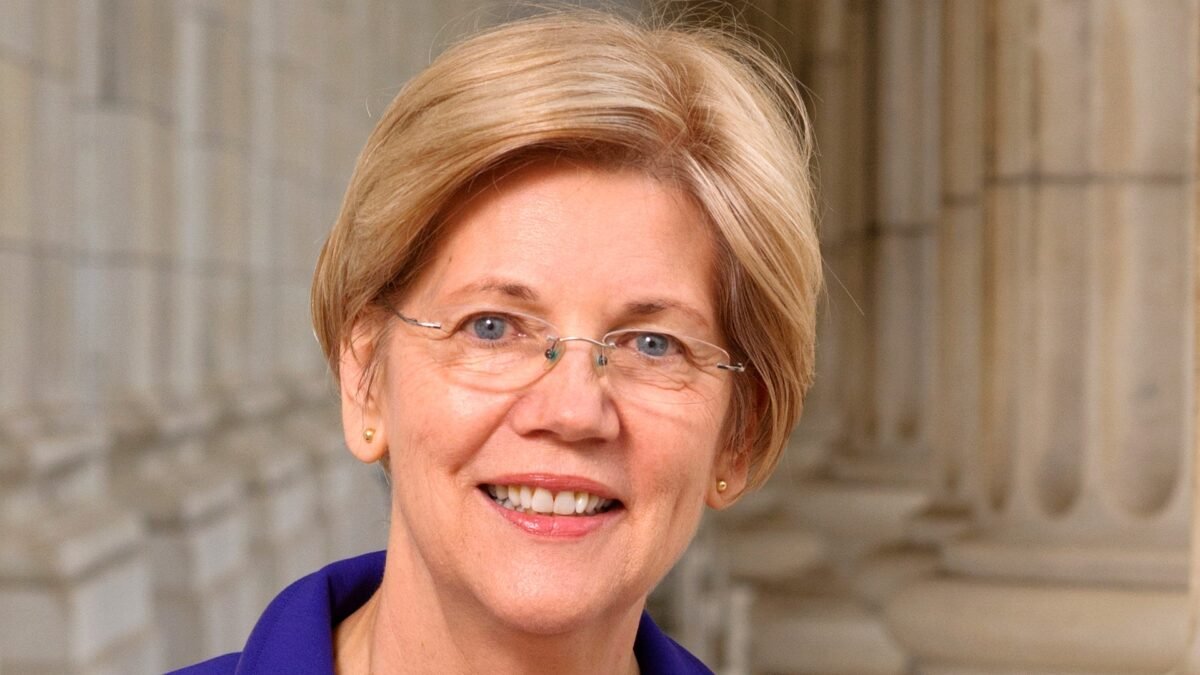
The United States Department of Justice has warned Senator Elizabeth Warren that her planned investigations of President Donald Trump and his associates could carry “significant legal consequences”, in a letter that has sharply escalated the fight over Congress’s oversight powers weeks before Democrats take control of the Senate.
The warning came in a two-page letter sent on Sunday, 15 November 2026, by Aaron Reitz, the United States Attorney for the Southern District of Texas, according to Reuters. Reitz told Warren, a Massachusetts Democrat who is set to chair the Senate Banking Committee when the new Congress convenes in January, to preserve all records connected to her planned inquiries into people and companies associated with Mr Trump.
Reitz cited two federal criminal civil-rights statutes, 18 U.S.C. Sections 241 and 242, and warned that failing to comply “may result in sanctions, adverse-inference instructions, or other penalties, and may carry significant legal consequences”, according to Politico. He posted the letter on X, writing that Warren “is on the warpath to wield her committee gavel like a tomahawk, seeking the scalps of those who associate ‘too closely’ with President Trump”, and added: “My first arrow shot.”
Warren’s office had not responded publicly by Sunday afternoon, according to Reuters. The letter gives her until 6 p.m. Eastern time on 23 November to confirm in writing that she has received it and has preserved the material.
A preservation demand is not a subpoena, a court order or a criminal charge, and no charges have been announced against Warren or any other lawmaker. But notices to preserve records often come before investigations, and the letter is the third such warning sent to a Democratic senator in five days, in what Democrats and legal analysts describe as a coordinated effort to deter the oversight that will begin when the party takes the Senate majority in January.
What the letter says
According to Reuters, Reitz told Warren she appeared “eager to wield your future gavel like a tomahawk, hunting for the scalps of President Trump’s private associates”. He directed her to preserve materials “relevant to your intent to weaponize congressional investigations and deprive citizens of their core constitutional rights”.
The demand is sweeping in scope. It covers Warren herself and her staff, employees, agents, consultants and campaign personnel, and anyone acting in concert with her, according to reports of the letter. It covers all documents, communications and electronic records connected to the planned investigations.
The letter was issued under the subject line “Conduct Implicating 18 U.S.C. §§ 241–42”, according to the Rothman Report, which reviewed the document. Section 241 makes it a crime for two or more people to conspire to injure, oppress, threaten or intimidate any person in the free exercise of constitutional or federally protected rights. Section 242 makes it a crime for a person acting under colour of law to wilfully deprive someone of those rights.
Both statutes are Reconstruction-era civil-rights laws. They have historically been used against violent conspiracies to deny people their rights — most famously against the Ku Klux Klan — and against officials who abuse their authority. Their use as the basis for a warning against a senator’s planned congressional investigations is, by the account of legal analysts, without modern precedent.
Reitz posted the letter on his official X account on Sunday. Mr Trump reposted it on his Truth Social account several hours later, according to Reuters. Stephen Miller, the White House deputy chief of staff, reposted it with nothing but the statute numbers: “18 USC 241 and 242”.
The third warning in five days
Warren is not the first Democrat to receive such a letter. On 11 November, Reitz sent a similar preservation demand to Senator Richard Blumenthal of Connecticut, the incoming chair of the Senate’s Permanent Subcommittee on Investigations, over his inquiry into donors to the White House ballroom project. On 12 November, he sent one to Senator Elissa Slotkin of Michigan over her public comments about holding people around Mr Trump accountable.
Blumenthal answered his letter by calling the implied threat “baseless”, defending his inquiry as legitimate congressional oversight, and demanding that Reitz preserve his own communications about the decision to issue the warning. He also invoked the constitutional protections that cover legislative activity.
Slotkin’s office said her letter appeared online before she had even received it. Reitz had written on X that Slotkin “fantasised about weaponizing Congress” and called it potentially illegal, according to reports of his post.
The letters follow a separate warning from the White House counsel, Will Scharf, to Representative Robert Garcia of California, the top Democrat on the House Oversight Committee, that certain investigative conduct could cross into criminality. The White House communications director, Steven Cheung, backed Reitz on Sunday, accusing Warren and other Democrats of targeting people because they work with or associate with Mr Trump.
Taken together, the four warnings in less than a week amount to a pattern. All four were aimed at Democrats who are preparing to use the oversight powers that come with the Senate majority the party won in the midterm elections on 3 November, less than two weeks ago.
What triggered the letter
Reitz’s letter to Warren cited her public statements about investigating corporate leaders and Trump associates, and two specific letters she has sent in recent weeks.
The first was her appearance on CBS’s Face the Nation on 8 November, in which she warned that Wall Street executives and major corporations should expect scrutiny. A Warren banking committee aide told Reuters on 9 November that Wall Street executives and major corporations should “preserve their documents and prepare to answer tough questions”.
The second was a letter sent on 12 November by Warren, Blumenthal and Garcia to Meredith O’Rourke, a leading Trump fundraiser, seeking information about fundraising connected to Mr Trump’s projects. According to the lawmakers, reports describe more than $800 million in contributions to the White House ballroom, the presidential library and other projects they labelled “vanity projects”. The letter asked O’Rourke to answer by 25 November and to preserve her records.
Reitz also cited an earlier letter, dated 28 September and co-signed by Warren, Blumenthal, Slotkin and others, to the chief executives of Amazon, Meta, Alphabet and Microsoft, telling each company it had “spent lavishly to stay on the good side of President Trump”. According to the Rothman Report, Reitz wrote that Warren then “threatened to spear them with future investigative action”.
Politico reported that the letter is “replete with puns and references to Native Americans”, and noted that Mr Trump and his allies have spent years mocking Warren over her past claims of Native American heritage. The “tomahawk” and “scalps” language in the letter, and Reitz’s “My first arrow shot” sign-off on X, drew immediate criticism from Democrats, who described the wording as deliberately provocative.
The White House response
The White House moved quickly to endorse the letter. Cheung, the communications director, said on Sunday that Warren and other Democrats were targeting people because of their association with Mr Trump. Miller’s repost of the statute numbers was read by Democrats as the White House chief of staff’s office publicly citing criminal statutes against a sitting senator.
Mr Trump himself reposted the letter on Truth Social hours after Reitz published it, according to Reuters, lending the president’s own voice to the warning.
But the administration’s position contains a tension. On 12 November, Attorney General Todd Blanche said the Justice Department had no ongoing criminal investigations into lawmakers’ words. The preservation demands, however, are framed in the language of criminal law — they cite criminal statutes, warn of sanctions and adverse inferences, and are issued by a United States Attorney, the federal government’s chief prosecutor in a judicial district.
Reitz is a Trump appointee who previously served as chief of staff to Senator Ted Cruz of Texas. His district, the Southern District of Texas, is based in Houston. Warren is a senator from Massachusetts, and the Senate Banking Committee she is set to chair sits in Washington. The geography of the letter — a Texas prosecutor writing to a Massachusetts senator about her future work as a committee chair — has itself become part of the argument about what the letter is meant to achieve.
What the law says
The central legal question is whether a senator’s planned congressional investigations can amount to a violation of the civil-rights statutes Reitz cited. The answer, according to the legal analysts quoted in the reporting, is almost certainly no.
The Constitution’s Speech or Debate Clause, in Article I, Section 6, protects members of Congress from being questioned in any other place for any speech or debate in either House. The clause has long been read to cover legislative acts, including committee investigations, hearings and the gathering of information for legislation. Politico’s legal affairs reporter Kyle Cheney wrote that “no prosecution could ever be brought that centers on committee chairs”, according to Raw Story.
Sections 241 and 242, for their part, require a conspiracy or an act under colour of law aimed at depriving a person of a constitutional right. Congressional oversight — asking questions, demanding documents, holding hearings — is itself an exercise of constitutional authority, not a deprivation of anyone’s rights. No court has held that a senator’s investigation of a private citizen’s donations or a corporation’s conduct violates the civil-rights laws.
That does not make the letter legally meaningless. A preservation demand, even one resting on a doubtful theory, creates a real obligation: if Warren were to destroy documents after receiving it, she could face sanctions in any future proceeding. It also creates a public record, and a public message, that the Justice Department is watching.
The distinction matters. The letter does not charge Warren with a crime, and it does not order her to stop investigating anything. What it does is put her on notice, in writing, from a federal prosecutor, that the department considers her planned oversight to be potentially criminal conduct. The chilling effect, Democrats argue, is the point.
Analysis: Why It Matters
A warning aimed at January, not November
The most important fact about this letter is its timing. Warren does not yet chair the Senate Banking Committee. She will not hold a gavel until January, when the new Congress is seated and Democrats take the majority they won on 3 November. The investigations Reitz warns her about have not happened yet. They are, at this stage, promises and letters.
That is what makes the letter so unusual. It is not a response to an investigation that has overreached, or to a subpoena that has been abused. It is a pre-emptive warning against investigations that have not yet begun, sent to a senator for the oversight she says she intends to conduct. The message is not “you went too far”, but “do not start”.
Politico called the clash an early sign of the pushback Democrats will face as they prepare to use their new oversight powers. That framing is exactly right, and it is why the letter matters beyond Warren herself. The Senate Banking Committee oversees Wall Street, the housing market, insurance, and increasingly the regulation of digital assets and the financial system. Its chair can demand documents from banks, summon executives, and hold hearings that move markets. The administration’s opening move, before the committee has even changed hands, is to tell its incoming chair that her plans may be criminal.
The language is the message
It would be a mistake to treat the “tomahawk” and “scalps” language as a flourish. Federal prosecutors do not normally write letters full of puns. They write in careful, neutral language, precisely because their words carry the weight of the state. Reitz chose to post his letter on social media with a quip — “My first arrow shot” — and to fill it with references to Native American imagery aimed at a senator Mr Trump has mocked for years over her heritage claims.
The language serves two purposes. First, it signals to the president’s supporters that the prosecutor is on their side, speaking their language. Second, it makes the letter itself a piece of political theatre, designed to be shared, quoted and cheered, rather than a sober legal instrument. A letter meant only to preserve documents would not need to be posted on X with a joke.
That is also why the White House’s response matters. When the communications director and the deputy chief of staff publicly endorse a prosecutor’s warning against a senator, and the president reposts it, the letter stops looking like the independent act of a single United States Attorney and starts looking like administration policy. The Justice Department is meant to be independent of the White House. The public choreography of this episode — prosecutor posts, White House cheers, president amplifies — is precisely what that independence is supposed to prevent.
Three senators, one pattern
Warren is the third senator to receive a preservation demand in five days, and the pattern is the story. Blumenthal was warned over his inquiry into ballroom donors. Slotkin was warned over comments about accountability. Warren was warned over her plans for the Banking Committee. Garcia, in the House, was warned by the White House counsel.
Each letter, taken alone, can be explained away as a response to a specific statement. Taken together, they form a campaign: a series of public warnings, issued in the same week, against the Democrats who will hold the oversight gavels in January. The common thread is not any particular investigation, but the fact of oversight itself.
This is the context in which the letters must be read. The administration is not objecting to a subpoena, or to a hearing, or to a document request. It is objecting, in advance, to the exercise of a constitutional power by the opposition party. That is a different kind of dispute, and a more serious one, than an argument about the scope of a single inquiry.
The law is on Warren’s side — and that is not the whole story
On the law, Warren’s position is strong. The Speech or Debate Clause exists precisely to prevent the executive branch from using criminal law to punish legislators for their legislative work. No prosecutor has ever successfully brought a case against a committee chair for conducting an investigation, and the idea that asking a fundraiser about $800 million in donations could violate the civil-rights statutes would, if accepted, make almost all congressional oversight a potential crime.
But the strength of the legal position is not the whole story, because the letter does not need to win in court to succeed. It needs only to make the targets hesitate. A senator who has been told by a federal prosecutor that her conduct may be criminal will think twice before sending her next letter, even if her lawyers tell her the threat is empty. A corporation that has been told its cooperation with a committee could draw the Justice Department’s attention will think twice before handing over documents. A fundraiser who has been told that Congress’s questions are themselves under scrutiny will think twice before answering.
This is the logic of the chilling effect, and it is the oldest logic in the politics of intimidation. The threat does not have to be credible in a courtroom. It has to be credible enough, in the mind of the person receiving it, to change their behaviour. The fact that the Attorney General said on 12 November that there are no ongoing criminal investigations into lawmakers’ words does not undo the effect of a prosecutor’s letter warning of “significant legal consequences” three days later. If anything, the contradiction between the two statements deepens the uncertainty, and uncertainty is what intimidation feeds on.
What is really being fought over
Strip away the statutes and the social media posts, and the dispute is about what the next two years will look like. Democrats won the Senate on 3 November promising to investigate the administration — its donors, its deals, its use of the presidency to enrich its friends. The Banking Committee, under Warren, is the sharpest instrument they hold for that purpose, because it reaches directly into the financial world where the administration’s allies operate.
The administration’s answer, delivered before the new majority has even taken its seats, is that those investigations will themselves be treated as suspect. That is a claim about the balance of power between the branches of government, and it is a claim that cannot be settled by a letter. It will be settled, if it is settled at all, by whether Warren and her colleagues proceed anyway, by whether the courts uphold the Speech or Debate Clause, and by whether the public accepts the idea that investigating a president’s associates is a crime, or insists that it is Congress’s job.
The letter, in that sense, is a test. It tests whether the threat of criminal law can do what an election could not: keep the incoming majority from using the power the voters gave it. The answer will not come in a courtroom. It will come in January, when Warren picks up the gavel, and the country sees what she does with it.
What to Watch Next
- Warren’s reply, and the 23 November deadline. The letter requires Warren to confirm in writing by 6 p.m. Eastern on 23 November that she has received it and preserved the material. What she says — and whether she answers the substance of the threat or simply confirms preservation — will set the tone for the confrontation.
- Whether other Democrats receive letters. Three senators and one House Democrat have been warned in five days. If the pattern continues, it will confirm that this is a systematic campaign rather than a series of isolated responses, and it will show which committees the administration fears most.
- The Blumenthal and Slotkin responses. Blumenthal has already called his warning “baseless” and demanded that Reitz preserve his own records. Whether the other recipients take the same defiant line, or a quieter one, will shape how the episode is understood.
- Attorney General Todd Blanche’s position. Blanche said on 12 November that the department had no ongoing criminal investigations into lawmakers’ words. Whether he endorses, distances himself from, or stays silent on Reitz’s letter will show whether the warnings carry the department’s backing or are the work of a single prosecutor.
- The ballroom and library fundraising inquiry. The underlying investigation — into more than $800 million in contributions to the White House ballroom, the presidential library and other projects — will continue regardless of the letter. O’Rourke’s 25 November deadline for answering the lawmakers’ questions is the next concrete date.
- The Senate Banking Committee’s first moves in January. The real test of the letter’s effect will come when the new Congress is seated. Watch for Warren’s first document requests, her first hearing schedule, and whether Wall Street executives cooperate or cite the Justice Department’s warnings as a reason to resist.
- Any court challenge. If the administration escalates from warnings to action — a subpoena for a senator’s records, or a criminal referral — the Speech or Debate Clause will be tested in court for the first time in this context. Legal experts expect such a challenge to fail, but the attempt itself would be a constitutional event.
Sources
- Reuters — “US Justice Department warns Senator Warren over records preservation”
- EuropeSays — “US Attorney Warns Elizabeth Warren Over Probes of Trump Allies”
- Workers Rights News — “Trump attorney threatens Elizabeth Warren. Claims her oversight of Trump allies could be ‘civil-rights crimes’”
- The Rothman Report — “Elizabeth Warren Gets DOJ Preservation Demand”
- Melissa Hallman Writes — “U.S. attorney tells Warren to preserve records as oversight fight expands”
- Aaron Parnas — “Trump Launches Major Investigations Against Democrats”

About the Author — Abdul Mannan
Related Articles

Iran Launches Second Drone Attack in Three Days on US Base in Bahrain as Hormuz Standoff Deepens
Iran says it fired six drones at a US air defence radar in Bahrain early on Sunday, the…
Trump Says US Needs No Deal With Iran and Pulls Vance Off the Talks
President Donald Trump has told Vice President JD Vance to stop leading negotiations with Iran, declaring that the…
Supreme Court to Decide Whether Trump Can Bar Asylum at the Southern Border
The justices will decide whether Proclamation 10888 lawfully shut off asylum at the southern border, and whether lower…