
Trump Says US Needs No Deal With Iran and Pulls Vance Off the Talks

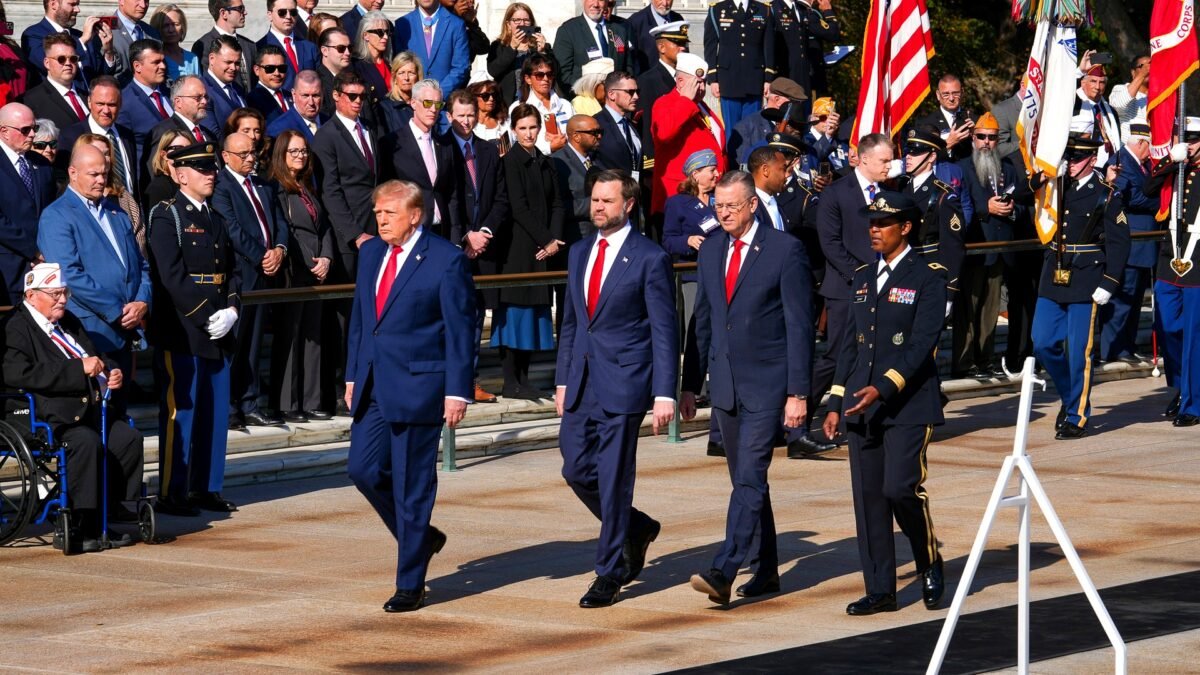
President Donald Trump has told Vice President JD Vance to stop leading negotiations with Iran, declaring in a social media post on Thursday that the United States no longer needs a deal with Tehran. The decision removes the administration’s chief negotiator from the Iran file at the very moment diplomats say talks were accelerating, and it leaves an eight-month war without a diplomatic track, days before Mr Trump travels to Asia for a summit with the leaders of China and Russia.
“We don’t need a deal with Iran. Those days have long since passed! We’ve got their money, Hundreds of Billions of Dollars, and we’ve got their Strait!” Mr Trump wrote on Truth Social on Thursday 12 November, according to the Associated Press, CNN and USA Today, which all reported the post in full. In the same message, he said he had asked Mr Vance “to focus his complete and total attention on the Massive Corruption and Crime taking place in Democrat run Cities and States throughout the U.S.”
The order was not a quiet reassignment. It was delivered in public, in the president’s own words, and it landed the morning after The Wall Street Journal reported that Mr Vance was weighing a possible re-engagement with senior Iranian negotiators, including face-to-face talks with a top Iranian security official. According to the Associated Press, which cited a person familiar with the matter, Mr Trump was aware of Mr Vance’s deliberations and believed the Iranians were not acting in good faith.
Hours later, in an interview with the conservative radio host Hugh Hewitt, Mr Trump took a harder line still. The American military was “locked and loaded”, he said, and was watching Pickaxe Mountain, a site linked to Iran’s nuclear programme, for signs of activity. “If something does not work out, I would not hesitate” to act, he told Mr Hewitt, according to the Associated Press. In the same interview, CNN reported, he conceded that it would “absolutely” be a defeat to walk away from the confrontation with Iran’s current government still in power.
The contradiction is the story. Within a single day, the president said the war was effectively over, said no deal was needed, said his forces were ready to strike, and said leaving Iran’s government in place would be a defeat. Allies, mediators and Tehran are now trying to work out which of those statements is the policy — and whether the man who had been doing the negotiating is still in the room at all.
What Trump said on Thursday
The Truth Social post was short, blunt and aimed in two directions at once. The first half closed the door on diplomacy with Tehran. The second half opened a new front at home, directing the vice-president to turn his attention to alleged corruption and crime in states and cities run by Democrats. Mr Trump named Minnesota, California and Illinois among them, according to reporting of the post.
USA Today, reporting the post on Thursday, said Mr Trump “signalled he plans to wind down negotiations with Iran” and had “pulled Vice President JD Vance off diplomatic efforts to broker a peace deal to end the war in Iran”. CNN, in its own account the same day, said Mr Trump had “offered mixed messages on his approach to the war with Iran, first writing on social media that the US doesn’t ‘need a deal’ with Tehran and pulling Vice President JD Vance away from the talks to focus elsewhere, then later conceding it would be a ‘defeat’ to walk away with Iran’s current regime still in power.”
The timing mattered as much as the words. The Wall Street Journal had reported on Wednesday that Mr Vance was considering face-to-face negotiations with a top Iranian security official to advance talks, after the vice-president had publicly blamed the war for the Republicans’ heavy losses in the midterm elections. The Associated Press reported that Mr Trump’s post came the morning after that report, and that the president — who had been aware of Mr Vance’s thinking — believed the Iranians were not acting in good faith.
Mr Vance was not left in doubt about the change. According to the New York Post, he joined an Oval Office meeting to discuss the war on Thursday morning, after Mr Trump had posted his message. The Post also reported, citing sources, that Mr Vance was not entirely removed from the Iran portfolio and would probably return to his negotiating role if there was progress in the stalled talks — a nuance that softens the public message but does not undo it.
The White House declined to comment directly to the Associated Press on Mr Trump’s post-election rhetoric on Iran. Secretary of State Marco Rubio, speaking on Friday evening to the Federalist Society, underscored the administration’s argument that economic pressure had already done the work. “The economic pain that we are inflicting on that regime is so great that there’s no need for military action because we’ve weakened them so much,” Mr Rubio said, according to the Associated Press. Earlier in the week, Mr Rubio had stressed that the United States was not opposed to mediators continuing their efforts. “If there’s a deal to be done, the president will be the first one to be in favor of it,” he said. “But it’s not going to be a stupid deal. It’s not going to be a bad deal.”
Vance, the negotiator Trump sidelined
To understand why the decision matters, it helps to understand what Mr Vance had been doing. He was not a bystander in the Iran file. He was, by every account, the administration’s chief negotiator — the official who had carried the talks, built the relationships and, in the view of some in Tehran, represented the more pragmatic wing of the administration.
According to Al Jazeera, Mr Vance was “believed to be viewed by Tehran as one of the more pragmatic figures in the Trump administration since the US and Israel launched their surprise war on Iran on February 28”. He was backed by Mr Trump’s envoys Jared Kushner and Steve Witkoff when he negotiated the now-defunct memorandum of understanding with Iran in June, an agreement that briefly paused the war and allowed shipping through the Strait of Hormuz to resume. The New York Post reported that the memorandum ran to 14 points and opened a 60-day window for negotiations to finalise an end to the war — a window that passed without a deal.
Mr Vance had also been the one keeping the channel open in recent weeks. Al Jazeera reported that he wrote a letter to Iran’s security chief, Mohsen Rezaei, in late October, as regional mediators redoubled their efforts to bridge the gaps between the two sides. Mr Rezaei initially described the tone of the letter as positive, but by last week he was dismissing claims of progress and a possible direct meeting with Mr Vance as “fake news about imaginary talks”. On the social media platform X, Mr Rezaei taunted the administration, writing: “You lost the war and the election. Vance has conceded, Rubio is heading for the exit, Hegseth is about to be fired, and the CENTCOM commander is now a podcaster!”
The vice-president’s own politics help explain the president’s frustration. Mr Vance had been sceptical about launching the war, according to the Associated Press, although he ultimately supported Mr Trump. After the midterm elections, he blamed the war for the Republicans’ defeat — a public judgement that the president plainly did not welcome. Nasser Hadian, a professor of international relations at the University of Tehran, told Al Jazeera that by assigning Mr Vance to the domestic corruption file, Mr Trump was “mainly signalling a confrontation with the Democrats after their sweeping victories against the governing Republican Party in the midterm elections”. But, Mr Hadian added, the move “may also serve Israel, which is reportedly eager for Trump to launch new strikes against Iran, after Vance blamed the Republicans’ humiliating defeat in the midterms on the war”.
Inside Iran, the reaction was mixed. The reformist newspaper Shargh argued this week that Mr Vance’s role on Iran was unresolved rather than definitely terminated, while also warning that the conflict could further escalate, according to Al Jazeera. The conservative daily Farhikhtegan disputed the portrayal of Mr Vance as genuinely opposed to the war, arguing that diplomacy, military force and economic pressure all served a common American objective of coercing Iran into accepting Washington’s conditions.
What is not in doubt is that the negotiator is gone from the table, at least for now. Whether he returns, as the New York Post’s sources suggested he might, depends on whether the talks make progress without him — a circular condition, since his absence is itself one of the reasons the talks have stalled.
A war with no ending in sight
The war Mr Trump now says needs no deal began on 28 February, when the United States and Israel launched a surprise war on Iran. Eight months on, according to the Associated Press, it has settled into a strange and dangerous condition: no longer a full-scale bombing campaign, but not a peace either. The shooting has largely stopped. The blockade has not. The diplomacy has now stopped too.
At the start of this week, Mr Trump met the prime minister of Qatar at the White House and afterwards told reporters that he believed it was highly unlikely he would need to order new major strikes on Iran, declaring that the war was “militarily is effectively over”, according to the Associated Press. On Monday 9 November, he told reporters that further military action “won’t be necessary”, and on Tuesday, according to the New York Post, he said the war was “effectively over” but that he would keep in place the “status quo” naval blockade of Iranian ports.
The blockade is the centrepiece of the American strategy as it now stands. Michael Singh, managing director at the Washington Institute for Near East Policy, told the Associated Press that he expected the status quo to persist for some time, with the United States and Iran locked in a stalemate over the Strait of Hormuz and Washington continuing its months-long naval blockade, which is curbing the flow of Iranian crude to the global market. Mr Singh said the American strategy of squeezing Iran economically was “a far more attractive option for Trump than military escalation or making concessions to Tehran”.
But the blockade is also the reason the war cannot simply be declared over. Iran’s economy is being strangled, its oil exports choked, and its people paying the price — and Tehran has made clear it will not accept that condition indefinitely. Mohammad Saleh Sedghian, director of the Arab Center for Iranian Studies, told Al Jazeera that the American siege and harsh sanctions would continue, “something that could cost Iran more than a relatively shorter military conflict with Washington”. He added: “The blockade and disruptions are significantly raising the costs for Iranian people. The current state of no war and no negotiated resolution is very dangerous.”
The nuclear question sits underneath everything. Differences with Iran over its nuclear activities remain the thorniest issue, according to the Associated Press, and Mr Trump insists they must be resolved as part of any deal meant to end the war. Tehran, for its part, remains unwilling to engage in negotiations over its nuclear programme until the United States agrees to several core conditions that Iran has been demanding be part of any ceasefire agreement. Al Jazeera reported that Tehran was demanding seven conditions and a clear sequencing of concessions to end the war — terms that appear unacceptable to Washington.
At the centre of the nuclear dispute sits Pickaxe Mountain, the English nickname for Kuh-e Kolang Gaz La, a 1,600-metre peak about a mile south of the Natanz nuclear complex in central Iran. Experts believe the mountain hosts a nuclear facility, thought to lie between 80 and 100 metres underground — far deeper than the better-known site at Natanz, and far harder to destroy. The Trump administration’s concern, according to a University of Manchester analysis, is that the mountain could shelter centrifuges capable of enriching uranium to weapons-grade levels. Newspaper reports citing Israeli intelligence assessments claim Iran moved centrifuges and related equipment into its tunnels, although analysts have not been able to confirm that any centrifuges have been moved there. What is inside the mountain, and how close it is to becoming operational, remain publicly unverified, and international inspectors have never been given access.
Mr Trump has repeatedly threatened the site, saying in October that the United States could destroy it quickly — in ten minutes, by one account, and in one hour by another. On 9 November, he said American forces were “locked and loaded” should circumstances change. A September assessment by the Centre for Strategic and International Studies, a think tank based in the United States, found an increased level of activity at Pickaxe Mountain during 2026. The facility’s depth is an estimate drawn from external evidence; detailed plans have never been published. America’s largest conventional bunker-buster, the GBU-57, was used against Fordow and Natanz in June 2025 — and even that weapon’s ability to reach a facility 80 to 100 metres underground is a matter of open debate among experts.
The Strait remains the flashpoint
While the diplomats argue, the Strait of Hormuz remains the place where the war could restart without anyone ordering it. The United Nations reported that October had the highest number of incidents against commercial ships in the contested waters since February, according to the Associated Press. The latest weekly report by the United Kingdom Maritime Trade Operations, published on Friday, recorded eight incidents in and around the strait, mostly in the southern route near Oman, according to Al Jazeera. The same report recorded 139 outbound and 169 inbound transits through the strait during the week — approximately 65 per cent below pre-conflict levels.
At the same time, a person familiar with the matter told the Associated Press that oil shipments through the strait were reaching near-prewar levels, and that Mr Trump believed he could potentially leave it to Gulf countries to negotiate a deal with the Iranians on governing the critical waterway. The two figures measure different things — ship transits on one hand, oil volumes on the other — but together they describe a waterway that is functioning and dangerous at the same time.
On Friday and Saturday, according to Al Jazeera, Iran’s Islamic Revolutionary Guard Corps and the regular army separately claimed several new incidents in which vessels either hit naval mines or were struck by projectiles after attempting “unauthorised” routes in the critical waterway. Those claims have not been independently verified, and they should be treated as claims, not as established facts. The same caution applies to an earlier Iranian claim, reported by CNN, that Iran targeted a United States military installation in Bahrain early on Friday in retaliation for what it described as an American attack on Iranian territory. CNN reported the claim as Iran’s account; no American or Bahraini confirmation of such a strike has been reported.
Qatar, the chief mediator, continues to try to negotiate an interim agreement that would restore traffic through the strait, which is a vital passageway for the flow of oil and natural gas from the Gulf to global markets, while leaving open options for further discussions between the United States and Iran, according to the Associated Press. But those efforts are now clouded by uncertainty following Mr Trump’s shifting — and sometimes contradictory — comments, according to two Middle East diplomats familiar with the process, who spoke to the Associated Press on condition of anonymity. The diplomats said the situation had appeared to be on the right track earlier in the week, after Qatar’s prime minister met Mr Trump. But the president’s social media post on Thursday, declaring that the United States did not need a deal with Iran and directing Mr Vance to focus his “complete and total attention” on his anti-fraud campaign, “has created a sense of limbo”.
One of the diplomats said the post raised questions about why Mr Trump appeared to be sidelining Mr Vance, who was sceptical about launching the war but ultimately supported Mr Trump. The other described the push for peace as falling into a holding pattern while people awaited clarification from the White House on Mr Trump’s intentions. That diplomat added that it was not entirely clear to mediators or the Iranians whether Mr Trump’s comments meant he was abandoning a negotiated agreement or was simply posturing after the congressional midterm elections that cost his Republican Party control of Congress.
Tehran’s own rhetoric has hardly cooled. Iran’s deputy ambassador to the United Nations, Gholamhossein Darzi, told the United Nations Security Council on Friday that Iran “has never closed the door to diplomacy”. But he warned that should the United States or Israel return to bombing, his country would offer “an immediate and decisive response”. Mr Hadian, the Tehran professor, told Al Jazeera that Iranian decision-makers would not tolerate the current situation indefinitely. “The authorities will either go after their warships, their vessels, or their military bases,” he said. “The stronger the blockade becomes, including through maritime pressure and disruptions for overland borders and air travel, war becomes more probable.”
The politics behind the turn
The Iran decision cannot be understood without the midterm elections. On 3 November, the Democrats won control of Congress, sweeping the Republicans from power in both chambers. The day after the vote, Mr Trump acknowledged that the war and the global economic tumult it had caused were partly to blame for his party’s losses, while maintaining that the war had been the right thing to do, according to the Associated Press.
The Democrats have not been shy about the point. Senator Cory Booker of New Jersey, speaking on Friday on the sidelines of the Democrats’ post-election gathering in Denver, told the Associated Press: “President Trump is now acting like an arsonist who has set ablaze our foreign policy. And now he just wants to walk away.”
The domestic turn in Mr Trump’s message — the instruction to Mr Vance to pursue alleged corruption in Democratic-run cities and states — is part of the same political story. The vice-president already leads the administration’s anti-fraud campaign, and the president’s post effectively made that campaign his full-time job. It also gave Mr Trump a way to change the subject: from a war his own vice-president had blamed for an election defeat, to an investigation of the party that had just won it.
The war has also become a liability inside the administration. Defence Secretary Pete Hegseth has faced an impeachment vote over his role in the war, according to Al Jazeera, after the House member Thomas Massie introduced articles of impeachment against him earlier in November. Al Jazeera also reported that Mr Hegseth and the Central Command chief, Brad Cooper, were reportedly in favour of renewed military action against Iran — a position that puts them at odds with the president’s public insistence that no further strikes are necessary, and with Mr Vance’s preference for a negotiated outcome.
All of this will follow Mr Trump to Asia. The Associated Press reported that his ambiguous positioning on the war was expected to loom large during a visit next week to the Philippines and the Asia-Pacific Economic Cooperation meetings in the Chinese tech hub of Shenzhen. While in Shenzhen, Mr Trump will hold an unprecedented three-way summit with China’s Xi Jinping and Russia’s Vladimir Putin, and he is expected to discuss Iran and the three powers’ nuclear stockpiles with them. The trilateral meeting has already been announced; what has not been announced is what, if anything, Mr Trump intends to do about the war he says is over and the deal he says he does not need.
Analysis: Why It Matters
The negotiator was the message
In diplomacy, removing a negotiator is never a neutral administrative act. It is a signal, and it is read as one by everyone watching — allies, mediators, adversaries and the negotiator’s own counterparts. Mr Vance was not simply the official who happened to be handling the Iran file. He was the official Tehran regarded as its most credible interlocutor, the one who had carried the June memorandum, written the October letter and kept the channel alive when it would otherwise have gone dead. His removal tells Tehran that Washington is no longer investing in the conversation, and it tells the mediators — above all Qatar — that their work has lost its American sponsor. A president can always bring a negotiator back, and the New York Post’s sources say Mr Vance may return if the talks progress. But talks do not progress on their own. They progress because someone is in the room, and the room is now empty.
“No deal” is a policy, not just a post
It is tempting to treat a social media post as theatre, and Mr Trump has often used his posts as opening bids rather than final positions. But this one has already produced real effects. The Associated Press reported that two Middle East diplomats described the peace effort as falling into a holding pattern, with mediators waiting for clarification from the White House. Al Jazeera reported that decision-makers in Tehran were weighing the implications of the shift, and that analysts believed it could increase the chances of conflict. When the people whose job it is to make peace stop working because they cannot tell what the policy is, the post has become the policy — whatever the president’s private intentions may be. The distinction between posturing and policy only matters if someone with authority eventually clarifies it. No one has.
The blockade is now the strategy
Strip away the rhetoric and the American position is now clear: no new strikes, no new deal, and a naval blockade that stays in place. Mr Singh of the Washington Institute called it the most attractive option for Mr Trump, and it is easy to see why. A blockade costs no American lives, requires no congressional authorisation, and lets the president claim both that the war is over and that the pressure continues. But a blockade is also a form of war, and it is one that hurts ordinary Iranians first. Mr Sedghian’s warning — that the siege and sanctions could cost Iran more than a relatively shorter military conflict — is a reminder that economic warfare has casualties too, even if they do not appear on a battlefield map. And a blockade that has no diplomatic off-ramp is not a strategy for ending a war. It is a strategy for managing one indefinitely, at rising cost to everyone it touches.
The mixed messages are the danger
The most dangerous feature of the last week is not any single statement Mr Trump has made about Iran. It is the fact that he has made all of them, and they point in different directions. The war is effectively over, and the military is locked and loaded. No deal is needed, and it would be a defeat to walk away with Iran’s government still in power. The vice-president is off the file, and the vice-president may return. Each statement is defensible on its own. Together, they leave every other actor guessing — and guessing is how miscalculation happens. Iran’s deputy ambassador warned of an “immediate and decisive response” to any new bombing. Mr Hadian predicted that Tehran would eventually go after American warships, vessels or bases. The Strait of Hormuz is already the most incident-prone waterway in the world. In that environment, ambiguity is not a clever negotiating tactic. It is a hazard.
The clock is running toward Shenzhen
The trilateral summit in Shenzhen, where Mr Trump will sit down with Mr Xi and Mr Putin, gives this story its deadline. The Associated Press reported that Mr Trump was expected to discuss Iran and the three powers’ nuclear stockpiles with them — which means the Iran question will be on the table in a room that includes two of the world’s other nuclear powers, neither of which shares Washington’s view of the war. Mr Trump will arrive in that room having told the world he needs no deal, having removed his negotiator, and having warned that his forces are ready to strike. That is a difficult position from which to negotiate, and an easy position from which to be misunderstood. The summit may produce the clarification the mediators are waiting for. Or it may produce another round of statements that leave everyone guessing. Either way, the days between now and Shenzhen are the window in which this story will be decided — by a post, a meeting or a miscalculation.
What to Watch Next
- Whether Mr Vance stays off the file. The New York Post reported that sources expect him to return if the talks progress. Watch for any meeting, call or public statement that puts him back in the room — or confirms he is out for good.
- Qatar’s next move. The chief mediator is still trying to negotiate an interim agreement on Strait of Hormuz traffic. If Doha pauses or scales back its efforts, it will be the clearest sign that the diplomatic track has genuinely closed.
- The Strait of Hormuz incident count. The United Kingdom Maritime Trade Operations publishes weekly figures. Any rise in incidents, or any verified attack on a commercial vessel, would show the limbo turning into escalation.
- Pickaxe Mountain. Any new statement from Mr Trump about the site, any satellite evidence of activity, or any Iranian move to publicise the facility will signal whether the “locked and loaded” warning is hardening into a plan.
- The Shenzhen trilateral. Mr Trump’s meeting with Mr Xi and Mr Putin is expected to cover Iran and nuclear stockpiles. Watch for any joint language on Iran — or any sign that the two leaders pressed him on the war.
- The domestic anti-fraud campaign. Mr Vance’s new assignment is the other half of this story. Watch where the campaign goes first, and whether it becomes the administration’s main political weapon in the weeks before the new Congress is seated.
- Tehran’s next signal. Iran’s deputy ambassador said diplomacy was never closed. Watch for any Iranian statement, release or back-channel move that tests whether the door Mr Trump appeared to shut is still open.
Sources
- Associated Press, “With Shifting Iran Rhetoric Following US Elections, Trump Leaves Mideast in Limbo About Path Ahead” (via Military.com)
- USA Today, “Trump says deal with Iran not needed, pulls Vance off negotiations”
- CNN, “Trump tells Vance to turn his focus away from Iran: ‘We don’t need a deal'”
- CNN, “Iran targets US military site in Gulf for first time in two months as hopes for a deal fade”
- Al Jazeera, “How does Iran view shift in US approach after JD Vance ordered away?” (via Occasional Digest)
- University of Manchester, “Why Donald Trump keeps threatening Iran’s Pickaxe Mountain — and why it is so hard to destroy”

About the Author — Abdul Mannan
Related Articles
Supreme Court to Decide Whether Trump Can Bar Asylum at the Southern Border
The justices will decide whether Proclamation 10888 lawfully shut off asylum at the southern border, and whether lower…

Democrat Jonathan Kreiss-Tomkins Wins Alaska Governor’s Race, Ending 28 Years of Republican Rule
Jonathan Kreiss-Tomkins, 37, won 50.8 per cent of first-choice votes to become Alaska's first Democratic governor since 1998…
Trump Takes Elon Musk on Asia Trip but Will Not Raise the Nvidia Scandal With Xi
President Donald Trump will take Elon Musk with him on next week's trip to Asia, but the billionaire…