
Imran Khan Tells Top Judges He ‘May Not Return Alive’ in Plea for Medical Treatment

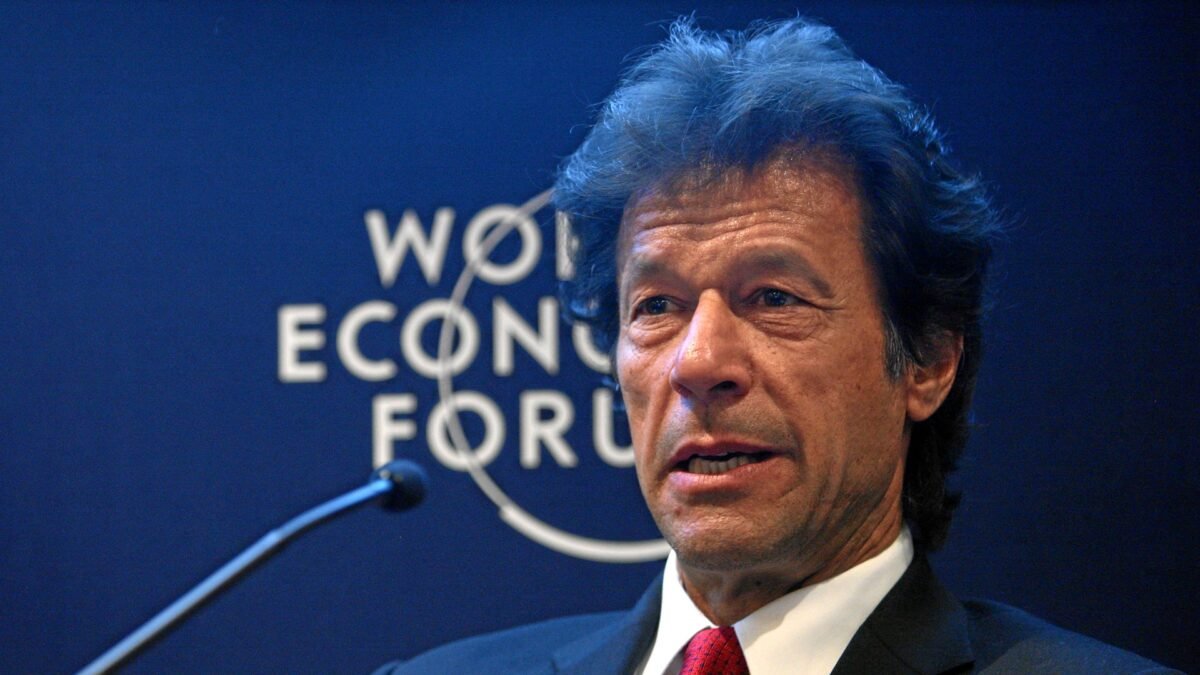
Pakistan’s jailed former prime minister Imran Khan has written to the country’s three most senior judges warning that his health in prison is failing and that he may not survive without urgent medical treatment, according to Reuters, which reported the appeal on Monday, 16 November 2026.
In an open letter dated 16 November, addressed to the chief justices of the Supreme Court, the Federal Constitutional Court and the Islamabad High Court, Khan said doctors had warned him that he was “highly vulnerable to a brain haemorrhage and cardiac arrest” and that his heart had already suffered damage.
“At seventy-four, this unrelenting state is taking me to a place from which I may not return alive,” he wrote, according to Reuters and Dawn, which both reported the letter on Monday.
The letter was shared on social media on Monday by his lawyer, Barrister Salman Safdar, who said Khan had given him the instructions and notes during a three-hour meeting at Rawalpindi’s Central Jail Adiala on 11 November. Safdar said he had composed the letter “faithfully and solely” on those instructions, adding: “The words that follow are his.”
Khan, 74, has been in prison since August 2023. He wrote that he had lost 85 per cent of the vision in his right eye, that his blood pressure had become uncontrolled during solitary confinement, and that his wife, Bushra Bibi, who is also jailed, could lose her sight permanently without another operation. He asked the judges not for a favour but for the implementation of the Supreme Court’s own orders on his medical treatment and prison conditions.
“I do not ask your Lordships for any favour. All I request as justice is the implementation of the orders of the honourable SC and proper treatment for our medical conditions,” he wrote. “I will only remain able to prove my innocence if I stay alive.”
The government disputes the account. Information Minister Attaullah Tarar has said Khan was taken to the Pakistan Institute of Medical Sciences (PIMS) between 20 and 21 August for a detailed examination involving doctors from Shifa International Hospital, and Parliamentary Affairs Minister Tariq Fazal Chaudhry said on Monday that the claims of denied medical facilities were “contrary to the facts”, adding that Khan had been taken to PIMS eight times for medical examinations and that, according to medical assessments, his blood pressure was satisfactory.
The health claims in the letter are Khan’s own account. They have not been independently verified through publicly available medical records, and the government and the prison authorities have given a different version of his treatment. What is not in dispute is that the letter exists, that it was published by his lawyer on Monday, and that it has immediately become the most consequential political document in Pakistan in weeks.
“I may not return alive”
The letter opens with Khan writing not as a former prime minister or as the head of a political party, but as a man who says he gave his life to Pakistan through cricket, philanthropy and public service. He recalled that he had served as the country’s 22nd prime minister and said no criminal case had been registered against him for 70 years. After turning 70, he wrote, he faced what he called an “unprecedented and ruthless campaign of political victimisation”, involving numerous prosecutions, more than 100 court appearances, repeated pre-arrest bail applications and an assassination attempt that he survived.
Despite the cases, he said he had chosen to pursue his defence through the courts and had “never once sought relief on medical grounds, nor used illness as a tactic”. He wrote that his faith in the justice system had been renewed whenever he received relief from the courts, but that this changed after the constitutional amendments, following which the relief available to him became “narrow, and then it closed off altogether”.
“It grieves me deeply to say that, when I needed it most, the system I had placed my trust in did not come to my aid,” he wrote, adding that he and Bushra Bibi had faced successive criminal trials in Adiala while their appeals remained pending.
The heart of the letter is the account of his confinement. Khan said his circumstances changed on 20 December 2025, the day the verdict was announced in the Toshakhana case: “I was totally isolated, disconnected and held incommunicado from the outside world, in torturous solitary confinement for up to twenty-two hours a day, in disregard of every constitutional right and every entitlement the Prison Rules guarantee a prisoner: no family, no lawyers, no call to my sons, no books and no television.”
He wrote that in the entire year he had been allowed to meet his counsel only four times: on 10 February, on 8 April, and then, after a silence of almost seven months, on 2 and 11 November 2026. His wife, he said, had been allowed to meet her counsel only once during the year. The restrictions, he said, violated the jail manual, prison rules and prisoners’ basic right to consult their lawyers, leaving them unable to defend themselves in the cases against them.
According to the letter, the jail’s own medical board recorded his anxiety and advised more frequent contact with his wife and family, reading material and television. “That advice has not been followed,” he wrote.
He said his weekly meeting with Bushra Bibi, which he called his “only human interaction”, was repeatedly cancelled by jail authorities without explanation. He said he had learnt that his three sisters were also in custody but was not being allowed to meet them. His sons, Kasim and Sulaiman, were not permitted to call him despite clear court orders. “No one in the jail is permitted to respond to me or speak to me, not when I offer them Salam, and not when I recite a verse of the Holy Quran,” he wrote. “The purpose, I can only conclude, is to make me ill and to break my will.”
On his health, Khan wrote that his blood pressure had become uncontrolled during solitary confinement, rising from 130 to 150 and then 170, before reaching 192 and 193 on 10 November. He said doctors had warned him that he was “highly vulnerable to a brain haemorrhage and cardiac arrest” and that his heart had already suffered damage. The eye condition, he wrote, was identified as right central retinal vein occlusion, which first emerged in late January and was discovered by a court-appointed amicus curiae in February 2026. He said he had lost 85 per cent of the vision in his right eye.
He closed the letter with an appeal on “the most basic grounds of human compassion” to give him justice “before it is too late”. “I spent my life building hospitals so that those who could not afford treatment would receive it free of cost,” he wrote. “Today, I ask only that my wife and I be treated.”
The 18 August order that was never carried out
A central demand in the letter concerns a Supreme Court order issued on 18 August by a three-member bench, after considering a report from the jail authorities. The court had directed the authorities to shift Khan to Islamabad’s Shifa International Hospital within two days, have him examined by a medical board including a cardiologist and an eye specialist, and allow him weekly meetings with his family and twice-weekly phone calls with his sons.
Khan wrote that the order had not been implemented. He was taken to PIMS instead and returned to jail after a medical examination, and the PTI subsequently filed a contempt petition alleging that the authorities had failed to implement the court’s order. “That order has not been implemented. My case now rests on the docket of the FCC, awaiting a hearing,” he wrote.
He also questioned the priority given to his appeal in the Al-Qadir case, the £190 million corruption case in which he is serving a sentence. “It saddens me deeply to observe that the Al-Qadir appeal hearing has taken priority while my life, my rights and my wellbeing are left waiting,” he said.
The order’s history is tangled, and both sides cite it. In late January, Khan was first taken to hospital for a minor eye procedure. Five days later, Information Minister Attaullah Tarar said doctors at PIMS had conducted an examination of his eyes and, after obtaining his written consent, carried out a minor medical procedure that lasted around 20 minutes. PIMS later confirmed that Khan was administered an anti-VEGF intravitreal injection to treat right central retinal vein occlusion.
In February, a report prepared by Barrister Safdar on the Supreme Court’s direction revealed that Khan had told officials his right eye was functioning at only 15 per cent capacity. Safdar submitted the report to a two-member bench. As a result, the Supreme Court ordered that Khan be granted access to his personal physicians in Adiala Jail and that he be allowed telephone contact with his sons, Kasim and Sulaiman.
Later, a medical board examining Khan reported an improvement in his eyesight and did not recommend shifting him to a hospital. According to the medical report, his vision in his right eye improved from 6/36 to 6/9, while his left eye had 6/6 vision with the use of glasses. The assessment was carried out by a board comprising Dr Nadeem Qureshi and Dr Arif, following a detailed examination at Adiala jail. The government had earlier denied the 85 per cent vision-loss claim, and one of Khan’s sisters said his eyesight had significantly improved after treatment.
The two accounts now sit side by side, unresolved: the former prime minister says his vision is 85 per cent gone and his blood pressure reached 192 and 193 on 10 November; the government says he has been examined eight times, that a medical board found his eyesight improving, and that his blood pressure was satisfactory. Neither side has published the underlying medical records, and the public cannot adjudicate between them. That absence of an independent, published record is itself now part of the story.
The government’s answer: treatment was provided
The government has maintained throughout that medical treatment was provided. Information Minister Attaullah Tarar said Khan was taken to PIMS between 20 and 21 August for a detailed examination involving doctors from Shifa International Hospital, the very hospital the Supreme Court had named. More recently, Khan was taken to PIMS overnight on 10–11 November for an eye procedure. A hospital official told Dawn that he received an anti-VEGF injection, that his vital parameters were normal, and that he remained clinically stable before and after the procedure.
Parliamentary Affairs Minister Tariq Fazal Chaudhry said the claims of denied medical facilities were “contrary to the facts”, adding that Khan had been taken to PIMS eight times for medical examinations and that, according to medical assessments, his blood pressure was satisfactory.
The government’s position, in short, is that the state has not withheld treatment but has delivered it repeatedly, at the country’s main public hospital, and that the former prime minister’s condition is being monitored. The letter’s position is that the treatment delivered was not the treatment ordered — that the Supreme Court directed a transfer to Shifa International Hospital and an examination by a board including a cardiologist and an eye specialist, and that this did not happen — and that the conditions of his confinement, above all the isolation, are themselves damaging his health.
The dispute is therefore not only about medicine. It is about whether a court order means what it says, and about who decides what compliance looks like when the state is both the jailer and the provider of the treatment.
Bushra Bibi: the plea within the plea
Khan wrote that it was not his own condition that disturbed him most, but his wife’s. “Yet it is not my own condition that disturbs me most, but my wife’s. In April 2026, her retina detached; she underwent complicated eye surgery in secrecy and was sent straight back to solitary confinement,” he wrote.
Recalling their meeting in November, he said that when he saw her this month, “she could neither bear the light nor open her eyes, and without another surgery she may lose her sight permanently.” He wrote that her records were withheld, her doctors denied, and her suspension of sentence unheard, “despite the law’s compassion for women prisoners”.
Bushra Bibi was examined at Adiala in March after complaining of pain in her right eye. She was reportedly examined by Dr Muhammad Arif Khan, head of the ophthalmology department at PIMS. The medical report stated that she had been experiencing blurred vision and black spots in her right eye, that she also reported seeing flashes in the dark, and that she was suffering from headaches. The examination diagnosed her with posterior vitreous detachment in her right eye, and also identified myopia and astigmatism. She was prescribed eye drops and medication, along with the use of glasses, and was reportedly recommended a follow-up medical check-up after four weeks. She then underwent eye surgery on the evening of 16 April.
Her counsel went to the Islamabad High Court on Monday asking for her complete medical file and for her to be shifted at once to a specialist hospital, according to reports of the filing. The application makes the wife’s case a separate legal track from her husband’s letter, and it means the courts now face two medical pleas from the same household on the same day.
Three years in Adiala: the cases behind the letter
Khan has been in prison since August 2023, after convictions his Pakistan Tehreek-e-Insaf party calls politically motivated. He and Bushra Bibi were sentenced to 17 years in prison on 20 December 2025 in the Toshakhana-II case, which concerns allegations that the couple unlawfully retained a Bulgari jewellery set gifted by the Saudi crown prince during an official visit to Saudi Arabia. He is also serving a sentence in the £190 million corruption case, known as the Al-Qadir case. According to Reuters, all of Khan’s convictions bar one have been suspended or overturned, with appeals pending. He denies wrongdoing and says the charges are politically motivated, a claim the government denies.
He also faces pending trials under the Anti-Terrorism Act in connection with protests on 9 May 2023, the day of his arrest that year, when violent protests broke out across the country. The letter’s complaint about successive criminal trials in Adiala while appeals remained pending refers to this long tail of cases, which has kept him in custody even as individual convictions have been set aside on appeal.
The family dimension sharpened in recent days. His sisters Uzma Khan and Noreen Niazi were released from Kot Lakhpat Jail on 13 November, while elder sister Aleema Khan remains detained. Khan wrote that he had learnt his three sisters were in custody but was not being allowed to meet them. The release of two sisters three days before the letter was published, and the continued detention of the third, is part of the backdrop against which the letter’s claim of isolation must be read.
Khan was removed from office in April 2022 through a no-confidence vote, after which he led a sustained campaign against the government and the military establishment. His arrest in August 2023, and the cascade of cases that followed, removed him from the political stage but not from Pakistani politics: his party, barred from contesting under its own symbol, still won the largest number of seats in the February 2024 general election through candidates who stood as independents. The letter is therefore not only a medical appeal. It is a document from a man who remains, even from a prison cell, the central figure of Pakistan’s opposition.
A judiciary reshaped: the court the letter must now persuade
The letter is addressed to three chief justices because the judiciary it must persuade is not the judiciary of a year ago. The 27th Constitutional Amendment, passed in November 2025, created a new Federal Constitutional Court and stripped the Supreme Court of its role in hearing constitutional cases. The amendment was passed in one of the fastest and most contentious processes in Pakistan’s recent history, with the Senate and the National Assembly approving it within days and President Asif Ali Zardari signing it into law on 13 November 2025. Two senior Supreme Court judges, Syed Mansoor Ali Shah and Athar Minallah, resigned in protest.
Under the new arrangement, constitutional matters, references from the high courts and appeals expressly provided under legal acts are dealt with by the Federal Constitutional Court, while the Supreme Court exercises appellate jurisdiction in the situations envisaged under Article 185 of the Constitution. The Federal Constitutional Court has since ruled that its legal observations bind all courts, including the Supreme Court, and that Supreme Court judgments carry only persuasive value for it. The two courts have been feeling their way towards a working relationship ever since, with litigation about which forum should hear which case still unresolved in important respects.
That is the context of Khan’s sentence: “My case now rests on the docket of the FCC, awaiting a hearing.” The order he says was never implemented was made by the Supreme Court; the forum that must now enforce it, or decide whether it can, is the new constitutional court. The letter is therefore addressed, deliberately, to the chief justices of all three courts that could touch it: the Supreme Court that made the order, the Federal Constitutional Court that now holds the docket, and the Islamabad High Court that supervises the jail and the capital’s administration.
The Human Rights Commission of Pakistan, concluding its 40th annual general meeting on Monday, warned of what it called an escalating assault on constitutional democracy and fundamental rights, saying freedom of expression, judicial independence and democratic institutions were facing growing threats. Its chairperson, Asad Iqbal Butt, said the 26th and 27th Constitutional Amendments had seriously weakened judicial independence and institutional checks and balances. The commission also criticised the Federal Constitutional Court’s intervention restricting the Peshawar High Court’s exercise of its constitutional jurisdiction, and pointed to the imposition of an emergency and governor’s rule in Khyber Pakhtunkhwa, the detention of the province’s elected chief executive and the mass arrests of PTI workers in October 2026.
The reaction: opposition, rights body and a tense political day
Opposition leaders moved quickly. National Assembly opposition leader Mahmood Khan Achakzai and Senate opposition leader Allama Raja Nasir Abbas urged the superior judiciary on Monday to take notice of Khan’s letter and the alleged non-implementation of the Supreme Court’s August order. Their intervention frames the letter as a test of the judiciary’s willingness to enforce its own orders against the executive — the same question Khan himself poses.
The letter arrived on a day of major political developments in Islamabad. PPP Chairman Bilawal Bhutto-Zardari telephoned JUI-F chief Maulana Fazlur Rehman on Sunday and condemned what he called the government’s actions and “political vengeance” against the party, saying the government should tolerate opposition criticism and avoid steps that weaken democracy and Parliament. The call came as JUI-F supporters staged protests in several cities across Khyber Pakhtunkhwa — including Peshawar, Swabi, Lower Dir, Shangla, Hangu, Battagram and Lakki Marwat — against what the party called propaganda targeting its leadership, with workers defying a Section 144 ban on gatherings in Swabi. A terrorism case has been registered against Mufti Abrar Ahmed, secretary to the JUI-F chief. Tensions between Fazl and the PML-N-led government have run high for a month over the KP emergency and governor’s rule.
Defence Minister Khawaja Asif said on Sunday that it would not take long to reach a consensus on creating new provinces, and that the process was moving towards agreement. Official sources told Dawn that President Asif Ali Zardari and Prime Minister Shehbaz Sharif, in their weekend meeting in Lahore, had agreed on the direction of the consultations. The ruling PML-N and its coalition partner the PPP are meanwhile moving to repair their relationship, with Prime Minister Shehbaz Sharif scheduled to travel to Karachi on Friday, 20 November, to meet Bilawal Bhutto-Zardari, after differences between the two parties surfaced during the general elections in Gilgit-Baltistan and Azad Jammu and Kashmir earlier this year.
The Human Rights Commission’s statement added a further layer. It highlighted the October 2026 sentencing of human rights lawyers Imaan Mazari-Hazir and Hadi Chattha to ten years in prison, describing the verdicts as a chilling example of how individuals exercising their constitutional rights could be targeted, and expressed concern over continued enforced disappearances and the detention of activists including Mahrang Baloch, Ali Wazir and Idris Khattak. It called for an open national debate on Balochistan’s challenges and urged the restoration of cross-border trade to safeguard livelihoods.
Taken together, the day’s developments describe a political system under strain on several fronts at once: a jailed former prime minister warning that he may die in custody, a coalition partner accusing the government of political vengeance against another opposition party, a rights body warning that democratic institutions are being hollowed out, and a government pressing ahead with constitutional changes to the map of the federation. The letter did not create that strain. It gave it a human face and a deadline.
Analysis: Why It Matters
A medical plea, not a political one — and that is the point
The most striking feature of the letter is what it does not ask for. Khan does not ask to be released, does not ask for his convictions to be quashed, and does not ask the judges to intervene in the politics of his cases. He asks for a hospital, for a medical board, for meetings with his family and for phone calls with his sons — all things a court has already ordered. By framing the appeal as a request for the implementation of existing orders rather than for new relief, he has made the letter very difficult to dismiss as a political manoeuvre, and very difficult for the judiciary to ignore without appearing to abandon its own authority. The letter’s power lies precisely in its modesty: it asks the system to do what the system has already said it will do.
The unimplemented order is the real charge
Strip away the medical detail and the letter makes one institutional accusation: that an order of the Supreme Court, made by a three-member bench in August, has not been implemented three months later, and that no one has been held to account for that. In any legal system, the enforcement of court orders is the line between a judiciary and a debating society. If a former prime minister, whose case is followed by millions, cannot get a hospital transfer order enforced, the question ordinary litigants will ask is what chance they have. The letter forces the courts to answer that question in public, and soon, because the man asking it has put a time limit on it with his own body.
Two versions of the same prison — and no independent record
The public now has two irreconcilable accounts of one prisoner’s health. Khan says his blood pressure reached 192 and 193, that he has lost 85 per cent of the vision in one eye, and that his wife may go blind. The government says he has been examined eight times, that a medical board found his eyesight improving, and that his blood pressure was satisfactory. Both accounts cannot be complete, and the public has no way to tell which is closer to the truth because neither side has published the medical records. That vacuum is dangerous: it invites every side to fill it with suspicion, and it means the argument will be settled by politics rather than by evidence. The obvious remedy — an independent medical board, with its findings published — is also the remedy the Supreme Court ordered in August. Its non-implementation is the reason the vacuum exists.
The letter is addressed to a court system that has changed underneath it
Khan’s case now sits on the docket of a court that did not exist when his troubles began, created by an amendment he blames for closing off the relief that was once available to him. The Federal Constitutional Court has spent its first weeks asserting that its observations bind the Supreme Court, while the Supreme Court has been working out what jurisdiction it retains. The letter lands in the middle of that unresolved contest and asks the new court to do something the old court could not get done: enforce an order against the executive. How the Federal Constitutional Court responds — whether it takes the case up quickly, whether it orders an independent examination, whether it holds anyone in contempt — will be read as the first real evidence of what the new court is for, and whom it serves.
What happens next will be read as a test of the new judiciary
Whatever the courts do, the letter has already changed the terms of the argument. The government can no longer describe Khan’s detention as a routine matter of criminal justice, because the prisoner himself has described it, in terms a court cannot easily disregard, as a matter of life and death. The opposition can no longer be accused of inventing a crisis, because the crisis is described in the prisoner’s own words, published by his own lawyer. And the judiciary can no longer treat the case as one file among many, because the file now contains a warning that its subject may not survive the wait. The next hearing, the next medical bulletin and the next statement from the prison authorities will all be read against the letter’s central claim. That is why the letter matters beyond the fate of one man: it has made the enforcement of a court order, and the health of a prisoner, into the measure by which Pakistan’s new judicial order will first be judged.
What to Watch Next
- Whether the Federal Constitutional Court lists Khan’s case for hearing this week, and whether it orders an independent medical board to examine him and Bushra Bibi, with its findings made public.
- Whether the Islamabad High Court acts on the application filed on Monday by Bushra Bibi’s counsel seeking her complete medical file and her immediate transfer to a specialist hospital.
- Whether the prison authorities or the government publish any medical record or bulletin that would allow the competing accounts of Khan’s blood pressure and eyesight to be tested against evidence.
- Whether the Supreme Court takes up the contempt petition filed by the PTI over the alleged non-implementation of its 18 August order, and whether any official is held to account.
- Whether the Al-Qadir appeal, which Khan says has been given priority over his health matters, is listed for hearing, and what the court decides on his sentence.
- Whether opposition parties, led by Achakzai and Raja Nasir Abbas, escalate the matter in Parliament or on the streets, and whether the JUI-F protests in Khyber Pakhtunkhwa merge with the PTI’s campaign over Khan’s health.
- Whether the Human Rights Commission’s warning, and the wider debate over the 26th and 27th Amendments, produces any response from the government or the judiciary on the independence of the courts.
Sources
- Reuters — Pakistan ex-PM Imran Khan appeals for urgent medical help, says he ‘may not return alive’
- Trending News PK — Imran Khan Appeals to Top Judges for Medical Treatment (based on the open letter and reporting by Reuters, Dawn and the Express Tribune)
- Globe TV — Imran Khan asks Pakistan’s chief justices for hospital transfer, citing heart risk (summarising Dawn’s reporting)
- Dawn report, reproduced — ‘I may not return alive’: Imran urges top judges to enforce court orders, ensure medical treatment
- The Pakistan Daily — FCC Says Its Legal Observations Bind All Courts
- Wikipedia — Twenty-seventh Amendment to the Constitution of Pakistan

About the Author — Abdul Mannan
Related Articles
Pakistan Takes the ECO Chair as Dar Hosts Regional Foreign Ministers in Islamabad
Pakistan has assumed the chairmanship of the Economic Cooperation Organization for 2026–27 as Deputy Prime Minister and Foreign…
No Relief for Imran Khan and No Change in KP, Sources Say, as PTI Backchannel Talks Narrow to Bushra Bibi
Sources say backchannel contacts between the PTI and the authorities will stay within narrow limits: no relief for…
Major Among Four Soldiers Killed as 24 Militants Die in North Waziristan and Balochistan Operations
Four soldiers, including a major, were killed and 24 militants died in separate operations in North Waziristan and…