
Britain to Send Ukraine More Than 1,000 Air Defence Missiles in £240m Winter Package as Allies Rush Patriot Interceptors

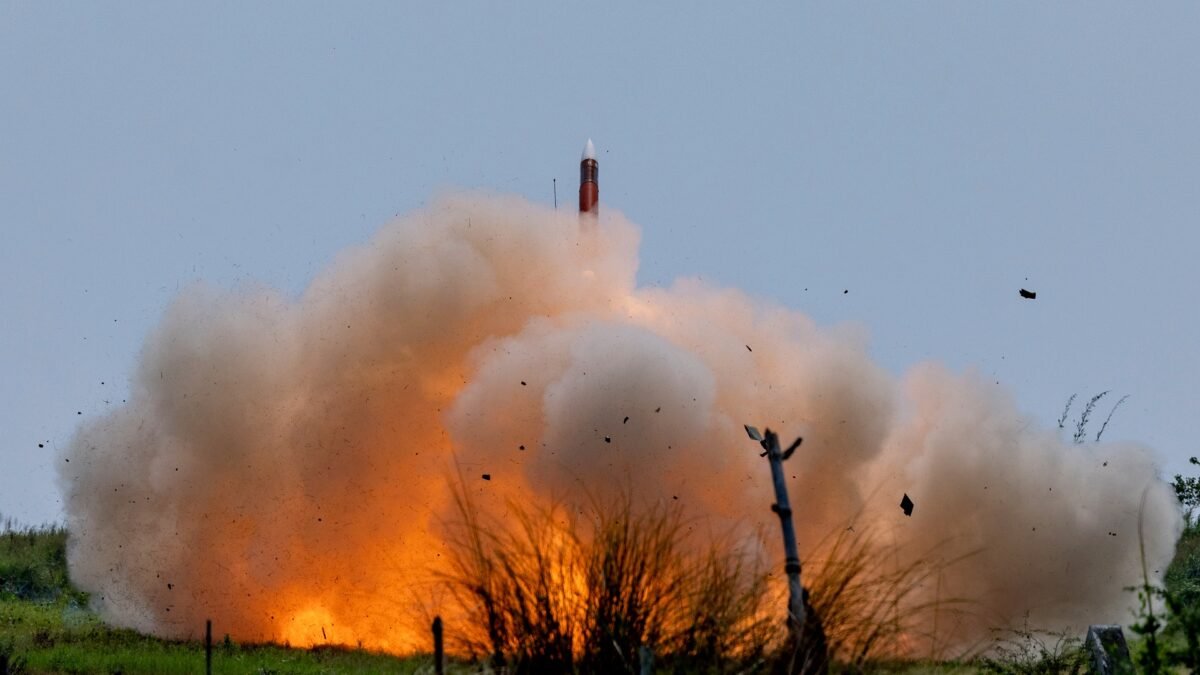
Britain will send Ukraine more than 1,000 additional short-range air defence missiles and launchers in a new £240 million package designed to help the country survive Russian air attacks this winter, the government announced on Tuesday.
Defence Secretary Wes Streeting unveiled the support as he co-chaired the 37th meeting of the Ukraine Defence Contact Group, the almost 50-nation coalition that coordinates military aid for Kyiv, at NATO headquarters in Brussels, according to the government.
The package, worth about $317 million, includes more than 1,000 short-range air defence missiles and launchers, plus more than a dozen air defence radars to help Ukraine spot incoming strikes, according to Reuters and the government’s announcement. Deliveries to Ukraine’s armed forces will begin from mid-December.
“In Ukraine, President Putin uses winter as a weapon. That’s why we must continue to convert our steadfast commitment for Ukraine into capability that will help defend against barbaric Russian attacks,” Mr Streeting said, according to the government’s statement.
“We are using funding the Chancellor pledged at the Budget to support Ukraine this winter to deliver over 1,000 air defence missiles, as part of our ongoing commitment to mobilise allies and strengthen Ukraine’s defences,” he added. “Ukraine’s frontline is the frontline for freedom and democracy, and we will stand with them for as long as it takes.”
What Britain is sending
The missiles will come from Thales in Belfast, and the radars will be sourced from Britain and Europe, according to the government. The systems have already proved effective against the Iranian-designed, jet-powered Shahed drones that Russia is using to strike Ukrainian cities and infrastructure, the government said.
The launchers are Thales’s RapidRanger system, a lightweight, highly automated system that fits on wheeled or tracked vehicles and fires Starstreak and Lightweight Multirole Missiles, according to Defence Blog, a specialist defence publication.
The new deliveries build on 400 surface-to-air missiles Britain has already supplied Ukraine ahead of this winter, according to the government. The £240 million package forms part of the £500 million announced at the Budget to plug urgent gaps in Ukraine’s air defences this winter, on top of Britain’s wider £10 billion commitment to Ukraine.
Prime Minister Andy Burnham will outline the remaining support at a meeting of the Coalition of the Willing on Thursday, according to the government.
The announcement came on the same day that Britain, Sweden and Ukraine signed a Letter of Intent committing to the principle of providing Swedish Gripen fighter jets to Ukraine, with what the government described as a formidable range of battle-proven weapons systems. That follows an announcement earlier this year of €300 million in investment to help deliver the Gripens, and British companies supply critical components for the aircraft, including the radar and landing gear, with more than 30 per cent of each aircraft manufactured in the United Kingdom, according to the government.
Britain, alongside France, is also currently leading the Multinational Force Ukraine’s first major exercise in Poland this month. Exercise Koalicja tests how to move, protect and supply a force that would help rebuild Ukraine’s armed forces once the fighting ends, according to the government.
Germany and Norway fund Patriot interceptors
Britain’s announcement was matched on Tuesday by a separate pledge from Germany and Norway to buy more missiles for Ukraine’s American-made Patriot air defence batteries, the only systems Kyiv has that can reliably stop Russian ballistic missiles.
German Defence Minister Boris Pistorius said Berlin would contribute $300 million to a new package arranged through the Prioritised Ukraine Requirements List, known as PURL, the NATO-coordinated mechanism under which European allies pay for American weapons sent to Kyiv. Norway is funding the rest of the package, according to Reuters.
“The focus of the package is air defense — specifically, guided missiles for Patriot systems PAC-2 and PAC-3,” Mr Pistorius said, according to Reuters. It is the fifth package Germany has joined under PURL, he said.
Germany is also preparing to integrate its IRIS-T missiles into the NASAMS air defence systems that Norway has supplied to Ukraine, and will deliver additional radars as well as drone and fighter jet ammunition, according to Reuters.
The pledge matters because Germany said earlier this month that it could no longer hand over Patriot systems from its own stocks, since further transfers would leave gaps in Germany’s own defences. Buying the interceptors instead, through PURL, has become the route by which Ukraine’s Patriot batteries are kept supplied. Ukraine’s Defence Ministry has said about 95 per cent of the Patriot interceptors it receives now come through PURL, according to Defence Blog.
On 30 October, the United States State Department approved a possible sale of 500 PAC-3 MSE Patriot interceptors to Ukraine for an estimated $2.1 billion, to be financed by Canada, Germany and Norway alongside Ukrainian national funds backed by a European Union loan, with no United States government funding involved. President Volodymyr Zelenskyy said at the time that the newly produced missiles could take several years to arrive, although Ukraine needs them this winter to protect its energy infrastructure.
A winter campaign against the power grid
The announcements came as Russia intensifies a campaign of missile and drone strikes against Ukraine’s energy system, in what Kyiv and its allies describe as a deliberate attempt to freeze the country into submission as temperatures fall.
Russia has struck Ukraine’s power system almost every day since 30 September, according to a detailed account of the campaign published by Noozify. On 16 October, Russia’s chief of the general staff told President Vladimir Putin that the armed forces had begun massive strikes on Ukraine’s energy infrastructure.
According to the independent organisation ACLED, 195 strikes on energy infrastructure were recorded in 2023. In 2026 there have been 2,319 since the start of the year, and that is only as of 6 November, according to the Ukrainian World Congress.
The scale of the damage is now visible in daily life. On 8 November, the energy company DTEK said more than 600,000 people in the Dnipropetrovsk region had lost power, and another 250,000 lost it around Kharkiv, according to Noozify. On 10 November, areas of Kyiv Oblast around the capital were without power for 14 to 17 hours a day, according to the Ukrainian World Congress. In the first ten days of November, complaints from Kyiv residents to the hotline about a lack of electricity rose roughly 16-fold compared with last November, and the capital averaged about 11 hours a day without power.
On the night of 16-17 November, Russian forces launched Iskander-M, Zircon and S-400 missiles in the ballistic role, Iskander-K cruise missiles, Kh-59 and Kh-69 air-launched missiles and 306 strike drones against Ukraine, according to Ukrainian reporting summarised by the Silent Dossier. The Ukrainian Air Force reported 208 drones downed in its initial count, with impacts at 44 locations. Ballistic missiles struck two bridges over the Dnieper in Kyiv, and two people were killed in the city’s Obolonsky district, according to the same reporting.
The nuclear risk has also sharpened. The International Atomic Energy Agency said on Saturday that the Zaporizhzhia nuclear power plant lost all off-site power for more than 12 hours the previous weekend, with emergency diesel generators running, and that grid dips also triggered backup generators at facilities in the Chernobyl exclusion zone. The agency’s Director General, Rafael Grossi, said the concerns were “only further exacerbated as temperatures continue to fall and winter takes hold.”
Ukraine’s grid operator, Ukrenergo, implemented rolling outages of up to three hourly shifts in multiple regions on 16 November because of cumulative grid damage from Russian attacks, according to a weekly security assessment.
Strikes and counter-strikes
The air defence announcements followed a dramatic Ukrainian strike of its own. On the night of 15-16 November, Ukrainian drones and missiles struck the Kerch Bridge linking Russia with occupied Crimea, in what President Zelenskyy described as an “unprecedented” operation. A section of the bridge partly collapsed, according to the BBC, in an attack Kyiv said had taken weeks to plan.
Ukraine has also been striking deep inside Russia. Ukrainian forces struck the Gazprom Neftekhim Salavat oil-refining and petrochemical complex in Salavat, Bashkortostan, late on 16 November into 17 November, according to Ukrainian reporting.
Meanwhile, the diplomacy around the war continues without a breakthrough. United States envoys Steve Witkoff and Jared Kushner met President Putin in Moscow on 12 November, then travelled to Dublin to brief President Zelenskyy, who said he hoped the Americans would return with “specifics” and that there was a “window of opportunity” for a breakthrough before the end of 2027. The Moscow meeting followed two days of United States-mediated direct talks between Russia and Ukraine in Abu Dhabi on 10-11 November, the first in nine months, which ended with agreement in principle on a large prisoner exchange but no breakthrough on territory or a ceasefire.
Mr Zelenskyy has also asked Ukraine’s security council to consider additional drone protection for infrastructure, after the ballistic missile strikes on Kyiv’s bridges, major power outages in three regions, and renewed disruption of logistics and agricultural exports.
The European Union is preparing an emergency winter aid package for Ukraine, including pontoon bridges, according to Ukrainian reporting.
Analysis: Why It Matters
1. Winter is the battlefield now
The timing of Tuesday’s announcements is the story. Both the British package and the German-Norwegian Patriot deal were framed, explicitly, as winter support — not as general military aid, but as a response to a specific Russian strategy: using the cold as a weapon. Mr Streeting said it in so many words. Mr Pistorius accused Russia of deliberately targeting civilian and energy infrastructure, particularly in Ukraine’s major cities, as the country faces an exceptionally harsh winter.
That framing matters because it changes how the aid should be judged. The question is not whether 1,000 short-range missiles will win the war. It is whether they will keep the lights and the heating on in Kyiv, Kharkiv and Dnipro through January and February. A country whose citizens spend 11 to 14 hours a day without electricity, whose hospitals run on generators, and whose water supply fails for more than a day at a time is a country under a different kind of siege — one that does not need tanks to break through the front line to succeed.
Russia’s campaign is systematic and, by the numbers, unprecedented in this war. More than 2,300 strikes on energy infrastructure in a single year, against fewer than 200 in all of 2023, is not harassment. It is a plan. The strikes on the substations that connect nuclear power plants to the grid are the most alarming part of that plan, because they convert an energy war into a nuclear safety crisis — as the International Atomic Energy Agency’s warning about an “exceptionally high risk” of an accident this winter makes plain.
2. Short-range missiles are the workhorses, not the showpieces
It is tempting to read the headlines — 1,000 missiles, £240 million — as a single dramatic gesture. The reality is more practical. The British systems are short-range: they are designed to shoot down the drones that Russia launches in their hundreds, night after night, at power stations and substations. They are the workhorses of air defence, not the showpieces.
That is exactly why they matter. A Patriot battery can stop a ballistic missile, but it cannot be everywhere, and each of its interceptors costs millions of dollars. The drones Russia sends against the grid are cheap. Shooting them down with the most expensive weapon in the arsenal is a losing exchange, and Ukraine’s defenders know it. The RapidRanger and Starstreak systems Britain is sending are built for precisely this job: mobile, quick to deploy, and proven against the jet-powered Shahed drones that now carry the bulk of Russia’s nightly attacks.
The dozen-plus radars in the package are, in some ways, as important as the missiles. An air defence system that cannot see an incoming drone cannot shoot it down, and Russia has spent the autumn trying to blind Ukraine’s detection network alongside its power grid. More radars mean earlier warning, more time to intercept, and fewer drones reaching their targets.
3. Europe is now paying for American missiles
The German-Norwegian package tells a second, quieter story about how the war is now funded. Ukraine’s Patriot batteries are American systems, firing American interceptors, but the money keeping them supplied is increasingly European. Germany’s $300 million is its fifth contribution through PURL, the mechanism under which allies buy American weapons for Kyiv — and, according to Ukraine’s own Defence Ministry, about 95 per cent of the Patriot interceptors Ukraine now receives arrive through that route.
This is a remarkable shift, and it carries a vulnerability with it. Europe can write the cheques, but it cannot manufacture PAC-3 interceptors. The production lines are American, the stocks are finite, and the United States is fighting its own war with Iran — a war that began on 28 February 2026 and has consumed American munitions and attention for nine months. The possible $2.1 billion sale of 500 new PAC-3 interceptors approved in October will not deliver missiles before 2030, by the American government’s own estimate. That is the gap PURL is trying to bridge, one purchase at a time, and it is a gap that will not close quickly.
The British package sidesteps that problem neatly: the missiles come from Belfast, not from an American production line. That is one reason the announcement could be made with confidence about a mid-December delivery date, rather than a promise measured in years.
4. The coalition is widening, and so is the commitment
Tuesday’s announcements did not happen in isolation. They came at the 37th meeting of the Ukraine Defence Contact Group, a coalition of almost 50 nations that has now been meeting for more than four years, and they were accompanied by the Gripen Letter of Intent and the first major exercise of the Multinational Force Ukraine in Poland.
Each of those elements points in the same direction: the coalition supporting Ukraine is planning not just for this winter, but for the years after the fighting ends. A fighter jet agreement, a multinational force exercise, and a £10 billion wider British commitment are not the actions of governments expecting the war to end next month. They are the actions of governments preparing for a long haul — and, notably, preparing for a Ukraine that will need to be defended and rebuilt even after a ceasefire.
That long horizon is also visible in the diplomacy. The Abu Dhabi talks and the Moscow meeting produced agreement on a prisoner exchange but nothing on territory. Mr Zelenskyy’s hope of a breakthrough before the end of 2027 suggests that even the optimists in Kyiv now measure the road to peace in years, not months. In that context, air defence is not a stopgap. It is the condition that makes everything else — the talks, the rebuilding, the survival of the state — possible.
5. The test is delivery, not announcement
None of this will matter if the missiles do not arrive. Britain promises deliveries from mid-December, which means the first systems should reach Ukraine’s armed forces in roughly a month. The German-Norwegian Patriot package carries no timeline at all. That difference is worth watching, because the history of Western military aid to Ukraine is littered with announcements that took months to become hardware on the ground.
The winter will not wait. Kyiv is already averaging 11 hours a day without power, and the coldest months are still ahead. If the British missiles arrive in December as promised, they will meet the worst of the Russian campaign head-on. If they slip, Ukraine will face the hardest weeks of the war with the defences it already has. The announcement is welcome. The delivery date is the real commitment.
What to Watch Next
- Mid-December deliveries: whether the first British missiles and radars reach Ukraine’s armed forces on schedule, and where they are deployed first.
- Thursday’s Coalition of the Willing meeting: Prime Minister Burnham’s outline of the remaining British support from the £500 million Budget pledge.
- The Patriot timeline: whether Germany and Norway disclose how many PAC-2 and PAC-3 interceptors their package will buy, and when they will arrive.
- The Gripen agreement: whether the Letter of Intent signed on Tuesday becomes a firm delivery schedule for the Swedish fighter jets.
- Russia’s next strikes: whether the nightly attacks on Ukraine’s energy grid intensify further as temperatures drop, and whether the Kerch Bridge strike draws a retaliatory response.
- The nuclear safety picture: further statements from the International Atomic Energy Agency on the Zaporizhzhia plant and the grid’s stability through the winter.
- The diplomacy: whether the prisoner exchange agreed in principle at Abu Dhabi goes ahead, and whether the American envoys return to Kyiv or Moscow with the “specifics” President Zelenskyy has asked for.
Sources
- UK Government — More than 1,000 air defence missiles for Ukraine as UK delivers £240 million in winter support
- Reuters — Britain to supply Ukraine with more than 1,000 short-range missiles
- Reuters — Pentagon’s Colby warns NATO allies against shutting US firms out of arms deals
- Defence Blog — Britain, Germany rush air defense to Ukraine ahead of winter
- Ukrainian World Congress — Russia is destroying Ukraine’s energy sector on the eve of winter
- Noozify — Ukraine’s Power Grid Under Attack: The Autumn Strikes, Day by Day

About the Author — Abdul Mannan
Related Articles

UK Unemployment Falls to 4.6% as Vacancies Hit Lowest Since 2021 and Pay Growth Slows
Britain's unemployment rate fell unexpectedly to 4.6% in the three months to September, official figures showed on Tuesday…

Milburn Review Calls for ‘Complete System Reset’ to Rescue a Million Young Britons From Joblessness
Alan Milburn's year-long review, published in full on Tuesday, calls for a decade-long overhaul of youth support —…
Burnham to Declare Brexit ‘Has Not Worked’ and Set Three Tests for New EU Deal Ahead of Friday Summit
Prime Minister Andy Burnham will tell the Lord Mayor's Banquet that 'the Brexit we were given has not…