
Burnham to Declare Brexit ‘Has Not Worked’ and Set Three Tests for New EU Deal Ahead of Friday Summit

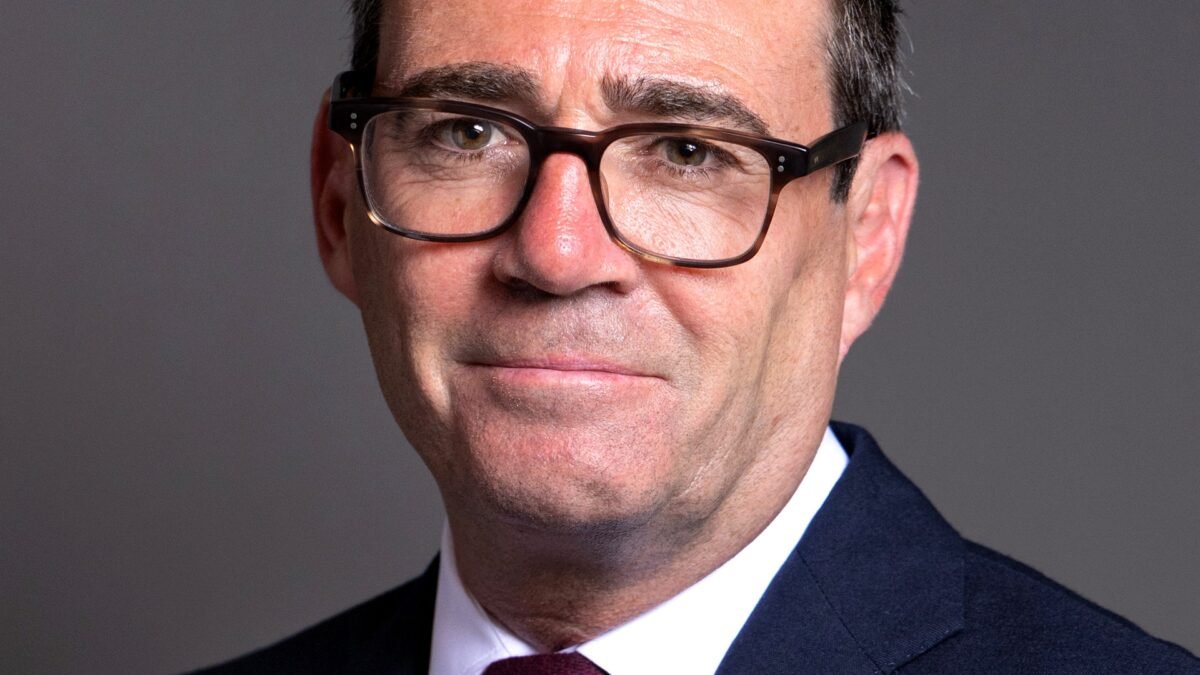
Prime Minister Andy Burnham will deliver the bluntest verdict on Brexit ever offered by a sitting British prime minister when he addresses the Lord Mayor’s Banquet at Guildhall in the City of London on Monday evening, declaring that the deal Britain was given after the 2016 referendum “has not worked” and that the country has “lost more than we gained” by leaving the European Union.
Burnham is using his first major foreign policy speech as prime minister to compare the political debate about Brexit to the story of the Emperor’s New Clothes, arguing that politicians have spent a decade refusing to state an obvious truth. According to advance extracts of the speech released by Downing Street on Sunday, he will tell the banquet: “It’s like the Emperor’s new clothes — where no one is prepared to say the obvious truth. Well, I say it as I see it. And to be frank, the emperor has nothing on.”
“The Brexit we were given has not worked. We have lost more than we gained,” he added, in remarks that were also previewed at the Welsh Labour conference in Llandudno on Saturday, where he used the same phrase for the first time.
The speech comes four days before a UK-EU summit in Brussels on Friday, 20 November, where Burnham will meet European Commission President Ursula von der Leyen and European Council President António Costa for his first formal summit with the bloc since he succeeded Sir Keir Starmer as prime minister in July. The summit, originally scheduled for July, was postponed when Starmer resigned. Burnham is seeking agreement on a series of practical deals covering food and farming trade, emissions trading, energy markets and a youth mobility scheme, which the government says could increase Britain’s GDP by 0.4 percent, equivalent to approximately £17 billion. Closer alignment on financial services, however, has been ruled out at this summit.
But the prime minister is also using the speech to set out three tests that any new agreement with the EU must pass before he will sign it — conditions that are designed to reassure voters that closer ties do not mean reversing the referendum result, while leaving open the question of how far Britain’s relationship with Europe should eventually go.
The three tests for a new deal
The first test, Burnham said, is that any agreement must be consistent with Labour’s 2024 general election manifesto and the government’s red lines. That means no return to the single market, no return to the customs union and no restoration of freedom of movement during this parliament, which runs until the next general election, due in 2029. The prime minister has repeatedly said those commitments bind Labour until voters have another say.
The second test is that the deal must improve on the Brexit agreement negotiated by Boris Johnson’s government and bring Britain closer to the arrangement voters believed they were choosing in 2016, rather than the hard Brexit that Burnham says was put in place by the Conservatives. “The Brexit we were given has not worked,” he will say, arguing that Johnson’s promise to “take back control” was never delivered and that leaving the EU instead created barriers for businesses and damaged Britain’s economic potential.
The third test is the one Burnham has made his own: the “Makerfield test”. Named after his parliamentary constituency in Greater Manchester, which he won in a by-election before becoming prime minister, the test requires any agreement to deliver real, tangible improvements in people’s everyday lives, particularly in communities that have felt neglected for too long. Downing Street said the test was set out on the premise that measures which work for Makerfield will work for others like it across the country.
Burnham presents closer cooperation with Europe as a “win-win” and describes Britain under his leadership as a “positive player” on the world stage rather than an “adversarial” one. “This is a win-win,” he will say, according to the advance extracts. “It illustrates our new approach. Not adversarial. No longer burning bridges — but being constructive and positive, showing that we can come together to confront shared challenges.”
He also addresses the argument that foreign policy forces a choice between values and interests. “Too often in foreign policy we pose a false choice between our values and our interests,” he will say. “But I see it differently. I think the two reinforce each other. Leading with our values. Because it’s right. And because it is in our interests.”
What Friday’s summit is expected to deliver
The Brussels summit on Friday is the second UK-EU summit since Britain’s withdrawal from the bloc, and it builds on the strategic partnership established at the first summit in London in May 2025 under Starmer, when both sides committed to developing closer cooperation across trade, security and other shared priorities.
Four areas are under discussion. The first is a sanitary and phytosanitary deal covering food and agricultural products. Under the plans reported by The Times, the UK would agree to follow existing and future European agriculture rules in return for the end of border checks on British exports in the Channel. The government argues that reducing checks and paperwork could lower costs for farmers, food producers and retailers, and ease pressure on supermarket prices. The deal is not expected to come into force before January 2028, and customs declarations would still be needed even after it takes effect, according to reporting by The Guardian.
The arrangement would also give Britain a say, but not a vote, in how EU food rules are made. Hamish Falconer, the minister responsible for relations with the EU, told the BBC on Sunday that the UK would have “a voice in the room” when European policymakers discuss food regulations under a new agreement, but would not have voting rights. The distinction is likely to remain central to the political debate, since closer alignment would require the UK to comply with rules it cannot vote on and could limit its ability to diverge from European standards.
The second agreement under discussion is the linking of the UK’s emissions trading system with the EU’s equivalent scheme, which would improve cooperation on carbon pricing and help businesses operating across both markets. Alignment on energy markets is also expected to be signed off at the summit.
The third is a youth mobility scheme, under which 18 to 30-year-olds would be allowed to travel, study and work in the EU and in Britain for a limited period. The details are still being negotiated, including how many young people would be allowed to take part each year. The EU has been pushing for 100,000 European participants, while the UK has wanted the number to be lower, and both sides are now reported to be talking about a figure of about 80,000, with a break clause on either side. The government has stressed that the scheme would not restore freedom of movement and would operate under agreed restrictions. For families, the food deal could also end the £200 animal health certificate currently needed every time a pet is taken to the EU.
The proposed agreement could also include an exit clause designed to protect the EU against the possibility of a future British government reversing closer regulatory alignment. The provision has been nicknamed the “Farage clause”, reflecting concerns that a future Reform UK administration could undo commitments made by Burnham’s government. Falconer said the EU was concerned about the possibility of a future Conservative or Reform government reversing the agreement, and an exit mechanism would provide safeguards if Britain subsequently changed course, although the precise terms remain subject to negotiation.
Foreign Secretary Ed Miliband told the BBC that the prime minister would lay out options for Britain’s longer-term relationship with the continent after the summit, while Burnham has ruled out major changes before the next general election. Burnham has, however, refused to rule out putting a pledge to rejoin the EU in Labour’s next manifesto, a position that is causing unease among some Labour MPs in red wall seats facing a challenge from Reform UK.
Reaction: Johnson, the Conservatives and Reform
The reaction to the advance extracts was swift and sharply divided. Former prime minister Boris Johnson, who negotiated Britain’s departure agreement before leaving office in 2022 following the Partygate scandal, told The Telegraph on Sunday night that Britain would “absolutely” vote to leave the EU again if Burnham forced another vote on the issue, and warned the prime minister against “wasting his premiership” on Europe.
“It is madness to escalate the Brexit issue as your political priority,” Johnson said. “He will impale himself and his party on this point, and he needs to move off it because he won’t win — because the reality is that people are not fools.” Johnson also hinted that he could return to the political fray in the event of a second Brexit referendum or a snap general election held on the issue. His intervention echoed advice from former prime minister David Cameron last week to avoid returning to the bloc.
The Conservatives accused Labour of dragging Britain back into the European Union “via the back door” with its EU reset. Deputy Conservative leader Alex Burghart said Burnham’s focus on the future of the UK-EU relationship was a tactic to distract from rising welfare costs and questions about defence funding. “Nearly a decade after the Brexit referendum, Andy Burnham is reopening a debate the country settled long ago, while ignoring the challenges facing Britain today,” Burghart said. “Instead of tackling the spiralling welfare bill, fixing our economy, and properly funding our defence, Burnham is preparing to hand Brussels more money in an effort to distract from the mess his party has gotten us into.”
Oliver Lewis, who was Johnson’s deputy chief Brexit negotiator and now chairs the Stay Out anti-rejoin campaign group, said the prime minister had won his Makerfield seat by promising not to undo Brexit and had since told the country his ultimate goal was to take Britain back in. “On Friday he will sign a deal that sends more money to Brussels, hands back control of our own laws and opens the door to more immigration, and nobody in Makerfield voted for any of that,” Lewis said. “Families struggling with the cost of living need a prime minister focused on their priorities instead.”
Reform UK leader Nigel Farage, who is planning to visit Brussels on Friday to attack plans for further integration with the bloc, has previously called Burnham’s talk about free movement “a total betrayal of Brexit Britain and Burnham’s Makerfield pitch”. Reform UK deputy leader Richard Tice, speaking to Talk TV, said the expression to remember was “leave meant leave”, adding: “It didn’t mean stroke your chin. Navel gaze for a few years, and then flip to the British people and try and cozy up and handcuff yourself to a failing, rioting bunch of European nations who are doing economically even worse than we are.” When Burnham raised the prospect of an “honest discussion” about free movement last month, the Conservatives’ Chris Philp said the British people had voted to end free movement and there could be no return to it. The Telegraph also reported that the founders of the pre-Brexit Leave.EU campaign are preparing to relaunch under the name Enough Official, a sign that the campaigning infrastructure of the referendum era is being rebuilt for the next phase of the argument.
Foreign Secretary Ed Miliband backed the prime minister on the BBC on Monday, saying: “I think most people — whether they voted Leave or Remain — don’t think this Brexit deal is working.” A decade on from the referendum, he added, the status quo was “not good enough” and had not “delivered positive economy change” for Britain. Industry body TheCityUK, meanwhile, called on the government to pursue closer relations on areas such as security but to ditch some EU regulation on data and risk — a reminder that the City of London, the audience for Monday’s speech, wants closer ties on its own terms. Researchers from Morgan Stanley sounded a note of caution, noting that while studies show Brexit dampened Britain’s growth prospects, there were “multiple uncertainties” hanging over closer alignment, such that projecting a boost in investment “cannot be viewed with any conviction”.
Background: from the 2016 referendum to the reset
Britain voted to leave the European Union in a referendum in June 2016, and formally left the bloc in January 2020 under Johnson’s government. The withdrawal agreement and the Trade and Cooperation Agreement that followed ended Britain’s membership of the single market and the customs union and brought freedom of movement to an end, replacing them with a looser trading relationship that introduced customs checks, regulatory barriers and new paperwork for businesses trading with the EU.
The debate about whether that settlement works has never gone away, but for years no prime minister was willing to reopen it in the terms Burnham used on Monday. Starmer, who led Labour to victory in the 2024 general election, put red lines in the party’s manifesto ruling out a return to the customs union, the single market or freedom of movement, and pursued a cautious reset that produced the May 2025 summit and a framework for negotiations rather than a fundamental rethink. Burnham succeeded Starmer in July, and his speech at the Lord Mayor’s Banquet is the clearest sign yet that he intends to go further than his predecessor in arguing that the existing deal is not good enough.
Public opinion has also moved. Polls suggest a majority of voters now favour either rejoining the EU or getting closer to Europe, a shift that Burnham’s allies believe gives him room to make the argument that Johnson says will destroy him. The prime minister’s calculation appears to be that the economic case for closer ties — cheaper food, easier trade, more opportunities for young people — can be separated from the question of membership itself, and that voters will judge the Friday deal on whether it makes their lives easier rather than on the constitutional question.
That calculation will be tested in the coming days. The summit on Friday will show whether the practical agreements can be signed as planned, and the weeks after it will show whether Burnham follows through on his promise to set out options for Britain’s longer-term relationship with the continent, including going “all the way” and rejoining after the next general election — a prospect he has discussed openly even as he insists that no major change will come before voters have their say.
Analysis: Why It Matters
A prime minister saying the unsayable
The most important thing about Burnham’s speech is not what it promises but what it says out loud. For a decade, British prime ministers have treated Brexit as a settled fact that must not be re-examined, even as businesses complained about border checks, farmers struggled with export paperwork and young people lost the right to live and work across Europe. The reason was political fear: the referendum split the country, and any leader who reopened the question risked being accused of betraying the result. Burnham has decided that the cost of silence is now greater than the cost of honesty. By putting the words “the Brexit we were given has not worked” into the advance extracts of his first major foreign policy speech, he has made the verdict itself the news — and he has done it in language, the Emperor’s New Clothes, that is designed to be remembered and repeated. The risk is obvious, and Johnson spelled it out: this could become the issue that defines and damages his premiership. The gamble is that voters have already reached the same conclusion, and that a prime minister who says what they think will be rewarded rather than punished.
The three tests are a cage as much as a promise
Burnham’s three tests deserve close reading, because they reveal the tension at the heart of his position. The first test — consistency with the manifesto and the red lines — is a promise to his critics that Friday’s deal will not cross the lines Labour drew in 2024. The second — that the deal must improve on the 2016 settlement — is a promise to his supporters that he will not settle for cosmetic change. The third — the Makerfield test — is a promise to voters in places like his own constituency that the deal will make a tangible difference to their lives. Together they are meant to reassure everyone at once. But they also constrain him. A deal that satisfies the red lines and passes the Makerfield test may be modest in scope, and a modest deal may not deliver the economic gains he is claiming. The £17 billion figure is a government projection based on the agreements under discussion, not a guaranteed outcome, and its eventual value will depend on the final terms and on implementation. If Friday’s deal turns out to be narrow — a food agreement that does not take effect until 2028, a youth scheme with a capped number of places, an emissions link whose benefits are technical rather than visible — Burnham will have to explain why a prime minister who declared Brexit a failure signed a deal that only trims its edges.
The economics: a projection, not a prize
The economic argument is the strongest card Burnham holds, and also the one most open to challenge. The claim that the agreements could raise GDP by 0.4 percent, about £17 billion, is a government estimate, and it is worth asking what sits behind it. The food deal would reduce checks and paperwork, which should lower costs for producers and retailers, but the savings would take time to reach shoppers, and the deal itself is not expected to start before January 2028. The youth mobility scheme would open opportunities for young people, but its economic effect depends on numbers that are still being negotiated. The emissions trading link would help businesses that operate in both markets, but its benefits are diffuse. None of this means the estimate is wrong — it means it is a forecast, and forecasts about trade deals have a habit of disappointing. The deeper economic point Burnham is making is not about the £17 billion at all. It is that the current settlement imposes a permanent cost on British businesses through friction at the border, and that reducing that friction is worth doing even if the gains are hard to measure precisely. That is a reasonable argument, but it is also one that his opponents will test against the reality of people’s weekly shopping bills, which is why the Makerfield test matters so much to him.
The politics: Johnson, Farage and the question he will not answer
The political danger for Burnham is not the deal itself but the question it raises and that he has refused to close: what comes next? By saying he wants to set out options for the longer-term relationship after the summit, including going “all the way” and rejoining after the next general election, he has given his opponents exactly the opening they wanted. Johnson’s warning that Burnham will “impale himself” on Europe is not really about Friday’s food deal; it is about the referendum that Johnson believes Burnham is steering towards. Farage’s planned visit to Brussels on Friday is designed to make the same point from a different direction: that any step towards closer alignment is a step towards rejoining, whatever the prime minister says about red lines. And the unease among Labour MPs in red wall seats is real, because those are the seats where Reform UK is the main challenger and where the politics of Brexit are most sensitive. Burnham’s answer is that voters will decide, and that no major change will come before the next election. But that answer leaves the question open rather than settling it, and an open question about rejoining is exactly what his opponents want to campaign on.
Friday is the easy part — the hard part starts after
If Friday’s summit goes as planned, Burnham will return from Brussels with signed agreements and a claim that he has made Brexit work better. That will be the easy part. The hard part begins the following week, when he has promised to set out options for Britain’s longer-term relationship with Europe. At that point the careful balance of the three tests will be tested against a much harder question: does Britain want a closer relationship that stops short of membership, or does it want to rejoin? The first option is the one the red lines allow. The second is the one his opponents accuse him of wanting. There is also a third possibility that neither side talks about much: that the practical deals signed on Friday work well enough that the bigger question loses its urgency, and Britain settles into a closer but still outside relationship that nobody quite planned. That outcome would suit Burnham, because it would let him claim progress without forcing a referendum. But it would require the deals to deliver visible benefits, and visible benefits take time. In the meantime, the debate Burnham reopened on Monday will run on its own momentum, driven by Johnson, Farage and the campaigners relaunching their organisations for the next fight. The prime minister has chosen to have the argument. He will now have to win it, not once at a summit, but repeatedly, in public, for as long as he is in office.
What to Watch Next
- The delivery of the speech itself — whether Burnham goes beyond the advance extracts in the banquet hall, and how the full text frames the longer-term relationship.
- Friday’s summit in Brussels — whether the food, emissions trading and youth mobility agreements are signed as planned, and what the final numbers on the youth scheme turn out to be.
- The reaction of EU leaders — whether von der Leyen and Costa endorse the package publicly, and whether the exit clause makes it into the final text.
- The parliamentary response — how Labour MPs in red wall seats react, and whether the Conservatives and Reform UK can turn the speech into a sustained attack.
- The longer-term options paper — what Burnham sets out in the weeks after the summit, and whether it includes rejoining as a formal option.
- The economic evidence — whether the government’s £17 billion projection survives scrutiny from independent forecasters, and when shoppers might actually see lower prices.
- The campaigning response — the relaunch of Leave.EU as Enough Official, Farage’s Brussels visit, and whether a new referendum campaign takes shape before the next election.
Sources
- Reuters — “UK PM Burnham ready to confront ‘obvious truth’ of Brexit’s costs”, TBS News, 16 November 2026
- The Irish Times — “UK lost more than it gained from Brexit, Andy Burnham to say ahead of EU summit”, 16 November 2026
- The Times — “Andy Burnham: UK lost more than it gained leaving EU”, 16 November 2026
- The British Eye — “Andy Burnham to Sign New EU Deal After Declaring Brexit Has Failed”, 16 November 2026
- UK Fact Check — “Burnham: Brexit ‘has not worked’ – three tests for EU deal”, 16 November 2026
- No Glaze News — “Burnham will say Brexit ‘has not worked’. What could his EU deal mean for you?”, 16 November 2026
- Truth Media (Reuters reporting) — “British Prime Minister to Address ‘Obvious Truth’ of Brexit in London Speech”, 16 November 2026
- Scottish Financial News — “Burnham to tell City Brexit ‘has not worked’ ahead of EU summit”, 16 November 2026

About the Author — Abdul Mannan
Related Articles
Milburn Review Calls for ‘Complete System Reset’ to Rescue a Million Young Britons From Joblessness
Alan Milburn's year-long review, published in full on Tuesday, calls for a decade-long overhaul of youth support —…
Burnham to Declare Brexit ‘Has Not Worked’ in Landmark Speech Ahead of EU Summit
Prime Minister Andy Burnham will tell the Lord Mayor's Banquet that the Brexit Britain was given 'has not…
Prince Harry Makes Surprise Fourth Visit to Ukraine, Telling Wounded Veterans: ‘You’re Going to Win the War’
Prince Harry made an unannounced two-day visit to Lviv, his fourth trip to Ukraine since Russia's invasion, telling…