
UK Unemployment Falls to 4.6% as Vacancies Hit Lowest Since 2021 and Pay Growth Slows

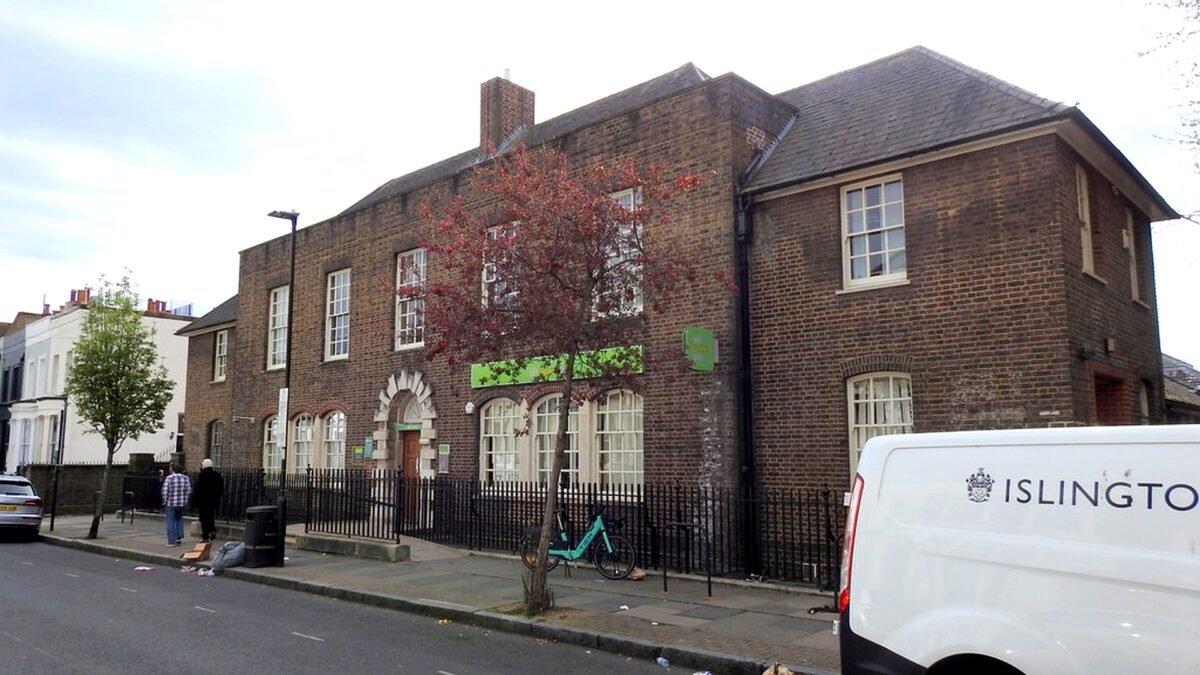
Britain’s unemployment rate fell unexpectedly to 4.6 per cent in the three months to September, according to official figures published on Tuesday, but the improvement came with a warning attached — and almost every other number in the same release pointed in the opposite direction.
Job vacancies fell to 690,000, their lowest level since the spring of 2021. Pay growth slowed to 3.5 per cent, its weakest in six years. And the number of people on company payrolls fell by 34,000 in October alone. The Office for National Statistics (ONS), which published the figures, said the fall in unemployment was partly caused by changes in the make-up of its survey sample rather than by a genuinely stronger jobs market.
The release, published on the morning of Tuesday 17 November, lands on the same day the government is digesting a landmark review of youth unemployment, and a month before the Bank of England must decide whether to raise interest rates again. Taken together, the figures describe a labour market that is cooling not through mass layoffs but through a quiet hiring freeze — one that is falling hardest on young people looking for their first job.
Economists had expected the unemployment rate to hold at 4.7 per cent. Instead it dipped to its lowest since the three months to April, according to Reuters. Sterling was little changed after the data, and financial markets continued to price in a roughly 90 per cent chance that the Bank of England will raise rates in December.
The headline figures
The ONS estimated that 1.684 million people were unemployed in the three months from July to September 2026, down by 88,000 on the previous quarter and by 102,000 on the same period a year earlier. The unemployment rate, at 4.6 per cent, was down by 0.3 percentage points on both the quarter and the year.
The employment rate for people aged 16 to 64 rose to 75.4 per cent, up 0.3 points on the quarter and 0.4 points on the year, with 34.625 million people in work — 155,000 more than in the previous three months. The economic inactivity rate, which measures the share of working-age people neither in work nor looking for it, eased by 0.1 points to 20.8 per cent, with 9.069 million people classed as inactive.
On the surface, that is a healthy set of numbers. Unemployment is falling, employment is rising, and fewer people are sitting outside the labour market altogether. It is the first time in this cycle that the headline rate has moved so clearly in the government’s favour, and it comes after a year in which unemployment climbed above 5 per cent. According to a speech by Bank of England rate-setter Clare Lombardelli on Monday, the rate peaked above 5 per cent late last year, having stood below 4 per cent in 2022.
But the ONS itself urged caution. In its bulletin, the statistics agency said the quarterly movements in employment and unemployment “partly reflect the rotation of the LFS sample” — the Labour Force Survey on which the figures are based. The group of respondents completing their fifth and final quarter in the survey in June 2026 had lower employment and higher unemployment than both the new group entering the survey in September and other recent groups. As the old group left and was replaced, the ONS said, that change alone “contributed to the increase in the headline employment rate and the fall in the unemployment rate”.
The agency added that the new group entering the survey was more closely aligned with other recent groups, suggesting the latest movement “partly reflects the characteristics of the outgoing group rather than an unusually strong incoming group”. In plain terms: some of the improvement may be a statistical artefact of who happened to be surveyed, not a real change in the jobs market. The ONS advises readers to look at longer-term trends and to read the survey figures alongside other measures, including payroll data and vacancies.
Those other measures tell a different story. The number of people on payrolls, drawn from HM Revenue and Customs tax records rather than a survey, fell by 34,000 between September and October to 30.2 million, according to the ONS. The figures are provisional and likely to be revised, but the direction matches the rest of the release. Total weekly hours worked fell by 3.3 million to 1,101.8 million over the quarter. And 120,000 people were made redundant in the three months to September, a redundancy rate of 4.0 per thousand employees.
Vacancies: the number that tells the truer story
If the unemployment rate is the headline, vacancies are the number economists watch most closely for the direction of travel — and they are falling steadily. The ONS estimated there were 690,000 job vacancies in the three months from August to October, down by 22,000 on the previous three months. That is the lowest since the three months to April 2021, and the smallest number outside the pandemic since 2014, according to Reuters.
The decline was, in the words of Liz McKeown, the ONS director of economic statistics, “again concentrated in smaller businesses, which report that increased labour and operating costs are affecting their hiring decisions”. Small firms, in other words, are the ones pulling back first — a pattern that has now repeated for several months.
The scale of the pullback is striking when set against the position before the pandemic. Speaking at the Bank of England Watchers’ Conference on Monday, Clare Lombardelli said vacancies across the economy were around 14 per cent lower than just before the pandemic, but the falls were far steeper in the sectors that give many people their first job: around 19 per cent lower in accommodation and food services, and 46 per cent lower in retail. Graduate vacancies are around 7 per cent lower than a year ago, she said.
That matters because vacancies are a measure of demand for workers, while unemployment is a measure of supply. When vacancies fall faster than unemployment, it means employers are quietly closing their doors to new hires even while existing staff keep their jobs. Lombardelli put it plainly in her speech, titled “The low-gear labour market”: “It is cooling, but mainly through less hiring rather than more firing.” The redundancy rate, she said, is roughly where it was before the pandemic. “The labour market is stuck in low gear,” she added.
For anyone looking for work, that distinction is cold comfort. A labour market that is not firing people is still a hard place to find a job if nobody is hiring. The number of vacancies has now fallen for months, and at 690,000 it is far below the peaks of more than 1.2 million seen in the hiring surge that followed the pandemic. Employers are not shedding staff in large numbers, but they are not replacing them either, and they are not creating new roles.
Pay growth slows — but not enough for the Bank
The third strand of Tuesday’s release was pay. Annual growth in average weekly earnings slowed to 3.6 per cent in the three months to September, down from an upwardly revised 3.8 per cent, according to Reuters. Excluding bonuses, regular pay growth slowed more than economists had expected, to 3.5 per cent from 3.7 per cent. In the private sector alone, regular pay growth held at an upwardly revised 3.1 per cent.
Reuters reported that Tuesday’s data showed the weakest overall level of pay growth since the three months to October 2020 — the period when the pandemic was suppressing wages across the economy. That is a significant milestone: pay growth has now fallen back to levels not seen since the Covid era, even though the economy is not in recession.
For workers, the slowdown has a silver lining and a sting. With consumer price inflation at 3.5 per cent in September, according to the Bank of England, pay growth of 3.5 per cent means real pay — wages adjusted for prices — is barely growing at all. Households are no longer seeing their pay packets shrink in real terms, as they did during the worst of the inflation surge, but neither are they getting meaningfully better off.
For the Bank of England, the pay figures are the most important numbers in the release. The central bank has been watching the labour market closely to see whether the surge in energy prices caused by the Iran war is starting to trigger larger pay demands, or whether firms’ appetite for labour is too weak for that, Reuters reported. So far, the evidence points to the second explanation: hiring is weak, and pay growth is easing.
But it is not easing fast enough for most of the Bank’s policymakers. For most members of the Monetary Policy Committee, pay growth much above 3 per cent is viewed as making it harder to return inflation to the Bank’s 2 per cent target, and the central bank already expects inflation to reach almost 5 per cent next year because of near-term energy price rises, Reuters reported. That is why the cooling in pay has not changed market expectations: financial markets still see a roughly 90 per cent chance that the Bank will raise rates in December, and price in two or three more increases in 2027, after raising rates for the first time in more than three years in November.
The Bank’s Monetary Policy Committee voted 8 to 1 to raise Bank Rate by a quarter of a percentage point to 4 per cent at its meeting ending on 4 November, according to Lombardelli’s speech. Suren Thiru, chief economist at the Institute of Chartered Accountants in England and Wales, said Tuesday’s figures “ensure that a December interest rate rise remains a live possibility, indicating that the labour market has yet to soften sufficiently to bring inflation under control without further policy tightening”, Reuters reported. Last week, Monetary Policy Committee member Megan Greene said surveys were pointing towards pay growth of at least 3.5 per cent next year.
Young people are carrying the slowdown
The most troubling part of the labour market story is who is bearing the brunt of it. Young people account for a disproportionate share of the weakness, and the figures published on Tuesday arrive on the same day the government is responding to a landmark review of youth unemployment.
Workers aged 16 to 24 make up only around 12.5 per cent of the labour force, Lombardelli said on Monday, but they account for around 40 per cent of all unemployment and more than half of the rise in joblessness since the middle of 2022. Youth joblessness stands at around 13 per cent for 18 to 24-year-olds, nearly three times the national average, according to labour market analysis of the ONS figures. Nearly one million 16 to 24-year-olds in the UK are now not in education, employment or training — equivalent to around 13 per cent of that age group — Lombardelli said, citing the review by former health secretary Alan Milburn.
The Milburn review, published on Monday, called for a “complete system reset” to rescue a million young Britons from joblessness, as NEXA reported. The review, commissioned by the government, argues that sweeping reforms are needed from the classroom to the NHS to turn around the prospects of young people who are out of work and out of training. The BBC reported that the plan aims to get 440,000 young Britons into work. The government has said it will respond to the review, and the new ONS figures will sharpen the pressure to act: the jobs market young people are being asked to enter is one in which vacancies in retail and hospitality — the sectors that traditionally offer first jobs — have fallen furthest.
That is the cruel arithmetic of a hiring freeze. When employers stop recruiting, it is not the people already in work who suffer most. It is the school leaver, the graduate and the young person trying to get a first foot on the ladder. They cannot be made redundant, because they were never hired in the first place. They simply do not appear in the employment figures at all — they appear in the unemployment figures, or in the inactivity figures, or in the count of young people not in education, employment or training.
Lombardelli warned that weak hiring could also blunt the usual effect of rising unemployment on pay. Jobseekers who are poorly matched to the vacancies available may do less to ease wage pressure than in the past, she said, because the jobs on offer are not the jobs the unemployed are qualified for, or in the places where they live. That mismatch — between the skills young people have and the jobs employers are advertising — is at the heart of the Milburn review’s argument for reform.
Analysis: Why It Matters
A fall in unemployment the statisticians will not fully vouch for
The first thing to understand about Tuesday’s figures is that the ONS itself does not want you to take the headline at face value. The statistics agency has spent the past three years rebuilding the Labour Force Survey after response rates collapsed, returning to face-to-face interviewing, increasing incentives and reinstating a sample boost. It now describes the survey’s outputs as official statistics, and says it will not seek reaccreditation for the old survey, preferring to focus on its online-first replacement. Against that background, the agency’s own warning — that the quarterly improvement partly reflects which households happened to rotate out of the sample — deserves to be taken seriously. A 0.3-point fall in unemployment is within the survey’s margin of error, and the ONS has effectively told the public that part of it may not be real. Governments of every colour have learned to celebrate good labour market headlines quickly; this is one headline that comes with its own health warning printed on the box.
The hiring freeze is the real story — vacancies are the economy’s honest signal
If the unemployment rate is ambiguous, the vacancies figure is not. There is no survey-rotation effect to explain away a fall to 690,000 vacancies, the lowest outside the pandemic in more than a decade. Vacancies are counted from employers, not households, and they measure something simple: how many jobs are actually open. When that number falls by 22,000 in three months, and when the fall is concentrated in smaller businesses citing higher labour and operating costs, the message is that employers have stopped expanding. That is consistent with everything else we know about the economy: borrowing costs above 5 per cent, energy prices elevated by war, and a government that has raised taxes and the youth minimum wage while adding new workers’ rights obligations. Each of those may be defensible on its own terms. Together, they have made hiring more expensive at precisely the moment employers are least confident about the future. The result is a labour market that looks stable from a distance — few redundancies, unemployment drifting down — but is quietly closing its doors.
Pay is cooling, but not fast enough for the Bank of England
The pay figures present the Bank of England with an uncomfortable halfway house. Wage growth has fallen to its lowest in six years, which is exactly what the Bank wants to see if inflation is to return to 2 per cent. But at 3.5 per cent, it is still above the level most policymakers regard as consistent with the target, and one of their number has said surveys point to pay growth of at least 3.5 per cent next year. That is why markets are pricing a December rate rise at around 90 per cent despite the cooling jobs market. The Bank’s dilemma is that the tool it has — higher interest rates — works by making borrowing more expensive, which discourages hiring and investment. Raising rates into a hiring freeze risks turning a soft labour market into a hard one. But not raising them risks allowing inflation expectations, already pushed up by energy prices, to become embedded in wage demands. The December decision will be the first real test of whether the Bank believes the labour market has cooled enough, and Tuesday’s figures give both sides of that argument something to quote.
Young people are carrying the slowdown
The most important numbers in this release are not the headline rate but the distribution of the pain. When 16 to 24-year-olds make up an eighth of the workforce and two-fifths of the unemployed, the labour market is not merely cooling — it is failing at its most basic function, which is to give young people a start. The Milburn review’s finding that nearly a million young people are not in education, employment or training is not a footnote to the jobs figures; it is the jobs figures, seen from the point of view of the people they describe. Retail vacancies down 46 per cent on pre-pandemic levels means the Saturday job, the Christmas temp role and the first rung of the ladder are disappearing. Graduate vacancies down 7 per cent on the year means the degree is buying less than it did. A hiring freeze is always regressive in this way: it protects insiders and punishes outsiders. The longer it lasts, the more it risks creating a cohort whose working lives start with a gap that never fully closes.
The politics: a good headline on the day the youth jobs plan lands
For the government, the timing of these figures is both convenient and awkward. A falling unemployment rate on the day the Milburn review dominates the headlines is a gift to ministers who want to argue that their approach is working. But the same release hands their critics the evidence that the improvement may be partly statistical, that vacancies are at a decade low, and that the young people the review is meant to help face the weakest hiring market in years. The Prime Minister’s wider agenda — closer ties with the European Union, a food and agriculture deal to be signed in Brussels on Friday, and a promise to make everyday life tangibly better — all depends on an economy that is creating opportunities, not merely counting fewer unemployed people. Tuesday’s figures show an economy doing the second, not the first. The test of the Milburn response, and of the government’s economic strategy more broadly, will be whether the next set of figures shows vacancies rising again. Until then, the headline is better than the reality it describes.
What to Watch Next
- The Bank of England’s December decision: Markets price a roughly 90 per cent chance of another rate rise next month. Watch whether Tuesday’s pay figures are enough to keep the hawks in the majority, or whether the vacancy data gives the doves an argument for waiting.
- The next ONS labour market release on 15 December: The ONS has scheduled its next bulletin for 15 December 2026. The key question is whether the unemployment rate holds at 4.6 per cent once the sample rotation effect washes through — or whether the improvement reverses.
- Inflation data: With consumer prices at 3.5 per cent in September and the Bank expecting inflation to approach 5 per cent next year, the next inflation release will show whether energy prices are feeding through as feared — and whether real pay is about to start falling again.
- The government’s response to the Milburn review: The review calls for a “complete system reset”, including a new Youth Opportunities Service. Watch for the government’s formal response, funding commitments and timetable — and for business reaction, with firms already demanding tax cuts in exchange for supporting the plan.
- Vacancies in retail and hospitality: The Christmas hiring season is the next test of employer demand. If vacancies in the sectors that offer first jobs keep falling through the festive period, the youth unemployment problem will deepen before it improves.
- Payroll data for November: October’s fall of 34,000 in payrolled employees was provisional. The November update will show whether the decline is a blip or the start of a trend — and whether the hiring freeze is turning into something worse.
- Small business hiring intentions: The ONS says the vacancy decline is concentrated in smaller firms citing higher labour and operating costs. Surveys of small business confidence and hiring plans will show whether the government’s planned changes to National Insurance for younger workers are enough to change their minds.
Sources
- Office for National Statistics — Employment in the UK: November 2026
- Reuters — UK pay growth slows as job vacancies hit lowest since 2021 (via Jack FM)
- Bank of England — “The low-gear labour market”, speech by Clare Lombardelli, 16 November 2026
- FE News — ONS Labour Market November 2026: UK Unemployment Rate Falls to 4.6%
- Action Forex — UK Unemployment Falls to 4.6%, but Payroll Losses and Weaker Hiring Tell Different Story
- The Globuzz — UK Unemployment Falls to 4.6% as Payrolls and Vacancies Drop

About the Author — Abdul Mannan
Related Articles
Milburn Review Calls for ‘Complete System Reset’ to Rescue a Million Young Britons From Joblessness
Alan Milburn's year-long review, published in full on Tuesday, calls for a decade-long overhaul of youth support —…
Burnham to Declare Brexit ‘Has Not Worked’ and Set Three Tests for New EU Deal Ahead of Friday Summit
Prime Minister Andy Burnham will tell the Lord Mayor's Banquet that 'the Brexit we were given has not…
Burnham to Declare Brexit ‘Has Not Worked’ in Landmark Speech Ahead of EU Summit
Prime Minister Andy Burnham will tell the Lord Mayor's Banquet that the Brexit Britain was given 'has not…