
Xi and Putin Meet in Shenzhen on Eve of Historic Three-Way Summit with Trump as Ukraine Fears Grow

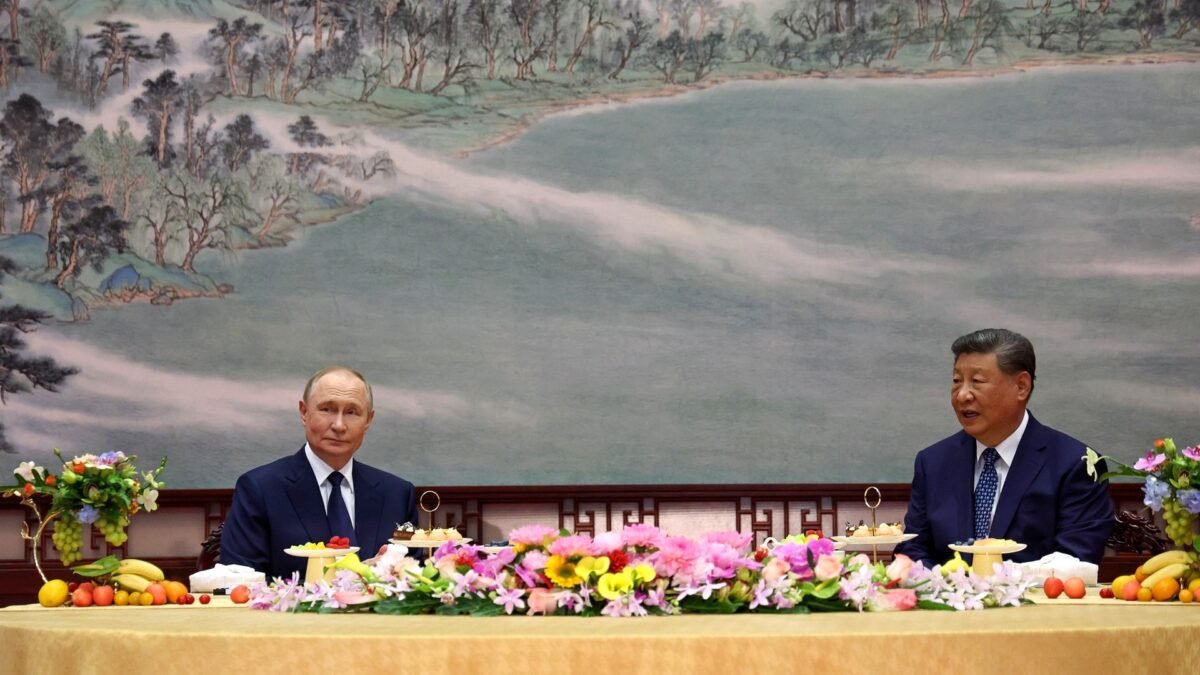
Chinese President Xi Jinping and Russian President Vladimir Putin held talks in Shenzhen on Wednesday, a day before the two men are due to sit down with United States President Donald Trump in the first three-way summit of its kind, as Kyiv and European capitals watched with growing unease over what the leaders of the world’s three largest nuclear powers might decide between themselves.
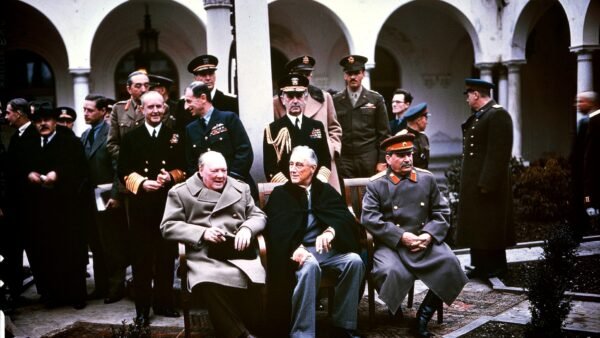
Chinese and Russian news agencies reported that the two leaders began their meeting around midday on Wednesday, according to Euronews. It was their fifth meeting this year, one of which took place by video link, and it came on the eve of a gathering that has been compared, in both excitement and alarm, to the 1945 Yalta Conference at which the United States, Britain and the Soviet Union carved up parts of Europe and the Far East.
The three men are due to meet on Thursday on the sidelines of the Asia-Pacific Economic Cooperation (APEC) summit in Shenzhen, the southern Chinese tech hub that is hosting the annual gathering of Pacific leaders. Beijing has said only that the leaders will hold “in-depth exchanges on safeguarding world peace and promoting strategic stability in major-power relations”, while Washington has said the agenda will cover Russia’s war in Ukraine, the war in Iran and nuclear disarmament, after the bilateral nuclear weapons treaty between the United States and Russia expired in February.
No detailed readout of the Xi-Putin talks had been published by the time this article was written, but the choreography of the day was clear enough. Both men addressed the APEC gathering before their meeting, using the stage to set out sharply different visions of the world order from the one Washington has promoted, and both then moved behind closed doors to coordinate positions before Trump arrives.
The speeches: free trade against “former hegemons”
Xi used his opening address to the APEC business audience to present China as the guardian of open trade. “We must firmly uphold the rules-based multilateral trading system with the World Trade Organization at its core, support free and open trade and investment, maintain the stability and smooth operation of global industrial and supply chains,” he said, according to Reuters.
He pledged that China would lower tariffs, open its markets further and continue investing in its industrial complex and new technologies, while standing up against protectionism and unilateralism. The message was aimed squarely at the United States, which has raised tariffs and adopted a more muscular foreign policy under Trump, and it was delivered days after Washington announced further restrictions on China’s access to advanced artificial intelligence chips from companies such as Nvidia. China has pledged to retaliate.
Western trade partners have criticised China for running annual trade surpluses in excess of $1 trillion through policies that support its manufacturing sector at the expense of its consumers, according to Reuters. Beijing says its growth model is appropriate for an economy still catching up with the world’s richest, but Washington, Brussels and others are concerned that China’s supply chain dominance gives it geopolitical leverage and threatens their industries and jobs. For the second straight year, China will have exported $1 trillion more in goods than it imported, according to the Associated Press.
“His message is likely to resonate with many Global South countries and reinforces Beijing’s effort to contrast its technology strategy with that of Washington,” George Chen, a partner and chair of digital practice at The Asia Group, told Reuters.
Putin followed Xi onto the stage with a much blunter message. He described Western powers as “former hegemons”, said Europe was in a “humiliating decline”, and argued that the sanctions imposed on Russia after his invasion of Ukraine had backfired and made his country stronger.
“Experience has shown that the traditional tools of economic dominance and de facto coercion have largely run their course, having lost much of their intimidating power,” Putin said, according to Reuters. “While sanctions, tariffs, and export restrictions may still exert a certain deterrent effect, they are incapable of halting growth — let alone crushing the economies of competitors.”
He described the world as “turbulent” and “marked by a fragmenting global economy and rising military-political risks”, but said disagreements between countries could be addressed by “sitting at the table”. “I therefore expect big potential benefit from the upcoming trilateral meeting between the leaders of Russia, China and the United States,” he said.
Putin was speaking days after Ukraine struck the Kerch road bridge linking Crimea to Russia, a major blow to his four-year-old war, according to Reuters. Euronews reported that Putin told the APEC gathering he expected the trilateral to be “highly useful”, adding: “What is desperately needed is unity rather than division… and dialogue rather than ultimatums.”
Trump’s road to Shenzhen runs through Manila
Trump was still in the Philippines on Wednesday, where he attended a summit of the 11-member Association of Southeast Asian Nations (ASEAN) and, a day earlier, met fellow leaders of the Quad — Australia, Japan and India — for the first time in his second term. The group is broadly seen as a counterweight to Chinese influence in the region, according to Euronews.
He started Wednesday in Manila with lunch at the Malacañang Presidential Palace with President Ferdinand Marcos Jr., who told him he had sent fast food from the Philippine chain Jollibee to the US delegation for a late-night snack on Tuesday. Trump praised the US bond with the Philippines and the interior decoration of the presidential palace. “Our people share common history, common values, common interests, common architectural tastes,” he said, according to the Associated Press. “I love what you’ve done here.”
After the meeting, Trump said the two nations had reached a trade deal on Wednesday, though he had also said last year that an agreement had been reached. The US trade deficit in goods with the Philippines has risen under Trump, climbing from $4.9 billion in 2024 to $12.8 billion during the first nine months of this year, according to the Census Bureau, as reported by the Associated Press.
Trump also had a short reunion with Imelda Marcos, the former first lady and mother of the Philippines’ current president, who is 97 years old. She appeared to hand him a gift, according to a video posted by the White House, and Trump called her “always the most beautiful”. Her late husband, Ferdinand Marcos, was ousted as the Philippines’ strongman leader during the 1986 “People Power” uprising.
Around 2,000 people protested during Trump’s visit to Manila, carrying banners reading “Trump out now” and “Reject Pax Silica”, a reference to a US supply chain initiative, according to Euronews.
Trump departed in the afternoon for Shenzhen and told reporters he was looking forward to the arrival ceremony. “I am the guest of President Xi and I hear we’re going to have quite a landing,” he said, according to the Associated Press. “It’s going to be a beautiful thing.” He will take part in the APEC summit on Thursday and then hold his meeting with Xi and Putin, before returning to the United States.
The meeting will mark the fourth encounter between the Chinese and American leaders in a single year, following a summit in South Korea and reciprocal visits to Beijing and Washington, according to Le Monde. Trump will become the first American president to travel to China twice in one year. Xi is expected to attend the G20 summit in Florida a month later to schedule further meetings for 2027.
Ukraine: on the agenda, off the agenda, on again
The most sensitive question hanging over Thursday’s meeting is whether the three leaders will discuss Ukraine — and, if they do, whether they will do so over the heads of Kyiv and Europe.
Washington initially said Ukraine was not expected to be on the agenda. Trump then contradicted his own advisers, insisting the topic would be addressed. “We’ll talk about my favorite subject: Ukraine. Ukraine’s losing,” he said before departing for Asia, according to Le Monde. “Russia is losing 25,000 soldiers a month. So, we’ll be talking about that.” The Associated Press reported that Trump said the war was “very close to getting it done”, adding: “We’re going to have a good meeting on that.”
The uncertainty matters because Ukraine is not one of the three participants. Ukrainian President Volodymyr Zelensky warned in late October: “We really don’t want this to turn into ‘Yalta 2, 3, 4’ with a redistribution of influence,” referring to the 1945 conference, according to Le Monde. The meeting has drawn comparisons with Yalta because it brings together the leaders of the world’s three largest nuclear powers at a moment when the war in Ukraine, now in its fifth year, remains unresolved.
US diplomats initially sought to reassure allies by saying Trump planned to discuss Iran and nuclear arms control, but not the fate of Ukraine, even though Putin almost certainly does not have the same agenda, according to Le Monde. Xi regards the war as not China’s concern, according to Euronews.
The Kremlin this week dismissed comparisons with the Yalta Conference as “games of political scientists”, but said the meeting would have a major impact on global affairs, according to Reuters. Beijing said the trilateral is of “groundbreaking significance” and will promote world peace. Chinese Foreign Ministry spokesperson Mao Ning said on Monday: “The three presidents will have an in-depth exchange of views on safeguarding world peace and enabling strategic stability in major-country relations. The summit is of groundbreaking significance,” according to Le Monde.
“The picture of that particular constellation of leaders is gonna be very significant; people will be referring to it for years,” Kurt Tong, a former US ambassador to APEC and former consul in Hong Kong, now a consultant at The Asia Group, told Le Monde. “It is very unusual for the US to be meeting, without others in the room, with the two countries that are generally considered the biggest challenges to US power on the planet.”
The war itself continues to grind on. Russia has been striking Ukraine’s energy grid almost daily since the end of September, and Ukraine’s destruction of part of the Kerch bridge this week was one of its most significant strikes of the war. On Tuesday, Taiwan and Japan flagged incursions by Russian aircraft into their airspace, according to Reuters.
Nuclear arms and the Iran war
Nuclear disarmament is another stated priority for Trump. The White House has said he wants to discuss reducing nuclear arsenals with Xi and Putin, after the New Strategic Arms Reduction Treaty between Washington and Moscow expired in February. China has long argued that the United States and Russia should cut their much larger arsenals before it will discuss limits on its own, according to Euronews.
China has a growing arsenal, though it is still much smaller than its counterparts: about 620 warheads compared with about 5,000 each for Russia and the United States, according to the Stockholm International Peace Research Institute, as reported by Le Monde. China wants to narrow that gap and therefore does not consider itself obliged to reduce its stockpiles.
US officials have cautioned that the Shenzhen meeting is not expected to produce an immediate nuclear agreement. Analysts are not expecting substantive breakthroughs, despite the unprecedented nature of the meeting, according to the Associated Press.
The war in Iran is also on the table, according to Washington. Both Russia and China have provided support to Iran after Trump launched a war there in late February to halt that country’s development of nuclear weapons, according to the Associated Press. The war has pushed up inflation and slowed global growth as energy prices have swung in response to each escalation and every pause in the conflict.
The conflict flared again this week, with US fighter jets striking a Revolutionary Guards missile launch site on Qeshm Island in the Strait of Hormuz on Tuesday, and Iran launching drones at American forces in Bahrain and Kuwait in the early hours of Wednesday. The exchanges underline how much of the world’s most dangerous business is now concentrated in a single week of diplomacy in Shenzhen.
The Kim question
Trump has also floated the possibility of a private meeting with North Korean leader Kim Jong Un in Shenzhen, though neither that nor a one-on-one meeting with Putin has been confirmed beyond the US president’s own musings, according to the Associated Press. “We may meet with Kim Jong Un also,” Trump said before leaving the US on Monday. “He may come. I don’t know. That’s up to President Xi,” according to Le Monde.
Secretary of State Marco Rubio, speaking in Manila, stopped short of confirming a Kim meeting but said engagement was the only way to resolve problems with North Korea. Rubio clarified on Wednesday that Trump was “serious” about meeting with Kim, but suggested no meeting was currently scheduled between Trump and Kim for Thursday. “I’m not telling you that there will be a meeting tomorrow,” Rubio said, according to the Associated Press. “I’m just saying that” the president “is willing to meet and discuss, as he did during his first term.”
Since the two leaders met three times between 2018 and 2019 during Trump’s first term without reaching an agreement, Kim has made the recognition of his country’s status as a nuclear power a precondition for any new meeting, according to Le Monde. In August, Trump mentioned that Kim possessed “57 very powerful nuclear weapons.”
Outages at home, chips on the table
Trump’s trip is his first abroad since his party suffered a heavy defeat in the midterm elections, and the new resistance in Congress will limit his room for manoeuvre while strengthening his desire to shine on the international stage, according to Le Monde. “The election could make Trump more eager to secure diplomatic results while making those results harder to deliver,” Sun Chenghao, a professor of international relations at Tsinghua University in Beijing, told Le Monde.
He is also travelling against an awkward backdrop at home. A series of technical outages involving Microsoft, the Federal Aviation Administration, JPMorgan Chase and the National Security Agency’s communications network has left the administration scrambling to calm the American public, according to the Associated Press. Trump had been nonchalant about the outages on his first day in Asia, calling them a consequence of being a nation that is “big and powerful”.
Rubio stepped in on Wednesday to reassure Americans, telling reporters there was “zero” evidence that the outages were connected or tied to rival nations, cyber hackers or criminals. “Sometimes when you are going in to fix your system because you’ve identified a vulnerability, it creates a short-term disruption,” he said, according to the Associated Press.
The technology rivalry is not a side issue at this summit; it is one of its central fault lines. The governance of artificial intelligence is to be discussed, according to Le Monde. China promotes economically accessible forms of AI that remain under government control, in contrast to the high costs of US industry leaders and the Trump administration’s reluctance to regulate.
The issue has been sharpened by the crisis at Nvidia. Its chief executive, Jensen Huang, was forced to resign after the revelation of his extramarital affair with a businesswoman suspected of working for Chinese intelligence services, according to Le Monde. Beijing has denied that she was a spy. In the wake of the affair, the Trump administration has been accused of failing to act on suspicions about China and of being lax by shipping second-best chips directly to China and the best ones to data centres in Southeast Asia that are widely accessible to the Chinese.
On Monday, the Trump administration tightened its controls by requiring a licence for the export of AI processors to countries such as Malaysia and Singapore, where they have often subsequently been used by China, according to Le Monde. That move disrupted the apparent calm in relations between the two giants. Asked this week why the US had not been more aggressive in cutting off China’s access to advanced computer chips, Trump said there were differences of opinion inside his administration and that “We have a very good relationship with China, and you don’t want to insult them,” according to the Associated Press.
Taiwan, the self-governing island that China claims as its own and the leading manufacturer of advanced computer chips, is another subject Trump says he does not plan to raise. “I’m sure he’ll raise it,” Trump said of Xi. “I won’t have to raise it,” according to the Associated Press. Since a warning call from Xi in February, Trump has suspended a major arms sale to Taiwan worth $14 billion, according to Le Monde. Over the months, that sale has turned into a test of China’s ability to force Trump to back down permanently on the issue, which is the most crucial in China’s eyes.
The stage itself: Shenzhen as showcase
For China, the summit is as much a piece of stagecraft as a negotiation. Xi will deliver a speech on Wednesday and welcome guests with a grand banquet at a site in central Shenzhen, according to Le Monde. But the meetings with Trump and Putin the following day are to take place in a state villa about 10 kilometres to the north, in the hills above the city of 18 million residents, further reinforcing the image of visitors coming to see him.
The main goal for China is to make the Shenzhen summit a demonstration of its power, as it is the only country able to bring together such a diverse array of nations and interests, according to Le Monde. The Canadian and Australian prime ministers, along with the Mexican president, are among about 20 leaders expected to attend. They will be able to see for themselves how Shenzhen, which was nothing but fields and fishing villages before the economic reforms, has in just half a century become a centre of innovation and the symbol of a new China that must now be reckoned with.
Most of the guests will also find themselves in close proximity to Putin for the first time since the large-scale invasion of Ukraine began in February 2022, with complex protocol manoeuvres in place to avoid being seen as normalising relations with the Russian leader, according to Le Monde. As for the Japanese prime minister, Sanae Takaichi, there is no indication that she will personally meet with the Chinese president. Relations between China and Japan have been in a deep freeze since Takaichi declared a year ago that a Chinese attack or blockade of Taiwan would pose a threat warranting a military intervention by her country.
Handshakes and photo opportunities will outnumber detailed negotiations leading to concrete results, according to Le Monde; time for such talks will be deliberately limited in order to avoid debating China’s massive exports and the threat they pose to jobs elsewhere in the world.
Analysis: Why It Matters
China is hosting, and that is the point
The most important fact about Thursday’s meeting is not what is on the agenda but where it is happening and who arranged it. Only China could bring the American and Russian presidents to the same table at the same time, and only in a Chinese city, on Chinese terms, with the Chinese president as host. That is a statement in itself. For decades, the great set-piece summits of world politics were convened in Washington, Geneva, Reykjavik or Helsinki. Shenzhen is a deliberate choice: a city that did not exist as a metropolis fifty years ago, now presented as the capital of the new world economy. Xi is not just hosting a meeting; he is exhibiting a model of development and, by extension, a claim that the centre of gravity in world affairs has moved east. Every photograph from the villa in the hills above the city will carry that message, whether or not a single agreement is signed.
The Yalta comparison is unfair — and that is why it stings
The comparison with Yalta is, on its face, imprecise. In 1945 the three leaders who met were wartime allies dividing a defeated enemy’s territory; in 2026 the three men in Shenzhen are rivals, and two of them are on opposite sides of an active war. But the comparison stings precisely because of what it captures: three men, three nuclear arsenals, and a room from which the countries most affected by their decisions are absent. Ukraine is not in the room. Taiwan is not in the room. Europe is not in the room. The Kremlin’s dismissal of the comparison as “games of political scientists” is itself telling — Moscow knows the charge of carving up spheres of influence is the one accusation that could delegitimise the whole exercise, and it is determined to answer it in advance. The test will not be what the three leaders say in public afterwards, but whether anything they agree in private binds countries that were never consulted.
Trump’s improvisation is the strategy — and the risk
Trump has signalled that he wants an improvised approach in Shenzhen, betting that his unscripted brand of diplomacy, built on personal relationships, can create a legacy to reshape world affairs in his final two years in office, according to the Associated Press. There is a logic to it: formal summits with prepared communiqués have not ended the war in Ukraine or the war in Iran, and a president willing to talk to anyone can sometimes unlock what process cannot. But improvisation has a cost, and it is visible in the Ukraine question itself. His own diplomats told allies Ukraine would not be on the agenda; he then announced, on the record, that it would be. That is not a negotiating tactic so much as a public contradiction of his own government, delivered hours before he sits down with the two men who benefit most from it. Putin has every reason to welcome a conversation about Ukraine conducted without Ukraine. The risk is not that Trump will make a bad deal on Thursday — there is almost no time for a deal — but that he will lend the weight of the American presidency to a conversation whose very format concedes that the fate of smaller nations can be discussed by three men in a villa.
The Xi-Putin meeting before the meeting matters more than it looks
The choreography of Wednesday matters. Xi and Putin met first, alone, before Trump arrived, and their fifth meeting of the year is not a courtesy call. It is a coordination session. The two leaders have spent the year building a partnership that now spans energy — China takes roughly half of Russia’s crude oil exports, according to the Centre for Research on Energy and Clean Air — military technology, and a shared interest in blunting American power. By meeting on the eve of the trilateral, they arrive on Thursday with agreed positions, while Trump arrives having flown in from Manila after a day of handshakes and a protest. The speeches at APEC were the public version of the same coordination: Xi the reasonable champion of free trade, Putin the blunt critic of Western decline, each playing a role the other cannot. Whatever Trump says about Ukraine, Iran or nuclear weapons on Thursday, he will be saying it to two men who have already compared notes.
Nuclear arms, chips and Taiwan: the real agenda is the long one
The headlines will focus on Ukraine, but the durable business of Shenzhen is longer-term. The expiry of the last US-Russia nuclear treaty in February has left the world’s two largest arsenals without a binding framework for the first time in half a century, and China, with about 620 warheads and growing, has no intention of joining a freeze that would lock in its disadvantage. The chip war is equally structural: Washington is tightening export controls while Beijing denies its agents had anything to do with the Nvidia scandal, and both sides know that whoever controls advanced computing controls the next generation of weapons, economies and intelligence. And Taiwan, which Trump says he will not raise, is the issue Xi cares about most — the $14 billion arms sale he has already persuaded Trump to suspend is the proof. None of these questions will be settled in a single afternoon in a hillside villa. But the fact that all of them are now being discussed in the same room, by the same three men, is itself the news. The world has not had a conversation like this since the Cold War, and the last time it did, the people who were not in the room paid the price.
What to Watch Next
- Thursday’s trilateral itself: whether the three leaders issue any joint statement, and whether Ukraine, Iran or nuclear arms feature in it by name.
- Any readout from the Xi-Putin talks on Wednesday, and whether it mentions Ukraine, energy cooperation or the trilateral in terms that bind the two men to a common position.
- Whether Trump holds the one-on-one meetings he has teased with Putin and with Kim Jong Un, and what Rubio’s careful wording — “serious” but nothing scheduled — turns out to mean.
- The reaction in Kyiv and in European capitals to whatever emerges from Shenzhen, and whether Zelensky’s “Yalta 2, 3, 4” warning is answered by any concrete reassurance from Washington.
- Whether the APEC summit produces anything on trade, AI governance or supply chains, or whether the trilateral swallows the entire agenda.
- Developments in the Iran war, where the overnight exchanges around Qeshm Island, Bahrain and Kuwait show how quickly a diplomatic week can be overtaken by events.
- The next round of US chip export controls and China’s retaliation, and whether the Nvidia affair produces any further disclosures before the G20 meeting in Florida in December.
Sources
- Reuters — “Xi, Putin blast Western ‘protectionism’, sanctions before meeting Trump at APEC” (Liz Lee and Laurie Chen, 18 November 2026)
- Euronews — “China’s Xi Jinping and Putin hold talks in Shenzhen on eve of three-way summit with Trump” (18 November 2026)
- Associated Press — “Trump wants to show strength in China, but a series of technological snafus raises concerns at home” (18 November 2026)
- Le Monde — “With Trump and Putin at his side, Xi puts himself front and center on world stage” (18 November 2026)
- The Daily Star (via Beyond Headlines) — “Xi and Putin huddle ahead of historic Trump trilateral” (18 November 2026)
- Wikimedia Commons — “Vladimir Putin and Xi Jinping (2025)” (Kremlin.ru, CC BY 4.0) — source of the featured image

About the Author — Abdul Mannan
Related Articles
Russian Military An-12 Transport Plane Crashes in Siberia, Killing All 19 on Board
A Russian Air Force An-12 transport plane crashed in Siberia on Tuesday, killing all 19 people on board,…
South Korea Fears a ‘Second Yalta’ as Trump, Xi and Putin Prepare to Meet in Shenzhen
South Korea has warned Washington and Beijing that Thursday's first-ever Trump–Xi–Putin summit must not become a "second Yalta"…
Russia Stalls UN ‘Killer Robot’ Talks in Geneva as US Opposes Binding Rules on Autonomous Weapons
Russia stalled the opening of a UN conference on lethal autonomous weapons in Geneva on Monday, blocking the…