
Russian Military An-12 Transport Plane Crashes in Siberia, Killing All 19 on Board

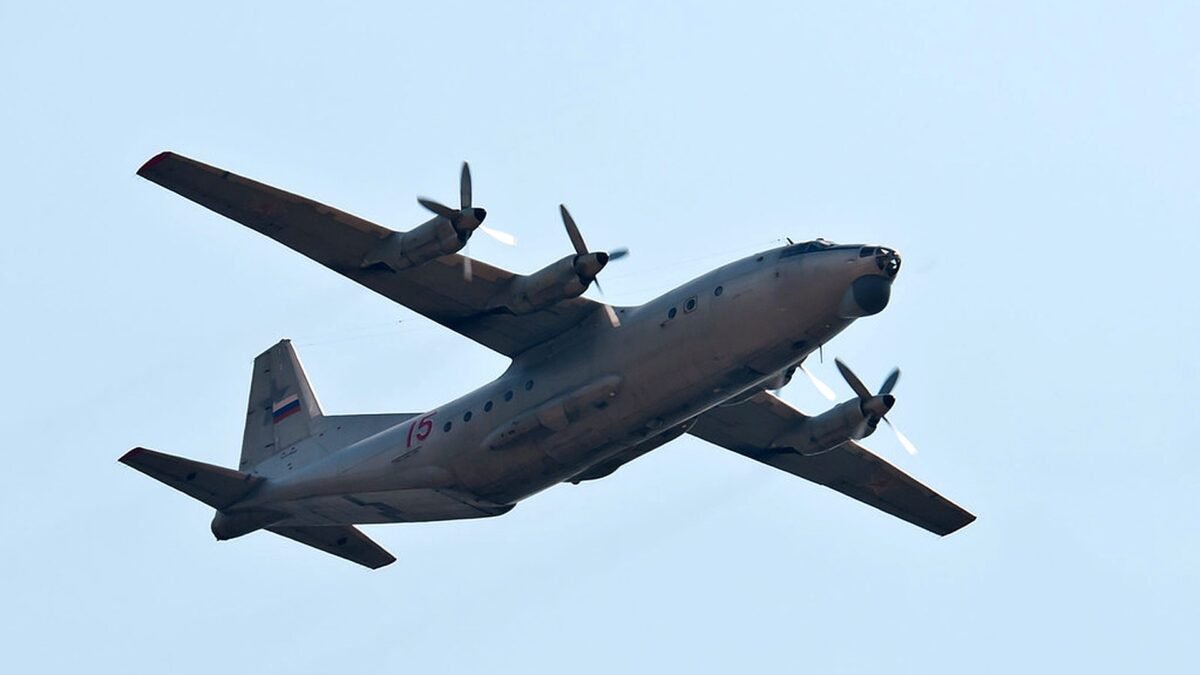
A Russian military transport plane has crashed in Siberia, killing all 19 people on board, Russia’s Defence Ministry has said. The Antonov An-12 came down in an uninhabited area of the Kemerovo region on Tuesday, 17 November 2026, during what the ministry described as a scheduled flight, and officials said a technical malfunction was the preliminary cause.
According to CNN, which cited the ministry via the state news agency RIA, the four-engine turboprop was flying through the southwestern Siberian region when the accident occurred. The BBC and The Independent reported the same account: 19 people, including the crew, were on board and none survived. Early Russian media reports had put the death toll at 17, but the ministry later revised the figure to 19, according to the Anadolu Agency and other outlets that tracked the casualty count through the evening.
The crash site lies near the village of Yagunovo, south of the regional capital Kemerovo, in a district of coal mines, forests and scattered settlements. The regional governor, Ilya Seredyuk, said on Telegram that an aviation incident had occurred in the Yagunovo district and travelled to the scene, where he filmed a video message beside the wreckage. Emergency crews extinguished a fire at the site, the governor said, and police sealed off the area while investigators began their work. A commission from the Russian Aerospace Forces is working at the site to establish the circumstances of the accident, according to Russian media reports.
There was no immediate official word on the identities of those killed, and the ministry has not released the aircraft’s registration. What is known is that the flight was routine: a military transport moving people and, according to some reports, spare parts between air bases deep inside Russia, thousands of miles from the front lines of the war in Ukraine.
What happened
The An-12 was flying from Tolmachevo Airport in Novosibirsk to Kansk Air Base in Krasnoyarsk Krai, a journey of roughly 500 miles across southern Siberia, according to reporting on the flight’s route. The aircraft went down in the Kemerovo region, which lies between the two, in an area the ministry said was unpopulated. No one on the ground was reported hurt, and the fact that the aircraft came down away from settlements appears to have prevented a second toll on top of the 19 dead.
Russian media outlets, citing witnesses and Telegram channels close to the security services, reported that the aircraft was seen burning as it fell, and one channel, Baza, reported that a fuel leak had started a fire on board and that the crew had been trying to reach Kemerovo’s Alexei Leonov airport for an emergency landing. Those accounts have not been confirmed by the Defence Ministry, and they should be treated with caution: in the first hours after a crash, witness accounts and unofficial channels routinely conflict, and the only facts the authorities have formally confirmed are the crash itself, the death toll, the routine nature of the flight and the preliminary finding of a technical malfunction.
What the ministry’s statement does establish is the shape of the accident. The aircraft was not on a combat mission and was not reported to have been attacked. It was on a scheduled flight, it suffered what the ministry called a technical malfunction, and it came down in open country. An investigation is under way, and Russian practice in military air accidents is for the Aerospace Forces commission to examine the wreckage, the flight recorders and the maintenance history before any final cause is announced, a process that typically takes months rather than days.
The governor’s response followed the pattern of recent Russian regional emergencies. Seredyuk confirmed the incident on the MAX messaging platform and on Telegram, said emergency services were working at the scene, and later posted video from the site showing the burned wreckage in a field. He said the region was providing the necessary assistance to the investigation. National Guard troops were deployed to secure the crash site, according to reporting on the response.
The aircraft: a Soviet workhorse still flying at 69
The Antonov An-12, known to NATO as the “Cub”, is one of the longest-serving military transport aircraft in the world. It first flew on 16 December 1957, entered Soviet Air Force service in 1959, and was built in a run of 1,248 aircraft at factories in Irkutsk, Voronezh and Tashkent before production ended in 1973. The four-turboprop, high-wing airlifter, with its rear cargo ramp, was the Soviet counterpart to the American C-130 Hercules, and for more than three decades it was the standard medium-range cargo and paratroop transport of the Soviet air forces.
The An-12 carried Soviet troops and supplies through every major commitment of the Cold War’s second half, most notably the war in Afghanistan between 1979 and 1989, where it served as the primary intra-theatre freighter and, grimly, as the aircraft that carried the coffins of fallen soldiers home, the loads known as “Cargo 200”. After the collapse of the Soviet Union, the Russian Air Force inherited a large fleet of the type and kept flying it, and the aircraft remains in service with the armed forces of Russia and several other countries, as well as with civilian cargo operators.
Open-source estimates have put the active Russian military fleet at around 60 aircraft, with dozens more in storage. The type was already old when the Soviet Union fell, and it is older now: the youngest An-12s left the production line more than half a century ago, in 1973. Russia has long intended to replace the type with the Ilyushin Il-76 and, eventually, with newer designs, but the An-12 has survived every retirement plan, because it is rugged, simple, able to operate from rough airstrips, and suited to exactly the kind of routine internal flight that ended in disaster on Tuesday.
The aircraft’s age is not, on its own, an explanation for the crash. Old aircraft can be safe aircraft when they are maintained properly, and the An-12’s record includes decades of reliable service. But age does change the maintenance equation. Spare parts become scarcer, airframes accumulate fatigue, and the engineering knowledge that keeps a 1950s design flying resides in a shrinking pool of specialists. Reporting in 2026 suggested that a substantial share of Russia’s wider An-12 inventory urgently required repairs, and that the Russian government had acknowledged that the lack of domestic production of Antonov-designed aircraft, the design bureau is Ukrainian, made full restoration of the fleet impossible. That is the context in which any investigation of Tuesday’s crash will be read, whatever its final findings.
A troubled record
Tuesday’s crash is the deadliest An-12 accident in Russia for several years, but it is not the first of its kind. The type has a long accident history, and Siberia has seen more than one An-12 come down in its forests and fields.
On 3 November 2021, an An-12 operated by the Belarusian carrier Grodno Aircompany crashed in a wooded area near Irkutsk airport, killing all nine people on board. The aircraft had been returning from delivering food and consumer goods to Anadyr in the far north-east, and it came down during a night landing attempt in snow and freezing rain. The final report by the Interstate Aviation Committee, the body known as MAK, found that the crew had failed to maintain the established descent path, descending prematurely into trees and the ground. Belarus suspended commercial An-12 operations as a precaution while the inquiry ran, and the investigation took more than two years to complete.
A decade earlier, on 9 August 2011, an An-12 operated by Avis-Amur Airlines disappeared from radar in the Magadan region after an engine caught fire. The crew reported that they were returning to Magadan, and then contact was lost. All 11 people on board were killed. In December 2013, another An-12 crashed near Irkutsk while being ferried between aircraft plants, killing all nine on board, a flight that was carrying aircraft parts rather than passengers or cargo.
The An-12 has also been a casualty of the war in Ukraine. According to open-source records, Russia lost one An-12 on 1 June 2025 during Ukraine’s Operation Spider’s Web, the long-range drone attack on Russian air bases. That loss, however, was a combat loss on the ground at an airfield. Tuesday’s crash was different in kind: an aircraft lost in the air, on a routine flight, deep inside Russia, with no suggestion from any source that it was attacked.
The pattern is worth stating plainly. The An-12 keeps flying because Russia needs it, and it keeps crashing, at a low but steady rate, because it is old, because it flies hard duty in harsh conditions, and because the support system that once kept more than a thousand of them airworthy no longer exists in its original form. Each accident has its own cause, and the investigation of this one has barely begun, but the pattern is the reason the crash will be read in Moscow as more than a single accident.
Analysis: Why It Matters
The crash is far from the war, and that is the point
The first thing to understand about this crash is where it happened. Yagunovo is roughly 2,100 miles from the battlefields of Ukraine, according to reporting on the distance. The aircraft was flying between two Siberian cities on a scheduled internal flight. Nothing in the official account suggests enemy action, and no Ukrainian source has claimed any involvement. The war is the backdrop to almost every Russian military story now, but this is not, on the available evidence, a war story. It is a peacetime military accident, of the kind that happens to armed forces in every country, and it deserves to be reported as one rather than folded into the daily tally of the war.
That distinction matters because it changes the questions the crash raises. If an aircraft is shot down, the questions are about air defence, intelligence and escalation. If an aircraft falls out of the sky on a routine flight in Siberia, the questions are about maintenance, airworthiness, training, the age of the fleet and the system that keeps it flying. Those are quieter questions, but they are the ones that determine whether 19 more people die on a flight like this one next year.
An ageing fleet with no factory to call
The second thing to understand is the aircraft itself. The An-12 is a remarkable survivor. It was designed in the 1950s, built until 1973, and is still doing the job it was designed for nearly seven decades after its first flight. That longevity is a tribute to the design, but it is also a measure of Russia’s problem. The country that designed the aircraft, Ukraine, is now the country Russia is at war with. The factories that built it are in Russia, Uzbekistan and Ukraine, and the production lines closed decades ago. There is no new An-12 coming, and there is no factory that can build one.
Western sanctions imposed since 2022 have made the problem worse, cutting off access to components, materials and technical support that Russian aviation once bought abroad. But the deeper problem predates the sanctions. Russia’s military transport fleet has been living off Soviet inheritance for 35 years, and the inheritance is wearing out. The Il-76, the intended replacement, is itself a 1970s design, and the newer aircraft that were supposed to succeed both types have arrived slowly, in small numbers, or not at all. Every An-12 that remains in service is, in effect, irreplaceable, and every An-12 that is lost takes with it a capability that cannot be bought back.
That is why the reporting that a substantial share of the An-12 inventory urgently needs repairs, and that Moscow has acknowledged the impossibility of fully restoring Antonov-designed aircraft without domestic production, is so significant. It suggests a fleet being managed, not renewed, and a maintenance burden that grows heavier each year. It does not prove that maintenance caused Tuesday’s crash, and it would be wrong to say so before the investigation reports. But it is the context in which the crash happened, and it is the context in which the investigation’s findings will be judged.
The ministry’s quick answer raises its own questions
The Defence Ministry’s statement that a technical malfunction was the preliminary cause came within hours of the crash, before any serious examination of the wreckage could have been completed. That speed is normal in Russian official practice, and it may turn out to be right. Engines do fail, and a 1950s turboprop with tens of thousands of flying hours behind it can fail without warning. But a preliminary cause announced on the day of the accident is a hypothesis, not a finding, and it should be read as one.
The history of An-12 investigations counsels patience. The 2021 Irkutsk crash took more than two years to produce a final report, and its cause turned out to be a crew error in bad weather, not the mechanical failure that early reports had suggested. The 2011 Magadan crash was initially reported as an engine fire, and the investigation had to establish what happened in the minutes between the fire report and the loss of contact. In both cases, the early accounts were incomplete, and the final reports told a more complicated story.
There is also a pattern in Russian military accident reporting that readers should keep in mind. Official statements tend to be brief, to emphasise the routine nature of the flight, and to offer a preliminary technical explanation quickly. That is not necessarily concealment; it is how a defence ministry communicates when it controls the information and the investigation. But it means the public record of a crash like this one is built, at first, almost entirely from official statements, and the independent checks that exist in civilian aviation, a public preliminary report, a transparent investigation, are far weaker. The Aerospace Forces commission will know far more than it has said, and what it eventually says will matter more than what was said on the first day.
Nineteen deaths the war did not cause
It is easy, in a week when the news from the war is dominated by collapsing bridges, drone barrages and power cuts, to treat 19 deaths in Siberia as a footnote. That would be a mistake, and not only because every one of those 19 people had a name, a family and a future. The dead were crew and soldiers on a routine flight, the kind of flight that military personnel take for granted as safe, and their deaths are a reminder that the war’s costs are not confined to the battlefield.
Russia’s armed forces are operating at a tempo they have not sustained since the Soviet era, and that tempo is borne not only by the units at the front but by the logistics system behind them: the transport aircraft, the aircrews, the maintenance teams, the bases that keep the whole machine moving. A transport fleet that is old, stretched and hard to maintain is a risk to the people who fly in it, and that risk is present whether or not a single shot is fired. The 19 deaths on Tuesday are, in that sense, a cost of the war’s tempo even though they were not caused by the war’s fighting, and they deserve to be counted as such.
There is also a human detail that should not be lost. The ministry said the aircraft came down in an uninhabited area, and the governor’s video showed wreckage in an empty field. That almost certainly means the crew, or the aircraft’s last moments, spared the village of Yagunovo a worse disaster. It is a small mercy in a story that has very few, and it is worth recording.
What the investigation must now prove
The investigation now under way faces three questions, and the credibility of its answers will matter beyond this single crash. First, what actually happened to the aircraft in its final minutes: whether an engine failed, whether a fire broke out, whether the crew attempted an emergency landing, and whether the aircraft was controllable when it came down. The flight recorders, if they survived the fire, should answer most of that, and the wreckage will answer the rest.
Second, whether the aircraft should have been flying at all: whether its maintenance was current, whether any known defect had been deferred, and whether the crew had reported problems on earlier flights. Those are the questions that determine whether this was a bolt from the blue or the end of a chain of decisions, and they are the questions that Russian investigators have historically been least willing to answer in public.
Third, what happens to the rest of the fleet. After a fatal crash, air forces commonly ground the type pending inspection, or at least order checks on the affected system. Whether Russia does so, and how openly, will be a test of how seriously the crash is taken. A fleet of ageing aircraft that cannot be grounded because it cannot be spared is a fleet in trouble, and the An-12 fleet is not one Russia can easily spare.
What to Watch Next
- The formal investigation: the Aerospace Forces commission’s findings, and whether the preliminary finding of a technical malfunction survives examination of the flight recorders and wreckage.
- The identities of the dead: whether the ministry names the crew and passengers, and what it says about their service and their families.
- Any fleet action: whether An-12 flights are paused, restricted or subjected to emergency inspection, and how long any such measure lasts.
- The maintenance question: whether the investigation examines the aircraft’s service history and the availability of spare parts, and whether its findings are published.
- The wider Russian military aviation record: whether this crash prompts a broader review of ageing Soviet-era types still in frontline service.
- Ukrainian and Western reaction: whether Kyiv or Western analysts draw any conclusions about the state of Russia’s transport fleet, and whether the crash features in assessments of Russian logistics.
- The next An-12 flight: how quickly the type returns to routine operations, and whether the return is announced or simply happens without comment.
Sources
- CNN — Russian military transport aircraft crashes in Siberia, killing 19, defense ministry says
- The Independent — Ukraine-Russia war latest: Russian military plane crashes in Siberia killing all 19 on board
- Wikipedia — 2026 Russian Air Force Antonov An-12 crash
- Wikipedia — Antonov An-12
- Interstate Aviation Committee (MAK) — Investigation: An-12BK EW-518TI, 3 November 2021
- Aviation Safety Network — Accident: Antonov An-12BK EW-518TI, 3 November 2021

About the Author — Abdul Mannan
Related Articles

Saudi-Led Coalition Hits 60 Houthi Targets Across Yemen as Rebels Close on Aden and Missiles Fly at Riyadh
Saudi-led warplanes struck 60 Houthi targets across four Yemeni governorates on Tuesday as the rebels advanced to within…

Trump Hugged by Xi in Shenzhen and Shakes Putin’s Hand Ahead of Historic Three-Way Summit
Xi Jinping broke protocol to greet Donald Trump on the Shenzhen tarmac with a hug, and hours later…
Suspected Russian Aircraft Breach Japanese Airspace as Tu-95 Bombers Land in Vietnam in Biggest East Asia Deployment in a Decade
Two suspected Russian aircraft entered Japanese airspace before dawn on Tuesday, three countries scrambled fighter jets, and hours…