
Ash Barty Elected to International Tennis Hall of Fame as Class of 2027 Honours Her Short, Brilliant Career

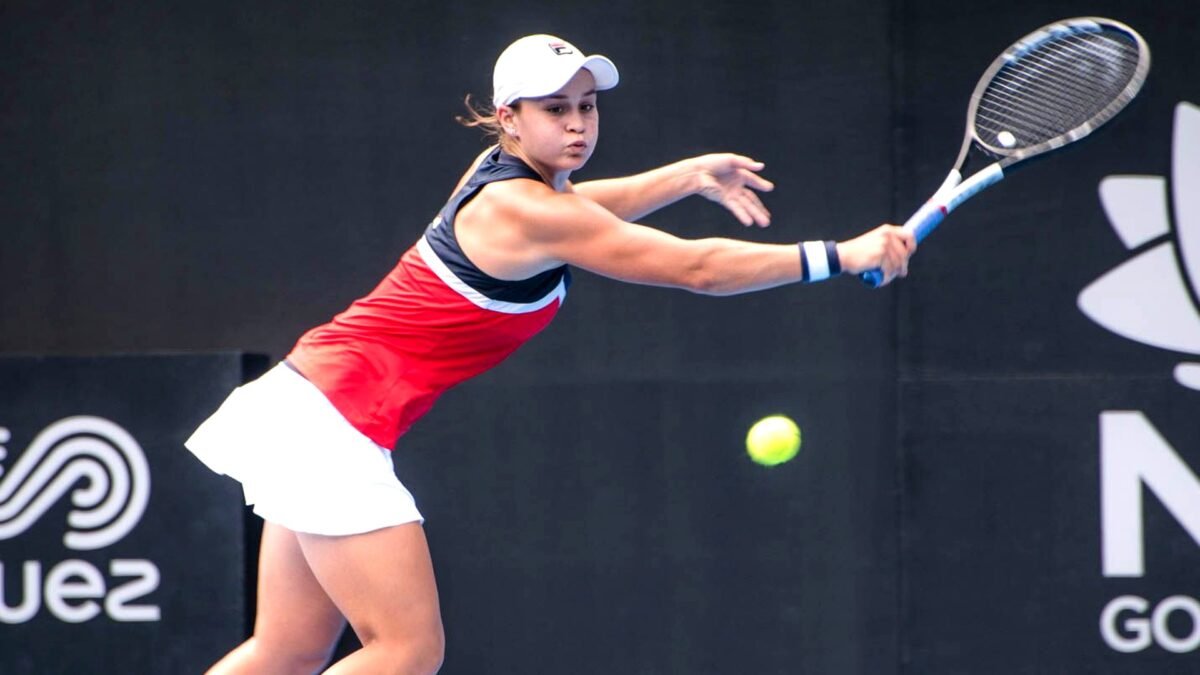
Ashleigh Barty has been elected to the International Tennis Hall of Fame, the sport’s highest honour, in her first year on the ballot, capping a career that was as short as it was brilliant. The announcement was made on Thursday, 19 November 2026, by the Hall of Fame in Newport, Rhode Island, which confirmed that Barty will be inducted as part of the Class of 2027 alongside Japanese wheelchair tennis great Shingo Kunieda.
Barty, a three-time Grand Slam singles champion and former world No. 1, retired from tennis in March 2022 at the age of 25, while still ranked No. 1 in the world and holding two of the four major titles. Her election, announced less than five years after she walked away from the sport at its summit, is a first-ballot verdict on one of the most complete and most admired careers of the modern era, according to the Women’s Tennis Association (WTA).
“I feel incredibly grateful and humbled to be elected to the International Tennis Hall of Fame,” Barty said in a statement released by the Hall of Fame. “I was fortunate to look up to so many Australian trailblazers who shaped the game and represented our country with such pride. To have my name mentioned alongside theirs is a surreal feeling.”
“My career was a team effort, so this honor belongs just as much to my family, my coaches and everyone who helped me along the way,” she added.
Kunieda, the most decorated men’s wheelchair tennis player in history, was elected in the Wheelchair Tennis Category. He will become Japan’s first inductee into the Hall of Fame. The two will be formally inducted during the Hall of Fame’s induction celebration in Newport from 26 to 28 August 2027, with tickets going on sale in February, according to the WTA.
A surprise call from two champions
Barty and Kunieda learned the news in surprise video calls led by Hall of Fame co-presidents Kim Clijsters and Patrick McEnroe, the WTA reported. In a fitting tribute to their place among the sport’s all-time greats, the calls featured personal congratulations from nearly 20 fellow Hall of Famers, including Roger Federer, Martina Navratilova and Jim Courier, officially welcoming the pair into the exclusive club.
The announcement, made in the United States on Wednesday and in Australia early on Thursday, confirmed Barty as the 35th Australian to be inducted into the Hall of Fame, and the first Australian woman to receive the honour since 2013, when Daphne Akhurst and Thelma Coyne Long were inducted. Akhurst, who won the Australian Championships five times in the 1920s and died at 29, is the player whose name is engraved on the trophy presented to the women’s singles champion at the Australian Open each year.
Barty’s election came from a player ballot that also included Juan Martin del Potro and Svetlana Kuznetsova, both of whom missed out on induction for a second consecutive year, according to Tennis Up To Date. The nominees for the Class of 2027 had been announced on 18 October, and a candidate must secure at least 75 per cent of the combined vote from the official voting group and the fan ballot to earn induction. Barty was elected in her first year of eligibility, a distinction that places her among the most emphatic first-ballot selections in the Hall of Fame’s history.
The numbers behind a short career
Few players in tennis history have achieved as much in as little time as Barty. She won 15 singles titles and 12 doubles titles on the WTA Tour, including three Grand Slam singles titles on three different surfaces: the French Open on clay in 2019, Wimbledon on grass in 2021 and the Australian Open on hard courts in 2022. She also won the US Open doubles title in 2018, and the season-ending WTA Finals in 2019.
Barty rose to world No. 1 in 2019 and held the top ranking for 121 weeks in total, including 114 consecutive weeks, one of the longest unbroken runs at the summit in the history of the women’s game. She finished as the year-end No. 1 for three straight years, from 2019 to 2021, according to the WTA. Her career singles record stood at 305 wins against 102 defeats, and she reached a career-high ranking of No. 5 in doubles.
The Australian Open victory in January 2022 was the defining moment of her career. Barty beat Danielle Collins in straight sets in the final in Melbourne to become the first Australian singles champion at the nation’s Grand Slam in 44 years, ending a drought that had stretched back to Chris O’Neil’s title in 1978. She did it without dropping a set all tournament, and she did it as the overwhelming favourite of a home crowd that had waited a generation for the moment.
Six months earlier, at Wimbledon, she had won her second major with a three-set victory over Karolina Pliskova in the final, fulfilling what she later called her “one true dream”. The triumph came on the 50th anniversary of fellow Indigenous Australian Evonne Goolagong Cawley’s first Wimbledon title in 1971, and Barty became only the second Indigenous woman to win the singles title at the All England Club. A proud Ngarrindjeri woman, Barty has often spoken of Goolagong Cawley as the trailblazer whose path she followed, and she wore a dress inspired by Goolagong Cawley’s 1971 outfit for her own final.
Her first major, at Roland Garros in 2019, announced her as a champion. She arrived in Paris ranked outside the world’s top 100 less than two years earlier and left as the French Open champion and, days later, the world No. 1. It was the beginning of a reign that would last, with only the interruption of the pandemic, until the day she retired.
The break that made the comeback
What makes Barty’s story unlike any other in modern tennis is that she had already walked away from the sport once before. A prodigy from Ipswich in Queensland, she won the Wimbledon girls’ singles title at 15 in 2011 and, as a teenager, reached three Grand Slam doubles finals in 2013 alongside Casey Dellacqua, including at the Australian Open while still only 16 years old.
But late in 2014, at 18, she stepped away from tennis entirely, worn down by the pressure, the travel and the weight of expectation. For almost two years she did not play the sport at all. Instead she played professional cricket, signing with the Brisbane Heat for the inaugural Women’s Big Bash League season despite having no formal training in the sport, and she has said the break restored her love of competing on her own terms.
She returned to tennis in May 2016, playing a small ITF event in Eastbourne, and her rise from there was startlingly fast. Within three years she was a Grand Slam champion and world No. 1. Within six she had won majors on every surface, finished three consecutive years at the top of the rankings, and retired, still No. 1, at 25.
Her retirement, announced on 23 March 2022, less than two months after her Australian Open triumph, stunned the tennis world. She was the reigning champion at Wimbledon and the Australian Open, the world No. 1, and at the peak of her powers. In her announcement she said she had given everything she had to the sport and was ready for the next chapter of her life. She has not returned, and has said many times since that she does not want to.
Since retiring, Barty has married professional golfer Garry Kissick, with whom she began a relationship in 2017, and the couple have had two children: a son, Hayden, born in 2023, and a daughter, Jordan, born in June 2025. She has also written a series of children’s books, remained involved in Australian tennis as a mentor and ambassador, and played golf competitively, winning her club championship at Brookwater in 2020 during her playing career.
Kunieda: a giant of wheelchair tennis
Alongside Barty, the Class of 2027 honours a player whose dominance of his discipline is without parallel. Shingo Kunieda, 42, won 28 major singles titles and 50 major titles overall in wheelchair tennis, along with four Paralympic gold medals. He became the first men’s wheelchair tennis player to complete a career Golden Slam, winning all four majors and Paralympic gold, and he held the world No. 1 singles ranking for a record 582 weeks, according to the WTA.
“Being elected to the International Tennis Hall of Fame is an incredible honor,” Kunieda said in a statement. “My goal was always to push the limits of wheelchair tennis and share its excitement with the world. I am so grateful to my family, my team and everyone who supported me on this unforgettable journey. I’m so excited for the year ahead and to be inducted in Newport.”
Kunieda will become the eighth wheelchair tennis inductee since the Hall of Fame began recognising the category in 2010, and the first Japanese player of any kind to be inducted. His election, like Barty’s, was confirmed in the surprise video calls led by Clijsters and McEnroe, with congratulations from nearly 20 Hall of Famers.
Analysis: Why It Matters
Barty’s election to the Hall of Fame is a story about more than one player’s trophies. It is a verdict on a career that broke almost every rule of how tennis greatness is supposed to be built, and a reminder of how much the sport lost, and how much it gained, when she walked away at 25.
1. A first-ballot verdict on a short career
Hall of Fame elections are, by design, conservative. Voters tend to reward longevity: the long careers, the slow accumulation of titles, the familiar names who stayed at the top for a decade. Barty’s case was the opposite. She played fewer than 500 singles matches in her career, won 15 titles, and spent barely six years as a top player. Her entire spell at world No. 1 lasted just over two years. Yet she was elected in her first year on the ballot, ahead of Juan Martin del Potro, a US Open champion and Olympic medallist, and Svetlana Kuznetsova, a two-time major champion, both of whom missed out for a second consecutive year.
That is the voters saying something specific: that greatness is not measured in years served. Barty’s peak was so high, and her game so complete, that a short career was enough. She won majors on clay, grass and hard courts, finished three straight years as world No. 1, and retired while still the best player in the world. There is no padding in that record, no late-career decline to explain away, no long tail of early-round defeats. The Hall of Fame has, in effect, judged her at her best, and found her best good enough.
2. The retirement that still defines her
Every account of Barty’s career returns, sooner or later, to the retirement. It is impossible to write about her without it, because the retirement is the lens through which the whole career is now understood. She left at 25, at No. 1, holding two majors, with years of dominance plausibly ahead of her. No player in the modern era has retired in such a position, and no retirement has been so widely accepted as the right decision.
That acceptance is itself remarkable. Tennis is a sport that treats early retirement as a tragedy, and the players who leave young are usually assumed to be broken by injury or burnout. Barty was neither. She said she had achieved her dreams, that she had nothing left to prove, and that she wanted a different life. The Hall of Fame election, coming less than five years later, is the sport’s formal agreement with that decision. It says that a career can be complete at 25, that walking away at the top is not a failure of ambition but an exercise of it, and that the measure of a player is what they did, not how long they kept doing it.
It also quietly reframes the 2014 break. When Barty left tennis at 18 to play cricket, many assumed she was finished. She was not. The break gave her the perspective that made the comeback possible, and the comeback gave her the career that the Hall of Fame has now honoured. Her story is, among other things, an argument that stepping away from elite sport is not the same as giving up on it.
3. Three surfaces, one complete player
What separates Barty from almost every other player of her generation is the completeness of her game. She won her three majors on three different surfaces, something only a handful of women in the Open era have managed, and she did it with a style that belonged to no single surface. Her game was built on a sliced backhand, a heavy forehand, a precise serve and an instinctive feel for the court that commentators repeatedly compared to the all-court players of an earlier era.
That versatility is the heart of her Hall of Fame case. There are players with more titles, more weeks at No. 1 and longer careers. There are very few who could win on any surface, against any opponent, in any conditions, and who did so while playing a style that was unmistakably their own. Barty’s tennis was not a system or a formula; it was a set of skills, deployed with unusual intelligence, and it made her almost impossible to prepare for. Opponents knew what was coming and still could not stop it.
The Hall of Fame has always prized that kind of player: the ones who change how the game is understood, not just who win the most. Barty belongs in that company, and her election recognises it.
4. What the Hall of Fame gains, and what it still owes
Barty’s induction is also good news for the Hall of Fame itself. The institution, based in Newport, Rhode Island, has worked hard in recent years to stay relevant to a sport whose audience is younger, more global and less attached to its history than it once was. Inducting a 30-year-old who retired four years ago, who is active on social media, who writes children’s books and plays golf and is raising two young children, brings the Hall of Fame into the present in a way that a posthumous induction of a 1920s champion, however deserving, cannot.
But the same ballot that elected Barty also left questions. Del Potro, the 2009 US Open champion who beat Federer in the final and won Olympic silver and bronze for Argentina, has now missed out twice. Kuznetsova, who won the US Open and the French Open and reached No. 2 in the world, has also missed out twice. Both are players whose careers were shortened or interrupted by injury, and both have cases that many in the sport consider strong. Their continued absence is a reminder that the Hall of Fame’s 75 per cent threshold is a high bar, and that first-ballot elections like Barty’s are the exception, not the rule. The question of when, or whether, del Potro and Kuznetsova will join her will follow the Class of 2027 for years.
5. The Australian line she joins
For Australia, Barty’s induction is a moment of national pride, and a reminder of the country’s extraordinary place in tennis history. She is the 35th Australian to be inducted, joining a list that includes Rod Laver, Margaret Court, Roy Emerson, Evonne Goolagong Cawley, John Newcombe and, from 2013, Daphne Akhurst and Thelma Coyne Long. She is the first Australian woman to be inducted since Akhurst and Coyne Long, and the first living Australian woman since Goolagong Cawley.
That lineage matters, because Barty has always placed herself inside it. She has spoken of Goolagong Cawley as her inspiration, of the Australian trailblazers she looked up to, and of the pride she felt representing her country. Her Wimbledon victory in 2021, on the 50th anniversary of Goolagong Cawley’s first title there, was the most deliberate act of homage in her career, down to the dress she wore. Her Australian Open victory in 2022 ended a 44-year wait that had become a national obsession.
Her induction, then, is not only a personal honour. It is the latest chapter in a story that runs from Akhurst in the 1920s, through Court and Goolagong Cawley, to Barty herself: the story of Australian women at the very top of world tennis. That Barty’s name will now sit alongside theirs in Newport is exactly what she said it felt like when she heard the news: surreal.
What to Watch Next
- The induction ceremony, 26-28 August 2027: Barty and Kunieda will be formally inducted in Newport, Rhode Island, alongside the Hall of Fame’s annual celebration, including the Celebrity Pro Classic, the Fit for Fame Blazer Dinner and Fame Fest. Tickets go on sale in February.
- Barty’s speech: Her induction address will be one of the most closely watched moments of the ceremony, given how rarely she has spoken at length about her career since retiring. Expect tributes to her family, her coaches and Goolagong Cawley.
- Whether she returns to the court: Barty has repeatedly said she does not want to return to professional tennis, but the induction weekend will put her back on a court in exhibition matches alongside fellow Hall of Famers. Any hint of a competitive comeback would be major news.
- Del Potro and Kuznetsova’s next ballot: Both missed out for a second consecutive year. Whether they are nominated again, and whether the voters reconsider, will be one of the talking points of the next election cycle.
- Kunieda’s legacy in Japan: As Japan’s first inductee, Kunieda’s honour is expected to raise the profile of wheelchair tennis in his home country, where he is already a national figure. Watch for tributes from Japanese tennis and Paralympic bodies.
- Australia’s Hall of Fame presence: With Barty the 35th Australian inducted, attention will turn to who might follow, including Samantha Stosur, the 2011 US Open champion, when she becomes eligible.
- The Class of 2027 build-up: The Hall of Fame will announce the full induction weekend programme, including the celebrity matches and fan events, in the months ahead, with Barty’s participation likely to drive record interest.
Sources
- WTA — Ashleigh Barty to be inducted into International Tennis Hall of Fame in 2027
- Associated Press, via theScore — Barty, Kunieda elected to International Tennis Hall of Fame
- International Tennis Hall of Fame, via PR Newswire — Ash Barty and Shingo Kunieda to be Inducted into the International Tennis Hall of Fame in 2027
- Tennis Majors — Ash Barty and Shingo Kunieda elected to the International Tennis Hall of Fame
- NBC Sports — Ash Barty retires from tennis at 25; won 3 Grand Slams
- Tennis Up To Date — Ash Barty enters Tennis Hall of Fame as Juan Martin del Potro misses out for second consecutive year

About the Author — Abdul Mannan
Related Articles
Pochettino Vows to ‘Change Things’ as Manchester United’s New Era Begins at Anfield
Mauricio Pochettino has vowed to 'change things' at Old Trafford as he prepares for a baptism of fire…

Nicholls’ Unbeaten 113 Rescues New Zealand to 243 for 5 After Bumrah’s Opening Blitz in Wellington Test
Henry Nicholls' unbeaten 113 and Glenn Phillips' 94 not out rescued New Zealand to 243 for 5 on…

Pat Cummins Faces Captaincy Crisis as Bancroft’s Sandpapergate Tell-All Reopens Cricket’s Darkest Scandal
Cameron Bancroft's 4,000-word statement says the whole Australian team knew about the sandpaper plot — and the cricket…