
Pat Cummins Faces Captaincy Crisis as Bancroft’s Sandpapergate Tell-All Reopens Cricket’s Darkest Scandal

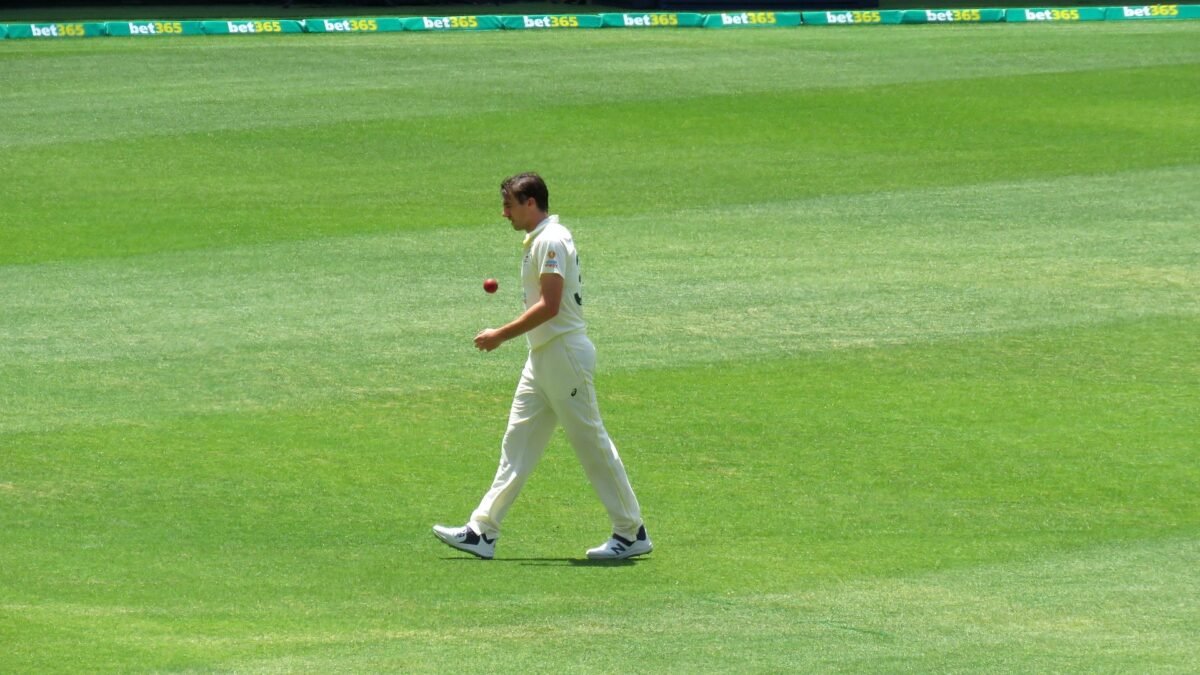
Australia captain Pat Cummins is facing the gravest crisis of his leadership after Cameron Bancroft, the player caught at the centre of the 2018 ball-tampering scandal, broke eight years of silence to accuse the whole team of knowing about the sandpaper plot — and to say that Cummins’ own public denials left him feeling “angry, betrayed and alone”.
Bancroft’s 4,000-word statement, published in The West Australian on Wednesday 18 November 2026, has detonated across world cricket. Within hours, former captains, veteran commentators and even opponents were openly questioning whether Cummins can remain Australia’s Test captain, while Cricket Australia’s hastily announced “independent forum” into the affair was dismissed by one former England captain as already irrelevant. According to Sky Sports, the statement has left Cummins in “a very difficult position”. According to The Times, his captaincy is now in crisis — and public opinion will decide his fate.
“It was not just the three of us — Steve Smith, David Warner and I — who knew about me using sandpaper on the ball in South Africa,” Bancroft wrote. “It was the whole team.”
That single sentence contradicts the official version of events that has stood since 2018, when Cricket Australia’s investigation concluded that knowledge of the plan was confined to three players. It also directly contradicts Cummins, who last week staged a marathon press conference — 68 minutes, by most counts — to dismiss the same claim, made first in Usman Khawaja’s autobiography, as “utter nonsense” and “100 per cent wrong”.
Cummins has not spoken publicly since Bancroft’s statement appeared. His management issued a brief response through CODE Sports, saying: “Whilst we feel for Cam and everything he’s been through, there’s nothing in the statement that hasn’t been answered by Pat in his press conference.” That answer has satisfied almost nobody. As former England captain Nasser Hussain told Sky Sports: “If you’re going to make that press conference 68 minutes, you’d better make sure everything you say is 100 per cent spot on.”
The statement that changed everything
Bancroft, now 33, was the player caught on camera during the third Test against South Africa at Cape Town in March 2018, roughing up the ball with a piece of sandpaper before trying to hide it down the front of his trousers. He was banned for nine months. Smith, then captain, and Warner, then vice-captain, were each suspended for 12 months. The scandal — “Sandpapergate” — became the defining crisis of modern Australian cricket, and the official account has always been that only those three men knew.
In his statement, Bancroft admitted for the first time that he did not tell the truth to Cricket Australia’s investigators in 2018. “When I was questioned during Cricket Australia’s investigation, I did not give a complete and truthful account,” he wrote, according to Reuters. “I withheld important details, including when the use of sandpaper began, how long it went on for, and the involvement and awareness of others. I did this to protect Cricket Australia’s investigation and not implicate others around me.”
He said he had now reached the point where “continuing to protect an incomplete account of events feels more damaging than the truth”. His career, he wrote, “has been destroyed and I have never been able to play for my country since Justin Langer was coach in 2019”.
The detail in the statement is what has made it so difficult to dismiss. According to Cricbuzz, Bancroft wrote that the plan was discussed in a “wider team environment”, with head coach Darren Lehmann and bowling coach David Saker both present when the group agreed to it. Warner, he confirmed, raised the idea of using sandpaper but said he could not do it himself because he feared the cameras that followed him closely would catch him — a finding Cricket Australia’s 2018 investigation had also reached. Smith, as Bancroft remembers it, joined the conversation briefly before making it clear he “wanted no part in it”.
Bancroft said the sandpaper was first used not in Cape Town, where the scandal was exposed, but a Test earlier, in Port Elizabeth. He wrote that he used it “nearly every over” after day two of that match, and that the whole exercise was openly discussed and even celebrated inside the team. “I recall conversations with all the fast bowlers Pat Cummins, Mitchell Starc, Josh Hazlewood and Mitchell Marsh about whether it was reverse swinging enough,” he wrote. “I also spoke with Tim Paine, who was in a key position behind the stumps to observe how the ball was moving.”
“All the bowlers gave me feedback if my work on the ball was working. It was helpful,” he added. “I remember Mitchell Marsh taking wickets and joking about how much the ball was swinging and how he never used to swing it like that. There was laughter and celebrations when wickets fell.”
According to Sky Sports, Bancroft recalled team-mates telling him “Great work Bang. Keep it up” and “be careful”, and said the team would “laugh” about the use of sandpaper and the game-changing effect it had — Australia took four wickets for 28 runs in one session after tampering. He also said he was encouraged by members of the playing and coaching staff, “especially [bowling coach] David Saker”.
Perhaps the most damaging passage concerns the one person Bancroft says did object. The team’s media manager, Kate Hutchison, expressed her distaste at the use of sandpaper in a meeting on day three of the Port Elizabeth Test and, according to Bancroft, walked out because she was so unhappy with what was being discussed. As Hussain put it on Sky Sports: “How does the media manager know what’s going on but a bowling unit doesn’t? It would be the first time a bowling unit does not know what is happening to a cricket ball.”
Bancroft was blunt about his own conduct. “I knew that using sandpaper was not simply pushing the boundaries of the laws of cricket. It was cheating,” he wrote. “But I also saw an opportunity to contribute. I was a youngster playing in his seventh Test match. If you asked me to run through a brick wall at that time I would have.”
The trigger: a press conference that backfired
Bancroft said the “final straw” that made him write the statement was Cummins’ press conference on Friday 13 November. The captain had called the media to respond to Khawaja’s autobiography, Sabr, published on 10 November, in which the former opener claimed the entire team knew about the sandpaper. Cummins spoke for well over an hour — 68 minutes according to most reports, 70 by others — and was unsparing. He said Khawaja’s claim that “we all knew” was, if it meant the team knew sandpaper was going out on to the field, “100 per cent wrong”. He described the suggestion that he and others were architects of a tampering scheme as “complete and utter nonsense” and “irresponsible”.
“There’s no grand plan. There’s no team meeting. There’s no bowlers saying this is what must happen,” Cummins said, according to reports of the press conference. “I think there are natural progressions that get you there.”
Bancroft’s account describes something very different: a team meeting, a proposal agreed in a wider group, regular conversations with the bowlers about whether the ball was reversing enough, and a dressing room in which the tactic was openly joked about. “What I saw, experienced and lived with — not only him, but everyone else on that tour in South Africa — is not the public account he gave in his press conference and in the years previously when he has spoken on this,” Bancroft wrote.
He is now the third member of that touring party to come forward since Khawaja’s book reopened the affair. Warner backed Khawaja on 9 November, calling his claims “100 per cent accurate” and later saying Cummins’ response “stinks of a cover-up”. Chadd Sayers, the one-Test seamer who was 12th man in Cape Town, said on 15 November that he believed “everyone knew”, and revealed that he himself carried the sandpaper off the field with the drinks after tea — and that Cricket Australia never interviewed him.
That last point has become a central weakness in the official account. According to ESPNcricinfo, Cricket Australia chief executive Todd Greenberg confirmed that only eight of the 11 players who appeared in the Cape Town Test were interviewed in 2018. Khawaja, who says he sat next to Bancroft in the dressing room during that Test, has said he was never interviewed either.
The reaction: ‘It’s often not the crime, it’s the cover-up’
The response from the cricket world has been swift and, for Cummins, unsparing. Hussain, speaking on Sky Sports, said the statement “puts Cummins in a very difficult position” and added: “It’s often not the crime, it’s the cover-up that gets you. And finally, it looks like the truth is coming out from within that dressing room.”
“He’s got some explaining to do because he was so strong,” Hussain said. “I was surprised he was so strong in his denial of what Usman Khawaja wrote in that book about the sandpaper scandal. Bancroft said himself that he felt betrayed and angry and alone after that press conference.”
Hussain also challenged the substance of Cummins’ denial directly. “He could hide behind semantics and whether he knew sandpaper was being taken on the field that particular day or that particular session, but he directly said no,” he said. “If you read The West Australian article from Bancroft, he says the media manager walked out because she was so unhappy with what was being discussed in a team meeting.”
Former England captain Alastair Cook, speaking on TNT Sports, said Bancroft’s statement had rendered Cricket Australia’s new forum “irrelevant” before it had even begun. “When Khawaja first came out, the first thing a lot of people thought was ‘he’s just selling a book’,” Cook said. “This one is an open, honest letter on his own accord, with clearly no financial gain to him about his experience of his eight-and-a-half years, and that’s what’s made me sit up and listen.”
“He’s opened his own forum, hasn’t he? He has done it himself and hasn’t allowed any administrator to get in the way of his words,” Cook added. “It’s another person telling his side of the story, that backs up three other players. We’ve not heard the end of it. Over the next 24-48 hours, it’s all coming out — there’s no doubt about that.”
Former England wicketkeeper Matt Prior, also on TNT Sports, said Cummins would have to speak again. “He will probably have to [speak again] as Australia captain!” Prior said. “His agent has come out with a statement to say he answered everything the other day, but he hasn’t really because there’s now new information that has come from Bancroft — there are a lot of question marks.” Prior added that coaches must now face scrutiny too: “There are coaches that need to stand up and be counted. This has completely opened this whole thing up. At what point do Cricket Australia not just owe to the public and to us as fans, but to the individuals whose lives were changed? They’ve got a responsibility to find out the truth.”
In Australia, the reaction was equally blunt. Former fast bowler Jason Gillespie, commentating for the ABC, called the statement “a bit of a grenade”. “It’s called into question a lot of testimony, a lot of statements,” Gillespie said. “It’s a very awkward situation for Pat Cummins. When he did his press conference last week, he was probably thinking, ‘This is the end of it, I’m going to get it done’. Any of those thoughts are out the window now … he has gone pretty hard, he’s named names. That’s something that CA and various individuals are going to have to navigate, and this ain’t over by any stretch of the imagination.”
Veteran cricket writer Gideon Haigh, speaking on the ABC’s 7:30 programme, called the revelations “mortifying” for Cummins — but added an important note of context. “We should bear in mind that he was a young player at the time, he was the junior member of that pace ensemble, he maybe didn’t feel confident about going against the flow in the same way as Cameron Bancroft,” Haigh said. He was scathing about the leadership around the team, criticising the “devastating lack of leadership” at the time and the failure of the coaching staff to act. “There are hugely experienced international coaches in that dressing room who could easily have taken measures to respond,” he said. “There were very, very experienced Test cricketers involved who could have spoken up. It was obviously an environment of conformity if not coercion with which Bancroft fell in because of a desire to belong … to be on par with the big boys.”
Fox Cricket commentator Gerard Whateley said Bancroft’s account was “lock, stock and barrel in the way that he has written it” and “extremely credible”, adding: “It’s the story I always expected to read in the detail that it has been presented.” Whateley argued that a fresh investigation is now unavoidable: “No credible organisation can stand and not investigate what has been put forward.”
Robert Craddock, writing for CODE Sports, went further, arguing that “Cummins’ leadership will be lucky to survive this debacle”. “Why would he lie? What has he possibly got to gain? His Test place is long gone. He is not selling a book. He has owned up to what he did,” Craddock wrote of Bancroft. “Bancroft’s version of events is the most convincing evidence of the whole saga because he has nothing to gain by saying it except the cleansing that comes with telling his version of the truth.”
The reaction crossed borders and generations. Dale Steyn, the great South African fast bowler who was on the opposing side in Cape Town, wrote on social media that the affair would never go away for the Australians, and dismissed the idea that those involved deserved a protected “safe space” to discuss it without scrutiny. British broadcaster Piers Morgan called Bancroft’s statement “the dam bursts” and asked how “Pinocchio Pat” could survive it and stay captain. Pakistan legend Wasim Akram had already questioned Cummins’ defence earlier in the week, saying a fast bowler would know “straight away” what was happening to a ball.
Cricket Australia’s forum — and why it is already under fire
Hours before Bancroft’s statement was published, Cricket Australia had tried to get ahead of the story. Interim chair David Boon and chief executive Todd Greenberg announced at Bellerive Oval, ahead of the third one-day international against England in Hobart, that the board had agreed to establish an “independent forum” where players and staff from the 2018 tour could share their experiences in confidence, without fear of retrospective punishment.
But the announcement was carefully limited. Greenberg confirmed that the initial 2018 investigation would not be reopened and would not be made public, for confidentiality reasons. An independent person — likely a King’s Counsel or a former judge — will be appointed in the coming days, along with terms of reference. The process will not be completed before the first Test against New Zealand. “This forum is not about re-litigating the past at all,” Greenberg said. “It’s not a re-investigation. It’s not designed to re-prosecute or to sanction.”
Greenberg also defended Cummins directly. “The captain doesn’t need to be cleared,” he told the Hobart press conference. “I think they both [Cummins and Khawaja] can be true because it’s their version of events and their version of events is their truth.”
That framing — two contradictory accounts both treated as true — has drawn sharp criticism. Khawaja and Warner have both questioned the forum, and Cook’s verdict that it had been rendered “irrelevant” by Bancroft’s statement within hours of its announcement captures the mood of much of the commentary. Whateley’s demand for a proper investigation, with an amnesty from further penalty but a full establishment of the facts, goes directly against Cricket Australia’s stated position.
After Bancroft’s article appeared, Cricket Australia issued a further statement: “We respect that Cameron Bancroft has told his story, and we will take time to consider his comments. We expect that there will be many dimensions to the events of 2018, which is why we have established the forum for individuals to give their version of events. We are finalising the terms of reference and will commence the process as soon as possible.”
The board did not immediately respond to a request for comment on Bancroft’s specific claims, according to Reuters.
What happened in Cape Town — and why it still matters
To understand why a statement about events eight years ago has shaken Australian cricket to its foundations, it is worth recalling what happened in March 2018 — and what was supposedly settled.
Australia arrived in South Africa for a four-Test series already simmering with hostility. In the third Test at Newlands, Cape Town, television cameras caught Bancroft, then playing his eighth Test, using a small piece of yellow sandpaper to rough up one side of the ball, then attempting to hide it down the front of his trousers after realising he had been spotted. At the close of play, Smith admitted in a press conference, alongside Bancroft, that the team’s “leadership group” had devised a plan to tamper with the ball.
The fallout was immediate and enormous. Smith and Warner were sent home before the fourth Test. Cricket Australia’s investigation, led by its head of integrity, concluded within days that Warner had developed the plan and instructed Bancroft to carry it out, that Smith knew about it and failed to stop it, and that only those three knew in advance. Bancroft was banned for nine months; Smith and Warner for 12 months each and stripped of leadership roles. The International Cricket Council added a one-Test suspension for Smith. Lehmann, cleared of any direct role, resigned as head coach anyway.
The scandal prompted a national reckoning. Cricket Australia commissioned an independent cultural review, which found the team had operated in a “win without counting the cost” environment. The sport’s public image in Australia — where cricketers are held to a standard often described as the “Australian way” — was badly damaged, and the three banned players became symbols of a wider moral failure.
But doubts about the official account never fully went away. In 2021, Bancroft was asked in a newspaper interview whether the bowlers knew about the tampering. His answer — that it was “self-explanatory” — set off a fresh round of questions, and Cummins, Hazlewood, Starc and Nathan Lyon issued a joint statement denying any knowledge and calling for an end to “rumour-mongering and innuendo”. Then-captain Tim Paine said the four bowlers had spoken to him and denied involvement.
What Khawaja’s book and now Bancroft’s statement have done is to put a detailed, named, first-person account on the record that contradicts that position — not from an outsider or a journalist, but from the man who actually held the sandpaper. According to The Times, Bancroft also offered context that reaches back further than South Africa, describing the manipulation of the quarter-seam during the 2017-18 Ashes — the series in which he made his debut — as part of the dressing-room culture he walked into.
None of this proves, in a legal sense, what Cummins or any other individual knew on a given day in 2018. Bancroft’s account is his own recollection, eight years on, and Cummins has consistently denied it, in 2021 and again last week. What it does prove is that the official version — three men, acting alone, with nobody else aware — is now openly disputed by three members of that touring party, and that Cricket Australia’s own investigation interviewed only eight of the 11 players who played in Cape Town.
Analysis: Why It Matters
The captaincy is now the story, not the scandal
For eight years, Sandpapergate was a story about three men and a piece of sandpaper. Bancroft’s statement has turned it into a story about the man who leads Australian cricket today. That is the shift that matters, and it is why the reaction has been so much fiercer than the response to Khawaja’s book alone. Khawaja could be dismissed, by those inclined to do so, as a man selling a memoir. Bancroft cannot. As Craddock put it, he has nothing to gain — no book, no Test place to win back, no career to revive. He has, by his own account, already lost his career. The credibility of his statement rests precisely on that absence of motive, and it is what makes Cummins’ position so precarious. The captain’s authority rests on trust, and trust is exactly what is now in dispute.
The 68-minute press conference was a gamble — and it backfired
Cummins’ decision to hold a marathon press conference last week was intended to end the matter. Instead, it created the conditions for Bancroft’s intervention. By speaking at such length, and in such absolute terms — “100 per cent wrong”, “complete and utter nonsense” — Cummins left himself no room to manoeuvre when a direct participant contradicted him days later. Hussain’s observation cuts to the heart of it: a 68-minute denial has to be “100 per cent spot on”, because every word becomes a hostage to the next revelation. Had Cummins said less, or left more room for the possibility that others saw things differently, Bancroft’s statement would still have hurt — but it would not have landed as a direct rebuttal of the captain’s own words. The press conference was meant to be a full stop. It became an invitation.
Cricket Australia’s ‘both can be true’ position is unsustainable
Greenberg’s suggestion that Cummins’ and Khawaja’s accounts “can both be true” because each is “their version of events” may have been intended as a diplomatic bridge, but it reads as an abdication. Two accounts cannot both be true when one says the whole team knew and the other says nobody outside three men knew. Either the bowlers knew about the sandpaper or they did not. A forum that is explicitly not a re-investigation, that will not reopen the original inquiry, that will not publish its findings in full, and that will not finish before the New Zealand series, looks less like a search for truth than a mechanism for letting the story die of old age. Whateley’s argument — that no credible organisation can refuse to investigate what has now been put on the record — is the one Cricket Australia will find hardest to answer, because it is framed not as an attack but as a minimum standard of governance.
The dressing-room culture question is bigger than one tour
Haigh’s phrase — “an environment of conformity if not coercion” — points to the deeper issue Bancroft’s statement raises. Bancroft was 25, playing his seventh Test, desperate to belong. He describes a dressing room where the tactic was joked about, encouraged by a coach, and discussed openly — and where the only person who objected was the media manager. That is not a story about three bad actors. It is a story about a group in which dissent was structurally difficult, in which a young player felt he could not refuse, and in which the people with the most experience and authority — the coaches and senior players — either participated or stayed silent. The 2018 cultural review identified exactly this problem. Eight years later, the question is whether anything in that culture has actually changed — and whether the men who now run the team are the right people to answer it.
The Ashes shadow and the calendar will not wait
The timing could hardly be worse for Australian cricket. England have just won the one-day series 2-1 in Hobart, the five-match Twenty20 series begins in Melbourne on Saturday 21 November, and the Test side’s next assignment — a four-match series against New Zealand starting in Perth on 9 December — is less than three weeks away. Cummins will walk out to lead his team in front of home crowds while the central question about his past remains unanswered, and while former players queue up to say more. Cook’s prediction that “over the next 24-48 hours, it’s all coming out” suggests the story is still accelerating, not settling. Every press conference between now and the first Test will begin with the same questions, and every answer that is not a full account will be measured against Bancroft’s 4,000 words. Cricket Australia hoped its forum would buy time. It has bought, at most, hours.
What to Watch Next
- Cummins’ next public appearance: whether the captain speaks again before the Twenty20 series begins on Saturday, and whether he repeats his denial, qualifies it, or declines to answer. His management’s statement that “there’s nothing in the statement that hasn’t been answered” suggests he would prefer not to — but Prior’s warning that he “will probably have to” speak again as captain is likely to prove correct.
- More players coming forward: Cook predicted further revelations within 24 to 48 hours, and Hussain said he “wouldn’t be surprised if others came out”. Watch for statements from other members of the 2018 touring party — particularly Starc, Hazlewood and Lyon, whose 2021 denial now stands alongside Bancroft’s detailed contradiction.
- The forum’s terms of reference: Cricket Australia says it is finalising these and will appoint an independent chair, likely a King’s Counsel or former judge. Whether the forum can compel attendance, whether its findings will be published, and whether it can examine the 2018 investigation itself will determine whether it is taken seriously.
- Khawaja and Warner’s next moves: both have already questioned the forum. If either gives a fuller account of their own, the pressure on Cricket Australia to convert the forum into a genuine inquiry will grow sharply.
- The New Zealand series build-up: the first Test begins in Perth on 9 December, and Cricket Australia has confirmed the forum process will not be completed before then. Expect the story to dominate every pre-series press conference, and watch whether the board’s stance shifts as the series approaches.
- Public and sponsor reaction in Australia: The Times argued that public opinion will decide Cummins’ fate. Polling, talkback radio and the Australian press — which turned decisively against the team in 2018 — will be the real jury, and sponsors will be watching the same coverage.
- Whether the 2018 investigation is reopened: Cricket Australia has ruled this out, but Whateley’s call for a fresh investigation with an amnesty from further penalty is gaining support. If more players corroborate Bancroft, the board’s refusal to re-examine its own inquiry will become harder to sustain.
Sources
- Sky Sports — Sandpapergate: Australia Test captain Pat Cummins faces fresh scrutiny after Cameron Bancroft’s explosive claims
- Cricbuzz — ‘Betrayed’ Cameron Bancroft angered by Pat Cummins’ denial, says whole team knew of sandpaper plan
- Reuters — Bancroft says entire Australian team were aware of sandpaper plot
- Fox Sports Australia — ‘Lucky to survive’: Cricket world reacts to ‘mortifying’ Bancroft tell-all… and what comes next
- ESPNcricinfo — CA set up ‘independent forum’ into Sandpapergate but will not re-litigate the incident
- TNT Sports — Australia’s Sandpapergate: What happened originally, why is it back in the news, and what could come next

About the Author — Abdul Mannan
Related Articles
Ben Duckett’s 133 Seals England’s First ODI Series Win in Australia in Eight Years as Hosts Collapse Again in Hobart
Ben Duckett struck 133 and Sonny Baker took four wickets as England beat Australia by 97 runs in…

India Beat Pakistan 2-1 to Win Record 10th SAFF Title as Both Teams Share Guards of Honour in Dhaka
India came from behind to beat Pakistan 2-1 in the SAFF Championship final in Dhaka, then both teams…
MS Dhoni Ends 19-Year IPL Playing Career as Chennai Super Kings Name Him Team Mentor for 2027
MS Dhoni has ended his 19-year IPL playing career and will serve as Chennai Super Kings' team mentor…