
Anthropic Closes Record Nasdaq Debut at $97.17, Up 17%, After Opening Pop Briefly Valued It at $2 Trillion

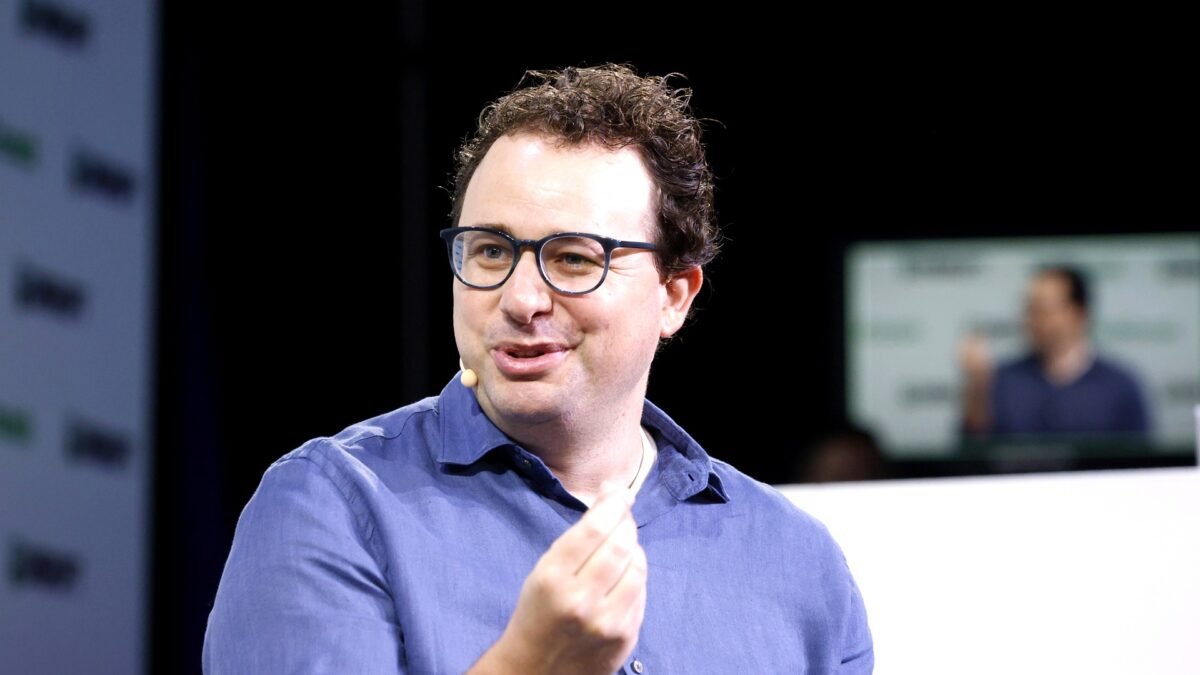
Anthropic, the maker of the Claude artificial intelligence models, closed its first day as a public company at $97.17 a share on Thursday, 19 November, up about 17 per cent on the $83 price at which it sold its shares the night before, in the largest initial public offering in history. The debut, on the Nasdaq Global Select Market under the ticker ANT, briefly valued the six-year-old company at about $2 trillion before the shares gave back much of their opening surge, according to Nasdaq and Reuters.
The first trade came at 11:50 a.m. Eastern Time, more than two hours after the opening bell, at $111.50 — about 34 per cent above the offering price. The shares peaked at $115.10 just before noon and slipped as low as $92.72 before settling at $97.17, about 13 per cent below the opening print, according to Nasdaq’s quote page and Invezz. More than 846 million shares changed hands, making ANT the most actively traded name on the Nasdaq and easily beating the 522 million shares traded on SpaceX’s opening day in June, according to Invezz.
Anthropic sold 980 million Class A shares at $83, raising about $81.3 billion, according to the company’s own announcement. That passed the $75 billion raised by SpaceX in June, making it the biggest stock-market offering on record, according to CBS News and Reuters. The underwriters, led by Goldman Sachs and Morgan Stanley, have a 30-day option to buy up to a further 147 million shares, which would take the total raised to about $93.5 billion if exercised in full, according to Invezz.
The debut came on a down day for the wider market. The Nasdaq Composite fell 550.69 points, or 2.25 per cent, to 23,879.20, the Dow Jones Industrial Average lost 1,101.11 points, or 2.19 per cent, to 49,097.06, and the S&P 500 fell 2.02 per cent to 7,175.83, according to Invezz. Anthropic’s shares therefore finished their first session higher even as the market around them fell by more than 2 per cent — and a day after the Dow had already dropped 849 points in a global sell-off.
The numbers of the debut
The tape of Anthropic’s first day tells a story in three acts: a scramble, a peak, and a long fade. The co-founders, Dario Amodei and his sister Daniela Amodei, rang the Nasdaq opening bell at 9:30 a.m. in Times Square, but the ceremony itself did not start trading. Indications climbed through the morning, from about $99.60 to $105, then $110 and $111, before the stock finally opened slightly above that last level, according to Invezz. Within a minute of the first trade the shares touched $114.99, according to CBS News, and by 12:19 p.m. they had fallen to $95.05, according to Australian coverage of the session. By mid-afternoon they were changing hands at around $95.60, still about 15 per cent above the offering price.
The closing price of $97.17 left investors who received stock at $83 well in the money, but it also left the debut well short of its opening euphoria. The close was about 12.9 per cent below the opening price, according to The Desk. Even so, as Invezz noted, a 17 per cent first-day gain on the largest IPO on record is a strong debut — all the more so on a session in which the main United States indexes finished more than 2 per cent lower.
The offering itself had already been enlarged before trading began. Anthropic first marketed 825 million shares at $70 to $78, then priced 980 million shares at $83 — more stock, at a higher price, than the range implied. Of the 980 million shares, 956,351,354 were sold by the company and 23,648,646 by existing stockholders, who keep the money from their own shares, according to Anthropic’s announcement. The only named sellers were the seven co-founders, each offering 3,378,378 shares, according to the company’s filing as reported by TechWatch. No venture-capital firm sold a single share.
Separately, seven technology companies — AMD, Broadcom, Google, Micron, Microsoft, Nvidia and TSMC Partners — agreed to buy $26.0 billion of non-voting Class N shares at the $83 IPO price, about 313.3 million shares, in a private sale set to close immediately after the offering, according to The Desk. Google and Nvidia are taking $10 billion each, AMD $2.5 billion, Broadcom, Micron and Microsoft $1 billion each, and TSMC $500 million, according to Dealroom. The prospectus estimates Anthropic’s net proceeds from its own IPO shares and that private sale at about $104.8 billion, or about $117.0 billion if the underwriters buy all their extra shares, according to The Desk.
A record built on demand
Demand for the offering was, by every measure reported, extraordinary. Orders ran to nearly seven times the shares on offer, according to Bloomberg’s deals reporters, cited by BigGo Finance. Retail interest was the largest in history, according to Invezz, and roughly half of the firms that placed orders were left empty-handed — a higher share than usual. Retail investors received an allocation of around 15 per cent, below the roughly 20 per cent the company had targeted, but still above the 5 to 10 per cent typical of most IPOs, according to Invezz. About 315 million shares were unlocked on day one, according to Bloomberg.
The banks on the deal are due about $550 million in underwriting fees, according to the company’s filing as reported by Invezz — more than the roughly $500 million paid on the SpaceX IPO. The listing also handed Nasdaq a marquee win and, according to Bloomberg, emptied the IPO calendar until the first quarter of 2027.
Analysts who opened coverage stayed above the close. Melius started at Buy with a $155 price target, with its head of technology research, Ben Reitzes, saying that assigned value could even be “conservative”, according to Invezz. Needham’s Scott Berg has a Buy rating and a $150 target. The average target across five Buy ratings was about $116, according to Invezz. Wolfe Research, in a Thursday note, said cybersecurity could match Anthropic’s coding opportunity and reach $500 billion annually, according to Invezz.
The debut is expected to provide a major windfall for stock-holding employees, some 4,250 of whom will become millionaires, according to the New York Post. The seven co-founders were estimated to be worth a combined $140 billion at the IPO price, according to Bloomberg, cited by the New York Post.
The $2 trillion question
The most eye-catching figure of the day — $2 trillion — needs careful handling, because it was never a single number. It reflected prices during the day, not the close, and it depended on which shares were counted.
At the $111.50 open, Reuters put Anthropic’s market value at about $2 trillion, a level exceeded by only a handful of United States-listed firms, and ahead of the $1.96 trillion it assigned to SpaceX at its June opening trade, according to Invezz. CBS News said the stock’s peak valued Anthropic at more than $2 trillion, and Fortune said the opening surge briefly gave it a $2 trillion market value, according to The Desk. Investing.com quoted Tom Hulick, chief executive of Strategy Asset Managers, saying the opening price put the fully diluted value close to $2 trillion, according to The Desk.
At the close, the reported figures depended on which shares were counted. Investing.com put Anthropic’s implied valuation at about $1.76 trillion and Fortune put its market value just shy of $1.8 trillion, neither stating the share count, according to The Desk. Fortune added that counts leaving out potential dilution from restricted stock, convertible notes and other items give about $1.3 trillion. Nasdaq’s quote page listed a market capitalisation of about $1.27 trillion without saying which shares it includes, according to The Desk. Anthropic itself has not stated a market value.
The company’s final prospectus, filed with the Securities and Exchange Commission on Thursday, says about 13.22 billion shares across all its share classes will be outstanding once the offering and the related private sale are done, including about 7.58 billion Class A shares and about 5.64 billion non-voting Class N shares, according to The Desk. Multiplying those 13.22 billion shares by the $97.17 close gives about $1.28 trillion. That simple calculation counts the convertible notes and restricted stock units that turn into shares at the offering, but leaves out stock options, restricted stock units that have not yet vested and convertible notes that have not yet turned into shares, which is why fully diluted figures run higher, according to The Desk.
The record claims also need the same care. CBS News called it the largest IPO in history, saying the $81.3 billion raised passed the $75 billion SpaceX raised when it listed in June, according to The Desk. Fortune drew a narrower line: the record holds when measured by money raised — $79 billion for Anthropic’s own shares, or $81.4 billion including shares sold by existing holders, against SpaceX’s $75 billion. By valuation at the IPO price, Fortune said, Anthropic’s roughly $1.5 trillion would rank second to SpaceX’s $1.77 trillion, according to The Desk. SpaceX later reached $85.7 billion after its overallotment was exercised, according to Invezz. These comparisons use each sale’s base size before any extra shares, and Anthropic’s announcement makes no ranking claim, according to The Desk.
What is not in dispute is the scale. At the IPO price, Anthropic was valued at about $1.5 trillion. At the open, on the broadest count of its shares, it was worth about $2 trillion — behind only Apple, Microsoft, Nvidia, Alphabet and Amazon among United States companies, according to Australian coverage of the session. By the close, on the most generous count, it was worth about $1.76 trillion, still ahead of SpaceX’s market capitalisation of $1.88 trillion at the IPO price, according to the New York Post — which noted that Anthropic pared back some gains to close a bit behind SpaceX’s market value.
What Amodei said at the bell
Before ringing the bell, Dario Amodei used his opening speech to recommit Anthropic to the safety-first mission on which the company was founded — and to promise that the listing would not change it. “My co-founders and I started Anthropic because we believe that the most powerful technology of our time should be built for the benefit of humankind,” he said, according to TechCrunch, which published the full text of the speech. He and his sister lost their father to a disease that, just a few years later, became curable, he said, and he began his career in biology hoping to help future cures come sooner. “Sufficiently powerful AI could compress a century of scientific and medical progress into a decade,” he added, according to the Glasgow Times.
He was equally direct about the risks. “We’ve always been honest that this technology has very real risks,” he said, according to the Glasgow Times — risks ranging from misuse by individuals or nation-states to economic disruption to losing control of AI systems, according to TechCrunch. “And to state it unequivocally, we will pace the training and deployment of AI systems, taking as long as is necessary to have confidence that they are safe and will remain under human control,” he concluded, according to TechCrunch. “We will not bend to either business nor political pressure. Today puts the company in a stronger financial position, and in doing so only strengthens our resolve to do the right thing.”
Daniela Amodei, the company’s co-founder and president, echoed those sentiments in an interview with CNBC on Thursday, according to TechCrunch, noting that while the risks were real, the promise of AI was also “incredible”. “We were really founded on this idea that it is our job to mitigate those risks, and I think we have to date done an incredible job doing that. We obviously have more work ahead of us, but we are deeply committed to safety,” she added. In her Nasdaq speech, she addressed the critics of AI directly: “This technology needs you — not your trust, not your use, but your voice. The end of the story isn’t written yet. Intelligence is now something humans can build,” according to the Daily Caller, citing CNBC.
The speech matters because it is now a promise made in public, on the most public morning of the company’s life, to the shareholders who have just bought into it. Anthropic was founded in 2021 by Dario Amodei and fellow researchers from OpenAI, and it is the first company that directly develops frontier AI models to enter the United States stock market, according to BigGo Finance. Fortune called it the first pure-play maker of frontier AI models to go public, noting that SpaceX also builds rockets and that Google and Meta run large search and social media businesses, according to The Desk.
A turbulent week for artificial intelligence
The debut capped a turbulent week for the AI sector, according to The Times — and the turbulence was not confined to Anthropic. Nvidia’s chief executive, Jensen Huang, abruptly resigned last week after three decades at the helm of the company he founded, following revelations of extramarital affairs, including one with a Chinese businesswoman, Alice Huang, whom United States intelligence officials have identified as suspected of working with Chinese intelligence services, according to CNN and Reuters. Nvidia’s board unanimously accepted his resignation and, on Tuesday, ruled out reinstating him, telling investors “we’ve got this”, according to CNN. The company’s chief financial officer, Colette Kress, is serving as interim chief executive while the board searches for a permanent leader.
Huang said on Tuesday that he would be “honoured” to return as chief executive if the board decided his return was in the best interest of shareholders, according to CNN. The board is not considering reinstating him, a source familiar with the situation told CNN. He has agreed to testify before Congress on 1 December, according to CNN, and is expected to face questions about his relationship with Alice Huang and Nvidia’s sales of chips to Singapore-based Megaspeed.
On Thursday, California’s attorney general, Rob Bonta, served Nvidia with an investigative subpoena, his office said, examining whether Nvidia’s or Huang’s actions resulted in China obtaining advanced chips or confidential information, and whether the company misled investors and the public about that risk, according to Reuters. “The conduct of Nvidia and its former CEO raises bright red flags,” Bonta said, according to Reuters. The United States Securities and Exchange Commission has also opened a civil investigation into whether Nvidia’s investor disclosures accurately described its business, the Wall Street Journal reported, according to BigGo Finance. Separately, the House Foreign Affairs Committee said on Thursday that the Trump administration had approved shipments of nearly 900,000 advanced Nvidia and AMD AI chips to Chinese companies between December 2025 and May this year, although it was unclear how many were ultimately shipped, according to Reuters. Nvidia said the approvals were subject to strict conditions and limited volumes and that it had stopped shipping H200 chips to China, according to Reuters.
Nvidia’s shares have fallen more than 28 per cent since the affair and its potential implications came to light, according to the Motley Fool, and by 13 November they had fallen more than 30 per cent from their 6 October closing high, according to Reuters. Yet the company’s third-quarter results, reported on Tuesday, showed quarterly revenue of $115.8 billion, up 103 per cent year on year, beating expectations, according to CNN — a reminder that the business, for now, is still growing faster than the scandal around it.
The wider market, meanwhile, has been asking harder questions about the AI build-out all month. Investors have been weighing worries about higher interest rates and about the sheer cost of developing and operating AI models, according to Reuters and Invezz. Anthropic’s own prospectus shows the scale of that cost: the company spent nearly $9 billion on computing capacity and infrastructure in the first half of 2026, nearly four times the amount spent a year earlier, according to Reuters, and it has committed to nearly $900 billion in computing spending with infrastructure partners including Amazon and Google, according to Reuters. It has also committed to spending $70 billion on computing power and infrastructure over the next 12 months, according to Android Headlines.
That is the backdrop against which the debut must be read: a record listing, on a down day, in a week when the most important chief executive in AI left his company, the most important chipmaker in AI was subpoenaed, and the market fell by more than 2 per cent. The demand was real. So was the doubt.
Analysis: Why It Matters
The first pure-play AI lab is now a public-market fact
Until Thursday, ordinary investors could buy the picks and shovels of the AI boom — the chips, the cloud, the power — but not the mine itself. The companies that actually build frontier models were either private, like OpenAI, or buried inside much larger businesses, like Google and Meta. Anthropic’s listing changes that. For the first time, the public market has a direct, listed way to take a view on a stand-alone model developer, as Invezz put it, rather than only through the chipmakers and cloud groups that have dominated the trade. That is a structural change, not a one-day event: it creates a daily, public price for the idea that a company whose product is intelligence itself can be worth more than most countries’ economies. It also creates a benchmark. Every private AI lab, every venture round, every government grant will now be measured, fairly or not, against ANT’s closing price.
The pop that faded is the honest part of the story
The shape of the first day — a 34 per cent opening surge, then a long slide to a 17 per cent close — is more informative than either number alone. The opening was a scramble for a scarce asset: nearly seven times oversubscribed, half the firms that placed orders left empty-handed, and the first trade came two hours late because the opening auction could not find a price fast enough. The fade was the market doing its slower work: weighing a company that generated $33.24 billion of revenue in the nine months to 30 September, up about 1,200 per cent from the same period a year earlier, according to its prospectus as reported by Invezz, against a net loss of $104 billion for the same period, most of it from changes in the fair value of convertible notes and derivatives, according to Dealroom, citing the prospectus via CNBC. A 17 per cent gain on the largest IPO in history, on a day the Nasdaq fell 2.25 per cent, is a strong debut. It is also a debut that left $500 billion of intraday paper value on the table between the open and the close. Both facts are true, and the tension between them is the story of the AI trade in miniature: extraordinary growth, extraordinary cost, and a market that is no longer willing to pay any price for either.
$900 billion of promises now has a quarterly clock on it
The most important number in Anthropic’s prospectus is not the $81.3 billion it raised, or the $2 trillion it briefly touched, but the nearly $900 billion it has committed to spend on computing power and infrastructure with partners including Amazon and Google. That is a promise that can only be kept by growing revenue at something like the current rate — a run-rate of about $81 billion as of 31 October, up $10 billion from 30 September, according to Reuters — for a very long time. As a private company, Anthropic could make that promise to a handful of investors who had signed up for the vision. As a public company, it must now defend it every quarter, to analysts who have already set price targets from $116 to $155, to index funds that will add the stock on fixed timetables, and to the roughly 15.5 billion insider shares subject to lock-up agreements that run until after Anthropic reports results in the third quarter of next year, according to Invezz. The Morningstar US Total Market Index will include the stock after five trading days, the Nasdaq-100 after 18 December, and the S&P 500 will not add it for at least a year, according to Invezz. Each of those dates is a moment when a new class of holder — passive, price-insensitive, permanent — enters the register. The company’s spending commitments do not wait for them.
Safety pledges meet shareholder pressure
Dario Amodei’s speech at the bell was, in its way, the most remarkable document of the day. A chief executive, on the morning his company became the biggest IPO in history, used his platform to promise that he would slow down if safety required it, and that he would not bend to business or political pressure. It is a promise that was easy to make when the company was private and its investors were chosen. It is a much harder promise to keep when the shareholders are the public, the quarterly earnings call is the forum, and the competitors — OpenAI, Google, Meta — are not slowing down. The test will not come in a speech. It will come the first time a safety concern delays a model that the market is waiting for, or the first time a rival ships something Anthropic has held back. The structure of the company offers some protection: the founders kept control, the private placement buyers are the company’s own suppliers and customers, and no venture firm sold a share. But the listing has changed the audience for that promise from a room of believers to the whole market, and the market has a way of asking, every single day, whether a promise is worth what it costs.
OpenAI is next — and the whole AI trade is being repriced
Anthropic’s debut is also a rehearsal. OpenAI, the industry’s largest private company, is planning its own listing in 2027, according to Teckhustlers, and every number from Thursday will be read in its boardroom as a preview: the oversubscription, the opening pop, the fade, the valuation arguments, the analyst targets. But the debut is equally a warning. It arrived in the same week that Nvidia — the company on whose chips the entire boom runs — lost its founder-chief executive, was subpoenaed by California’s attorney general, and saw its shares fall by more than a quarter from their highs. It arrived on a day when the Nasdaq fell 2.25 per cent and the Dow lost more than 1,100 points. The AI trade is no longer a one-way bet on a single story. It is now a set of separate stories — model makers, chipmakers, cloud providers, power suppliers — each with its own risks, its own governance, and its own price. Anthropic’s first day gave the market a price for the model makers. What happens next depends on whether that price can survive contact with the costs underneath it.
What to Watch Next
- The offering closes on Friday, 20 November, subject to customary conditions, with the $26.0 billion private placement set to close immediately afterwards, according to The Desk. Watch whether the underwriters exercise their 30-day option on up to 147 million more shares, which would take the total raised to about $93.5 billion.
- The first week of trading. The Morningstar US Total Market Index will include ANT after five trading days, according to Invezz. Watch whether the shares hold above the $83 offering price once the opening-week excitement fades — and whether the $93 level flagged by Bloomberg’s deals reporters as the line between a wobble and something close to failure, according to BigGo Finance, comes into play.
- Index inclusion in December. The Nasdaq-100 adds the stock after 18 December, according to Invezz. That will force a large, mechanical wave of buying — and will test whether the shares can absorb it without another sharp swing.
- Anthropic’s first earnings report as a public company. No date has been set, according to Invezz. The first report will show whether the $81 billion run-rate is still climbing, and how much of the $900 billion computing commitment is already turning into cash costs.
- The Nvidia investigations. California’s subpoena, the SEC’s civil investigation and Jensen Huang’s 1 December testimony before Congress, according to CNN, will shape the governance story around the chipmaker that supplies Anthropic’s rivals and partners alike. Any finding that chips or confidential information reached China would reverberate across the whole AI supply chain.
- OpenAI’s 2027 listing plans. Anthropic’s debut is the test case for whether the next, larger listing can draw similar demand, according to Teckhustlers. Watch for any signal from OpenAI about timing, size or structure in the weeks ahead.
- Regulation. California’s new AI kill-switch law, covered on this site on 19 November, and the wider debate over AI safety, misuse and control will now have a listed company at their centre. Watch for any regulatory move — in California, in Washington, or in Brussels — that treats a frontier model maker as critical infrastructure rather than an ordinary software company.
Sources
- Anthropic — Anthropic prices initial public offering (company announcement)
- Reuters — Anthropic prices blockbuster IPO at $83 a share, source says
- Invezz — Anthropic ANT Closes at $97.17, Up 17% on Its First Day of Trading
- The Desk — Anthropic ends its first trading day at $97.17, up 17% from its $83 IPO price, after opening at $111.50
- TechCrunch — At Nasdaq opening bell, Anthropic CEO recommits to pacing AI development
- The Times — Anthropic IPO: AI giant valued at $2trn on Nasdaq debut — as it happened

About the Author — Abdul Mannan
Related Articles

Walmart Beats Forecasts as Revenue Hits $188.8 Billion and Raises Full-Year Outlook — But Shares Slip
Walmart beat Wall Street's forecasts for its fiscal third quarter, reporting revenue of $188.8 billion and raising its…
Fed Minutes Point to More Rate Rises as Waller Calls for a 50-Point December Hike
Minutes of the Federal Reserve's October meeting show almost all officials expect further rate rises, and Governor Christopher…
Nvidia Shares Fall for Fifth Straight Day Despite Record $115.8 Billion Quarter as SEC Probe and House Demands Pile On
Nvidia's shares fell for a fifth straight session despite a record $115.8 billion quarter, as a reported SEC…