
Fed Minutes Point to More Rate Rises as Waller Calls for a 50-Point December Hike

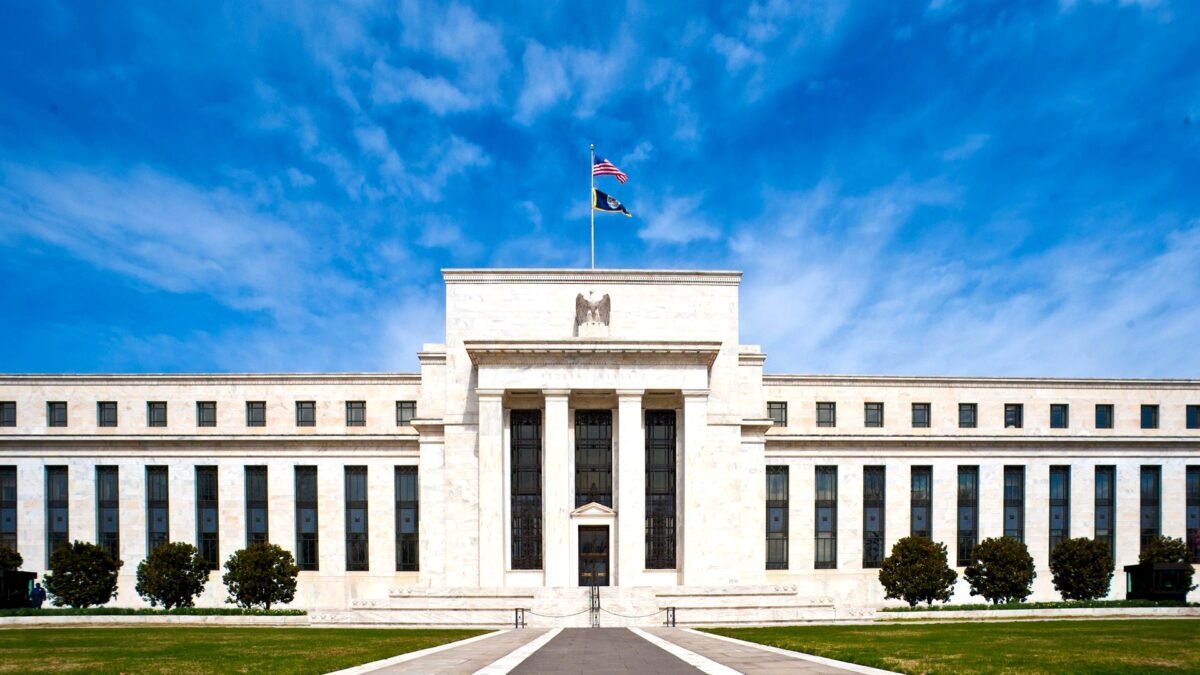
The United States Federal Reserve is heading for another interest rate rise, and one of its most senior officials says it should not be a small one. Minutes of the central bank’s October meeting, published on Wednesday 18 November, show that almost all policymakers expect further increases in the months ahead, and a few said a move larger than a quarter of a percentage point could be on the table in December if inflation data disappoints. Hours before the minutes were released, Governor Christopher Waller told CNBC that the Fed should raise rates by half a percentage point at its December meeting, or say plainly that faster tightening is coming in 2027.
“You have to go 50 in December to put it in place and get it done,” Waller said, according to Reuters. “I’m very concerned about inflation. It’s headed in the wrong direction, and it’s spreading out.”
The message landed on a market already nervous about the direction of borrowing costs. The Dow Jones Industrial Average fell 561 points, or 1.1 per cent, to 50,198 on Wednesday, moving near correction territory, according to Barron’s. The S&P 500 fell for a fifth consecutive session, gold dropped to a 14-month low, and the dollar rose to a fresh 19-month high as traders absorbed the prospect of a central bank that has stopped cutting rates and started raising them again.
The minutes cover the Federal Open Market Committee’s meeting of 27 and 28 October, at which the committee held its policy rate in a range of 3.75 per cent to 4.00 per cent by a vote of 10 to 2. Governor Lisa Cook and Cleveland Fed President Beth Hammack dissented, favouring a quarter-point increase at that meeting. The record shows the decision to hold was closer than the vote suggested: a few participants described it as a close call, and some wanted a rise in October itself. According to XTB’s account of the minutes, some of those who supported a pause did so only on the condition that the market understood further tightening remained likely.
The key sentence in the minutes is about what comes next. “In the months ahead, almost all participants judged that, under their baseline outlooks for inflation and the labor market, further action to raise the target range for the federal funds rate,” the minutes said, “would likely be appropriate, in order to ensure a timely return of inflation to the 2% objective.” A couple of participants went further, saying a move of more than 25 basis points could deserve consideration at the December meeting if incoming inflation numbers were unfavourable.
What the minutes said
The minutes present a committee that has changed its mind about the direction of travel. For most of the past year the question inside the Fed was when, and how fast, to cut rates. The October record shows the argument has flipped: the debate is now about whether to tighten again, and how much. According to Reuters, the minutes record that Fed policymakers focused on inflation risks in October, with some seeing a need for a bigger rate rise.
Staff estimates quoted in the minutes put the scale of the problem in plain numbers. Total personal consumption expenditure prices — the Fed’s preferred inflation measure — were estimated to have risen 3.6 per cent in the year to September, with the core measure, which strips out food and energy, at 3.1 per cent. Both are well above the central bank’s 2 per cent target. The minutes note that the vast majority of participants saw the risks to inflation as tilted to the upside, and that officials left their inflation forecasts essentially unchanged while slightly raising their forecast for economic growth.
Data published since the October meeting has strengthened the hawks’ case, and the minutes are being read in that light. October consumer prices rose 0.4 per cent on the month, with core prices up 0.3 per cent for a third consecutive month, according to XTB. A monthly core reading of 0.3 per cent, repeated month after month, compounds to an annual rate well above the Fed’s target, and it is exactly the pattern Waller warned about.
The minutes also show the committee spending significant time on the artificial intelligence investment boom. Members discussed it extensively, weighing the potential productivity gains against financial stability risks, and officials flagged opaque, concentrated financing among AI-related companies as a concern, according to the Financial Economy’s account of the minutes. That detail matters because it connects the Fed’s rate debate to the market story of the autumn: a technology sector whose valuations have soared on AI spending, much of it financed through complex arrangements that even the central bank says it cannot fully see through.
For the December meeting, scheduled for 8 and 9 December, the minutes leave the door open in both directions. The committee’s own survey of dealers, summarised in the minutes, already pointed to one increase in December and another in March 2027. But the formal record goes further than a single quarter-point move: it records that a larger step could be considered if the data justify it.
Waller’s 50-basis-point call
Waller’s intervention on Wednesday was the bluntest public statement yet from a serving Fed governor in this tightening phase. Speaking to CNBC’s Steve Liesman, he argued that the central bank may need to deliver a shock to markets with an unusually large increase, because inflation is not only too high but broadening across the economy. According to Reuters, Waller said the Fed needed to get more aggressive in its response to inflation that he fears is changing public psychology about prices, and either approve a half-point rise at the December meeting or communicate a faster pace of rises in 2027.
“If you really want to get it down you’ve got to start taking aggressive actions,” Waller said, according to Reuters, either through a larger half-point increase at the coming December 8–9 meeting, or by using the post-meeting statement or Chairman Kevin Warsh’s press conference to set market expectations for further rises.
His argument rests on a specific benchmark he set himself. In a speech on 10 November, Waller said a half-point rise should be considered if October core inflation rose by 0.3 per cent or more. The data, published since, showed October core consumer prices rising exactly 0.3 per cent on the month — the third consecutive month at that pace. According to Stocktwits, three straight months of 0.3 per cent core inflation met the threshold Waller had set for considering a half-point move.
Waller also pointed to the composition of inflation. About 70 per cent of items in the core services basket are rising at a rate above 3 per cent, he said, which is unrelated to oil prices. That matters because services inflation — rents, healthcare, insurance, restaurant meals — tends to be stickier than goods prices, and it is largely beyond the influence of the energy costs that have dominated headlines this year. Reuters reported Waller noting that many of the items with faster-rising prices now sit in the services sector and are largely beyond the influence of high oil costs and other temporary factors.
His deepest concern, and the one he returned to repeatedly, is psychological. Recent inflation has been running above 3 per cent on an annualised basis and may be accelerating, Waller said, and he fears business leaders are coming to treat that level as normal and as something that should simply be passed on to consumers. “You are starting to hear some of that — ‘we put through 3% because we think we can get it’ — and that’s when you start having problems trying to get inflation down,” he said, according to Reuters. “So you might need to shock people to say, wait a minute, 3% is not the number you should be thinking about going forward… That’s the kind of psychology we need to start breaking… We can’t wait. We can’t do this in like the next two years.”
Waller offered the committee an alternative to a half-point move, but framed it as nearly as demanding. A quarter-point rise in December paired with a clear signal of another increase in January could have similar effects on market pricing, he said, but only if the signal is credible — delivered in the post-meeting statement or spoken by the chair at the press conference. “The Chair has his way of wanting to communicate. That’s fine. Those are his preferences,” Waller said, according to Reuters. “I’ve been in this game a long time… You want to use communications as one of your tools… We should be using communication to do what we want, to get the markets to help us do our job.”
That last point touches a live tension inside the Fed. Chairman Kevin Warsh has said he wants to avoid forward guidance as much as possible, preferring to decide meeting by meeting. Waller, in effect, argued that this is a moment when the central bank needs to use strong communication to its benefit and help keep inflation psychology in check. According to FXStreet, Warsh has denied political reasons behind the October decision and said the committee would be “better positioned” in December to decide whether to raise rates further.
Waller also raised the stakes beyond December. He said the Fed may need to reverse the three quarter-point cuts it made in 2025, potentially requiring “three hikes plus maybe some more,” according to Stocktwits. That would mean the entire easing cycle of last year being unwound — and then some — within a matter of months.
Other officials join the hawkish chorus
Waller was not the only Fed official speaking in hawkish terms on Wednesday. San Francisco Fed President Mary Daly said further interest rate rises would be required to ensure inflation returns to the 2 per cent target, while urging officials to proceed cautiously and with a “measured approach” as they monitor economic data. According to XTB, Daly described inflation as having been “too high for too long,” though she advocates a gradual approach rather than Waller’s shock.
Fed Governor Michael Barr described inflation as “too high” and said he would support further rises if the economy develops as expected, according to XTB. New York Fed President John Williams said more interest rate rises are likely as the central bank works to pull inflation back to its 2 per cent goal, according to MPA. Dallas Fed President Lorie Logan wants at least two more increases, according to Biggo Finance. The pattern is consistent: across the regional banks and the board in Washington, the officials speaking in public this week are pointing in the same direction, even if they differ on pace.
The breadth of that chorus is itself part of the story. In October, two officials dissented in favour of a rise. By Wednesday, the public debate had moved from whether to raise rates to whether the December move should be a quarter point or a half point, and how many more increases should follow. That shift has happened in less than a month, and it is the speed of the change, as much as its direction, that has unsettled markets.
The market reaction
Wednesday’s session on Wall Street was, in Reuters’ words, mixed — but the mix told a clear story. The Dow Jones Industrial Average closed down 561.25 points, or 1.11 per cent, at 50,198.17, according to Longbridge, while the S&P 500 fell 16.9 points, or 0.23 per cent, to 7,323.63, its fifth consecutive daily decline. The Nasdaq Composite rose 101.5 points, or 0.42 per cent, to 24,429.88, but the index remains in correction territory, according to Pulsafi, which tracks the market daily.
Beneath the headline indices, the damage was uneven. Six of the eleven S&P 500 sectors fell and five rose. Energy dropped 3.5 per cent as oil prices slid, while consumer discretionary shares rose 2.2 per cent. Nvidia, the chipmaker at the centre of the AI trade, fell 2.9 per cent despite reporting record quarterly revenue of $115.8 billion the previous day. Health insurers were the worst performers: Humana fell 12 per cent and UnitedHealth 10 per cent. Palo Alto Networks rose 10 per cent ahead of its earnings report, as cybersecurity shares climbed after a series of high-profile software outages.
The bond market reflected the same repricing. The 10-year Treasury yield fell 4 basis points to 5.07 per cent, while the two-year yield rose 1 basis point and the 30-year yield fell 5 basis points, flattening the curve. At a 20-year bond auction on Wednesday, the yield reached 5.459 per cent, according to XTB. Futures markets moved firmly toward a quarter-point rise in December: traders are pricing in about a 90 per cent chance of a 25-basis-point increase at the December meeting, according to Reuters, with a total of more than 80 basis points of tightening priced in through September 2027.
What is striking is the gap between what markets expect and what Waller is calling for. Futures traders are pricing in minimal odds of a move larger than 25 basis points in December, according to XTB, even as Waller argues publicly for 50. That gap is the market’s judgement that the committee as a whole will not follow its most hawkish member — or it is a mispricing that December will correct. Either way, the tension between the two is now the central question for the next three weeks.
Gold told the same story in a different market. The metal fell 3 per cent to $3,735 an ounce, a 14-month low, according to Reuters, and dropped below $3,800 for the first time in more than a year, according to XTB. Gold typically suffers when real interest rates rise, because it pays no yield, and the prospect of more than 80 basis points of tightening through September 2027 has pushed real yields higher. Mining shares fell with it: raw materials stocks on the Australian market have lost more than 12 per cent in six sessions as copper, gold and iron ore prices plunged, according to AAP.
Oil also fell. Brent crude dropped 1 per cent and West Texas Intermediate fell 3.2 per cent to $83.26 a barrel, a two-and-three-quarter-month low, on signs of larger global oil supplies. The dollar, by contrast, rose 0.3 per cent to a fresh 19-month high, with the euro falling below $1.10 and sterling the biggest decliner among major currencies. The VIX volatility index stood at 24.6, elevated by the standards of the past year.
The selling was not confined to the United States. European shares fell 1 per cent to a two-week low, with the UK market down 1.3 per cent, according to Reuters. In Asia on Thursday morning, Japan’s Nikkei rose 1 per cent and US stock futures gained, after Anthropic priced its record $81 billion initial public offering at $83 a share — but South Korea’s Kospi was flat and Taiwan shares fell 1 per cent, leaving the region’s broad index on course for a weekly decline of more than 4 per cent.
The UK offered a reminder that the inflation problem is not only American. Figures published on Wednesday showed UK inflation rose to 3.6 per cent in October, the highest in a year, according to Reuters. Britain is facing its longest run without inflation dipping below 2 per cent since the early 1990s. The European Central Bank, meanwhile, is also signalling a December rate rise, according to XTB, suggesting the turn toward tighter policy is becoming a shared Western story rather than an American one.
The road to December
To understand how quickly the Fed’s position has changed, it helps to retrace the past year. The central bank cut interest rates three times in 2025, moves Waller has described as “insurance cuts” — reductions intended to guard against a slowdown rather than respond to one that had already arrived. Then, in September 2026, the Fed raised rates, lifting the federal funds target to 3.75 per cent to 4.00 per cent. In October it held steady, in a decision its chair described as the product of a “heck of a family fight,” according to FXStreet.
The minutes now show that the October pause was a pause, not a pivot. The committee’s own language — “almost all” expecting further rises — is about as close to unanimity as central bank minutes ever get, and the dissent in October ran in the hawkish direction: the two officials who voted against the decision wanted a rise, not a cut. No participant, on the published record, argued for lower rates.
Between now and the December meeting, the committee will receive another inflation report and a labour market report, and both will shape the decision. The November consumer price figures, due before the meeting, will be the most important: if core prices rise 0.3 per cent for a fourth consecutive month, Waller’s own threshold for a half-point move will have been met again, and the “couple” of participants who raised the possibility of a larger December move in the minutes will have fresh evidence. If the numbers soften, the case for 25 basis points — the move markets have fully priced — becomes stronger.
The political backdrop adds another layer. The Trump administration has argued that inflation is transitory, driven by an energy shock related to the war with Iran, according to XTB. On Wednesday, Defence Secretary Pete Hegseth said an oil deal with Venezuela made the Strait of Hormuz “irrelevant” for Western energy supply, and Brent crude dropped below $93. But the minutes and Waller’s remarks indicate the Fed sees inflation broadening beyond energy prices, into services where oil plays little direct role. That disagreement — between a White House that sees a temporary energy shock and a central bank that sees a spreading price problem — is likely to sharpen as December approaches.
There is also the question of the Fed’s own credibility. The central bank spent much of 2021 and 2022 describing a surge in prices as transitory, and was then forced into the fastest tightening cycle in four decades. Officials are acutely aware of that history, and Waller’s language about “shocking” expectations reads as a deliberate attempt to avoid repeating it. The minutes’ emphasis on inflation psychology — on what businesses and consumers expect prices to do — is the same concern in more formal dress.
Analysis: Why It Matters
The pause is over, and the Fed is saying so in writing
The most important fact in the minutes is not any single number. It is the near-unanimity. When “almost all” participants in a committee as divided as this one agree that further rises are likely appropriate, the direction of policy is settled; only the pace remains to be argued. Markets had already begun to price that in after the October inflation data, but the minutes turn a market inference into a written record. That matters because it removes the ambiguity that had allowed investors to hope the October hold was the start of a longer pause. It was not. It was a single meeting’s hesitation inside a tightening cycle, and the committee has now said so itself.
Waller’s 50-point call is a test of the whole committee
Waller is one governor among twelve voting members, and his view is not the committee’s view. But his intervention does something important: it forces the rest of the committee to answer a specific question rather than a general one. It is easy for a central bank to agree that inflation is too high; it is harder to agree, in public, on whether December should bring a quarter point or a half point. By naming the number and the date, Waller has set a benchmark against which the December decision will be judged. If the committee delivers 25 basis points, markets will ask whether that is enough. If it delivers 50, Waller will be seen as having moved the consensus. Either way, the debate he has started will frame the next three weeks, and the November inflation data will be read through his lens.
The market and the Fed are pricing different worlds
There is a genuine puzzle in Wednesday’s market reaction. Futures traders put the chance of a 25-basis-point December rise at about 90 per cent, and the odds of anything larger at minimal levels — yet the most vocal Fed governor is publicly calling for 50. One of the two is wrong. If the market is right, Waller is an outlier whose views will not carry the committee, and the December meeting will be a routine quarter-point rise. If Waller is right, the market has underpriced the scale of what is coming, and the repricing when the decision lands will be sharp. The minutes do not resolve this: they record that only “a couple” of participants raised the larger move. But they also record that the data since October have validated the hawks. The gap between market pricing and Waller’s call is, for now, the most honest measure of uncertainty in the whole story.
Gold’s collapse is the real-economy signal
Equity indices can be noisy, and a 561-point fall in the Dow on a day when the Nasdaq rose is the kind of mixed session that invites over-reading. Gold’s 3 per cent fall to a 14-month low is a cleaner signal. It says that investors now expect real interest rates to stay higher for longer, and that the era in which cheap money lifted every asset is ending. Gold has no yield, no earnings and no dividend; its price is, more than any other asset, a pure bet on the future path of real rates. When it falls 3 per cent in a day, it is telling you that the market has changed its mind about that path. The same message is visible in the 20-year bond auction, where the yield reached 5.459 per cent, and in the dollar’s rise to a 19-month high. These are not the prices of an economy heading for easier money.
The AI warning in the minutes should not be missed
Buried in the minutes is a passage that may matter more over the next year than the December decision itself. Officials discussed the AI investment boom extensively and flagged opaque, concentrated financing among AI-related companies as a financial stability concern. This is the central bank saying, in its own cautious language, that it cannot fully see how the largest investment boom in a generation is being financed. Nvidia fell 2.9 per cent on Wednesday despite record earnings. The European Central Bank’s president has warned that AI stock valuations remain elevated. Anthropic has just priced the largest initial public offering in history. The Fed’s warning connects these threads: a market priced for endless AI growth, financed in ways the regulators describe as opaque, with interest rates now rising. If the AI trade stumbles while rates climb, the minutes will look, in retrospect, like the moment the central bank saw it coming.
What to Watch Next
- The November inflation report: due before the December meeting, this is the single most important release. A fourth consecutive 0.3 per cent monthly rise in core prices would meet Waller’s own threshold for a half-point move and strengthen the case of the “couple” of officials who raised it in the minutes.
- The December 8–9 FOMC meeting: the decision itself, and just as importantly the statement and Chairman Kevin Warsh’s press conference. Watch whether the committee signals a January rise, as Waller has urged, or sticks to its meeting-by-meeting approach.
- Fed speakers in the coming days: Beth Hammack, Philip Jefferson, Michael Barr, Austan Goolsbee, Thomas Barkin and Anna Paulson are all scheduled to speak, according to Reuters. Their remarks will show whether Waller’s hawkishness is spreading or isolated.
- The Dow and the Nasdaq: the Dow is near correction territory and the Nasdaq is already in it. Whether the indices stabilise or slide further will shape how much political pressure builds on the Fed before December.
- Gold and the dollar: gold at a 14-month low and the dollar at a 19-month high are the market’s verdict on the rate path. A recovery in gold would signal doubt about further tightening; continued weakness would confirm it.
- Anthropic’s first day of trading: the record $81 billion offering begins trading on Thursday on the Nasdaq. Its reception will test whether investor appetite for AI can survive a rising-rate environment.
- The Trump–Xi–Putin meeting in Shenzhen: the first three-way meeting of the three leaders takes place on Thursday. Any statement on trade or energy could move oil prices, and with them the inflation picture the Fed is watching.
Sources
- Federal Reserve — Minutes of the Federal Open Market Committee, October 27–28, 2026
- Reuters — Waller says on CNBC the Fed needs to get more aggressive in inflation response
- Reuters — Trading Day: Markets mixed in a Nvidia, Anthropic, minutes swirl
- XTB — Fed Minutes: Virtually everyone in favor of further rate hikes. Is there a chance for 50 basis points in December?
- TradingView / Stocktwits — Fed’s Daly emphasizes need for rate hikes, but with a ‘measured approach’ as Fed minutes show growing inflation unease
- FXStreet — Fed Minutes keep further rate hikes firmly on the table

About the Author — Abdul Mannan
Related Articles

Nvidia Shares Fall for Fifth Straight Day Despite Record $115.8 Billion Quarter as SEC Probe and House Demands Pile On
Nvidia's shares fell for a fifth straight session despite a record $115.8 billion quarter, as a reported SEC…
Target Beats Forecasts as Shoppers Return, Raising Its Full-Year Outlook Ahead of the Holidays
Target earned $2.65 a share in its third quarter, beating forecasts as comparable sales rose 5.6% on a…
Dow Drops 849 Points as Global Sell-Off Deepens and S&P 500 Hits Lowest Close Since July
Wall Street's four-day slide deepened on Tuesday as the Dow fell 849 points, the S&P 500 hit its…