
Britain Quietly Took Tens of Thousands of Fridges Offline in Secret Race to Stop Hackers Spoiling the Food Supply

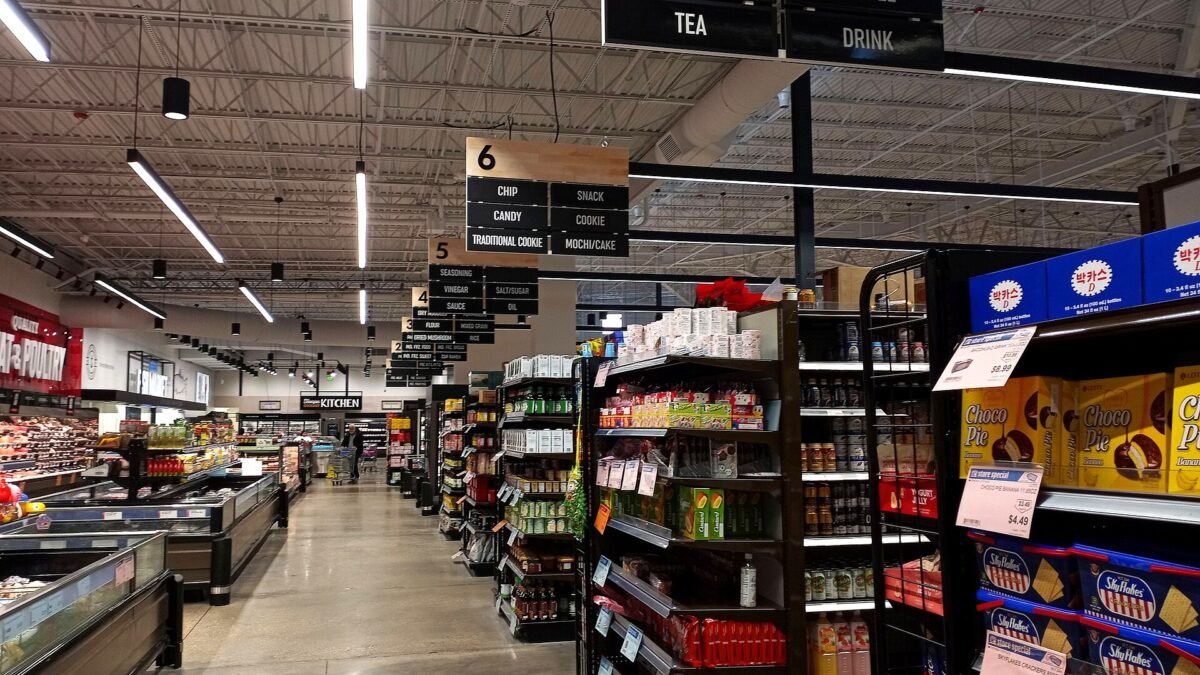
Tens of thousands of fridges and freezers across Britain have been quietly taken off the open internet in a secret security operation, after researchers found a flaw that could have let hackers spoil millions of pounds of food in supermarkets, warehouses and restaurants, according to the BBC.
The operation, which has been running since late October, brought together security researchers, supermarket IT teams and the National Cyber Security Centre, working around the clock to warn dozens of companies and close the gap before criminals or state-backed hackers found it. A fix for the flaw has now been developed and rolled out, according to Reuters.
The flaw was found in temperature controllers made by the British firm Resource Data Management, known as RDM, whose equipment is widely used across the United Kingdom’s food industry. Each controller can remotely manage the temperature of dozens of fridges and freezers, so a single weak point could have put whole stores and depots at risk.
Thousands of devices controlling tens of thousands of refrigeration units were taken off the open internet, in some cases remotely and in others by staff physically removing internet cables and then checking temperatures by hand. Most major supermarkets have had to divert their IT teams to the work, and the BBC has only now been able to report the operation, holding the story back until the danger had been contained to reduce the chances of hackers causing harm if they found the vulnerability.
The danger was far from theoretical. This year has already seen three waves of attacks on similar equipment across Europe, in which tonnes of food were spoiled at hundreds of stores and millions of pounds of damage was caused. The British operation was a race to make sure the next wave did not reach the United Kingdom.
The secret operation
The operation began in late October, according to the BBC, when ethical hackers at a firm called Omega Systems found a major flaw in the most popular refrigeration controllers used in Britain. Their findings were then checked and developed by experts at Pen Test Partners, a cybersecurity firm, which helped raise the alarm with the authorities.
The National Cyber Security Centre, the Department for Environment, Food and Rural Affairs and the Food Standards Agency then joined the effort to plug the gaps. They held conference calls with the industry and set teams the task of contacting firms at risk, according to the BBC.
The scale of the response was enormous. Thousands of devices controlling tens of thousands of refrigeration units were taken off the open internet, either remotely or, in some cases, physically, with staff ordered to remove internet cables and monitor temperatures manually. Most major supermarkets have been forced to divert IT teams to address the risks, and a worker at one large chain told the BBC that staff were taking hundreds of devices offline every day over the course of a week.
“It did feel like a race against time as we were expecting another wave of these fridge hacks to come,” the worker said, according to the BBC. The worker, who did not want to be publicly named, added that the business consequences could have been devastating, with interruption to trading and to supply chains, and said warehouses held millions of pounds worth of food that could have been spoiled if hackers had found the weakness.
The warning went well beyond supermarkets. Convenience stores, petrol stations, restaurants and fast food chains, sports arenas, hotels, food processing plants and cold storage sites were also told to take action about the risks, according to the BBC.
The National Cyber Security Centre is known to issue proactive notifications and early warning alerts to organisations where it believes vulnerabilities may exist. It declined to comment on the report, according to Reuters.
The flaw in the controllers
The flaw was found in temperature controllers made by Resource Data Management, a British company whose equipment is widely used across the UK food industry. The controllers are the small, networked devices that let a store or a warehouse manage the temperature of its fridges and freezers from a distance, rather than by walking to each unit and turning a dial.
That convenience is also the weakness. Each controller can remotely manage the temperature of dozens of fridges and freezers, so a single compromised device can put a whole store, or a whole depot, at risk. If an attacker can reach the controller over the internet, they can change the temperature, switch on a defrost cycle, or switch off the alarms that would warn staff that something is wrong.
Ken Munro of Pen Test Partners told the BBC that the popular controllers had a similar weak-password problem to the Danfoss and other controllers that had been attacked so successfully in earlier hacks on the continent. He added that the message had to go out as soon as possible while being kept secret, because with so much extra attention now on these widely used pieces of equipment, it was likely only a matter of days before criminals or state-backed hackers worked the flaw out.
The ethical hackers who found the flaw say the hardware needed to exploit it could be bought cheaply online, including on sites such as eBay. That detail matters, because it means an attacker would not need specialist equipment or inside access to a store to attempt the attack. The barrier to entry was low, and the potential damage was high.
RDM disputes how serious the vulnerabilities are, but the company has been praised for the professional way it has responded, according to the BBC. Its chief executive, Ged Evans, said the flaw was identified in a test environment and that the test had gone beyond what such exercises usually involve, because it included taking apart the company’s hardware. Evans said the firm had acted quickly to deal with the issue, had already released its first patches and had been in proactive contact with customers to flag any problems and recommend steps to reduce the risk.
RDM has also confirmed that there is no sign of any malicious activity on its controllers, and that it continues to work with the National Cyber Security Centre and other authorities to monitor the situation, according to the BBC.
Pen Test Partners said the immediate threat had largely been addressed, although smaller businesses operating refrigeration equipment could still be exposed. The firm warned that food manufacturers, cold storage warehouses and other businesses further down the supply chain may not yet have received the necessary alerts, according to the Grocery Gazette.
Three waves of attacks across Europe
The British operation did not come out of nowhere. It followed three waves of hacks on refrigeration temperature controllers so far this year, each one more serious than the last, according to the BBC.
In August, fridges at a small number of United States military bases were affected. Those incidents are now under investigation as suspected cyberattacks, according to TechXplore, and on 5 November the US Cybersecurity and Infrastructure Security Agency, the FBI and other federal agencies issued a joint security advisory, given the global threat to keeping food, medicine and other products at safe temperatures.
On 11 and 12 October, hundreds of supermarkets and food processing sites in France were hit when Danfoss temperature control systems were targeted. The attackers remotely took control of temperature-regulating software, raised the temperatures inside fridges and freezers, in some cases by switching on defrost cycles, while the stores were closed. In some units, temperatures reportedly climbed as high as 50 degrees Celsius, or 122 degrees Fahrenheit. Staff found spoiled meat, melted ice cream and ruined dairy, and in several stores units had caught fire.
Then, on 1 and 2 November, dozens of supermarkets across seven European countries were hit, with Belgium and Luxembourg the worst affected, and a small number of blood bank sites in France were also affected, according to the BBC. Stores operated by Carrefour, SuperValu, ICA and Delhaize were among those targeted, according to the Grocery Gazette, and some refrigeration units reached temperatures of 50 degrees Celsius, leaving chilled and frozen products unsellable.
A wave of cyberattacks knocked out commercial fridges and freezers from Sweden to Belgium earlier in November, while a similar hack hit France in October, forcing stores to throw away millions of euros’ worth of food, according to Reuters.
Although UK supermarkets largely escaped those attacks, several British food suppliers were also targeted, according to the Grocery Gazette. London-based fruit and vegetable wholesaler Langridge Organic reported that six of its ten refrigeration units had been compromised, while the Association of Independent Meat Suppliers confirmed incidents affecting several members.
France blames Iran for the October attack
The October attack in France was the most serious of the three waves, and it has become a diplomatic incident as well as a criminal one. French intelligence and cyber agencies accused Iran’s Revolutionary Guards of carrying out the October hack, which targeted about 700 commercial sites and caused 15 fires after hackers raised temperatures in refrigeration systems, according to Reuters.
France formally blamed the attack on Shahid Kaveh, an offensive cyber unit affiliated with the Islamic Revolutionary Guard Corps, on 9 November. Foreign Minister Jean-Noël Barrot summoned the Iranian ambassador in Paris and called for fresh European Union sanctions, following an investigation by France’s national cybersecurity agency, ANSSI. The Paris prosecutor’s office also opened a judicial investigation into the head of Shahid Kaveh and his two deputies.
Iran denies the claim, and Tehran has not commented on the specific accusation. Reuters reported that it could not independently establish how France reached its attribution, and the claim should be treated as France’s own conclusion rather than as proven fact.
The method used in France was, by the standards of state-backed hacking, alarmingly simple. The attackers exploited internet-exposed industrial controllers, including units made by the Danish firm Danfoss, that grocery chains use for remote maintenance. By hijacking automated defrost cycles and disabling alarms, the hackers forced fridges and freezers across major chains to overheat. More than 100 Coopérative U stores and 180 Intermarché and Netto stores were hit, according to the BBC, and Carrefour, Monoprix and E.Leclerc were also affected.
Following the attacks in Europe, Germany’s information security office warned of continuing vulnerabilities in some of Danish firm Danfoss’ industrial cooling appliances, according to Reuters. Cybersecurity researchers had publicly documented flaws in the Danfoss controllers months before the attacks, which is one reason the French incident has raised such sharp questions about why so many of the devices were still reachable from the open internet.
Why Britain thought it was safe
Until now it had been thought that Britain had largely escaped such attacks, because the British refrigeration industry relies on different devices from those used on the continent. The new discovery showed that the equipment used in Britain carried a similar weakness, and the sector has been rushing to fix it ever since, according to the BBC.
That mistaken sense of safety is part of the story. The French attacks used Danfoss controllers, and British supermarkets mostly use RDM controllers, so the industry assumed it was protected by difference. The Omega Systems researchers showed that the difference was superficial: the British controllers had a similar weak-password problem, and they were connected to the internet in the same way, for the same reason, remote maintenance and central monitoring.
The same logic applies far beyond fridges. The systems that keep food cold, water flowing, buildings heated and factories running are increasingly connected to the internet, and they are often built from components supplied by a large number of manufacturers, each running its own highly tailored software. Because many of these manufacturers face few security standards, and because the components are not regularly patched when flaws are found, the components are often not particularly secure.
Shaanan Cohney, an assistant professor of computer science at Tufts University who researches the intersection of cybersecurity, privacy, law and public policy, told TechXplore that there is a long history of attacks on operational technology systems, from traffic signals to subway fare card systems. What is new, he said, is not that these devices are being attacked, but the scale and apparent ease of the attacks, potentially by a foreign nation.
“In my work as a researcher, it’s very uncommon to examine one of these devices and find a clean bill of health,” Cohney said. “Often, you find not just one security flaw, but many. That leaves these systems vulnerable to state-sponsored attackers, who may need to find only one weakness to bring an important system down.”
Cohney also warned that artificial intelligence is making cyberattacks more accessible to a wider range of bad actors. Tasks that might once have taken a well-trained attacker weeks to accomplish can now be done by someone with far less expertise, with help from AI, and in some cases AI can even identify and link multiple security vulnerabilities to carry out an attack, he said.
The company at the centre of it
Resource Data Management is a British company, and its controllers are, in the BBC’s words, the most popular refrigeration controllers in the United Kingdom. That popularity is precisely why the flaw mattered so much: a weakness in one widely used product becomes a weakness in the food supply of a whole country.
RDM’s position is that the vulnerability was identified in a test environment, and that the test went further than usual by dismantling the company’s hardware. The company argues that comparing its equipment with the systems attacked in mainland Europe is unfair, because exploiting its controllers would require obtaining a piece of hardware. The ethical hackers who found the flaw say that hardware could be bought cheaply online, which undercuts that argument.
At the same time, RDM has been praised for its professional response, according to the BBC. The company moved quickly, released its initial security updates, contacted customers with advice on protecting their equipment, and confirmed that there is no evidence that hackers exploited the vulnerability in its controllers. That combination, a dispute about severity alongside a fast and cooperative fix, is a familiar pattern in cybersecurity, where a manufacturer can reasonably argue that a flaw is hard to exploit while still treating it as urgent.
The dispute also illustrates a wider tension in the industry. Manufacturers of operational technology often design their products for reliability and ease of maintenance, not for security against a determined attacker. A controller that is easy for a supermarket’s own engineers to reach remotely is also easy for anyone else to reach, unless it is protected by strong passwords, by being kept off the open internet, or by both. The British operation did both: it took the devices off the internet first, and the fix followed.
What happens next
The immediate threat has largely been addressed, according to Pen Test Partners, but the work is not finished. Smaller businesses operating refrigeration equipment could still be exposed, and food manufacturers, cold storage warehouses and other businesses further down the supply chain may not yet have received the necessary alerts.
That warning points to the hardest part of the operation. The big supermarket chains have large IT teams and a direct line to the National Cyber Security Centre, so they could be reached quickly and could act quickly. A small cold storage warehouse, a family-run food processor or an independent restaurant may use the same controllers, may have no IT team at all, and may never have heard of the flaw. Reaching those businesses, one by one, is slower work, and it is the work that will decide whether the fix actually holds.
There is also the question of what happens to the devices now. Taking a fridge controller off the internet is a sensible emergency measure, but it removes the remote monitoring that the controllers were bought for. Staff have to check temperatures by hand, which is slower and less reliable, and the industry will have to decide whether the controllers go back online once the fix is in place, or whether the whole approach to remote refrigeration management needs to change.
Germany’s warning about continuing vulnerabilities in Danfoss appliances suggests that the problem is not limited to one manufacturer or one country. The European attacks exploited known weaknesses in widely used equipment, and the British operation found a similar weakness in different equipment. The pattern is the same in both cases: devices that were never designed to face the open internet were connected to it anyway, and nobody checked until attackers did.
The French attribution also remains unresolved. France has blamed the Revolutionary Guards, Iran denies it, and the European Union has been asked to consider sanctions. If the attribution holds, the supermarket attacks would be one of the most visible examples of a state-backed cyber operation aimed directly at ordinary life, rather than at a military or government target. If it does not hold, the episode will still stand as a warning about how fragile the systems behind a weekly shop have become.
Analysis: Why It Matters
The target was not a bank or a base. It was dinner.
That is what makes this story different from most cybersecurity news. The attacks did not steal money, spy on a government or shut down a power station. They targeted the fridges in supermarkets, the places where ordinary people buy their food. The damage was measured in spoiled meat, melted ice cream, ruined dairy and fires in the back of shops, and the victims were shoppers who had nothing to do with the politics behind the attack.
Cohney, the Tufts researcher, put it plainly. There have been attacks targeting water systems and electric utilities, he said, but targeting supermarkets brings the threat home to consumers in a much more immediate, everyday way. A power cut is an inconvenience that everyone understands as infrastructure. A supermarket with no fresh food is a reminder that the food supply itself runs on software, and that software can be attacked.
The British operation understood that. The reason it was conducted in secret, and the reason the BBC held its report until the danger had been contained, was that the stakes were not abstract. If hackers had found the RDM flaw before the fix was ready, the result would not have been a data breach or a ransom note. It would have been empty shelves, spoiled food and, in the worst case, fires, in shops across the country, in the weeks before Christmas.
Secrecy was the defence, and it worked
The most striking feature of the British operation is that it was secret at all. Cybersecurity operations are usually secret because they involve intelligence or because they are still under way. This one was secret for a simpler reason: telling the public about the flaw before it was fixed would have told the attackers about it too.
That is a difficult judgement to make, and it is worth pausing over. The public had a right to know that the fridges in their supermarkets might be vulnerable. But the BBC, the National Cyber Security Centre and the companies involved all agreed that publishing the flaw first would have put the food supply at greater risk, not less. The operation was therefore conducted quietly, with industry conference calls and direct contact with firms at risk, rather than with a public warning.
The judgement appears to have been correct. There is no evidence that hackers exploited the vulnerability in the RDM controllers, and the fix has now been developed and rolled out. But the episode also shows how much of modern cybersecurity depends on decisions that the public never sees, made by people whose names never appear in the news. The supermarkets’ IT teams, the ethical hackers at Omega Systems, the experts at Pen Test Partners and the officials at the National Cyber Security Centre did their work in private, and the public only learns about it now, after the danger has passed.
Weak passwords are still the weakest link
For all the talk of state-backed hackers and sophisticated cyber operations, the flaw at the heart of this story was, by the account of the people who found it, a weak-password problem. The Danfoss controllers attacked in France had a similar problem, and the RDM controllers in Britain had one too.
This is not a new failure. Weak and default passwords have been the most common way into connected devices for more than a decade, and the industry has known about the problem for just as long. Yet the controllers that manage the temperature of the food in a country’s supermarkets were still protected, in effect, by passwords that an attacker could guess or bypass.
The reason is not mysterious. These devices were designed to be easy to install and easy to maintain, and strong passwords, regular patching and network isolation all add cost and complexity. A supermarket chain buys hundreds or thousands of controllers, and it wants them to work out of the box, not to require a security team to configure each one. The manufacturers, in turn, compete on price and convenience, not on security. The result is a market in which the cheapest and easiest product wins, and the security bill arrives later, in the form of a secret nationwide operation to take the devices offline.
The food supply is now critical infrastructure, whether we call it that or not
Governments have long lists of critical infrastructure: energy, water, transport, health, finance. Food is on those lists too, but it is often treated as a matter of farming and trade, not of technology. The supermarket attacks show that this is no longer true, if it ever was.
A modern supermarket is a networked system. Its fridges are controlled remotely, its stock is tracked in real time, its deliveries are scheduled by software, and its tills are connected to the same network. A failure in any one of those systems can empty shelves within hours, and a deliberate attack on the refrigeration system can destroy stock, start fires and close stores.
The American response recognised this. The joint advisory issued by the Cybersecurity and Infrastructure Security Agency, the FBI and other federal agencies on 5 November framed the threat in terms of keeping food, medicine and other products at safe temperatures. That is the language of public safety, not of retail. Britain’s operation, with the Department for Environment, Food and Rural Affairs and the Food Standards Agency involved alongside the National Cyber Security Centre, treated the problem in the same way.
The question now is whether that recognition survives the news cycle. The fix has been rolled out, the immediate threat has been addressed, and the supermarkets are back to business. But the underlying pattern, widely used devices, weak security, connected to the internet because it is convenient, has not changed. The next flaw will be found in a different device, made by a different company, and the same secret race will have to be run again.
The attribution question will not go away
France’s decision to blame the Revolutionary Guards for the October attack was unusual. Governments rarely attribute cyberattacks publicly, and when they do, they usually do so with more evidence than France has so far been able to show. Reuters reported that it could not independently establish how France reached its conclusion, and Iran denies the claim.
That uncertainty matters, because the attribution is doing a lot of work. It is the basis for a call for European Union sanctions, for a judicial investigation in Paris, and for a wider argument that the supermarket attacks were not ordinary cybercrime but state-backed sabotage aimed at ordinary life. If the attribution is right, the attacks were a deliberate attempt to disrupt daily life and influence public opinion, as Cohney suggested. If it is wrong, the sanctions and the diplomacy built on it will look hasty.
Either way, the British operation does not depend on the attribution. The RDM flaw was real whether or not Iran was behind the French attacks, and the fix was necessary whether or not the next attacker is a state or a criminal gang. That is, in the end, the most useful lesson of the story: the defence has to work against whoever comes next, not just against the attacker who came last.
What to Watch Next
- Whether the fix for the RDM controllers is confirmed as fully rolled out across all affected businesses, including the smaller firms that Pen Test Partners warned may not yet have received alerts.
- Whether any further evidence emerges to support or challenge France’s attribution of the October attack to the Revolutionary Guards, and whether the European Union moves towards sanctions.
- Whether Germany’s warning about continuing vulnerabilities in Danfoss appliances leads to further action, or to new attacks on refrigeration systems elsewhere in Europe.
- Whether the United States investigation into the August incidents at military bases confirms that those fridges were also hit by a cyberattack, and what the joint CISA and FBI advisory leads to in practice.
- Whether British supermarkets put their refrigeration controllers back on the internet once the fix is in place, or whether the industry changes how remote refrigeration management works.
- Whether the National Cyber Security Centre, Defra or the Food Standards Agency publish any public guidance for small food businesses that use the same controllers.
- Whether the episode prompts new security standards for operational technology in the food sector, or whether the pattern of weak passwords and internet-exposed devices continues until the next flaw is found.
Sources
- BBC News, “Thousands of UK fridges secured from hackers in secret operation” (via Europe Says)
- Reuters, “UK finds fix for fridge and freezer vulnerability after European hacks”
- Grocery Gazette, “UK supermarkets forced to disconnect thousands of fridges in secret cyber operation”
- TechXplore, “When hackers target grocery stores”
- Catering Insight, “‘Secretive operation’ thwarts cyber attack on restaurant fridges in UK”
- World Right Now, “Secret race to shield Britain’s fridges from hackers”

About the Author — Abdul Mannan
Related Articles
Japan’s Fugaku Supercomputer Breach Widens: 430 Stolen Keys Confirmed as RIKEN Treats 4,222 Users’ Data as Leaked
RIKEN confirms intruders stole 430 credentials — including 233 SSH private keys with no passphrase — from Japan's…

Astronomers Find a Triple Star System 28 Light-Years Away That ‘Should Not Exist’
Astronomers hunting for planets around a red dwarf 28 light-years away found a triple star system with two…

After Eight Years and Six Billion Miles, BepiColombo Finally Reaches Mercury
After eight years, nine planetary flybys and a journey of some six billion miles, the joint European-Japanese BepiColombo…