
Japan’s Fugaku Supercomputer Breach Widens: 430 Stolen Keys Confirmed as RIKEN Treats 4,222 Users’ Data as Leaked

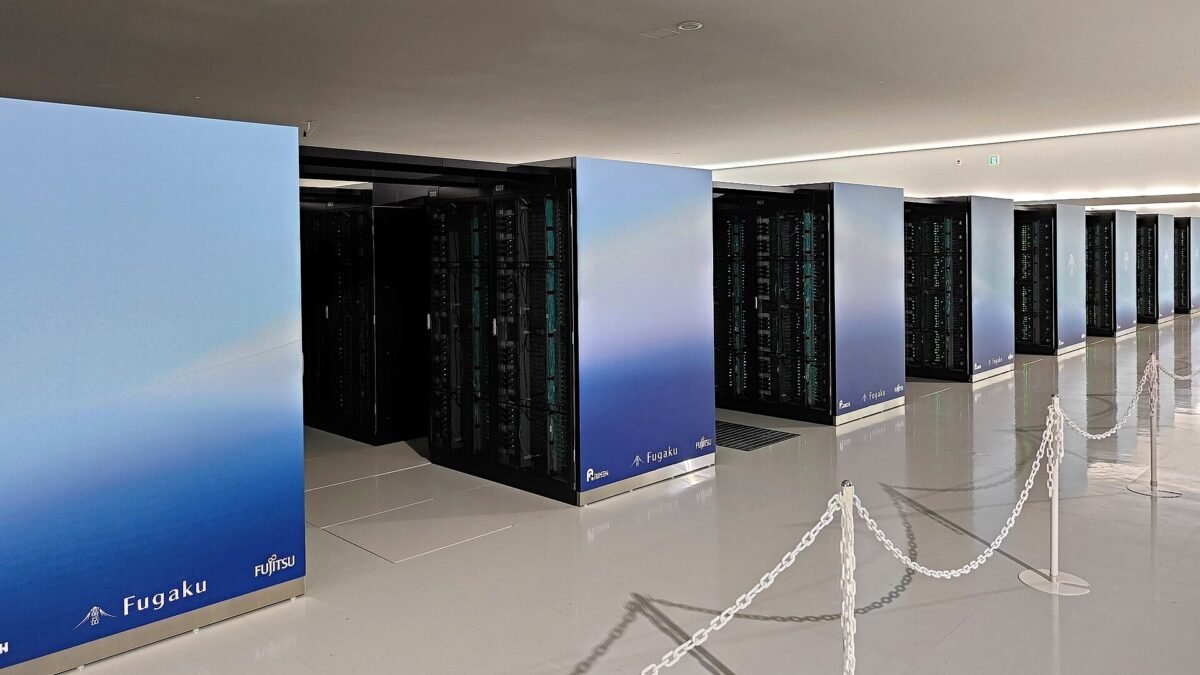
Japan’s flagship supercomputer Fugaku, once the fastest machine on the planet, has been shut down for more than a week after intruders broke into its operations network through an internet-facing status page and stole credentials that open doors far beyond the machine itself. In a second report published on 20 November, Japan’s national research institute RIKEN confirmed that the attackers collected and removed 430 authentication credentials belonging to researchers — including 233 SSH private keys with no passphrase at all — and that the personal details of 4,222 Fugaku users must now be treated as leaked.
The disclosure, reported by BleepingComputer and The Register, turns what first looked like a contained intrusion into a breach whose consequences may reach supercomputers, universities and cloud services in Japan and abroad. RIKEN has still not named the attackers, the vulnerability they exploited, or the date Fugaku will run again. What it has done is publish a minute-by-minute account of the attack, admit that the stolen keys have already been tried against other systems, and tell thousands of researchers to revoke credentials they may have trusted for years.
How the intruders got in
According to RIKEN’s first notice, published on 16 November, an external third party gained access to Fugaku’s internal operations network between 10 and 13 November by exploiting a publicly accessible web page that displayed the supercomputer’s operating status. The page — a dashboard showing whether the machine was running — was exposed to the internet, and the attackers used it as a foothold into the network that operates the system. RIKEN has not said which software the dashboard ran on, or which vulnerability was exploited, and its investigation into the exact method of entry continues.
Once inside, the intruders operated several internal servers and planted malicious programs, according to RIKEN. Suspicious traffic was detected on 12 November, and RIKEN began investigating with the contractor that maintains the operations system. At 4:33 p.m. Japan time on 13 November, the unauthorised access was confirmed. The incident was reported to Japan’s Ministry of Education, Culture, Sports, Science and Technology at 8:59 p.m. that evening, and the affected system was isolated at 10:07 p.m.
The response was fast. At 4:30 a.m. on 14 November — roughly twelve hours after the breach was confirmed — RIKEN shut Fugaku down and cut off outside access. Administrative keys were replaced that evening. On 15 November, all running and queued compute jobs were stopped, every user’s login public key was invalidated, and users were emailed at 4:18 p.m. and told to revoke and replace any credentials they had stored on the machine. On 16 November, RIKEN reported the incident to Japan’s Personal Information Protection Commission and briefed the Saitama and Hyogo prefectural police. It also notified the bodies that run HPCI, the network linking Japan’s academic supercomputers.
That speed is to RIKEN’s credit, and it is one of the reasons the institute’s handling of the incident has drawn praise from security specialists. But the speed of the shutdown could not undo what had already been taken.
What was taken
RIKEN’s first notice said that files stored in users’ home directories on Fugaku, and information registered in the user authentication system, had been taken or may have been taken. The numbers it gave were stark: the names, email addresses and user IDs of up to 4,222 Fugaku users, and the names and email addresses of up to 375 users of Rikyu, RIKEN’s newer AI-for-science supercomputer, were at risk. SSH private keys and access keys that users had stored on Fugaku for connecting to systems outside RIKEN were also taken or may have been taken, as were research data files.
The second report, published on 20 November, made the picture worse — and more precise. Using advanced log analysis, conducted in part with artificial intelligence tools, RIKEN’s investigators found traces showing that the intruders had indeed accessed the targeted information. Although no evidence of external misuse has been confirmed, RIKEN said it was treating the data as leaked so that users could act without waiting for proof.
For the 4,222 Fugaku users, the confirmed exposure goes beyond names, email addresses and user IDs. It now includes the addresses, affiliations and other details entered when each account was registered, contact details such as phone numbers, and a record of the type of document each user supplied to verify their identity. RIKEN said it had not found that the identity documents themselves had leaked. The second report gave no new figure for Rikyu users.
The most consequential finding concerns the credentials. RIKEN confirmed that authentication credentials used to connect to external systems — supercomputers and cloud services run by other organisations — were collected and removed from some users’ home directories. The total was 430 credentials: 233 private keys with no passphrase set, and 197 protected by a passphrase. RIKEN is contacting the affected users one by one and asking them to invalidate and reissue their keys at every destination they open.
RIKEN also confirmed that some of the stolen credentials had already been used in attempts to connect to other systems. Its investigation has not determined whether any of those attempts succeeded, or whether research results were stolen. It said there was no concrete evidence so far that research data had leaked, but it is still checking whether the files taken contain personal data belonging to third parties, such as research subjects.
Why 430 keys matter more than 4,222 names
A list of names and email addresses is a familiar kind of breach, and a serious one. But the 430 credentials are the part of this incident that security specialists are watching most closely, because they turn a single break-in into a chain of possible break-ins.
Researchers who work on large supercomputers rarely work on just one. A scientist may run a simulation on Fugaku, move the results to another machine, and analyse them on a third. To do that from the command line, many keep SSH private keys for the other systems — and access keys for cloud storage and services — in their home directory on the machine where they spend most of their time. It is convenient, and on a well-managed system the home directory feels like a safe place.
That convenience is also the vulnerability. An attacker who can read home directories on one supercomputer collects keys to others, including systems at universities and research institutes in Japan and abroad that were never attacked directly. RIKEN has already confirmed that the intruders tried to use some of the stolen credentials against other systems. Until every one of those keys is revoked at its destination — and only the researchers themselves know where their keys lead — the breach is not contained.
The 233 keys without passphrases are the sharpest edge of the problem. A passphrase does not make a stolen key safe, but it buys its owner time: the key cannot be used until the passphrase is guessed or cracked. A key without one works for whoever holds the file. RIKEN’s decision to ask users to replace both groups of keys, protected and unprotected alike, is the right one — but replacing a key at every system it opens is slow, manual work, and it has to be done by thousands of individual researchers, each at their own pace.
A machine built for the hardest problems in science
The scale of the disruption is inseparable from what Fugaku is. The supercomputer, named after an alternative name for Mount Fuji, sits at the RIKEN Center for Computational Science in Kobe. Developed jointly by RIKEN and Fujitsu, it became the fastest supercomputer in the world in June 2020, topping the TOP500 list — and it was the first machine built on Arm architecture to do so. At full strength it reached 442 petaflops on the LINPACK benchmark, a measure of raw computing speed, with 158,976 processors and more than 7.6 million computing cores. It held the top spot until May 2022, when it was overtaken by the Frontier system in the United States, and it remained in the world’s top ten as recently as June 2026, ranking ninth.
Fugaku entered shared use in March 2021, after trial operations in which it was used for research on COVID-19, including diagnostics, treatments and simulations of how the virus spreads. Since then it has been used for drug discovery, severe-weather forecasting, earthquake and tsunami simulation, climate modelling and simulations of airborne virus transmission — the kind of work that depends on weeks of uninterrupted computing time and cannot simply be moved to another machine.
Its smaller companion, Rikyu, is a 64-petaflop supercomputer built for AI-driven scientific research. RIKEN’s notices treat the two machines together because both were affected by the breach, though the confirmed credential theft concerns Fugaku users.
Every day Fugaku stays offline, research projects that depend on it stand still. RIKEN has given no date for its return. It says the machine will restart only after it has separated its public-facing services from the management network, rebuilt the affected servers, fixed the exploited vulnerability and reviewed its network configuration. It has also promised to draw up a reform plan and to set up an investigation committee that includes outside experts.
Analysis: a status page was the front door
The most striking fact about this breach is not its scale but its entry point. The intruders did not break through a firewall protecting the supercomputer itself, or compromise a researcher’s account, or exploit the high-performance computing software at the heart of the machine. They came in through a web page whose only job was to tell the world whether Fugaku was running.
Dashboards like that are built to be public and simple, and they are often treated as a convenience rather than a production service. That is precisely what makes them dangerous. A page that only displays status still runs software, and if that software has a vulnerability, the page becomes a way in — especially if it sits on a network that can reach the systems it reports on. RIKEN has not said what software its dashboard ran, who built it, or whether the contractor that maintains the operations system was responsible for it. Until it does, other research centres cannot check whether they have the same exposure.
The lesson is not specific to supercomputers. Every internet-facing page, however humble its purpose, is part of an organisation’s attack surface and needs an owner, a software inventory and a patch status. A status page that can reach the network it describes is not a display. It is a door.
Analysis: credential sprawl is the research world’s quiet risk
The second lesson is about how researchers actually work. Nobody involved did anything unusual by keeping keys to other systems on Fugaku. It is how multi-site scientific work runs, and it is how it has run for years. But it means that a breach at one centre is potentially a breach of every centre its users can reach — and the centres on the far end of those keys may not know they are exposed until the researchers who own the keys get around to revoking them.
There are better ways to manage this. Short-lived SSH certificates, issued for hours or days instead of permanent keys, limit what a stolen credential can do. Passphrases and hardware tokens add a second barrier. Clear guidance that private keys for other systems do not belong on shared machines would help, though guidance alone rarely changes habits formed over years of convenience. The harder fix is structural: research computing needs to make the secure way the easy way, so that a scientist moving data between three supercomputers never has to choose between getting the work done and keeping the keys safe.
RIKEN’s own response points in that direction. Separating public services from the management network — the fix it has promised before restarting Fugaku — addresses the entry point directly. Rebuilding the compromised servers removes whatever the intruders left behind. The investigation committee, with outside experts, is a chance to ask the harder questions about how a status page reached an operations network in the first place.
Analysis: Japan’s wider cyber problem
Fugaku is not an isolated incident. As The Register noted in its coverage, the breach is the latest in a long run of significant cyberattacks to hit Japanese cloud providers, telecoms companies, retailers and government agencies, and Tokyo has released emergency funds in the hope of shoring up the country’s cyber defences quickly. RIKEN’s breach fits a pattern in which attackers probe widely and take whatever a poorly guarded corner yields — in this case, a dashboard, and through it, the keys to much more.
Supercomputers have been targeted before. In May 2020, several computing centres in the UK, Germany, Spain and Switzerland — including the University of Edinburgh’s ARCHER system — shut down their machines after intrusions that installed cryptocurrency-mining software. The Fugaku attack is different in intent and in consequence: no miners were reported, and the prize was credentials and data, not computing power. That makes it harder to dismiss as opportunistic noise. The attackers knew what a home directory on a supercomputer contains, and they went looking for it.
Whether they were after research data, a foothold in other institutions, or simply whatever they could sell, RIKEN has not said, and it may not know. No attribution has been made. What is known is that the intrusion lasted at least four days, that it touched several internal servers, and that the people behind it are still, as far as anyone can say, unidentified.
What to watch next
Several questions will decide how this story ends. The first is whether any of the attempted logins with the stolen credentials succeeded. RIKEN says it is working with the organisations that host the other systems to find out, but it has given no tally of compromised destinations. The second is whether research data — or personal data belonging to third parties, such as research subjects — turns out to have been taken. The third is the restart date: every week Fugaku stays dark is a week of lost computing time for projects in medicine, weather and disaster science that have no ready substitute.
The fourth question is the one RIKEN still owes the wider community: what was the dashboard, and what was the vulnerability? Other supercomputing centres run status pages too, and they cannot check their own exposure until RIKEN names the software. The institute’s notices have been detailed and candid about times, numbers and its own uncertainty — a model of how to disclose a breach — but the missing piece is the one other operators need most.
For the 4,222 Fugaku users, the immediate advice is concrete: revoke every SSH private key and credential stored on Fugaku at each service it opens, issue new ones, check the logs of those systems for unfamiliar logins since 10 November, and treat emails claiming to come from RIKEN or Fugaku with suspicion. RIKEN has warned that it never asks users for passwords, and that phishing emails impersonating the institute are a real risk in the wake of a breach like this.
And for the rest of the research world, the message is simpler still. The most powerful computer Japan has ever built was not broken into through its most powerful defences. It was broken into through a page that told the world it was switched on. The machines we trust with our hardest problems are only as secure as the smallest, most forgettable service connected to them — and Fugaku, silent in Kobe for more than a week, is the proof.
Sources
- RIKEN — Status of the investigation into unauthorized access to the supercomputers Fugaku and RIKYU (Second notice, 20 November 2026)
- RIKEN — Notice regarding a possible personal information leak affecting Fugaku and RIKYU users (First notice, 16 November 2026)
- BleepingComputer — Japan takes Fugaku supercomputer offline after cyberattack
- The Register — Japan’s Fugaku supercomputer has decidedly un-super security

About the Author — Abdul Mannan
Related Articles

Astronomers Find a Triple Star System 28 Light-Years Away That ‘Should Not Exist’
Astronomers hunting for planets around a red dwarf 28 light-years away found a triple star system with two…
After Eight Years and Six Billion Miles, BepiColombo Finally Reaches Mercury
After eight years, nine planetary flybys and a journey of some six billion miles, the joint European-Japanese BepiColombo…

Britain Quietly Took Tens of Thousands of Fridges Offline in Secret Race to Stop Hackers Spoiling the Food Supply
Supermarkets, warehouses and restaurants across Britain have spent weeks quietly disconnecting tens of thousands of fridges and freezers…