
Tanker Struck and Set on Fire Near Strait of Hormuz as Attacks on Shipping Surge to Highest Level Since October

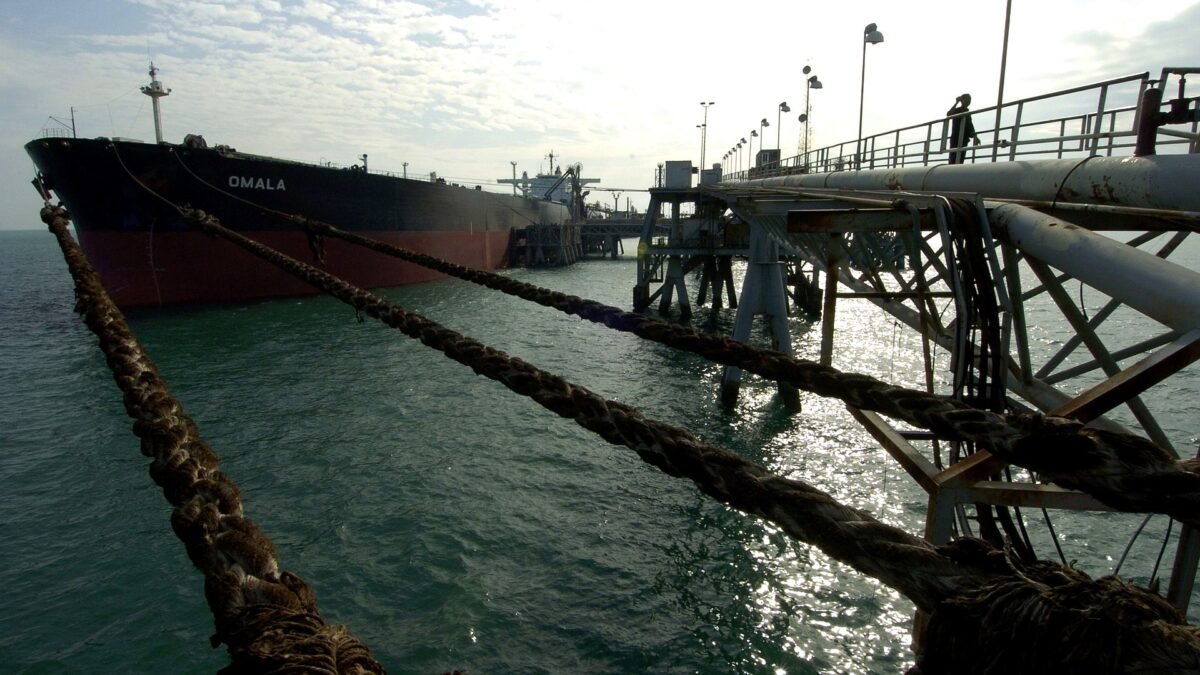
An oil tanker caught fire after being struck by an unknown projectile while sailing out of the Strait of Hormuz on Friday, in the latest attack on commercial shipping in a week that maritime analysts say has seen the highest number of incidents since mid-October.
The tanker was hit at about 3 p.m. UTC on Friday, 20 November, roughly eight nautical miles north of Khasab, a town on Oman’s Musandam Peninsula, according to the United Kingdom Maritime Trade Operations agency, known as UKMTO. The vessel was sailing outbound through the strait when the projectile struck its port bow, and the ship’s company security officer reported a fire on board, according to Reuters, which first reported the incident.
No casualties or environmental impact were reported, and the authorities were investigating the incident, according to UKMTO. The tanker has not been identified, and the extent of the damage to the vessel and whether it was able to continue its voyage remained unconfirmed on Friday evening.
The strike was the latest in a sharp escalation of attacks on merchant shipping in the waters around the Arabian Peninsula, and it came as the United States and Iran remain locked in a war that has now lasted almost nine months, with a naval blockade of Iranian oil exports at its centre and a decision on renewed American strikes deferred until after the new year.
What Happened Off Khasab
UKMTO, a British navy-affiliated agency that acts as the main point of contact between merchant shipping and military forces in the region, issued Warning 214-26 after receiving the report from the vessel’s company security officer. The warning recorded the strike at about 1500 UTC, eight nautical miles north of Khasab, and said a fire had broken out on board, according to gCaptain, the maritime news outlet.
The location matters. Khasab sits on the Musandam Peninsula, the finger of Omani territory that juts into the Strait of Hormuz and overlooks the narrow shipping lanes through which tankers leaving the Persian Gulf must pass. The waters off the peninsula have become the most dangerous stretch of the strait in recent days, with four tankers hit within 13 nautical miles of Khasab over three days, according to maritime security analyst Martin Kelly of Orbital Risk Intelligence, cited by gCaptain.
Friday’s incident was the fourth of those attacks, and it followed two serious strikes earlier in the week on vessels in almost exactly the same patch of water. The pattern, according to Kelly, points to an increasingly dangerous concentration of attacks along the southern shipping lanes off the Musandam Peninsula, particularly against tankers attempting to leave the Persian Gulf.
Within hours of the UKMTO warning, Iran’s Revolutionary Guards offered a different account of what had happened. The Guards said an oil tanker had caught fire after hitting a naval mine while attempting to transit the Strait of Hormuz near Khasab, according to Iranian state media, as reported by Reuters. That explanation has not been independently verified, and it conflicts with UKMTO’s account of an unknown projectile striking the vessel’s port bow.
Neither account has been independently confirmed by a third party, and the identity of the vessel, its cargo, its flag and its destination have not been disclosed. Until the ship is identified and inspected, the weapon responsible for Friday’s fire cannot be established with certainty, and the two competing explanations will remain unresolved.
A Week of Attacks Around the Musandam Peninsula
Friday’s strike did not happen in isolation. It capped a week in which shipping experienced 15 attacks and piracy-related incidents, a 50 per cent increase on the previous week and the highest weekly total since mid-October, according to Kelly’s assessment, cited by gCaptain.
In the Persian Gulf, the Strait of Hormuz and the Gulf of Oman, Kelly recorded seven strikes involving six vessels over the past seven days. The violence has left two seafarers missing and 13 injured, according to his assessment.
The most serious incident of the week before Friday came on Tuesday, 17 November, when the tanker Navig8 Messi was struck 13 nautical miles north of Khasab and suffered a fire. The Abu Dhabi National Oil Company, known as ADNOC, confirmed that one crew member was missing and 11 others were injured. The remaining crew were evacuated and the vessel was reported to be under tow, according to gCaptain.
The LPG tanker Tara Gas was disabled by a projectile strike on Monday, 16 November, before being hit again the following day, resulting in another fire and the vessel being abandoned, according to gCaptain. The two strikes on the same ship, a day apart, underlined how exposed vessels have become in the waters off Khasab, where attackers appear able to return to a stricken ship at will.
The week’s attacks are part of a longer pattern that has been building since the summer. According to UKMTO, six verified attacks were recorded across the Strait of Hormuz and the Persian Gulf during its latest reporting period, which covered incidents through 18 November. Four occurred in the strait itself and two in the wider Persian Gulf. Two vessels required assistance, while the outcomes of four others remained unknown, according to the agency, which cautioned that its figures do not capture every incident, since some reports cannot be independently verified.
Since the ceasefire agreement between the United States and Iran expired on 17 August, UKMTO has recorded six total vessel losses, while 22 vessels required assistance and 31 were confirmed to have continued their voyages, according to gCaptain’s account of the agency’s figures.
Earlier incidents in the same campaign include three oil tankers that exploded in the strait on 11 November, three tankers set ablaze on 8 November, and two cargo ships that sank near the strait on 15 October, all previously reported by this publication. In each case, the vessels were struck in or near the strait’s shipping lanes, and in each case the attacks added to a toll that has steadily mounted through the autumn.
The Joint Maritime Information Center, the multinational body that assesses threats to shipping in the region, continues to assess the threat to commercial shipping in the Strait of Hormuz as severe, warning that further deliberate attacks are highly likely, according to gCaptain.
Traffic Through the Strait Is Falling
The deteriorating security situation is taking a continued toll on commercial traffic through the strait, the world’s most important oil chokepoint.
In its weekly maritime security overview, published on Friday, UKMTO reported 115 outbound and 148 inbound transits over the preceding seven days, down from 139 outbound and 169 inbound crossings the previous week. Combined traffic remains approximately 65 per cent below pre-conflict levels, according to the agency.
The fall in traffic reflects a calculation being made daily by shipowners, insurers and charterers: whether the cargo is worth the risk of sending a vessel through waters where tankers are now being hit with regularity. War-risk insurance premiums for the strait have risen sharply since the war began, and some owners have chosen to keep their vessels away entirely, accepting longer voyages around Africa rather than the shorter passage through the strait.
The consequences extend well beyond the shipping industry. The Strait of Hormuz carries a large share of the world’s seaborne oil, and any sustained disruption to traffic through it feeds directly into global energy prices. Brent crude, the international benchmark, traded above $92 a barrel on Friday, according to market reports, as traders weighed the latest attack against the broader risk to supply.
The economic pressure is felt most acutely in Iran itself, where the American naval blockade has prevented the country from moving substantial amounts of crude oil from the Persian Gulf to global markets, according to the Institute for the Study of War. Iran is experiencing worsening inflation, rising living costs and continued depreciation of its currency as a result of its inability to move substantial amounts of crude, the institute said in its update of 20 November.
Two Competing Explanations
The most striking feature of Friday’s incident is that two very different accounts of it were published within hours, and neither can yet be confirmed.
UKMTO, drawing on the report of the vessel’s own company security officer, described an unknown projectile striking the tanker’s port bow. The language is deliberately neutral: the agency does not attribute the attack, and it does not speculate about the weapon. Its account is consistent with the pattern of the week’s earlier attacks, in which projectiles and drones were reported to have struck vessels in the same area.
Iran’s Revolutionary Guards, by contrast, said the tanker had struck a naval mine while attempting to transit the strait near Khasab. The claim was carried by Iranian state media and reported by Reuters. The Guards’ account fits a separate thread of Iranian claims: earlier in the week, Iran’s navy said six tankers had been hit by mines in the strait, a claim that rested on the navy’s own statement, named no ships and gave conflicting tallies, and could not be independently verified.
The two accounts cannot both be right about the weapon, though they agree on the essentials: a tanker was hit near Khasab on Friday, and a fire broke out on board. What remains unknown is whether the vessel was struck by a projectile fired at it or by a mine it sailed into, and that distinction matters, because it points to different kinds of threat, different perpetrators and different countermeasures.
Mines, if they are indeed being laid in the strait’s shipping lanes, would pose a threat to every vessel that passes, including those with no connection to the war. A projectile attack, by contrast, suggests a deliberate, targeted strike on a specific ship. Until the vessel is identified and its damage examined, the question cannot be settled, and responsible reporting must keep both accounts in view without adopting either as established fact.
The Blockade and the Convoy
Friday’s attack came as Iran appeared to be preparing its most direct challenge yet to the American naval blockade of its oil exports.
According to the Institute for the Study of War, Iran will likely attempt to run the blockade in the coming days in an attempt to break it. The institute cited Hamshahri, a Tehran municipality-affiliated outlet, which claimed on 20 November that Iran has staged 14 tankers at Kharg Island, its main crude export terminal, to attempt to run the blockade.
Attempting to run the blockade would expose Iran to significant risk, ranging from the destruction of a tanker fleet at minimum to possibly resuming a larger-scale conflict with the United States, or both, according to the institute. Iran’s willingness to accept these risks demonstrates the degree to which the regime views the current economic situation as both dire and unsustainable, the institute said.
The United States has taken several recent steps to further restrict any Iranian attempts to move oil out of the country. The Joint Maritime Information Center announced on 18 November that the blockade will now include vessels that have received cargo via a ship-to-ship transfer from a vessel carrying cargo loaded at an Iranian port or coastline, according to the institute. The change closes a loophole through which Iranian crude could be laundered at sea, transferred from one tanker to another beyond the reach of the blockade.
Inside Iran, hardline voices have been urging the government to force the issue. The Fars News Agency, which is affiliated with the Revolutionary Guards, argued on 18 November that Iran should publicly dispatch a tanker convoy and retaliate against regional energy and technology infrastructure if American forces enforce the blockade and interdict the convoy, according to the institute.
Running the blockade would force the United States to choose between stopping the blockade runners by force or letting them pass, which would render the blockade ineffective and therefore invalid, according to the institute’s assessment. Iran’s optimal scenario would be for the United States to allow the blockade runners to pass to avoid a resumption of conflict, given that doing so would collapse the blockade’s effectiveness.
Iran may also calculate that the Gulf states would pressure the United States to end the war prematurely if the fighting resumed, according to the institute, which made no assessment about whether that calculation would succeed. The calculation rests on a real fear among Gulf governments: that a renewed round of fighting would see Iranian attacks on their critical infrastructure, as happened this week when Iran fired drones and missiles at the Ali Al Salem air base in Kuwait and launched several attacks on Bahrain on Wednesday, after an American strike on a Revolutionary Guard missile site on Qeshm Island the day before.
On Friday, a United States-launched missile struck the outskirts of Qeshm city, according to Iran’s Tasnim news agency, with no immediate reports of casualties.
The Wider War: Strikes, Votes and a Decision Deferred
The tanker attacks are one front of a war that has now lasted almost nine months, since it began on 28 February 2026. The war has cost the United States military more than $48 billion since then, according to the Associated Press, and 23 American service members had been killed as of 13 November, according to the same agency.
On Thursday, 19 November, the United States Senate voted 51 to 48 to defeat a war powers resolution that would have directed President Donald Trump to remove American forces from hostilities with Iran or obtain Congress’s approval, as previously reported by this publication. The vote was the first on the war in either chamber of Congress since the midterm elections of 3 November, in which the president’s party lost control of the House of Representatives.
Meanwhile, the question of whether the United States will launch a new round of strikes on Iran has become the subject of intense lobbying in Washington. Israel’s spy chief, Roman Gofman, the head of the Mossad and a close confidant of Prime Minister Benjamin Netanyahu, met CIA Director John Ratcliffe in Washington last week and then met the United States envoy Steve Witkoff in Miami, according to the Wall Street Journal and the Associated Press. Gofman presented the Americans with Israeli intelligence about Iran’s nuclear programme and advocated for a new multi-day campaign of airstrikes against Iran, according to people familiar with the matter.
Netanyahu has been pushing for renewed attacks for months and says Israel’s goal remains toppling the Iranian regime, according to the Wall Street Journal. The New York Times reported that Netanyahu is advocating a concentrated military campaign lasting four to seven days, involving intensive American and Israeli airstrikes against Iranian military infrastructure, including missile launchers, drone facilities and installations belonging to the Revolutionary Guards.
Trump, however, has said he will not decide until after the new year. “I am not rushing into any decision [on Iran]. We will see what happens after the beginning of the year,” he told Axios aboard Air Force One while flying back to the United States after the Asia-Pacific summit in China, according to the news agency ANI. Secretary of State Marco Rubio has argued that the pressure campaign can continue instead, and a United States official said the administration’s campaign of economic pressure on Iran has been effective to the point that Trump does not need to restart major combat operations, according to the Associated Press.
Against Netanyahu’s pressure, American allies in the Middle East have accelerated efforts to prevent a resumption of all-out war, according to the Associated Press, citing regional officials. Gulf states, Pakistan and Turkey have lobbied Washington to avert a renewed war, and Qatar’s prime minister, Sheikh Mohammed bin Abdulrahman bin Jassim Al Thani, met Trump at the White House last week in a bid to bring the United States and Iran back to the negotiating table.
The lobbying has intensified after a week of tit-for-tat attacks across the Gulf, and the tanker strike off Khasab will only sharpen the argument on both sides: for those who want renewed strikes, it is evidence that Iran is escalating; for those who want talks, it is evidence that the current course is producing more violence, not less.
The Black Sea and the Return of Piracy
The surge in maritime violence extends well beyond the Middle East. Six commercial vessels were struck in the western Black Sea over the past week, according to Kelly’s assessment, cited by gCaptain, including two ships that sank in Bulgaria’s exclusive economic zone on consecutive days.
The general cargo ship Betul 8 sank on 16 November, followed by the LPG tanker Gas Husky on 17 November. All 31 seafarers aboard the two vessels were rescued, according to gCaptain.
The maritime security firm Ambrey separately confirmed reports of six vessels struck since 13 November, including four attacked near the Sulina anchorage in Romanian waters and two in Bulgarian waters. Ambrey assessed the attacks as part of an escalating Russian campaign involving unmanned aerial and surface vessels, according to gCaptain.
The incidents have raised growing concerns about the safety of commercial shipping in waters adjacent to NATO member states Romania and Bulgaria, and they have added a second front to a crisis that was already stretching the world’s maritime security resources.
Piracy-related activity has also increased in the Gulf of Aden and the western Indian Ocean. During the week, a tanker reported being approached by an armed skiff carrying a ladder approximately 430 nautical miles east of Socotra, Yemen. In another incident off Al Mukalla, armed guards aboard a cargo vessel fired a warning shot to repel an attempted boarding, according to gCaptain.
A further incident was reported on Friday, when six armed men aboard a skiff fired four shots at an eastbound bulk carrier approximately 95 nautical miles southwest of Al Mukalla. The ship’s security team returned warning shots, forcing the attackers to retreat. No injuries or damage were reported, according to gCaptain.
Taken together, the three theatres — the Strait of Hormuz, the Black Sea and the Gulf of Aden — describe a week in which merchant shipping faced threats from state-linked attacks, from mines and projectiles, and from opportunistic piracy, all at once. Maritime security analysts warn that the coming week could bring further strikes against commercial vessels, according to gCaptain.
Analysis: Why It Matters
The strait is becoming a shooting gallery, not a shipping lane
Four tankers hit within 13 nautical miles of Khasab in three days is not a series of isolated incidents. It is a pattern, and patterns have authors, even when no one claims responsibility. The concentration of attacks in one small patch of water suggests that whoever is behind them has chosen the narrowest, most unavoidable part of the strait and is working it methodically. For shipowners, that changes the calculation entirely: the risk is no longer a random hazard of transiting a war zone, but a predictable danger at a predictable place. That is why traffic is down by almost two-thirds, and why it will keep falling unless the attacks stop or are stopped.
The mine claim is the most dangerous part of the story
Whether Friday’s tanker hit a mine or was struck by a projectile matters more than it might seem. A projectile attack, however serious, is aimed at a particular ship. A minefield in the shipping lanes threatens every ship that passes, including vessels carrying food, medicine and fuel to countries that have nothing to do with this war. Iran’s earlier claim that six tankers had been hit by mines could not be verified, and it should not be repeated as fact. But the Revolutionary Guards’ decision to offer a mine explanation for Friday’s incident, hours after UKMTO reported a projectile strike, deserves attention, because it suggests that mines are now part of the conversation in Tehran, whether as a weapon actually used or as a threat being advertised. The distinction will only be settled by evidence from the stricken vessel, and until that evidence appears, the shipping industry must plan for both possibilities.
The blockade is working, and that is why it is being tested
The most important context for Friday’s attack is not the attack itself but the economic pressure behind it. The American blockade has cut off Iran’s main source of foreign earnings, and the effects — rising inflation, a falling currency, rising living costs — are now severe enough, in the Institute for the Study of War’s assessment, to push Tehran towards the risky step of trying to run the blockade with a convoy of 14 tankers. That is the logic of a siege: pressure builds until the besieged side must either break out or break down. The convoy, if it sails, will be the moment the blockade is tested in its most literal sense, and the outcome will determine whether the economic weapon that Washington has relied on can hold, or whether it collapses the first time it is challenged.
Trump’s January deadline is now the war’s central fact
By telling Axios that he will not decide on renewed strikes until after the beginning of the year, Trump has created a six-week window in which every actor in the region will try to shape his decision. Netanyahu and Gofman will argue that the window for effective strikes is closing. The Gulf states, Pakistan, Turkey and Qatar will argue that a new campaign would be more devastating than the war so far. Iran will try to demonstrate, through the tanker convoy and through attacks on shipping, that the pressure campaign has a cost. And the American military will have to manage a blockade that is being challenged at sea while its commander-in-chief waits. The tanker strike off Khasab is best understood as part of that contest: an event staged, or at least exploited, in the shadow of a decision that has not yet been made.
The world’s shipping lanes are under strain in three places at once
It is easy to treat the Strait of Hormuz, the Black Sea and the Gulf of Aden as three separate stories. They are not. The same week saw tankers hit off Oman, ships sunk off Bulgaria and pirate skiffs firing on bulk carriers off Yemen. The common thread is that the systems built over decades to keep merchant shipping safe — naval patrols, insurance, international law, the simple expectation that civilian ships are not targets — are fraying simultaneously in different seas. No single navy can police all three theatres, and no single diplomatic initiative addresses all three causes. The week’s toll — two seafarers missing, 13 injured, two ships sunk, a tanker abandoned and another on fire — is the human price of that fraying, and it is being paid by crews who had no part in the wars around them.
What to Watch Next
- The identity of Friday’s tanker. Until the vessel is named, its flag, cargo and owner will remain unknown, and so will the question of who was being targeted and why. Watch for the ship’s identification and for any statement from its owner or insurer.
- The mine-versus-projectile question. The vessel’s damage, once inspected, should settle whether it struck a mine or was hit by a projectile. That finding will shape how navies and insurers respond, and whether the threat is treated as a minefield or a missile campaign.
- The Kharg Island convoy. If Iran does dispatch the 14 tankers reported to be staged at Kharg Island, the American response — interception, escort or acquiescence — will be the most consequential decision of the blockade so far.
- Traffic figures for the coming week. UKMTO’s next weekly overview will show whether Friday’s attack accelerates the fall in transits through the strait, and whether owners begin avoiding the waterway altogether.
- Trump’s decision timetable. With the president committed to deciding after the new year, watch for further lobbying visits from Israeli officials and for counter-lobbying from Gulf states, as well as for any shift in the administration’s public language on strikes.
- The Black Sea campaign. Ambrey’s assessment of an escalating Russian campaign using unmanned vessels bears watching, particularly if attacks spread from Bulgarian and Romanian waters towards the Bosphorus or towards NATO naval patrols.
- Crew safety and the missing seafarers. Two seafarers are missing from this week’s attacks, including one from the Navig8 Messi. Watch for updates on search efforts and for any statement from ADNOC or the vessel’s operator.
Sources
- Reuters — “Fire reported on tanker after projectile strike off Oman, UKMTO says”
- gCaptain — “Another Tanker Hit in Strait of Hormuz as Maritime Attacks Surge Worldwide”
- Institute for the Study of War — “Iran Update, November 20, 2026”
- United Kingdom Maritime Trade Operations (UKMTO)
- Associated Press (via Religion News Service) — “Mideast nations ramp up efforts to avert all-out war as Israel urges Iran strikes, officials say”

About the Author — Abdul Mannan
Related Articles
Iraqi Troops Enter Kataib Hezbollah Stronghold as Jurf al-Sakhar Reopens After 12 Years
Iraqi security forces moved into Jurf al-Sakhar on Friday under a compromise deal with Kataib Hezbollah, ending the…
US Senate Rejects Bid to End Iran War in 51-48 Vote, Handing Trump a Symbolic Victory After Midterm Rebuke
The Senate voted 51-48 on Thursday to defeat a House-passed war powers resolution, the first vote on the…
Israel Launches First Gaza Ground Operation Since Ceasefire as Tanks Cross the Yellow Line
Israeli tanks crossed the Yellow Line in central Gaza on Wednesday in the first ground operation beyond the…