
Israel Launches First Gaza Ground Operation Since Ceasefire as Tanks Cross the Yellow Line

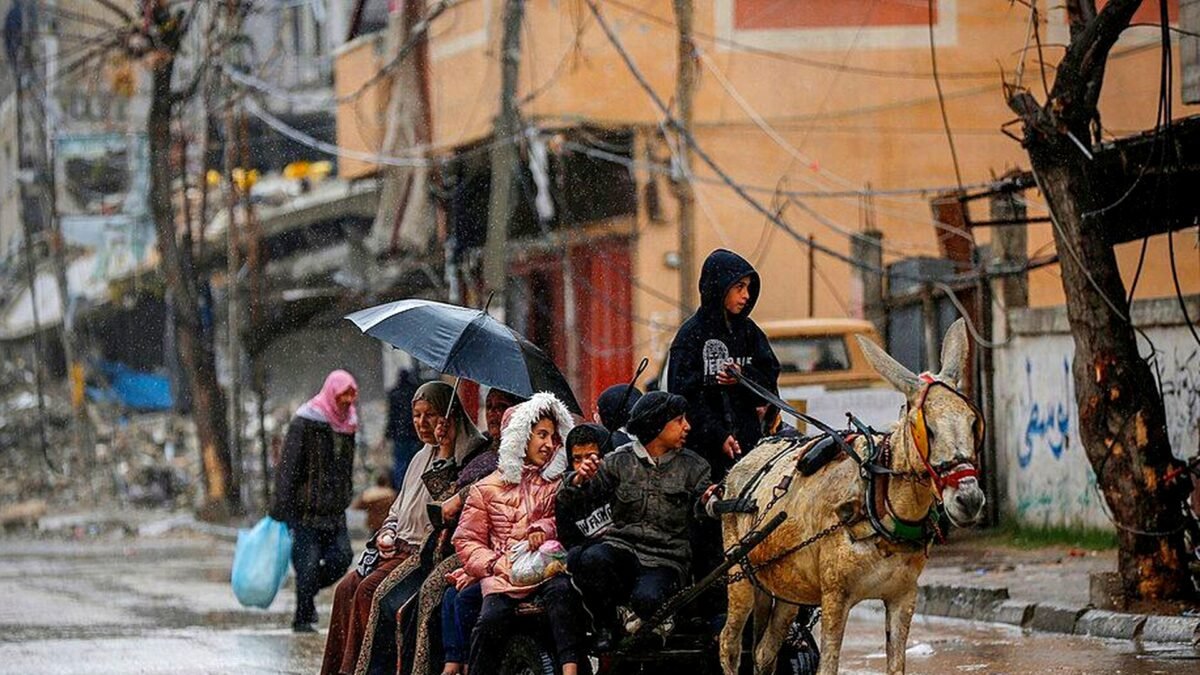
Israeli tanks crossed the Yellow Line in central Gaza on Wednesday, 18 November 2026, in the first ground operation beyond the ceasefire boundary since the truce took effect more than a year ago, sending families fleeing from the Nuseirat and Bureij refugee camps as artillery fire echoed across Gaza’s main north-south road. According to Reuters, the advance was the first ground raid of its kind since the October 2025 ceasefire, and it put fresh pressure on an agreement that the United States-backed body overseeing it had warned only a day earlier was in danger of collapse.
Witnesses told Reuters that Israeli tanks rolled onto the Salah al-Din road, Gaza’s main north-south route, west of the Yellow Line, the boundary that separates the roughly two-thirds of the territory still under Israeli control from the area administered by Hamas. An AFP journalist on the scene saw tanks positioned east of the Nuseirat camp, while residents said the advance, backed by artillery cover and bulldozers, forced families from their homes, tents and shelters in the blocks around the two camps. Video verified by BBC Verify showed a man ducking after artillery fire and then running along the Salah al-Din road about 1.5 kilometres west of the Yellow Line.
Israel’s military said the operation was a joint effort with Shin Bet, its domestic security agency, to dismantle what it described as a tunnel west of the line that posed an immediate and direct threat to its troops. According to the military, the operation was a targeted activity against Hamas infrastructure in central Gaza, and it had also struck a militant in southern Gaza earlier on Wednesday. The military told AFP it had launched what it called a precise operation to remove a threat posed to the Israeli army, adding that there was Hamas infrastructure in the area and that it was responding to Hamas ceasefire violations. The tunnel claim has not been independently verified, and no independent assessment has established whether this specific operation complied with the truce.
The Coordinator of Government Activities in the Territories, known as COGAT, the Israeli military body responsible for civilian affairs in the Palestinian territories, announced the start of the operation in Arabic shortly after midday on Wednesday. It said the army had begun an operation targeting what it called terror infrastructure around the Yellow Line in blocks 660, 661 and 666, that the Salah al-Din road would be closed to traffic inside those blocks, and that residents should stay away from the area until the army spokesperson announced the operation was over. Al Jazeera reported that the announcement did not amount to a formal evacuation order for the people living in the area, a distinction its correspondent Hind Khoudary drew explicitly, although Israeli media described the notices as evacuation warnings and residents fled in large numbers.
Hamas called the advance and the forced evacuations northeast of Nuseirat a dangerous development and a flagrant violation of the ceasefire agreement, and urged mediators to intervene immediately. The group accused Israel of systematically squeezing Palestinians into a narrow area of Gaza and accused Prime Minister Benjamin Netanyahu’s caretaker government of escalating to escape its domestic crises. Hamas also condemned the Board of Peace for having, in its words, unacceptably equated the occupation’s ongoing aggression with the suffering of the Palestinian victim. The Popular Front for the Liberation of Palestine called the operation a prelude to a wider escalation aimed at forcibly displacing Palestinians. Israel’s military did not immediately respond to the Hamas statement, according to Reuters.
Mahmoud al-Saafin, a 27-year-old resident of Bureij, told the AFP news agency that families feared the operation was only the beginning. “We fear this may be the start of a broader operation and that displacement will begin anew, as we have not yet recovered from the effects of the previous war and displacement,” he said. A resident of Nuseirat told BBC Arabic that people fled without blankets, pillows or clothes. Palestinians were photographed carrying their belongings on a donkey cart as they left Nuseirat after the army’s order to leave the area.
Palestinian medics told Reuters that an Israeli airstrike near the army raid killed one person, and that two other people were killed in separate incidents earlier on Wednesday in Deir al-Balah and Gaza City. Gaza’s Civil Defence agency said three people were killed and others wounded in three Israeli drone strikes, including one death in Nuseirat. Al Jazeera reported a fourth death: an attack on al-Mughraqa killed one person and wounded several others, according to an official at al-Awda Hospital, with separate attacks in Deir el-Balah, Nuseirat and Gaza City killing three more people. The differing counts reflect the fog of a fast-moving operation rather than any settled toll, and the numbers may change as hospitals and civil defence teams complete their accounting.
The line that was not supposed to be crossed
The Yellow Line was drawn under the first phase of President Donald Trump’s plan to end the war in Gaza, and it marked the boundary to which Israeli troops pulled back when the ceasefire took effect on 10 October 2025. At that point Israel held about 53 percent of the territory, with more than two million Palestinians crowded into the remainder, mostly in tents. Since then, according to Al Jazeera, Israel has continued to move the line gradually, and it now encompasses around two-thirds of the enclave. Reuters described the line in the same terms, as the boundary of the two-thirds of the Gaza Strip still under Israeli control despite a ceasefire that has lasted more than a year.
The United Nations said in September that almost Gaza’s entire population was displaced within the limits of the Yellow Line, on less than 40 percent of the territory’s land. The BBC reported on 18 November that more than 1.9 million people remained displaced, including 1.4 million in tents or makeshift shelters. The area covered by Wednesday’s operation is small on a map and large in human terms: the UN humanitarian office assessed the three blocks at about 2.5 square kilometres, home to more than 18,000 people, 4,000 of them in displaced persons’ camps. Gaza’s Ministry of Social Development said 5,260 people from 865 families were at risk in and around the affected area, including 2,855 sheltering in six centres and camps in and beside it and 2,405 around them.
That density is the reason the operation matters beyond its military footprint. The blocks are not empty ground. Block 666 covers al-Da’wa, a neighbourhood on the north-eastern edge of Nuseirat camp, south of Wadi Gaza. Blocks 660 and 661 cover the northern edge of Bureij camp. The Salah al-Din road, the road that runs the length of the Strip, passes through all three. Closing it, even for a stretch, cuts the main artery along which food, water, the wounded and the fleeing all move.
Israel says Hamas has recently been regrouping and rearming, and it has stepped up attacks against the group in recent weeks. On Saturday, an Israeli attack killed Samir Abu Younis, the Qassam Brigades’ Rafah commander. On Tuesday alone, Israeli fire killed six Palestinians, including a six-year-old boy, according to Gaza’s civil defence agency and hospitals, as reported by AFP. The October 2025 ceasefire halted major fighting, according to Reuters, but it has not stopped Israeli attacks or secured Hamas’ disarmament.
A ceasefire the overseers say is failing
The operation came one day after the body overseeing President Trump’s plan to end the Gaza war accused both Israel and Hamas of failing to meet their commitments to end hostilities, leaving the population of Gaza in dire conditions and the ceasefire in danger of collapse. The 12-page Board of Peace report, seen by Reuters, was the body’s second to the United Nations Security Council since the US-backed ceasefire came into effect 13 months ago. According to Al Jazeera, the board accused Israel of restricting aid and delaying the deployment of Palestinian police, and Hamas of continuing armed activity and taxing goods entering Gaza. Senior Hamas official Basem Naim dismissed the report as pure disinformation.
The board spelled out what failure would mean. “Should it collapse, there would be no road map to return to, no administration to deploy and no enabling environment to rebuild,” it said, according to Al Jazeera. The warning is not abstract. The rest of the plan, covering Israel’s withdrawal, reconstruction and Hamas’ disarmament, has stalled. Hamas agreed in July to a roadmap to give up its weapons and hand over governance. Israel rejected it. Israel also has not let the board’s technocratic administration start work in Gaza, and that has held up an international stabilisation force, the Associated Press reported, according to Al Jazeera.
The numbers behind the warning are stark. Gaza’s Ministry of Health says Israeli forces have killed 1,658 Palestinians and wounded 6,000 since the ceasefire began, according to Al Jazeera. Reuters put the toll at at least 1,600 Palestinians killed since the ceasefire went into effect, while the Israeli military says five Israeli soldiers have been killed in the same period. Palestinian authorities say more than 74,000 people in Gaza have been killed in the military campaign that Israel launched there after Hamas-led fighters killed about 1,200 people in southern Israel in the attack of 7 October 2023, according to Reuters.
Aid remains restricted. About 100,000 tents are waiting to enter Gaza, held up by crossing closures and lengthy Israeli security checks, the International Organization for Migration says, according to Al Jazeera. The winter has already begun to bite: floods in recent days swamped tens of thousands of tents, and the displaced face a fourth winter in tents and makeshift shelters. Four Western allies told Israel only days ago to let 150,000 tents into Gaza before winter closes in. The operation in Nuseirat and Bureij adds fresh displacement to a population that has, in many cases, already been displaced several times over.
What Israel says, and what it has not shown
The Israeli case for the operation rests on a single claim: a tunnel west of the Yellow Line that posed an immediate and direct threat to its troops. The military said the operation was launched with Shin Bet to dismantle that tunnel, and it told AFP it reserved the freedom to act and manoeuvre whenever necessary to eliminate any immediate threat in the Gaza Strip. For nine hours after the operation began, Israel named no target or military objective. Only late on Wednesday did it say the aim was to dismantle a tunnel. It did not say where the tunnel is, show evidence of it, or announce when the operation would stop.
That sequence matters, because the ceasefire agreement does not give either side a free hand to decide unilaterally what counts as a violation. The military said it was responding to Hamas ceasefire violations, but the claim about Hamas infrastructure was not independently verified in the reports. The Board of Peace, in its report a day earlier, accused Hamas of continuing armed activity, which gives Israel’s account some support in general terms, but the board’s report is not evidence about this particular tunnel, and no independent party has confirmed that the tunnel existed, where it ran, or what threat it posed.
Israeli Defence Minister Israel Katz has made the government’s wider position plain. He said Israel will not withdraw until Hamas is dismantled, and he added: “If tensions escalate on the various fronts, we are fully prepared to seize additional territory, evacuate local residents and incorporate it into Israel’s permanent security perimeter.” That language goes well beyond a tunnel. It describes a policy in which the Yellow Line is not a fixed boundary but a starting point, and in which further territory can be taken and held if Israel judges the moment requires it. For Palestinians living west of the line, that is the sentence that turns a single operation into a threat of more to come.
Netanyahu’s position has hardened in parallel. Only days before the operation, he publicly rebuked the Gaza executive board set up under Trump’s plan as the second phase of the peace plan began, a confrontation that exposed the gap between the American-designed framework and the Israeli government’s reading of it. The board’s warning that the ceasefire could collapse, and the operation that followed within a day, now sit side by side as the two halves of the same crisis: the overseers say the agreement is failing, and one of the parties is acting as though the agreement’s constraints no longer bind it.
The view from the camps
For the families of Nuseirat and Bureij, the legal arguments about the ceasefire are secondary to the immediate question of where to go. Many of them were displaced during the war, returned to damaged homes when the ceasefire took hold, and are now fleeing again with whatever they can carry. The donkey cart has become the image of this displacement, as it was of earlier ones: families piled onto carts with blankets and bags, moving along roads that may close behind them.
The camps themselves are among the oldest and most crowded in Gaza. Nuseirat and Bureij were established in the late 1940s and early 1950s, and their narrow streets and dense housing make any military operation there a civilian event as much as a military one. Artillery fire, tank shells and gunfire were heard across the area on Wednesday, according to witnesses, and the operation closed the road that residents would normally use to leave. The army has not said how long the operation will last, and COGAT’s announcement said only that residents should stay away until the army spokesperson announces it is over.
The timing adds to the hardship. Winter rains have already flooded tents across Gaza, and the 100,000 tents waiting at the crossings cannot reach the people who need them. The families who fled Nuseirat and Bureij on Wednesday left shelters that were already inadequate, in weather that was already turning, with no clear destination and no announced end to the operation that displaced them. A Nuseirat resident told BBC Arabic that people fled without blankets, pillows or clothes, a detail that captures the speed of the flight better than any casualty count.
Analysis: Why It Matters
The Yellow Line was the ceasefire’s one hard fact. It has now been crossed by tanks.
A ceasefire is, in the end, a set of lines on a map and a set of promises about who will not cross them. The October 2025 agreement had many soft parts: disarmament was promised but never delivered, reconstruction was promised but never started, a technocratic administration was promised but never allowed to begin work. The Yellow Line was the one part that was concrete, visible and, until Wednesday, intact. Israeli troops had held their side of it for thirteen months. Now they have crossed it in force, with tanks, artillery and bulldozers, and the crossing was announced publicly by the military body that administers the territory. That is not a skirmish or a misunderstanding. It is a deliberate, public act, and it changes the status of the line itself. A boundary that one side crosses openly, and justifies openly, is no longer a boundary in the sense the agreement meant. It is a line that moves when one party decides it should move, which is what the residents of the camps have been saying for months as the line crept inward from 53 percent of Gaza to around two-thirds.
The tunnel claim is doing a lot of work, and it is unverified
Every element of Israel’s justification depends on the tunnel. If there was a tunnel posing an immediate and direct threat to Israeli troops, the operation has a military logic that even critics of the wider policy would have to acknowledge. If there was not, or if the tunnel was a minor or disused structure, the operation looks very different: a show of force, a test of the ceasefire’s limits, or a step towards the further territorial seizure that Minister Katz has openly described. The problem is that the public record, as it stands, does not allow anyone outside the Israeli military to tell the difference. No location has been given, no evidence has been shown, and the claim was not made until nine hours after the operation began. That is not how a time-sensitive threat is normally communicated. It is how a justification is assembled after the fact. None of this proves the claim false. It proves that the claim cannot be evaluated, and that a ceasefire cannot survive on unevaluable claims. If either side can cross the line whenever it asserts a threat that no one else can check, the line does not exist.
The Board of Peace warned on Tuesday. The tanks moved on Wednesday.
The sequence is the most damning detail in the whole story. The Board of Peace, the body created to oversee Trump’s plan, told the Security Council that the ceasefire was in danger of collapse and that both sides were failing to meet their commitments. It warned that if the agreement collapsed there would be no road map to return to, no administration to deploy and no enabling environment to rebuild. Within a day, Israeli tanks were west of the Yellow Line. The operation may have been planned before the report was delivered, and the timing may be coincidence. But coincidence is not the point. The point is that the warning and the operation together describe a process that is already under way: the agreement is failing in slow motion, the overseers know it, and the parties are behaving as though they know it too. Hamas condemned the board’s report as disinformation and accused it of equating the occupier with the victim. Israel rejected the roadmap Hamas offered in July and has not let the technocratic administration start work. Both sides are, in their own ways, walking away from the framework while blaming the other for its collapse.
Katz’s words are the real headline
The operation itself is limited: three blocks, a stretch of road, a tunnel that may or may not exist. What Katz said about it is not limited at all. A defence minister who says his country is fully prepared to seize additional territory, evacuate local residents and incorporate the land into a permanent security perimeter is not describing a tunnel operation. He is describing a policy of territorial expansion, stated in advance, as a contingency that his government is ready to execute. That language matters because it tells the families of Nuseirat and Bureij, and the two million Palestinians crowded into the remaining third of Gaza, that Wednesday’s operation may be a beginning rather than an end. It also matters because it tells the mediators, the Board of Peace and the Trump administration that the Israeli government does not regard the Yellow Line as a limit on its freedom of action. The operation can be defended as a response to a threat. The policy Katz described cannot be defended in the same terms, and it is the policy, not the tunnel, that will decide whether the ceasefire survives the winter.
Displacement is the story, not a side effect
It is easy, in coverage of a military operation, to treat the fleeing families as background: the human colour around a story about lines, tunnels and ceasefire clauses. That gets the story backwards. The operation’s most certain and most immediate consequence is not the destruction of a tunnel, which is unverified, or the weakening of Hamas, which is unmeasured. It is the displacement of thousands of people who had already been displaced, from homes that were already damaged, into a winter that is already flooding their tents. The UN’s figures put more than 18,000 people in the affected blocks, and Gaza’s own ministry put 5,260 people from 865 families at immediate risk. Those people are now somewhere else, in conditions no one has described, with no announced end to the operation that moved them. The ceasefire was supposed to end this cycle. Thirteen months after it took effect, the cycle has resumed in the same camps, on the same road, with the same donkey carts. That is the measure of what has failed, and it is measured in people, not in lines on a map.
What to Watch Next
- How long the operation lasts, and whether Israeli forces withdraw to the Yellow Line or stay in the three blocks. A withdrawal would suggest a limited action; a prolonged presence would suggest the line has moved again.
- Whether Israel produces any evidence for the tunnel: a location, photographs, or a description of what was found. The credibility of the operation’s justification depends on it.
- The response of the mediators and the Board of Peace, and whether the Trump administration treats the crossing as a violation or as a legitimate security action under the ceasefire.
- Whether Hamas responds militarily or confines itself to political condemnation, and whether the regrouping Israel alleges produces any visible action.
- The fate of the displaced families from Nuseirat and Bureij, and whether aid agencies can reach them while the Salah al-Din road remains closed in the affected stretch.
- Whether the 100,000 tents waiting at the crossings begin to move, and whether the winter flooding worsens the humanitarian situation faster than the political process can respond.
- Whether the ceasefire survives the winter at all, and what, if anything, replaces it if the Board of Peace’s warning proves correct and the agreement collapses with no road map to return to.
Sources
- Reuters: “Israeli military begins a new thrust in Gaza, witnesses say” (via Duke FM)
- Al Jazeera: “What does Israel’s new ground offensive mean for Palestinians in Gaza?” (via Haiti Gazette)
- Daily Inference: “Israeli Tanks Cross Gaza’s Yellow Line, and Families Run Again”
- Magna Bureau: “Israeli military launches rare ground operation beyond Gaza’s Yellow Line as Hamas calls it a flagrant ceasefire breach”
- Unbiased Headlines: “Israeli Tanks Push Past the Yellow Line in Central Gaza as Hamas Calls It a Ceasefire Violation”
- SRN News (Reuters): “Israel launches ground operation in central Gaza, dozens flee”

About the Author — Abdul Mannan
Related Articles
Trump’s Board of Peace Warns Gaza Ceasefire Could Collapse as Israel and Hamas Both Fail to Honour Deal
The Board of Peace has warned the UN Security Council that the Gaza ceasefire could collapse, accusing both…

Iran Fires Third Round of Drones at US Radar in Bahrain as US Strikes Qeshm Island and Gulf States Sound Overnight Alerts
Iran fired drones at a US radar base in Bahrain for the third time in five days on…
Iraq Orders Army Into Kataib Hezbollah Stronghold as Oil-Smuggling Crackdown Reaches a Showdown
Iraqi Prime Minister Ali al-Zaidi has ordered troops into Jurf al-Nasr, a Kataib Hezbollah stronghold south of Baghdad,…