
Iran Strikes US Bases in Bahrain as Tehran Claims Two Patriot Radars Destroyed and Manama Reports Civilian Site on Fire

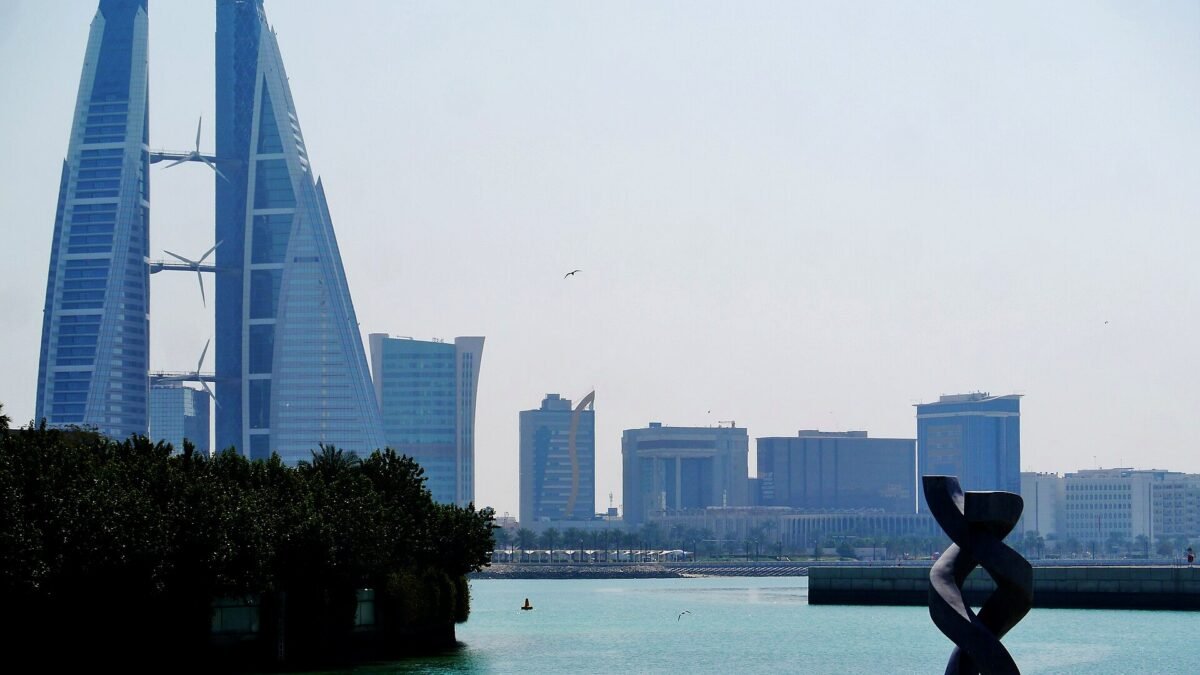
Iran launched a combined missile and drone attack on Bahrain late on Saturday night, in the sharpest escalation yet of the Gulf confrontation, with Tehran claiming it destroyed two American Patriot air defence radars and Manama reporting that a civilian industrial facility was hit and set on fire. No injuries were reported, according to Bahrain, but the two sides gave irreconcilable accounts of what was struck, and the United States had not confirmed any damage to its forces by the time the first reports were published.
Air raid sirens sounded across Bahrain on Saturday evening, and the country’s Interior Ministry urged residents to move to the nearest safe place, without initially saying what the threat was, according to Reuters. The Bahrain Defence Force said its air defences intercepted a number of Iranian aerial attacks late on Saturday, with falling debris causing minor property damage but no casualties. In a post on X, the Interior Ministry described the attack as part of what it called “Iranian aggression” and said preliminary reports pointed to material damage but no injuries, with civil defence teams working to bring a fire under control at a civilian industrial facility it did not name or locate.
Shortly afterwards, Iran’s Islamic Revolutionary Guard Corps (IRGC) said its Aerospace Force had carried out a combined missile and drone operation against United States military positions at the al-Riffa and Awali bases in Bahrain, and claimed it had destroyed two US Patriot air defence radars at those locations. The statement, carried by Iranian state broadcaster IRIB and reported by Al Jazeera, said the attack was “in response to continued aggression and violations of the airspace of the Islamic Republic of Iran”. It added that two American MQ-1 and MQ-9 reconnaissance and combat drones had violated Iranian airspace earlier on Saturday, and that the operation was also retaliation for an attack on a radar installation on Iran’s Hengam Island.
That was not the only Iranian account. Earlier, the semi-official Fars news agency reported that the IRGC had attacked two military bases used by US forces at Sheikh Isa and Juffair, different targets from the ones named in the Guards’ own statement. And Iran’s state news agency IRNA offered yet another version, reporting that an interceptor missile launched from the US Fifth Fleet base in Bahrain had crashed on Sitra Island and started a large fire, citing an outlet called Bahrain News which blamed a recurring malfunction in the Patriot air defence system. Bahrain’s Foreign Ministry rejected the IRGC’s assertion that it had struck American military installations, saying the facility that caught fire was used solely for civilian purposes, according to Iran International.
The competing claims could not be independently verified on Sunday morning. No public confirmation of damage to the radars had come from the United States by publication time, and US Central Command (CENTCOM) had not issued a statement on the Saturday night strikes, according to Euronews. That silence matters, because the central question of the night is a factual one that only evidence can settle: whether American air defences in Bahrain were hit, or whether the attack was intercepted and the only damage was to a civilian site.
A night of claims and counter-claims
The Bahrain strikes did not come out of nowhere. They were the fourth Iranian attack on the island kingdom in nine days, after a lull of about two months in the Gulf fighting. On 13 November, the IRGC claimed a hit on a US early-warning radar in Bahrain, a claim the Pentagon denied. Two days later, on 15 November, it said six drones had targeted the radar system at the Al-Riffa helicopter base. On Tuesday 17 November, it claimed a third radar hit, and CENTCOM called the claim false, saying in a post on X that “multiple Iranian one-way attack drones launched by the IRGC today towards Bahrain were intercepted without any damage to U.S. equipment or injury to American personnel”. Each round has followed the same pattern: an Iranian claim of a successful strike on American air defences, a Bahraini account of interceptions and limited damage, and an American denial or silence.
Saturday’s round was preceded by another disputed claim the same day. Iran’s army announced that its air defences had fired a missile at a US F-16 fighter jet operating over the Persian Gulf on Friday evening, 20 November, damaging the aircraft and forcing it into an emergency landing. CENTCOM rejected the account outright on Saturday. “Iran did not attack a U.S. F-16 fighter aircraft yesterday — at all,” the command said, adding that all American fighter jets in the Middle East were safe and accounted for. The IRGC also released footage it said showed the downing of two US drones, an MQ-9 and an MQ-1, over the Strait of Hormuz, and Iranian state media described the MQ-9 as the 58th claimed downed since the war began. That claim, too, was not independently verified, and no US comment on it had been located.
The same Saturday saw attacks on shipping through the Strait of Hormuz. At least three oil tankers were attacked in or near the strait, according to Euronews. The UK military’s maritime security centre, UKMTO, said two tankers were struck separately by projectiles early on Saturday while exiting the Persian Gulf through the strait, with no casualties reported. Iranian state media said a third tanker hit a naval mine east of the strait and caught fire, and that the Iranian navy had conducted its most “intense and varied” operations yet overnight to stop vessels. The tanker strikes were the latest in a surge of incidents in the strait over the past week, and they came as Iran prepared a direct challenge to the American blockade of its ports.
The tanker convoy and the blockade
More than 14 Iranian tankers are reported to be staged off Kharg Island, preparing to sail in convoy in an attempt to break the US naval blockade of Iranian ports in the coming days. Iran’s Deputy Foreign Minister Kazem Gharibabadi told Iranian media that the blockade “is an act of war” and that Tehran would take “any necessary measures to break this economic siege”, warning of a “fierce military response” and widespread attacks on energy infrastructure across the Gulf region if the convoy is engaged. Tehran has warned Washington that the convoy will sail soon, bound for China, according to Euronews.
The warning sets up a dilemma that the Washington-based Institute for the Study of War has described in stark terms: Iranian attempts to run the blockade force the United States either to collapse the blockade or to return to a war that carries heavy political costs, straining its relationships with Gulf allies. The blockade is the centrepiece of Washington’s economic pressure on Tehran, and President Donald Trump has said he plans to maintain it, describing the American navy as having “total control over the Hormuz Strait” and saying last week that the United States had taken “record amounts of oil” from the strait. If the convoy sails and is stopped by force, the confrontation could widen within hours. If it sails and is allowed through, the blockade, and with it a central pillar of American leverage, would be visibly broken.
At the same time, diplomacy has not stopped. Foreign Minister Abbas Araghchi said on Saturday that reopening the Strait of Hormuz would be “not difficult” if the United States accepted what he called reasonable conditions, above all ending the blockade, lifting sanctions and acknowledging what he described as past mistakes. Iranian negotiators are in Qatar for talks on a proposal that could reopen the strait within two days if Washington meets several conditions, and Araghchi said the two-day plan to cease hostilities and reopen the waterway was still on the table. Gharibabadi added that negotiations over Iran’s nuclear programme had not yet begun, and that Iranian nuclear materials would not be exported under any circumstances. Trump, for his part, said on Saturday that any potential agreement with Iran would be permanent and aimed at preventing Tehran from acquiring nuclear weapons, and told Fox News that he had never been particularly interested in regime change in Iran.
The gap between the two positions remains wide. Tehran wants the blockade lifted and sanctions eased as the price of reopening the strait. Washington wants a permanent deal that ends Iran’s path to a nuclear weapon, and has shown no sign of accepting Tehran’s conditions. CBS News has reported that the United States and Israel are considering a new military assault on Iran in the near term. Three people familiar with the matter told Reuters last week that Trump has told senior advisers he does not plan to escalate attacks on Iran unless provoked by the Islamic Republic or the Houthis, and when the Axios news outlet pressed him on Thursday for a timeline on renewed strikes, he replied: “We will see what happens after the beginning of the year.”
A wider night across the Gulf
Saturday night’s escalation was not confined to Bahrain. In the early hours of Sunday, the Saudi-led coalition said its air defences had “intercepted and destroyed a ballistic missile launched by Yemen’s Houthi group toward western Saudi Arabia”, according to a statement carried by the Anadolu Agency. The interception triggered a civil defence alert for the Mecca region, and it extended a repeated pattern of coalition air defence engagements against projectiles headed towards the area around Islam’s holiest city, a pattern that began on 15 September and that Houthi military officials have repeatedly denied.
Bahrain, meanwhile, has pressed the United Nations Security Council to enforce Resolution 2817, the March 2026 measure condemning Iranian attacks on Gulf states, and has reserved its right to self-defence under the UN Charter and the Gulf Cooperation Council’s joint defence agreement. The GCC secretary-general backed Bahrain within hours, declaring the island kingdom’s security inseparable from that of all six member states, according to reports from the region, framing what Manama described as an Iranian strike not as a bilateral incident but as an offence against the collective.
The context is a war that began on 28 February, when the United States and Israel attacked Iran, and that has since drawn in the Gulf Arab states, which have come under repeated fire from Tehran. Bahrain hosts the headquarters of the US Navy’s Fifth Fleet at Juffair, and has been attacked repeatedly since the war began, including three drone attacks in recent days after a lull of several weeks, according to Al Jazeera. The US Senate rejected a bid to end the Iran war in a 51-48 vote on 20 November, and the Pentagon has said 23 American service members have been killed since the campaign began, 11 in combat and 12 from non-combat causes, with no new deaths reported in the latest window. The Congressional Research Service has estimated at least 81 American military aircraft and drones lost or damaged since February, most of them MQ-9 Reaper drones.
Analysis: a credibility contest with real stakes
The most important fact about Saturday night is also the most uncertain one: nobody outside the two governments yet knows what was actually hit in Bahrain. That uncertainty is not an accident. It is the shape of this phase of the war.
Iran’s claims have grown bolder with each round. A radar hit on 13 November, six drones on 15 November, a third radar claim on 17 November, and now two Patriot radars destroyed on 21 November, alongside a damaged F-16 and two downed drones. Each claim has been denied or left unconfirmed by the United States, and each time Bahrain has reported interceptions and limited damage away from American installations. The pattern is consistent enough to read as deliberate: Tehran is using claims of successful strikes as a weapon in their own right, aimed at the credibility of American air defences and at the confidence of Gulf governments that host American forces.
That is why the Patriot claim matters more than the tonnage of explosives involved. The Patriot system is the shield that Gulf states and American bases rely on, and a demonstrated ability to destroy its radars would change the military arithmetic of the whole region. If the claim were true, it would mean Iranian missiles and drones can now defeat the defences protecting the Fifth Fleet’s home. If it is false, as CENTCOM said of the earlier claims, it is information warfare, designed to create the impression of American vulnerability without the cost of achieving it. Either way, the claim itself forces Washington into a difficult position: silence leaves the allegation standing, while a denial invites Tehran to produce footage, as it did with the drone videos on Saturday, and to challenge the denial again.
The second contest is over the blockade, and it is the more dangerous one. A convoy of more than a dozen tankers sailing out of Kharg Island towards China is not a routine shipment. It is a deliberate test, announced in advance, of whether the United States will fire on Iranian ships to maintain an economic siege that Tehran calls an act of war. The Institute for the Study of War’s assessment captures the trap: stopping the convoy means escalation, and letting it through means the blockade collapses. There is no third option that preserves both American leverage and regional calm, which is precisely why Tehran has chosen this move, and why the coming days, not Saturday night, may prove to be the decisive test.
The third contest is diplomatic, and it is running in parallel. Araghchi’s offer, reopening the strait within two days if Washington accepts Iran’s conditions, is a real proposal with a real deadline, and it is being negotiated through Qatar. But the conditions attached to it, an end to the blockade, the lifting of sanctions and an acknowledgement of past mistakes, are the same conditions Washington has refused for months, and Trump’s demand for a permanent deal that prevents a nuclear weapon points in the opposite direction. The two sides are talking, but they are talking past each other, and the talks have not yet touched the nuclear programme itself. That combination, active negotiations and active attacks, is familiar from earlier phases of this war, and it has repeatedly ended with the attacks overtaking the talks.
For Bahrain, the stakes are immediate and physical. The island kingdom is small, densely populated and home to the headquarters of the Fifth Fleet, which makes it both a strategic asset and a target. Its government has now had to sound air raid sirens, urge residents to shelter and report a fire at a civilian facility, all in a single night, and it has invoked the Security Council and the GCC in response. The message to its own people is that the state can protect them. The message to Tehran is that the attacks will be treated as aggression against the Gulf as a whole. Neither message is cost-free, and both will be tested again if the attacks continue.
For the wider region, the night’s events confirm that the war has settled into a pattern of grinding, deniable escalation: drone and missile attacks on Gulf states, tanker strikes in the strait, Houthi missiles towards Saudi Arabia, and a running argument over what was hit and what was not. None of it, on its own, amounts to the all-out war that both sides say they want to avoid. But each round narrows the space for the other side to back down, and each round adds another claim that will have to be answered, either with evidence or with force.
Why It Matters
Saturday night matters because it tested three lines at once, and all three are now under strain. The first is the American air defence shield over the Gulf. If Patriot radars can be destroyed, the Fifth Fleet’s home is less safe than it was, and every Gulf government hosting American forces will ask what that means for them. The second is the blockade of Iran, the main instrument of American economic pressure, which is about to be tested by a convoy that Tehran has announced in advance and dared Washington to stop. The third is the diplomatic track, which offers a way out within days but demands concessions that neither side has yet been willing to make.
The most likely course in the coming days is more of the same: further Iranian attacks on Gulf targets, further American denials, and further pressure on shipping through the strait. The more dangerous course is a miscalculation, a strike that kills Americans, a convoy that is fired upon, or a claim that is proved true in a way that demands a military answer. The war has already lasted more than eight months. Saturday night showed that it is not winding down. It is finding new fronts, and Bahrain, a small island that hosts the fleet that polices the Gulf, is now one of them.
What to Watch Next
First, whether CENTCOM issues a statement on the Saturday night strikes, and what it says about the radar claims. A detailed denial, like the one issued for the F-16 claim, would be significant. Continued silence would leave the question open and Tehran’s claim standing. Second, whether the tanker convoy sails from Kharg Island, and how the United States responds if it does. Third, whether the Qatari-mediated talks produce anything concrete before the convoy moves, and whether either side shifts its conditions. Fourth, whether the Houthi missile fire towards Saudi Arabia continues, and whether the Saudi-led coalition responds. And fifth, whether Bahrain faces a fifth attack in ten days, which would confirm that the island kingdom has become a regular target rather than an occasional one.
Sources
- Al Jazeera — “Bahrain says Iranian attack causes fire at industrial facility”
- Euronews — “Iran attacks US bases in Bahrain as its tankers get ready to break the US blockade”
- Xinhua — “Iran’s IRGC says targeted US positions at 2 bases in Bahrain with missiles, drones”
- Reuters — “Bahrain warns residents of potential threat as Iran conflict persists”

About the Author — Abdul Mannan
Related Articles
Two More Tanker Strikes Reported Near Strait of Hormuz as Iran Claims Mine Hit and US Drone Downings
Two tankers were hit by unknown projectiles off Oman early on Saturday, hours after a tanker was set…

Tanker Struck and Set on Fire Near Strait of Hormuz as Attacks on Shipping Surge to Highest Level Since October
An outbound tanker caught fire after being struck by an unknown projectile eight nautical miles north of Oman's…
Iraqi Troops Enter Kataib Hezbollah Stronghold as Jurf al-Sakhar Reopens After 12 Years
Iraqi security forces moved into Jurf al-Sakhar on Friday under a compromise deal with Kataib Hezbollah, ending the…