
Pakistan Minister Dodges Indus Waters Questions in New Delhi: ‘You Have Not Invited Me to Discuss It’

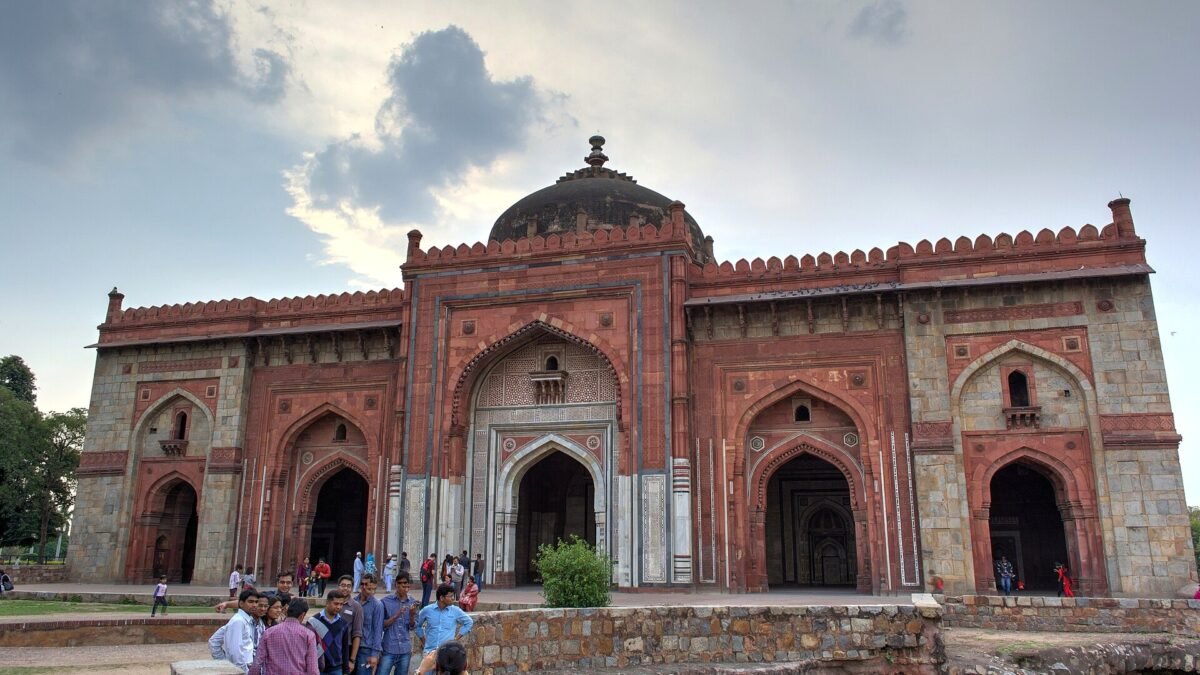
Pakistan’s climate change minister, Musadik Masood Malik, spent his final day in New Delhi refusing to be drawn into the two arguments that have defined India–Pakistan relations for the past nineteen months. Asked by reporters on Sunday about the Indus Waters Treaty and about terrorism, the visiting minister answered with the same polite deflection: he had not been invited to discuss either subject.
“When you invite me to discuss the Indus Water Treaty, we will certainly talk about it. You haven’t invited me to discuss the Indus Water Treaty at this moment,” Malik said, according to the Indo-Asian News Service (IANS), which reported his remarks from the sidelines of the Shanghai Cooperation Organisation’s first Civilisational Dialogue Forum in the Indian capital.
It was a striking change of tone from the same minister. In June, Malik had criticised India’s decision to place the 1960 Indus Waters Treaty in abeyance, warning that Pakistan would “cut off that hand” which attempted to take away its share of the river water, according to IANS. Five months later, standing on Indian soil at the end of a three-day multilateral forum, he would not repeat the threat, defend it, or withdraw it. He simply said the forum was not the place, and no invitation had been extended.
Malik, who is Pakistan’s Minister for Climate Change and Environmental Coordination and led his country’s delegation to the forum, was speaking to journalists on Sunday 22 November, the final day of the gathering at Purana Qila, the 16th-century Old Fort in New Delhi. His visit was already historic: it was the first by a Pakistani federal minister to India since the two countries fought a four-day war in May 2025, and the first ministerial visit since then foreign minister Bilawal Bhutto-Zardari travelled to Goa in May 2023 for a meeting of the Shanghai Cooperation Organisation’s Council of Foreign Ministers, according to IANS.
The questions put to him on Sunday went to the heart of the standoff. India placed the Indus Waters Treaty in abeyance with immediate effect after the attack in Pahalgam, in Indian-administered Kashmir, on 22 April 2025, in which 26 people, most of them tourists, were killed. New Delhi blamed Pakistan-based militants for the attack, a charge Islamabad denied, and said the treaty would remain in abeyance until Pakistan credibly and irrevocably gave up its support for cross-border terrorism, according to IANS. Two weeks later, on 7 May, India launched Operation Sindoor, striking what it described as terrorist infrastructure in Pakistan and Pakistan-administered Kashmir. Pakistan retaliated, and four days of missile and drone exchanges followed before a ceasefire was agreed.
Against that background, Malik’s refusal to engage on the treaty was the most watched moment of his visit. But it was not the only subject he sidestepped. Asked about bilateral issues more generally, he said he had not been invited for bilateral talks with India at all.
“I have not been called for bilateral talks even once. Once there is any formal movement on it, I will answer the questions related to it. Without a mechanism, how can we discuss bilateral issues?” he said, according to IANS.
He added that he would be willing to take part in discussions on specific issues if India extended a formal invitation. “When you invite me for a discussion on those specific issues, I shall be there. But first, you must extend that invitation. Tell me that you wish to engage in a bilateral dialogue; when you invite me for such a discussion, I will be present,” he said.
The remark he would not repeat
The June warning that Malik declined to revisit on Sunday had been one of the sharpest statements by a Pakistani minister since India suspended the treaty’s operation. At the time, Islamabad was reacting to a decision that struck at the foundation of the water-sharing arrangement between the two countries. The Indus Waters Treaty, signed in Karachi on 19 September 1960 by the Indian prime minister, Jawaharlal Nehru, and the Pakistani president, Ayub Khan, and brokered by the World Bank, divided the six rivers of the Indus system between the two countries. India was given the three eastern rivers — the Ravi, the Beas and the Sutlej — while Pakistan was given the three western rivers — the Indus, the Jhelum and the Chenab — with India permitted only limited use of the western rivers for purposes such as power generation and irrigation within strict limits. A Permanent Indus Commission, with a commissioner from each country, was set up to manage the arrangement, and the treaty survived the wars of 1965 and 1971 and the Kargil conflict of 1999.
For Pakistan, the treaty is not an abstraction. The Indus system waters the plains of Punjab and Sindh, where most of the country’s food is grown, and its rivers feed the canals on which Pakistani agriculture depends. That is why India’s decision to hold the treaty in abeyance — rather than formally withdrawing from it — was treated in Islamabad as a serious escalation, and why Malik’s June response was framed in the language of a red line.
On Sunday, however, the minister chose a different register entirely. He did not argue that the treaty remained in force. He did not say Pakistan would take the matter to the World Bank or to arbitration. He did not repeat the threat. Instead, he treated the question itself as misplaced, on the grounds that the forum he had come to attend was multilateral, not bilateral, and that nobody had invited him to negotiate.
The same approach governed his answers on Friday, when he first sidestepped questions about Pakistan’s action against terrorism. “I have come here on a multilateral forum and I want a good multilateral forum to be held,” he said, according to IANS. “These issues are very wide. You just saw some issues of Iran in our neighbourhood, many issues in Central Asia, many issues in Afghanistan.”
On Sunday, pressed again, he shifted from deflection to a proposal of his own. Any discussion of terrorism, he said, should be based on evidence, and the two countries should present their evidence to each other in a forum created for that purpose.
Terrorism: evidence first
“Any discussion on this matter must be based on evidence. My wish, given that the entire region has been engulfed by this, is that we address it collectively,” Malik said, according to Zee News, which reported his remarks with inputs from the news agency ANI.
“There is only one way to resolve this: we must transparently present all the evidence, all the facts, to one another. We should create a forum where this evidence can be brought to light, and every issue can be addressed based on that foundation,” he said.
He added that Pakistan had a greater stake than anyone in confronting terrorism, pointing to the toll it has taken inside Pakistan itself. “If anyone has a stake in addressing terrorism, it is us, more than anyone else. That is why we want everything to be brought to light based on evidence, so that we can all work together to confront this terrorism and bring it to an end,” he said.
He also said Pakistan had repeatedly proposed presenting evidence through both bilateral and multilateral forums. “We have stated on many occasions, in various forums, that evidence can be presented bilaterally; we have also suggested that this could be handled multilaterally, you bring your evidence, and we will bring ours,” he said, according to Zee News.
According to the Daily Jagran, he added that thousands of Pakistanis had themselves fallen victim to extremism and terrorism, and that his country was focused on protecting its own citizens. “I told you yesterday — though I didn’t come here specifically to discuss these issues — that thousands of our people have fallen victim to extremism and terrorism, and we are focused on protecting our own citizens,” the newspaper quoted him as saying.
He also called for dialogue aimed at a lasting solution rather than provocation. “If you are seeking a lasting solution to the issue, rather than merely looking to provoke, then that is how we should proceed,” he said, according to Zee News.
The proposal — an evidence-sharing forum — is not new. Pakistan has made similar offers before, and India has consistently rejected the premise that the two sides’ claims about terrorism are equivalent or that the issue should be settled by exchanging dossiers. India has maintained that cross-border terrorism must be addressed and has repeatedly called on Pakistan to act against terrorist groups operating from its territory, according to Zee News. New Delhi has also consistently raised the issue at international forums and has argued that dialogue cannot proceed without action against cross-border terror networks.
That position was restated on Friday by the Indian foreign ministry. Responding to questions about Malik’s visit and his earlier comments, the ministry’s spokesperson, Randhir Jaiswal, said New Delhi had already communicated its position on the treaty. “As far as the IWT is concerned, we have made our position very clear, and that is where it remains. There is absolutely no change,” he said, according to the news outlet Fact.
A visit watched closely on both sides
Malik’s three days in New Delhi were watched closely in both capitals, and not only for what he said. His presence alone was a political event. The Shanghai Cooperation Organisation’s Civilisational Dialogue Forum, held from 20 to 22 November, was a cultural gathering, not a summit, and no formal talks between the two governments were on its agenda. But in a relationship that has had almost no ministerial contact since the May 2025 fighting, even a modest appearance carried weight, and both governments knew it.
On Saturday, addressing the forum, Malik turned his speech to the subject he knows best. Climate change, he said, had become a major threat to civilisation and to historical heritage. “The enemy of this civilization is climate change,” he told delegates, recalling how Pakistan’s devastating floods of 2022 swept through Sindh and damaged Mohenjo-daro, the 4,500-year-old city of the Indus Valley civilisation. A wall that no invader had brought down in four and a half millennia, he said, had been brought down by climate change.
The speech was well received in the hall. Outside it, the politics were sharper. India’s ruling Bharatiya Janata Party shared a video of Malik applauding at the Purana Qila event and described it as “New India’s response”, according to the Daily Jagran — a jibe aimed at the contrast between the minister’s June threats and his courteous applause in New Delhi. During his address to the forum, Malik also switched from English to Urdu, telling the audience that English felt strange in the setting, according to the Daily Jagran.
The episode captured the double bind of the visit. In Pakistan, Malik’s June language had played to a domestic audience that wanted a forceful answer to India’s move on the treaty. In New Delhi, the same language would have turned a cultural forum into a confrontation, and the minister chose instead to say nothing that could be quoted as a climbdown or a threat. The cost of that choice was that he left New Delhi without having said anything substantive about the two issues that matter most between the two countries — and without any indication that either side intends to reopen them.
Why the treaty matters
The Indus Waters Treaty has long been described as one of the most durable agreements between India and Pakistan, precisely because it survived every crisis the two countries went through. Negotiated over nearly a decade under World Bank auspices, it was designed to settle a dispute that began at Partition, when the new border cut across the canal system of the Indus basin and left Pakistan downstream of headworks controlled by India.
The settlement it produced was a division of rivers rather than a sharing of water. India received the eastern rivers, which flow largely through Indian territory, and Pakistan received the western rivers, which carry the bulk of the system’s water. India was allowed to build run-of-the-river hydroelectric projects on the western rivers and to use limited amounts of their water for irrigation and domestic purposes, but it was not permitted to store or divert their flows in ways that would harm Pakistan’s use. Disputes were to be settled first by the Permanent Indus Commission, then by a neutral expert, and finally by a court of arbitration.
That structure held through wars and crises for more than six decades, which is why India’s decision in April 2025 to place the treaty in abeyance was so significant. Abeyance is not the same as withdrawal: India has not formally denounced the treaty, and the legal consequences of holding it in abeyance remain contested. But the practical effect, as Pakistan has presented it, is that the mechanism which guaranteed its water supply has been suspended at a moment when the two countries have no other channel for discussing the rivers at all.
The treaty’s suspension also sits alongside a wider freeze. Since the May 2025 war, the two countries have had virtually no direct political contact at ministerial level. Trade remains suspended, sporting contact is minimal, and the diplomatic presence in each other’s capitals is reduced. The Shanghai Cooperation Organisation forum was one of the few multilateral tables at which both countries still sit, and India’s decision to invite all member states to the forum, announced on 28 October, created the opening for Malik’s visit. Neither government, however, treated the opening as a chance to talk. India extended no invitation for bilateral discussions, and Pakistan’s minister made clear he had not sought one.
Analysis: the art of saying nothing, politely
There is a temptation to read Malik’s performance in New Delhi as evasive, and in one sense it was. A minister who had warned in June that Pakistan would “cut off that hand” stood in the Indian capital five months later and declined to say the words again, or to explain them, or to take them back. Reporters who pressed him were told, in effect, to take the matter up with someone else, at some other time, through some other channel. It is not hard to see why the exchange was reported in India as a dodge, and why the ruling party treated the footage of his applause as a small victory.
But the evasion was also deliberate, and it is worth asking what it achieved. Malik is Pakistan’s climate change minister, not its foreign minister. The Indus Waters Treaty and counter-terrorism are outside his portfolio, and he had a genuine procedural point: he had travelled to New Delhi for a multilateral cultural forum, not to negotiate, and he had no mandate to do so. Answering the treaty questions on Indian soil would have forced him into one of two traps. Repeating the June threat would have turned a cultural visit into a confrontation and handed New Delhi a fresh provocation. Disowning it would have been read in Islamabad as a retreat under pressure. The “not invited” formulation allowed him to do neither, and to keep the visit intact.
There is also a second, quieter logic to his answers. By insisting that any discussion of terrorism must be based on evidence, and by proposing a forum in which both sides present their evidence, Malik was restating Pakistan’s long-standing position that the two countries’ accusations should be tested against proof rather than asserted as fact. It is a position India has consistently rejected, on the grounds that the evidence of cross-border terrorism is already established and that what is missing is action, not argument. But as a piece of diplomacy, the proposal served its purpose in New Delhi: it let the minister sound reasonable and constructive while committing Pakistan to nothing and conceding nothing.
The same cannot be said of the visit as a whole. For all its historic firsts, the trip produced no meeting, no statement, no mechanism and no follow-up. The Indian foreign ministry’s message on Friday — no change on the treaty, no bilateral talks — was delivered before Malik had even finished his visit, and nothing he said on Sunday altered it. The Bharatiya Janata Party’s video of his applause made the domestic political point in Delhi: the minister who had threatened India in June was now clapping politely in the Old Fort. In Islamabad, meanwhile, the visit will be judged by a different standard: whether a minister could travel to India, speak about climate change, and return without incident. By that standard it succeeded. By the standard of the issues that actually divide the two countries, it changed nothing.
That is the paradox of the Shanghai Cooperation Organisation forum as a venue. It is one of the few tables at which India and Pakistan still sit together, and it produced the first ministerial visit in more than three years. But a cultural forum is designed to avoid the hard questions, and Malik’s visit showed how effectively it does so. The treaty was not discussed because the forum was not the place for it. Bilateral talks were not held because no invitation was issued. And the two governments left New Delhi exactly where they had been when the forum began: the treaty in abeyance, the accusations about terrorism unanswered, and no channel open for either subject.
Whether that is a failure or a success depends on what the visit was for. If its purpose was to test whether the two countries can be in the same room without a crisis, it passed. If its purpose was to begin unwinding the freeze that followed the May 2025 war, it did not try. The most generous reading is that a first visit after a war is valuable precisely because it is uneventful — that a minister travelling, speaking and returning home without incident is itself a small step, and that the hard conversations can wait for a table that is actually set for them. The harsher reading is that both governments used a cultural forum to perform normalcy while leaving the substance untouched, and that Malik’s careful silence was the price of the performance.
Either way, the treaty question will not stay unanswered for long. The Indus system does not pause for diplomacy, and the longer the treaty remains in abeyance, the more the question of its legal status and its practical operation will press on both governments. Pakistan will have to decide whether to pursue the matter through the treaty’s own dispute mechanisms, through the World Bank, or through other international channels, and India will have to decide whether abeyance is a temporary pressure tactic or a permanent new position. Neither decision was taken in New Delhi this weekend. Both were postponed, politely, by a minister who had not been invited to discuss them.
What to watch next
Several things will show whether Malik’s visit was a one-off appearance or the start of something. The first is whether any follow-up contact takes place between the two governments, in any format, in the coming weeks — even an informal meeting on the margins of another multilateral gathering would be a signal. The second is whether Pakistan raises the treaty’s status through formal channels, including the Permanent Indus Commission or the World Bank, and how India responds. The third is the domestic reaction in Pakistan, where the contrast between the minister’s June language and his November restraint will be noticed, and where the government will have to explain why a visit that produced no movement on the treaty was worth making.
The fourth is the Shanghai Cooperation Organisation itself. The forum in New Delhi was the organisation’s first Civilisational Dialogue Forum, and its value as a meeting place for India and Pakistan will be tested by whether it leads to anything more than applause. If the two countries can use the organisation’s gatherings to keep a door open, the forum will have served a purpose beyond culture. If not, Malik’s visit will be remembered as a curiosity: the first Pakistani minister in India since a war, who came, spoke about the climate, and went home without discussing the water.
For now, the position on both sides is unchanged. India says its stance on the treaty is exactly where it was, and that dialogue depends on action against terrorism. Pakistan says it is ready to talk, and ready to present evidence, but only when it is invited to do so. And the invitation, as Malik pointed out more than once in New Delhi, has not yet been extended.
Sources
Madhyamam — No invitation for bilateral talks with India, says Pakistan minister at SCO dialogue

About the Author — Abdul Mannan
Related Articles

Pakistan’s Slow Internet to Last Until 6 December as Repairs Continue on Faulty SMW5 Undersea Cable
Transworld Associates says repairs to the faulty SEA-ME-WE 5 submarine cable should finish by 6 December, with slower…
Zardari’s Five Ordinances Strip Khyber Pakhtunkhwa Lawmakers of Key Privileges as Governor’s Rule Deepens
President Asif Ali Zardari has promulgated five ordinances for Khyber Pakhtunkhwa, stripping provincial lawmakers of most of their…

Musadik Malik in Delhi: First Pakistani Minister in India Since the May 2025 War Calls Climate Change the ‘Enemy of Civilisation’
Pakistan's climate minister Musadik Malik has arrived in New Delhi for the SCO Civilisational Dialogue Forum, the first…