
Zardari’s Five Ordinances Strip Khyber Pakhtunkhwa Lawmakers of Key Privileges as Governor’s Rule Deepens

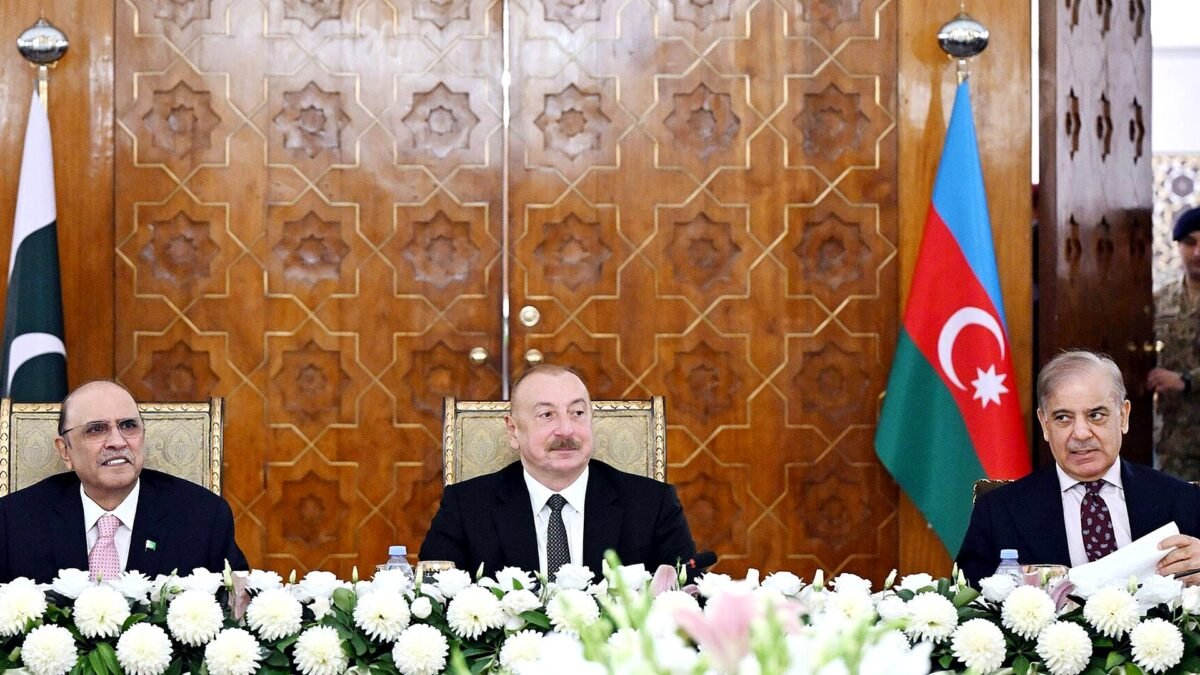
President Asif Ali Zardari has promulgated five ordinances for Khyber Pakhtunkhwa that strip the province’s elected lawmakers of most of their legal protections, including their immunity from preventive detention, in the most far-reaching rewriting of the province’s political order since emergency rule was imposed six weeks ago.
According to Dawn, the President’s office confirmed on Saturday that the five ordinances had been promulgated, and four of them had already been published in the Official Gazette on 19 November. The centrepiece is an amendment to the Khyber Pakhtunkhwa Provincial Assembly (Powers, Immunities and Privileges) Act 2026, which deletes 21 of the law’s 40 sections and removes the entire schedule of offences relating to breaches of parliamentary privilege.
The move lands in a province where the elected government has not functioned since 11 October, when an emergency was proclaimed and governor’s rule imposed under Articles 232 and 234 of the Constitution. Chief Minister Sohail Afridi, Assembly Speaker Babar Saleem Swati and other lawmakers have been in preventive detention ever since, according to police, and Governor Faisal Karim Kundi has said they were placed under house arrest. The ordinances now remove, after the event, the very legal shields that would have protected those lawmakers from being detained in the first place.
That sequence matters. The detentions came first; the law that forbade them has now been rewritten. Whether that is coincidence or design is the question the province’s politics will argue over in the weeks ahead, and it is a question the courts are already being asked to answer.
What the five ordinances do
The five measures, as set out in the President’s office statement reported by Dawn, are the Khyber Pakhtunkhwa Societies (Registration) (Amendment) Ordinance 2026; two Khyber Pakhtunkhwa Special Initiative Ordinances, one covering 12 designated districts and one covering the remaining districts; the Khyber Pakhtunkhwa Provincial Assembly (Powers, Immunities and Privileges) Ordinance 2026; and the Khyber Pakhtunkhwa Speaker and Deputy Speaker (Salaries, Allowances and Privileges) Ordinance 2026.
The privileges ordinance is the most consequential. It omits 21 sections of the 2026 Act, including section 5, which dealt with the attendance of a detained or arrested member; section 6, which protected members from civil or criminal action; section 10, which barred the preventive detention of a member altogether; and section 11, which required the Speaker’s permission before a member could be arrested or detained. Also deleted are the Assembly’s powers to summon individuals and to arrest, the provisions making a breach of privilege an offence, and the rules for taking cognisance of such offences. The schedule listing offences connected with violations of the privileges of the Assembly, its members and committees has been removed as well.
The Global Times, reporting the same measures, described the change as a sweeping overhaul of the province’s administrative and legislative framework, and noted that the amendments had effectively dismantled significant statutory protections previously available to elected representatives.
The two special initiative ordinances create a parallel machinery for running development in the province. Each establishes an executive committee with wide-ranging powers over special initiatives, which the ordinances define broadly to include any work, development scheme, rehabilitation or reconstruction, procurement of goods and human resources, and consulting services involving public funds, as determined by the committee itself.
For the 12 designated districts, the committee’s chairman, vice chairman and members are nominated by the prime minister, with the Area Development Secretariat serving as its secretariat. For the remaining districts, the governor nominates the members and the planning and development department acts as secretariat. The committees can identify initiatives as urgent or emergent, scrutinise and approve proposals and PC-Is, grant anticipatory approval, identify and recommend the executing agency — including military organisations and formations — monitor progress, including through third-party evaluation, and constitute further committees. Their decisions are taken by majority vote, with the chairman holding a casting vote, and the chairman may co-opt technical experts.
The ordinances give these committees overriding effect over other laws, including the Khyber Pakhtunkhwa Public Procurement Regulatory Authority Act 2012 and the Public Private Partnership Act 2020, and they bar civil courts from exercising jurisdiction over acts done, orders passed or proceedings conducted under them.
The fifth element of the package is quieter but telling. The amendment to the Societies Registration Act inserts a new sub-section providing that religious seminaries registered with the Directorate General of Religious Education, under the Ministry of Federal Education and Professional Training, need not register separately under the Act. The remaining ordinance deals with the salaries, allowances and privileges of the Speaker and Deputy Speaker.
The law that was already controversial
The privileges law now being gutted was itself the subject of a public storm only months ago. The Khyber Pakhtunkhwa Provincial Assembly (Powers, Immunities and Privileges) Act 2026 was passed in April and assented to on 7 May 2026. It granted lawmakers official passports for themselves and their spouses for life, free arms licences, blanket immunity from preventive detention, and made the Speaker’s permission mandatory before any member could be arrested on a criminal charge. It also contained provisions affecting journalists covering the Assembly, including powers to restrict coverage and penalties for reports deemed distorted.
The backlash was swift. After days of public and media criticism, Chief Minister Afridi ordered a review of the law, and the provincial information minister announced that the disputed provisions would be withdrawn and the law restored in line with the 1988 Act. The Assembly subsequently amended the law, restricting official passports to the parliamentary tenure, cutting the number of lifetime non-prohibited bore arms licences to four, and reducing the enhanced fines and punishments for journalists.
That history is important for understanding what has happened now. The same protections that the province’s own elected government had already begun to roll back under public pressure have now been removed wholesale, not by the Assembly that enacted them but by presidential ordinance, at a moment when that Assembly’s Speaker is himself in detention and the chief minister who ordered the review is himself detained. The instrument has changed, the forum has changed, and the political meaning has changed with them.
How Khyber Pakhtunkhwa reached this point
The emergency was imposed on 11 October on the federal cabinet’s recommendation, with the federal government accusing the Pakistan Tehreek-e-Insaf provincial administration of failing to tackle rising militancy. Both houses of parliament endorsed the step shortly afterwards, amid walkouts and protests by PTI lawmakers. An Area Representative and Development Council was formed to oversee the 12 districts deemed to face intense security challenges, including the merged former tribal districts, and federal forces were deployed in the province.
On 4 November, the federal cabinet transferred the chief minister’s powers to Governor Kundi through a federal government order, authorising him to exercise the chief minister’s powers under the Constitution, provincial laws and the provincial rules of business. An 11-member advisory council was set up to assist him, and the governor was required to send monthly reports to the federal government on the use of those powers. Prime Minister Shehbaz Sharif also announced a Rs160 billion development package for the province.
The PTI has challenged the emergency and governor’s rule in the courts. The party filed an amended petition in the Peshawar High Court, arguing that the first proviso to Article 232 of the Constitution requires a resolution of the provincial assembly before an emergency can be imposed in a province, and that no such resolution was passed. The Federal Constitutional Court, which had issued an interim order on 5 November, amended that order and allowed the Peshawar High Court to hear writ petitions under Article 199, except for cases concerning the imposition of the emergency itself, governor’s rule and detentions under the Maintenance of Public Order Ordinance. PTI chairman Barrister Gohar Ali Khan, who attended the hearing, said the party was disappointed and argued that keeping people in jail while depriving them of access to a judicial forum violated fundamental rights.
The Human Rights Commission of Pakistan has demanded an end to the emergency and governor’s rule and the immediate release of the chief executive and all others it described as arbitrarily detained, warning that counter-terrorism measures must remain within the law and not become a pretext for collective punishment or the suppression of fundamental rights.
The draft ordinance that became this package was itself the subject of reporting a week before its promulgation. According to Aaj News and Express News, the federal government sent the draft to the president on the prime minister’s advice, and the National Assembly session was rescheduled because an ordinance cannot be issued once a session of the Assembly has been summoned. Earlier in November, Governor Kundi cancelled all gold mining leases in the province, alleging that illegal mining was funding terrorism, and Afridi petitioned the Federal Constitutional Court for the release of 14 lawmakers.
Analysis: the scaffolding of a new provincial order
Read together, the five ordinances do more than settle a quarrel about lawmakers’ perks. They build the legal scaffolding for a different way of governing Khyber Pakhtunkhwa, one in which the elected Assembly is weaker, the governor’s office is stronger, and development spending in the most sensitive districts is controlled by committees appointed from Islamabad rather than by the province’s own elected representatives.
The privileges ordinance is the most symbolically loaded, because it removes protections that exist in every parliamentary system for a reason. Immunity from preventive detention and the requirement of the Speaker’s permission before arrest are not luxuries. They are the mechanisms by which a legislature protects its members from being picked off by an executive that finds them inconvenient. Remove them, and a member of the Assembly can be detained, and the Assembly itself has no legal lever left to demand their attendance or to punish the breach. That is not a technical adjustment. It is a redistribution of power between the executive and the legislature, carried out by ordinance while the legislature’s own presiding officer is in detention and unable to object.
The special initiative ordinances are the more practically significant half of the package. They create committees that can approve development schemes, grant anticipatory approval, choose executing agencies including military formations, and override procurement and public-private partnership laws, all while civil courts are barred from questioning their acts. In the 12 designated districts, which include the former tribal districts, the committee is nominated by the prime minister. This is a centralisation of development authority in a province whose merger with the former tribal areas was supposed, eight years ago, to bring those districts into the mainstream of provincial democratic governance. Instead, the districts are now to be run through a federally nominated committee with sweeping powers and no judicial oversight.
There is a case the federal government will make, and it is not a frivolous one. Khyber Pakhtunkhwa faces a genuine and worsening security crisis, with militant attacks rising and the provincial administration, in the federal government’s view, unable to cope. Development in the merged districts has stalled for years, and the argument for a streamlined, federally backed delivery mechanism is easy to understand. The Rs160 billion package announced by the prime minister needs an administrative vehicle, and the governor’s office, backed by these committees, is the vehicle the federal government has chosen.
But the method matters as much as the motive, and the method here is the problem. Ordinances are meant to be emergency instruments for when parliament is not in session, not a substitute for legislation on matters as fundamental as the powers of a provincial assembly. The National Assembly session was rescheduled precisely so that the ordinances could be issued, which is a lawful manoeuvre but a revealing one: the government chose the path that avoided parliamentary debate. And the privileges ordinance was promulgated after the detentions it now retrospectively legitimises, which invites the obvious question of whether the law was changed to fit the facts on the ground rather than the other way round.
There is also the question of who benefits. The Pakistan Peoples Party, whose president promulgated these ordinances, governs Sindh and sits in the federal coalition, and its chairman has spent the past week warning against the division of Sindh and defending the rights of provinces. The ordinances do the opposite of what that rhetoric promises in Khyber Pakhtunkhwa: they concentrate power in the centre and weaken a provincial assembly. The contradiction will not go unnoticed by the PPP’s own critics, and it will be noticed most sharply in the province itself, where the party that won the Assembly now finds its members stripped of their protections by a president from another party.
The courts are the likeliest arena for what happens next. The PTI’s challenge to the emergency is already before the Peshawar High Court and the Federal Constitutional Court, and the ordinances will almost certainly be added to that litigation. The courts have already shown caution, allowing the High Court to hear most petitions while reserving the core questions of the emergency and governor’s rule. Whether the privileges ordinance survives judicial scrutiny will depend on whether the courts treat the removal of parliamentary protections as a legitimate exercise of ordinance-making power or as an encroachment on the constitutional scheme of provincial autonomy.
What is certain is that the ordinances change the facts on the ground even before any court rules. Lawmakers who were already detained now have no statutory shield to invoke. Development funds in the merged districts will now flow through federally nominated committees. And the Assembly, when it eventually reconvenes, will return to a chamber whose powers have been substantially rewritten without its consent. That is a difficult starting point for any restoration of normal provincial politics, and it is why this package, issued on a Saturday and gazetted without debate, deserves to be read as one of the most consequential political acts of the year in Pakistan.
What to watch next
The first test will be the reaction of the PTI and of the detained lawmakers themselves, none of whom had publicly responded to the ordinances at the time of writing. The second will be the courts, where the existing challenges to the emergency now have a new and sharper target. The third will be the parliament, before which the ordinances must eventually be laid, and where the PPP’s own members will have to decide whether they can defend in Islamabad a measure that weakens a provincial assembly in Peshawar.
Watch also for the practical consequences in the merged districts. If the new executive committees move quickly to approve schemes and appoint executing agencies, the federal government will point to delivery as vindication. If they stall, or if their decisions are challenged, the ordinances will look like what their critics already call them: a legal facade for the indefinite suspension of provincial democracy. And watch the calendar. Ordinances lapse unless approved by parliament, and the government’s willingness to put this package to a vote will be the clearest signal of whether it regards the new order in Khyber Pakhtunkhwa as a temporary emergency measure or a permanent settlement.
Sources
- The Global Times — Presidential Ordinances Strip KP Lawmakers of Key Privileges, Empower Committees Over Development Projects
- Burak Digital — Presidential Ordinances Strip KP MPAs of Key Privileges
- Khyber Pakhtunkhwa Code — The Khyber Pakhtunkhwa Provincial Assembly (Powers, Immunities and Privileges) Act, 2026 (official text)
- Skardu Times — Federal government sends draft ordinance widening KP governor’s powers

About the Author — Abdul Mannan
Related Articles

Musadik Malik in Delhi: First Pakistani Minister in India Since the May 2025 War Calls Climate Change the ‘Enemy of Civilisation’
Pakistan's climate minister Musadik Malik has arrived in New Delhi for the SCO Civilisational Dialogue Forum, the first…
Pakistan’s Election Body Still in the Dark as 14-Province Referendum Plan Takes Shape
The Election Commission says it has not been contacted about a referendum on new provinces — even as…
Bilawal Wants Shehbaz Sharif to Become the First Pakistani PM to Serve a Full Five-Year Term
Bilawal Bhutto-Zardari says he wants Shehbaz Sharif to become the first Pakistani prime minister to complete a full…