
Trump Hosts Third Meme Coin Gala as $TRUMP Crashes 99% and a $518 Stake Buys a Seat

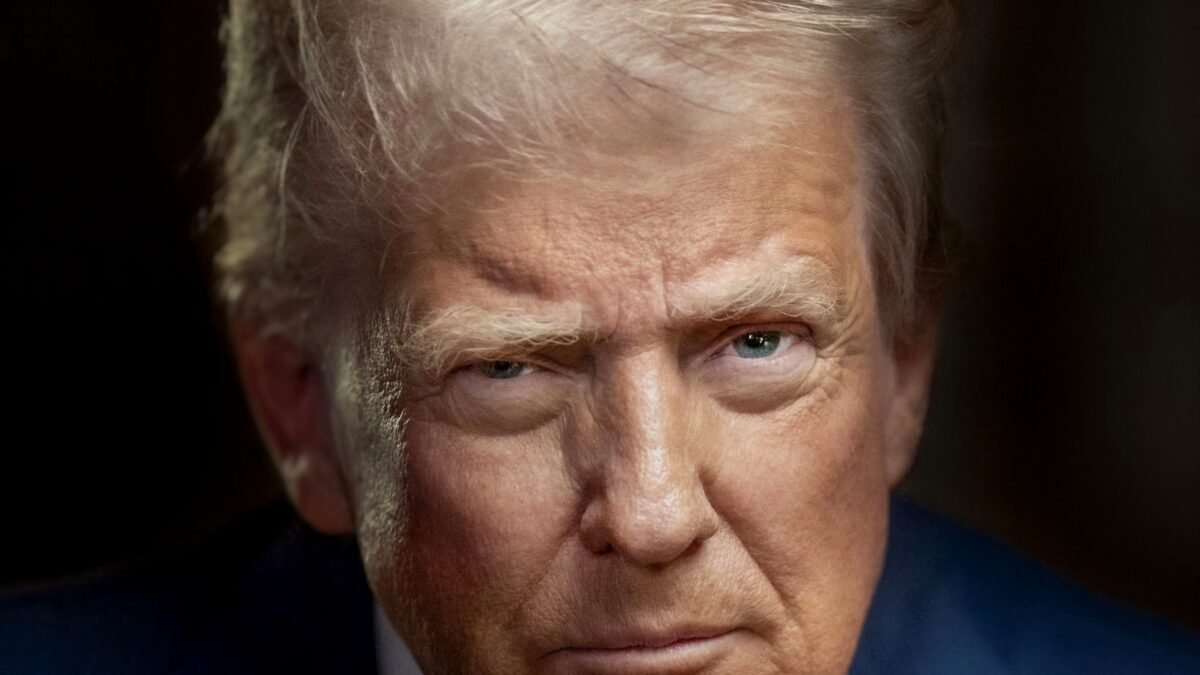
President Donald Trump hosted his third gala dinner for the biggest holders of his $TRUMP meme coin on Sunday night, at his golf club in Sterling, Virginia, even as the token traded near its lowest price since it was launched and the cost of a seat at the table had collapsed by 99 per cent.
The dinner, held at the Trump National Golf Club outside Washington, was reserved for the top 185 holders of the cryptocurrency, according to the event’s organisers. The top 29 holders were promised a special VIP reception with the president, and the top four were promised an 18-karat gold Trump watch. It was the third time Mr Trump has held such an event for the coin’s biggest buyers since the token launched in January 2025, according to CNN.
The contrast with the first dinner, held in May 2025, could hardly have been starker. Then, buyers spent an estimated $148 million on the coin chasing 220 seats, with the top 25 alone spending more than $111 million, according to Reuters. This time, the final public leaderboard listed just 130 wallets holding 9.79 million TRUMP tokens, worth about $9.1 million when the contest closed on 16 November, according to an analysis of Solana blockchain data by Public Citizen, a nonprofit consumer advocacy group. That is about 94 per cent below the money on the first dinner’s board.
One buyer, going by the name Michel, landed spot number 179 after picking up $518 worth of the coin across October and November, according to a Washington Post analysis cited by TheStreet. The coins were already worth only about $272 by the time of the Post’s report. Getting into the door at the first dinner had required at least $55,000 worth of the coin, according to the Post. The wallet at the bottom of this year’s board, named JerryW, held 9.71 TRUMP, worth about $9 when the board locked.
The token itself set a record at the worst possible moment. TRUMP fell to an all-time low of $0.8051 on 21 November, the day before the dinner, and traded near $0.88 at the time of the reports, down 98.8 per cent from the $73.43 peak it hit two days after its launch, according to CoinGecko. The coin has about 224,000 holders, according to CoinMarketCap, which tracks live cryptocurrency data. At its peak in January 2025, the token briefly commanded a paper valuation exceeding $14 billion.
A smaller room, a quieter crowd
Organisers extended registration by four days and still could not fill the list, the Washington Post found. More than 5,000 wallets held enough of the coin to qualify but never signed up. The contest ranked wallets by their average holdings across a scoring window that ran from 30 September to 16 November, according to the event’s website.
The top seat told the same story as the rest of the board. The number one wallet, named FastX, holds about $1.65 million in the coin, 91 per cent less than the $18.5 million stack that won the first dinner. FastX, a Singapore-linked trading platform, said it would show up “as an independent holder” carrying 10 questions its community picked in a vote, according to The Block. The company says it is not affiliated with Mr Trump or the TRUMP project.
The guest list itself was private, but the names advertised on the event’s website included boxer Floyd Mayweather, “Shark Tank” investor Kevin O’Leary, former NBA player Tristan Thompson and mentalist Lior Suchard. Mr O’Leary was among the featured speakers, and Mr Trump spoke for about 40 minutes, according to the Washington Post’s account of the evening. Inside the club, a dancer in a Trump mask greeted guests, who dined on fall harvest salad and filet mignon.
One man who did not attend was the biggest winner of the first dinner. Justin Sun, the Chinese-born crypto billionaire who founded Tron, did not come to Sunday’s dinner, the Wall Street Journal reported. Mr Sun won the first dinner’s leaderboard and later fell out with the Trump family’s separate crypto venture, World Liberty Financial, suing it in April over frozen tokens. World Liberty has called his claims “entirely meritless”. In March, the Securities and Exchange Commission settled its 2023 fraud case against Mr Sun and his companies. One of his firms agreed to pay a $10 million penalty without admitting or denying wrongdoing, and the agency dismissed all remaining claims, according to the SEC’s filing.
Morten Christensen, who runs the crypto giveaways site Airdrop Alert, made the VIP reception by buying 75,000 TRUMP at an average price of $1.70 and hedging the position with an offsetting bet against the coin in futures. The trade netted him about $6, he told the Wall Street Journal. Running the same play at the first two events cost him about $1,200 and $500 respectively, he told Bloomberg, and he also used it to land a seat for his sister. It was his third $TRUMP meme-coin-affiliated event.
The event page carried one caveat in bold: “There will be no private meetings with The President.” The dinner’s website also states that the coin is “not political and has nothing to do with any political campaign or any political office or governmental agency.”
Who was in the room
The blockchain data analysed by Public Citizen also raised questions about who, exactly, the president was dining with. Of the 130 wallets on the board, 66 took delivery of their coins straight from trading platforms that turn away American customers, the group found. Binance addresses funded 52 of them, Bybit 12 and BloFin two, with four wallets funded by both Binance and Bybit. Those 66 wallets hold $4 million in TRUMP, 44 per cent of the coins on the board.
Only 29 wallets trace solely to platforms that take American customers, such as Coinbase and Kraken, and they hold about 3 per cent of the board. Binance has been shut out of the US market since 2023, when it settled Treasury Department cases over money-laundering controls and sanctions breaches.
Wallet-to-wallet movements also hinted that some guests hold more than one seat. Four groups look set to control nine of the 29 VIP spots, and one owner may be behind 14 more wallets, Public Citizen found, though the transfers on their own cannot prove shared ownership.
The foreign flavour of the guest list is not new. At the first dinner, the top holder was Mr Sun, a Chinese-born billionaire, and the event drew complaints that it amounted to selling access to the president to foreign buyers. The White House has consistently rejected that characterisation. “The President’s attendance at a privately organized event does not make it a White House event or government function,” spokesperson Davis Ingle told Bloomberg.
What the coin made Mr Trump, and what it cost buyers
Licensing fees from the meme coin brought Mr Trump $635 million last year, according to his latest financial disclosure. The venture pairs Fight Fight Fight LLC, a company tied to longtime Trump associate Bill Zanker, with Mr Trump’s CIC Digital. The two companies held back 80 per cent of the supply and take in revenue from trading, so the proceeds cost no capital to produce, Public Citizen noted.
Retail buyers sit on the other side of that ledger. Analytics firm Nansen, in research commissioned by Public Citizen, counted about 1.6 million wallets that bought TRUMP on Solana decentralised exchanges. By August, roughly 1 million of them were sitting on $3.2 billion in combined losses. The top 1 per cent of winning wallets captured about 80 per cent of all gains.
The coin was launched in January 2025, just days before Mr Trump’s second inauguration, and soared to about $75 within two days. It has fallen almost without interruption since. Trading interest faded as well. Over the two weeks after organisers announced this gala, TRUMP’s trading volume dropped about 35 per cent and its price slipped about 9 per cent, according to Kaiko data cited by Bloomberg. Announcements of the first two events pushed volume to four to eight times its earlier levels, according to The Block.
Mr Trump’s wife has her own token. The $MELANIA coin, promoted by the first lady, peaked above $8 but now trades at around 4 cents, according to the Wall Street Journal.
Speaking to attendees on Sunday, Mr Trump expressed support for proposed legislation around cryptocurrency, known as the CLARITY Act, and said he believes there will be bipartisan support for it. “In fact, I think we’re going to have a lot of bipartisan support for everything because I’ll be the veto king of the world,” he added, according to CNN.
He also defended his crypto activities in his own terms. “I’m doing it for the United States … If we don’t do it, China’s going to do it,” Mr Trump told attendees at his golf club, according to reports cited by Reuters. During an interview on CBS’s “60 Minutes” earlier this month, Mr Trump defended the fact that his net worth has gone up by $3 billion since the start of his second term, largely due to cryptocurrency, comparing his earnings to those of previous presidents. “Well, but they own something, whatever crypto was at the time,” the president said. “You know, there’s crypto and before that there was oil …”
The criticism, and what comes next in Washington
The Trump family’s rapidly expanding crypto empire has been a subject of concern for Democrats, who have alleged that the president is using his office for financial gain. The president attended a similar gala last May, which his critics called a textbook pay-to-play venture.
On Sunday, Senator Richard Blumenthal, a ranking member of the Senate Judiciary Committee who last year sponsored a resolution condemning the meme coin venture, heaped fresh criticism on the operation. “Trump is clearly more focused on profiting from his pump-and-dump meme coin operation than addressing Americans’ soaring cost of living crisis,” Mr Blumenthal said in a statement. “He has put a ‘For Sale’ sign on the White House through the $TRUMP coin and other crypto dealings. Countless Americans have likely been deceived by an apparent pump-and-dump scheme that benefited a privileged set of insiders and cost ordinary investors billions of their hard-earned money.”
Donald Sherman, president of Citizens for Responsibility and Ethics in Washington, or CREW, a liberal-leaning watchdog group, said the sweeping Republican midterm losses should serve as “a clear mandate” to the president and Congress that corruption is a top concern. “Donald Trump’s memecoin dinner is the clearest evidence that he cares more about lining his pockets and giving access to his personal investors than addressing the problems facing the American public,” Mr Sherman told CNN. “Congress needs to ensure oversight of and accountability for the president.”
Democrats who won both chambers of Congress in the 3 November midterms have pledged to investigate the president’s crypto ventures. Nine senators led by Senator Adam Schiff of California pressed the White House last month to publish the guest list for Sunday’s dinner and answer questions about the president’s profits from the coin, according to NBC News. Last month, several Democrats also sent a letter to the White House pushing for more details on the first meme coin gala.
The venture is nonetheless likely to be among a list of targets for investigation by Democrats when they gain control of Congress in January, according to CNN. The new House majority, which will be led by Speaker-designate Hakeem Jeffries, has already signalled that oversight of the Trump family’s business dealings will be a priority, and the party’s investigators have been sending preservation letters to the administration for weeks.
Regulators have largely stepped back. Soon after the coin launched, enforcement staff at the Commodity Futures Trading Commission began looking into possible fraud around it, then set the inquiry aside after deciding the commission would never sign off on subpoenas, according to the New York Times. The probe ended before reaching any conclusion on whether wrongdoing occurred. SEC staff said in February 2025 that meme coins are “akin to collectibles” and generally not securities, leaving buyers without the protection of federal securities laws, according to the agency’s statement.
The CLARITY Act, the bill that would set clearer rules for digital assets, failed a 49-50 Senate vote in September, while Republicans still controlled the chamber. Mr Trump’s endorsement on Sunday may give it new life, but the Democrats who take power in January have shown little appetite for handing the president a legislative win on an issue tied so closely to his family’s finances.
Analysis: a gala that tells the story of the Trump crypto economy
The most revealing number from Sunday night is not the price of the coin. It is $518. That is what it cost one buyer to sit in the same room as the president of the United States, at an event that 18 months ago demanded at least $55,000. In the space of a year and a half, the price of access to Donald Trump through his meme coin has fallen by 99 per cent, in almost exact proportion to the fall in the coin itself.
That symmetry is the story. The $TRUMP coin was never a business. It has no underlying asset, no revenue stream and no product, as TheStreet put it bluntly: a token “with no underlying business or asset behind it”. Its value was always a bet on proximity to power — on the idea that owning the president’s coin might buy a dinner, a photograph, a conversation. When the coin traded at $73, that bet looked expensive. At $0.88, it looks cheap. But the bet itself has not changed, and neither has the question it raises: should the president of the United States be selling dinner seats to the highest bidders, even when the bidding has collapsed?
The White House answer is that the dinner was a private event, organised by private companies, and that the president’s attendance does not make it a government function. That is true in a narrow legal sense. But it misses the point the critics are making, which is not about the legal status of the dinner but about the economics of it. The two companies behind the coin held back 80 per cent of the supply and collect revenue from trading. The president’s family has made at least $635 million from the venture, according to his financial disclosure. Meanwhile, about a million ordinary buyers were sitting on $3.2 billion in combined losses by August, according to Nansen’s research, and the top 1 per cent of winning wallets captured about 80 per cent of all gains. The dinner is the visible tip of a machine in which the house always wins and the crowd pays.
The foreign dimension makes the machine harder to defend. Two-thirds of the wallets on the board were funded through exchanges that do not serve American customers, and they hold nearly half the coins on the board. The top wallet belongs to a Singapore-linked trading platform. The biggest holder at the first dinner was a Chinese-born billionaire. None of this is illegal, and none of it proves that any individual buyer sought or received a favour. But it does mean that the president of the United States is hosting private dinners for a room in which foreign money is heavily represented, at a moment when his own administration is warning about foreign influence and when his intelligence chief is confirming investigations into Chinese efforts to obtain American technology. The optics, at the very least, are awkward.
There is also a telling detail in the way the event was staged. The website promised “no private meetings with The President”. The guests got a group dinner, a speech, a photograph opportunity and a gift bag, not a one-to-one audience. That is a deliberate line, drawn to keep the event on the right side of the rules. But it is a line that only matters if one accepts that the underlying transaction — paying for proximity to the president — is acceptable in the first place. The Democrats who will run Congress from January plainly do not accept it, and the dinner is now firmly on their investigation list.
What happens next will be shaped by three things. The first is the investigation itself. The new Democratic House majority has the subpoena power to demand the guest list, the financial records and the communications behind the coin, and nine senators have already asked for the guest list. The second is the CLARITY Act. Mr Trump’s endorsement may revive a bill that failed by a single vote in September, but any crypto legislation will now be negotiated with a Congress that intends to investigate the president’s crypto dealings at the same time. The third is the coin itself. The next contest is already running: the event site now offers a Super Bowl LXI weekend in Los Angeles to the top 18 holders, and its scoring window opened on Monday. If the pattern of the last 18 months holds, the prize will be smaller, the room will be emptier, and the price of a seat will be lower still.
The first dinner, in May 2025, drew complaints about the food, including one guest who called the steak “Walmart steak”. On Sunday, the menu was fall harvest salad and filet mignon, and a dancer in a Trump mask greeted the guests. The catering improved. The economics did not.
Why It Matters
The meme coin dinner matters for reasons that go beyond one evening at a Virginia golf club. It is the clearest available measure of how the Trump family’s crypto business actually works: who pays, who profits, and who is left holding the loss. The figures published in the last 24 hours — $635 million to the Trump family, $3.2 billion in losses for about a million small buyers, a 99 per cent fall in the price of a seat — describe a transfer of wealth from ordinary buyers to the people who created the token. That is the structure of the venture, not an accident of the market.
It matters, too, because of what comes next. In six weeks, a new Congress takes office with the power to investigate the president’s crypto dealings, and the dinner is already on its list. The questions the Democrats will ask — who attended, how much they paid, what they received in return — are the same questions the White House has so far declined to answer. The guest list remains private. The nine senators who asked for it last month are still waiting.
And it matters because the coin is not going away. The organisers have already opened the next contest, offering a Super Bowl weekend to the top 18 holders. The president has tied his support for crypto legislation to the same venture. Whatever happens to the price of $TRUMP, the model it represents — a president selling access through a token he controls — will be tested in Congress, in the courts and in the market in the months ahead. Sunday night’s dinner, with its half-empty room and its $518 seats, is the moment that model began to look threadbare.
Sources
- CNN — Trump organization hosts ‘exclusive’ dinner to promote president’s meme coin
- TheStreet — Dinner with Trump cost this investor 99% less
- The Wall Street Journal — Trump Rewards Top Owners of His Declining Coin With Exclusive Dinner
- Reuters via TradingView — Trump hosts meme coin dinner as token drops
- CoinTribune — Trump Hosts 185 Investors Despite His Token’s Plunge

About the Author — Abdul Mannan
Related Articles
US Army to Detonate Nearly Five Tons of Unstable Explosives in Iowa on Tuesday Despite Court Order
The US Army says it will detonate 68 barrels of degraded lead azide in Middletown, Iowa, by Tuesday,…
Democrats Clinch Historic House Majority of 258 Seats, Largest Since 1992, as Hubbard Ousts Foxx in North Carolina Recount
Democrats have secured at least 258 House seats — their largest majority since 1992 — after Chuck Hubbard…
Trump Vows to Work With Democrats to Cap Credit Card Interest at 10% as Americans Carry Record $1.29 Trillion in Debt
President Donald Trump said on Saturday he would work with the incoming Democratic Congress to cap credit card…