
US Army to Detonate Nearly Five Tons of Unstable Explosives in Iowa on Tuesday Despite Court Order

The United States Army will detonate nearly five tons of dangerously unstable explosives at a munitions plant in Iowa by Tuesday, even though a federal appeals court has temporarily blocked the operation, after the Trump administration told the court at the weekend that it intends to proceed under emergency powers that it says override the court order.
In a filing late on Saturday, the Justice Department told the US Court of Appeals for the 8th Circuit that the Army would carry out the controlled detonation of 68 barrels of degraded lead azide at the Iowa Army Ammunition Plant in Middletown “by November 24, 2026”, invoking an emergency exception for munitions and explosives in federal environmental law. The filing argued that the court’s order “does not enjoin or otherwise prohibit the Army from acting under a separate legal authority”, according to Reuters, which first reported the government’s position.
On Sunday, the Justice Department went further, asking the appeals court to lift its pause on the permit altogether. The Army says the material, which has been sitting in storage for more than 20 years and has become so unstable that it cannot be moved, could explode on its own as temperatures fall. “The real choice, in other words, is not between a detonation and no detonation. It is between a planned and mitigated detonation and an unplanned and unmitigated explosion,” the government’s filing said, according to CNN.
The announcement sets up an extraordinary confrontation between the military and the courts, days before a blast that the Army itself has warned will send a plume of toxic lead dust drifting across a vast swath of Iowa, over the Mississippi River and into parts of Illinois. Environmental groups that won the court’s temporary pause reacted with fury, accusing the Army of trying to sidestep the judicial process rather than answer the public’s demands for safety and transparency.
The detonation had originally been scheduled for Friday morning, 20 November. After an outpouring of public concern, the Army postponed it first to Monday and then to Tuesday. The Federal Aviation Administration has restricted flights around Middletown from Monday through Wednesday, according to a temporary flight restriction notice cited by CNN.
What the court filings say
The legal battle began on Thursday, when the Iowa Environmental Council and the Sierra Club’s Iowa chapter, represented by the non-profit environmental law organisation Earthjustice, sued the US Environmental Protection Agency over the emergency permit it had issued for the detonation. The groups argued that the EPA had skipped necessary steps in issuing the permit, had failed to consider safer alternatives and had given inadequate notice to the public.
Later that day, the 8th Circuit issued a one-sentence order temporarily freezing the EPA’s permit until it could rule on the groups’ emergency motion. The order did not say when the court would take further action.
The Justice Department first cited a federal regulation exempting responses to an “immediate threat” to human health, public safety, property or the environment from EPA permitting requirements in a filing on Friday. In Saturday’s filing, it said the Army intended to invoke that exemption. Colonel Aaron Teller, commander of the Army’s 71st Ordnance Group, which handles explosive ordnance disposal, determined in a sworn declaration filed with Saturday’s notice that the lead azide poses “an immediate threat”, according to CNN.
Government lawyers told the appeals court that the standards of the federal law regulating hazardous waste do not apply when there is an immediate threat to health, safety or the environment as determined by an explosives or munitions emergency response specialist. “To protect its personnel and the surrounding communities, the Army needs to take swift action,” the lawyers wrote in the filing late on Saturday. “Protection of human health and the environment demand action now, not delay,” according to the Associated Press.
The Army did not immediately respond to an inquiry from Reuters on Sunday about the precise timing of the detonation. The City of Fort Madison said on Saturday that it had been notified the detonation would most likely occur either on Monday or Tuesday, but that if it did not happen this week, “another time will need to be arranged with additional planning”, CNN reported.
On Sunday, Iowa Governor Kim Reynolds launched a dedicated website to gather information from the Army, the EPA and other partners, according to the Des Moines Register. Reynolds had activated a state emergency operations centre on Friday.
Why the Army says it cannot wait
The Army discovered the problem in March, during what Acting Secretary of the Army Adam Telle described as “routine stockpile surveillance” at the Iowa Army Ammunition Plant. Staff found that lead azide stored in two earth-covered concrete magazines had been degrading. The material had been submerged in an ethanol-water bath to keep it stable, but the liquid had evaporated over the years, leaving the chemical to dry out and recrystallise into a form that is now, in the Army’s words, “extremely unstable and sensitive to even slight friction or movement”.
“Packing and transporting it poses an unacceptable risk of accidental detonation to personnel handling and transporting as well as to the public,” an Army fact sheet distributed to the community last month said, according to CNN.
Lead azide has been used by the military for decades as a primary explosive in detonators, the chemical that sets off a larger blast. The 68 barrels at Middletown hold about 9,500 pounds of the material, close to five tons. Officials say the danger grows as the weather turns colder. The Associated Press reported that officials warned there was a risk the chemicals could explode as temperatures were expected to drop below 30 degrees Fahrenheit (minus 1 Celsius) in the coming days. The local National Weather Service office forecasts cooler, drier conditions on Tuesday, with highs in the upper 30s.
Telle said the Army had delayed the detonation to Monday, the “latest possible moment prior to a forecasted temperature drop, which would risk further destabilization of the material”. The emergency permit from the EPA would allow the Army to carry out the detonation at any point between 13 November and 11 February 2027, but the Army has argued that waiting until later in that window is not an option.
After coordinating with the EPA, experts and the community, officials “determined that a controlled detonation was the option that posed the lowest risk to the public in the immediate and surrounding area”, Telle said in a statement on Thursday. The Army, in a joint statement with the Department of Health and Human Services and the EPA on Friday afternoon, said: “The entire interagency is working together to ensure that the controlled detonation in Middletown, Iowa is conducted in the safest fashion possible.” The statement added that officials had been “meticulously planning for this event since March, and all agencies involved are prepared to take the most extreme mitigation measures available to ensure there is no risk to the public and any disruptions are minimized.”
The Army had previously awarded a contract to MuniRem Environmental, a Georgia-based firm that uses chemicals to neutralise munitions, but later cancelled the deal citing safety concerns, court filings show, as first reported by The New York Times. According to EPA documents, alternatives such as neutralising and decomposing the drums’ contents with other chemicals were considered, but officials said handling the drums would increase the probability of an accidental, fatal detonation. “This decision is supported by the technical consensus across military and federal explosive safety authorities that this is the only safe method of treatment,” read a partially redacted September letter included in the court filings from Amy L. Borman, deputy assistant secretary of the Army for Environment, Safety and Occupational Health.
Valentine Nzengung, chief executive at MuniRem, told CNN the Army “told us that they evaluated reports and they found out that controlled detonation was the safest way, and that is why they were moving forward with controlled detonation. They did not provide us much more detail than this.”
Patrick O’Shaughnessy, a University of Iowa professor and environmental health expert, described the situation as “unprecedented” and called a planned detonation “the lesser of two evils”. “Somebody left it to rot that long, for it to now being the only option is to blow it up on site because it can’t be moved,” he told CNN. “It’s regrettable, and it’s almost, it’s hard to believe that it’s happening in this country.” He added: “They’re pretty much up against a wall here to get it done. It’s extremely unfortunate that it’s come to this, but I would agree that it’s better to be under a planned scenario than a random event that may occur under really bad meteorological conditions.”
The lead dust plume and who is in its path
The most alarming part of the Army’s plan, for the people living downwind, is what will rise into the sky when the barrels are blown up. “The detonation will result in an air plume with some lead-containing particles which will disperse in the air and deposit on the ground,” an Army advisory states. “Lead is toxic to humans and animals.”
The plaintiffs in the lawsuit have argued that the detonations would release a toxic plume of lead dust that could travel 100 miles (161 kilometres) north of the site, depending on weather conditions, according to Reuters. Army modelling has suggested the smoke could travel about 25 miles north, with fallout depositing over a range of about 40 miles, although the Army’s own public advisory warned communities up to 100 miles away. The plume could cross the Mississippi River and reach parts of western and central Illinois, according to Illinois state officials.
Wind conditions could affect how far lead particles travel. Wind speeds are expected to be near zero on Tuesday, with weak winds blowing from north to south and becoming near motionless by midday, CNN meteorologist Tyler Ory said. Calm air would limit how far the dust spreads, but it would also mean the particles settle closer to the blast site.
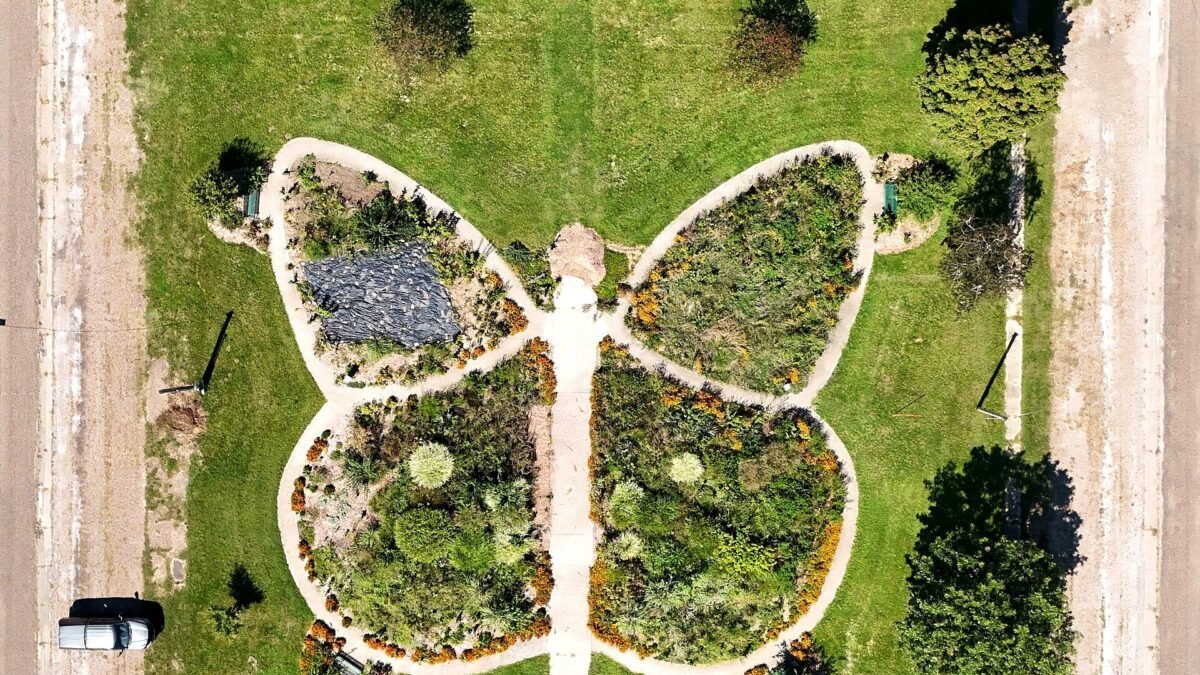
Middletown itself is home to about 363 people, according to the most recent figures cited by CNN, although other estimates put the population closer to 400. Thousands more live in the surrounding area. Residents near the town’s City Park and Butterfly Park were asked to leave their homes between 8am and 2pm on the day of the blast, because vibrations from the two planned explosions were expected to be quick but strong enough to break old windows. Schools in the area closed on Friday, the original detonation day, and must decide again for Tuesday.
More than 80 miles north of Middletown, Cedar Rapids, Iowa’s second-most populous city, is preparing for the detonation. Officials there are taking steps to monitor the drinking water supply, drawn from wells along the Cedar River, for potential contamination, though they do not anticipate impacts, according to a city update cited by CNN.
Iowa City, about 60 miles north of Middletown and home to more than 75,000 people, said it did not know about the planned detonation until news began circulating early last week, and that no state or federal agency had formally notified the city. City Manager Geoff Fruin said in a declaration filed on Saturday in support of the environmental groups’ lawsuit that an email on Friday had told the city an EPA team had been deployed to collect a pre-detonation surface water sample, because Iowa City lies within a 100-mile radius of the detonation. “Iowans deserve a transparent, coordinated, and effective response to this unprecedented event,” Michael Schmidt, general counsel at the Iowa Environmental Council, said in a news briefing.
Illinois officials have issued their own guidance. Residents should stay indoors on the day of the detonation, with windows and doors closed for one to two days afterwards as a precaution, and use portable air cleaners equipped with a HEPA filter. Illinois agriculture officials recommended keeping livestock and pets inside until the plume has passed and washing them to remove potential contaminants, and warned of exposure through fishing. Illinois Governor JB Pritzker said on Friday that he had spoken with Telle, urging more transparency about the planned detonation. “The State is still seeking more data from them on how this could impact Illinoisans and is working to keep you informed and safe,” Pritzker said.
A community that learned late
One of the most persistent complaints from residents and local officials is not about the chemistry but about the communication. The Army held a community meeting in Middletown on 15 October to share information about a potential detonation in late November, according to documents on the plant’s page cited by CNN. But a public advisory issued on Sunday 15 November was the first time many other communities, some as far as 100 miles away, became aware of the potential impact.
Brieanna Beck, Middletown’s city clerk and municipal officer, told CNN that officials at the plant had regularly updated town officials about the planned detonation and that she had shared each update on the city’s Facebook page. The city had been aware of the detonation plan for a couple of months, she said. The plant also sent letters to homes potentially affected by the detonation.
But beyond Middletown, the picture was different. Iowa City officials said they were unaware of any state or federal agency formally notifying them. Fruin said the city had been discussing possible protocols to address impacts from the detonation, but added that it was difficult to plan because of a “lack of notice and information”.
The governor’s office said state agencies were coordinating with EPA and Army officials to “continuously monitor the situation and keep local partners informed”, Reynolds said on Friday. But the sense of being caught unprepared has fuelled anger across the region. Josh Turek, the US senator-elect for Iowa, has called for a delay to the detonation, saying he had “heard from many Iowans who are worried about their health and safety due to the potential risk of lead exposure as a result of the detonation”. Rob Sand, the incoming governor, said Iowans’ safety now and in the future should be the government’s top concern. “An unacceptable lack of communication and clarity has made Iowans understandably concerned and angry about this situation,” he said. “The public deserves to know, if this is the safest option, why other options were worse.”
Environmental advocates said that as of late Sunday morning, the Army had failed to update the public about the latest weather forecasts or projections of the path of the plume containing lead dust. “People across numerous impacted communities speaking up and demanding accountability is the only reason there was an opportunity to pause and think about better ways to approach the lead azide problem,” Thien Chau, a senior attorney at Earthjustice, said in a statement on Sunday. “Yet despite claiming public safety is its top priority and public communication is essential to trust, the Army seemed more concerned over the weekend with finding a way to sidestep the judicial process than on meeting the public’s demands for greater transparency, notice to affected communities, and far stronger protection of people, property, and the environment from serious harm.”
The legal fight
The central legal question is whether the Army can simply declare an emergency and proceed without the permit that a court has frozen. The environmental groups say it cannot, or at least should not be allowed to do so without the court first testing the claim.
“We want to be absolutely clear that the regulation they cite is an extraordinary and extreme backstop for situations where there is truly nothing else that can be done,” Rachel Rintelmann, a managing attorney at Earthjustice, said in an email to CNN about the Friday filing. “It is an incredibly high bar, and we urge the Army not to rely on it if it is only doing so to sidestep the ongoing processes to obtain transparency and protections that communities, government leaders, and the law demand.”
Richard Revesz, a New York University School of Law professor who specialises in environmental and regulatory law and served as an Office of Management and Budget official during the Biden administration, told CNN that federal courts have the authority to prohibit the detonation. Courts should carefully consider whether the Army is correct in its assertion that controlled detonation was the “option that posed the lowest risk to the public in the immediate and surrounding area”, Revesz said, citing Telle’s statement. “The damage to the immediate and surrounding areas could be enormous and should not be disregarded merely on the basis of conclusory assertions.”
The groups have also argued that the cleanup requirements under the current permit are inadequate to properly address the scope and degree of potential impacts, according to Chau. There does not appear to be sufficient understanding of how far the plume would spread, or which bodies of water, such as the Mississippi River, and which land would be blanketed with lead dust, including where people live, Chau told reporters on Friday.
In a follow-up filing on Sunday, the government asked the court to deny the plaintiffs’ motion and lift the stay on the EPA permit, which includes provisions requiring testing and cleanup of contaminated areas after the blast. The Army intends to follow those mitigation requirements whether or not the permit is formally reinstated, it said, according to the Des Moines Register. The Sunday filing argued that federal officials had already considered the alternatives suggested by the environmental groups, such as chemically neutralising the explosives in place, and rejected them. The explosive material is so degraded that even opening the lids of the 55-gallon plastic barrels poses an unacceptable risk of setting off an explosion, the filing said.
The court has not yet said when it will rule. If the Army detonates on Tuesday as planned, the case may become academic before the judges have had their say, a prospect that has sharpened the criticism from the plaintiffs. “Federal officials are now trying to bypass the judicial process and review while not showing they had pursued other safer alternatives than detonation,” lawyers representing the environmental groups argued, according to CNN.
The health risks of lead
Lead is one of the most studied toxins in public health, and the science leaves little room for reassurance. There is no safe level of lead in the body, Dr Sameer Vohra, director of the Illinois Department of Public Health, said in a statement. “And when inhaled or swallowed, it can pose serious health risks.”
Exposure is known to cause serious harm to children’s health, resulting in slowed growth and development, as well as problems with learning, behaviour, hearing and speech, according to the US Centers for Disease Control and Prevention. With the detonation, there is potential for exposure through the air during the initial plume or through touch after the dust has settled, and neither route is worse than the other, because the lead will still build up in the body either way, Vohra said.
The hope, according to O’Shaughnessy, is that if the lead azide spreads over a wider area, it will not stay in high-level concentrations. “It’s kind of like one of these, the solution to pollution is dilution, right?” he said. That is a thin comfort for residents who will be told to stay indoors, keep their windows shut and wash down their cars, windowsills and outdoor surfaces afterwards, and for farmers worried about livestock and soil.
Environmental advocates also warn that the detonation could worsen health for residents in Iowa, which has the second-highest rate of cancer of any US state and is one of only three states where the rate is rising, according to CNN. That statistic has become a rallying point for critics who say the state has already borne more than its share of environmental risk.
Analysis: a detonation, a court order and a test of who decides
The facts of the Middletown case are, on their own, extraordinary enough. A stockpile of unstable explosives was left to rot for more than two decades in a munitions plant in a small Iowa town, until the only option anyone could agree on was to blow it up in place and hope the wind behaved. That is the story the Army and its critics actually agree on. Everything else, the timing, the transparency, the legality, is contested, and the contest matters far beyond one small town in south-eastern Iowa.
The first question is about competence and stewardship. Lead azide does not become dangerous overnight. It degrades slowly, over years, as the liquid that keeps it stable evaporates. The material at Middletown was stored in the 2000s and, by the Army’s own account, was not properly evaluated for two decades. O’Shaughnessy’s remark, that “somebody left it to rot that long”, captures the public’s disbelief. The Iowa Army Ammunition Plant is not a forgotten depot. It is an active military installation, part of the industrial base that produces the munitions the United States relies on. If a stockpile of primary explosive can be neglected there for twenty years, the public is entitled to ask what else is sitting, unexamined, in bunkers across the country. The Army has not answered that question, and it is one that Congress, which controls the military’s budget and oversees its facilities, should be asking in hearings rather than in press statements.
The second question is about trust. The Army’s technical case for a controlled detonation is, on the evidence available, strong. The material cannot be moved. Chemical neutralisation was examined and rejected, twice over, first when the MuniRem contract was cancelled and again in the court filings. An uncontrolled explosion in freezing weather, at an unknown time and under unknown conditions, is plainly worse than a planned one. Even the plaintiffs’ own expert witnesses have not claimed that the material is safe where it sits. The problem is that the Army built this case in private, over months, and then presented it to the public as a decision already made, with a week’s notice and a blast scheduled for a Friday morning. Trust is not built by technical consensus alone. It is built by showing your working, and the Army’s working, the modelling of the plume, the weather analysis, the testing and cleanup commitments, has been shared late, partially and, in the view of the environmental groups, only after a lawsuit forced the issue. The result is a community that does not doubt the danger of the explosives so much as it doubts the completeness of the assurances about everything that follows the blast.
The third question, and the most consequential, is about the rule of law. A federal appeals court paused the operation so that it could consider whether the EPA’s emergency permit was lawful. The government’s answer, delivered on a Saturday night, was effectively that the pause does not matter, because the Army can act under a separate emergency authority that no permit is needed for. That may prove to be legally correct. The regulation the Justice Department cites does exist, and it was written for precisely this kind of situation, an immediate threat from explosives where delay could be catastrophic. But the optics and the precedent are troubling. A court order that can be sidestepped by invoking a different legal authority is, for practical purposes, no order at all, and the government has chosen to assert that power at the weekend, hours before the planned blast, rather than asking the court to decide the question first. The Justice Department did ask the court on Sunday to lift the stay, which suggests it would prefer the court’s blessing, but it has made clear it will proceed regardless. If the detonation goes ahead on Tuesday, the court’s consideration of the permit will be moot, and the next time a federal agency wants to bypass a judicial pause, it will have a precedent to point to.
There is also a political dimension that cannot be ignored. The Trump administration has, in other contexts, shown little patience for court orders that stand in the way of executive action, and critics will inevitably read the Middletown filings as part of that pattern. Supporters will read them as the opposite, as a government refusing to let procedure endanger lives. Both readings can be sincerely held, which is why the courts exist: to decide, on evidence and argument, which one the law supports. The tragedy of this case is that the timetable may not allow them to do so. By the time the 8th Circuit rules on the emergency motion, the lead azide may already be gone, dispersed over the Iowa countryside in a plume that cannot be recalled.
Finally, there is the question of who bears the risk. The people of Middletown did not choose to live next to 68 barrels of degrading explosives, and the farmers and townspeople up to 100 miles away certainly did not choose to have lead dust fall on their fields and roofs. The Army’s position is that the risk is unavoidable and that a controlled blast minimises it. That may be true. But “unavoidable” is a conclusion that should be demonstrated, not asserted, and the demonstration should have happened in public, with time for independent experts to test it, before the blast was scheduled. The fact that it did not is the reason this story has become a national one, and the reason the detonation on Tuesday, whatever its outcome, will be remembered as a failure of planning as much as a feat of ordnance disposal.
What to watch next
The immediate question is whether the detonation happens on Tuesday, and whether the 8th Circuit acts before then. The court could lift the stay, decline to intervene, or issue a further order, and any of those outcomes would reshape the legal argument overnight. If the Army proceeds under its emergency authority, expect the environmental groups to seek an emergency ruling, and expect the Justice Department to argue that the court has no power to stop an action taken under a separate legal authority.
After the blast, the focus will shift to monitoring. The EPA has committed to testing and cleanup of contaminated areas, and the Army says it will follow those mitigation requirements whether or not the permit is formally reinstated. Residents will be watching for the results of air and soil sampling, for the plume modelling to be published in full, and for the promised cleanup to materialise. Iowa City, Cedar Rapids and the Illinois authorities have all said they will monitor water supplies and public health indicators, and their findings will be the first independent check on the Army’s assurances.
Longer term, the case is likely to prompt questions in Congress about how the stockpile was allowed to degrade, how many similar stockpiles exist, and whether the emergency exception the Army is invoking should be available to bypass a court order. The House and Senate armed services committees oversee the Army’s ammunition plants, and the Middletown episode, with its combination of a twenty-year oversight failure, a courtroom confrontation and a toxic plume over two states, is the kind of story that generates hearings. Whether those hearings produce reform, or merely recrimination, will depend on whether the detonation on Tuesday goes as planned, and on what the lead dust leaves behind.
Sources
- Reuters — Iowa detonation of lead will proceed under emergency powers, Army says, bypassing court order
- CNN — US Army tells court it intends to detonate bomb-making material in Iowa on Tuesday despite pause. Here’s what we know
- Associated Press — Court told of US Army’s plans to detonate bomb-making chemicals in Iowa
- Des Moines Register — Army says it will explode lead azide in Iowa without EPA permit
- USA Today — Army’s plan to blow up unstable explosives faces another setback

About the Author — Abdul Mannan
Related Articles

Democrats Clinch Historic House Majority of 258 Seats, Largest Since 1992, as Hubbard Ousts Foxx in North Carolina Recount
Democrats have secured at least 258 House seats — their largest majority since 1992 — after Chuck Hubbard…

Trump Vows to Work With Democrats to Cap Credit Card Interest at 10% as Americans Carry Record $1.29 Trillion in Debt
President Donald Trump said on Saturday he would work with the incoming Democratic Congress to cap credit card…
Trump Orders Federal Contractors to Check With White House Before Answering Congress, Threatening Their Contracts
President Donald Trump has ordered federal contractors to clear congressional inquiries with the White House first, threatening their…