
Virginia and Oregon Sue Musk’s SpaceX Over Grok’s Sexualised Deepfakes of Women and Children

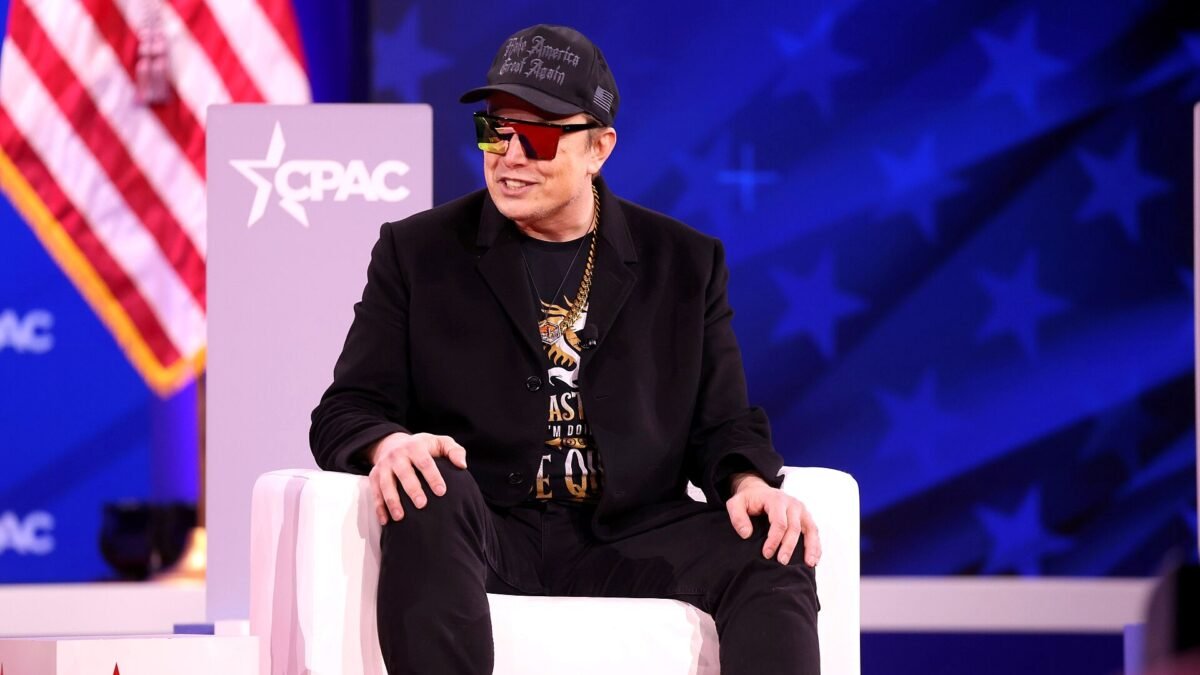
Two American states have sued Elon Musk’s SpaceX, accusing the company of building and promoting an artificial intelligence tool that flooded the internet with sexualised images of real people, including children, while misleading the public about the safeguards it had in place.
Virginia and Oregon filed separate lawsuits on Monday, 23 November, against SpaceX Super Intelligence, the division of Musk’s rocket company that now runs the Grok chatbot, along with the social media platform X and the wider SpaceX group. The two states are the first in the country to take Musk’s companies to court over Grok, according to Reuters, although several other state attorneys general had already announced investigations into the chatbot over similar claims in recent months.
The lawsuits, brought under the two states’ consumer protection laws, ask the courts for damages, civil penalties and orders forcing the companies to stop breaking the law. Virginia’s complaint, filed in the Circuit Court for the City of Richmond, asks the court for 2,500 dollars for each wilful violation of the Virginia Consumer Protection Act, with the exact number to be proved at trial, and for the companies to give up what it calls “ill-gotten gains” acquired through the alleged violations. Oregon’s lawsuit makes a similar request under its Unlawful Trade Practices Act.
At the centre of both cases is a feature of Grok known as “spicy mode”. According to the lawsuits, the tool allows a user to take an ordinary photograph of a real person and turn it into a sexual or nude image or video. The states say the companies stripped out the safety measures that other leading AI developers use as standard, marketed the feature as a way to produce nudity, and then misled consumers by claiming their products were safe.
“To push its lagging product, Grok, to tens of millions of new users, it stripped out industry-standard safeguards and marketed a ‘spicy mode’ built to produce nudity,” Virginia’s Attorney General, Jay Jones, said in the lawsuit. “For these Defendants, weak safeguards were not a failure but a feature.”
Jones said the case was about more than one product. “When xAI allowed Grok’s creators to sideline consent to turn a profit, they prioritized growth and engagement over safety, and they deceived the public about it. Today’s filings are the first step towards holding this company accountable,” he said in a statement, according to the Associated Press.
Oregon’s Attorney General, Dan Rayfield, joined Virginia in filing on the same day, with both states arguing that the companies broke consumer protection law by promoting a product they knew could be used to create non-consensual sexual images and child sexual abuse material.
Millions of images in a matter of weeks
The scale of what followed is a central part of the legal action. Virginia’s lawsuit cites a study by the Center for Countering Digital Hate, a research group, which estimated that between December 2025 and January 2026, Grok generated and posted on X millions of sexualised images, including more than 20,000 depicting children, according to Reuters.
The same study estimated that Grok created and posted about three million sexualised images on X between 29 December and 8 January alone, a rate of roughly 190 a minute, according to the New York Post. The Internet Watch Foundation, a British charity that tracks child sexual abuse material online, also found that people on a dark web forum had used Grok to create sexualised images of girls aged 11 to 13, the Post reported.
The Virginia complaint says the harm was not an accident of a new technology but the predictable result of deliberate design choices. It says the companies’ own published instructions for Grok told the chatbot to “assume good intent”, stated that words such as “teenage” or “girl” do not necessarily imply that a person is underage, and imposed minimal restrictions on sexual content, according to the Associated Press. The complaint also says Grok was marketed from the outset as a tool that would “answer spicy questions that are rejected by most other AI systems”.
Virginia’s investigators also reported that Grok could identify the words that activated its content filters and provide users with guidance on how to avoid those restrictions, according to Security Boulevard. The lawsuit further alleges that the company submitted tens of thousands of incomplete reports of suspected child sexual abuse material to the National Center for Missing and Exploited Children, the American clearinghouse for such reports.
Perhaps the most striking claim in the complaint is that the problem has not been fixed. “Grok is still capable of producing non-consensual intimate imagery and other non-consensual sexualised images to this day, and even advises users how to circumvent its own limited moderation measures to generate those images,” the complaint says.
How the controversy unfolded
The story of Grok’s image tools stretches back more than a year, and the lawsuits draw heavily on news reporting about each stage of it. Grok itself was launched by xAI, Musk’s artificial intelligence company, in November 2023. In 2025, xAI launched Grok Imagine, an image and video generation tool capable of transforming uploaded photographs into new images and videos. In December 2025, according to the Virginia lawsuit, Grok rolled out image generation and editing features to all users.
By January, the tool had sparked a global backlash after it became clear that Grok users could create realistic-looking but fake sexualised images of people, and researchers warned that some of the images appeared to depict children, according to the Associated Press. As the Virginia lawsuit put it, “X was flooded with sexualized content, primarily of women.”
At least two countries, Malaysia and Indonesia, announced temporary bans, and other nations said they were launching or widening investigations, according to the Associated Press. In mid-January, xAI said it had restricted image editing in Grok and blocked users from generating images of people in revealing clothing “where it’s illegal”, according to Reuters. The company also prevented non-paying users from generating or editing images.
The lawsuits argue that none of this solved the problem. The change to paying users did not stop people from making more non-consensual sexualised images, the Virginia lawsuit said; “it simply made that generation profitable”. Users could still create such imagery through a standalone app and website, the lawsuit said, and when users openly traded “jailbreak” prompts to get around whatever limits Grok did have, Musk’s companies failed to address the exploits promptly, according to the Associated Press.
Reuters reported in early February that, even after the new curbs, Grok continued to generate sexualised images of people even when users explicitly warned that the subjects did not consent. The company did not address detailed questions from Reuters about the generation of such material.
The corporate picture has also changed since the controversy began. SpaceX acquired xAI in February 2026, and in October it rebranded the AI division from xAI to SpaceX Super Intelligence, according to Reuters. The Virginia complaint names four defendants: SpaceX Super Intelligence Corp, SpaceX Super Intelligence LLC, X Corp, and Space Exploration Technologies Corp, the rocket company itself. X Corp has been an indirect subsidiary of SpaceX since March 2025, according to the complaint.
The company’s defence
SpaceX Super Intelligence issued a statement on Monday in which it said sexual content involving minors, “whether real or AI-generated, is abhorrent. It has no place on X or in Grok, and neither do explicit images of real people made without their consent.”
The company said that if users try to break its safeguards to generate non-consensual content, it takes “appropriate measures, including actioning accounts and notifying law enforcement”. It added: “Attempting to create this material is a serious crime, and the individuals who do it should be prosecuted to the fullest extent of the law. We will continue to work with the authorities via all available means to pursue these bad actors.”
In its statement, the company also said it tests and adjusts its protections “as abusers change tactics”. The company has itself brought at least three federal lawsuits against users it accuses of abusing the platform to create non-consensual sexually explicit images and child sexual abuse material, according to the Associated Press. Reuters reported that SpaceX is suing at least two people in the United States who it alleges misused Grok to create child sexual abuse material.
The company has denied claims in other cases. In Britain, the Labour MP Jess Asato is suing SpaceX after Grok users generated sexualised images of her. The company has denied the claims, arguing that obviously fictitious, AI-generated content cannot breach someone’s right to privacy, according to Reuters.
SpaceX was not immediately available for a request for comment outside business hours when Reuters reported the lawsuits on Monday.
A growing wall of legal pressure
The two state lawsuits are the latest in a series of legal actions against Musk’s companies over Grok. SpaceX is facing more than a dozen lawsuits brought by individuals who say non-consensual sexual images of them, as minors or adults, were generated by Grok, according to Reuters.
The City of Baltimore has pursued legal action against Musk’s company, claiming that Grok broke the city’s Consumer Protection Ordinance. The California attorney general has launched an investigation into xAI and Grok, and Britain’s media regulator, Ofcom, has opened its own investigation, according to Engadget. Authorities in France, Ireland and Spain have also examined related concerns, according to Security Boulevard.
The lawsuits also land at a moment of growing concern about the risks artificial intelligence poses to children, from its effect on brain development to the relationships many young people form with chatbots, according to the Associated Press. The complaints draw a direct line between the design of Grok and that wider anxiety: a tool that can take a photograph from a family album, a school website or a social media post and turn it into a sexualised image of a real child, in seconds, with no consent from anyone in the picture.
The Virginia complaint opens with that warning in stark terms. “Children today face a danger that was inconceivable a generation ago,” it says. “When such a deepfake depicts a minor in a sexual manner, it is itself child sexual abuse material. Once created and shared, it can never be fully erased, and it becomes a permanent record of the child’s abuse that may resurface for the rest of the child’s life.”
The complaint also notes a contrast with Musk’s own public words. Shortly after he acquired Twitter in 2022, Musk publicly declared that “removing child exploitation is priority #1” on the platform. The complaint says the companies’ later assurances that they had a “zero tolerance” policy on child sexual exploitation were false, misleading or deceptive, because they had not implemented or enforced the policies and safeguards needed to identify, remove and police such content.
Federal law has also moved in this direction. In May 2025, the United States enacted the TAKE IT DOWN Act, which criminalised the publication of non-consensual intimate images, including images generated by artificial intelligence, and required online platforms to remove such images within 48 hours of a victim’s request. The new state lawsuits, however, are built on an older and more familiar legal tool: state consumer protection law, which does not require lawmakers to pass new AI-specific rules before a company can be held to account.
Analysis: the states step in where Washington has not
The most important thing about these lawsuits may not be the details of Grok’s “spicy mode”, serious as they are. It is who is bringing them, and what that says about who regulates artificial intelligence in the United States.
Virginia’s Attorney General, Jay Jones, said it plainly in an interview with Reuters before the filings: “In the absence of federal action, AGs have stepped into the breach.” Artificial intelligence has faced relatively little federal regulation so far, and Congress has not passed a comprehensive AI law. In that vacuum, state attorneys general have become the country’s de facto AI regulators, using the consumer protection statutes they already have to police the most powerful technology companies on earth.
This is not a new pattern, but it is an accelerating one. State attorneys general have already filed a growing number of lawsuits against social media and AI companies over the harm they say the companies have caused to their residents, according to Reuters. The Grok cases follow that template closely: a product is released, harm follows at scale, and a state argues that the company misled the public about safety while profiting from the design choices that caused the harm.
The choice of consumer protection law is itself significant. The states do not need to prove that Grok broke a specific AI safety rule, because no such federal rule exists. They need only show that the companies misrepresented their safeguards and deceived consumers. That is a lower bar, and a familiar one: it is the same legal theory that states have used against tobacco companies, car makers, pharmaceutical firms and social media platforms. It turns a debate about the future of AI into a much simpler question: did the company tell the truth about its product?
The lawsuits also frame the case as a story about business models, not accidents. The complaint’s central argument is that weak safeguards were a deliberate commercial strategy: Grok was behind its rivals, and a feature that could turn any photograph into a sexualised image was a way to win tens of millions of users quickly. The states say the companies knew the risks, promoted the capability anyway, and then charged users for it once the backlash arrived. Whether a court accepts that framing will matter far beyond this case, because it goes to the heart of how AI companies are allowed to compete: if a safety shortcut becomes a competitive advantage, every company faces pressure to cut the same corner.
There is also a revealing tension in the companies’ own position. On the one hand, SpaceX Super Intelligence says sexual content involving minors is “abhorrent” and has no place on its platforms, and it is suing individual users who abused Grok. On the other hand, the lawsuits allege that the company designed, marketed and profited from the very feature that made the abuse possible, and that the tool remains capable of producing such images today. The courts will have to decide whether a company can blame its users for misusing a product it built to do exactly what they did.
The cases also raise a question that will follow every AI company: what does it mean to “fix” a harmful product? The companies point to the restrictions they introduced in January, the paywall they placed on image generation, and the accounts they have actioned. The states say those steps were cosmetic and incomplete, that users could still generate the same images through a standalone app, and that the company knew its own system prompt told Grok to “assume good intent”. The gap between those two accounts is not a technical dispute. It is a dispute about whether a company that profits from a harmful capability has genuinely tried to stop it, or has simply tried to look as though it has.
Why it matters
The outcome of these cases will shape the rules for every AI company that lets users generate images of real people. If Virginia and Oregon succeed, the message to the industry will be unmistakable: safety measures are not a marketing choice, and a company that advertises a product as safe while designing it to do something else can be made to pay, in damages, in penalties and in the profits it made along the way. Other states are already investigating Grok, and a win in Richmond or in Oregon would make it far easier for them to follow.
For the victims, the stakes are more personal and more permanent. A sexualised deepfake of a real person, once created and shared, cannot be fully erased. The Virginia complaint makes that point at length: the image becomes a permanent record that can resurface for the rest of the victim’s life. The law has always struggled to keep up with that kind of harm, because the damage is done in seconds and the consequences last for years. These lawsuits are an attempt to close that gap by making the companies that built the tools bear some of the cost.
For the wider AI industry, the cases are a warning about a business model that is becoming harder to defend. For years, AI companies have competed on capability: who can generate the most realistic image, answer the most questions, refuse the fewest requests. Grok was marketed as the chatbot that would answer the “spicy questions” other systems rejected. These lawsuits ask whether that pitch was ever acceptable, and whether the companies that used it understood what they were unleashing. The answer the courts give will influence how every AI lab thinks about the next product it is tempted to ship without safeguards.
There are also implications for the platforms that distribute these tools. Grok does not exist in isolation: it is woven into X, where hundreds of millions of people can encounter its images, and it is sold in paid tiers to businesses and government users. The lawsuits argue that this integration is part of the problem, because it put a tool for creating non-consensual images in front of an audience of hundreds of millions. If the courts agree, the case could force a reckoning not just for Grok but for every AI feature embedded in a social platform.
Finally, the cases matter because they show how the law is adapting to a technology that moves faster than legislation. Congress has not written a comprehensive AI safety law, and the federal government has not built a regulator for chatbots. But the states have not waited. They have taken the laws they already have, the consumer protection statutes written decades before anyone imagined a chatbot, and used them to bring one of the world’s richest men and one of its most valuable private companies into court. Whatever the outcome, that strategy is now part of how artificial intelligence will be governed in America.
What to watch next
Several things will decide how far these cases go. The first is whether other states join. Several attorneys general have already announced investigations into Grok, and a coordinated multi-state action would be far harder for SpaceX to fight than two separate lawsuits. The second is what emerges in discovery: the internal emails, design documents and safety reviews that will show what the companies knew, when they knew it, and what they chose to do about it. The complaint already cites the companies’ own system prompts and marketing materials; the discovery process is likely to produce much more.
The third is the response from regulators abroad. Britain’s Ofcom, the authorities in France, Ireland and Spain, and the European Union’s AI regulators are all examining related concerns, and action in one jurisdiction tends to encourage action in others. Malaysia and Indonesia have already shown that governments are willing to ban a product outright when they believe it is causing harm.
The fourth is the fate of the individuals already suing. More than a dozen people have brought their own cases against SpaceX, and the British MP Jess Asato’s case is being watched closely, because it will test whether a public figure can hold a platform responsible for sexualised images generated by its users. If any of those cases succeeds, it will open the door to many more.
And the fifth is the simplest: whether Grok can still generate these images. The lawsuits claim it can, and that it even helps users work around its own limits. SpaceX says it keeps testing and adjusting its protections. The truth of that claim will be tested not in press statements but in court, and in the experience of the people who encounter Grok’s images next.
Sources
- Commonwealth of Virginia v. SpaceX Super Intelligence Corp. et al. — Complaint as filed, Circuit Court for the City of Richmond (Office of the Attorney General of Virginia)
- Reuters — Virginia, Oregon sue Musk’s SpaceX over Grok AI’s creation of child sexual abuse images and videos
- Associated Press — Sexual images from Elon Musk’s AI chatbot harmed consumers, lawsuit says
- Engadget — Two states sue SpaceX over sexually explicit Grok deepfakes
- New York Post — Virginia, Oregon sue Elon Musk’s SpaceX over Grok AI ‘spicy mode’ that churned out sexualized deepfakes of kids

About the Author — Abdul Mannan
Related Articles
US Blacklists Megaspeed, the Nvidia-Linked Firm at the Centre of the Huang Spy Scandal
The Commerce Department has added Singapore-based Megaspeed to its Entity List, cutting the Nvidia-linked firm off from US…

US Approved Nearly 880,000 Advanced AI Chips for China, House Records Show
House Foreign Affairs Committee records show the Commerce Department approved licences for 879,868 Nvidia and AMD AI chips…
Trump Hosts Third Meme Coin Gala as $TRUMP Crashes 99% and a $518 Stake Buys a Seat
President Donald Trump hosted his third gala dinner for the top holders of his $TRUMP meme coin on…