
US Approved Nearly 880,000 Advanced AI Chips for China, House Records Show

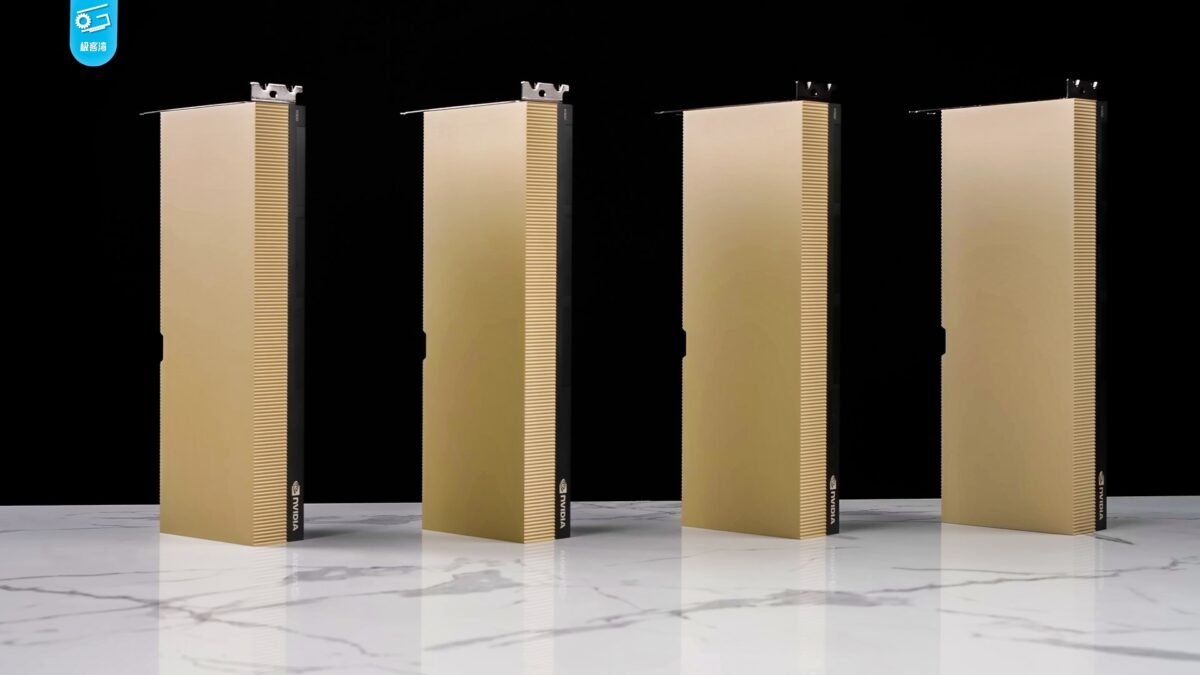
The United States approved licences for nearly 880,000 advanced artificial intelligence chips for Chinese companies in the space of six months, according to records released by the House Foreign Affairs Committee, in a disclosure that has reopened one of the sharpest arguments in Washington over technology, trade and national security.
The documents show that the Commerce Department’s Bureau of Industry and Security, known as BIS, approved the export, re-export or transfer of 879,868 Nvidia H200 and AMD MI325X processors to companies with Chinese ties across 21 licence applications, as of 11 May 2026. The companies behind those applications had asked to sell more than 3.4 million chips in total, meaning roughly one in four of the processors requested was cleared.
The buyers named in the records include some of the largest technology companies in China. According to Reuters, the approved allocations included 150,000 chips for Tencent, 75,000 for Alibaba, 43,000 for Baidu and 4,000 for BYD. All four companies appear on the Pentagon’s list of Chinese military companies, a designation for firms the United States considers contributors to China’s defence industrial base. The committee itself refers to the Pentagon as the Department of War.
The release, made public on 19 November by the committee’s chairman, Brian Mast, a Republican from Florida, was described by the committee as the most detailed public disclosure ever made under the Export Control Reform Act, the 2018 law that gives the Commerce Department its powers to restrict sensitive technology exports on national security grounds. It landed in the middle of a political storm around Nvidia, its recently reinstated chief executive, Jensen Huang, and a widening investigation into how advanced American chips reach China.
The disclosure does not show that 879,868 chips were actually delivered. That distinction sits at the centre of the argument now raging in Congress, inside the administration and across the technology industry, and it is the first thing any reader of the records needs to understand.
The numbers behind the disclosure
The committee’s figures cover licence applications filed between December 2025 and May 2026. Seventeen of the 21 approved applications were filed by Nvidia and covered 579,868 of its H200 chips, while four were filed by AMD and covered 300,000 of its MI325X processors, according to a count of the committee’s tables. The total number of chips requested across all the applications was 3,444,160.
The H200 is one of Nvidia’s more powerful AI chips, though not its most advanced, according to the Associated Press. It belongs to the company’s Hopper family of data centre processors, the workhorse hardware on which much of the world’s large-scale AI training runs. AMD’s MI325X is a roughly comparable accelerator. Both are far more capable than the consumer graphics cards most people know, and both are exactly the kind of hardware that American export controls were designed to keep out of the hands of a strategic rival.
Not every request was granted. The records show that BIS refused some of the largest deals put before it. Nvidia applied to sell 610,000 chips to Alibaba and 508,000 to ByteDance, the owner of TikTok, and both applications were turned down, according to The Register. The approvals that were granted were therefore selective rather than blanket, and the pattern of what was allowed and what was refused is now part of the political argument.
One detail in the documents has drawn particular attention from lawmakers. Every Nvidia and AMD application reviewed by the committee described the risk that the chips would be diverted to unauthorised uses as “low”. That self-assessment, repeated across all 21 applications, is now being held up by critics as evidence that the licensing system leans too heavily on the assurances of the companies that profit from the sales.
Chairman Mast used powers under the Export Control Reform Act to make the records public, and the committee said the release was agreed by unanimous consent. In the committee’s own statement, Mast said he had exercised his legislative authority to reveal export control licence application information regarding Nvidia’s and AMD’s AI chip licences for China. The statement said the findings included requested sales of 3.4 million AI chips and the approval of more than 879,000 by BIS, and it noted that the approvals included exports to companies designated as Chinese military companies.
Who was cleared to buy
The four named buyers tell much of the story. Tencent, China’s largest social media and gaming company, was approved for 150,000 chips, the biggest single allocation in the records. Alibaba, the e-commerce and cloud computing giant, was approved for 75,000. Baidu, the search company that has bet heavily on AI, was approved for 43,000. BYD, the electric vehicle maker, was approved for 4,000.
All four sit on the Pentagon’s list of Chinese military companies. The designation does not mean the companies are arms of the Chinese military. It means the United States government has formally assessed them as military-civil fusion contributors to China’s defence industrial base, and therefore as companies whose access to advanced American technology carries a security risk.
Chris McGuire, a former United States official who works on American-Chinese technology policy, told reporters that the scale of the approvals for companies on that list was striking. “The fact that over 30 per cent of the AI chips sent to China were shipped to companies that the Department of War has designated as Chinese military companies is astonishing, and calls into question whether Commerce conducted any serious national security review before approving these licenses,” he said. The four named companies account for 272,000 of the 879,868 approved chips, or just under 31 per cent of the total.
The committee’s statement also said the records included requests by Nvidia involving possible chip-smuggling fronts. CNBC reported that Mast singled out two firms named in Nvidia licence applications, Maginfra and New Matrix, as suspected fronts used to move advanced chips to Chinese buyers. No charges have been announced against either firm, and the allegation remains what the committee’s documents describe rather than a finding by a court.
Representative Gregory Meeks, the senior Democrat on the House Foreign Affairs Committee, said the administration’s handling of chip export controls over the past month had put national security and the American technology edge at risk, and that BIS had failed to enforce the rules. On 20 November, Meeks and Representative Sydney Kamlager-Dove wrote to Commerce Secretary Howard Lutnick asking how the department had handled its investigation into Megaspeed, the Singapore company at the centre of the Nvidia scandal.
A licence is not a shipment
The most important caveat in the whole story is also the simplest: a licence approval is not a delivery. The committee’s records authorise exports, re-exports and transfers. They do not show how many chips were physically shipped to China, where those chips ended up, or how they were ultimately used. Reuters reported that it was not immediately clear how many of the approved quantities became actual China-bound shipments, and the Associated Press drew the same distinction.
Some of the approved entries in the committee’s tables are marked “Approved, not shipped”. Jeffrey Kessler, a Commerce Department official, told the committee in July that shipments under the programme had begun but remained “very few”. Nvidia said in a statement that the “limited shipments we made under the H200 program were legal and authorized” by BIS, and that the review and licensing process had spanned more than half a year, with approvals subject to strict conditions and limited volumes.
The company has since stopped shipping the chips. On 17 November, interim chief executive Colette Kress said Nvidia would no longer sell H200 chips in China, a decision that came after weeks of turmoil at the company. The company confirmed again on 20 November that shipments had stopped despite the licences that remained in place. AMD said it complies with American export control laws and regulations and maintains rigorous processes to ensure compliance across its global operations.
Even so, the money involved is large. Nvidia said it sold 2.4 billion dollars’ worth of licensed Hopper chips, the family that includes the H200, to China in its latest quarter. The Washington Post reported on 20 November that Commerce had approved sales of almost 580,000 Nvidia AI chips under the administration’s plan, citing the licence rows released by the committee. The precise scale of what was actually delivered, as opposed to merely authorised, remains unresolved in the public record, and that gap is where much of the political fight now concentrates.
The revenue-share question
One of the most contentious elements of the story is the arrangement under which the sales were permitted. The Trump administration adopted a more flexible approach in December 2025, allowing Nvidia to sell H200 chips to approved Chinese customers under strict conditions. President Donald Trump said on 8 December 2025 that the H200 and similar products could be shipped to approved customers in China, and in January the Commerce Department turned that into policy, reviewing applications for the H200, the MI325X and comparable processors one by one.
According to the Washington Post, the framework that enabled the approvals was structured so that the United States government would take a share of the proceeds from the licensed sales. Reported figures for the government’s share have ranged between 15 per cent and 25 per cent, and the precise percentage has not been confirmed in any official document. The arrangement has been described by critics as, in effect, a fee charged in exchange for permission to sell sensitive technology to a rival, and by supporters as a pragmatic way to keep American companies competitive while extracting value for the taxpayer.
That structure is part of why the disclosure has cut across party lines. The loudest criticism has come not only from Democrats but from Republicans. Michael McCaul, a Republican congressman and former chairman of the House Foreign Affairs Committee, said in an interview with Fox News that the administration risked strengthening China’s military capabilities. “We are arming China by selling these chips,” he said. His warning carries weight precisely because it comes from inside the president’s own party and from a lawmaker who once ran the committee that released the records.
The policy also marks a sharp break with the approach of the previous administration. Former President Joe Biden had restricted Chinese access to advanced AI chips over concerns that the technology could support China’s military. The Trump administration’s decision to reopen the door, even on a case-by-case basis and even for a chip that is not Nvidia’s most advanced, reversed that stance, and the committee’s disclosure is the first time the public has been able to measure the scale of the reversal in hard numbers.
A cabinet row over who is in charge
The disclosure also exposed an unusually public disagreement inside the administration itself. Treasury Secretary Scott Bessent said on 20 November, in an interview with CNBC after returning from a trip to Asia with President Trump, that no further restrictions on the sale of older Nvidia chips to China were needed. “The proper chip restrictions are in place,” he said. “And the remote access has been curtailed.”
Bessent was referring to a move made on 16 November, when the Commerce Department’s Bureau of Industry and Security issued an interim rule limiting other countries’ access to advanced AI chips through data centres abroad. The rule targets a workaround that had worried officials for years: Chinese companies that could not buy restricted chips outright had been renting computing power from data centres in third countries. The new rule requires licences for data centres that give companies headquartered in China or Macau access to advanced American chips, and it was written at the direction of the Treasury Department and the National Security Council rather than by Commerce, which usually oversees chip exports.
That authorship matters. The restrictions came from Bessent’s Treasury and the White House rather than from Commerce Secretary Howard Lutnick’s department. Bessent had said the previous week that he was frustrated with the Commerce Department’s delay in placing restrictions on Nvidia chip exports to Megaspeed International, the Singapore firm under investigation by the United States for potentially diverting restricted Nvidia AI chips to China. In an unusually public rebuke of a fellow cabinet member, Bessent said his department had wanted to place export controls on Megaspeed, but that Commerce was in charge of the matter.
Speaking to reporters on 20 November, Trump said he had “not lost confidence” in Lutnick, calling him a “different kind of guy” with a “natural business instinct” who had “done a very good job”. The president’s words steadied Lutnick’s position for the moment, but they did not settle the underlying question of who controls the export regime. Both Lutnick and Huang have been summoned to testify before the Senate in December, according to Al Jazeera, and the committee’s licence records are likely to be at the centre of that hearing.
The Megaspeed shadow
None of this can be understood without the scandal that has engulfed Nvidia over the past month. Jensen Huang stepped down as chief executive amid allegations of an affair with an executive at Megaspeed, a Singapore-based company that uses advanced chips to generate computing power that Chinese firms access remotely. The former executive was reportedly suspected by American intelligence agencies of being a spy for China, and the director of national intelligence, Jay Clayton, confirmed on 22 November that the United States is investigating both the woman, Alice Huang, and Megaspeed itself.
Nvidia’s board reinstated Huang as chief executive on 23 November, eleven days after his departure, and the company’s shares rose sharply on the news. The reinstatement has not ended the investigations. California’s attorney general announced an investigative subpoena for Nvidia on 19 November, the same day the committee released the licence records, and the Securities and Exchange Commission’s interest in the company has been widely reported, though not officially confirmed.
On 17 November, two days before the licence disclosure, Chairman Mast sent a letter to Under Secretary Jeffrey Kessler demanding export-licence and end-use-check records on Megaspeed and a related company, Speedmatrix. The letter and the licence release are part of the same congressional effort: to establish, from the government’s own records, how much advanced American computing power has reached China, through which channels, and with what oversight.
That effort is now producing answers that neither the administration nor the industry finds comfortable. The records show a licensing system that approved roughly one in four chips requested, refused the biggest single deals, and yet still cleared hundreds of thousands of advanced processors for companies the Pentagon itself lists as military companies, on the basis of applications that uniformly described the diversion risk as low.
Analysis: Why It Matters
The significance of this disclosure is not that it proves the United States handed China a decisive military advantage. It does not. The records cannot show that, because they record permissions rather than deliveries, and because a single generation of AI chips, however powerful, does not by itself decide a technological rivalry. The significance is different, and in some ways more consequential: for the first time, the public can see the actual machinery of American technology controls operating in practice, and the picture it presents is of a system pulled in opposite directions at the same time.
On one side stands the logic of restriction. The United States has spent years building a wall around advanced computing, on the argument that the chips that train frontier AI models are also the chips that can design weapons, break codes and power surveillance systems. The Pentagon’s military-company list, the Biden-era bans and the committee’s own insistence on transparency all belong to that logic. On the other side stands the logic of commerce. Nvidia is the world’s most valuable company precisely because it sells these chips at enormous scale, and every chip it cannot sell in China is revenue lost to a competitor, often a Chinese one. The Trump administration’s decision to allow H200 sales under strict conditions was an attempt to square that circle: keep the most advanced hardware back, let the previous generation flow, and charge the government a share for the privilege.
The records suggest the compromise satisfied nobody. Hawks in both parties look at 879,868 approved chips, including 272,000 for Pentagon-designated military companies, and see a wall with a gate in it. Industry looks at 3.4 million chips requested and roughly three-quarters refused, and sees a market being strangled by politics. And the administration’s own Treasury secretary is publicly at odds with its Commerce secretary over who should be running the system, while the president publicly defends the Commerce secretary and the House committee publishes the receipts.
The deeper question is whether the licensing regime can survive this kind of scrutiny. Export controls work only if they are credible, and credibility depends on the belief that decisions are made on security grounds rather than commercial or political ones. A system in which every application describes its own diversion risk as “low”, in which approvals are granted to companies on the military list, and in which a revenue share flows to the government from the very sales being licensed, invites the suspicion that the gate is being priced rather than guarded. That suspicion is now bipartisan, voiced by a former Republican committee chairman and by the senior Democrat on the same committee, and it will not be answered by assurances alone.
There is also a strategic dimension that goes beyond the numbers. China does not need American chips forever. Every year that passes, Chinese firms close more of the gap with domestic alternatives, and every licensed sale is, in the eyes of critics, a transfer of capability that shortens that timeline. Supporters of the sales argue the opposite: that keeping Chinese firms dependent on American hardware, even a generation behind the frontier, preserves leverage that a total ban would destroy, since a ban would simply accelerate China’s drive for self-sufficiency. Both arguments are serious, and both have been made for years. What the committee’s disclosure does is force the argument out of the abstract and into the concrete, where it can be judged against the actual decisions that were made.
The timing compounds the stakes. The disclosure arrived in the same week that Nvidia’s leadership crisis dominated the business news, that the administration moved to close the remote-access loophole, and that the president met the Chinese leader, Xi Jinping, in Shenzhen. Technology policy is no longer a separate file from diplomacy, trade and domestic politics. It is the same file, and the licence records are now part of the evidence in all of those arguments at once.
For the rest of the world, the message is that the American export control system is contested from within. Allies who have been asked to align their own controls with Washington’s will be watching to see whether the United States enforces its own rules consistently. Countries in the global south that buy Chinese technology will note that Washington’s own government licensed hundreds of thousands of advanced chips for Chinese firms. And Beijing, which has protested the controls for years, now has an official American document showing the scale on which those controls were waived.
What to watch next
The first test comes in December, when Lutnick and Huang are due to testify before the Senate. The committee’s licence tables will be in front of them, and the questions will be direct: who decided that the diversion risk was low, why were Pentagon-designated companies approved at all, and what did the government receive in return. The answers, given under oath, will shape whether the licensing system is reformed or defended.
The second test is enforcement. The interim rule on remote access, issued on 19 November, is the administration’s answer to the most obvious loophole in the system, and its effectiveness will be judged by whether Chinese firms can still rent advanced computing power through data centres abroad. The investigations into Megaspeed, the California subpoena and the congressional demand for end-use-check records will show whether the government can trace where licensed chips actually went.
The third test is the market. Nvidia has said it will no longer ship H200 chips to China, but the licences it holds remain valid, and the question of whether any further shipments occur under them is open. AMD’s position is the same. If shipments resume, the political argument will reignite. If they do not, the industry will press for clarity about what, if anything, it is allowed to sell in the world’s second-largest economy.
Finally, the revenue-share arrangement itself remains unresolved. The precise percentage the government takes from licensed sales has not been confirmed, and Congress is unlikely to let that question rest. Whether the government should profit from the sale of sensitive technology to a strategic rival is a question of principle, not arithmetic, and it is now firmly on the record as one of the defining arguments of the American technology debate.
Sources
- Associated Press (via TradingView/Seeking Alpha) — Treasury secretary rules out further curbs on Nvidia chip sales to China
- Dataconomy — US approved nearly 900,000 AI chip sales to China
- The Register — US let Nvidia and AMD sell bucketloads of chips to military-linked Chinese companies
- StockAnalysis — US approved licenses for more than 879,000 Nvidia and AMD AI chips for China out of 3.4M requested
- TheStreet — Scott Bessent sends a strong verdict to Nvidia’s stock investors

About the Author — Abdul Mannan
Related Articles

US Blacklists Megaspeed, the Nvidia-Linked Firm at the Centre of the Huang Spy Scandal
The Commerce Department has added Singapore-based Megaspeed to its Entity List, cutting the Nvidia-linked firm off from US…
Trump Hosts Third Meme Coin Gala as $TRUMP Crashes 99% and a $518 Stake Buys a Seat
President Donald Trump hosted his third gala dinner for the top holders of his $TRUMP meme coin on…

US Army to Detonate Nearly Five Tons of Unstable Explosives in Iowa on Tuesday Despite Court Order
The US Army says it will detonate 68 barrels of degraded lead azide in Middletown, Iowa, by Tuesday,…