
US Blacklists Megaspeed, the Nvidia-Linked Firm at the Centre of the Huang Spy Scandal


The United States has added Megaspeed, the Singapore-based chip firm at the centre of the espionage scandal that engulfed Nvidia, to its trade blacklist, cutting the company off from American semiconductors and other sensitive technology. The move, which the Commerce Department made on Monday 23 November, landed on the same day Nvidia’s board reinstated Jensen Huang as chief executive after President Donald Trump lobbied for his return.
According to Reuters, which first confirmed the listing with a source familiar with the matter, Megaspeed and its foreign affiliates were added to the Commerce Department’s Entity List, the government’s most powerful export-control tool. The Wall Street Journal and Fox Business subsequently confirmed that the listing had gone ahead. The news was first reported by Semafor, which said the move was designed to stop the company “from obtaining US-made semiconductors”.
Once a company is on the Entity List, no American firm may sell it goods, software or technology — including advanced chips — without a licence from the US government, and such licences are, according to Reuters, likely to be denied. The restriction also covers Megaspeed’s foreign affiliates, closing off the route of buying through subsidiaries in other countries.
Megaspeed is a Singapore-based cloud and artificial intelligence infrastructure provider that supplies computing power for data centres training AI models. During the period at the heart of the scandal, it was one of Nvidia’s biggest chip customers, and Nvidia still lists it as an official cloud partner in its directory. The company was spun out of the Chinese gaming group 7Road in 2023 and operates through leased facilities in Singapore and Indonesia.
The firm attracted public attention in October 2025, when The New York Times reported that it was under US investigation over whether it was helping Chinese customers obtain advanced Nvidia chips subject to Washington’s export controls. At the centre of that investigation is Alice Huang, a Chinese businesswoman who is Megaspeed’s controlling shareholder and led the company for more than two years. The Times reported last month that US authorities had concluded that Alice Huang was a Chinese intelligence asset who passed information to Beijing while developing a close relationship with the Nvidia chief executive. Reuters said it could not independently verify the intelligence allegation, and China has said the spy accusations are “groundless”. Megaspeed has denied wrongdoing.
Huang, who has acknowledged the affair with Alice Huang, was ousted as Nvidia’s chief executive less than two weeks ago after the relationship became public. On Monday, the board unanimously reinstated him after Trump intervened, with the president later saying, “I made the deal.” Nvidia’s shares soared on the news, with the company’s value climbing by almost $1 trillion, according to the BBC, and the tech-heavy Nasdaq rising 6.5 percent.
A two-year investigation reaches the blacklist
The blacklisting is the culmination of an investigation that has been running for more than two years. According to a joint statement issued by the Commerce and Justice Departments on 16 November, the Commerce Department’s Bureau of Industry and Security opened its export-control investigation into Megaspeed in 2024. In May 2025, the bureau’s investigators requested records from Nvidia concerning direct or indirect sales to Megaspeed, and a month later Nvidia placed the company on its internal “no sell” list, halting all sales to it.
In June 2025, agents from the Bureau of Industry and Security worked with Singaporean law enforcement officials to conduct an on-site, in-person end-use check at Megaspeed and interviewed Alice Huang, who was chief executive at the time. Following those actions, the Justice Department took the lead in a criminal investigation of Megaspeed, and the two departments said they were working together to “bring the full extent of the law against Megaspeed for any criminal conduct that may have occurred”.
The scale of the trade at issue is vast. According to reporting by The New York Times, Megaspeed’s Malaysian sister company spent at least $4.8 billion on AI equipment containing Nvidia chips between June 2024 and February 2026. Nvidia has said that despite Megaspeed not being on the Entity List or subject to an “is informed” letter, it placed the company on its block list in June 2025, prohibiting any further sales or shipments, and that the voluntary block remains in place.
Megaspeed’s chief executive, James Tan Yong Pong, said in a statement on 12 November that the company “takes its compliance obligations under US export control laws extremely seriously. Compliance is a fundamental priority for the company, and Megaspeed is committed to working constructively and transparently with the US government.”
First addition to the list in more than a year
The listing is significant not only for what it does to Megaspeed but for what it says about the administration’s approach. According to Reuters, the last time the Commerce Department placed any new entities on the list was October 2025. Senator Elizabeth Warren noted in July that the department had not added a single company to the Entity List since 9 October 2025, making Megaspeed the first addition in more than a year.
The long pause was deliberate. As Reuters exclusively reported in June, the United States had held off adding China’s AI startup DeepSeek, the memory chipmaker CXMT and more than 100 other companies flagged as national security risks to the trade blacklist, as the Trump administration tried to avoid escalating tensions with Beijing during trade negotiations. The decision to list Megaspeed now, in the middle of that restraint, marks a break with that caution — and it did not come easily inside the administration.
Treasury Secretary Scott Bessent said earlier this month that the Treasury, the Pentagon, the State Department and the US Trade Representative had all backed listing Megaspeed, while the Commerce Department resisted. The Wall Street Journal reported that Commerce Secretary Howard Lutnick had been under sustained pressure from others inside the administration to make the move, and that tensions over the issue spilled into public view once the relationship between Jensen Huang and Alice Huang was leaked to The New York Times.
Congress has been pushing in the same direction. Senator Pete Ricketts of Nebraska has introduced the MEGA Act, which would place immediate restrictions on Megaspeed, including licence requirements with a presumption of denial, and force the Commerce Department to decide on an Entity List designation within 30 days. “Megaspeed’s ties to Communist China demand action. We cannot delay any longer,” Ricketts said.
The pressure has not been confined to Megaspeed. According to Semafor, the Justice Department is also investigating a second Nvidia customer, Supermicro, over export-control violations, and the House Foreign Affairs Committee has demanded records relating to both Megaspeed and another firm, Speedmatrix. On 17 November, the committee’s chairman, Brian Mast, wrote to the Commerce Department demanding the Megaspeed and Speedmatrix files, and the committee’s records, released on 19 November, showed that the Commerce Department had approved licences for 879,868 advanced Nvidia and AMD chips for Chinese companies, including firms designated by the Pentagon as Chinese military companies.
The wider crackdown on chip diversion
The Megaspeed listing is the latest step in a broader tightening of the rules governing advanced chips. On 16 November, the Commerce Department issued an interim rule designed to stop companies from circumventing export controls through remote computing arrangements, under which Chinese customers access data-centre capacity in third countries. Malaysia, Thailand, Indonesia, Singapore and Brazil were added to a list of countries subject to export restrictions, and companies will need licences from the Commerce Department to ship to those countries. The rule, which takes effect immediately, was described by the Bureau of Industry and Security as designed “to ensure that existing restrictions on access to sensitive American technology cannot be circumvented through remote computing arrangements involving data centers in third countries”.
The rule followed months of friction inside the administration. Bessent said last week that Treasury and other officials had been pushing for action on Megaspeed and chip exports for months but that Commerce stood in the way. In one sign of that strain, the Commerce Department’s press release announcing the rule said it was “written by and at the direction of the Department of the Treasury and the National Security Council”.
The stakes are enormous. The advanced chips at issue — Nvidia’s H100 and H200 graphics processors and their successors — are the engines of the global artificial intelligence race, and the United States has spent four years building a wall of export controls to keep the most powerful versions out of Chinese hands. The controls, first imposed in October 2022 and tightened repeatedly since, ban the sale of the most advanced chips to China and restrict the sale of slightly less powerful versions through a licensing system. The Megaspeed affair has become the most serious test yet of whether that wall actually holds.
The questions at the heart of the affair remain unresolved. It has not been established publicly whether any Nvidia chips supplied to Megaspeed actually reached China, or how many. Nvidia has said its shipments to the company were limited and have now stopped. The House committee’s records show that the Commerce Department approved licences for hundreds of thousands of advanced chips for Chinese buyers, but approvals are not the same as shipments, and the committee’s own figures show that many approved licences were never used. The criminal investigation now led by the Justice Department will determine whether laws were broken — and by whom.
Analysis: Why It Matters
The blacklisting of Megaspeed matters for three reasons, and the timing of it matters most of all. The listing landed on the very day that Jensen Huang walked back into Nvidia’s chief executive office, restored by a board that had ousted him less than two weeks earlier after the president himself intervened. On the same day, the company at the centre of the scandal that cost Huang his job was formally cut off from American technology. The choreography is impossible to miss, and it tells the story of this administration’s approach to the Nvidia affair: protect the man, punish the company.
That split is politically convenient, and it may also be the only approach that works. Nvidia is the most valuable company in the world, the indispensable supplier of the chips on which the entire artificial intelligence economy runs, and its shares rose by almost a trillion dollars in value on the news of Huang’s return. No administration wants to be blamed for breaking Nvidia. Megaspeed, by contrast, is a Singaporean firm with no American constituency, no stock market listing that matters to US voters, and a controlling shareholder whom American officials suspect of being a Chinese intelligence asset. Blacklisting it costs Washington almost nothing at home and buys it credibility with the hawks in Congress who have spent months asking why nothing was being done.
But the convenience of the split should not obscure the awkward question it leaves hanging. If Megaspeed was, as the Commerce Department now evidently believes, a conduit for getting advanced American chips to China in breach of export controls, then the chips it bought came from somewhere — and the only supplier named in any of the reporting is Nvidia itself. The Justice Department’s criminal investigation will have to answer the question that the Entity List designation carefully avoids: whether Nvidia knew, or should have known, where its chips were going. The company has insisted that it halted sales voluntarily in June 2025 and that its shipments were limited. The investigators will test that account against the $4.8 billion that Megaspeed’s sister company spent on AI equipment in less than two years.
The second reason the listing matters is what it reveals about the machinery of export control itself. For more than a year, the Commerce Department added no company at all to the Entity List, even as its own investigators were building a case against Megaspeed and even as other agencies — Treasury, the Pentagon, the State Department, the trade representative — were urging it to act. The department’s reluctance, according to the reporting, was bound up with the trade negotiations with Beijing: listing Chinese-linked firms risked poisoning talks that the president valued more. The result was a strange spectacle in which the government charged with enforcing export controls appeared to be the main obstacle to enforcing them, and in which a rule on remote access to chips had to be written by the Treasury and the National Security Council because Commerce would not write it itself.
That internal resistance has now been overcome, at least for Megaspeed. But the same reluctance plainly still applies to the more than 100 companies that Reuters reported in June had been flagged as national security risks and left off the list, including DeepSeek and CXMT. The administration has shown that it will blacklist a company when the political pressure becomes unbearable and the target is small enough. It has not yet shown that it will do so when the target is large, the economic costs are real, and the diplomatic consequences are serious. Until it does, the Entity List will look less like a wall and more like a gate that opens when the politics demand it.
The third reason is the message the listing sends to every other company in the chip supply chain. The Megaspeed affair has exposed how much of the export-control system depends on trust: on chipmakers policing their own customers, on cloud providers in Singapore and Malaysia being honest about who uses their data centres, and on end-use checks that, in Megaspeed’s case, involved American agents flying to Singapore to inspect a data centre and interview its chief executive. The new interim rule on remote access is an admission that the old system had a hole in it — that a Chinese customer who could not buy a chip could simply rent time on one sitting in a third country. Closing that hole matters, but it also raises the cost of compliance for every legitimate cloud provider in South-East Asia, and it will be watched closely by governments in the region who do not want their data-centre industries treated as extensions of the American export-control regime.
There is also the question of what happens next for Megaspeed itself. An Entity List designation is not an absolute ban — sales can proceed if the government grants a licence — but licences for listed entities are, in practice, almost never granted. The company’s data centres in Singapore and Indonesia were built with Nvidia hardware and American software, and its business depends on both. Without access to new chips, spare parts or software updates, its infrastructure will age quickly in an industry where a chip generation lasts barely two years. The company’s statement that it takes compliance seriously and wants to work constructively with the US government reads, in that light, less as defiance than as an appeal: a company that knows its survival now depends on persuading Washington to show it mercy.
Finally, the affair has become a test of whether the United States can run a technology war and a trade negotiation with the same country at the same time. The Trump administration spent the first half of the year trying to do both — restricting chips while cutting deals — and the Megaspeed listing suggests the balance is shifting towards restriction. The question is whether Beijing reads it that way, and how it responds. The earlier pattern, when Washington tightened chip controls, was retaliation against American firms and a redoubling of China’s domestic chip programme. If that pattern holds, the Megaspeed listing will be remembered not as the end of the Nvidia scandal but as the moment the chip war entered a harder phase.
What to Watch Next
Several developments will show how far the crackdown goes. First, the formal publication of the listing in the Federal Register, which will confirm the scope of the designation and whether additional Megaspeed affiliates or individuals, including Alice Huang herself, are named. Second, the Justice Department’s criminal investigation, which is now the central legal proceeding in the affair and could produce charges against the company, its executives, or others in the supply chain.
Third, whether the Commerce Department follows through on the more than 100 companies reported to have been flagged as national security risks, including DeepSeek and CXMT, or whether Megaspeed remains a one-off. Fourth, the Senate testimony expected in December from Commerce Secretary Howard Lutnick and from Jensen Huang, which will put both men on the record about what they knew and when. And fifth, Beijing’s response — whether China treats the listing as a routine enforcement action or as an escalation that demands retaliation, and what that means for the trade understandings the two governments have been building since the summer.
Sources
- Reuters — US to blacklist Megaspeed chip firm linked to Nvidia scandal, source says
- The Wall Street Journal — Commerce Department Adds Megaspeed to Trade Blacklist
- Fox Business — Trump admin adds Megaspeed to Commerce Department trade blacklist after Nvidia scandal
- TechCrunch — Megaspeed, the company at the center of the Jensen Huang scandal, appears headed for a US blacklist
- US Bureau of Industry and Security — Entity List

About the Author — Abdul Mannan
Related Articles
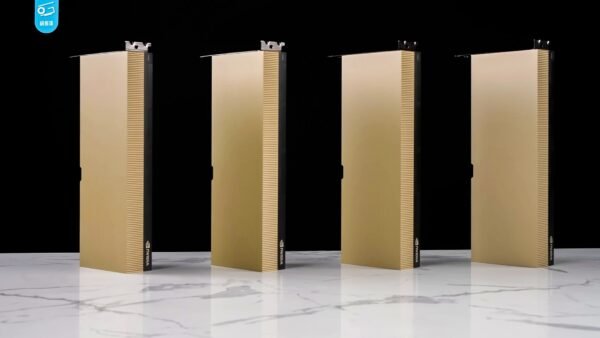
US Approved Nearly 880,000 Advanced AI Chips for China, House Records Show
House Foreign Affairs Committee records show the Commerce Department approved licences for 879,868 Nvidia and AMD AI chips…
Trump Hosts Third Meme Coin Gala as $TRUMP Crashes 99% and a $518 Stake Buys a Seat
President Donald Trump hosted his third gala dinner for the top holders of his $TRUMP meme coin on…

US Army to Detonate Nearly Five Tons of Unstable Explosives in Iowa on Tuesday Despite Court Order
The US Army says it will detonate 68 barrels of degraded lead azide in Middletown, Iowa, by Tuesday,…