
Malaysia to Send 6,803 Myanmar Nationals Home in December, Days After World Court’s Genocide Ruling

Malaysia Presses Ahead With Returns Days After Genocide Verdict
Malaysia will send another 6,803 Myanmar nationals back to Myanmar next month, Prime Minister Anwar Ibrahim told parliament on Tuesday, pressing ahead with a repatriation programme less than a week after the world’s highest court ruled that Myanmar committed genocide against its Rohingya minority. The announcement, reported by the Associated Press and Reuters, puts one of South-East Asia’s most prominent governments in the uncomfortable position of returning people to the very state the International Court of Justice has just condemned.
Anwar laid out the plan in the lower house of parliament in Kuala Lumpur. Three naval vessels sent by Myanmar will carry 1,500 people home on 6 and 7 December, while a further 5,303 will be flown back during the month, with the Myanmar government paying for the flights. The prime minister said Malaysia had already returned 10,476 Myanmar nationals this year, including 1,476 who were taken home aboard a Myanmar naval vessel on 29 September.
The timing is what makes the announcement so striking. On 19 November, the International Court of Justice in The Hague ruled by nine votes to six that Myanmar’s security forces committed genocide against the Rohingya during military “clearance operations” in northern Rakhine State in 2017. The court found that the evidence supported an estimate of about 10,000 Rohingya violently killed, alongside mass rape, the burning of villages and the destruction of thousands of homes. It was the first time the court has ever found a state responsible for genocide.
Anwar did not shy away from that verdict. He told parliament that Malaysia respected the court’s ruling, and he acknowledged that many of the asylum seekers in Malaysia were victims of atrocities carried out by the Myanmar regime. But he said Malaysia could no longer afford to host refugees indefinitely, and he argued that the returns were consistent with the court’s own language, which called for a safe and dignified return for those fleeing persecution. “Malaysia has not abandoned its principles of upholding the rights of the people of Myanmar,” he said, according to the Guardian’s account of his remarks.
He also offered an assurance about the people already sent back. Malaysia had secured a guarantee of a safe and dignified return, he said, adding that, based on monitoring by Malaysian intelligence, none of the 10,476 people returned so far had been subjected to any form of pressure. Rights groups, however, have questioned how such monitoring can be verified, and the United Nations has previously warned that migrants sent back to Myanmar could face a dangerous homecoming.
The Numbers Behind the Decision
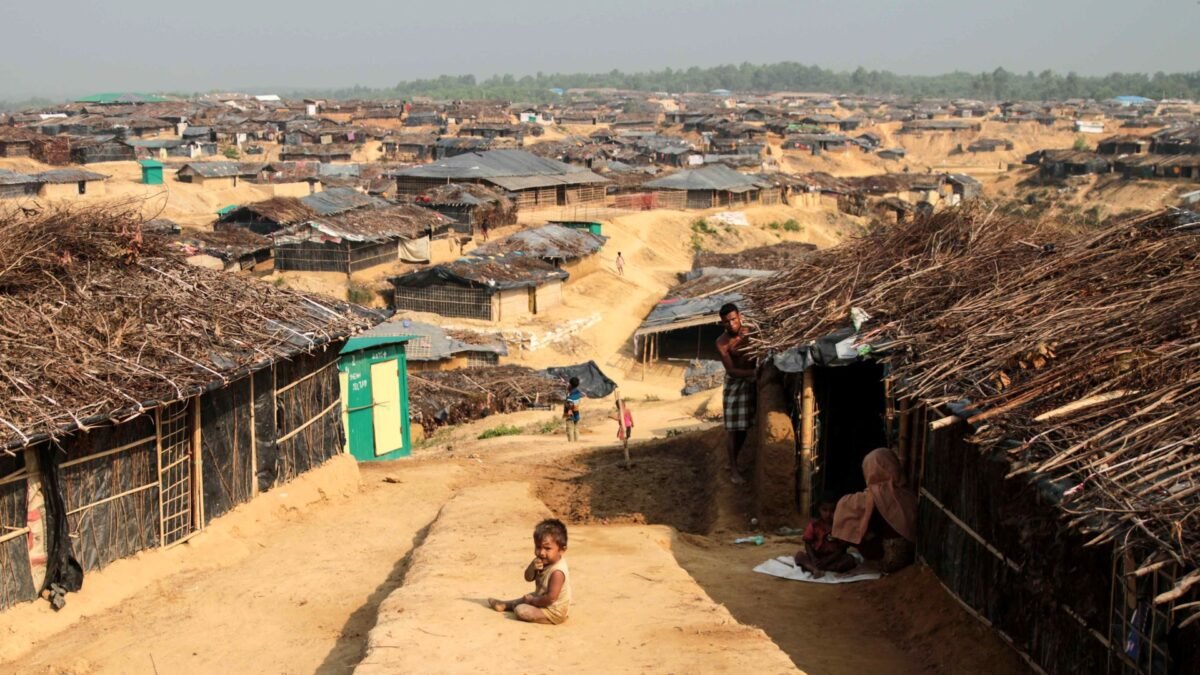
Malaysia hosts one of the largest Myanmar refugee populations in the region. According to the Associated Press, nearly 200,000 refugees from Myanmar live in the country, including Rohingya who fled the military crackdown and members of other ethnic minorities. Figures from the UN refugee agency cited by Reuters put the number of refugees and asylum seekers registered in Malaysia at 225,740 as of August, around 90 per cent of them from Myanmar. A separate count cited in reporting on the announcement said about 193,000 Myanmar refugees were registered at the end of February, roughly two-thirds of them Rohingya.
The scale of the repatriation programme has grown steadily through the year. The 1,476 people who boarded a Myanmar naval vessel at the Lumut naval base on 29 September were the first large group to be returned by sea. Since January, more than 10,000 Myanmar nationals have been sent back, most of them by air, according to Reuters. The December round of 6,803 would be the largest single month yet, and it would take the year’s total past 17,000.
What remains unclear is the most sensitive question of all: how many of the people being returned are Rohingya. Anwar referred to those being sent back as Myanmar nationals and did not say how many of them are Rohingya, according to the Insight International’s report on his remarks. Reuters likewise noted that it was unclear whether any Rohingya were among the more than 10,000 people returned since January. That distinction matters enormously, because the Rohingya are the group the world court has just ruled was the target of genocide, and because many Rohingya in Malaysia fled the very military now running the country they would be sent back to.
Malaysia’s legal framework offers the refugees little protection. The country is not a party to the 1951 Refugee Convention and has no full legal framework for refugees, which means those registered with the UN refugee agency live in a grey zone: tolerated in practice, but without the legal right to work, to formal education for their children, or to protection from detention. For years, successive Malaysian governments have described the refugee population as a financial burden and a security risk, and Anwar repeated that argument on Tuesday, saying efforts to resettle the refugees in third countries had been unsuccessful.
The Turkey Door Closes
One of those third-country options closed only days before the announcement. On 20 November, Deputy Prime Minister Ahmad Zahid Hamidi said the cabinet had approved a plan to resettle 10,000 Rohingya refugees in Turkey through a vocational training programme. The announcement was later removed from his Facebook page without explanation, and Ankara denied that it would take in around 10,000 people currently living in Malaysia. On Tuesday, Anwar confirmed that Turkey had formally told Malaysia two days earlier that it was not yet ready to consider accepting the refugees.
The collapse of the Turkey option sharpens the dilemma. With no third country willing to take significant numbers, and with Malaysia unwilling to host them indefinitely, repatriation to Myanmar becomes the default — even though Myanmar is in the middle of a civil war, even though the court has just ruled that its military committed genocide, and even though the UN has warned about the dangers of return. Anwar’s answer is engagement: he said his talks with Myanmar’s leader, Min Aung Hlaing, who visited Kuala Lumpur last month, had helped bring progress to the long-standing issue, and he defended the government’s decision to keep working with Myanmar’s military-backed government.
That engagement has drawn criticism from rights groups, who argue that it risks legitimising a regime that seized power in a coup in 2021, deposing the elected government of Aung San Suu Kyi and plunging large parts of the country into conflict. Anwar insisted that Malaysia remained committed to the Association of Southeast Asian Nations’ peace plan for ending the violence in Myanmar, and the regional bloc has indeed renewed diplomatic pressure on Myanmar for failing to implement its peace initiative, restricting the country’s top leaders from major regional summits. Myanmar, for its part, has criticised ASEAN for unfair treatment.
A Court Ruling With No Enforcement
The International Court of Justice ruling that frames this story is historic, but it also exposes the limits of international law. The case was brought by The Gambia in November 2019 on behalf of the Rohingya, and after years of proceedings the court delivered a 191-page judgment finding that Myanmar had committed genocide, failed to prevent genocide, failed to punish it, and failed to enact the domestic legislation needed to give effect to its obligations under the Genocide Convention. The court’s president, Judge Yuji Iwasawa, described in detail how villages and bridges had been set alight and bulldozed, with men and boys executed and girls and women raped during the 2017 operations, and said the murder of infants supported the inference that Myanmar’s forces acted with the intent to prevent births among the group.
The court ordered Myanmar to stop any ongoing violations, to investigate and prosecute those reasonably suspected of genocide, to give assurances of non-repetition, and to adopt measures of restitution, including allowing the safe, voluntary and dignified return of the Rohingya to their homes. The question of compensation will be decided in a later phase, with Myanmar required to report within two years on the restitution measures it has adopted. Myanmar’s government has dismissed the ruling as unfair. The court has no police force and no means of enforcing its judgments, so compliance depends on political pressure from other states — the very states, like Malaysia, that are now making their own calculations about how to deal with Myanmar’s rulers.
That is the paradox at the heart of Tuesday’s announcement. The court’s judgment speaks of return, but it speaks of a safe, voluntary and dignified return, as part of restitution owed to the victims of genocide, under conditions the victims themselves can accept. Anwar has adopted that phrase and applied it to a state-run repatriation programme, arguing that his government’s engagement with Myanmar’s leadership is the practical way to deliver it. Whether the two ideas are the same thing is the question that will be tested in December, when the first of the three naval vessels sails.
Why It Matters
This story matters for reasons that reach far beyond Malaysia’s borders, and it deserves to be read as more than a bureaucratic announcement about numbers and ships.
First, it is a test of what a genocide verdict is actually worth. The International Court of Justice has now said, in the clearest terms available to international law, that a state committed genocide. If, within days of that verdict, a neighbouring government can send thousands of people back to that state and present the move as consistent with the ruling, then the ruling risks becoming a piece of paper rather than a turning point. The court ordered restitution and a safe, voluntary and dignified return. The words “voluntary” and “safe” do the heavy lifting in that sentence, and they are precisely the words that are hardest to verify when the returns are organised by the state that was found responsible, monitored by the intelligence service of the state doing the returning, and carried out without independent observers on the ground. Malaysia says its monitoring shows no one has faced pressure. But monitoring by a government with a stated interest in the programme succeeding is not the same as independent verification, and the UN refugee agency’s access to the returnees after they arrive in Myanmar is the detail that will determine whether the assurance is real.
Second, the announcement exposes the gap between the world’s moral language and its practical politics. Every government that praised the court’s ruling also knows that no country has stepped forward to take the Rohingya in meaningful numbers. Turkey’s refusal is the latest example. Bangladesh, which hosts close to a million Rohingya in Cox’s Bazar, has made clear it wants them to go home. Malaysia says it cannot afford to keep them. The result is a circle in which everyone agrees the Rohingya deserve justice, and no one agrees to bear the cost of sheltering them while justice is pursued. That is not a new pattern — it is the pattern of every refugee crisis — but the genocide verdict was supposed to break it. Instead, the verdict is being used to justify the very returns that the verdict’s critics feared.
Third, the story is a measure of how far Myanmar’s generals have come in from the cold. Five years ago, Min Aung Hlaing was an international pariah, barred from ASEAN summits and condemned around the world for the coup. Today he is hosted in Kuala Lumpur, negotiating repatriation deals with a government that calls itself a friend of the Rohingya, while his country’s navy is chartered to carry the returnees home. Engagement has its defenders — isolation, they argue, achieves nothing, and only dialogue can secure the guarantees that make return safe — and Anwar’s position is the classic statement of that case. But engagement also has a price, and the price is visible in the symbolism of the December sailings: the navy of the state found guilty of genocide will be the vessel that carries the victims’ neighbours home.
Fourth, the numbers themselves tell a story about the region’s direction. More than 17,000 people returned in a single year, with thousands more to follow, suggests that repatriation is becoming a settled policy rather than an experiment. If the December round goes ahead without incident, other countries hosting Myanmar nationals will watch closely, and the programme could become a template. If it goes wrong — if returnees are detained, conscripted, or simply disappear from view — the damage will be done quickly and will be hard to undo. The stakes are therefore immediate and concrete, not abstract.
Finally, there is the human question that no statistic can answer. The people on those ships and planes are not numbers. Many of them have spent years in Malaysia, working without legal status, raising children who have never seen Myanmar, and living with the knowledge that the state they fled is the state they are being sent back to. Some may genuinely want to go home. Others may have agreed because the alternative — detention, or life without papers — felt worse. The difference between a voluntary return and a coerced one is often invisible from the outside, and it is decided in quiet conversations in detention centres and offices, not in parliamentary announcements. That is why the question of who is on the list, and how their consent was obtained, is the single most important fact still missing from this story, and why it should be the first question asked of the Malaysian government in the days ahead.
The court has spoken, and its judgment is final and binding. What happens next will decide whether it is also meaningful. The ships sail on 6 December. The world will be watching who boards them, and what happens to them when they arrive.
What to Watch Next
The first test comes on 6 and 7 December, when the three Myanmar naval vessels are due to sail with 1,500 people aboard. Watch for whether the UN refugee agency is given access to the passengers before departure and to the returnees after arrival, and whether the Malaysian government publishes the breakdown of how many of those boarding are Rohingya. The second test is the airlift of 5,303 people during December, and whether the pace of returns accelerates into the new year. The third is the reaction of the UN and of rights groups, who have already warned about the dangers of return, and whether any of them are able to verify the conditions on the ground in Myanmar. And the fourth is the compensation phase of the court case, which will unfold over the next two years and will keep the question of what Myanmar owes the Rohingya firmly on the international agenda. Malaysia’s answer, for now, is that engagement and repatriation are the way forward. December will show whether that answer holds.
Sources
- Associated Press — Malaysia to repatriate another 6,803 Myanmar nationals despite ICJ genocide ruling
- Reuters — Malaysia to continue working with Myanmar on refugee repatriation, PM says after genocide ruling
- The Guardian — Malaysia to send thousands of migrants back to Myanmar as PM acknowledges junta’s ‘atrocities’
- UN News — World’s top court finds Myanmar guilty of genocide against Rohingya
- International Court of Justice — Judgment of 19 November 2026, The Gambia v. Myanmar (full text, PDF)

About the Author — Abdul Mannan
Related Articles
Russia Warns Estonia It Is ‘On the Verge of Triggering Open War’ Over Border Closure
Russia has warned Estonia that its actions are "on the verge of triggering open war" after Tallinn said…
Russia Could Launch Nuclear-Armed Satellite Within Weeks, Western Intelligence Warns
Western intelligence services believe Russia could launch a nuclear-armed satellite, Sputnik-S, into orbit before the end of this…
NATO Meets in Emergency Session as Poland Confirms All Three Intruding Objects Were Russian Kh-101 Missiles
NATO's North Atlantic Council meets in Brussels today after Polish prosecutors confirmed all three objects that entered Polish…