
US Prepares Sweeping New Tariffs on China, EU and 14 Other Economies as Greer Readies Section 301 Findings

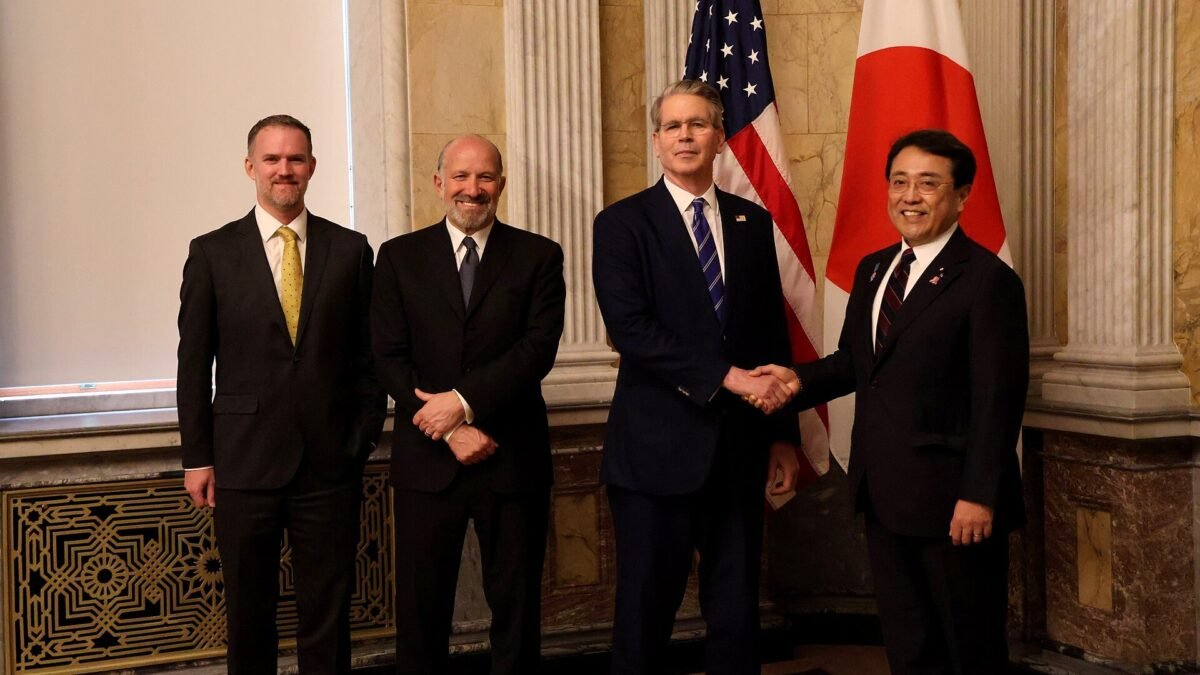
The Trump administration is preparing to unveil a sweeping new round of tariffs on China, the European Union and 14 other major trading partners, in the most ambitious attempt yet to rebuild the president’s global tariff regime after the Supreme Court struck down his earlier duties in February.
According to Reuters, the administration is poised to release the findings of a months-long investigation into industrial overcapacity as soon as Tuesday or Wednesday, with new import duties on a wide range of goods expected to follow. The Wall Street Journal first reported that the announcement was coming, and three people with knowledge of the matter confirmed to Reuters that the results of the probe, run by the Office of the United States Trade Representative under Section 301 of the Trade Act of 1974, are imminent.
United States Trade Representative Jamieson Greer, who launched the investigation in March, is expected to announce the findings. The probe covers 16 economies: China, the European Union, India, Japan, South Korea, Mexico, Vietnam, Taiwan, Thailand, Malaysia, Indonesia, Switzerland, Norway, Singapore, Bangladesh and Cambodia. Together they account for the overwhelming bulk of America’s goods trade, and the duties now being prepared would reach almost every category of imported product.
The precise tariff rates have not yet been decided, and the people who spoke to Reuters and the Journal cautioned that the timing could still change. But the shape of the plan is now clear. The administration intends to honour the tariff ceilings it negotiated with individual countries and trading blocs over the past year, in exchange for trade concessions and promises of large-scale investment in American industry. The European Union, Japan and South Korea are likely to face overall tariff rates of 15 per cent or less, according to the Journal, reflecting the deals struck with Washington. Vietnam and India could face higher duties consistent with their own agreements. China, which administration officials describe as the biggest source of excess industrial capacity, is expected to face the steepest treatment of all.
For China, the numbers matter enormously. Under the trade truce between Washington and Beijing, which runs until 10 January 2027, the administration has capped second-term tariffs on Chinese goods at 20 per cent, on top of duties of about 25 per cent imposed during President Donald Trump’s first term. The United States has already imposed a 12.5 per cent duty on all Chinese imports under the separate forced-labour investigation completed over the summer, leaving only 7.5 percentage points of headroom under the cap. Bloomberg reported earlier that the administration was considering an additional 7.5 per cent tariff on Chinese imports, which would bring the overall rate to almost exactly 20 per cent.
One person familiar with the planning told Reuters that the 20 per cent cap would probably be maintained for as long as the trade truce is extended. If the truce expires, the excess-capacity rate would snap to a higher level, giving Beijing a powerful incentive to agree an extension. The two sides are also working to cut tariffs on 30 billion dollars of non-strategic imports from each side under a process known as the “Board of Trade”, and it is unclear how any new Section 301 duties would affect that effort.
The new duties would stack on top of tariffs already in force. That is the deliberate design. When the administration launched the excess-capacity probe in March, it was one of two sweeping trade investigations opened in the spring to rebuild a tariff regime after the “reciprocal” duties imposed in 2025 were invalidated by the courts. The first probe, into weak enforcement of forced-labour laws in foreign supply chains, was completed over the summer and justified tariffs of 10 to 12.5 per cent on goods from 60 trading partners, including all 16 economies covered by the excess-capacity investigation. Any duties imposed now would be added to those rates, pushing the total burden on some imports substantially higher.
Greer has framed the investigation as a defence of American manufacturing. “The United States will no longer sacrifice its industrial base to other countries that may be exporting their problems with excess capacity and production to us,” he said when the probe was launched. In its filing in March, his office said there was evidence that countries, led by China, had aggressively expanded production in strategic sectors beyond what demand can support, and that China and the European Union maintained large global goods surpluses. One figure cited in the Federal Register notice was China’s record global goods trade surplus of more than 1.2 trillion dollars in 2025.
According to Reuters, the administration has singled out China as the biggest source of excess industrial capacity, which it says is flooding global markets with steel, aluminium, electric vehicles, appliances, solar products and other goods. China has rejected the accusations, saying its exports reflect competitive advantages rather than unfair practices. The probe is also partly directed at Chinese investment in Southeast Asian countries, including Vietnam, Indonesia and Cambodia, where Chinese firms have built factories to manufacture goods for the American market and avoid tariffs — a practice Washington describes as circumvention.
Several of the countries under investigation have pushed back. India, Singapore, Norway and Vietnam have all disputed the administration’s allegations of industrial overcapacity, according to the Journal. But the administration appears undeterred. The Journal reported that it could retain the option of raising tariffs further if countries fail to address their industrial subsidies through negotiations with Washington.
The timing is delicate. The announcement would come just weeks before the Group of 20 leaders’ summit in Miami on 14 and 15 December, where Trump and Chinese leader Xi Jinping are expected to meet, and some trade experts expect the administration to wait until after the summit. Others note that Greer told Bloomberg TV on Friday that he expects the industrial overcapacity report to be released soon and “certainly” before the end of the year. The Politico report carried by Yahoo said the announcement would come on Tuesday night, and three other people briefed by the administration confirmed that the report was being finalised and the results would be announced as soon as Tuesday.
Markets have already reacted. United States stock futures slipped lower on Tuesday after the Journal’s report, with the S&P 500 and the Nasdaq extending losses. The reaction reflects a familiar pattern: investors have repeatedly sold on tariff news this year, even as the administration insists that the duties are a tool to rebuild American industry.
The announcement would also land in the middle of tense negotiations with Mexico over the renewal of the United States-Mexico-Canada Agreement, which governs trade across North America. Mexico is one of the 16 economies under investigation, and the prospect of new duties on Mexican goods could complicate talks that are already fraught. The duties would also come with a raft of carve-outs, according to the Politico report: products such as steel, aluminium and automobiles that are already subject to separate national-security tariffs are likely to be exempt, and targeted countries will still have an opportunity to weigh in through hearings, public comments and closed-door talks before the rates are finalised. There will also be an opportunity for future tariff reductions if countries take steps to reduce their manufacturing overcapacity.
Legal challenges are almost certain. Like the administration’s other efforts to impose tariffs after its Supreme Court defeat, any new duties based on this investigation are likely to be challenged in court. The forced-labour tariffs are already under scrutiny at the United States Court of International Trade. The administration’s lawyers are betting that Section 301, a statute that has survived decades of use, will prove a sturdier legal foundation than the emergency-powers law the Supreme Court rejected in February. That law, the International Emergency Economic Powers Act, was the basis for the “reciprocal” tariffs imposed in 2025, and the court ruled that it did not authorise the president to impose duties of that scale.
The political context has also shifted. A Reuters/Ipsos opinion poll taken after November’s midterm elections found that 62 per cent of respondents would support efforts to repeal the tariffs, and the administration’s own figures show that tariffs have contributed to higher prices on consumer goods in the United States. KPMG chief economist Diane Swonk warned on Monday that additional tariffs could reignite inflationary pressures, and that China could use its control over supplies of rare earth elements as leverage in any retaliation.
Yet the administration shows no sign of backing away. The excess-capacity probe is the second of two investigations designed to replace the invalidated duties with a new, legally durable tariff architecture, and Greer’s office has spent eight months building the record. The report’s release, whenever it comes, will be the moment that architecture is put to the test — in the markets, in the courts, and in capitals from Brussels to Beijing.
Analysis: Why It Matters
This is not just another tariff announcement. It is the Trump administration’s answer to the most serious legal defeat its trade policy has suffered, and the way it is constructed tells us a great deal about how the second-term tariff regime will work.
The first thing to understand is the legal strategy. When the Supreme Court struck down the “reciprocal” tariffs in February, it did not rule that tariffs themselves are unlawful. It ruled that the particular law the president had used — an emergency-powers statute designed for sanctions and asset freezes, not for setting tax rates on imports — did not give him the authority to impose duties on that scale. The administration’s response has been to rebuild its tariff edifice on older, sturdier foundations. Section 301 of the Trade Act of 1974 is a law that has been used by presidents of both parties for half a century, most famously against China in 2018 and 2019. It requires an investigation, a finding of unfair practices, and an opportunity for public comment before duties are imposed. That process is slower and more cumbersome than the emergency route, but it is also far harder for a court to overturn. The forced-labour investigation completed over the summer was the first brick in this new structure; the excess-capacity probe is the second, and by far the larger.
The second thing to understand is the scale. The 16 economies under investigation are not a random list. They are, with a few exceptions, the countries that run the largest trade surpluses with the United States, and together they cover the vast majority of American imports. The investigation is not aimed at a single country or a single sector. It is a judgement about the structure of the global economy itself: that too much manufacturing capacity has been built, too cheaply, in too few places, and that the result is a flood of goods that undercuts American producers. Whether or not that diagnosis is right — and many economists would dispute it, arguing that cheap imports benefit American consumers and that overcapacity is a normal feature of a competitive market — it is a coherent theory, and it is one that the administration has now spent eight months documenting.
The third point is the careful calibration around the deals already struck. The administration is not simply imposing the highest possible rates. It is honouring the ceilings negotiated over the past year: 15 per cent for the European Union, Japan and South Korea, 20 per cent for China under the truce. That restraint is not generosity. It is the price of the agreements themselves. The European Union, for example, accepted its 15 per cent ceiling in the Turnberry deal struck with European Commission President Ursula von der Leyen in 2025, in exchange for trade concessions and promises of investment in American industry. To breach that ceiling now would destroy the credibility of every deal the administration has signed. The message is that the new duties will restore tariff levels to roughly where they were before the Supreme Court ruling, not push them to new heights — at least for countries that have already made deals.
China is the exception, and deliberately so. The administration regards Beijing’s industrial subsidies as the most extensive and disruptive in the world, and the structure of the new duties reflects that view. The 7.5 percentage points of headroom under the 20 per cent truce cap is not a coincidence; it is the precise space the administration has left itself to act. And the warning that the rate would “snap to a higher level” if the truce expires is a lever, not a threat made in anger. It gives Beijing a reason to extend the truce in January, and it gives Washington a reason to keep negotiating. The “Board of Trade” process, under which the two sides are cutting tariffs on 30 billion dollars of non-strategic imports, is the other side of the same coin: pressure and engagement, applied at the same time.
The fourth point is the timing, and here the administration faces a genuine dilemma. Announcing the findings before the G20 summit in Miami on 14 and 15 December would allow the president to arrive with a fresh demonstration of leverage, and to meet Xi Jinping with the new duties already on the table. But it would also risk poisoning the summit before it begins, and it would hand Beijing a grievance to air in front of the world’s other major economies. Waiting until after the summit would preserve the atmosphere for negotiation, but it would also look like hesitation — and this administration has never been comfortable looking hesitant. The reports that the announcement could come as soon as Tuesday night suggest that the balance of opinion inside the administration has tipped towards acting now. The fact that Greer told Bloomberg TV on Friday that the report would be released “certainly” before the end of the year, and the fact that the report is now described as being finalised, both point in the same direction.
The fifth point is the domestic politics. The Reuters/Ipsos poll finding that 62 per cent of Americans would support efforts to repeal the tariffs is a striking number, and it comes after a midterm election in which the cost of living was a central issue. The administration’s tariffs have, by its own acknowledgement, contributed to higher prices on consumer goods. Diane Swonk’s warning that further duties could reignite inflationary pressures is not an abstract concern; it is a description of what American households would actually experience. The administration’s answer is that the short-term cost is worth the long-term gain of a rebuilt industrial base. That is a defensible argument, but it is also a gamble, and the poll numbers suggest that voters are not yet convinced. The coming months will test whether the administration can hold the political line while the economic costs accumulate.
The sixth point is the legal risk. Section 301 is a strong statute, but it is not invulnerable. The forced-labour tariffs imposed under a parallel investigation are already being challenged at the United States Court of International Trade, and any duties imposed under the excess-capacity probe will almost certainly face similar challenges. Importers, trade associations and affected countries will argue that the investigation’s findings are overstated, that the duties are disproportionate, or that the administration has not followed the required procedures. The courts will take months, perhaps years, to resolve those questions. In the meantime, the duties will be collected, the prices will be paid, and the trade flows will adjust. That is the nature of trade policy: the law moves slowly, but the money moves immediately.
Finally, there is the question of what this means for the wider world. The 16 economies under investigation include some of America’s closest allies — Japan, South Korea, the European Union, Norway, Switzerland, Singapore — as well as its principal rival. The Politico report noted that the threat of further tariffs alone is likely to enrage foreign allies already frustrated by other elements of the president’s trade policies, which they believe violate existing agreements. That frustration is real, and it is growing. But it is also worth noting that the administration has chosen to work through a formal investigation, with hearings and public comment, rather than by executive fiat. That process gives other countries a chance to respond, to negotiate, and to offer concessions. The opportunity for future tariff reductions, if countries take steps to reduce their manufacturing overcapacity, is an explicit invitation to bargain. Whether the invitation is accepted will determine whether this becomes a new trade war or a new trade settlement.
What to watch next is straightforward. First, the announcement itself: when Greer releases the report, what rates it proposes, and which products are exempt. Second, the reaction from Beijing, Brussels and Tokyo, and whether any of them retaliate or offer concessions. Third, the G20 summit in Miami, where Trump and Xi are expected to meet and where the trade truce’s future will be decided. Fourth, the legal challenges, which will begin almost as soon as the duties are imposed. And fifth, the economic data: whether prices rise, whether imports shift to other countries, and whether American manufacturing actually benefits. The answers to those questions will determine whether this is the moment the administration finally built a tariff regime that lasts — or the moment it discovered that the old problems had simply been given new names.
Sources
- Reuters — Trump administration set to unveil new tariffs after probe on excess factory capacity, sources say
- The Wall Street Journal — U.S. Prepares to Raise Tariffs on China and Other Countries
- Politico via DailyFoxNews — Trump administration tees up tariff hikes on EU, China, others
- Newsmax — Trump Readies New Tariffs on China, Other Nations
- Bloomberg Tax — US Readies Tariff Hike on China, EU Goods as Soon as Tuesday

About the Author — Abdul Mannan
Related Articles

Malaysia to Send 6,803 Myanmar Nationals Home in December, Days After World Court’s Genocide Ruling
Malaysia will repatriate 6,803 Myanmar nationals in December — 1,500 by naval vessels on 6–7 December and 5,303…
Russia Warns Estonia It Is ‘On the Verge of Triggering Open War’ Over Border Closure
Russia has warned Estonia that its actions are "on the verge of triggering open war" after Tallinn said…

Russia Could Launch Nuclear-Armed Satellite Within Weeks, Western Intelligence Warns
Western intelligence services believe Russia could launch a nuclear-armed satellite, Sputnik-S, into orbit before the end of this…