
Senegal Reinstated as AFCON 2025 Champions as CAS Overturns Morocco’s Title Award

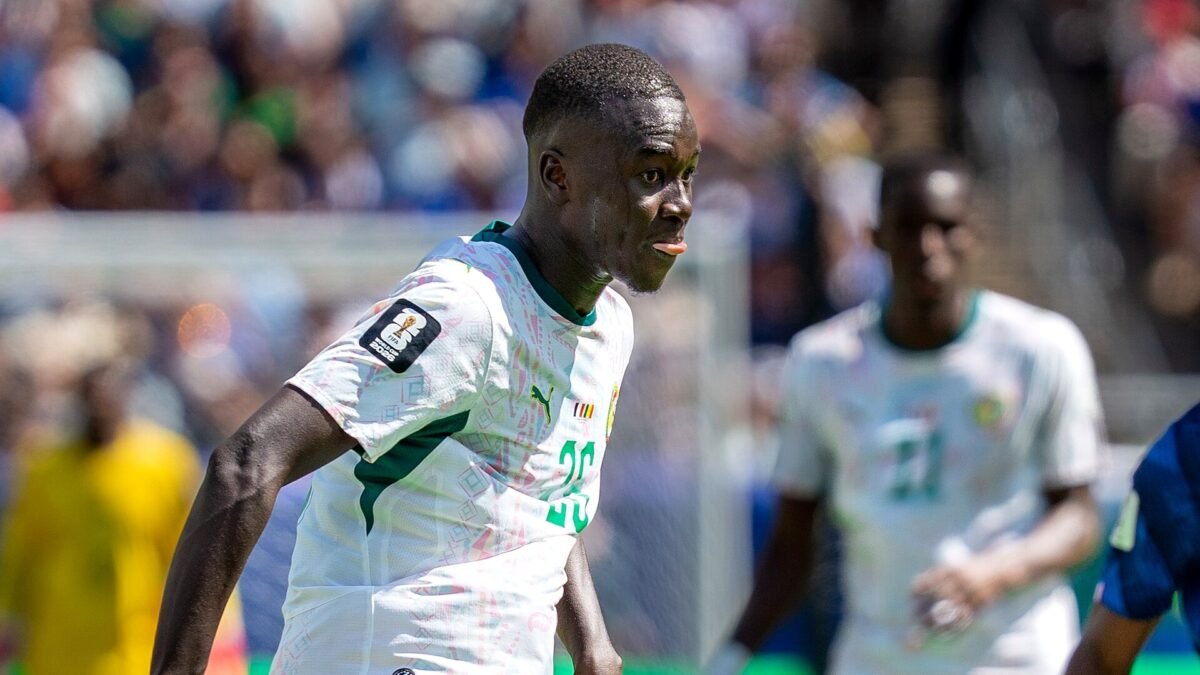
Senegal are the champions of Africa again. Ten months after they beat Morocco 1-0 in one of the most chaotic finals in the history of the Africa Cup of Nations, the Court of Arbitration for Sport (CAS) ruled on Tuesday that the result stands, restoring the title that African football’s own appeal body had taken away from them in March.
The ruling, which CAS said was unanimous, ends a legal saga that began in the final minutes of the match in Rabat on 18 January and ran through three separate football tribunals. It confirms Senegal as the winners of the 2025 Africa Cup of Nations (AFCON) for the second time in three editions, and it leaves Morocco, the host nation, as runners-up for the second time in the space of a year: first on the pitch, and now in the courtroom.
“The Court of Arbitration for Sport has upheld the appeal by the Senegalese Football Federation against the Confederation of African Football and the Royal Moroccan Football Federation concerning the final of the Africa Cup of Nations Morocco 2025,” CAS said in a statement, according to Reuters. “The decision rendered by the CAF Appeal Board is set aside and the decision by the CAF Disciplinary Board is reinstated. Consequently, the result obtained at the end of the AFCON 2025 final is confirmed (1-0 for Senegal).”
The Senegalese Football Federation celebrated the verdict on Instagram with the words: “Again and Always African Champions.” Morocco’s federation, by contrast, said it was “astonished” by the decision and “affirms its intention to pursue all available legal procedures to appeal the decision”, Sky Sports reported.
The heart of the case was not whether Senegal played the better football on the night. It was whether a referee’s decision, taken in the middle of a match that had descended into disorder, could be overturned months later by administrators. CAS said it could not.
How the final descended into chaos
The final, played at the Prince Moulay Abdellah Stadium in Rabat on Sunday 18 January, had been goalless for 92 minutes when the match unravelled in a sequence of incidents that no one in the stadium will forget.
Senegal thought they had taken the lead in the second minute of stoppage time, when Ismaila Sarr put the ball in the net. But the referee, Jean-Jacques Ngambo Ndala of DR Congo, had already blown his whistle for a foul by Abdoulaye Seck on Morocco captain Achraf Hakimi in the build-up. Because the whistle came before the ball crossed the line, the video assistant referee could not intervene even if it had judged the decision wrong, according to Sports Illustrated.
Minutes later, the drama swung the other way. Morocco’s Brahim Díaz went down under contact from El Hadji Malick Diouf at a corner. Play was initially waved on, but Ndala was directed to his pitchside monitor by the video assistant referee and, after making his way through a thicket of protesting Senegal players, awarded a penalty to the hosts.
Senegal’s head coach, Pape Thiaw, reacted by ordering his players off the pitch. Most of them followed him towards the tunnel. Captain Sadio Mané stayed on the field, and then went into the dressing room to persuade his team-mates to return, according to CNN and Sports Illustrated. After a stoppage of about 14 minutes, the Senegal players came back out and the match resumed, Reuters reported.
What happened next decided the match twice over. Díaz attempted a Panenka penalty, chipping the ball gently down the middle, and goalkeeper Edouard Mendy saved it. Then, in the fourth minute of extra time, Pape Gueye struck a powerful shot to give Senegal a 1-0 lead. Morocco could not find an answer, and Senegal celebrated their second continental title.
The celebrations in Dakar were unrestrained. The team paraded the trophy through the streets of the capital. But the joy lasted barely two months.
Ten months of legal wrangling
Morocco’s football federation was not willing to accept the defeat. It first took its complaint to the Confederation of African Football’s disciplinary committee, which rejected the appeal on 28 January. That same day, CAF fined both federations for their conduct during the final and suspended Senegal coach Pape Thiaw for five matches, according to Sports Illustrated.
Morocco then went to CAF’s appeal board, and there it succeeded. On 17 March, the appeal board ruled that Senegal had forfeited the final by walking off the pitch, overturned the result, and recorded a 3-0 victory for Morocco. Just like that, the trophy changed hands without a ball being kicked. Morocco, which had lost the final on the pitch, became the champions in the record books, and Senegal, which had won it, became the team that had forfeited.
Senegal’s federation appealed to CAS on 25 March. The case was heard behind closed doors at the court’s headquarters in Lausanne, Switzerland, on 8 October. No verdict was reached on the day. The three-member panel, chaired by French sports law expert Gérald Simon, with Italian international law professor Luigi Fumagalli and Ulrich Haas, a Hamburg-based attorney and professor of law at the University of Zurich, deliberated for more than six weeks before announcing its decision on Tuesday, 24 November, according to Reuters.
The wait meant that the identity of the AFCON 2025 champions was unresolved for 310 days after the final whistle, as Sports Illustrated noted. For most of that time, Morocco were listed as the champions. Senegal were, in the official record, a team that had walked off and forfeited. Players who had lifted a trophy in Rabat in January spent the rest of the year unsure whether history would record them as winners at all.
What CAS actually decided
The case turned on a legal principle known as the “field of play” doctrine. In football, as in most sports, decisions taken by the referee about what happens on the pitch are treated as final. A court or a disciplinary body will not normally re-referee a match. The question before CAS was whether Ndala’s decision to restart the final after the walk-off fell inside that protected territory, or whether it was something else entirely, a disciplinary matter that an appeal body could review.
Morocco argued that the walk-off was a breach of Articles 82 and 84 of the tournament regulations. Article 82 states that if a team leaves the ground before the end of the match without the referee’s authorisation, it shall be considered the loser and eliminated from the competition. Article 84 provides that a team which contravenes Article 82 is eliminated and awarded a 3-0 defeat. Morocco’s case was that Senegal’s temporary departure triggered those provisions, and that the referee should have brought the match to an early conclusion.
The panel disagreed. It found that the referee’s decision to resume the match, or to stop it, fell “definitively within his sole authority”, according to the CAS statement quoted by Sky Sports. “By blowing his whistle to restart play, the referee considered that the conditions for resuming the match had been met — both teams were on the pitch again, and both expressed their willingness to resume.” The panel added that the effects of the referee’s decision were limited to the pitch.
Crucially, CAS held that Articles 82 and 84 apply only when a team’s conduct leads the referee to call off a match permanently. Ndala did not call the final off. He restarted it, and the match produced a sporting result. Those provisions therefore did not apply. “In conclusion, the panel considers that in resuming the match, the referee did not err in law,” CAS said, according to Sports Illustrated.
CAS secretary general Matthieu Reeb put the point more plainly to reporters. “The team’s temporary withdrawal from the field was not followed by the abandonment of the match. If the referee had blown the final whistle, he could have done so, and perhaps things would have turned out differently. The CAS arbitrators considered that the referee was within his rights,” he said, according to Reuters. He added: “There could only be one winner in this final, just as there could only be one winner in this legal process. The law has spoken. I think we simply have to accept the decision of the Court of Arbitration for Sport.”
The panel also noted that the Senegal federation, coach Pape Thiaw and players Iliman Ndiaye and Ismaila Sarr had already been sanctioned by CAF in separate disciplinary proceedings, Reuters reported. In other words, the walk-off had already been punished. What CAS refused to do was let that punishment extend to erasing the result of a match that had, in the end, been played to a finish.
CAS said the full grounds of the decision were issued to the parties on Tuesday and that the award will be published in due course unless confidentiality is requested.
The road to Rabat
The final itself was the meeting of the two strongest teams of the tournament, and its controversy should not obscure the football that brought them there.
Senegal reached the final by beating Egypt 1-0 in the semi-final in Tangier, with Sadio Mané scoring the winner in the 78th minute. The victory ended Egypt’s pursuit of a record-extending eighth continental title and confirmed Senegal’s status as one of Africa’s most consistent tournament teams, according to CAF. It was Senegal’s fourth AFCON final, and their third in the last four editions.
Morocco’s route was harder. The hosts beat Nigeria 4-2 on penalties after a goalless semi-final in front of more than 65,000 fans at the Prince Moulay Abdellah Stadium, with goalkeeper Yassine Bounou saving two spot-kicks and Youssef En-Nesyri converting the winning penalty. The victory took Morocco to their first AFCON final since they lifted the trophy on home soil in 1976, half a century earlier.
The final was, on paper, a meeting of two generations of African football excellence. Morocco, the team that had reached the semi-finals of the 2022 World Cup and were co-hosts of the 2030 World Cup, were chasing a first continental title in 50 years in front of their own supporters. Senegal, the champions of the 2021 edition, won in Cameroon in early 2022, were chasing a second title in three editions and a confirmation that their golden generation, led by Mané, was not a one-tournament wonder.
Morocco’s coach at the time, Walid Regragui, likened the final to something out of “a Hitchcock script”, according to Sports Illustrated. The ten months that followed have only made the comparison more apt.
Reaction in Dakar and Rabat
In Senegal, the ruling was received as the correction of an injustice. Former Nigeria player and coach Samson Siasia, speaking to Reuters, said: “Senegal won fair and square, the referee in charge after speaking to both captains continued and they agreed. At the end of the match Senegal won. This is a dead issue, please let’s move on.”
The sentiment will be widely shared in Dakar, where the team had already been celebrated as champions in January, only to see the title taken from them by a committee in March. For the players, the ruling restores a triumph they had already lived. Mané, who had stayed on the pitch when his team-mates walked off and then talked them back out of the dressing room, can now be remembered as the captain who kept his team in the tournament and then led them to the title, rather than the captain of a team that forfeited a final.
In Morocco, the reaction was very different. The federation said it was “astonished” and intends to pursue all available legal procedures to appeal the decision, according to Sky Sports. Whether such an appeal can succeed is far from clear. CAS is sport’s highest court, and its awards are very rarely overturned. The Swiss Federal Tribunal, the only body that can review a CAS award, does so on narrow procedural grounds, not on the merits of the case.
For the Moroccan players, the ruling is a second defeat. They lost the final in January, briefly held the title from March, and have now lost it again in November. As CNN observed, Morocco’s players have now “tasted defeat both on the pitch and now again almost a year later”. Hakimi, Díaz, Bounou and their team-mates must live with the knowledge that they came within a saved penalty of a first title in 50 years, and that the courts have now confirmed what the scoreboard said on the night.
Analysis: Why It Matters
The CAS ruling matters for reasons that reach well beyond the question of whose name is engraved on a trophy. It is, first and foremost, a ruling about who decides football matches: referees, or lawyers.
Football has always lived with the idea that the referee’s word is final, even when the referee is wrong. That idea is not a quaint tradition. It is the only thing that makes the sport workable. Every match contains decisions that one side or the other believes to be wrong, and if every such decision could be re-litigated in a tribunal months later, no result would ever be safe. The field of play doctrine exists to draw a line: what happens on the pitch stays on the pitch, and the remedy for a bad decision is a better referee next time, not a rewritten result.
CAF’s appeal board crossed that line in March. It took a match that had been played to a finish, with both teams on the pitch and both having agreed to continue, and it replaced the result with a forfeit. The danger of that precedent was obvious to anyone who thought about it for more than a moment. If a temporary walk-off could erase a result after the match had resumed and finished, then any team that felt wronged by a referee would have an incentive to walk off, and any losing team would have an incentive to argue afterwards that the match should never have continued. Results would become provisional, and the sport would be governed by whoever had the best lawyers rather than the best players.
CAS has now closed that door, and in doing so it has done African football a considerable favour. The panel’s reasoning was narrow and careful. It did not say that walking off is acceptable. It did not say that Senegal’s conduct was beyond reproach. It said, in effect, that the referee was the person with the authority to decide whether the match continued, that he decided it should, that both teams accepted that decision at the time, and that the regulations Morocco relied upon simply did not cover a match that was restarted and completed. That is a ruling about the limits of disciplinary power, and it is a sound one.
But the ruling also exposes a governance problem inside African football that will not be fixed by a court decision in Lausanne. Consider the sequence of events. CAF’s own disciplinary committee rejected Morocco’s appeal in January. CAF’s own appeal board then overturned that decision in March and awarded the title to Morocco. Two bodies inside the same organisation, applying the same regulations to the same facts, reached opposite conclusions. That is not a disagreement about a close call. It is a failure of institutional coherence, and it left the identity of the continental champions uncertain for the best part of a year.
The episode also underlines a wider mistrust that runs through African football. As CNN noted in its reporting, the reaction of Senegal’s team was “in part the product of a deep-rooted mistrust in African soccer, notably between the national federations and CAF”. The talk before the final, much of it unfounded, was that Morocco, as hosts, were receiving favourable refereeing and scheduling. Whether or not any of that talk had substance, it created an atmosphere in which a disputed penalty could trigger a walk-off, because the players genuinely believed the match was being taken from them. Trust, once lost, is not restored by a court ruling. It is restored by transparent, consistent governance, and by refereeing appointments and disciplinary processes that are visibly independent of the politics of the host nation.
There is also a lesson here about the limits of the video assistant referee. The disallowed Senegal goal could not be reviewed because the referee had blown his whistle before the ball crossed the line. The penalty could be reviewed, and was. That asymmetry, a goal that could not be checked against a penalty that could, was at the root of the players’ sense of injustice. It was not a failure of technology. It was a failure of timing, of a fraction of a second, and it is worth remembering that for all the technology now available, football is still decided by human beings making instant judgements under extreme pressure. CAS acknowledged that Ndala decided “under extreme tension” but said that did not make his decision arbitrary. That is the right standard, and it is one that should be applied generously to referees everywhere.
For Senegal, the ruling confirms a golden era. Two titles in three editions, a fourth final in five tournaments, and a squad built around players who have now won at the highest level of African football more than once. Mané, who said after the semi-final against Egypt that he was playing in the tournament for the last time, has a fitting farewell to the competition. Gueye, whose extra-time goal won the final, has his moment restored. Mendy, whose penalty save kept Senegal alive, has his heroics confirmed as the turning point of a championship rather than a footnote to a forfeit.
For Morocco, the disappointment is real and should not be minimised. A home tournament, a first final in 50 years, a penalty to win it in stoppage time, and then a missed Panenka, an extra-time goal, and now a court ruling that confirms the defeat. Morocco remain, by common consent, one of the strongest teams in African football, and they will co-host the 2030 World Cup. The test for them now is whether the bitterness of this episode hardens into a grievance that poisons their relationship with CAF, or whether they accept the verdict, as Reeb urged, and move on. Their federation’s statement suggests the grievance is not yet spent.
For African football as a whole, the episode has been damaging. A tournament that was, by most accounts, a brilliant showcase for the continent ended with its final being decided in a Swiss courtroom ten months later. CNN’s assessment was blunt: “We’re living in a strange world if soccer matches are now being decided in the courtroom,” and the fact that it took more than 300 days to reach a conclusion was “an embarrassing indictment of the sport”. That embarrassment belongs not to the players, who played the match to a finish, but to the administrators who could not agree among themselves what the result was.
The most important sentence in the CAS ruling may be the simplest one: the result obtained at the end of the final is confirmed. Football is, at its best, a sport in which what happens on the pitch is what counts. On 18 January, Senegal won 1-0 after extra time. On 24 November, the law agreed. That is how it should have been all along, and the fact that it took ten months and three tribunals to say so is the real scandal of this affair.
What happens next
Senegal will now be able to celebrate their title properly, and the federation is expected to mark the ruling with celebrations in Dakar. The players can finally call themselves champions without qualification.
Morocco’s federation has said it intends to pursue further legal action, but the scope for overturning a CAS award is extremely narrow, and most legal observers would expect the ruling to stand. The Royal Moroccan Football Federation had also written to CAS on Tuesday asking for the announcement of the decision to be postponed, according to Sky Sports, a request that was evidently not granted.
CAF, meanwhile, faces questions about its own processes. The organisation will need to explain how its disciplinary committee and its appeal board reached opposite conclusions on the same case, and whether its regulations need to be clarified so that a similar dispute cannot arise again. One obvious reform would be to make explicit what CAS has now held: that a match which is restarted and completed cannot be forfeited after the event.
The next Africa Cup of Nations takes place in the summer of 2027 in Kenya, Uganda and Tanzania, according to NBC Sports. Senegal will arrive there as the defending champions, a title they have now held, lost and regained without playing a match in between. They will have only a few months to enjoy it. But after ten months of uncertainty, that is a problem they will be very happy to have.
Sources
- Reuters — Senegal reinstated as 2025 Africa Cup of Nations winners
- CNN — Senegal reinstated as 2025 AFCON champion after winning appeal
- Sky Sports — Senegal crowned AFCON 2025 champions by Court of Arbitration for Sport following appeal
- Sports Illustrated — Why Senegal Has Been Reinstated As AFCON Champion in Latest Twist to Crazy Story
- CAF Online — AFCON 2025: Senegal to face hosts Morocco in final after dramatic semi-final night

About the Author — Abdul Mannan
Related Articles
Infantino Took 39 Private Jet Flights in 115 Days, BBC Finds, as FIFA Election Fight Heats Up
A BBC Sport investigation found FIFA president Gianni Infantino took at least 39 private jet flights to 32…

UK Confirmed as Host of the 2035 Women’s World Cup, the First World Cup on British Soil Since 1966
FIFA has confirmed England, Scotland, Wales and Northern Ireland as hosts of the 2035 Women's World Cup —…

Dylan Larkin Traded to Montreal Canadiens in Blockbuster Deal Ending Months-Long Red Wings Saga
Montreal has acquired former Detroit captain Dylan Larkin in a blockbuster trade, ending a months-long standoff that saw…