
Dylan Larkin Traded to Montreal Canadiens in Blockbuster Deal Ending Months-Long Red Wings Saga

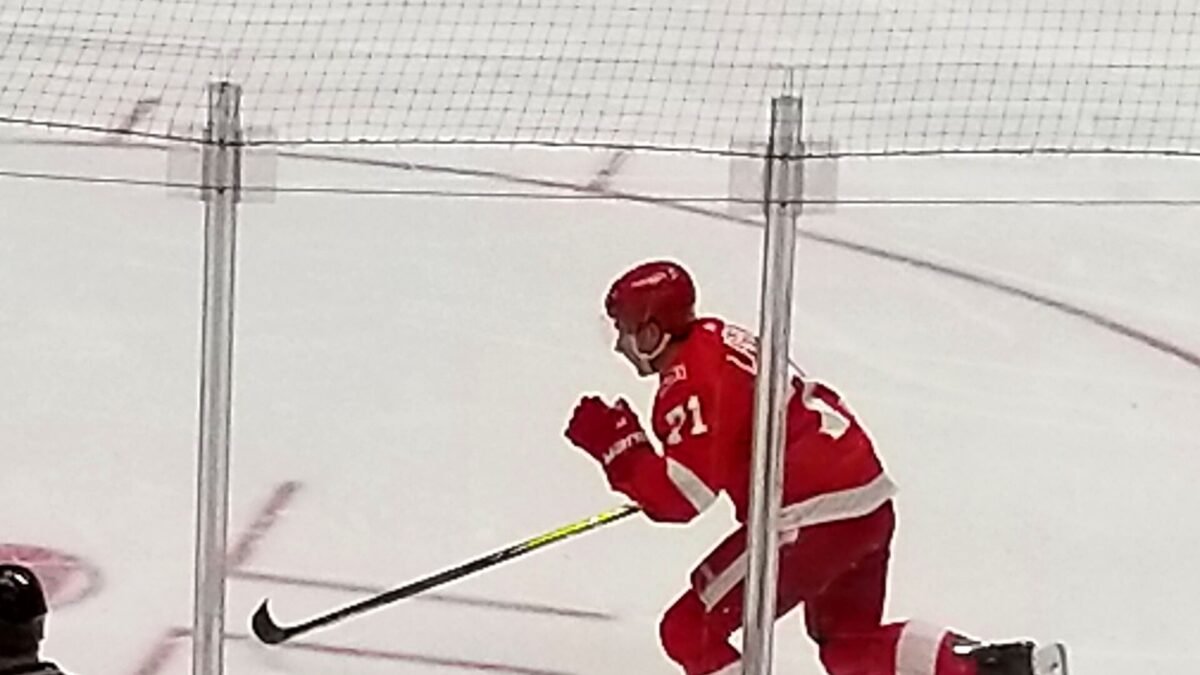
The Detroit Red Wings have traded Dylan Larkin to the Montreal Canadiens, ending one of the most uncomfortable standoffs in recent National Hockey League history and sending the former Detroit captain to the team whose fans spent weeks openly recruiting him.
The teams announced the blockbuster deal on Sunday, according to NHL.com. Montreal receives Larkin, a second-round pick in the 2028 NHL Draft and a third-round pick in the 2027 draft. Detroit receives forward Kirby Dach, goaltender Sam Montembeault, the rights to centre prospect Michael Hage, a conditional first-round pick in the 2027 draft, a conditional first-round pick in the 2029 draft, a second-round pick in 2027 and a fourth-round pick in 2028.
Larkin was on the ice for the Canadiens’ morning skate on Monday and was set to make his Montreal debut against the Los Angeles Kings at Bell Centre on Monday night, according to NHL.com. The 30-year-old centre, who spent his entire career in Detroit before the trade, had asked the Red Wings for a move after last season, was stripped of the captaincy in September, and then refused to play for the team in late October, prompting a suspension without pay.
The deal closes a saga that began in June, when Larkin’s trade request became public, and it gives both clubs what they said they needed most: Montreal gets a proven top-six centre in the middle of a push towards the play-offs, and Detroit gets a haul of young players and draft picks to feed a rebuild that has now stretched into a second decade.
A trade months in the making
Larkin’s wish to leave Detroit had been an open secret for months, according to TSN. The Waterford, Michigan native, drafted 15th overall by the Red Wings in 2014, asked for a trade after last season and used the full no-trade clause in his contract to limit the teams he would accept. At first he would only approve a move to the Minnesota Wild, the Florida Panthers or the Vegas Golden Knights. He later expanded that list to 10 teams, but Detroit could not find a deal, and the situation turned sour.
The Red Wings announced on 11 September that Larkin would no longer be the team’s captain, a role he had held since 13 January 2021. He played 10 games this season, scoring two goals and four assists, before telling the club on 29 October that he would no longer play for the Red Wings. Detroit suspended him without pay, and he forfeited more than $1 million in salary during the standoff, according to Sports Illustrated.
Larkin declined to explain publicly why he wanted out or to discuss his list of approved destinations, according to NHL.com. It was widely believed he wanted a better chance to win and to stay in the United States. The irony is that he ended up in Canada after all, in the one building where the crowd had already made its feelings plain.
When Detroit visited Montreal on 10 October, the Bell Centre crowd chanted “We want Larkin!” every time the 30-year-old stepped onto the ice during a 1-0 Canadiens win in a shootout. Larkin later said he had never imagined hearing that in that building in his career, and called the Montreal crowd passionate, knowledgeable and the best atmosphere in hockey, according to NHL.com.
According to TSN’s Pierre LeBrun, Larkin had been open to a move to the Canadiens for months, even though Montreal was not on his original list of approved teams. The Canadiens’ front office tried to keep the talks quiet so the extra attention would not damage the negotiations, and the deal came together on Friday night before it was announced on Sunday.
Montreal general manager Kent Hughes moved quickly once the door opened. “As soon as we saw that he asked to be traded we made the call,” Hughes said, according to NHL.com. His players were delighted. Cole Caufield called Larkin a superstar player and person, according to NHL.com, and the mood in the dressing room on Monday was that the general manager had, in the words of his own players, “pulled the trigger” on a deal they wanted.
What Montreal is getting
Larkin is a fast, two-way centre who has scored at least 30 goals in a season six times, including in each of the past five seasons, according to NHL.com. He has 278 goals and 649 points in 818 career games, all with Detroit. His best offensive season came in 2022-23, when he recorded 32 goals and 79 points in 80 games, according to TSN. He represented the Red Wings at the NHL All-Star Game three times, in 2016, 2022 and 2023.
He is also a proven performer on the biggest international stages. Larkin helped the United States win gold at the Winter Olympics in February 2026, the country’s first Olympic hockey gold since 1980, and he represented his country at the 4 Nations Face-Off in 2025, where the Americans finished second. Montreal fans will remember one moment in particular: Larkin scored the winning goal when the Americans defeated Canada 3-1 at Bell Centre on 15 February 2025.
He is the third player from the gold-medal-winning United States Olympic team to be traded, but the first to be traded from a United States-based team, according to NHL.com. The Canadiens now have Larkin and captain Nick Suzuki as their top two centres, a pairing that gives Montreal rare depth down the middle.
The fit looks natural. Suzuki is the captain in Montreal, which means Larkin can arrive as a supporting star rather than the face of the franchise, a role he filled with Team USA at the Olympics and at the 4 Nations Face-Off. He is locked up for five more seasons at an average annual value of $8.7 million, in the fourth season of an eight-year contract that runs through the 2030-31 season, according to TSN. For a Canadiens team that reached the Eastern Conference Final last season and sits third in the Atlantic Division at 14-6-4, according to TSN, that is a long-term commitment to a player who should still be in his prime when the window is widest.
There is also the question of the spotlight. Montreal is the most intense hockey market in the world, and Larkin will have to deal with a much brighter glare than he ever faced in Detroit. He will also return often to Detroit, where he can expect to be booed, starting with the Canadiens’ visit to Little Caesars Arena on 18 February, according to NHL.com. But the same intensity that makes Montreal demanding is what drew him there: the crowd that chanted his name in October is now his crowd.
One small detail from Monday’s morning skate caught the eye. Larkin took the ice wearing No. 89 on his helmet, according to NHL.com, rather than the No. 71 he wore for 12 seasons in Detroit. The number change is a visible marker of how complete the break is.
What Detroit is getting
For Detroit, the deal finalises an ugly divorce and bolsters the future, according to NHL.com. The most important piece is Hage, the centre prospect who currently leads NCAA Division I in scoring. Hage, 20, plays at the University of Michigan, where Larkin himself played as a freshman in 2014-15, and was the No. 21 pick of the 2024 NHL Draft.
Hage recorded 52 points, with 13 goals and 39 assists, in 39 games as a sophomore last season, and he has 26 points, with five goals and 21 assists, in 13 games as a junior this season, according to NHL.com. He also registered two goals and 13 points for Canada at the 2026 IIHF World Junior Championship, finishing as the tournament’s leading scorer on the way to a bronze medal, according to TSN. Detroit will hope he turns out to be another Larkin. The parallel is hard to miss: Larkin played at Michigan, was a mid-first-round pick, and had 47 points in 35 games as a freshman. Hage is following almost the same path.
The two conditional first-round picks matter too. According to TSN’s Chris Johnston, both the 2027 and 2029 first-round picks are top-10 protected, which means Detroit keeps them if they fall inside the top 10, a safeguard that protects the rebuild if Montreal stumbles. The 2027 second-round pick and the 2028 fourth-round pick add further depth to the draft cupboard.
Dach and Montembeault are the two pieces who can help Detroit right away, although both are pending unrestricted free agents. Dach, 25, has scored two goals and six assists in 22 games this season. The Fort Saskatchewan, Alberta native was drafted third overall by the Chicago Blackhawks in the 2019 NHL Draft, and has posted 53 goals and 144 points in 328 career games, according to TSN. Montembeault, 30, is a goaltender from Beauceville, Quebec, who owns a career record of 90-92-32 with a 3.23 goals-against average and a .896 save percentage in 231 games, all with the Canadiens, according to TSN. He has yet to play this season while working his way back from a lower-body injury sustained in October, and he had fallen out of favour in Montreal as Jacob Fowler and Jakub Dobes emerged as the Canadiens’ top two options in goal.
The trade also had a small footnote. Later on Sunday evening, the Canadiens acquired a second-round pick in the 2027 draft from the Anaheim Ducks, previously acquired from the Red Wings, in exchange for the second-round pick in the 2028 draft Montreal received in the Larkin deal, according to NHL.com.
Interim general manager Shawn Horcoff, who took over in Detroit, said on 29 October that his goal was to acquire players who could help the Red Wings right away but that he was open to all kinds of trades. He said then that the club was trying to find something fair for a return for someone of Larkin’s calibre, according to NHL.com. Once Larkin accepted a trade to the Canadiens, Detroit found a return that should help more down the road than it does today.
The drought that drove the divorce
To understand why this trade happened, it helps to look at what Larkin lived through in Detroit. He has played just five games in the Stanley Cup play-offs in his 11-season NHL career with the Red Wings, all as a rookie in 2015-16, according to NHL.com. The Red Wings have missed the play-offs for 10 straight seasons, the longest drought in their history and the longest active drought in the NHL.
That record is the backdrop to everything. Larkin was the hometown boy, the Michigan kid drafted by his hometown team, made captain at 24, and asked to lead a rebuild that never quite arrived. He played through the worst stretch in franchise history, scored 30 goals again and again, won an Olympic gold medal for his country, and still never played a meaningful spring game in Detroit after his rookie year.
The numbers since he left tell their own story. Detroit was 5-4-3 when Larkin quit on the team. The Red Wings have gone 3-8-0 since and are 8-12-3, tied for seventh place in the Atlantic Division with the Toronto Maple Leafs at 19 points, according to NHL.com. The team did not just lose its best player; it lost its captain, its identity and, for a stretch, its way.
That is the human core of this trade. A player who gave his whole career to one club, in the city where he grew up, decided the wait had gone on long enough. He asked to leave, was booed by his hometown fans, had his captaincy taken away, sat out for more than three weeks without pay, and still held his line until the club found a deal he would accept. It is hard to call that a happy ending for anyone in Detroit, but it is an ending, and endings were what both sides needed.
Detroit still has work to do. The Red Wings must deal with defenceman Simon Edvinsson, an unsigned restricted free agent who also wants to be traded. He must sign by 1 December to be eligible to play in the NHL this season, according to NHL.com. The clock is ticking on that one, but at least the club can now move on from Larkin.
Analysis: a rare trade, and a revealing one
Trades of this kind are rare in the modern NHL, and the Larkin deal is revealing in several ways. First, it is unusual for a team to trade its captain, in season, to a division rival, and rarer still for the player to be the one who forced the move. Captains are supposed to be the last players moved, the ones a rebuild is built around. When a captain asks out, it is usually a verdict on the organisation as much as on the player.
Second, the deal shows how much leverage a no-trade clause gives a player, and how little it gives a team. Larkin’s full no-trade clause let him shrink the market to three teams, then to ten, and still left Detroit waiting for months while its captain sat at home. The Red Wings did well to extract two first-round picks, a leading college prospect and two NHL players from a position of such weakness, but the weakness was real. Every day Larkin sat out, his value fell and the club’s embarrassment grew. The lesson for other teams is plain: a no-trade clause is not a detail in a contract, it is a veto over the future, and it should be handed out accordingly.
Third, the deal is a bet on timing by both sides. Montreal is betting that its window is open now. The Canadiens reached the Eastern Conference Final last season, they are among the Atlantic Division leaders, and they have added a 30-goal centre on a long contract without giving up a single player from their current roster. Dach and Montembeault were surplus in Montreal, and Hage, for all his promise, is still a college player. Montreal paid for the present with the future, which is exactly what a team in its window should do.
Detroit is betting the other way: that the future is worth more than the present. The Red Wings are not winning anything this season, with or without Larkin, and a 30-year-old centre on a $8.7 million cap hit is worth more to a contender than to a team in a rebuild. Two first-round picks and a prospect like Hage could, in three or four years, be worth far more than the seasons Larkin had left in Detroit. It is the cold logic of a rebuild, and it is hard to argue with, even if it is painful to watch.
Fourth, the trade underlines how much the geography of the NHL has changed. The idea that a player who wanted to stay in the United States would end up in Montreal, the most scrutinised market in the sport, would once have seemed far-fetched. But the Bell Centre crowd changed the calculation. Larkin heard 21,000 people chanting his name in October and decided that the pressure of Montreal was not a reason to say no, it was a reason to say yes. The fans recruited him, and the recruitment worked. That is a new kind of leverage in hockey, and other fan bases will have noticed.
There is also a wider point about loyalty in professional sport. Larkin was loyal to Detroit for 12 seasons, through a rebuild that asked everything of him and gave him five play-off games. When he finally asked for something in return, a chance to win, he was booed in his own building and stripped of his captaincy. Fans are entitled to feel betrayed, and many in Detroit will. But the other side of the story is that loyalty is a two-way street, and a club that misses the play-offs for a decade cannot reasonably expect its best player to wait forever. The trade is not a failure of loyalty; it is what happens when loyalty runs out of time.
Why it matters
This trade matters because it rearranges the balance of power in the Atlantic Division. Montreal, already a conference finalist, has just added a proven 30-goal scorer down the middle without weakening its current roster. The Canadiens’ top two centres, Suzuki and Larkin, now give them a one-two punch that few teams in the Eastern Conference can match. If Larkin settles quickly, Montreal becomes a genuine contender, not just a good young team on the rise.
It matters for Detroit because it marks the end of an era and the start of a harder truth. The Red Wings’ rebuild has now lasted a decade, and the player who was supposed to lead it out of the wilderness has left. The haul from Montreal is real, and Hage could become a star, but draft picks are promises, not players, and Detroit’s fans have heard promises before. The next two or three years will decide whether this trade is remembered as the moment the rebuild finally found its footing, or as the moment it lost its best player for a bag of maybes.
It matters for the league because it is the latest sign that star players, even captains, even hometown heroes, are willing to force their way out when a team cannot offer them a chance to win. Larkin is the third player from the gold-medal United States Olympic team to be traded. The Olympics created a generation of American stars who have now tasted winning at the highest level, and they are not willing to go back to losing. That is a healthy pressure on teams, but it is also a warning: if you cannot build a winner around your star, do not be surprised when the star leaves.
And it matters for Larkin himself, because this is his second chance. He is 30, he has five seasons left on his contract, and he has joined a team that expects to play in June. The debut against Los Angeles on Monday night is only the first step, but the real test will come in the spring, when the games matter and the Bell Centre is at its loudest. If he delivers there, the months of booing, suspension and lost pay will look like the price of getting it right. If he does not, the questions will follow him, just as they followed him out of Detroit.
What to watch next
The first thing to watch is the debut itself. Larkin’s first game as a Canadien, against the Kings at Bell Centre on Monday night, will be one of the most watched regular-season games of the year in Montreal, and the reception he gets will set the tone for everything that follows. The second is the return to Detroit on 18 February, when he skates into Little Caesars Arena as a visitor for the first time. That night will be emotional, and probably loud, in both directions.
The third is the Edvinsson deadline. Detroit’s unsigned restricted free agent defenceman must sign by 1 December to play this season, and his situation is a smaller version of the Larkin saga. How Horcoff handles it will say a lot about whether Detroit has learned from the last five months.
The fourth is Hage. The prospect is the centrepiece of Detroit’s return, and his progress at Michigan will be watched closely. If he keeps leading college hockey in scoring, the trade will start to look like a win for Detroit sooner than expected. If he stalls, the criticism will grow.
Finally, watch the standings. Montreal’s bet is that Larkin makes a good team a great one. Detroit’s bet is that the picks and the prospect make a bad team a good one, eventually. Both bets cannot be right in the short term, but both could be right in the long term. That is what makes this trade worth watching long after the headlines fade: it is two teams, at opposite ends of the cycle, each doing exactly what their moment demands.
Sources
NHL.com — Larkin saga with Red Wings ends in blockbuster trade to Canadiens
TSN — Canadiens acquire Larkin in blockbuster with Red Wings
NHL.com — Larkin traded to Canadiens by Red Wings for package involving Dach, Hage
theScore — Red Wings trade Larkin to Canadiens in blockbuster deal
Montreal Canadiens — Canadiens acquire forward Dylan Larkin from the Detroit Red Wings

About the Author — Abdul Mannan
Related Articles

Pochettino’s Manchester United Reign Begins in Ruins as Liverpool Run Riot in 4-0 Anfield Rout
Mauricio Pochettino's first match as Manchester United head coach ended in a 4-0 defeat at Liverpool, with Leny…

Alcaraz Beats Zverev to Win First ATP Finals Title and Join Tennis’s Most Exclusive Club
Carlos Alcaraz beat world No. 1 Alexander Zverev 6-2, 7-6(7) in Turin to win his first ATP Finals…

India Declare on Record 720 for 9 in Wellington as Pant and Rahul Complete Historic SENA Century Sets
India declared on 720 for 9 — the highest Test total ever scored in New Zealand — as…