
Poundland Collapses Into Administration, Putting 11,000 Jobs at Risk Weeks Before Christmas

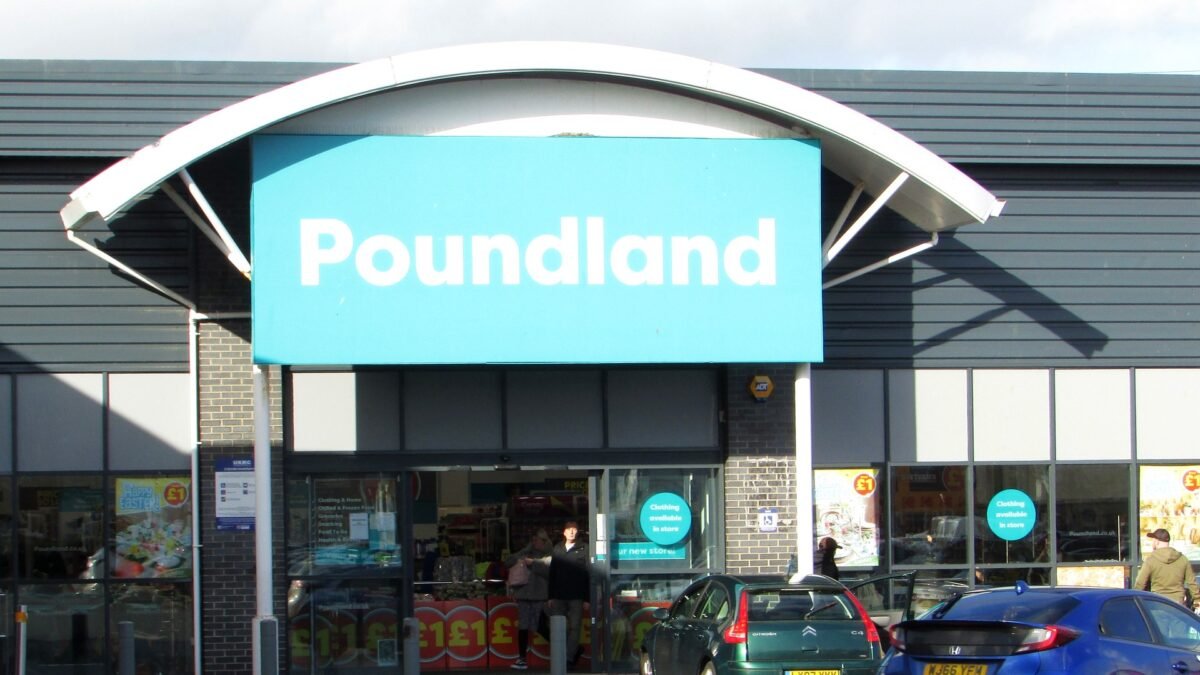
Poundland has collapsed into administration, putting around 11,000 jobs and 600 stores at risk just weeks before Christmas, after last-ditch efforts to secure a rescue deal for the discount retailer failed.
Administrators from restructuring firm AlixPartners were appointed on Wednesday 25 November 2026, hours before a court deadline expired, bringing to an end a three-month sale process that had failed to find a solvent buyer for the business as a whole. Poundland’s stores, head office and distribution centres will remain open and trading while the administrators examine every option for the chain’s future, but the business is now expected to be broken up, with rival retailers picking over its estate.
The collapse comes just seventeen months after Poundland was bought for £1 by the American investment firm Gordon Brothers, and follows a bruising period of restructuring, store closures and mounting political pressure over the way the chain has been run. For the thousands of staff who work in its shops, the news lands at the worst possible moment of the year, on the eve of the Christmas trading period on which the business depends.
According to The Times, administrators were appointed just hours before a midnight deadline set by the court, after talks about rescuing the discount chain had continued for several weeks without reaching a breakthrough. AlixPartners said it would continue to pursue “all options including sales of the business and its assets, either in whole or part”, and added that Poundland would “continue to trade as those options are examined and all stores and distribution centres remain open at this time”.
Gordon Brothers confirmed the appointment in a statement. “Poundland Limited has entered administration. First and foremost, our thoughts are with Poundland colleagues. We recognise how difficult the continued uncertainty is for them,” a spokesperson said. “Efforts to preserve as many jobs and stores as possible will continue, led by the administrators.”
The firm added that commercial negotiations with interested parties, both for the whole company and for substantial parts of its store estate, would now continue under the administrators.
The rescue that never came
Poundland’s board filed a notice of intention to appoint administrators on 29 October, a legal step that protected the company from its creditors while a solution was sought. That protection was later extended, with a deadline of 26 November. In the weeks that followed, the chain held urgent talks with a series of potential buyers, but none produced a deal before the deadline ran out on Wednesday night.
According to reporting by The Industry.fashion, citing the BBC, two offers were on the table and both were rejected. Martin Property Group, an Irish real estate firm, had offered to pay £5 million of a £30 million shareholder loan upfront and to defer the remainder until 2030. Xyra Holdings, an investment firm, had reportedly offered £12.5 million upfront. Neither proposal was accepted.
That £30 million shareholder loan, inherited by Gordon Brothers when it bought Poundland from Pepco Group in June 2025, was at the heart of the impasse. Gordon Brothers was owed £22.5 million of the loan, while former owner Pepco held the remaining £7.5 million. According to Sky News, the main obstacle to a sale agreement was Gordon Brothers’ insistence that the loan be repaid immediately and in full before any sale could proceed.
A third bidder, the German investment firm Zachert Private Equity, was also involved in the talks, according to Business Live, but no agreement was reached with any party before the crucial deadline on Wednesday 25 November.
Gordon Brothers had already rejected a solvent takeover offer from Martin Property Group before it launched the formal sale process at the start of September, according to the Press Association, a decision that will now come under intense scrutiny from MPs.
The firm has faced sustained criticism from MPs over its handling of the sale process. Members of Parliament have accused Gordon Brothers of deliberately cutting off funding and pushing the retailer to the brink of insolvency, including by withholding £60 million in funds that the business needed to pay suppliers and restock its shelves, according to the Retail Bulletin. The company has denied trying to force an administration, saying it provided £85 million in new financing over the past year and that the retailer would have entered insolvency in August 2025 without its support.
Seventeen months under Gordon Brothers
Gordon Brothers acquired Poundland from Pepco Group for a nominal £1 in the summer of 2025, seventeen months before the collapse. At the time, the investment firm said Poundland was in “distress and required a radical restructure”, and that without the takeover it would have collapsed into insolvency in August 2025.
What followed was a sweeping overhaul. Under a High Court-approved restructuring, Poundland closed nearly 150 stores and cut around 2,200 jobs, according to The Industry.fashion. Head office roles were cut, distribution centres were closed, online shopping was axed, and the business refocused on its iconic £1 price point. Gordon Brothers said the management team and staff had worked hard over the past twelve months to improve the underlying performance and had achieved £100 million of cost savings.
But the turnaround was not enough. In September, when it launched the sale process, Gordon Brothers said Poundland remained “challenged and vulnerable” despite its best efforts to deliver an improvement. Shelves began to empty in the final weeks because the company was running short of funds to restock during its peak Christmas trading period, according to ExecReview, and the board was forced to appoint administrators before Thursday’s deadline.
The Retail Gazette reported that restructuring firm AlixPartners had previously been lined up to oversee the administration, and that Hilco Capital had been approached to manage a potential stock liquidation, a sign of how far preparations for failure had advanced even while rescue talks continued.
Reaction: “devastating” for staff, “deeply concerning” for the high street
The political reaction was swift. Prime Minister Andy Burnham, whose Makerfield constituency hosts Poundland’s largest distribution centre, said the retailer was “part of the fabric” of high streets across the country. “The news that it has gone into administration just weeks before Christmas will be deeply concerning for workers and their families,” he said. “We want every effort made to secure a deal that protects jobs and keeps as many shops open as possible.”
Speaking to Times Radio, Polly Billington, a minister in the energy department, said the outcome was “terrible” for employees, consumers and the wider British high street, adding that the government would be working to “protect as many staff as possible” in the coming months.
Business Secretary Jonathan Reynolds had met Poundland executives on Monday for an update on the process, amid hopes that a sale could still be secured. Those hopes were dashed within forty-eight hours.
Mark Newton-Jones, the boss of Gordon Brothers’ European operations, has been called to face a second round of questioning from Parliament’s business select committee, having previously attended a private session earlier this month. MPs are expected to press him on the funding decisions, the rejected offers and the shareholder loan that blocked a sale.
The shopworkers’ union Usdaw was unsparing. Bally Auluk, the union’s national officer, said: “This is devastating news for our members, who were only recently praised by management for helping to turn the business around and now face the threat of losing their jobs.” He added: “This decision has been made by the owners Gordon Brothers, despite failing to engage with Usdaw, which is a disgraceful way to treat our members.”
The union’s anger reflects a wider frustration among staff, who had been told the restructuring was working, only to learn that the business they had helped to steady was being handed to administrators.
What happens next
AlixPartners has confirmed that Poundland’s roughly 600 stores across the UK and the Republic of Ireland, where it trades as Dealz, will remain open alongside its distribution centres and continue trading during the administration process. Staff will be paid as normal in the immediate term, and customers can continue to shop as usual.
But the administrators have been clear that the sale talks failed to “identify a viable solvent solution” for the business as a whole, and it is now likely that the group will be broken up. According to Sky News, retailers including B&M, Tesco and Lidl are expected to cherry-pick individual sites, with stores potentially being sold off through the administrators. ExecReview reported that Poundstretcher, B&M and The Range were also expected to take parcels of stores.
AlixPartners has put out an open call for buyers. “We would encourage anybody interested in acquiring the business in part or as a whole, as well as UK retail operators with open employment opportunities, to contact the administrators,” the firm said.
The most likely outcome, based on the reporting so far, is that the Poundland brand survives in some form, whether through a buyer for a rump of the best stores or through the sale of the brand itself, while a large number of shops close and thousands of jobs are lost. The administrators’ first task will be to assess which stores are viable, to keep the profitable estate trading through Christmas, and to run a rapid sale process before the value of the business drains away.
For suppliers, the administration creates immediate uncertainty. Firms that supplied Poundland on credit will now join the queue of creditors, and many will have to decide whether to keep supplying a business in administration at all. For landlords, the prospect of hundreds of empty units on high streets and retail parks arrives at a moment when many town centres are already struggling with vacancies.
Analysis: how the pound shop lost its power
Poundland’s collapse is not just the story of one retailer’s failure. It is the story of a business model that was built for a different economy, and of an ownership structure that left it with almost no room to adapt when that economy changed.
The idea behind Poundland was disarmingly simple, and for two decades it worked brilliantly. Founded in 1990 in Burton upon Trent, the chain sold almost everything for a single pound. In an era of stable prices, that simplicity was a marketing masterstroke: customers knew exactly what they were getting, and the business could buy huge volumes of a narrow range of goods at prices that left a margin even at £1.
But a fixed price point is a promise that becomes harder to keep with every year of inflation. When costs rise by a few per cent a year, a shop that charges £1 for everything must either shrink the product, change the product, or break the promise. Poundland did all three over time, introducing multi-price ranges and extending well beyond £1, but each step diluted the clarity that had made the brand famous. The “Amazing Value Everyday” slogan on its shopfronts tells the story: the business had already moved a long way from the single-price idea before Gordon Brothers arrived.
The second pressure was competition. The discount space Poundland once owned almost alone is now crowded. B&M and Home Bargains sell a wider range at sharper prices from bigger, cheaper out-of-town units. Aldi and Lidl have taken a large share of the value-conscious grocery spend that once flowed through Poundland’s food aisles. And online, the cheapest end of general merchandise has been swallowed by marketplaces that can undercut any high street rent bill. Poundland was squeezed from every direction at once.
The third pressure was cost. Business rates, rents, energy bills and, above all, wages have risen sharply. The national living wage has climbed year after year, and a labour-intensive, low-margin retailer feels every penny of it. A chain with 600 shops and 11,000 staff carries a wage bill that leaves almost no slack when sales soften, which is why the restructuring under Gordon Brothers focused so heavily on closing stores and cutting head office costs.
None of this makes the collapse inevitable, and that is where the questions about Gordon Brothers become important. The firm bought the business for £1, spent a year restructuring it, claimed £100 million of cost savings, and then could not agree a sale because of a £30 million shareholder loan it wanted repaid in full. Two buyers were willing to put money on the table, one offering £5 million upfront with the rest deferred to 2030, the other offering £12.5 million upfront, and both were turned away. MPs will want to know whether the loan was genuinely an obstacle to a deal, or whether it was used as a lever to extract a price the market would not pay.
The accusation that Gordon Brothers withheld £60 million in funding is the most serious of all, because if it is true, it means the owner starved its own business of the cash it needed to trade through its most important season. The firm denies it, pointing to £85 million of new financing, and the truth will emerge in the select committee hearings and, eventually, in the administrators’ report. But the pattern is one MPs have seen before in British retail: a private equity owner buys a struggling chain cheaply, restructures it aggressively, and the business ends up in administration with the taxpayer and the staff picking up the pieces.
The timing could hardly be worse. Administration in late November means the collapse lands just as the Christmas trading period begins, the weeks when a retailer like Poundland makes a disproportionate share of its annual profit. That is bad news for the administrators, who must now run a sale process during the busiest and most operationally demanding period of the year, and worse news for staff, who face Christmas not knowing whether they will have a job in January. The government has promised to work to protect as many staff as possible, but the hard truth is that a break-up sale will save some stores and not others, and nobody yet knows which.
There is also a wider question about the high street. Poundland’s 600 stores are not in prime city-centre locations; they are in the secondary shopping streets, market towns and retail parks where the chain is often one of the largest employers and one of the few reasons to visit. If a large number of those shops close, the effect will be felt well beyond the 11,000 people who work in them. Landlords will lose tenants, neighbouring shops will lose footfall, and town centres that are already fragile will lose another anchor.
That is why the Prime Minister’s intervention matters, and why it will be judged by results rather than words. The government can encourage buyers, it can support staff through the redundancy process, and it can press the administrators to move quickly, but it cannot conjure a buyer for a business that the market has just rejected. The most useful thing ministers can do now is to make sure the sale process is genuinely open, that the administrators consider bids for the business as a going concern as well as for parcels of stores, and that staff are given clear information about their rights and their options.
For shoppers, the immediate effect is limited: the shops are open, the shelves are being restocked as far as the administrators allow, and the Christmas range is on sale. But the longer-term effect is a further narrowing of choice on the high street. If Poundland disappears or shrinks to a rump, the value end of the market will be left largely to B&M, Home Bargains and the supermarkets, and the competitive pressure that kept prices down will weaken.
The next few weeks will decide the chain’s fate. Watch for three things. First, whether any bidder emerges for the business as a whole, or for a substantial core of stores, rather than a piecemeal sell-off. Second, what the administrators say about the state of the business when they publish their first statement of affairs, including the scale of the debts and the position of suppliers. And third, what Mark Newton-Jones tells the business select committee, because his evidence will shape the political judgement on whether Gordon Brothers acted as a responsible owner or as an investor that put its loan ahead of 11,000 jobs.
Poundland survived the financial crisis, the pandemic and the cost-of-living squeeze. It did not survive seventeen months under an owner that bought it for £1 and could not find a buyer willing to pay the price it demanded. That, more than any single trading figure, is the fact that will define this collapse.
Sources
- Retail Gazette — “Poundland collapses into administration putting 11,000 jobs at risk”
- The Times — “Poundland falls into administration, putting 11,000 jobs at risk”
- Bury Times (Press Association) — “Poundland falls into administration with 11,000 jobs at risk”
- Business Live — “Poundland falls into administration putting 11,000 jobs at risk after takeover talks fail”
- The Industry.fashion — “Poundland collapses into administration with 11,000 jobs at risk”

About the Author — Abdul Mannan
Related Articles
US Unveils New Tariffs on China, EU and 12 Other Partners in Section 301 Overcapacity Crackdown
The United States proposed new tariffs on 14 trading partners after an eight-month Section 301 investigation, with China…
Asian Markets Tumble as Tariff Threats and AI Doubts End the Nvidia Relief Rally
Asian stocks tumbled on Wednesday as fresh tariff threats from Washington and fading faith in the AI rally…

Huawei Convicted on 10 of 12 Counts in US Criminal Trial Over Trade Secrets and Iran Sanctions
A Brooklyn jury convicted Huawei on 10 of 12 counts, including conspiracy to steal trade secrets and bank…