
Huawei Convicted on 10 of 12 Counts in US Criminal Trial Over Trade Secrets and Iran Sanctions

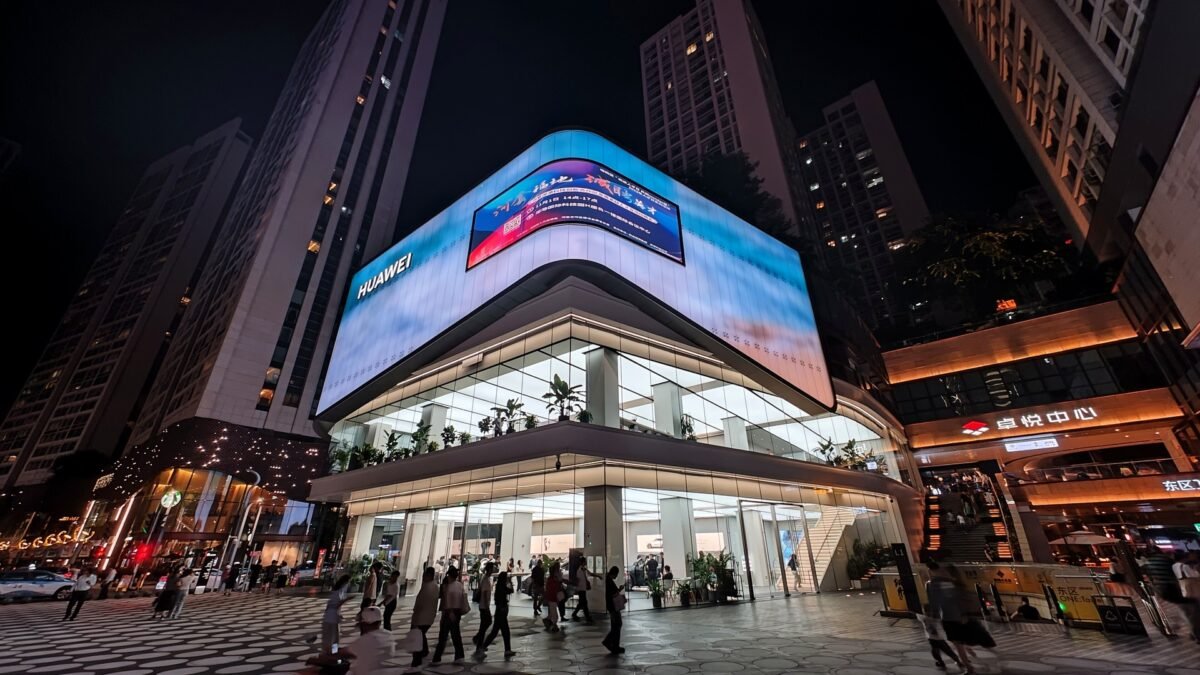
A federal jury in Brooklyn has convicted Chinese technology giant Huawei of conspiring to steal trade secrets from American companies and defrauding banks about its business in Iran, delivering the verdict on Tuesday in a criminal case that has shadowed the company, and relations between Washington and Beijing, for eight years.
According to Reuters, the jury in the United States District Court for the Eastern District of New York found Huawei Technologies and three of its subsidiaries guilty on 10 of the 12 criminal counts they faced, following a 12-week trial. The panel acquitted the companies of the two most sweeping charges against them: racketeering conspiracy and conspiracy to obstruct justice.
The verdict, reported by Reuters and the Associated Press, closes the courtroom chapter of a prosecution that began in 2018 and once produced a diplomatic crisis involving the United States, China and Canada. It does not end the legal story. Huawei has said it will appeal, and sentencing has been set for 14 September 2027, when the company faces financial penalties that could run into billions of dollars.
For the United States government, the convictions validate a case it has pursued across three presidencies. For Huawei, the acquittal on the racketeering charge offers a powerful counter-argument: the jury rejected the government’s claim that the company operated as a criminal enterprise. Both sides claimed a measure of vindication within minutes of the verdict being read.
What the jury decided
The defendants in the case were Huawei Technologies Co. Ltd., its Chinese subsidiary Huawei Device Co. Ltd., and its American subsidiaries Futurewei Technologies Inc. and Huawei Device USA Inc. No individual executives or employees stood trial, although prosecutors at one point also brought criminal charges against the company’s chief financial officer, Meng Wanzhou, in a separate strand of the case that was resolved in 2021.
According to the United States Department of Justice, one or more of the four companies was convicted of conspiracy to steal trade secrets, wire fraud conspiracy, wire fraud, bank fraud conspiracy, bank fraud, conspiracy to defraud the United States, conspiracy to violate the International Emergency Economic Powers Act, violations of that Act, and money laundering conspiracy. The verdict followed a 12-week trial before United States District Judge Ann M. Donnelly.
The two acquittals mattered as much as the convictions. Prosecutors had used the racketeering conspiracy charge, brought under the Racketeer Influenced and Corrupt Organizations Act, to argue that Huawei had spent two decades running what amounted to a criminal enterprise, systematically stealing technology and lying to banks and governments to expand its business around the world. The jury did not accept that characterisation. It also acquitted the companies of conspiring to obstruct justice.
Huawei’s lawyer, Brian Heberlig, told reporters outside the courthouse that the company was disappointed by the convictions but heartened by the acquittals. “We fully expect to appeal,” he said, describing the racketeering acquittal as a vindication of the company’s “good-faith compliance culture”. He added that it was premature to say how much the company might have to pay in penalties, but that the acquittal on the racketeering charge “could make a significant difference”.
According to the Associated Press, Huawei faces potentially billions of dollars in penalties when it is sentenced next September. The Justice Department said the defendants face financial penalties including criminal fines, forfeiture and restitution, although the precise amounts will be determined at sentencing.
The jury began deliberating on the afternoon of Wednesday 18 November, according to the Wall Street Journal, and returned its verdict on Tuesday 24 November after about four days of deliberations. On Monday 23 November, jurors had asked the court whether Huawei had appeared pursuant to a subpoena in Washington and whether that investigation had transferred to the Eastern District of New York, a question that suggested they were working carefully through the procedural history of a case that has taken many turns.
The case prosecutors built
Prosecutors presented their case in two broad parts: a trade secrets case and a sanctions case. Together, they argued, the two showed a single pattern of conduct stretching back more than twenty years, in which Huawei stole what it could not build and lied about where it did business.
On the trade secrets side, the government accused Huawei of stealing proprietary technology from a series of American companies. According to Reuters, prosecutors sought to prove that Huawei stole source code from Cisco Systems for its routers, stole antenna technology from the wireless telecommunications company Quintel, and hired a professor to gain access to a circuit board developed by the semiconductor company CNEX.
Two episodes became the most vivid moments of the trial. Jurors watched a video that, according to prosecutors, showed a Huawei employee slipping a piece of T-Mobile’s smartphone-testing robot, known as Tappy, into a backpack. In another incident detailed at trial, a Huawei engineer sneaked into a Fujitsu booth at a trade show to photograph a device. The Associated Press reported that the victim companies named in court records also included Motorola Solutions and Fujitsu, and that prosecutors told jurors Huawei had once sold internet routers containing source code copied from a competitor.
Assistant United States Attorney Meredith Arfa told the jury during closing arguments that the pattern was deliberate and directed from the top. “Committing crimes to get ahead was ingrained in the very culture of Huawei,” she said. In her closing, she added: “The tone was set at the top by Huawei leaders and executives who themselves engaged in criminal conduct, like lying to Congress, lying to banks, violating U.S. sanctions and trying to interfere with the very criminal investigation that led to this case.”
The sanctions case centred on Iran. The original 2018 indictment alleged that Huawei misled HSBC, Standard Chartered and BNP Paribas about its business dealings in Iran, so that the company could move dollars in and out of the country in violation of American sanctions. Prosecutors said Huawei operated in Iran through an entity known as Skycom Tech Co., and misrepresented its relationship with that business to financial institutions and American authorities.
Reuters reported that its own stories in 2012 and 2013 helped expose Huawei’s activities in Iran and were discussed during the trial. “After the media started questioning Huawei’s operations in Iran, so did Huawei’s banks,” prosecutor Meredith Arfa told jurors during closing arguments last week. Prosecutors also gave jurors a statement attached to Meng Wanzhou’s deferred prosecution agreement, in which she acknowledged that the company illegally conducted business in Iran.
More than 60 witnesses testified for the prosecution during the trial, according to Reuters, while the defence called 15. The trial began in September and lasted more than two months, making it one of the longest and most complex corporate criminal trials in recent American history.
The Meng Wanzhou thread
No part of the case has carried more diplomatic weight than the strand involving Meng Wanzhou, Huawei’s chief financial officer and the daughter of the company’s founder, Ren Zhengfei. In December 2018, Meng was detained in Canada on an American warrant, prompting a diplomatic crisis involving the United States, China and Canada.
According to Reuters, Meng had been secretly indicted on American charges of misleading an HSBC banker about Huawei’s business in Iran. She fought extradition to the United States for nearly three years before entering a deferred prosecution agreement and flying home to China to a hero’s welcome. The charges against her were dropped.
Meng did not testify at the trial, although an HSBC banker she met with in 2013 did testify, according to Reuters. Her deferred prosecution agreement remained a live part of the case, however: prosecutors used the statement attached to it, in which she acknowledged the company’s illegal business in Iran, as evidence against Huawei itself.
The Associated Press reported that Meng was ultimately allowed to return to China in 2021 in what was described as a prisoner swap that freed two Canadians held by China. As part of the deal, the United States dropped its case against her. The episode left a lasting mark on relations between Ottawa and Beijing, and it ensured that the Huawei prosecution would be watched as a diplomatic event as much as a legal one.
Huawei’s defence
Throughout the trial, Huawei’s lawyers argued that prosecutors had taken ordinary business activity and a handful of isolated episodes of wrongdoing and assembled them into a conspiracy that never existed. In his closing argument, Heberlig accused prosecutors of having “cherry-picked” a handful of disparate incidents to support their claim of a 20-year conspiracy, and said Huawei had succeeded through “hard work, innovation, and investment in research and development.”
The defence told jurors that the case was “about competition, not conspiracy; innovation, not theft; ordinary business dealings, not criminal misconduct,” according to the Wall Street Journal. Heberlig argued that Huawei’s lawyers had leaned on “innuendo and facts ripped out of context” and testimony from former employees “with a bone to pick”, in the Associated Press’s account of his closing argument.
On the trade secrets allegations, the defence made two arguments. First, it said that much of the material the United States alleged was stolen was already public. “You can’t steal a secret that isn’t a secret,” Heberlig told the jury. Second, it said the five trade secret-related disputes cited by the government were all civil matters that had been resolved over the past two decades. “No court ever found Huawei liable for willful intellectual property misappropriation, and the company was never ordered to pay damages for trade secret misappropriation,” the company said in a statement after the verdict.
Heberlig also pointed to the company’s own record. He noted that lines of Cisco source code had turned up in Huawei software more than two decades ago, but said that when the copying was discovered, Huawei recalled routers sold in the United States, offered to replace them with Cisco routers, and created what he called a “compliance culture that permeates Huawei today”. He said Huawei had paid billions of dollars in licensing fees over the years, with 75 per cent of that money going to American companies, and had reprimanded or fired employees found to have engaged in wrongdoing.
On the sanctions allegations, the defence argued that HSBC and the other banks knew about Huawei’s business in Iran and were competing for Huawei’s business. The company’s lawyers said American investigators had used isolated episodes of wrongdoing by a few of the company’s more than 200,000 employees to spin a false narrative about a grand conspiracy that did not actually exist.
In a statement after the verdict, Huawei said: “Huawei has always adhered to integrity in business, upheld business ethics, respected intellectual property, and remained committed to complying with all applicable laws and regulations. We remain focused on serving our customers and partners and ensuring continuous and stable business operations.” It added: “We believe the government’s remaining charges are equally without legal or factual merit. The five trade secret-related disputes cited by the government were all civil matters that were resolved over the past two decades. We will thoroughly review the relevant verdicts and take all necessary legal actions to defend our rights and interests.”
Reactions in Washington and Beijing
The Justice Department presented the verdict as a landmark in the enforcement of American sanctions and trade secrets law. “No person or company is above the law,” Attorney General Todd Blanche said in a statement. “For decades, Huawei and three of its subsidiaries conducted their business in the United States on the basis of lies and theft. Thanks to the work of the FBI and our federal prosecutors, those who engaged in these criminal activities will be held accountable.”
Joseph Nocella Jr., the United States Attorney for the Eastern District of New York, said: “Few crimes are as serious as Huawei’s decades-long pattern of endangering U.S. national security, violating the sanctity of U.S. commerce, and impeding the enforcement of U.S. laws. Today’s verdict is a step towards accountability for Huawei’s criminal activities, which includes yearslong collaboration with sanctioned entities in Iran, repeated lies to banks, and blatant thefts from U.S. technology companies.”
A. Tysen Duva, an Assistant Attorney General in the Justice Department’s Criminal Division, said: “For over two decades, Huawei built its global dominance and profit on the back of criminal activity. Huawei’s crimes threatened the U.S. financial system, victimized U.S. companies that compete honestly in the global telecommunications market, and undermined U.S. national security. Today’s verdict holds Huawei accountable for using crime, not fair business practices, to gain an advantage over its competitors.”
Chinese officials have long described the American campaign against Huawei as “economic bullying” and said Washington has improperly used national security as a pretext for oppressing Chinese companies, according to the Associated Press. Neither the White House nor China’s embassy in Washington immediately responded to requests from Reuters for comment on the verdict.
The verdict arrived at a moment of unusual sensitivity in the relationship between the two countries. The trial in New York overlapped with a summit between President Donald Trump, China’s President Xi Jinping and Russia’s President Vladimir Putin in Shenzhen, the technology-centred city where Huawei is based. According to the Wall Street Journal, the verdict comes on the heels of a visit by President Trump to Shenzhen for that summit, a reminder that the Huawei case has never been only a matter for the courts.
A case eight years in the making
The prosecution began in 2018, during President Trump’s first administration, when the Justice Department unsealed an indictment accusing Huawei of bank fraud, wire fraud and sanctions violations connected to its business in Iran. The following year, the United States government placed Huawei on a trade blacklist that restricted its access to American technology, amid concerns that the company posed national security risks.
In 2020, prosecutors added new charges, including allegations that Huawei had conspired to steal trade secrets from American technology companies over two decades. The expanded indictment turned what had begun as a sanctions case into a far broader accusation: that the theft of intellectual property was not incidental to Huawei’s rise but central to it.
The case then moved slowly, as cases involving classified material, foreign evidence and parallel diplomatic negotiations often do. Meng Wanzhou’s detention and eventual release consumed three years. The company itself continued to grow, diversifying beyond telecommunications equipment into smartphones, cloud computing and, more recently, chipmaking, as the boom in artificial intelligence fuels demand for microprocessors.
According to the Associated Press, it is unclear what effect the verdict might have on Huawei’s global fortunes. The company has not been allowed to sell equipment to American carriers for years because of security concerns, and it has been blacklisted by other Western allies, including Canada and Britain. That has not stopped the company from doing robust business elsewhere. Its smartphones and other telecommunications equipment are sold globally, and it has expanded into chipmaking, becoming an important alternative in China to chips made by companies such as Nvidia.
Reuters reported that experts have said the case did not undermine Huawei’s business, as the company diversified and emerged as a key player in China’s push for artificial intelligence. The company has more than 200,000 employees and operates in approximately 170 countries, according to Reuters, a scale that makes it one of the largest technology companies in the world and a symbol of China’s industrial ambitions.
Analysis: a split verdict with consequences in both directions
The most important feature of this verdict is that it is two verdicts at once. On ten counts, the jury found that Huawei broke American law. On the two counts that carried the government’s broadest claim, it found that the government had overreached. That split will shape everything that follows: the appeal, the sentence, the political argument in Washington, and the commercial argument in Beijing.
Start with what the government won. A conviction on conspiracy to steal trade secrets, bank fraud, wire fraud, sanctions violations and money laundering is a serious outcome for any company, and it is a rare one. The United States seldom brings criminal cases against foreign corporations of Huawei’s size, and it seldom wins them. The verdict gives American prosecutors a precedent they can cite the next time they accuse a foreign company of stealing American technology or evading American sanctions. It also gives the Justice Department a formal judicial finding to support the restrictions it has already imposed on Huawei’s access to American technology, restrictions that the company has challenged as political rather than legal.
The scale of the trial matters too. More than 60 prosecution witnesses, a 12-week trial, and a jury that deliberated for about four days before returning a detailed verdict across twelve counts suggest a careful process rather than a rushed one. That will make it harder for Huawei’s supporters to dismiss the outcome as a show trial, even though the company will argue on appeal that the evidence did not support the convictions. The fact that the jury acquitted on two counts strengthens that impression: a jury willing to reject the government’s most dramatic charge is a jury that appears to have weighed the evidence count by count.
Now consider what the government lost. The racketeering charge was not a minor part of the case. It was the charge that allowed prosecutors to present twenty years of incidents as a single criminal enterprise, and to tell the jury that Huawei’s success itself was the product of crime. Its rejection removes the most damaging label the government could have attached to the company. Huawei’s lawyers will use it in every forum that matters: in the appeal, where they will argue that the remaining convictions rest on the same overreach the jury rejected; in public, where they will present the company as a legitimate business that made mistakes rather than a criminal organisation; and in Beijing, where officials will present the acquittal as proof that the American case was political.
The financial consequences are real but uncertain. The Associated Press reported that Huawei faces potentially billions of dollars in penalties, and the Justice Department said the sentence will include fines, forfeiture and restitution. But the company’s lawyer noted that the racketeering acquittal could make a significant difference to the size of any penalty, and the sentencing date is nearly ten months away. Between now and September 2027, the appeal process will begin, and the question of how much Huawei ultimately pays may be litigated for years. For a company of Huawei’s size, with revenues measured in tens of billions of dollars, even a large fine is survivable. The greater risk is reputational and commercial: the verdict gives governments that are considering whether to buy Huawei equipment a fresh reason to say no.
The timing adds a further layer of complexity. The trial overlapped with a summit in Shenzhen involving Presidents Trump, Xi and Putin, and the verdict arrived days after that meeting. The case was brought during President Trump’s first administration, and the verdict was delivered during his second. That continuity across administrations suggests that the American position on Huawei is now a settled feature of policy rather than the project of a single president. At the same time, the summit in Shenzhen was itself a reminder that the United States and China continue to negotiate even as they prosecute each other, and that the Huawei case will be one of the subjects on the table whenever the two sides talk about technology, trade and sanctions.
There is also a wider lesson in the verdict for the technology industry. The case was built on episodes that are, in isolation, familiar to anyone who has followed the industry: a piece of equipment photographed at a trade show, a component carried out of a laboratory, lines of code that turned up where they should not have been. What made them a criminal case was the pattern prosecutors alleged, and the jury’s decision to convict on the trade secrets conspiracy while acquitting on racketeering suggests a careful distinction. The jury appears to have accepted that Huawei stole secrets, while rejecting the claim that the company was organised for the purpose of stealing them. That distinction may matter for future cases, where prosecutors will have to decide whether to aim for the broadest possible charge or the one most likely to survive a jury.
For Huawei, the verdict does not change the commercial reality it has lived with since 2019. It is already excluded from the American market and from the networks of several Western allies. Its growth now depends on China and on markets in Asia, Africa, the Middle East and Latin America, where its equipment is widely used and where the verdict may matter less than price and performance. Its expansion into artificial intelligence chips, where it has become an important domestic alternative to Nvidia, is the clearest sign of how the company has adapted: it is building the technology it can no longer buy.
What to watch next is straightforward. First, the appeal. Huawei has said it will challenge the convictions, and the appeal will test whether the evidence presented at trial was sufficient and whether the trial was conducted fairly. Second, the sentence. On 14 September 2027, Judge Donnelly will decide the financial penalties, and the size of that figure will determine whether the verdict is remembered as a symbolic rebuke or a material blow. Third, the political response. Beijing has already called the American campaign against Huawei economic bullying, and the verdict will feed into the broader argument about whether the United States is using national security as a tool of economic competition. Fourth, the commercial response. Governments and companies that buy Huawei equipment will now have to decide whether a criminal conviction in an American court changes their calculations, and whether the racketeering acquittal gives them cover to carry on as before.
The Huawei case began as a question about a single company’s conduct in Iran. It became a question about how the world’s two largest economies compete in technology, and about where the line falls between aggressive competition and criminal conduct. The jury’s answer, delivered after twelve weeks of evidence and four days of deliberation, was that Huawei crossed that line, but not in the way the government claimed. That is a verdict with consequences for Huawei, for its competitors, and for the governments that have spent eight years arguing about it.
Sources
- United States Department of Justice — “Chinese Telecommunications Conglomerate Huawei and Subsidiaries Convicted of Sanctions Violations, Bank and Wire Fraud, Conspiracy to Steal Trade Secrets, and Money Laundering” (24 November 2026)
- Reuters — “China’s Huawei convicted in US in sprawling criminal trial over Iran business” (24 November 2026)
- Associated Press — “Chinese tech giant Huawei is guilty of conspiracy to steal trade secrets, US jury finds” (24 November 2026)
- The Wall Street Journal — “China’s Huawei Convicted of Fraud in U.S. Criminal Trial” (24 November 2026)
- Bloomberg Tax — “Huawei Found Guilty of US Criminal Charges in Landmark Case” (24 November 2026)

About the Author — Abdul Mannan
Related Articles
Capita Chief Executive Quits as Pension Failures Wipe 70% Off Shares in a Day
Capita chief executive Adolfo Hernandez has stepped down with immediate effect after the outsourcer's botched running of the…
Sanofi to Acquire Insmed for $41 Billion in Landmark Bet on Respiratory Drugs
Sanofi has agreed to buy US drugmaker Insmed for $41 billion in cash, gaining the blockbuster lung drug…
CrowdStrike Agrees to Buy Zscaler in $43.9 Billion All-Stock Deal, Creating a Cybersecurity Giant
CrowdStrike has agreed to buy Zscaler in a $43.9 billion all-stock deal, uniting two cybersecurity giants — but…