
Nvidia Halts AI Server Shipments to Four Southeast Asian Countries as US Export Controls Bite

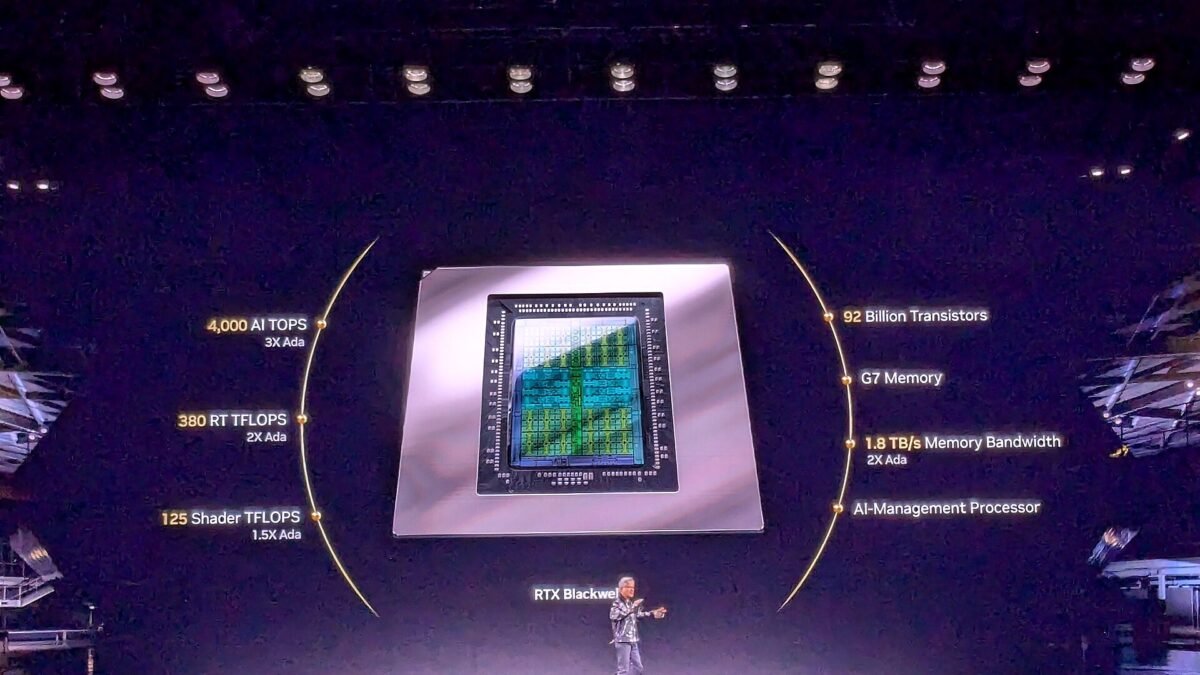
Nvidia has told the companies that build its artificial intelligence servers to stop shipping them to four Southeast Asian countries, in the clearest sign yet that Washington’s new export controls are disrupting the flow of advanced computing hardware across Asia. According to the Financial Times, the chipmaker instructed manufacturing partners including Dell and Supermicro to halt deliveries of servers containing its AI chips to Malaysia, Singapore, Thailand and Indonesia.
The reported halt, which the newspaper said was disclosed on Thursday 26 November, follows a sweeping new rule from the United States Commerce Department that took effect on 19 November. The rule requires American licences for shipments of advanced AI chips to the four countries, and to Brazil, and it targets a route that Chinese companies have used to reach Nvidia’s most powerful processors without importing them at all: renting computing power from data centres outside China.
It is not yet clear whether the halt is temporary. According to the Financial Times, which cited three people familiar with the matter, Nvidia and its partners are still working out how to comply with the new controls. Nvidia, Dell and Supermicro did not immediately respond to requests for comment, the newspaper reported. The uncertainty alone has shaken a market that only weeks ago looked unstoppable: thousands of Nvidia’s newest B300 graphics processors have appeared for resale, financing for Asian data centre projects has come under strain, and billions of dollars of investment in the region’s computing capacity is now in doubt.
The pause lands at the most turbulent moment in Nvidia’s history. Its chief executive and co-founder, Jensen Huang, resigned on 12 November after reports of an extramarital affair with a woman American officials suspect of links to Chinese intelligence, and was reinstated by the board on 23 November. He is due to face questioning from American lawmakers within days. And only a week ago, the House Foreign Affairs Committee disclosed that the Trump administration had approved the export of nearly 900,000 advanced Nvidia and AMD AI chips to Chinese companies over six months, a revelation that has turned the company’s China business into a political firestorm in Washington.
What Nvidia has reportedly told its partners
According to the Financial Times, Nvidia instructed its manufacturing partners to stop shipping servers built around its chips to buyers in the four Southeast Asian countries. Dell and Supermicro, which assemble Nvidia’s processors into server racks, told customers in those countries that their orders would not be shipped, the newspaper reported. Reuters separately reported the same halt, and The Times and The Wall Street Journal have also reported the move.
The halt is not a ban on all Nvidia products in the region, and it is not yet clear which chip models it covers or how long it will last. What is clear is the reason for it. On 16 November, the Commerce Department’s Bureau of Industry and Security published an interim final rule, titled “Addressing Remote Access to Advanced Semiconductors”, which took effect three days later. The rule requires licences for exports of advanced AI chips to Indonesia, Malaysia, Singapore, Thailand and Brazil, and it places restrictions on overseas data centres that provide large amounts of computing capacity to companies based in restricted destinations, including China.
According to reports on the rule, a data centre must obtain a licence if it provides more than 12 million units of aggregate computing power to customers in restricted destinations. Data centres that were already providing large amounts of computing power to such customers have 90 days from 19 November to apply for a licence if they want to keep doing so. One cloud provider executive told the Financial Times that the application process lacks clear instructions, a complaint that helps explain why Nvidia and its partners have chosen to pause shipments while they work out what compliance looks like.
The rule is the latest and most aggressive attempt by Washington to close the gaps in a system of export controls that began in October 2022 and was tightened in 2023. A further rule announced in January 2025 would have required licences for advanced chips worldwide, but the Trump administration said it would not enforce it before replacing it. That gap, according to reporting on the new measures, allowed Chinese companies to rent computing power in places such as Singapore, where Nvidia chips sat in data centres outside China’s borders and outside the reach of American export law.
The new rule also covers chips manufactured overseas for Chinese companies, including production arrangements involving foreign semiconductor manufacturers, and it sits alongside the blacklisting of Megaspeed, a Singapore-based cloud computing company, and its subsidiaries in Thailand and Malaysia. Megaspeed, an Nvidia partner that rents computing power at its data centres, has come under scrutiny over the possible illegal diversion of advanced AI chips to China. The Commerce Department added Megaspeed to its Entity List on 23 November, the same day Nvidia’s board reinstated Mr Huang, and also added Apex Enterprise Solutions, the Singapore subsidiary of China’s Alibaba that has business ties to Megaspeed.
The 900,000-chip disclosure
The halt cannot be understood without the disclosure that preceded it by a week. On 19 November, the House Foreign Affairs Committee released licensing records showing that the Commerce Department had approved the export of 879,868 advanced AI chips to Chinese companies between December 2025 and May 2026. The chips were Nvidia’s H200 model and AMD’s comparable MI325X, and companies had sought permission to send more than 3.4 million chips to China over the same six-month period.
The approvals covered 75,000 chips for Alibaba, 150,000 for Tencent, 43,000 for Baidu and 4,000 for BYD, according to the committee. The four named companies alone accounted for 272,000 approved chips, roughly 31 per cent of the total, and all four appear on the Pentagon’s 2026 list of Chinese military-linked companies. Committee chairman Brian Mast, a Republican from Florida, described the disclosure as the most detailed public release of its kind under the Export Control Reform Act, the 2018 law that expanded the Commerce Department’s authority to restrict sensitive technology exports on national security grounds.
The records also showed the limits of what an approval means. None of the approved chips had shipped as of 11 May 2026, according to the House records, and the committee’s figures do not establish how many of the approved processors were ultimately delivered to China. Commerce Department official Jeffrey Kessler told the committee in July that shipments had begun but remained “very few”, according to reporting on the disclosure. Nvidia said the approvals came with strict conditions and limited volumes, and confirmed that it has since stopped shipping H200 chips to China. AMD said it complies with applicable export control requirements.
The approvals followed President Donald Trump’s decision in December 2025 to reverse Biden-era restrictions and allow Nvidia to pursue H200 sales to China under tighter licensing conditions. The H200 is a Hopper-generation data centre chip, two generations behind Nvidia’s current Vera Rubin line, but it remains a powerful AI training processor. According to Nvidia’s quarterly report, the company booked 2.4 billion dollars of licensed Hopper data centre sales to China in the quarter ended 25 October, about 2.2 per cent of its 107.6 billion dollars of data centre revenue. Interim chief executive Colette Kress told analysts that the current quarter’s outlook contains no licensed Hopper data centre products, and that Nvidia has halted those shipments.
Even the licensed route proved messier than Washington expected. Beijing restricted H200 imports as part of its push to reduce dependence on American technology, and Reuters reported that about 600,000 H200 chips were sitting in Hong Kong awaiting approval from the mainland, roughly two-thirds of the number Washington had cleared in the preceding six months, while a handful of large Chinese internet companies each obtained only about 10,000. Because the licences require the H200 chips to pass through the United States for inspection, they enter on a 25 per cent tariff that Nvidia’s quarterly filing says it cannot pass on to customers.
The disclosure drew sharp criticism from both parties. Representative Gregory Meeks, the senior Democrat on the House Foreign Affairs Committee, said the administration’s handling of chip export controls over the past month had put national security and the American technology edge at risk. Chris McGuire, a former American official, told Reuters that the fact that more than 30 per cent of the AI chips sent to China went to companies the Department of War has designated as Chinese military companies was “astonishing”, and called into question whether Commerce had conducted any serious national security review before approving the licences.
A governance crisis at the top
The export control storm has collided with a governance crisis at Nvidia that has already cost the company its chief executive once. Mr Huang resigned on 12 November after reports that he had engaged in multiple extramarital affairs, including one with Alice Huang, a former Megaspeed executive whom some American officials suspect of being a Chinese intelligence asset. The Wall Street Journal reported no evidence that Beijing had obtained Nvidia technology through the relationship, but the affair placed the chief executive of America’s most valuable company at the centre of a national security controversy.
Nvidia’s board reinstated Mr Huang on 23 November, eleven days after his resignation, and the Commerce Department published its new export control rule days after he stepped down. The timing has not gone unnoticed in Washington. Mr Huang is scheduled to appear before three House committees for an interview on 1 December, where lawmakers are expected to question him about Nvidia’s chip exports and potential national security breaches, and he is also due to testify at a Senate Banking Committee hearing on 3 December.
The market has already delivered its own verdict on the turmoil. S&P Global Ratings placed Nvidia’s AA credit rating on watch for a possible downgrade on 25 November, citing governance concerns after Mr Huang’s departure and return. The following day, the Nasdaq plunged 4.7 per cent intraday as a wider AI sell-off pushed Wall Street towards the brink of a bear market, with Nvidia at the centre of the rout. The Financial Times report of the server shipment halt arrived against that backdrop, and it deepened the sense that the company’s problems are compounding faster than its board can resolve them.
The scandal has also produced a criminal case that illustrates how the diversion routes worked. In March 2026, federal prosecutors charged three people associated with Super Micro Computer, including a co-founder, over a scheme to sell at least about 2.5 billion dollars of servers packed with Nvidia chips to Chinese end customers through a Southeast Asian front company. And in July 2026, Washington accused the Chinese company Moonshot AI of accessing Nvidia chips through a facility in Thailand, one of the four countries now covered by the shipment halt.
Fallout across Southeast Asia
The immediate victims of the halt are not in Beijing or Washington but in the four countries caught in the middle. Singapore, Malaysia, Thailand and Indonesia have spent the past two years positioning themselves as the data centre hubs of Asia, attracting billions of dollars of investment from cloud providers and chipmakers drawn by cheap power, land and political stability. The new American rule, and Nvidia’s response to it, puts that investment in doubt.
According to reporting on the fallout, a Singapore cloud company called Aolani is losing financing for a project intended to provide computing power to ByteDance, the Chinese owner of TikTok, and ByteDance could leave the deal if it cannot access Nvidia chips to train its AI models. Lenders are struggling to find buyers for their exposure to Asian data centre loans, and billions of dollars of data centre investment in the region is now uncertain. Nvidia has warned that it could bring legal action against companies involved in restricted cloud services, and United States Trade Representative Jamieson Greer said on 25 November that the new rules close loopholes involving smuggling and remote access.
The resale market has reacted fastest of all. After the United States announced the new restrictions on 16 November, a large number of Nvidia graphics processors appeared for resale, including thousands of B300 chips, the company’s newest Blackwell-generation data centre processor. The sudden availability of so many chips on the secondary market has raised its own questions about where they came from and where they were headed, and it has added to the pressure on Nvidia’s share price.
Dell, one of the manufacturing partners told to stop shipping, is itself a measure of what is at stake. The company reported record quarterly revenue of 55 billion dollars on 25 November, driven by demand for AI servers, and its shares have been one of the market’s proxies for the AI infrastructure boom. A prolonged halt to shipments in four of Asia’s fastest-growing data centre markets would hit Dell and Supermicro directly, and it would slow the build-out of computing capacity across the region.
There is also a legislative dimension. A proposed Remote Access Security Act, which would put the new restrictions on a statutory footing, has passed the House of Representatives but still needs Senate approval. Its passage would make the licensing regime harder to reverse and would signal that Congress, not just the administration, intends to keep the remote-access route closed. For now, though, the rules rest on an interim final rule from the Commerce Department, and the 90-day window for existing data centres to seek licences runs until the middle of February.
Why It Matters
The most consequential sentence in Washington’s new chip rule is not about which processors may go to China. It is about where a data centre sits. For four years, American export controls have been built around a simple idea: keep the most advanced chips out of China, and China’s AI ambitions will stall. The new rule concedes that the simple idea has failed, because the chips did not need to enter China at all. Chinese companies could rent them by the hour from data centres in Singapore, Malaysia, Thailand and Indonesia, training their models on American silicon while the silicon itself stayed in a friendly jurisdiction. Nvidia’s reported decision to stop shipping servers to those four countries is the first concrete evidence that Washington has finally decided to close that route, and that the closure will hurt the countries that hosted it.
That matters for three reasons, and the first is the scale of what was at stake. The House committee’s disclosure showed that Washington approved nearly 900,000 advanced chips for Chinese companies in six months, and that almost a third of them were destined for companies the Pentagon itself lists as military-linked. That is not a loophole; it is a policy choice, made by the same administration that now says it wants the route closed. The contradiction is the story. The Trump administration reversed the Biden-era restrictions in December 2025, approved the licences, and then, within a year, published a rule that treats the resulting trade as a national security threat. Either the first decision was wrong or the second is an overreaction, and neither explanation flatters the officials who made both.
The second reason is the damage to the countries in the middle. Singapore, Malaysia, Thailand and Indonesia did nothing wrong by building data centres and buying Nvidia servers. They invested billions on the understanding that they were trusted partners in the American technology ecosystem, and they are now discovering that trust is conditional and revocable. The Aolani financing trouble and the ByteDance project at risk are only the first casualties. If the halt lasts, the region’s data centre boom will slow, its governments will look for alternative suppliers, and the most obvious alternative is China itself, which has been building its own AI chip industry precisely for this moment. A policy designed to slow China could end up accelerating the very decoupling it was meant to prevent, by pushing Southeast Asia’s computing infrastructure towards Chinese hardware.
The third reason is what the episode reveals about Nvidia itself. A year ago the company was the unquestioned symbol of the AI boom, a three-trillion-dollar colossus whose chief executive was treated as a visionary. Today its chief executive has resigned and been reinstated within eleven days, its credit rating is on watch for a downgrade, its shares have been caught in a market rout, and it is telling its own manufacturing partners to stop shipping its products to four countries because it cannot work out how to comply with American law. The company’s problem is not that it broke the rules. It is that the rules kept changing around it, and that its own chief executive’s personal conduct gave Washington a reason to look harder at a business model that had always depended on selling as many chips as possible to as many customers as possible, wherever they were.
What happens next will be decided in three places. The first is Congress, where Mr Huang’s testimony on 1 December and 3 December will test whether lawmakers believe the company’s assurances or want legislation that goes further than the Commerce Department’s rule. The second is the Commerce Department itself, where the 90-day licensing window will show whether the new regime is a workable system or a bureaucratic wall that strangles legitimate business. The third is Beijing, where the restrictions on H200 imports and the push for domestic chips suggest that China has already decided it cannot rely on American hardware, licensed or not. If that is right, then the great irony of this week is that Washington and Beijing agree on one thing: the era of American chips powering Chinese AI is over. The only question left is who pays for the divorce, and this week’s answer is that Southeast Asia pays first.
For the wider AI industry, the lesson is that the geopolitics of computing power is now as important as the technology itself. The chips that train the world’s most powerful models are no longer just products; they are instruments of national power, and their movement is governed by rules written in Washington rather than by demand in the market. Companies that build their strategies on the assumption that they can buy all the computing power they need, wherever they need it, will have to rethink. The age of frictionless AI infrastructure is ending, and Nvidia’s halted servers in Southeast Asia are the first visible sign of what replaces it.
Sources
- The Times – Nvidia halts server shipments to Southeast Asian countries
- Reuters (via The Edge) – Nvidia said to halt server shipments to Malaysia, Singapore, Thailand and Indonesia
- eWeek – US cleared nearly 900,000 AI chips for Chinese companies
- The JO AI – US chip rules disrupt Nvidia servers and Asian data centers
- Engadget – Nvidia reportedly halts AI chip shipments to Southeast Asia

About the Author — Abdul Mannan
Related Articles

Australia Passes Landmark Digital Duty of Care Law Covering AI Chatbots, With Fines of Up to 5% of Global Revenue
Australia's Parliament has passed a landmark Digital Duty of Care law forcing tech companies — including AI chatbot…

FCC Clears SpaceX to Launch One Million Starmind Satellites for AI Data Centres in Orbit
The FCC has authorised SpaceX to deploy up to one million Starmind satellites as AI data centres in…

OpenAI and Anthropic Staff Warn Their Most Powerful Unreleased AI Models May Be Too Dangerous to Release
Employees at OpenAI and Anthropic say their most powerful unreleased models may be too dangerous to release, according…