
FCC Clears SpaceX to Launch One Million Starmind Satellites for AI Data Centres in Orbit

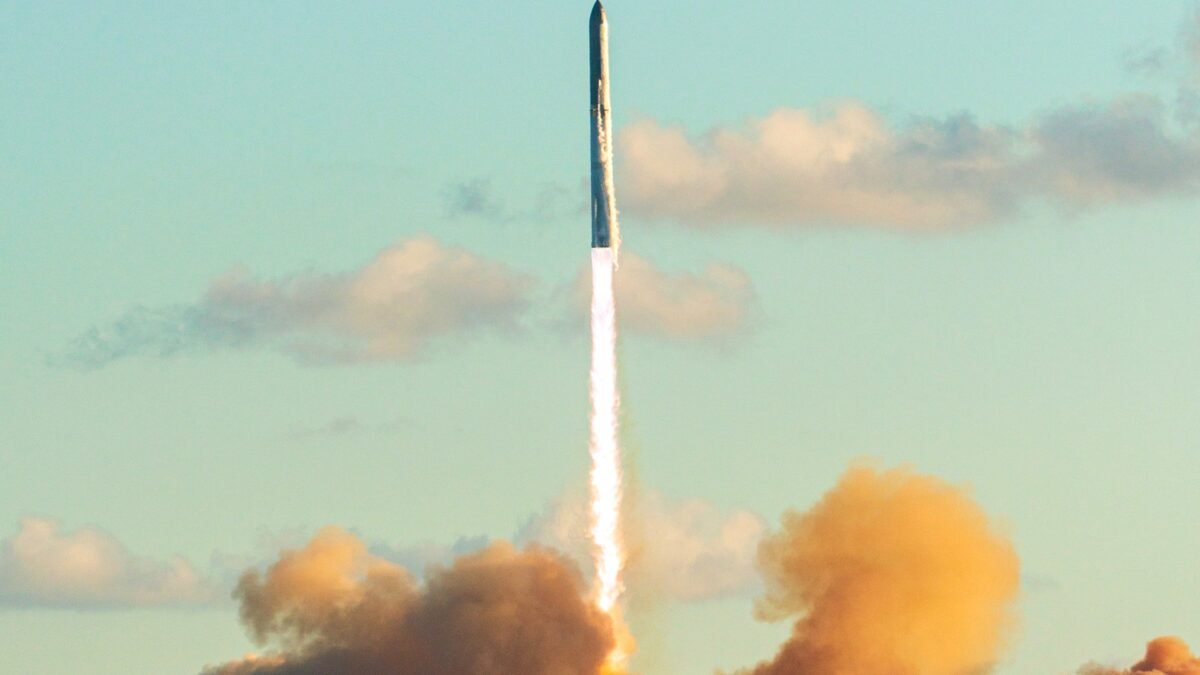
The United States has given SpaceX permission to build the largest satellite network ever proposed: up to one million spacecraft that would work as data centres in orbit, processing artificial intelligence workloads above the Earth. According to Reuters, the Federal Communications Commission announced the authorisation on Wednesday, 25 November 2026, describing it as the first approval in American history for a constellation of data centres in space.
The network, called Starmind, is SpaceX’s boldest project yet. Instead of beaming internet down to Earth, as its Starlink satellites do, Starmind satellites would carry powerful computer chips into orbit, run AI calculations there using sunlight for power, and send the results back to the ground. The FCC said it was approving the constellation to help meet rapidly growing demand for AI computing, a demand that is already straining power grids, land and water supplies on Earth.
The decision is conditional, not a blank cheque. SpaceX must put its first operational Starmind satellite into orbit by November 2033, deploy 10 per cent of the constellation — 100,000 satellites — by November 2035, reach half the network by November 2038, and complete all one million by 2040. The company must also meet conditions on communications backups, regular progress reports and a detailed plan for dealing with orbital debris. And the regulator has not yet settled the hardest question of all: what happens to these satellites when they die.
SpaceX’s chief executive, Elon Musk, welcomed the decision on his social media platform X, thanking FCC chairman Brendan Carr and writing: “Much appreciated. This will be a great asset to America and the world.”
What Starmind is meant to do
SpaceX first put the Starmind proposal before the FCC on 30 January 2026, and the regulator opened it to public comment on 4 February. The company describes the idea, in its own words, as “capturing solar energy in space to power low-cost, high-performance AI compute for Earth”. Each satellite would be a flying computer room: a wingspan of 75 metres, a deployed height of 30 metres, and, according to SpaceX, roughly 250 kilowatts of power — about the same as a single rack of servers in a ground-based data centre.
The satellites would not work alone. According to SpaceX senior vice president Michael Nicholls, speaking at the International Astronautical Congress in October, the spacecraft would fly in tight clusters of around ten, linked by laser beams carrying about 10 terabits of data per second between them, so that together they could run AI models efficiently. The clusters would then connect into the wider constellation and into Starlink. The FCC’s order says the constellation will communicate over optical links, with radio frequencies held in reserve for telemetry, tracking and command only if the lasers fail.
The computing hardware would come from the most valuable company in the AI boom. In August, SpaceX announced a partnership with Nvidia to design the compute payload for the Starmind AI1 satellite. According to SpaceX, each Starmind satellite will carry Nvidia Rubin graphics processors and Vera central processors, giving the network what the company calls data-centre-class computing in space.
SpaceX plans to manufacture the satellites at its facility in Bastrop, Texas, about 350 miles north of its Starbase launch site, and to launch them on its giant Starship-Super Heavy rocket. That rocket has now completed two orbital flights and has already deployed 52 of the new, larger Starlink V3 satellites from Starship. But deploying hundreds of thousands of satellites would require a launch rate and payload capacity far beyond anything conventional rockets could deliver economically, which is why the whole plan depends on Starship flying often and cheaply.
Musk’s own timetable is far more aggressive than the regulator’s deadlines. During a talk hosted by Baron Capital, he said he expected the first Starmind spacecraft to launch in the third quarter of 2027. “We’ll start off slow, but then it will ramp to significant volume probably in ’28 and then very large volume in ’29,” he said. SpaceX chief financial officer Bret Johnsen said last week that the company planned to launch its first data centres into space in 2027 while expanding its presence through 2029. The company’s filing for its initial public offering in June had suggested deployment could begin as early as 2028.
A decision made over strong objections
The approval was not uncontested. Amazon, which is building its own rival to Starlink, argued in its filing that the application lacked basic detail and described it as “a lofty ambition rather than a real plan”. Despite that lack of detail, Amazon also said the proposal “risks real harm”. Viasat, a satellite broadband operator, raised concerns about radio-frequency interference. The American Astronomical Society warned that a million satellites would damage ground-based astronomy, and the Secure World Foundation urged regulators to assess the cumulative risks to the sustainability of Earth’s orbit before granting approval.
The FCC rejected the petitions to deny the application. It ruled that concerns about optical astronomy fell outside its regulatory authority, saying they related to “potential non-spectrum related impacts” beyond the scope of the radio-frequency operations it licenses. It also declined to carry out a comprehensive environmental assessment, taking the view that several of the concerns raised fell outside its jurisdiction.
The astronomers did not hide their disappointment. The American Astronomical Society said in a statement that it was “disheartened and dismayed” by the decision and called the constellation “at odds with a spirit of cooperation and goodwill”. It said it was “gravely concerned about the future of federally funded astronomical research under such a fundamentally altered night sky, and the resulting waste of taxpayer dollars invested in astronomical facilities throughout the country and the world”. The society added that it hoped SpaceX would continue to coordinate with the National Science Foundation, but remained concerned by the lack of formal coordination requirements in the licence.
The FCC did, however, hold back on one part of SpaceX’s request. The company asked for a waiver of the rule that satellites ending their missions below 2,000 kilometres must re-enter Earth’s atmosphere within five years. For satellites operating above 600 kilometres, SpaceX wanted to move retired spacecraft into so-called graveyard orbits, or even out of Earth orbit into orbits around the Sun, rather than bringing them down to burn up. The FCC said SpaceX had not provided enough information for the commission to judge whether those alternative disposal methods met its requirements, so the waiver request was deferred. Before deploying any Starmind satellite that would not be disposed of by atmospheric re-entry, SpaceX must file a fresh application and justify any waiver of the rules.
That question matters because of the sheer numbers involved. SpaceX already operates the largest satellite constellation ever assembled, with just over 11,000 Starlink spacecraft in orbit, according to the latest figures kept by the astronomer Jonathan McDowell. Gizmodo reported that the Starmind constellation would increase the total number of satellites in Earth orbit by roughly 50-fold. Nicholls himself acknowledged the challenge at the astronautical congress, saying the scale of the network would demand “significantly” more reliability, new ways of operating satellites in close formation, careful handling of debris from micrometeoroids, and a new approach to end-of-life disposal.
Why put data centres in space at all
The idea sounds like science fiction, but it is a response to a very earthly problem. Training and running the largest AI models now consumes electricity on the scale of small cities, and the data centres that house them need land, huge amounts of power and vast quantities of water for cooling. Communities near proposed sites have pushed back, and the backlash against data-centre expansion was a visible factor in this month’s midterm elections in the United States.
Space offers two things Earth cannot easily provide: unfiltered sunlight, available almost continuously, and cold. A satellite in orbit can collect solar energy without clouds or night getting in the way, and it can radiate waste heat into the vacuum of space rather than heating rivers or drinking water. That is the promise that has drawn not only SpaceX but a whole field of competitors into the race.
Whether the promise survives contact with engineering reality is another matter. Cooling processors in the vacuum of space is genuinely hard, because there is no air to carry heat away; every watt of computing power has to be radiated away as infrared light through panels that add mass and size. Manufacturing a million satellites, launching them, keeping them in tight formation, and repairing or replacing them when they fail are all problems nobody has solved at anything like this scale. Financing is another open question: the chips alone, destined for orbit where they can never be recovered or upgraded, represent an enormous capital commitment.
The FCC’s own language showed how much of this is still aspiration. Its news release echoed SpaceX’s application in saying the network “promises to bring the human race closer to a Kardashev II civilization — one that can harness the full power of the sun”. Carr said in a statement: “This action opens a bold new frontier for the computing infrastructure needed to power America’s leadership and growth. By moving compute capacity beyond Earth, SpaceX and the many competitors working on their own orbital data centers are meeting the moment. This is the kind of American ingenuity that can unite our strengths in space and advanced technology, reinforce our economic leadership, and expand prosperity here at home.” He added: “America is leading the world into the era of super intelligence.”
The race is already crowded
SpaceX is first through the regulatory door, but it is far from alone. Blue Origin, the rocket company founded by Jeff Bezos, has proposed a 51,600-satellite constellation for its Project Sunrise initiative. Starcloud, based in Redmond, Washington, has applied to the FCC to operate an 88,000-satellite data centre constellation. Cowboy Space, formerly known as Aetherflux, has applied to deploy a 20,000-satellite constellation and is leasing a 291,035-square-foot facility in Kent, Washington, to build rockets and solar power systems. Google is testing satellites for a data-processing constellation called Project Suncatcher, and announced last week that its first Suncatcher satellites would launch on Blue Origin’s New Glenn rocket, with liftoff planned for no earlier than 2029. Sophia Space, a California start-up, is planning a ten-satellite constellation for high-performance orbital computing and announced last week that its orbital operating system had been deployed on Kepler Communications’ optical data relay constellation.
The FCC said it was continuing to review the other orbital data centre proposals and would decide each one “according to the agency’s regular procedures”. The Starmind decision sets the pattern those applications will be judged against — and it also sets the precedent that the FCC will not treat the night sky, or the cumulative environmental effects of mega-constellations, as part of its licensing decision.
That precedent is likely to be tested. Astronomers have spent years negotiating with SpaceX over Starlink’s brightness, and the company has redesigned satellites and adjusted operations to reduce their impact. A million satellites, many of them far larger than a Starlink spacecraft, is a different order of problem. The American Astronomical Society’s statement made clear that it wants the FCC to consider the protection of optical and infrared astronomy when assessing applications, “in the absence of another licensing agency that can take these concerns into account”. For now, no such agency exists.
Analysis: a licence for a million satellites is a bet on a future nobody can see yet
The most striking thing about the FCC’s decision is the gap between what it authorises and what actually exists. There is no orbital data centre today. There is no Starmind satellite in orbit, no cluster flying in formation, no proof that a 250-kilowatt computer can be cooled in space at a price anyone would pay. What exists is a rocket that has flown to orbit twice, a partnership with Nvidia, a factory in Texas, and a timetable that promises the first launch within about eight months. The licence is a bet — by the regulator as much as by SpaceX — that the engineering will catch up with the ambition.
That bet is not irrational. SpaceX has a record of turning ideas that looked absurd into routine operations: landing orbital rockets, reusing them dozens of times, and building a constellation of more than 11,000 satellites that now carries a large share of the world’s satellite internet traffic. The company’s filing for its stock market listing showed a business that has learned to manufacture spacecraft at industrial scale. If any company can attempt a million-satellite network, it is this one.
But the history of the space industry is also full of constellations that were licensed, financed and partly built, then abandoned when the economics failed. The original satellite phone constellations of the 1990s — Iridium and Globalstar — both went bankrupt. The numbers in this case are unforgiving: even at a launch rate of one Starship flight a week, each carrying dozens of Starmind satellites, reaching 100,000 spacecraft by 2035 would demand a manufacturing and launch machine unlike anything that has ever existed. The FCC’s milestones are generous for a reason. They give SpaceX fourteen years, and they give the regulator a series of checkpoints at which a failing programme can quietly shrink or die.
The second thing to notice is how the decision reframes the argument about data centres. On Earth, the AI build-out is running into political resistance precisely because its costs are visible: substations, water use, noise, farmland converted to server halls. Moving the problem into orbit does not remove those costs; it relocates them, and it creates new ones that are harder to see and harder to regulate. A data centre in space still needs chips, still needs launches that burn propellant, still leaves debris. The FCC’s refusal to conduct a full environmental assessment, and its ruling that the night sky is outside its remit, means those costs have not yet been counted by any public body. They will be counted eventually — by astronomers, by other satellite operators, or by the first serious collision in a crowded orbit — but not before the licences are granted.
Third, the decision is a piece of industrial policy dressed as a spectrum licence. Carr’s language — “America is leading the world into the era of super intelligence”, “the computing infrastructure needed to power America’s leadership and growth” — frames orbital computing as a matter of national competition. The United States is racing China to dominate artificial intelligence, and the Trump administration has made rapid data-centre expansion a priority even as voters push back. Approving Starmind lets the administration claim progress on AI infrastructure without approving another concrete server farm in anyone’s backyard. It is worth remembering that this is the same administration, and the same chairman, who have moved aggressively to clear regulatory obstacles for SpaceX across the board.
Fourth, the Nvidia connection deserves attention. The partnership announced in August means that the most strategically important chips in the world — the graphics processors on which the entire AI industry depends — are now part of a plan to put American computing power in orbit. That raises questions nobody has yet answered: who controls an orbital data centre in a conflict, what export controls apply to a computer that never touches foreign soil, and how the United States would protect a million-satellite network that is, by design, visible to everyone and reachable by no one. These are questions for a later day, but the licence brings them closer.
Why it matters
If Starmind works, even at a fraction of its planned scale, it changes the shape of the AI industry. Computing power would no longer be limited by the capacity of local power grids or the availability of water for cooling. The largest AI models could be trained in orbit, powered by sunlight, with the results beamed down to Earth. Countries without the grid capacity to host giant data centres could buy computing power from the sky. And the company that owns the network would own a piece of infrastructure as fundamental as the undersea cables or the cloud itself.
If it fails, the cost will be measured in more than money. A million-satellite constellation that is only partly built, then abandoned, would leave tens of thousands of dead spacecraft in orbits between 500 and 1,002 kilometres — the same crowded region where the International Space Station flies and where most Earth-observation satellites operate. The FCC’s deferred decision on disposal is therefore the most important part of this story. SpaceX wants to park dead satellites in graveyard orbits or send them into orbit around the Sun, rather than bringing them down to burn up in the atmosphere. The regulator has not agreed, and has demanded a separate application with proper justification before any satellite is allowed to end its life that way. Until that is resolved, the environmental case for Starmind is incomplete.
For astronomers, the stakes are immediate and personal. Ground-based telescopes, including the largest and most expensive instruments ever built, already lose observing time to satellite trails. A constellation fifty times larger than everything currently in orbit would transform the night sky into something fundamentally different — brighter, busier, and harder to study. The American Astronomical Society’s warning about wasted taxpayer investment in observatories is not rhetoric; it is a budget line. The FCC has decided that is someone else’s problem. It is not clear whose.
For the competitors, the decision is a starting gun. Blue Origin, Starcloud, Cowboy Space and Google now know what the FCC will accept, and what it will not ask about. Expect their applications to move faster, and expect the next fight to be over the same questions — debris, astronomy, and the environment — fought with more money and more lawyers.
What to watch next
The first test is the simplest: does a Starmind satellite actually launch in the third quarter of 2027, as Musk has promised? SpaceX’s record suggests treating that date with cautious optimism; its Starship programme has repeatedly slipped, and the first orbital data centre will need not just a rocket but a working satellite, a laser link, and a ground station that can use it.
The second test is the debris waiver. SpaceX must return to the FCC with a detailed case for disposing of satellites above 600 kilometres in graveyard or heliocentric orbits. That application will be the real environmental review of Starmind, and the objections that were set aside this time — from astronomers, from rival operators, from orbital sustainability experts — will return with it.
The third is Starship itself. The entire plan rests on a rocket that has flown to orbit twice and has deployed only 52 of the new Starlink V3 satellites so far. A launch rate of dozens of flights a year, each carrying a large number of Starmind satellites, is a different enterprise from the test programme that exists today. Watch the flight rate, the payload per flight, and the cost per launch; those three numbers will tell you whether one million satellites is a plan or a press release.
Finally, watch the other licences. The FCC is still reviewing proposals from Blue Origin, Starcloud, Cowboy Space and others. If those are approved on similar terms, the total number of licensed orbital data centre satellites could run into the millions, and the questions this decision left unanswered — about the night sky, about debris, about who regulates the space above our heads — will become impossible to ignore.
For now, the United States has said yes to the largest satellite network ever proposed. The hard part — building it, launching it, cooling it, and cleaning up after it — has only just begun.
Sources
- Reuters — US authorizes SpaceX to deploy 1 million satellites for data centers in space
- TechCrunch — FCC approves SpaceX plan to put AI data centers in space
- GeekWire — FCC clears SpaceX to put a million data center satellites in orbit
- Spaceflight Now — FCC green lights SpaceX’s plan to launch 1 million ‘Starmind’ data center satellites
- Gizmodo — FCC Approves SpaceX’s Plan to Deploy 1 Million Satellites to Orbit

About the Author — Abdul Mannan
Related Articles
Australia Passes Landmark Digital Duty of Care Law Covering AI Chatbots, With Fines of Up to 5% of Global Revenue
Australia's Parliament has passed a landmark Digital Duty of Care law forcing tech companies — including AI chatbot…

OpenAI and Anthropic Staff Warn Their Most Powerful Unreleased AI Models May Be Too Dangerous to Release
Employees at OpenAI and Anthropic say their most powerful unreleased models may be too dangerous to release, according…
Dell Doubles Revenue to a Record $55 Billion as AI Server Demand Smashes Forecasts
Dell Technologies more than doubled its revenue to a record $54.94 billion as AI server demand surged, raising…