
Erdogan Completes Ratification of Mecca Defence Pact as Pakistan, Saudi Arabia and Turkey Meet in Islamabad

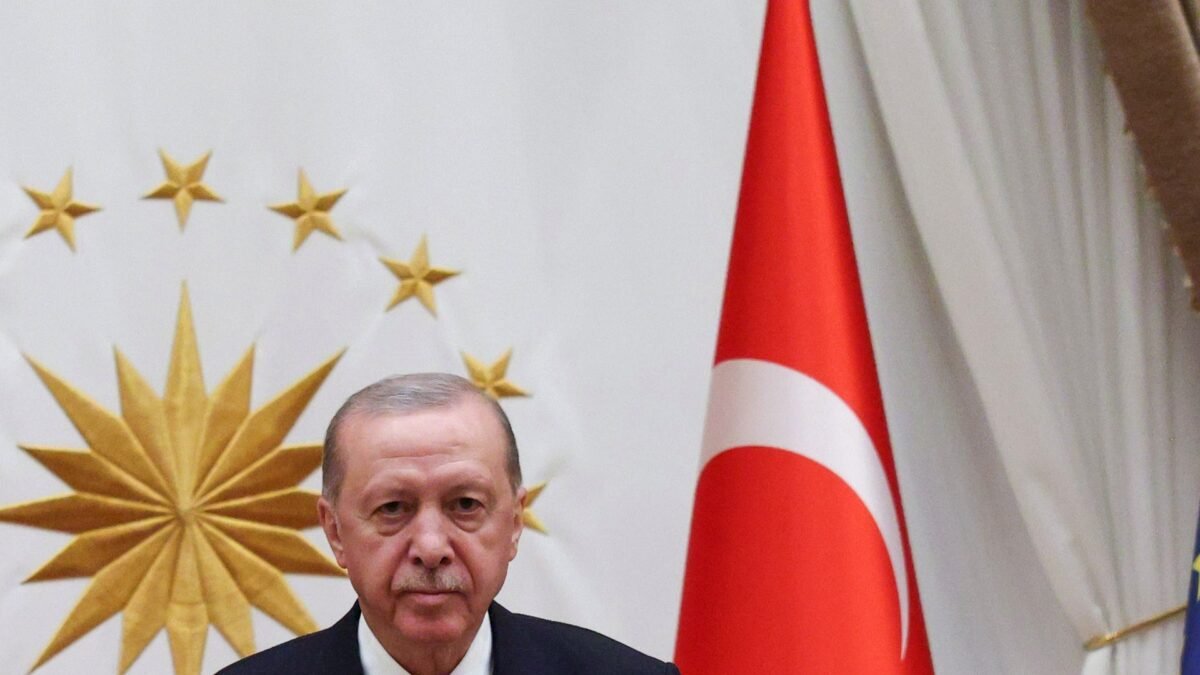
Turkish President Recep Tayyip Erdogan has formally approved the Mecca Joint Defence Agreement with Pakistan and Saudi Arabia, completing Turkey’s ratification of a pact under which an attack on any one of the three countries is treated as an attack on all three, according to Reuters.
The approval was published in Turkey’s Official Gazette on Friday, 27 November, under Presidential Decision No. 12017, according to Reuters. It came as foreign and defence ministers and military chiefs from the three countries gathered in Islamabad for two days of talks, with the Houthi campaign of missile and drone attacks on Saudi Arabia at the top of the agenda, according to the Associated Press.
The meeting, which runs on Friday and Saturday, is the third gathering of the pact’s Strategic, Political and Defense Committee since the three countries signed the agreement in the Saudi holy city of Mecca on 7 August, according to Al Jazeera. It is the first meeting of the committee since the pact’s ratification process was completed, and the first since the Houthi attacks on Saudi energy infrastructure escalated sharply this week.
Pakistan’s Defence Minister Khawaja Muhammad Asif, Foreign Minister Ishaq Dar and army chief Field Marshal Asim Munir are attending the talks, according to the Associated Press. Turkey is represented by Foreign Minister Hakan Fidan, Defence Minister Yasar Guler and military chief General Selcuk Bayraktaroglu, according to the Associated Press. Retired Pakistani General Nauman Mahmood, the alliance’s first secretary-general, is also attending, according to the Associated Press.
Authorities in Islamabad declared a local holiday on Friday and imposed tight security and road diversions around the meeting venues to limit public movement while the foreign delegations are in the capital, according to the Associated Press.
What the pact commits the three countries to
The Mecca Joint Defence Agreement was signed on 7 August by Saudi Crown Prince Mohammed bin Salman, President Erdogan and Pakistan’s Prime Minister Shehbaz Sharif, according to the Associated Press. Its core provision is that an armed attack on any one of the three states is considered an attack on all three, with assistance provided immediately under the right of self-defence in Article 51 of the United Nations Charter, including by military means, according to the text of the agreement as published by Turkey and reported by The Insight International.
The parties also commit to supply each other with arms, ammunition, fuel and spare parts in peace and in war, depending on availability, and to share intelligence, according to the agreement text reported by The Insight International. A committee of the three countries’ foreign ministers, defence ministers and military chiefs is to meet twice a year, and a secretariat has been established in Saudi Arabia, according to the agreement text.
The pact binds the parties for ten years, after which any member wishing to withdraw must give three months’ notice, according to the Associated Press. Pakistan provides the alliance’s first secretary-general, retired Lieutenant General Nauman Mahmood, who was appointed in September for a three-year term, according to Al Jazeera. The agreement enters into force once the last instrument of ratification is deposited, according to the text reported by The Insight International.
Ratification moved in stages over the autumn. Pakistan’s Foreign Ministry said on 23 October that Islamabad and Riyadh had completed their ratification processes, according to Al Jazeera. Turkey’s parliament approved the agreement on 5 November by 279 votes to 119, despite objections from opposition parties who argued that it could draw Turkish soldiers into regional wars, according to the Associated Press. President Erdogan’s formal approval, published on Friday, completes the process.
A ruling party lawmaker told Reuters last month that Turkey would also submit to parliament a mandate allowing military personnel to be deployed to Saudi Arabia under the pact, according to Reuters.
Why the meeting is happening now
The Islamabad talks open at the most dangerous moment for Saudi Arabia since the Houthi campaign against the kingdom reignited in the summer. On Thursday, a projectile struck Saudi Aramco’s Jazan refinery on the kingdom’s Red Sea coast, killing a Nepalese worker and injuring several others and starting a fire that temporarily halted some operations, according to the Saudi Ministry of Energy, as reported by CNN. The Saudi-led coalition blamed the Iran-aligned Houthi movement for the attack and said it had destroyed a ballistic missile launcher in the Yemeni port city of Hodeidah that it said the Houthis had used in the strike, according to Reuters.
The Jazan attack came a day after the Houthis claimed to have struck Ras Tanura, the kingdom’s largest refinery and a major crude export hub, according to CNN. The Saudi-led coalition said it had intercepted four drones over Ras Tanura and destroyed a drone near Jeddah Islamic Port, according to Reuters. On Tuesday, a strike on a tower in Riyadh’s financial centre housing the Public Investment Fund, the Saudi sovereign wealth fund, injured 11 people, according to Saudi Civil Defence, as reported by Al Jazeera.
At least 26 people have been killed in suspected Houthi drone and missile attacks in Saudi Arabia since 23 September, according to Saudi authorities, as reported by Al Jazeera. Twenty-three of them were killed in strikes on airports.
Saudi Arabia has answered with heavy airstrikes inside Yemen. On Thursday, the Saudi-led coalition announced that it had destroyed 50 Houthi military targets, including weapons depots, ballistic missile and drone launch sites and command centres, in strikes on the Sanaa, Hodeidah and Saada governorates, according to the coalition, as reported by multiple outlets. The Houthi-controlled armed forces said Saudi warplanes and missiles had carried out 109 strikes across Yemen in the preceding 24 hours, according to the Houthis, as reported by Treasure.
On Friday, the Houthi-run health ministry said an airstrike on a building in Turbah city in Taiz province in southwestern Yemen had killed at least 11 people, including children, and blamed Saudi Arabia. The Associated Press reported that it could not independently verify the claim and that the Saudi-led coalition had made no public comment about the incident. The casualty figures in that report come from Houthi sources alone and have not been independently confirmed.
The fighting has also spread to the sea. The United Kingdom Maritime Trade Operations, a British military monitor, said two tankers were hit by unknown projectiles in the Strait of Hormuz region, one on Wednesday afternoon and one early on Thursday, according to the Associated Press. Iran’s paramilitary Revolutionary Guard said the tankers had been trying to transit without its authorisation and had caught fire after hitting naval mines, according to the Associated Press.
Oil markets have reacted sharply. Brent crude, the global benchmark, traded above 97 dollars a barrel on Friday, while West Texas Intermediate climbed to about 86 dollars a barrel, putting both benchmarks on track for their first weekly gain in November, according to the Wall Street Journal. The OPEC+ group of producers is due to meet on Sunday, 29 November, to set output policy for 2027, according to the Wall Street Journal.
What each side wants from the pact
For Saudi Arabia, the pact is a search for security guarantees that do not depend on Washington. The agreement was signed in August amid a wider war that began with United States and Israeli strikes on Iran in February, according to Al Jazeera, and it links NATO’s second-largest army, the only nuclear-armed Muslim state and one of the world’s biggest oil exporters.
Pakistan’s Defence Minister Khawaja Asif told the AFP news agency earlier this week that the continuing turmoil south of Saudi Arabia would be on the agenda in Islamabad, according to Al Jazeera. “Any threat to Saudi Arabia is a threat to Pakistan and Turkiye according to the pact, which is absolutely clear,” Asif said, according to Al Jazeera. He described the pact as still being at an early stage. “Initially we need to have frequent meetings to steer what is being formulated, in a way that in the next couple of months we have everything in place so that we can move forward,” he said, according to Al Jazeera.
Asif has also said Pakistan will use “whatever means are available” to defend Saudi Arabia against Houthi attacks, according to the Associated Press. But Pakistan has drawn a clear line around what it will not do. Its Foreign Ministry said on 9 October that Pakistani troops stationed in Saudi Arabia under the alliance would not cross into Yemen to attack the Houthis, according to Al Jazeera. “It is an alliance intended to defend the three countries against aggression,” Foreign Ministry spokesperson Sajjad Haider Khan said at a weekly briefing, according to Al Jazeera.
Turkey has drawn a similar line. On 21 November, Foreign Minister Hakan Fidan told Turkish media: “Our current policy is aimed at the defence of Saudi Arabia; no decision has been made on deploying troops inside Yemen. However, the necessary support is being provided in defending Saudi Arabia,” according to Al Jazeera. Turkish officials have said Ankara is considering sending military assistance to Saudi Arabia but insist that no Turkish troops would be deployed to fight in Yemen or to attack the Houthis, according to the Associated Press.
At the Islamabad meeting, Fidan is expected to reaffirm Turkey’s commitment to the agreement and its “full solidarity” with Riyadh, and to declare unacceptable Houthi attacks that target civilians and civilian infrastructure and threaten regional security, according to Turkish officials, as reported by the Associated Press. He will also stress the importance of pursuing a diplomatic resolution to the conflict between the United States and Israel on one side and Iran on the other, and of ensuring safe navigation through the Bab al-Mandeb Strait, according to a Turkish official, as reported by the Associated Press.
A pact built during a war
The Mecca agreement was born in the middle of the region’s most dangerous conflict in years. The wider war began with United States and Israeli strikes on Iran in February, according to Al Jazeera, and the three leaders signed the pact in Mecca in August as that war continued.
Pakistan has played a double role throughout. Islamabad hosted talks between United States and Iranian officials aimed at ending the war on 11 April, according to Al Jazeera, and Pakistan brokered an interim deal between the two sides in June, according to the Associated Press. Pakistan is also working with countries in the Middle East, including Qatar, to urge the United States and Iran to return to the negotiating table, according to the Associated Press.
At the same time, Pakistan’s military relationship with Saudi Arabia has deepened on a separate track. On 11 April, as Islamabad hosted the United States-Iran talks, Saudi Arabia’s Ministry of Defence said a Pakistani force, including fighter and support aircraft, had arrived at King Abdulaziz airbase in the country’s Eastern Province under a bilateral mutual defence agreement that Islamabad and Riyadh had signed in 2025, according to Al Jazeera. Muhammad Faisal, a Sydney-based security and foreign policy analyst, told Al Jazeera that much of the Pakistani military presence in Saudi Arabia rested on that older bilateral arrangement, signed in September 2025, at a time when Gulf countries were re-evaluating their dependence on American security guarantees after Israel struck Qatar.
The three pact members have also kept a channel open to Tehran. On 26 October, Saudi Defence Minister Prince Khalid bin Salman, Pakistan’s army chief Asim Munir and Turkey’s intelligence chief Ibrahim Kalin met Mohsen Rezaei, secretary of Iran’s Supreme National Security Council, in Tehran, according to Al Jazeera. That meeting is widely believed to have been facilitated by Islamabad, according to Al Jazeera. “This showcased Pakistan’s dual role as an active member of the Mecca alliance and a diplomatic bridge between Riyadh and Tehran,” Faisal told Al Jazeera.
On 31 October, Rezaei told Iranian state television that Prince Khalid had warned that Israel would go after Turkey once it was done with Iran, and then Saudi Arabia, according to Al Jazeera. Riyadh, Ankara and Islamabad have not publicly commented on his account, according to Al Jazeera.
The pact’s committee has met twice before: in Istanbul on 31 August and in Riyadh on 5 October, according to Al Jazeera. At the Riyadh meeting, the three sides vowed to immediately implement their collective defence commitments, including arrangements for the rapid deployment of agreed military forces and capabilities to Saudi Arabia, according to the Associated Press. The joint statement from that meeting did not name Yemen or the Houthis, according to Al Jazeera.
Analysis: a promise that now has to work
The completion of Turkey’s ratification matters because it turns the Mecca agreement from a political declaration into a binding legal commitment. When the three leaders signed the pact in August, it was a statement of intent made in the middle of a war. When the last ratification instrument is deposited, it becomes a treaty with a ten-year life, a secretariat, a secretary-general and a committee that meets twice a year. That is the difference between a photograph in Mecca and an alliance.
But the timing of the Islamabad meeting exposes the pact’s central problem. The agreement was designed for a war with Iran, and its first real test is a war with the Houthis. The pact’s text names no country and no region as a threat, according to Al Jazeera, and at a briefing on 20 November, Pakistani spokesperson Sajjad Haider Khan said the agreement “is defensive in nature and is not directed against any country”, according to Al Jazeera. That deliberate vagueness was useful when the pact was signed, because it let all three members read their own fears into it. It is less useful now, when the question is concrete: what exactly will Pakistan and Turkey do, in practical terms, when a Houthi missile hits a Saudi refinery and kills a worker?
So far the answers have been carefully limited. Pakistan will defend Saudi territory but will not send troops into Yemen. Turkey will provide “the necessary support” for Saudi Arabia’s defence but has made no decision on deploying troops inside Yemen. Neither country has said publicly what the pact would require if Iran itself attacked Saudi Arabia directly. Asif declined to tell AFP how the pact would respond to a direct Iranian attack on Saudi Arabia, according to Al Jazeera, while naming Israel as a possible threat to the region. “The possibility of some conflict, or aggression from the Israeli side exists, so we need to close our ranks, the countries of this region,” he said, according to Al Jazeera.
That caution is not evasion. It reflects a genuine dilemma, and it is sharpest for Pakistan. Saudi Arabia wants Pakistan to contribute to its defence against the Houthis, and perhaps to act more offensively against them, but it also wants to keep Pakistan as a channel for talking to Iran, according to Umer Karim, an associate fellow at the King Faisal Center for Research and Islamic Studies in Riyadh, speaking to Al Jazeera. The deeper Pakistan becomes involved against the Houthis, the weaker its diplomatic role becomes, because Iran is the principal external backer of the Houthis, according to Karim.
“Saudi Arabia wants Pakistan to contribute to its defence against the Houthis, and perhaps to act more against the Houthis in an offensive manner, but it also wants to retain Pakistan as a conduit of diplomatic engagement with Iran,” Karim told Al Jazeera. He added that pressure on Pakistan could grow if Riyadh’s outreach to Tehran stalled. “Once Saudi Arabia recognises diplomatic engagement with Iran is not bringing any meaningful outcomes, only then perhaps will it further pressure Pakistan to be more openly involved against the Houthis, which would indeed imperil its goodwill with Iran,” he said, according to Al Jazeera. “The balancing act for Pakistan becomes difficult every day because Iran is unwilling to oblige its concerns and those of Saudi Arabia on Yemen. But for now, it has not crossed a breakdown threshold.”
The same tension runs through the pact’s relationship with Tehran. Iran has welcomed the idea of a regional arrangement that creates a balance against Israel and weakens the American order in the region, according to Javad Heiran-Nia, director of the Persian Gulf Studies Group in Tehran, speaking to Al Jazeera. But Tehran also knows, in his words, that “one dimension of the Mecca Pact, and of possible participation in it, is to control Iran and its proxy forces”, according to Al Jazeera. The 26 October meeting in Tehran, where the pact’s own members sat down with Iran’s security chief, shows that all sides understand the pact is as much a diplomatic instrument as a military one.
For Turkey, the calculation is different again. Ankara is a NATO member with the alliance’s second-largest military, and its parliament debated the pact openly, with 119 deputies voting against ratification on the grounds that it could draw Turkish soldiers into regional wars. Erdogan’s signature closes that debate for now, but the mandate for deploying military personnel to Saudi Arabia still has to go to parliament, according to Reuters. That vote, when it comes, will be the first public test of how far Turkish voters and lawmakers are willing to let the pact go.
The pact also has a structural limit that no amount of political will can remove. “The Mecca Pact does not include a superpower. So, its capabilities and power projections will always be limited, in that it’s an alliance of regional or middle powers,” Omer Ozkizilcik, an Ankara-based analyst and nonresident senior fellow at the Atlantic Council, told Al Jazeera. The alliance has not publicly explained how it would decide on a joint military response, which forces it would call on, or who would command them, according to Al Jazeera. A pact that promises everything, but has not yet said who gives the orders, is a promise that has not been tested.
That is why the Islamabad meeting matters more than the ratification itself. Ratification is paperwork. The meeting is where the three governments have to answer the practical questions: what forces, what equipment, what intelligence, what command arrangements, and under what circumstances. Asif’s own words point to the scale of the task. The pact is “still being at an early stage”, he said, and the three governments need frequent meetings “so that in the next couple of months we have everything in place so that we can move forward”, according to Al Jazeera. Eyup Ersoy, a visiting research fellow at Pembroke College, University of Oxford, told Al Jazeera that the speed of the pact’s formation so far was noteworthy. “The speed and scale of the formation of legal and institutional foundations of the agreement so far attest to the noteworthy performance of the agreement as well,” he said, according to Al Jazeera.
But speed of formation is not the same as readiness, and the Houthis are not waiting for the paperwork. In the last week alone, they have hit the kingdom’s largest refinery, killed a worker at Jazan, and struck a tower in Riyadh’s financial centre, according to reports. Saudi Arabia has answered with some of its heaviest airstrikes of the campaign. Oil prices have climbed back above 97 dollars a barrel. The war the pact was built for is already under way, and it is being fought not by the pact’s members together, but by Saudi Arabia alone, with its two partners offering support, solidarity and carefully worded limits.
Why it matters
The Mecca pact is the most serious attempt yet by Middle Eastern states to build a security order that does not depend on the United States. For decades, the Gulf’s security rested on an American guarantee. That guarantee looked less certain after Israel struck Qatar in September 2025, and the bilateral Saudi-Pakistani defence agreement that followed was the first response. The Mecca pact, signed a year later, is the bigger answer: three of the region’s most important Muslim states, including its only nuclear-armed power, binding themselves to defend each other.
If it works, it changes the region’s politics. A credible Mecca pact would give Saudi Arabia an alternative to Washington, give Pakistan a formal role in Gulf security, and give Turkey a bridge into the Gulf that does not run through NATO. It would also give the three countries a collective voice in any negotiation with Iran or with the United States, which is exactly what Fidan seemed to be signalling when he said Turkey would press for a diplomatic resolution and for safe navigation through the Bab al-Mandeb Strait.
If it does not work, the cost will be paid in credibility. A mutual defence pact that cannot answer a missile attack on a refinery is worse than no pact at all, because it tells every adversary in the region that the promise is empty. The Houthis, who have already shown they can reach Riyadh’s financial district and the kingdom’s biggest refineries, will be watching the Islamabad meeting closely. So will Iran, which has to decide whether the pact is a threat, an opportunity or a bluff. And so will the United States, which has spent decades as the region’s security provider and now has to decide whether to welcome a regional alternative or to see it as a rival.
The next few weeks will tell the story. The communique from Islamabad will show whether the three governments agreed on anything concrete, or whether they simply restated the promise. The Turkish parliament’s vote on a deployment mandate will show how far Ankara is prepared to go. Any announcement of Pakistani or Turkish personnel or equipment arriving in Saudi Arabia will show whether the pact has moved from paper to practice. And the OPEC+ meeting on Sunday will show whether the oil market believes the region is heading for a wider war or for a negotiated pause.
For now, the pact exists on paper, in full, for the first time. What it means in practice is the question the three governments have two days in Islamabad to answer.
Sources
- Reuters — Erdogan completes Turkey’s ratification of Mecca defence pact
- The Business Standard (Associated Press) — Pakistan to host Saudi Arabia, Turkey talks under trilateral defence pact
- Al Jazeera — Can the Mecca pact turn its collective defence promise into real support?
- CNN — Houthis strike Saudi oil infrastructure as Riyadh intensifies attacks on Yemen
- The Wall Street Journal — Oil futures mixed as markets track Middle East developments

About the Author — Abdul Mannan
Related Articles
Houthis Strike Aramco’s Jazan Refinery, Killing One Worker, as Saudi Arabia Pounds Yemen in Escalating Oil War
A projectile struck Aramco's Jazan refinery on Thursday, killing a Nepalese worker and injuring several others, a day…
Two Italian Technicians Killed as Iranian Drones Strike Kuwait Air-Defence Site and Force Flight Diversions
Two Italian technicians were killed and two people wounded when Iranian drones struck an air-defence surveillance station in…
Satellite Images Reveal Iran Racing to Build Huge Underground Facility Between Isfahan and Natanz Nuclear Sites
Satellite imagery shows Iran rapidly building a fortified underground complex at Behjatabad, between its Isfahan and Natanz nuclear…