
Two Italian Technicians Killed as Iranian Drones Strike Kuwait Air-Defence Site and Force Flight Diversions

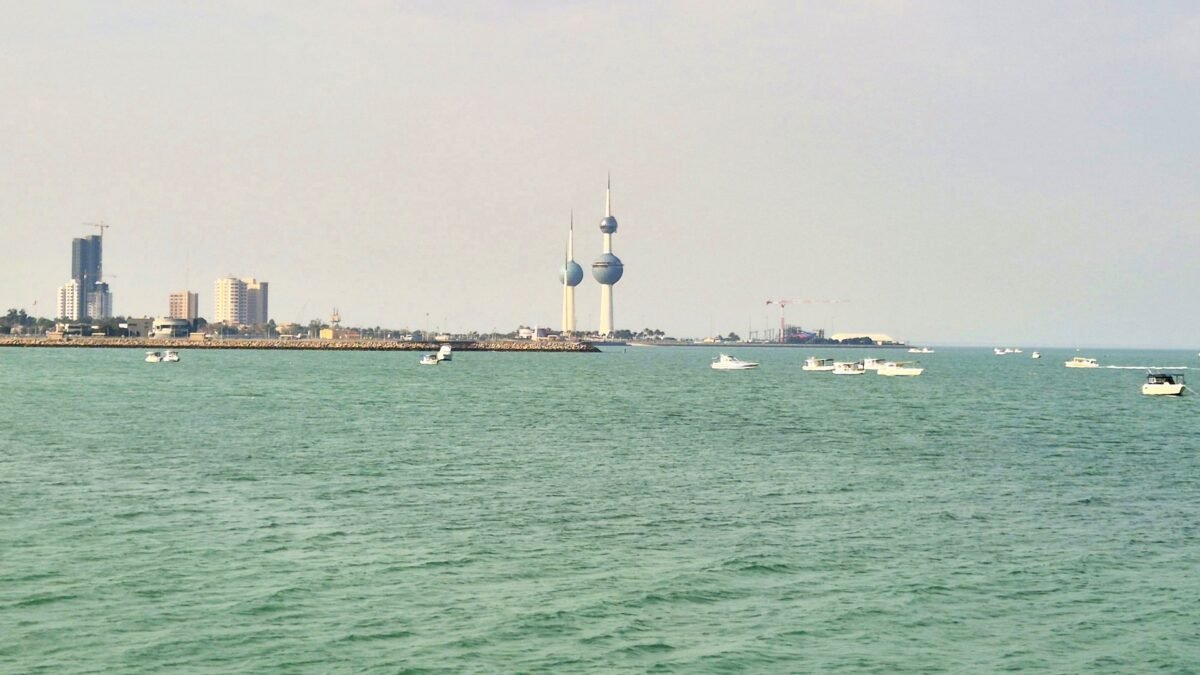
Two Italian technicians were killed and two other people were wounded when Iranian drones struck an air-defence surveillance station in Kuwait on Thursday, in the second reported Iranian attack on the Gulf state this month and a sharp new escalation of a war that has repeatedly spilled onto the territory of America’s Arab allies.
The two men worked for Rheinmetall Italia, the Italian unit of the German defence group Rheinmetall, and were at the surveillance station when it was targeted, according to Italy’s foreign minister, Antonio Tajani, who announced their deaths in the Italian Senate. Kuwait’s Defence Ministry later confirmed that the two Italians had died of their injuries, after first reporting that four people had been wounded by falling shrapnel when a “vital facility” was hit.
The attack also closed Kuwaiti airspace on Thursday afternoon and forced civilian aircraft on one of the world’s busiest air corridors to turn away mid-flight, in a vivid reminder that a war now in its ninth month is routinely disrupting the movement of ordinary travellers hundreds of miles from the front line.
Iran’s Foreign Ministry did not immediately respond to a request for comment from Reuters, and Rheinmetall declined to comment on the incident, according to Reuters.
The attack
Kuwait’s armed forces detected and dealt with a number of hostile drones inside the country’s airspace on Thursday, the Defence Ministry said in a statement shared on the Kuwait Army’s official account on X. The ministry’s spokesman, Staff Colonel Saud Abdulaziz Al-Atwan, said the Iranian attack had targeted a vital site and caused shrapnel to fall, wounding four people: one Kuwaiti citizen, two Italian nationals and one Pakistani national. All four were taken to hospital for treatment, and the attack also caused material damage, according to the ministry.
The ministry did not identify the site that was hit, and it gave no details about the condition of the wounded or the extent of the damage, according to Gulf Business, which reported the statement.
Tajani, speaking in Rome, gave the fuller account of what the two Italians had been doing when the drones struck. “Following a powerful explosion, both of our compatriots, according to information coming from Kuwait, have died. Two other people were injured: a Pakistani national and a captain in the Kuwaiti army,” he told the Senate, according to Reuters. The Kuwaiti ministry later confirmed that the two Italians had died of their injuries, and that the other two people hurt were a Kuwaiti and a Pakistani national.
“I would like to express my deepest sympathy and solidarity to the families of the Italian victims at this time of profound grief,” Tajani added, according to Reuters.
The sequence of the official statements tells its own story about how the day unfolded. The first Kuwaiti statement spoke of four people wounded by falling debris, the language of an attack that had been intercepted. Hours later, the same ministry was confirming two deaths. The drones, in other words, were stopped in the air, but what fell from the sky was still lethal. The ministry said its forces would continue to carry out their duties at a high level of readiness and would take all necessary measures to protect the country’s sovereignty and the safety of its citizens and residents.
The victims
The two dead men were technicians, not soldiers. They worked for Rheinmetall Italia, and, according to Tajani, they were working at an air-defence surveillance station in Kuwait when it was targeted. That detail matters. Rheinmetall is one of Europe’s largest defence contractors, and its technicians maintain the surveillance and air-defence systems that Gulf states rely on to detect exactly the kind of attack that killed them.
Their deaths put a European face on a war that, for most of its nine months, has been fought and suffered in by Iranians, Americans and the peoples of the Gulf. Italy is a NATO ally of the United States, and the killing of two of its nationals by Iranian drones, while they were working on a friendly state’s air defences, is the kind of event that travels far beyond the Gulf. Tajani’s decision to announce the deaths in the Senate, rather than through a routine foreign ministry statement, signalled that Rome understood the political weight of what had happened.
The two other people wounded in the attack were a Pakistani national and a captain in the Kuwaiti army, according to Tajani, a description the Kuwaiti Defence Ministry confirmed in substance when it said the other two injured people were a Kuwaiti and a Pakistani national. The presence of a Pakistani worker among the casualties is a quiet reminder of who actually staffs the Gulf’s defence and construction sites: the region’s armies and air-defence networks depend on large numbers of South Asian technicians and labourers, and they share the risk when those sites are attacked.
Flights diverted as airspace closed
Within hours of the attack, the consequences were visible in the sky. Flights on the key air traffic corridor between Europe, the Gulf region and Asia, crossing Iraq towards the Gulf, were suddenly redirected south on Thursday afternoon amid reports that Kuwait’s airspace was closed, according to Euronews. All flights were given a new heading, prompting them to make a sharp turn ahead of Kuwait’s airspace and move the entire international corridor towards neighbouring countries, including a flight on which Euronews reporters were travelling.
It was not a local disruption. Since the war in Iran broke out in late February, most international flights crossing Europe have been flying towards the major hubs of Doha, Abu Dhabi and Dubai by a route running through Turkey, Iraq, Kuwait, Bahrain and the United Arab Emirates, according to Euronews. That corridor is one of the great arteries of world aviation, carrying the traffic between Europe and Asia over the northern Gulf. When Kuwait’s airspace closes, the whole artery has to bend.
Flights bound for the Gulf countries now carry extra fuel for emergency diversions, in case they need to go into a holding pattern near their destinations if airports and airspaces are closed because of military activity, Euronews reported. That single detail captures how thoroughly the war has been absorbed into the ordinary business of flying: extra fuel, holding patterns and sudden turns south are now part of the operating routine on a route used by millions of passengers a year. It was not immediately clear how long the restrictions on Kuwaiti airspace would remain in place, or how many flights had been affected, according to a regional report on the diversions.
A second strike this month
Thursday’s attack was the second reported Iranian attack on Kuwait this month, according to Reuters. Earlier in November, Iran said it had targeted American drone and missile sites in Kuwait after the United States struck a missile site on Qeshm Island in the Strait of Hormuz on 17 November, Reuters reported.
Iran’s army said at the time that its drones had targeted Patriot air-defence systems and drone and missile launch platforms at Ali Al Salem Air Base in Kuwait, the main base used by American forces in the country. Al Jazeera reported that the attack marked the first time Kuwait’s air defences had to be activated since early September, ending roughly two months without a publicly reported Iranian strike on the country.
The pattern is now familiar. The United States strikes an Iranian target, and Iran answers by striking at the American military footprint in the Gulf, which sits on the soil of allied Arab states. Kuwait has been a repeated target of Iranian missile and drone fire during the war, according to JFeed. Earlier attacks hit oil refineries, the international airport and power lines, and killed and wounded Kuwaiti service members. Although the fighting has eased since its early stages, the two sides continue to exchange strikes, and the United States is enforcing a naval blockade of Iran’s ports, JFeed reported.
The war itself began in late February, when the United States and Iran went to war after the collapse of diplomacy over Tehran’s nuclear programme. It has since settled into a grinding pattern of strikes and counter-strikes across the Gulf: American warplanes hitting Iranian missile and nuclear sites, Iranian drones and missiles reaching for American bases and allied infrastructure in Bahrain, Kuwait, Qatar and Saudi Arabia, Houthi forces in Yemen firing on Saudi targets, and tankers being hit by mines in the Strait of Hormuz. President Donald Trump warned only days ago that the United States could launch new strikes on Iran after the New Year, a warning that now hangs over every fresh incident.
Analysis: Why It Matters
A European death toll in a Gulf war
The most important fact about Thursday’s attack is not the number of drones or the name of the base. It is the nationality of the dead. Two Italian citizens, working as civilian technicians for a European defence company, were killed by Iranian drones while maintaining an Arab ally’s air defences. That makes this attack different in kind from the strikes that have become routine in this war.
Until now, the human cost of the Gulf war has fallen overwhelmingly on Iranians, Americans and the peoples of the region. European governments have watched the war largely as concerned bystanders, worried about energy prices, shipping and refugees, but not burying their own citizens. Thursday changed that, at least in a small way. Italy now has a direct, human stake in the conflict, and its government will face questions at home about what its nationals are doing in the line of fire and what protection they are owed. Tajani’s Senate appearance was the first answer to those questions, and it will not be the last.
The fact that the victims worked for Rheinmetall adds a further edge. Rheinmetall is not a marginal contractor. It is the industrial backbone of Europe’s rearmament, and its technicians are deployed across the Gulf maintaining the air-defence systems that are supposed to protect these states. Iran’s drones struck the very people who keep the shield working. That is either a deliberate message or a grim coincidence, and neither interpretation is reassuring.
The logic of retaliation
The second thing Thursday’s attack reveals is the war’s retaliatory rhythm, which has now repeated itself so often that it can be stated almost as a rule. The United States strikes an Iranian target, and Iran answers against the American presence in the Gulf. The American presence sits on allied soil, so the answer lands on Kuwait, or Bahrain, or Qatar. The allies absorb the blow, intercept what they can, and count the cost.
This rhythm explains why Kuwait, a state that has no quarrel of its own with Iran and no part in the decisions taken in Washington, keeps being attacked. It hosts American forces, and in a war between the United States and Iran, hosting American forces is enough. The Kuwaiti Defence Ministry’s statement, with its careful language about “vital facilities” and “high readiness”, is the language of a government that knows it is a target for reasons it did not choose and cannot easily change.
It also explains why the fighting has not stopped despite months of diplomacy. Each side has a reason to keep hitting: Washington to degrade Iran’s missile and nuclear capacity, Tehran to prove that the American presence in the Gulf carries a price. Neither side has yet found a reason to stop, and the allies in between pay in damaged infrastructure, closed airspace and, now, dead European technicians.
Civilian skies in a war zone
The third lesson of Thursday is written in the flight paths. The sudden diversion of the Europe-Gulf-Asia corridor, the sharp turns south before Kuwaiti airspace, the extra fuel carried as a matter of routine: these are the marks of a war that has been normalised into the infrastructure of global travel. Millions of passengers fly over the northern Gulf every year. Their safety now depends on air-defence batteries working as intended and on pilots having enough fuel to wait out a missile exchange.
So far, the system has held. No civilian airliner has been brought down in this war, and the diversions on Thursday were orderly. But the margin is thin, and it depends on warnings reaching cockpits in time and on airspaces closing before, not after, the drones arrive. Every incident like Thursday’s is a reminder that the corridor over the Gulf is one miscalculation away from a catastrophe that would dwarf the loss of two technicians, however grave that loss is.
What Kuwait’s silence says
Finally, notice what the Kuwaiti authorities did not say. They did not name the site that was hit. They did not describe the damage beyond the word “material”. They did not say how many drones there were, or what kind, or where they came from beyond the attribution to Iran. That restraint is deliberate. Naming an air-defence surveillance station as the target would tell Iran exactly what its drones achieved, and it would tell the Kuwaiti public exactly how exposed their defences are.
But the restraint has a cost. It leaves the public to fill in the gaps, and it leaves the impression that the government is managing the news of the war as carefully as it is managing the war itself. In a conflict that has already lasted nine months, with no end in sight, that management will get harder with every attack.
What to Watch Next
The first question is what Italy does. Tajani has announced the deaths and offered sympathy to the families, but Rome has not yet said what, if anything, it will demand of Tehran or of its allies. Italy could summon Iran’s ambassador, demand an explanation, or press its partners for better protection of its nationals working in the Gulf. Any of those steps would raise the diplomatic cost of the attack for Iran.
The second question is whether Kuwait’s airspace reopens quickly and whether the flight diversions end. A short closure is a disruption; a long one is a statement that the authorities expect more attacks. Airlines, which have already adapted to carrying extra fuel and planning for diversions, will be watching for the first sign of a longer closure.
The third question is whether the United States responds. The pattern of this war suggests that an Iranian strike on an ally hosting American forces draws an American answer, and President Trump has already warned of new strikes on Iran after the New Year. The timing of any response, and whether it comes before or after that warning’s deadline, will shape the next phase of the war.
The fourth question is what Iran says. Tehran has not yet commented on Thursday’s attack, according to Reuters. If it claims the strike, it will be owning the deaths of two European civilians. If it stays silent, the attribution will rest on Kuwait’s statement and on the judgement of Western governments. Either way, the silence will not last long.
The last question is the simplest and the hardest: how many more times can this pattern repeat before one of the retaliations goes wrong? The war has already produced dead Americans, dead Europeans and dead Gulf service members. Each round of strikes narrows the margin for error. Thursday’s attack, with its two dead technicians and its diverted airliners, is a measure of how narrow that margin has become.
Sources
- Reuters — “Two Italians killed in Iranian drone attack in Kuwait, Italy says”
- Reuters — “Two Italian workers killed in Iranian strike in Kuwait, source says”
- Euronews — “Civilian flights diverted as Kuwait army intercepts Iranian drone attack”
- Gulf Business — “Kuwait: Four injured in Iranian drone attack targeting vital site”
- JFeed — “Iranian Drone Attack on Kuwait Wounds Four People”

About the Author — Abdul Mannan
Related Articles
Satellite Images Reveal Iran Racing to Build Huge Underground Facility Between Isfahan and Natanz Nuclear Sites
Satellite imagery shows Iran rapidly building a fortified underground complex at Behjatabad, between its Isfahan and Natanz nuclear…
Judges Urge Prosecutors to Drop Netanyahu Bribery Case in Major Legal Boost for Israel’s Prime Minister
Israel's judges have told prosecutors to drop the bribery case against Benjamin Netanyahu, saying a conviction is unlikely…
Houthis Say They Struck Saudi Arabia’s Largest Refinery at Ras Tanura as Satellite Images Show Smoke
Yemen's Houthis said they attacked Saudi Arabia's Ras Tanura refinery and Riyadh's financial district on Wednesday, as satellite…