
WHO Keeps Congo Ebola Outbreak a Global Emergency as Cases Pass 12,000 and Attacks on Health Workers Mount

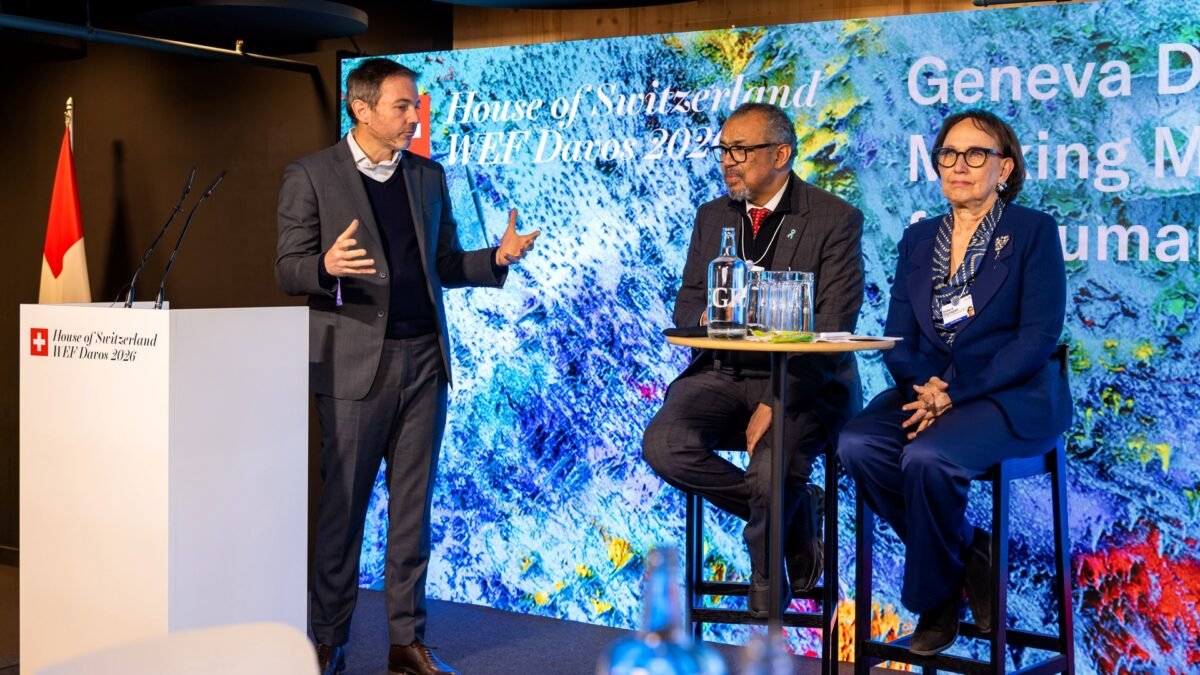
The World Health Organization has kept the Ebola epidemic in the Democratic Republic of the Congo under its highest level of global alert, warning that the outbreak is still spreading, still killing nearly half of the people it infects, and still being fought in places where gunfire stops health workers from reaching the sick.
The WHO announced on 27 November 2026 that its Director-General, Dr Tedros Adhanom Ghebreyesus, had determined that the epidemic continues to constitute a public health emergency of international concern, the formal label the agency uses for the most serious cross-border health threats. The decision followed the third meeting of the WHO’s Emergency Committee on 17 November, and came with updated temporary recommendations for the Democratic Republic of the Congo and for other countries.
More than 12,000 cases of Ebola and 5,900 deaths had been reported in the Democratic Republic of the Congo as of 24 November, according to the WHO. The country’s own health ministry put the toll higher two days later: 12,176 confirmed cases and 5,978 deaths as of 26 November, a fatality rate of 49.1 percent, according to the ministry’s situation report No. 196. On that single day, the ministry recorded 87 new confirmed cases and 35 deaths.
Six months after the emergency was first declared, the alarm is still sounding. The question now is not whether the world is paying attention — the WHO’s decision guarantees that it must — but whether the response can finally move faster than a virus that has already outrun it for half a year.
The decision and what it changes
A public health emergency of international concern, known by its initials PHEIC, is the strongest alarm the WHO can raise under the International Health Regulations, the binding rules that govern how countries respond to outbreaks. It does not impose travel bans or trade restrictions — the WHO has consistently advised against them — but it obliges countries to report cases, share information, and follow the temporary recommendations the Director-General issues. It also keeps the outbreak on the agenda of governments, donors and drug developers who might otherwise look away.
The Emergency Committee that advises the Director-General is a group of independent experts drawn from a roster maintained by the WHO. It is chaired by Professor Lucille Blumberg, a South African infectious diseases specialist. After its third meeting on the outbreak, the committee urged faster clinical trials of candidate vaccines and treatments, while insisting that high scientific, ethical and safety standards be maintained. It also stressed that communities must be told clearly and transparently how the trials are planned and carried out, so that people are not asked to trust a process they do not understand.
“Six months into this emergency, the Committee remains deeply concerned by continued transmission and the high number of Ebola-related deaths, particularly in a context where insecurity and obstacles to reaching affected communities make every aspect of the response more difficult,” Professor Blumberg said, according to the WHO.
“Stopping Ebola will require coordinated and accelerated action to find cases earlier, prevent infections in health-care settings and in the community, provide early supportive care, maintain trust with communities, and ensure responders can safely reach people in need.”
The updated recommendations call for intensified action in the areas of the Democratic Republic of the Congo where new cases are occurring or where community transmission is rising. They also ask the country to prevent infections inside health facilities, including infections linked to unsafe injection practices, and to cut the delay between the first symptoms, a diagnosis, and access to supportive care. For other countries, the WHO recommends targeted measures to identify and assess travellers who may have been exposed to the virus, so that the risk of spread beyond the Democratic Republic of the Congo is reduced without unnecessary interference with flights and international traffic.
On 24 November, two days before the WHO’s announcement, the agency published a new continental preparedness and response plan running from November 2026 to May 2027, setting out how African countries should prepare for cases that cross borders.
The numbers behind the emergency
The scale of the outbreak is now beyond dispute, and the figures tell a story of steady, relentless growth. The WHO’s latest disease outbreak notice, published on 20 November, reported 11,613 confirmed cases in the Democratic Republic of the Congo as of 17 November, including 5,678 deaths, a crude case fatality ratio of 48.9 percent. Cases had been confirmed in 68 health zones across eight provinces, with active transmission in 48 of them.
By 24 November, the WHO’s count had passed 12,000 cases and 5,900 deaths. By 26 November, the Congolese health ministry’s count stood at 12,176 confirmed cases and 5,978 deaths. The daily figures show no sign of the outbreak slowing: 87 new confirmed cases were logged on 26 November alone, 54 of them in North Kivu province, 27 in Ituri, three in Haut-Uélé and three in Tshopo, according to the ministry’s dashboard. Another 35 people died that day. Two days earlier, on 24 November, the ministry had recorded 12,021 cases and 5,904 deaths.
The WHO’s fifth rapid risk assessment, dated 25 November, rated the risk as very high in the Democratic Republic of the Congo and high in Kenya and Nigeria, the two countries where the virus has also been detected.
Kenya has reported nine cases and two deaths, with no new cases since 19 October, according to the WHO. Nigeria has reported one imported case. Earlier cases in Uganda and France have been controlled since August. The outbreak, in other words, is still overwhelmingly a Congolese emergency, but the region around it is not free of risk.
The numbers make this the largest Ebola outbreak ever recorded in the Democratic Republic of the Congo, regardless of which species of the virus caused it, according to the WHO. It is the second-largest Ebola outbreak ever recorded anywhere in the world, and the fastest-growing in history. It is already the deadliest of the country’s 17 Ebola outbreaks, and it is on track to surpass the death toll of the West African outbreak of 2014 to 2016, which killed more than 11,000 people after infecting more than 28,600, according to the Associated Press.
A virus with no approved vaccine
Part of what makes this outbreak so dangerous is that the virus causing it, Bundibugyo virus, is one of the rarest and least studied members of the Ebola family. It belongs to the Orthoebolavirus group, and fruit bats are suspected to be its natural reservoir. People can be infected through contact with infected wild animals, and the virus then spreads from person to person through close contact with the bodily fluids of someone who is sick.
The incubation period ranges from two to 21 days, and people are not infectious until symptoms appear, according to the WHO. That is a small mercy: it means that isolating the sick and watching their contacts for three weeks can, in principle, break every chain of transmission. But it also means that every missed case, every family that hides a sick relative, every village that health workers cannot reach, is a chain that keeps running.
Bundibugyo virus has caused only two earlier outbreaks: one in Uganda in 2007 and one in the Democratic Republic of the Congo in 2012, with case fatality rates of about 30 percent and 50 percent respectively, according to the WHO. There are still no approved vaccines or specific treatments for Bundibugyo virus disease. That sets it apart from the better-known Zaire ebolavirus, the species behind most Ebola outbreaks, for which licensed vaccines and monoclonal antibody treatments already exist.
The absence of a vaccine is not for want of candidates. A Phase 2/3 vaccine trial, called TUMAINI, was launched in Bunia on 23 October, and the WHO says two further candidate vaccines are to join it following national approvals. The trials are the first evaluation of a Bundibugyo-specific vaccine during an outbreak of the disease.
On 27 November, the same week as the WHO’s announcement, the Uganda Virus Research Institute launched Africa’s first Phase I clinical trial of an mRNA vaccine against Bundibugyo virus, in collaboration with the American pharmaceutical company Moderna. The study, designated mRNA-1469-P102, will assess the safety and immune response of the candidate in about 224 healthy volunteers aged between one and 65, according to the institute and the Xinhua news agency. It is the first time the vaccine has been tested in children. Volunteers will be followed for about a year after their injection. The research is supported by funding of up to $58.5 million from CEPI, the Coalition for Epidemic Preparedness Innovations, to Moderna.
Separately, Gavi, the Vaccine Alliance, has signed a purchase commitment with India’s Serum Institute for 1.5 million doses of another experimental vaccine, developed in collaboration with the University of Oxford, according to Reuters. Trials of two experimental vaccines were scheduled to begin in eastern Democratic Republic of the Congo, targeting people who have been in contact with infected patients and those considered at high risk of infection.
None of this will help the people who are sick today. A Phase I trial measures safety and immune response, not whether a vaccine prevents disease. The candidates in the TUMAINI trial will take months to produce results. The WHO’s call for faster trials is, in that sense, a call to shorten a race that the virus is currently winning.
When health workers become targets
The most alarming figure in the WHO’s announcement may not be the case count but the one about attacks. The agency has verified at least 94 attacks on health care in the Democratic Republic of the Congo since the outbreak was declared a global emergency six months ago. That means clinics shelled, ambulances stopped, nurses threatened, and treatment centres abandoned — in the middle of an epidemic that can only be beaten by health workers moving freely through villages.
The violence is not an abstraction. In the week before the WHO’s announcement, fighting between the army and the Convention pour la révolution populaire, a rebel group known as the CRP, forced health workers to evacuate from areas where the virus is spreading fastest. About a dozen people, including two WHO personnel and Congolese health officials, were evacuated to Bunia on 25 November after spending three full days trapped in a hospital in Akwe, northeast of the provincial capital, amid intense crossfire, according to the WHO’s incident manager, Dr Catherine Smallwood. Fighting earlier in the week had already prevented response teams from reaching some communities, disrupted the monitoring of people exposed to the virus, and left some treatment centres short of staff.
The CRP is one of more than 100 armed groups operating in eastern Congo, where conflict has created one of the world’s most severe humanitarian crises, according to the Associated Press. The group was founded last year by former warlord Thomas Lubanga, who was convicted by the International Criminal Court in 2012 of recruiting children under 15 and using them in fighting.
The WHO warned on 13 November that the outbreak remained “concerning” as violence disrupted the response, with around 400 to 500 new cases still being reported every week. The Africa Centres for Disease Control and Prevention warned earlier in November that the outbreak was “still not under control” as cases passed 11,200. Diagnostic capacity has grown — from just two laboratories to more than two dozen, capable of processing over 600 samples a day, with around 2,000 beds available across 109 transit and treatment centres — but capacity means little when the roads to the beds are closed by fighting.
The pattern is grimly familiar. In the 2018-2020 Ebola outbreak in North Kivu and Ituri, also in eastern Congo, attacks on treatment centres killed health workers and repeatedly set the response back. That outbreak lasted nearly two years and killed 2,287 people. The current outbreak is already far larger, and the security environment has not improved.
How the outbreak began
The Democratic Republic of the Congo declared the outbreak on 15 May 2026, in Ituri province in the country’s northeast. The WHO declared it a public health emergency of international concern two days later, on 17 May, an unusually fast decision that reflected how quickly the virus was spreading.
The early weeks were deceptively quiet. By 31 May, there were 210 confirmed cases and 17 confirmed deaths, according to the WHO’s regional office for Africa. The WHO’s Director-General visited Bunia on 30 May, opening a refurbished Ebola treatment centre with an initial capacity of 24 beds, expandable to 60, and hailing the recovery of four nurses who had been treated for the disease. “The Democratic Republic of Congo has faced Ebola before, 16 times, and has ended every outbreak. This is the 17th. That history gives me real confidence,” Dr Tedros said during the visit, according to the Associated Press.
That confidence has not been rewarded. The outbreak spread from Ituri into North Kivu, the province that now reports the most new cases each day, and then into six more provinces. By mid-November it had passed 11,000 cases. A week later it had passed 12,000. The speed is what makes it the fastest-growing Ebola outbreak in history: the West African epidemic of 2014-2016 took more than a year to reach the same number of cases.
The difference is not the virus. It is the setting. Eastern Congo is a region where the state is thin, the roads are few, and armed groups control large areas. Ebola is defeated by speed: finding the sick quickly, isolating them, listing every person they may have exposed, watching those contacts for 21 days, and burying the dead safely. Every one of those steps requires health workers to move freely through villages, to be trusted by residents, and to return day after day. Gunfire breaks all three conditions at once.
Analysis: the emergency that will not end
The WHO’s decision to keep the emergency in place is, on its face, unremarkable. Emergencies of this size are rarely lifted after six months. But the announcement matters for what it reveals about the state of the response — and about the limits of what a global health agency can do when the obstacles are not medical but military.
The first thing to notice is the language. Professor Blumberg’s statement does not talk about a virus that is winning because it is unusually deadly or unusually contagious. Bundibugyo virus is not more transmissible than other Ebola species. It talks about “insecurity and obstacles to reaching affected communities” making “every aspect of the response more difficult”. That is a diplomatic way of saying that the response is being shot at.
This is the central, uncomfortable fact of the outbreak. The world has the tools to stop Ebola. Contact tracing, safe burials, isolation, supportive care and community engagement ended 16 previous outbreaks in the Democratic Republic of the Congo. The tools are not failing. The people carrying them are being prevented from using them.
The 94 verified attacks on health care are the clearest measure of that failure. Each attack does more than injure or kill the people directly involved. It closes a clinic for days, it sends experienced staff home, it tells a community that cooperating with the response is dangerous, and it forces the WHO to spend money on security that should be spent on treatment. In an outbreak where a single missed case can seed a new chain of transmission, the cost of each attack is measured in infections that will not be counted for weeks.
The second thing to notice is the emphasis on trials. The WHO’s call to accelerate vaccine trials is not a routine line. It is an admission that the response needs a tool it does not yet have. Supportive care — fluids, electrolytes, treatment of secondary infections — saves lives, but it does not stop transmission. A vaccine does. The TUMAINI trial and the Uganda study are therefore not side projects. They are the most important development in this outbreak since the emergency was declared, and the WHO knows it.
But there is a tension here that the WHO’s statement does not resolve. Trials need the same things the response needs: access to communities, trust, and safety. A trial that cannot reach the people at highest risk — the contacts of confirmed cases in areas controlled by armed groups — will be slow, and its results will come too late for the people who need them most. The call for faster trials and the call for better security are, in practice, the same call.
The third thing to notice is what the WHO did not do. It did not recommend travel or trade restrictions, and it explicitly said the measures should not unnecessarily interfere with flights and international traffic. That matters, because the history of Ebola outbreaks is also a history of countries overreacting — closing borders, cancelling flights, and isolating the affected country in ways that make the response harder, not easier. Dr Tedros made the same point during his visit to Bunia in May, urging countries to reconsider travel bans and border closures because they “discourage transparency”. A country that fears being cut off is a country that hides its cases.
The regional picture sharpens the point. Kenya’s nine cases and Nigeria’s single imported case show that the virus can travel, and that the countries around the Democratic Republic of the Congo are watching. But they also show that it can be contained: Kenya has reported no new cases since 19 October. The difference between Kenya and eastern Congo is not luck. It is that Kenya’s health workers could reach the sick.
Why it matters
It matters, first, because of the death toll. Nearly 6,000 people have died, and the daily count of new cases is still close to 90. If the current pace continues, the outbreak will pass the West African epidemic’s death toll within months, becoming the deadliest Ebola outbreak in history. That is not a prediction. It is arithmetic.
It matters, second, because of what the outbreak says about the world’s ability to handle the next one. The WHO’s emergency system was built for moments like this: a dangerous pathogen, a fragile setting, and a response that needs international coordination. The system is working as designed — the committee met, the Director-General decided, the recommendations were issued, the plan was published. But the system cannot protect a nurse in Ituri from a bullet. That gap, between what Geneva can declare and what Bunia can deliver, is the real story of this outbreak.
It matters, third, because of the vaccine question. Bundibugyo virus has no approved vaccine, and it is not the only pathogen in that position. The mRNA platform that produced COVID-19 vaccines in months is now being tested against Ebola for the first time in Africa, in children as young as one. If the Uganda trial and the TUMAINI trial succeed, the world will have a tool it has never had — a vaccine against a virus that has killed thousands. If they fail, or if they are too slow, the next Bundibugyo outbreak will start from the same place this one did: with nothing.
And it matters because of the people who are not in the figures. Behind every number in the ministry’s situation reports is a family that buried a relative in a safe but lonely ceremony, a nurse who went back to work after a colleague was attacked, and a contact tracer who walked into a village that did not want to see them. The WHO’s announcement is about them, even though it does not name them.
What to watch next
Several things will show, in the coming weeks, whether the WHO’s renewed alarm is matched by a change on the ground.
The first is the daily case count. The ministry’s situation reports are the most reliable guide to whether transmission is slowing. A sustained fall below 50 new cases a day, and a fall in the proportion of cases in North Kivu, would be the first sign that the response is catching up. The opposite — a rise above 100 a day, or new health zones reporting cases — would mean the opposite.
The second is security. The WHO’s plan runs to May 2027. Whether health workers can operate in Ituri and North Kivu over the next six months will decide whether that plan is a timetable or a wish. Any further evacuations of treatment centres, or any further attacks on health care, should be read as a warning that the outbreak is about to get worse, not better.
The third is the trials. The TUMAINI trial in Bunia and the Uganda study in Entebbe are both in their early stages. The first safety data from Uganda is expected in the first half of 2027, according to reports. Any announcement that additional candidate vaccines have joined the TUMAINI trial, as the WHO has said they will, would be a positive sign.
The fourth is the regional picture. Kenya has gone more than a month without a new case. If it stays that way, and if Nigeria’s single case produces no secondary infections, the outbreak will remain a Congolese emergency rather than a regional one. A new case in a country that has not yet reported one would change that assessment overnight.
Finally, watch the next Emergency Committee meeting. The committee will meet again in about three months to advise the Director-General on whether the emergency should continue. By then, the world will know whether the renewed alarm produced a renewed response — or whether, six months from now, the same announcement will have to be made again, with a larger number attached.
Sources
- World Health Organization — WHO issues updated Ebola response recommendations, calling for improved security and accelerated research (27 November 2026)
- The File — WHO keeps Congo’s Ebola outbreak a global emergency as the count reaches 12,176 (29 November 2026)
- Associated Press via NPR — Congo Ebola outbreak reaches 12,000 cases as some responders evacuate (26 November 2026)
- Group of Nations — Bundibugyo Ebola is still a global health emergency as France’s G7 year ends (29 November 2026)
- Xinhua via GlobalSecurity.org — Uganda launches Africa’s first trial of mRNA vaccine against Bundibugyo Ebola (28 November 2026)

About the Author — Abdul Mannan
Related Articles
Three Flu Strains Circulate at Once in China as South Korea’s Cases Rise for a Fifth Week
Three influenza strains are circulating at once in China, raising fears of repeat infections, as South Korea records…
England Faces ‘Horrible Spike’ in Flu as Hospital Admissions Jump Almost 80% in a Week
Flu hospital admissions in England jumped almost 80% in a week to their highest level for this time…
Congo Ebola Outbreak Passes 12,000 Cases as Fighting Forces Responders to Evacuate
Confirmed cases in DR Congo's Ebola outbreak have passed 12,000, with nearly 6,000 dead, as fighting in Ituri…