
England Faces ‘Horrible Spike’ in Flu as Hospital Admissions Jump Almost 80% in a Week

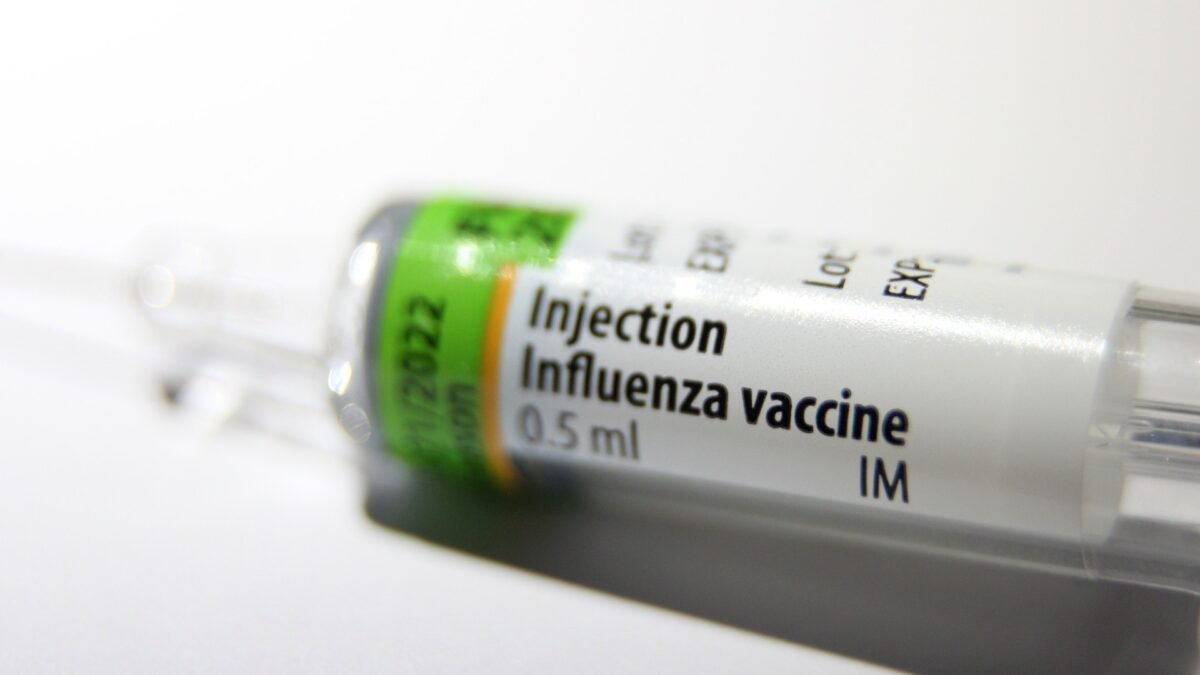
Hospital admissions for flu in England have jumped by almost 80% in a single week, reaching their highest level for this time of year since before the Covid pandemic, according to the UK Health Security Agency (UKHSA). The head of NHS England has warned hospitals to prepare for a “horrible spike” in cases as winter approaches.
The weekly hospital admission rate for flu rose to 8.98 per 100,000 people in the week of 16 to 22 November, up from 5.03 per 100,000 the previous week, according to UKHSA surveillance data published on Thursday 26 November. Admissions to intensive care for flu rose by a similar proportion over the same period. Laboratory testing found that 17.8% of samples were positive for influenza, up from 11.5% the week before.
The figures put England’s hospitals under pressure earlier in the winter than officials had hoped. The admission rate of about nine per 100,000 compares with 4.9 per 100,000 in the equivalent week last year, and UKHSA data show the rate has not been as high at this point in November in any previous year this decade. Emergency department attendances for flu-like illness were also above seasonally expected levels, the agency said.
Sir Jim Mackey, the outgoing chief executive of NHS England, told the NHS Alliance autumn conference that more hospital beds were already occupied by flu patients than at this time last year. He said he had been asked to wear a mask during a hospital visit for the first time in years, and urged hospital leaders to consider asking staff and visitors to wear masks as respiratory illnesses spread.
“I think we have more beds occupied with flu than we did this time last year, as we’re just about going to that horrible spike in flu,” Mackey said, according to the BBC. “My instinct is [that flu cases] will build, probably over the next five to ten days, and … we all will then need to be responding.”
Health officials are urging people most at risk to get vaccinated as soon as possible, amid concern that uptake among some eligible groups is lagging behind previous years. Just under 68% of people aged 65 and over had received a flu vaccine, the UKHSA said, lower than where uptake usually stands at this time of year. Among the almost 9.5 million people under 65 in clinical risk groups, including those with lung conditions, kidney or liver disease and diabetes, only 34% had been vaccinated up to 22 November, leaving almost seven million people without what officials describe as vital protection.
Just 39% of eligible two and three-year-olds had received their flu vaccine so far this autumn, the UKHSA said. Children in that age group are offered the vaccine as a nasal spray free of charge at GP surgeries and some community pharmacies, while school-age children are usually vaccinated at school, with a catch-up available in pharmacies from 1 December.
The strain driving the surge
The H1N1 strain of flu is fuelling the spread, according to Dr Suzanna McDonald, who leads the UKHSA’s flu programme. She told BBC Radio 4’s Today programme that the strain “does seem to have picked up a few more changes that we would have expected over the season”.
That matters because flu viruses constantly change, and a strain that has drifted further from the one used in the vaccine can spread more easily and, in some seasons, reduce how well the vaccine protects against infection. But McDonald stressed that the vaccine still worked well last year when a drifted strain circulated, and she urged people not to let uncertainty about the match put them off being vaccinated.
“But the really encouraging news was that last year when we saw a drifted strain, the vaccine still worked very well,” she said, according to the BBC. She added that thousands of people die from flu every year, and urged those who are ill with respiratory symptoms to wash their hands with warm soapy water, cough and sneeze into an elbow or a tissue, and stay at home in bed and avoid anyone at much higher risk of catching the disease.
Dr Ellen Fragaszy, the UKHSA’s lead epidemiologist, said flu levels were rising sharply. “Flu levels are now rising sharply with hospital and intensive care admission rates increasing by almost 80% this week,” she said. “RSV levels are continuing to increase, particularly in children under five, and Covid-19 levels are now also rising.”
Flu levels are expected to increase further as Christmas approaches and people spend more time socialising indoors, health officials said. That seasonal pattern is well established: colder weather, closed windows and crowded indoor gatherings give respiratory viruses more chances to spread, and the weeks around Christmas and the New Year are usually among the busiest of the year for hospitals.
Hospitals already declaring critical incidents
Several NHS trusts in England have already declared critical incidents this week because of winter pressures, according to The Guardian. A critical incident is an official declaration that a trust cannot cope with the demand for care it is facing, and it triggers measures such as calling in extra staff, cancelling routine work and asking neighbouring hospitals for help.
Trusts that have had to take that step this week include those in Nottingham, Derby and Burton, Kettering and Northampton, and Nottinghamshire, the newspaper reported. Mackey also used his conference appearance to condemn corridor care in hospitals, saying it had become “embedded” in some parts of the health service.
“It’s not something any of us would want for our families, our mothers, our aunties, uncles, whether it’s from a safety point of view, or more importantly from a personal dignity point of view,” he said, adding that there was a need to get a grip and eliminate it. Figures from NHS England showed that last month there were 110,299 instances of patients being cared for in hospital corridors, according to The Times.
The pressure is building on a service that is already stretched. Sir Ciaran Devane, chief executive of the NHS Alliance, which represents employers in the health service, said the flu season was clearly arriving earlier this year and it was not yet known how or when it would peak. “The NHS has already had to deal with the challenge of heatwaves this summer, so this could pile yet more pressure on already squeezed services,” he said.
Part of the strain comes from the simple fact that hospitals are treating more patients than they were a year ago, partly because the population is ageing. That means even a flu season of ordinary severity lands on wards that have less spare capacity than they once did, and a severe season can push them over the edge.
Mackey announced this week that he would leave his post as chief executive of NHS England in April, so his warning carries the weight of a leader who has run the service through several winters and knows what the coming weeks can look like. His message was not that the service is already overwhelmed, but that the direction of travel is clear and the time to act is now, before the spike arrives rather than after it.
The vaccine gap
The most striking part of the UKHSA figures is not the rise in admissions but the gap in vaccination among the people most likely to end up in hospital. About a third of people aged 65 and over have not yet had this winter’s flu vaccine, and almost two-thirds of under-65s in clinical risk groups have not had theirs either. Among toddlers, the figure is lower still: only about four in ten eligible two and three-year-olds have had the nasal spray vaccine.
McDonald urged parents not to dismiss the vaccine for their children. “Please don’t dismiss the importance of a flu vaccine for your children,” she said. “It will help keep them out of hospital and even save lives.”
The reasons uptake lags are familiar from previous winters. Some people do not realise they are eligible, or do not think flu is serious enough to bother with a jab. Some intend to get vaccinated but keep putting it off. Others are put off by the idea that the vaccine does not always prevent infection entirely, or by worries about side effects. Health officials point out that the vaccine’s main job is to reduce the risk of severe illness, hospital admission and death, and that it does that job well even in seasons when the circulating strain has drifted.
The government and the NHS run one of the largest flu vaccination programmes in the world each autumn, offering free vaccines to people aged 65 and over, adults and children in clinical risk groups, pregnant women, carers, frontline health and social care workers, and all children aged two to 11. Pharmacies and GP surgeries also offer the jab privately to anyone else who wants it. The programme is designed to protect the people most likely to become seriously ill and to reduce the number of hospital admissions at the busiest time of the year.
This year’s uptake figures are lower than at the same point last season among people aged 65 and over, according to the UKHSA’s earlier surveillance report, which recorded 65.8% coverage in that group against 67.8% a year earlier. The gap is small, but it points the wrong way at a moment when admissions are already climbing fast.
Not just flu: Covid, RSV and norovirus are rising too
Flu is not the only winter virus on the rise. The UKHSA’s week 47 data show that Covid-19 activity increased and is circulating at low levels, with laboratory positivity rising to 7.1% from 6.7% and hospital admissions increasing to 2.96 per 100,000 from 2.29 per 100,000. Admissions to intensive care for Covid-19 remained low, at 0.07 per 100,000 compared with 0.06 the previous week.
Respiratory syncytial virus, known as RSV, is also increasing and circulating at low levels, with positivity rising to 6.9% from 5.1% and hospital admissions reaching 2.34 per 100,000 from 1.66 per 100,000. RSV is rising particularly in children under five, the group it affects most severely. Norovirus laboratory reports were 11.7% above the average for the previous five seasons, and rotavirus activity remained 32.4% above the five-season average.
None of those figures is alarming on its own. Covid-19 and RSV are both circulating at low levels, and the health service has learned to manage them alongside flu. But the combination matters: three respiratory viruses rising at the same time, plus a stomach bug running above its usual level, adds up to more patients, more staff absence and more pressure on beds, all at the point in the year when the NHS is busiest.
The UKHSA is due to publish its next weekly winter surveillance update on 3 December, with updated monthly vaccination statistics on 24 December. Those figures will show whether the surge is continuing to accelerate, whether vaccination uptake is catching up, and whether the peak is likely to arrive before or after Christmas.
Last winter’s warning
This time last year, an early increase in flu cases also caused real concern across the NHS. The virus was spreading sooner than expected, and officials feared the numbers would keep climbing right through the always challenging Christmas and New Year period. As it happened, the outbreak peaked early and the bleakest predictions did not become reality, according to the BBC.
This time, hospital admissions with flu are a little higher than they were 12 months ago after another early surge, and once again officials do not know when the peak might be reached. The comparison with last year cuts both ways: it shows that an early surge does not necessarily lead to a catastrophic winter, but it also shows that the NHS is starting from a worse position than it was a year ago.
The difference between a bad winter and a manageable one often comes down to timing. If flu peaks in early December, hospitals face the worst of it before Christmas, when staffing is already stretched by holidays. If it peaks in January, it collides with the traditional post-Christmas surge in emergency admissions. Either way, the next few weeks will be difficult, and the honest position of the health officials quoted this week is that they cannot yet say which it will be.
Analysis: Why It Matters
An 80% rise in a single week is a rate-of-change number, and it deserves to be read carefully. It does not mean that 80% more people have flu than last week, or that hospitals are 80% fuller. It means that the flow of people becoming ill enough to need hospital care is accelerating fast, from a low base, and that the acceleration is happening in November rather than in January, when the NHS expects it.
That timing is the heart of the story. Flu seasons are not all the same. Some build slowly and peak late, giving hospitals time to prepare and vaccination campaigns time to reach more people. Others arrive early and rise steeply, and those are the ones that cause the most damage, because they compress the worst of the pressure into the weeks when the health service is already at its busiest. The UKHSA’s data point in that direction: the highest admission rate for this point in November this decade, a positivity rate up by more than six percentage points in a week, and intensive care admissions rising at the same pace as general admissions, which suggests the increase is being driven by genuinely severe illness rather than by hospitals admitting milder cases.
The second thing that matters is the vaccination gap. A flu vaccine is not a perfect shield, and nobody in the UKHSA or NHS England pretends otherwise. But it is the one lever that can still change the shape of this winter, and it is the lever that is currently being pulled too slowly. Almost seven million people in clinical risk groups under 65 have not been vaccinated. About a third of over-65s have not been vaccinated. Six in ten eligible toddlers have not had the nasal spray. Those are not people who have refused the vaccine; most of them are people who have not got round to it, or who do not know they are eligible, or who have decided that flu is not serious enough to bother with.
That is a communications problem as much as a medical one. The officials quoted this week have chosen their words carefully: Mackey’s “horrible spike” is deliberately vivid, McDonald’s reminder that thousands die from flu every year is deliberately blunt, and the UKHSA’s decision to publish the near-80% figure prominently is deliberately designed to cut through. The aim is to persuade people who are putting off vaccination to act now, while the vaccine still has time to take effect before the peak arrives. It takes about two weeks for protection to build after a flu jab, which means that someone vaccinated today will be protected in mid-December, but someone who waits until the peak is already here will not.
The third thing that matters is what the surge lands on. A flu epidemic arriving in a health service with spare beds is a problem; the same epidemic arriving in a service where more than 110,000 patients were treated in corridors last month is a different and more serious problem. Corridor care is not just undignified, as Mackey put it, it is also a clinical risk: patients in corridors are harder to monitor, harder to isolate when they are infectious, and harder to treat quickly when they deteriorate. A hospital that is already using corridors for routine care has nowhere to go when a surge arrives, except to cancel planned operations, declare critical incidents and ask other hospitals for help.
That is why the critical incidents declared this week matter more than they might appear to. They are not a sign that the NHS has failed; they are a sign that individual trusts are using the formal mechanism designed for exactly this situation. But they are also an early warning. Critical incidents in late November, before the flu peak and before Christmas, suggest that the margin for absorbing further pressure is thin, and that a further rise in admissions over the next five to ten days, exactly as Mackey expects, will push more trusts into the same position.
There are reasons not to panic. Last year’s early surge peaked early and the worst predictions did not come true. The vaccine still worked well last year against a drifted strain, and there is good reason to think it will work well again. Flu is circulating at moderate levels, not high levels, and Covid-19 and RSV are both still low. The health service has been through this before, and it has plans for it, including the government’s pledge of 140 million pounds for urgent care ahead of winter.
But there are also reasons to take this week’s figures seriously. The admission rate is higher than it was a year ago. The positivity rate is climbing fast. The strain has drifted more than expected. Uptake is behind where it should be. And the peak is still to come, at a time of year when hospitals are at their busiest and when indoor socialising over Christmas will give the virus more chances to spread.
The next few weeks will answer the question officials cannot yet answer: whether this is an early peak that fades before Christmas, as last year, or the start of a long and difficult winter. The figures to watch are the ones the UKHSA will publish on 3 December, the vaccination uptake figures due on 24 December, and the number of trusts declaring critical incidents in between. If admissions keep rising at anything like this week’s pace, the NHS will be facing its hardest winter since before the pandemic. If vaccination uptake catches up quickly, the peak may be lower and shorter than the raw numbers suggest.
For now, the advice from health officials is simple and unchanged: if you are eligible for a free flu vaccine, get it as soon as possible. If you have respiratory symptoms, stay at home, wash your hands, and keep away from people at high risk. And if you are caring for someone vulnerable, or visiting a hospital, consider wearing a mask. None of that is dramatic. All of it is the difference between a winter the NHS can manage and one it cannot.
Sources
UK Health Security Agency — Latest weekly winter virus surveillance data (GOV.UK)
The Times — Hospital flu admissions at highest level since pandemic
Health and Me — H1N1 flu surge in UK: hospital and ICU admissions rise nearly 80% in a week
Devon County Council — Flu levels on the rise so book your vaccination if you’re eligible

About the Author — Abdul Mannan
Related Articles
Congo Ebola Outbreak Passes 12,000 Cases as Fighting Forces Responders to Evacuate
Confirmed cases in DR Congo's Ebola outbreak have passed 12,000, with nearly 6,000 dead, as fighting in Ituri…
Wisconsin Reports Third Measles Death as Outbreak Reaches 920 Cases and US Toll Climbs to 14
Wisconsin has reported a third measles death — an adult in Lafayette County — as the state's outbreak…

FDA Approves Roche’s Wilserdly for Early-Stage Breast Cancer, First New Hormone Therapy in Over 20 Years
The FDA has approved Roche's once-daily pill Wilserdly for early-stage breast cancer after surgery, the first new hormone…