
Amazon Unveils Five New Alexa Devices Led by Echo Show 16, With Cameras Moving Into More Rooms

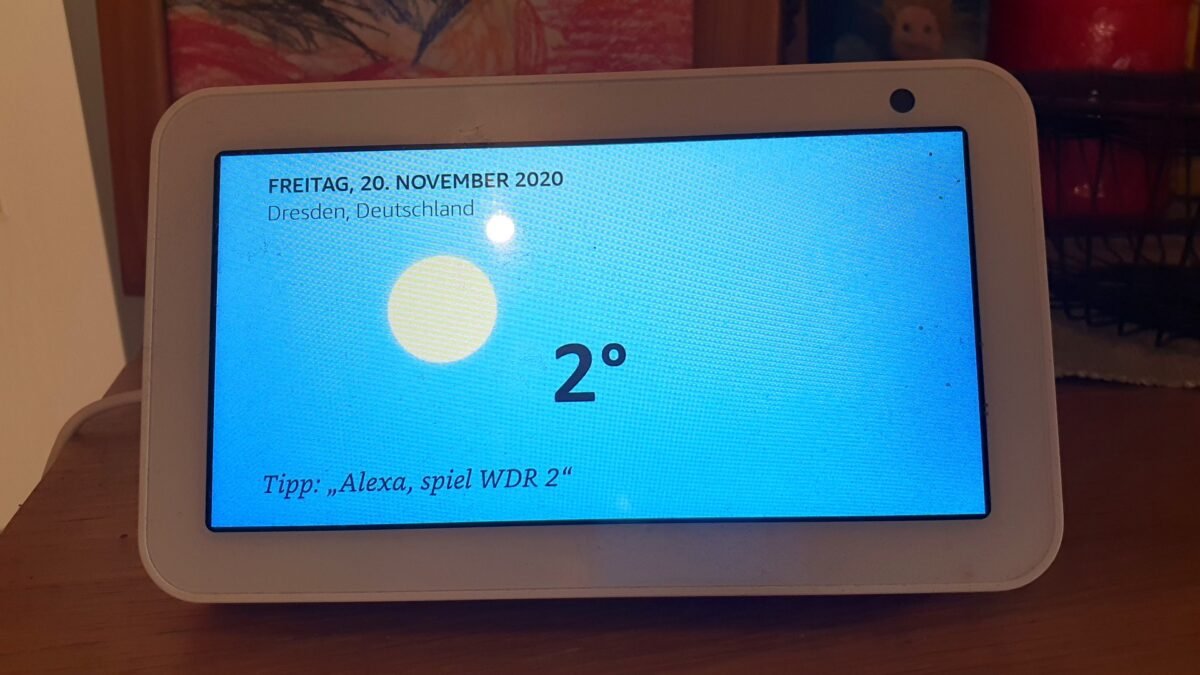
Amazon has unveiled five new Alexa-powered devices, led by a redesigned 16-inch Echo Show 16, in its clearest attempt yet to turn a smarter voice assistant into hardware that earns a place in almost every room of the home. According to Reuters, the company announced the range on Wednesday, 28 October 2026, as it pushes the latest version of Alexa further into kitchens, living rooms and bedrooms.
The five products are the Echo Show 16 smart display, the Echo Studio speaker with a built-in Home Camera, a new Echo Dot, a bedside clock called Echo Time, and the Alexa Photo Frame. According to Amazon, the Echo Dot, the Echo Studio with Home Camera and Echo Time were available from the day of the announcement, while the Echo Show 16 was offered for pre-order. The company put the Echo Show 16 at $499.99, with a Nanomatte display option at $569.99, and said pre-order customers would receive $100 off. Reuters reported the Echo Studio with Home Camera at $249.99, the Echo Dot at $99.99, Echo Time at $199.99 and the Alexa Photo Frame from $199.99.
The announcement matters less as a list of gadgets than as a statement about where Amazon believes the contest for the home will now be fought. The assistant itself is no longer the novelty. The question is which company controls the screens, speakers, cameras and sensors through which an assistant hears, sees and acts — and Amazon has answered by putting a camera, a screen or a sensor into devices that previously did without one, while keeping the prices within reach of a mainstream upgrade rather than a luxury purchase.
The Echo Show 16: a bigger screen built to be looked at
The Echo Show 16 is the centrepiece of the range, and Amazon described it as its most powerful and versatile Echo Show yet. According to the company, the device has a 16-inch full high-definition screen with 10 per cent more viewing area than the Echo Show 15, in a frame that is nearly 40 per cent thinner. The display is housed in an anodised aluminium frame, and Amazon said its colours are twice as vibrant as those of its predecessor.
Sound was given equal weight in the announcement. According to Amazon, the Echo Show 16 uses eight custom micro woofers and two tweeters, with a system called Advanced Room Adaptation that continuously adjusts playback to its surroundings, whether the device is mounted on a wall or standing on a kitchen counter. The company also said the device offers 20 per cent more power for interactions, a claim it presented as the reason responses should feel faster on the new display.
The camera is the most consequential change. According to Amazon, the Echo Show 16 carries the most advanced camera yet fitted to an Echo Show: a wide-angle 13-megapixel camera with the widest field of view the company has offered on the device, auto-framing to keep people in shot during video calls, and, for the first time on an Echo Show, night vision. The company said the night-vision capability allows a home to be checked through Live View in the Alexa app during the day or at night.
Amazon also said it has more than doubled the range of Visual ID, the feature by which Alexa recognises a person approaching the device, from eight feet to up to 17 feet. In practical terms, that means the display is meant to recognise who is walking towards it from across a room, rather than only when someone is standing directly in front of it, and to tailor what it shows accordingly.
A Nanomatte display option addresses a long-standing weakness of large screens in bright rooms. According to Amazon, the option uses the same anti-glare technology as its Alexa Tablet 12 Pro, etching a precise, pixel-aligned texture into the glass. The company said the result is more than 90 per cent less glare and 50 per cent less sparkle, while preserving detail and colour accuracy, so the screen remains readable in direct sunlight or under bright kitchen lights.
The Echo Show 16 also has Fire TV built in, according to Amazon, allowing streaming services to be watched directly on the device. That turns a product that began as a kitchen timer with a screen into something closer to a small television, and it is a deliberate blurring of categories. Amazon said the device can be personalised through Screen Styles, transforming it into a family organiser with colour-coded calendars, chores and meal plans, a digital photo frame, or a smart-home dashboard showing lights, locks, thermostats and cameras on a map of the home.
Amazon said the Echo Show line is its fastest-growing Echo product line, growing by more than 25 per cent year over year. That figure, attributed to the company, helps explain why the largest display in the range received the most attention: it is the surface on which Amazon can show the most information, sell the most services and keep the assistant visible even when nobody is speaking to it.
Echo Studio with Home Camera: a speaker that can see
The most debated product in the range is likely to be the Echo Studio with Home Camera. According to Reuters, the new speaker has a built-in camera that lets Alexa recognise objects held up to it and lets users check on a room remotely. Amazon said the device keeps the audio architecture that made the Echo Studio its best-sounding speaker — a high-excursion woofer, three full-range drivers and Dolby Atmos spatial audio — and adds visual intelligence to it.
According to Amazon, the camera allows Alexa to help in real time with what is in front of it. The company gave two examples: holding up a board-game box and asking Alexa to explain the rules, or holding up a cereal box so Alexa can recognise it and help reorder more. Live View in the Alexa app lets a user check in on the room while away, whether to see a pet or to confirm that lights were left on. Amazon also said the speaker will soon be able to be paired with a compatible Fire TV device to bring video calls to the largest screen in the home.
Amazon was careful to present the camera as an option rather than a requirement. According to the company, the standard Echo Studio remains available for customers who prefer no camera, at $219.99, while the version with Home Camera costs $249.99. The company also said a dedicated button turns off the microphones and any included cameras, that there are clear visual indicators whenever a device with a camera is streaming images or video to the cloud, and that on the Echo Studio with Home Camera a built-in LED turns on. Those details will matter, because a speaker with a camera in a living room raises a different question from a speaker without one, and Amazon knows the answer will be judged in practice rather than in a press release.
The audio itself is continuously tuned to the room. According to Amazon, Advanced Room Adaptation adjusts the sound to the acoustics of the space, while Adaptive Volume adjusts output according to where the listener is, so music or an audiobook maintains the same volume as a person moves about. For a premium speaker, that is the expected direction of travel: sound that adapts to the room rather than demanding that the room adapt to the speaker.
Echo Dot: the small speaker with a bigger job
The new Echo Dot is the least dramatic device in appearance and arguably the most important in reach. According to Amazon, it is the most capable Echo Dot yet, designed to be placed almost anywhere in a home. For the first time, it includes a built-in smart-home hub, so Alexa can connect directly to thousands of compatible devices such as lights, locks and thermostats without additional hardware. It also includes a built-in eero Wi-Fi extender, which Amazon said adds up to 1,000 square feet of coverage to an existing network.
At its core is Amazon’s custom AZ3 silicon, with a new AI Accelerator for on-device artificial intelligence. According to Amazon, that hardware sharpens conversational detection and filters out background noise, so the device should be better at hearing the right voice in a noisy room. For music, audiobooks and podcasts, the company said the new Echo Dot delivers crisp vocals and 50 per cent more bass than its predecessor.
Reuters reported the price at $99.99. According to Amazon, the Echo Dot ships from the day of the announcement, and two new children’s options are also available at $109.99, including a year of Amazon Kids+. The pricing is significant because the Echo Dot has always been Amazon’s volume product: the device that introduces households to Alexa at a price low enough to buy more than one. Adding a smart-home hub and a Wi-Fi extender to that device, at the same kind of price, is a way of making the cheapest entry point also the most useful one for a connected home.
Neowin, reporting on the announcement, added further detail on the Echo Dot’s connectivity, noting support for the Zigbee, Matter and Thread smart-home standards. That combination matters because the smart home has long been fragmented by competing standards, and a small speaker that speaks all three reduces the chance that a buyer discovers, too late, that a new light or lock will not work with the assistant they already own.
Echo Time: Alexa moves to the bedside, without a camera
Echo Time is a new kind of product for Amazon: a smart clock purpose-built for the nightstand. According to the company, it has a customisable display and a camera-free design, a deliberate choice for a device that will sit beside a bed. Users can choose from hundreds of clock faces, according to Amazon, ranging from analogue and modern designs to playful options and designs for favourite sports teams.
Its defining feature is sleep sensing. According to Amazon, new sleep-sensing technology powered by Omnisense can sense when a person is in lighter sleep and wake them within 10 to 60 minutes of the scheduled alarm, without any wearable device. As the alarm approaches, the display gradually brightens to mimic a natural sunrise and the tone builds gently, which Amazon presented as a way of easing a person awake rather than startling them.
Amazon also said Echo Time has earned the National Sleep Foundation’s SleepMark for meeting evidence-based sleep standards. Reuters reported the price at $199.99, while Amazon said a children’s version, Amazon Kids Echo Time, starts at $209.99 with a year of Kids+ included. The bedside is intimate territory for a technology company, and the absence of a camera, combined with a sleep-focused pitch, is Amazon’s attempt to present the device as a wellness product first and a listening device second. Whether customers accept that framing will depend on how clearly the sensing works, what data it collects, and how plainly Amazon explains both.
Alexa Photo Frame: the picture frame that talks back
The Alexa Photo Frame reimagines one of the oldest objects in the home. According to Amazon, it is the first photo frame with Alexa built in. It connects to Amazon Photos, and pictures sync automatically, with new photographs appearing as they are taken. Alexa intelligently surfaces the photographs worth seeing, according to the company — the ones in which people are smiling, or that fit the season — and skips screenshots and clutter.
Users can ask to see photographs of a favourite person, pet or trip, or swipe through images directly on the device’s 10-inch anti-glare touchscreen, where Amazon said every picture looks crisp and vibrant from any angle. Reuters reported the starting price at $199.99. The product is aimed at a simple, human problem: most photographs never leave a phone. By putting those photographs on a wall or a table, with a voice assistant attached, Amazon is betting that memories are a reason to keep a screen in the home even when nobody needs a timer, a weather forecast or a shopping list.
The assistant behind the hardware: Alexa+
Every device in the new range comes with the latest version of Alexa, according to Amazon. The company said the assistant now holds more natural conversations, reasons more deeply, asks clarifying questions, and coordinates across more sources at once to handle complex, multi-step requests. On a speaker, Amazon said, that shows up in the depth of what Alexa can reason through and get done. On a screened device such as the Echo Show 16, conversations unfold on the screen, with Alexa generating helpful visual content in the moment, and visually organising conversations into Cards so they can be picked up again across Echo devices, the Alexa app or the Alexa website.
That assistant is Alexa+, the generative-AI version of Alexa that Amazon unveiled in February 2025. According to GeekWire’s reporting at the time, Alexa+ was presented as a service that integrates generative AI natively into the voice assistant, promising free-flowing conversation, the ability to learn user preferences over time, and the capacity to handle tasks such as travel arrangements and activity planning on a user’s behalf. It was free for Amazon Prime members and $19.99 a month for others, and it uses AI models from Amazon and its partner Anthropic. Reuters reported at the launch that Amazon had invested billions of dollars in Alexa since its introduction in 2014, in the hope of placing the service in a range of devices and ultimately driving sales on its main shopping website.
Amazon said hundreds of millions of customers are using the new Alexa experiences, talking to Alexa two to three times more often and asking it to do more complex things. That claim, attributed to the company, has not been independently verified in the announcement material, but it explains the commercial logic of the hardware launch. If people are talking to the assistant more, and asking it to do harder things, then the devices that carry it need better microphones, better screens, better cameras and faster chips — and Amazon would rather sell those devices itself than leave the job to a rival’s hardware.
Certain features require Alexa+, which Amazon said is included with a Prime membership. That sentence, tucked at the end of the company’s announcement, is commercially important. It ties the hardware to a subscription the customer may already pay for, and it makes the value of the new devices depend, in part, on a service whose full capabilities sit behind that membership.
Competition: Apple, Google and the race for the home
Amazon is not launching into an empty market. According to Reuters, Apple earlier in October launched HomeView, a $299 smart-home device with a 7-inch screen and face recognition, and the HomePod mini 2, a $149 smart speaker. Reuters also said Amazon faces growing competition from Apple and from AI companies such as OpenAI that have hardware ambitions. The timing is therefore not accidental: Amazon’s five-device range arrives in the same month as Apple’s renewed push into the home, and well before the holiday shopping season, when smart speakers and displays have traditionally sold in large numbers as gifts.
The contrast between the two companies’ approaches is instructive. Apple’s HomeView, as described by Reuters, is a smaller screen with face recognition, positioned as a smart-home controller. Amazon’s Echo Show 16 is a much larger screen with Fire TV built in, positioned as a family organiser, a photo frame, a smart-home dashboard and a television. Apple is selling a control panel; Amazon is selling a room’s second screen. Both companies are betting that the home needs a fixed point of contact with its assistant, but they disagree about how large that point should be and how much it should do.
Google’s Nest Hub range remains part of the same contest, although it was not the focus of this announcement. The broader point is that the smart display, once seen as a niche product between a speaker and a tablet, has become the main battleground. A speaker can answer a question; a screen can show a calendar, a camera feed, a recipe, a photograph and a film, and it can keep showing them after the conversation ends. That persistence is valuable to a company that wants its assistant to be present rather than merely available.
Analysis: Why It Matters
1. Hardware is now the distribution strategy for the assistant
The most important fact about this announcement is not any single specification. It is that Amazon chose to express a software advance — a more capable Alexa — through five pieces of hardware at once. That choice reveals how the company sees the market. An assistant that lives only in a phone app competes with every other app on that phone. An assistant that lives in a speaker on a kitchen counter, a clock on a bedside table and a frame on a sideboard competes with silence, and it is present at the moments when a phone is in another room, charging, or simply not in hand.
Amazon’s history supports that reading. The original Echo succeeded not because its voice recognition was uniquely brilliant, but because it was always listening in a fixed place, at a price that made it easy to try. The new range repeats that logic with better tools: a hub and a Wi-Fi extender in the cheapest device, a camera in the best speaker, a sleep sensor in the clock, a screen large enough to run a television service. Each device lowers a different barrier to keeping Alexa in the room, and together they make it harder for a rival assistant to displace Amazon’s simply by being better on a phone.
The risk in this strategy is equally clear. Hardware is expensive to design, manufacture and support, and it cannot be updated as quickly as software. If Alexa+ does not improve fast enough, or if customers find the new features unreliable, Amazon will have five new products carrying the same disappointment, rather than one. The company’s answer, visible in the range, is to spread the bet: no single device has to succeed for the strategy to work, because the devices serve different rooms, different budgets and different levels of comfort with cameras and screens.
2. The camera is the feature — and the friction
Two of the five devices put a camera at the centre of the experience, and that is the announcement’s sharpest edge. The Echo Show 16 uses its camera to recognise who is approaching, to frame video calls and to let a home be checked at night. The Echo Studio with Home Camera uses its camera to recognise objects and to let a room be checked remotely. In both cases, the camera is presented as helpful: it sees so that Alexa can understand.
That helpfulness will be weighed against a familiar unease. A camera in a living room, and still more a camera that can see in the dark, asks for a level of trust that a microphone alone does not. Amazon’s response is procedural rather than rhetorical: a physical button that turns off microphones and cameras, a light that shows when streaming is happening, and a no-camera version of the Studio for those who want it. Those are the right kinds of safeguards, but they only work if they are obvious, reliable and easy to verify in the moment, not merely described in a product page.
The Echo Time clock shows that Amazon understands the boundary. A bedside device was deliberately made camera-free, even though a camera could have added features. That decision is a quiet admission that not every room is the same, and that the bedroom, where people sleep and dress, is where a camera would cost more trust than it could earn in convenience. The contrast between the clock and the speaker is therefore the most honest part of the announcement: Amazon is testing how far the camera can go, room by room, rather than assuming it belongs everywhere at once.
3. The bedroom is the new frontier, and sleep is the argument
Echo Time deserves more attention than a clock usually receives, because it represents a new claim on the most private hours of the day. By sensing lighter sleep and waking a person within a window of up to an hour, Amazon is moving from answering requests to intervening in a bodily process. The pitch is wellness: a gentler waking, a sunrise simulation, a standard set by a sleep foundation. The underlying technology, Omnisense, must sense presence and sleep stage without a wearable, which means it must interpret signals from the room itself.
If it works well, it will feel like a genuine improvement on an alarm clock, and it will give Amazon a presence at the start and end of every day. If it works poorly — waking people too early, too late, or at the wrong moment — it will be judged more harshly than a speaker that mishears a song request, because sleep is not a trivial thing to get wrong. The 10-to-60-minute window is wide, and customers will want to know how much control they retain over it, what happens on a night when a partner’s sleep differs from their own, and what data the sensing generates and where it goes. Amazon’s announcement answers the first of those questions in outline and leaves the others for reviews, support pages and the small print to settle.
The broader significance is that the smart home is moving from the public rooms of the house to the private ones. The kitchen and the living room were the first territories because they are shared, social spaces where a speaker is a convenience. The bedroom is different: it is where people are most vulnerable and least inclined to perform for a device. Winning there requires a different kind of product, and Echo Time, camera-free and sleep-focused, is Amazon’s attempt to build one.
4. The screen is becoming the television, the organiser and the dashboard at once
The Echo Show 16, with Fire TV built in and Screen Styles that turn it into a family organiser or a smart-home dashboard, is an attempt to collapse three devices into one. That is an attractive proposition for a kitchen, where counter space is scarce and where a television, a calendar and a control panel would otherwise compete for the same wall. It is also a risky one, because a device that tries to be everything can end up doing each job less well than a dedicated product.
The test will be in daily use. A family organiser is only useful if every member of the household actually uses it, and if updating a calendar or a chore list on a wall screen is easier than doing it on a phone. A smart-home dashboard is only useful if it shows the right devices, in the right place, without constant maintenance. A television is only useful if the picture, the sound and the remote — or in this case, the voice — are good enough that nobody reaches for a tablet instead. Amazon has given the Echo Show 16 the hardware to pass those tests: a large, bright, low-glare screen, powerful speakers and a fast processor. Whether the software keeps pace, and whether the screen avoids becoming another surface for advertising and suggestions, will decide whether it becomes a fixture or a novelty.
There is also a quieter point about attention. A screen that is always on, showing photographs, calendars and suggestions, changes the character of a room. It makes the home feel more informed and more managed, but also more watched and more prompted. The Screen Styles are Amazon’s way of letting a household choose which version of that room it wants. The choice matters, and it should be a real one, not a default that quietly reverts to the most commercial option.
5. Price, timing and the Apple contest will decide the season
Amazon has priced the range to compete on value rather than on prestige. The Echo Dot at $99.99, the Echo Studio with Home Camera at $249.99 and the Echo Show 16 at $499.99, with $100 off for pre-orders, place each device below the price at which a buyer must think twice for long. The children’s versions, the standard no-camera Studio and the Nanomatte option give the range a ladder: a buyer can start cheap, upgrade for a camera, or pay more for a better screen, without leaving Amazon’s ecosystem.
That ladder is aimed directly at Apple’s October launch. The HomeView at $299 and the HomePod mini 2 at $149 are not the cheapest products in their categories, and Apple has never tried to be. Amazon’s bet is that most households will choose the product that does more for less, and that a $499.99 screen with a television built in will look like better value than a $299 control panel, even if the control panel is more elegantly made. Apple will counter with privacy, design and integration with the iPhone, and for many buyers that will be enough. The contest, in other words, is not only about specifications. It is about which company’s version of the home a buyer already lives in, and which one they trust to run it.
Timing reinforces the point. Announcing in late October, with some devices shipping immediately and the largest on pre-order, puts Amazon in the shops for the holiday season, when these products are most likely to be bought as gifts and to enter homes that have never owned one. A gifted Echo Dot has historically been the start of a longer relationship with Alexa. A gifted Echo Show 16, if it lands in a kitchen and works well, could be the start of a larger one.
What to Watch Next
- Pre-order and shipping performance for the Echo Show 16, including when the first units reach customers and whether the Nanomatte option is available at the same time as the standard display.
- Independent reviews of the Echo Studio with Home Camera, particularly the accuracy of object recognition, the reliability of Live View, and whether the microphone and camera off button and the streaming indicator work as plainly in practice as Amazon describes them.
- Real-world testing of Echo Time’s sleep sensing, including how the 10-to-60-minute waking window behaves in shared bedrooms, what controls users have over it, and what sleep data is collected and how it is explained.
- How Alexa+ performs on the new hardware, including whether the faster chips and on-device processing produce noticeably quicker and more reliable answers, and how many of the new features require a Prime membership in practice.
- The response from Apple and other rivals, and holiday-season sales and pricing, which will show whether Amazon’s larger screen and camera-led approach, or Apple’s smaller control-panel approach, wins the argument for the home this year.
Sources
- Reuters — Amazon unveils new lineup of Alexa devices including redesigned Echo Show
- Amazon — Amazon unveils its newest lineup of Alexa devices
- Amazon — Echo Show 16: smart display with Fire TV, night vision camera
- Neowin — Amazon unveils five new Alexa devices, including an Echo speaker with a camera
- GeekWire — Amazon’s new Alexa+ uses generative AI to personalize conversations and automate tasks

About the Author — Abdul Mannan
Related Articles

Apple Acknowledges iPhone Duo Screen Cracks and Will Replace Affected Units Days After Launch
Apple has acknowledged that a small number of iPhone Duo units show inner-display problems days after launch and…

Astronomers Find a Galaxy-Sized Cloud of Gas With Almost No Stars — a Possible ‘Dark Galaxy’ 310 Million Light-Years Away
Astronomers have found a vast cloud of hydrogen 310 million light-years away that holds about two billion times…

NASA’s Swift Observatory Ends Its 22-Year Hunt for Cosmic Explosions as It Falls Back to Earth
NASA has switched off the Neil Gehrels Swift Observatory after more than 22 years chasing gamma-ray bursts; the…