
Andrew Mountbatten-Windsor Made £2,000 a Month Sub-letting Cottages at His Rent-Free Royal Lodge, MPs Reveal

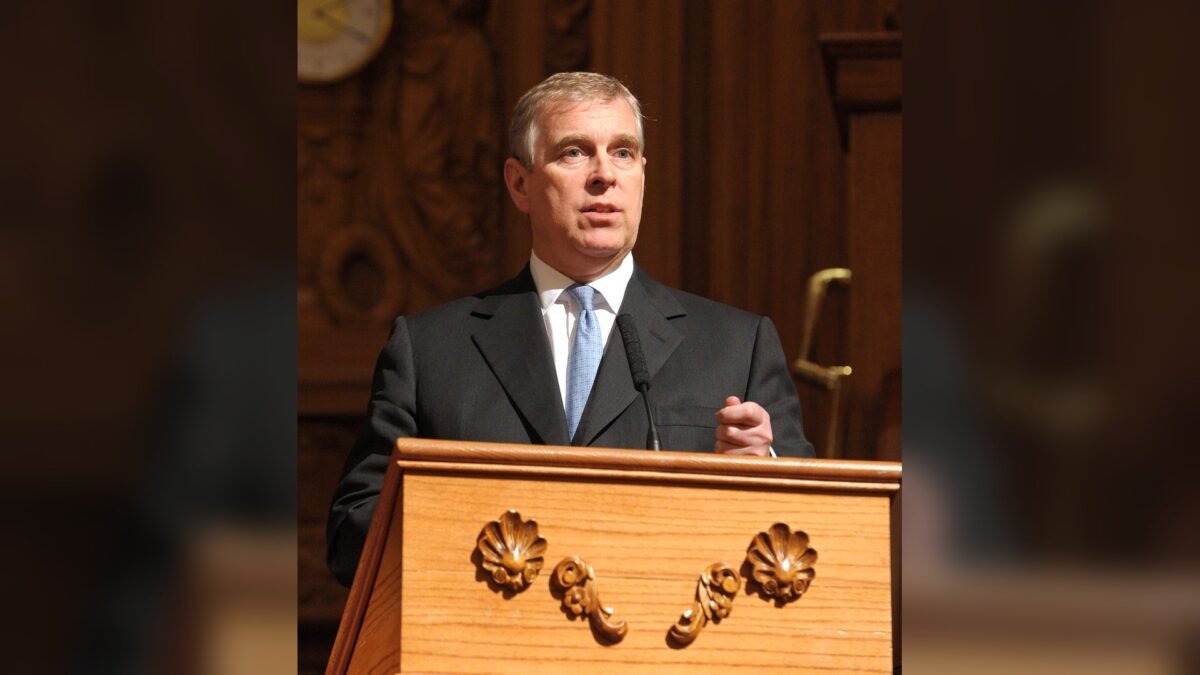
Andrew Mountbatten-Windsor earned just over £2,000 a month by sub-letting cottages on the Royal Lodge estate while paying no rent himself for the Windsor mansion, MPs have revealed in a report that accuses the Crown Estate of failing to learn lessons from one of the most controversial royal property deals in modern British history.
The cross-party Public Accounts Committee said the former prince, who was stripped of his titles over his links to the convicted sex offender Jeffrey Epstein, received the income from three cottages in the grounds of Royal Lodge even though his 75-year lease, signed in 2003, required him to pay only a peppercorn rent. The committee said the Crown Estate, the landlord, had no oversight of the arrangement and took none of the money.
MPs have now told the Crown Estate to ban sub-letting as standard in its leases, in a report that lays bare not only the Royal Lodge arrangement but also wider weaknesses in how royal homes and one of Britain’s largest property portfolios are managed. The committee concluded that the estate “did not identify specific lessons from the Royal Lodge lease arrangement” and was “reluctant to discuss specifics on how it is applying lessons learned from this process or discuss what they will do differently in the future, due to the Royal Lodge lease being a product of its time”.
The findings, published on Friday in the committee’s 20th report of the session, “The Crown Estate and associated properties: governance and management”, come a month after Mountbatten-Windsor formally surrendered his Royal Lodge lease and moved to private accommodation on the King’s Sandringham estate in Norfolk. They add a financial coda to a royal scandal that has already cost the King’s younger brother his titles, his military roles, his public duties and, in February this year, his arrest on suspicion of misconduct in public office.
The £2,000-a-month income
The precise scale of the sub-letting income emerged from a letter written to the committee by James Chalmers, the Keeper of the Privy Purse and Treasurer to the King, dated 7 September 2026. According to the Press Association, the information in the letter came from “the Household of Mr Mountbatten-Windsor” and was shared “in the interests of transparency and openness”.
The letter disclosed that Mountbatten-Windsor sublet one cottage at below market rate to a tenant who already lived on the estate and worked for the royal family, for most of the 22-year tenancy. From late 2021, for a period of less than a year, he sublet three cottages in total, generating a combined income, before maintenance and expenses, of just over £2,000 a month. The rents were described as reflective of a percentage of salary and below market rates.
Chalmers wrote that he had “not had access to the underlying documentation or historical records” but shared his understanding of the matter. The letter added that Mountbatten-Windsor was content for the information to be in the public domain, despite the committee having offered to treat it in confidence. “This is with the agreement of Mr Mountbatten-Windsor,” the letter said. “While you kindly suggested at the hearing that you would be willing to treat this information in confidence, I can confirm that Mr Mountbatten-Windsor is content for it to be in the public domain.”
What the letter did not do, according to the BBC, was reveal the total amount Mountbatten-Windsor received over more than two decades. Because he did not always rent out all three cottages, the committee said it could not calculate how much the sub-letting had been worth in total. The income went to Mountbatten-Windsor rather than to his landlord, the Crown Estate, which told MPs it had no oversight of how much he charged and that sub-letting was permitted under the terms of his lease.
The arrangement was possible because of the extraordinary terms on which Mountbatten-Windsor held Royal Lodge. He took on the 75-year lease in 2003 and paid about £7.5 million towards the mansion’s renovation and other charges, which meant he owed no annual rent. The property, a 30-room mansion in Windsor Great Park, was the only home occupied by a member of the royal family with an early surrender clause in its lease.
What the MPs recommend
The committee’s recommendations do not outlaw sub-letting on Crown Estate properties altogether, but they would make it the exception rather than the default. “We recommend that for all future leases the Crown Estate adopt a normal commercial practice to sub-letting,” the report said. “There should be a standard provision in leases that prohibits sub-letting, unless the landlord’s prior permission is obtained. That permission should not be unreasonably withheld, and we would expect the Crown Estate to obtain relevant financial details.”
The logic, as the MPs set it out, is straightforward. In a normal commercial lease, a landlord would either share in sub-letting profits or at least know what was being charged. The Times reported that MPs criticised the Royal Lodge arrangement as running contrary to normal commercial practice, which would usually involve the landlord sharing in sub-letting profits. The Crown Estate is not a private landlord. It is an independent £17 billion portfolio of property, land and seabed, owned by the monarch “in right of the Crown”, which means the King owns it during his reign but it is not his private property, and its profits go to the Treasury to be used for public spending. Money that flowed to a private individual instead of to the estate was, in the committee’s view, money lost to the taxpayer.
Sir Geoffrey Clifton-Brown, the Conservative MP who chairs the committee, said the inquiry had begun with questions about value for money. “This inquiry arose from a number of questions around the value for money of the financial arrangements pertaining to Royal Lodge,” he said. “With the publication of our report, those arrangements are now fully public. But our inquiry sought to add wider value by scrutinising the entirety of The Crown Estate’s governance and management of its large property portfolio. We hope that our recommendations in this area help it fulfil its statutory obligations for the benefit of the taxpayer, on behalf of the Crown.”
The future use of Royal Lodge has yet to be decided. The committee said the Crown Estate will “need to consider the lessons learned to inform future use and leasing arrangements for Royal Lodge”. A spokesperson for the Crown Estate said: “The Public Accounts Committee report is an important part of our accountability to Parliament. We are considering its findings and recommendations and will respond to the Committee in due course.”
A Buckingham Palace spokesperson said: “We are grateful to the Public Accounts Committee and its members for their work on this inquiry. We acknowledge the Committee’s recommendation and will carefully consider it as part of our commitment to continuous improvement.”
How the lease ended
The report also confirms the financial terms on which the Royal Lodge story ended. Mountbatten-Windsor left the house in February 2026, in the wake of revelations about his connections to Epstein, and formally surrendered the lease in October, a year after giving notice. The Crown Estate confirmed on 9 October that he received £302,000 in compensation for giving up the lease early, while also paying £1.8 million in repair and restoration costs. The two sums were netted off, which meant the estate was owed £1.5 million — a bill the King paid privately on his brother’s behalf, using money given to him by his brother, according to The Times.
The National Audit Office had estimated in June that Mountbatten-Windsor could have been entitled to £301,967.66, provided the full 12-month notice period was served and subject to the assessment of repair and dilapidation costs. The confirmed figure of £302,000 matches that estimate almost exactly. An earlier calculation, made before the repair bill was assessed, had suggested he might have been entitled to £488,342.21 had no repairs been required.
The scale of the repair bill is itself a measure of the condition in which the mansion was left. Royal Lodge is a substantial Georgian house, and the £1.8 million covered repairs and restoration after more than two decades of occupation. The King privately paying the balance closed the financial chapter of the lease, but it did not close the questions about how the arrangement had been allowed to run.
A wider inquiry into the Crown Estate
Although Royal Lodge was the trigger, the committee’s inquiry ranged across the whole of the Crown Estate and the Royal Household’s property arrangements, and its findings go considerably further than one lease. MPs criticised the estate for not clearly demonstrating how it balances its financial objectives with its environmental and social ones, and said its evidence provided “limited insight” into how the trade-off was measured. The report said it “remains difficult to understand how The Crown Estate works to strike an effective balance between social value and financial return across its marine, urban and rural portfolios”.
The committee also questioned the estate’s spending. Administration costs had risen by 129 per cent since 2020-21, and the salary of the chief executive, Dan Labbad, had risen by 106 per cent over the same period. According to the BBC, his pay package in 2025-26 was worth £2.3 million. The committee recommended that the estate set out a plan detailing how it will manage its spending.
MPs urged the estate to provide greater transparency in its public reporting on how it is diversifying its property across the United Kingdom, with 75 per cent of the portfolio concentrated in London and the south-east of England. They also questioned why The Gate in Newcastle, the city’s only covered central leisure destination, was marketed for sale for around £15 million after being bought by the Crown Estate for £60 million in 2012.
The inquiry also examined other royal leases, including Bagshot Park and Thatched House Lodge, and heard that the Prince and Princess of Wales hold a 20-year non-assignable lease on Forest Lodge, paying open market rent, with negotiations conducted at arm’s length. The contrast with the Royal Lodge arrangement, in which a non-working royal paid no rent at all, was not lost on the committee.
Out-of-date rents for other royals
The MPs also called on the Royal Household to implement a consistent policy for setting rent in its residential properties, after it emerged that Princess Beatrice and Princess Eugenie had for years paid rents based on out-of-date open market valuations. An investigation earlier this year by the National Audit Office found that outdated residential property valuations had led to inconsistencies in the rent charged for non-working members of the royal family within the occupied royal palaces, which are not part of the Crown Estate.
According to the BBC, the National Audit Office found that Beatrice and Eugenie do not pay anything themselves for their accommodation in St James’s Palace and Kensington Palace respectively — the rents are paid by the King. Up until this year, Eugenie’s rent for Ivy Cottage at Kensington Palace was based on a 2018 valuation, and Beatrice’s apartment in St James’s Palace on a 2020 valuation. The current rental rates are now 64 per cent of a 2026 open market valuation for Eugenie, and 68 per cent of a 2026 valuation for Beatrice.
The report stated: “Although The Royal Household had reviewed and increased these rents over the past six years, it did so without a clearly defined policy setting out how frequently independent valuations should be obtained or how and when rents should be reviewed.” It recommended: “The Royal Household should implement its policy for setting rent for all its residential properties consistently including defined intervals for independent valuations and rent reviews, to ensure rental income remains aligned with market rates and maximises value for money.”
The Household is responsible for 255 residential properties across the occupied royal palaces estate, including those used by non-working royals such as Beatrice, Eugenie and the Prince and Princess Michael of Kent. The Palace said it understood that the Household’s policy is typically to use a benchmark percentage of a property’s open market valuation as a guide when setting rent levels, in recognition of constraints such as location in a secure area.
The fall of Andrew Mountbatten-Windsor
The sub-letting revelations are the latest chapter in one of the longest-running crises of the modern monarchy. Mountbatten-Windsor, the third child and second son of Queen Elizabeth II and the younger brother of King Charles III, was once second in line to the throne. He stepped down from public duties in November 2019, after a disastrous television interview about his friendship with Epstein, the American financier who died in prison in 2019 while awaiting trial on sex-trafficking charges.
In January 2022, the late Queen removed his military affiliations and royal patronages and he stopped using the style His Royal Highness, weeks before he settled a civil sexual assault claim brought in the United States by Virginia Giuffre. He has consistently denied the allegations against him. The settlement was made without any admission of liability.
In October 2025, the King stripped him of his remaining titles, including the Dukedom of York, and he became known as Andrew Mountbatten-Windsor. He left Royal Lodge in February 2026, and later that month police arrested him on suspicion of misconduct in public office, according to reports at the time. The arrest, on 19 February, made him the first senior royal in modern times to be taken into police custody.
Since then the legal pressure has continued. Police in Scotland are conducting inquiries into the time he spent at the royal family’s Balmoral estate with Epstein and his associate Ghislaine Maxwell, it was reported on 30 October. And on 4 November, this site reported that he had been served with a witness summons compelling him to give evidence in a High Court civil fraud trial, the first order of its kind against a member of the royal family since 1891. He is expected to give evidence in December.
The Epstein files released by the United States Department of Justice this year have kept the story in the headlines, with images appearing to show the former prince on a shooting trip at Balmoral with Epstein, and a photograph showing Epstein and Maxwell inside a log cabin at Balmoral during a visit in 1999. Each disclosure has added to the pressure on the palace to demonstrate that the monarchy’s finances are being managed to the same standards as any other public institution.
Analysis: Why It Matters
1. A private income from a public asset
The figure at the heart of this report is not large by the standards of royal finances. Just over £2,000 a month, for less than a year at full extent, is a modest sum. But the committee’s interest is not in the amount. It is in the principle. Royal Lodge is a Crown Estate asset. Its profits belong, ultimately, to the Treasury and therefore to the taxpayer. A tenant who pays no rent and then collects rent from others is, in the committee’s framing, taking a private income from a public asset while the public landlord neither knows nor benefits. That is why the report’s language is about “normal commercial practice” rather than about wrongdoing. Nobody has suggested that Mountbatten-Windsor broke the terms of his lease. The sub-letting was allowed under it. The point the MPs are making is that the lease itself was the problem, and that a public body should never have agreed to terms that a commercial landlord would have rejected out of hand.
2. The Crown Estate’s blind spot
Perhaps the most damaging line in the report is not about the money at all. It is the committee’s conclusion that the Crown Estate “did not identify specific lessons from the Royal Lodge lease arrangement” and was “reluctant to discuss specifics”. The estate is a sophisticated commercial organisation managing £17 billion of assets, from the seabed around Britain’s coasts to some of the most valuable streets in London. That it should be unable, or unwilling, to explain what it had learned from its most publicly scrutinised lease suggests a governance culture that treats royal property as a special case, beyond the normal disciplines of asset management. The recommendation that sub-letting be banned as standard is, in that sense, the easy part. The harder question is whether the estate can apply the same rigour to royal tenants as it does to everyone else.
3. The cost of opacity
One reason the Royal Lodge story has run for so long is that so little of it was ever public. The sub-letting income was described as “undisclosed” when it first emerged earlier this year. The total received over two decades still cannot be calculated, because the records were not kept or not shared. The Keeper of the Privy Purse, in his letter to the committee, was candid that he had “not had access to the underlying documentation or historical records”. A public body that cannot produce the paperwork for its own lease is a public body with a record-keeping problem, and record-keeping problems are how small arrangements become large scandals. The committee’s demand for financial details in future sub-letting permissions is, at root, a demand for a paper trail.
4. A pattern, not an exception
The report’s wider findings suggest Royal Lodge was not an isolated lapse. Rents for other royals were set on valuations years out of date. Administration costs rose 129 per cent in five years. A leisure complex bought for £60 million was put on the market for about £15 million. Three-quarters of the portfolio sits in London and the south-east. Taken together, these are the findings of a committee that set out to examine one lease and found a pattern of weak challenge and limited transparency. That matters because the Crown Estate is not a family business. Its surpluses fund public spending, and its stewardship is a matter of public interest in a way that a private landlord’s never is.
5. The monarchy’s accountability test
For the palace, the report is another test of a strategy that has been visible since the King stripped his brother of his titles last year: distance the institution from the individual, cooperate with scrutiny, and let the process run. Buckingham Palace’s response to the report was notably uncontentious, thanking the committee and promising to consider its recommendations. That is the right tone, but the substance will be judged on what happens next. The future of Royal Lodge itself is undecided. The committee has said the estate must apply the lessons of the lease to whatever comes next for the mansion. Whether the next tenant pays a market rent, and whether the terms are published, will be the first real evidence of whether anything has changed.
What to Watch Next
- The Crown Estate’s formal response. The estate has said it will respond to the committee in due course. Watch for whether it accepts the sub-letting recommendation in full, and whether it commits to publishing lease terms for royal properties in future.
- The future of Royal Lodge. The mansion’s next use has not been decided. The committee has said the estate must apply the lessons of the lease to its future use and leasing arrangements. Any new tenancy will be scrutinised against that standard.
- The Royal Household’s rent policy. The Palace has acknowledged the recommendation for a consistent rent-setting policy with defined valuation intervals. The test will be whether rents for non-working royals move to full market rates, and how quickly.
- The High Court fraud trial. Mountbatten-Windsor is expected to give evidence in December under the witness summons reported earlier this month, the first such order against a royal since 1891. His appearance, if it goes ahead, will return the story to the front pages.
- The Balmoral inquiry. Police Scotland’s inquiries into his stays at Balmoral with Epstein and Maxwell remain live. Any development there would reopen the criminal dimension of the story, which has been quiet since his arrest in February.
Sources
- UK Parliament — Public Accounts Committee, Reports and Responses (20th Report: The Crown Estate and associated properties, HC 535, published 6 November 2026)
- BritBrief — Crown Estate told to ban sub-letting after Andrew’s Royal Lodge income
- The Times — Andrew made £2,000 a month subletting cottages at rent-free home
- Hello! Magazine — Andrew Mountbatten-Windsor’s secret income after stepping down from royal duties revealed
- The Irish News — Crown Estate must look at lessons learned on Andrew’s Royal Lodge lease, MPs say
- Journos News — Andrew receives £302,000 after surrendering Royal Lodge lease

About the Author — Abdul Mannan
Related Articles

Britain to Force Employers to Reveal Salaries in Job Adverts in ‘Say What You Pay’ Law
Britain will make it a legal requirement for employers to publish salaries in job adverts, Prime Minister Andy…
Bank of England Raises Interest Rates to 4% in First Hike in Over Three Years as Energy-Driven Inflation Heads Towards 5%
The Bank of England has raised interest rates to 4% for the first time in more than three…
Russell Brand Found Guilty of Rape and Three Sexual Assaults as Jury Convicts After Three-Week Trial
Russell Brand has been found guilty of rape and three counts of sexual assault at Southwark Crown Court.…