
Bank of England Raises Interest Rates to 4% in First Hike in Over Three Years as Energy-Driven Inflation Heads Towards 5%

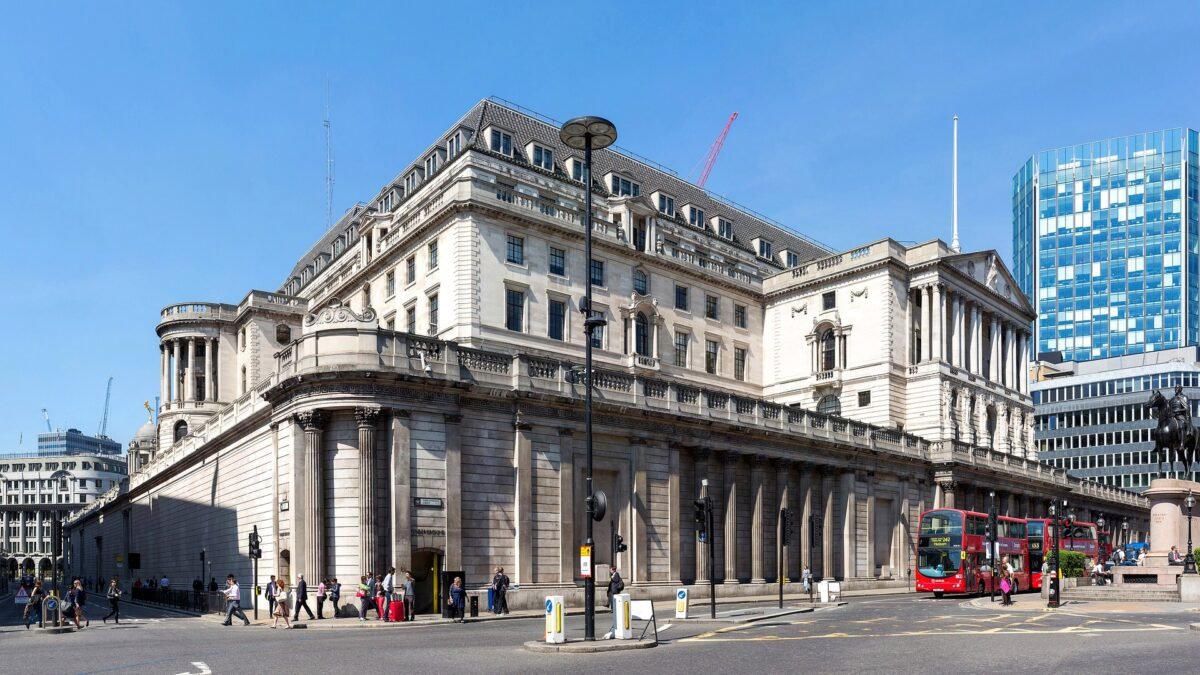
The Bank of England has raised interest rates for the first time in more than three years, lifting Bank Rate from 3.75% to 4% in a decision driven by surging energy prices and a warning that inflation could climb to around 5% by the middle of next year.
The Monetary Policy Committee voted by eight to one in favour of the quarter-point rise at its meeting ending on 4 November, with the decision published at noon on Thursday 5 November, according to the Bank of England. It is the first increase in Bank Rate since August 2023, and it ends a run of six meetings without a change since the rate was cut to 3.75% in December 2025.
Governor Andrew Bailey said the increase should not be read as the start of an inevitable run of rises, but he left no doubt that more tightening is on the table. “Today’s increase shouldn’t be seen as the first in an inevitable long sequence of hikes. But unless the conflict in the Middle East is resolved, neither does it seem likely to be the last increase,” Bailey said, according to Reuters.
The Bank now expects consumer price inflation, which reached 3.5% in the 12 months to September, to rise to around 5% by the middle of next year — more than double its 2% target. Under the Bank’s central forecast, inflation would peak at an average of 4.8% in the second quarter of 2027 and would not return to 2% until the third quarter of 2028, six months later than the Bank predicted in July.
The decision is a blow to Prime Minister Andy Burnham, who has sought to ease cost-of-living pressures, and it lands directly on millions of households. Around 510,000 homeowners on tracker mortgages will see their monthly repayments rise by £31, according to the banking trade body UK Finance, while The Times reported that 2.4 million mortgage holders will face higher loan rates next year.
The vote — and the one member who wanted more
The eight members who voted for the quarter-point rise were Governor Andrew Bailey, Sarah Breeden, Swati Dhingra, Megan Greene, Clare Lombardelli, Huw Pill, Dave Ramsden and Alan Taylor, according to the Bank of England’s published minutes. The single dissenter, external member Catherine Mann, voted for a half-point increase to 4.25%.
That split surprised financial markets. Coming into Thursday’s decision, a Reuters poll of economists had expected the dissent, if there was one, to come from a policymaker wanting to hold rates steady. Instead, the only disagreement was about how fast to tighten. Mann had argued last month that the Bank had been slow to reassure markets that it had a grip on inflation, and in the minutes of November’s decision she said she was concerned about “non-linear inflation risks” as consumer price inflation had risen to 3.5% in September, which she viewed as a potential trigger for a loss of confidence in the central bank.
Mann’s own reading of the outlook was bleaker than the committee’s. She argued that projected inflation reaches 4.9% by the middle of 2027 and that even that figure rests on a significant fall in energy prices, according to the Financial News summary of the minutes. Her position was not a one-off: she had also backed an increase in July, and at the September meeting she was one of three members — alongside Greene and Pill — who had already voted for a rise to 4% when the committee held at 3.75% by six votes to three.
The September split has now, in effect, become the November consensus. Greene and Pill both spoke in the latest minutes of a need for “further tightening” and “additional hikes” respectively, according to Reuters. Deputy Governor Clare Lombardelli said a further rate rise was likely to be needed in the near term. Bailey himself wrote in the minutes: “Without news which softens the risks to inflationary pressures, I can see the argument for a further increase in rates.”
Not every member is convinced. Swati Dhingra and Alan Taylor, who had previously been reluctant to raise rates, said they would need stronger evidence of so-called second-round effects — higher wages and prices set in response to the energy shock — before backing more tightening, according to Reuters. The committee is therefore united on this month’s rise but openly divided on how far the tightening cycle should go, and the division will matter at the next meeting on 17 December.
Why the Bank acted now
The Bank’s reasoning centres on energy prices, not on an overheating domestic economy. “The conflict in the Middle East is now in its ninth month. Global energy prices have continued to rise from an already elevated level,” the Bank said in its Monetary Policy Summary. The war between the United States and Iran, which began in late February 2026, has pushed oil prices sharply higher, and the Bank said the amount of inflationary pressure coming down the road from months of high energy prices required a rate rise now.
Consumer price inflation increased to 3.5% in September, up from 3.1% in August, according to the Office for National Statistics figures cited by the Bank. That is the highest rate since October 2025, and energy alone is adding around one percentage point to the headline figure, according to market analysis of the data. The Bank’s staff now project headline inflation of around 4.5% in the first quarter of 2027 — about one and a quarter percentage points higher than they projected in July — and around 5% in the second quarter.
The Bank was careful to say that there is still limited evidence of knock-on effects from higher energy prices so far. Firms are currently absorbing cost pressures through thinner profit margins and through energy hedging, and wage growth has not yet accelerated in response to the shock. But the Bank warned that those buffers are only temporary. “While the direct effects of higher energy prices are clear, and will continue to feed into firm and household energy bills, there remains limited evidence of knock-on effects on other prices and wages. However, the degree of inflationary pressure in the pipeline is now sufficient to warrant an increase in Bank Rate,” the Monetary Policy Committee said, according to MoneySavingExpert.
The Bank also set out what happens if the conflict gets worse. In an adverse scenario in which oil prices peak at around $130 a barrel, compared with around $100 currently, inflation would hit 6.2% in the third quarter of 2027, according to Reuters. Bailey told the BBC that the increase was warranted because further rises in energy prices are putting upward pressure on inflation, adding: “That’s what we have to seek to lean against.”
The decision comes a week after Chancellor John Healey’s annual budget, and the Bank’s new forecasts take account of it. The Bank said Healey’s budget would lower inflation by 0.25 percentage points at its peak but raise it later on, when temporary cost-of-living assistance expires. The Bank also revised up its growth forecasts, expecting the economy to expand by 1.6% this year and 1.3% next year — notably stronger than the government’s Office for Budget Responsibility predicted last week. The upgrade follows strong official data this year, and the Bank attributed some of the strength to spending on artificial intelligence and to a small, temporary boost from the budget, according to Reuters.
There was, however, a sobering line buried in the Bank’s assessment. After inflation and taxes, British households’ income from work was set to fall both this year and next, the Bank said — a reminder that the rate rise arrives at a moment when living standards are already under pressure.
What it means for households
The higher rate will increase the cost of borrowing for mortgages, loans and credit cards, but it will also lead to higher returns on savings, according to the BBC. Bank Rate is what the Bank of England charges other banks and building societies to borrow money, which influences what they charge their own customers for mortgages as well as the interest rate they pay on savings.
The increase will be felt quickly by households on tracker mortgages, which move in line with Bank Rate. About 510,000 tracker mortgage-holders will see a £31 monthly jump in repayments, according to UK Finance. Homeowners on fixed deals will see no change in their monthly payments, though future products may be affected, and the impact on people with other variable deals will depend on how their lender reacts.
For many borrowers, the pain is cumulative rather than new. The average five-year fixed mortgage rate across the biggest lenders has gone up nearly four percentage points since November 2021, from 1.3% then to 5.16% today, according to figures from the broker L&C Mortgages cited by The Times. British households have already suffered the fastest rise in mortgage costs in the G7 outside Japan this year, as market-based interest rates have hit their highest level since 2008, according to The Times. Fixed-rate mortgages have been heading towards 6% for weeks, and mortgage approvals have dropped to their lowest level in almost three years, according to Property Industry Eye.
The human side of the decision was captured by the BBC, which spoke to Patrick Bryson, from Brighton, whose five-year mortgage term at a 3.51% interest rate is set to end soon. He is one of millions of borrowers who took out cheap fixed deals in the low-rate era and now face refinancing at far higher rates. The Times reported that 2.4 million mortgage holders will face higher loan rates next year as their deals expire.
Savers, by contrast, should see some benefit, though banks are often slower to pass rate rises on to savers than to borrowers. The Bank’s decision also matters for businesses: higher borrowing costs make investment more expensive at a time when the Bank itself says growth is only modest, and the property industry warned that the rise deals a fresh blow to mortgage borrowers and to a housing market in which buyer confidence is already fragile, according to Property Industry Eye.
Reaction from the mortgage industry was broadly accepting of the rise, but several professionals questioned whether one move would be enough and what it means for borrowers on the ground, according to Mortgage Introducer. Duncan Kreeger, chief executive of the lender TAB, was among the most critical voices, arguing that the decision represented a failure of government rather than a necessary act of monetary policy. “Raising rates punishes borrowers for the government’s lack of discipline,” he said. John Phillips, chief executive of Just Mortgages and Spicerhaart, took a more measured view, urging brokers not to let clients confuse the base rate with mortgage rates. “Mortgage rates and the base rate are not joined at the hip,” he said. Steve Cox, chief commercial officer at Fleet Mortgages, acknowledged the Bank’s reasoning but raised questions about the timing, warning that attempting to get ahead of inflation risked creating problems for an economy already struggling to generate meaningful growth. Ryan McGrath, a director at Pepper Money UK, sought to reassure borrowers that today’s move would not automatically feed through into higher mortgage rates.
The wider picture: a world turning back to rate rises
The Bank of England is not acting alone. It has joined a path that its main peers have already embarked on, according to Reuters. The European Central Bank raised interest rates twice in 2026, in June and in September, held them on 29 October, and is widely expected to raise again at its meeting on 16 and 17 December. Sweden’s Riksbank raised rates on Wednesday, and signalled more to come. The United States Federal Reserve, by contrast, held its rate at 3.75% to 4.00% at its latest meeting, although the American economy is facing the same energy shock.
The common thread is the war in the Middle East. Euro area inflation hit 4.0% in October, its highest in three years, driven by energy costs that rose 20.8% over the year. The Bank of England’s own analysis points to the same cause: a conflict now in its ninth month that has disrupted energy supplies and pushed oil prices far above where they stood before the war began. Brent crude, which traded at around $95 a barrel on Wednesday after a sharp fall on hopes of diplomacy, remains far above the levels that prevailed before the conflict, and the Bank’s adverse scenario assumes it could reach $130.
Financial markets had been near-certain that there would be a rate rise this month, and they are now pricing in three quarter-point rises for 2027 — more than most economists think is likely, according to Reuters. Bailey said such differences reflected markets pricing in tail risks of a sharp further rise in energy prices, while economists’ expectations were based on the single most likely path of a smaller amount of further tightening. The Bank’s own survey of market participants was more restrained: the median respondent expected Bank Rate to rise to 4% in November and to 4.25% in February, and to be back at 3.5% in two and three years’ time, according to the Monetary Policy Report.
The decision also underlines how far the Bank has travelled in three years. Bank Rate peaked at 5.25% in 2023, during the inflation surge that followed the pandemic and Russia’s invasion of Ukraine. The Bank then cut rates steadily as inflation fell, reaching 3.75% in December 2025. At the start of the Middle East conflict, investors had expected the Bank to cut rates further this year. Instead, the war has forced the first rise since August 2023, and the Bank’s forecasts now show inflation staying above target for another two years.
Analysis: Why It Matters
A central bank caught between two fires
The Bank of England’s decision exposes the central dilemma of monetary policy in wartime. Raising interest rates is the textbook response to rising inflation, but it is a blunt instrument when the inflation is imported. The Bank cannot bomb-proof an oil tanker, negotiate a ceasefire, or reopen a shipping lane. What it can do is make borrowing more expensive, which cools demand and, over time, stops higher energy costs from spreading into wages and the prices of everything else. That is the logic Bailey set out, and it is the logic Mann thought did not go far enough. The risk is that the Bank tightens into an economy that is already weak: growth of 1.3% next year is hardly a boom, and the Bank itself expects households’ post-tax income from work to fall. If the war ends suddenly, the Bank will have raised rates into a falling oil price. If it drags on, one rise will not be enough. Either way, the Bank is steering by a forecast that depends on events in the Middle East over which it has no control, and that is an uncomfortable place for any central bank to be.
The dissent tells the real story
The most revealing detail of Thursday’s decision is not the 8-1 vote but the direction of the dissent. In most rate decisions, the lone dissenter is the dove who wants to hold or cut. Here, the dove’s seat was empty and the hawk, Catherine Mann, wanted a bigger rise. That matters because it shows how far the committee’s centre of gravity has moved in two months. In September, three members wanted a rise and six wanted to hold. In November, eight wanted a rise and one wanted a bigger one. The committee has not merely changed its mind; it has changed its mind quickly, and in one direction. Markets noticed: they are pricing three more rises next year, even though most economists think that is too many. The gap between market pricing and economists’ forecasts is itself a signal — it shows that investors are insuring against the tail risk of a much worse energy shock, and that insurance is priced into every mortgage and business loan in the country.
Mortgage holders are paying for a war they did not start
The political sting of this decision is that its costs fall on people who have nothing to do with the cause. A tracker mortgage holder paying £31 more a month is not being punished for overspending; the Bank itself says the economy is not overheating. The cost is the consequence of a war in the Middle East, transmitted through oil prices into British living rooms. That is why the decision is a blow to Prime Minister Andy Burnham, who has sought to ease cost-of-living pressures and now faces the spectacle of the Bank raising rates while his own budget’s temporary help is, by the Bank’s own account, going to push inflation up later when it expires. The 2.4 million mortgage holders facing higher rates next year will not distinguish between a rate rise caused by domestic excess and one caused by a foreign war; they will simply pay more. Governments have learned before that voters blame whoever is in charge when the monthly payment goes up, whatever the cause.
The 5% forecast changes the politics of the next two years
The Bank’s forecast that inflation will reach around 5% by the middle of next year, and will not return to 2% until the third quarter of 2028, is the most important number in Thursday’s announcement. It means that for the next two years, prices will keep rising at more than double the Bank’s target, and that real incomes will keep being squeezed. It also means the next general election will be fought against a backdrop of falling living standards unless the Middle East conflict is resolved. The Bank’s forecasts have been wrong before — its July forecast, prepared during a lull in the conflict, put inflation a full one and a quarter percentage points lower in early 2027 than it now expects — and forecasts are hostage to the war. But the direction of travel is now set in the public mind: higher for longer. That shapes wage negotiations, business investment decisions and household spending plans, and it is self-reinforcing, because if firms and workers expect 5% inflation, they set prices and pay claims accordingly.
The global turn to tightening is the story behind the story
Step back from Threadneedle Street and the bigger pattern is clear: the world’s major central banks are, one by one, reversing course and raising rates again. The European Central Bank has already tightened twice this year, Sweden’s central bank moved this week, and the Bank of England has now joined them. Only the Federal Reserve is still holding, and even there the debate has shifted. This is a remarkable reversal from the start of the year, when investors expected rate cuts, and it is entirely driven by one factor: energy. The war in the Middle East has turned the disinflation story of 2025 into the re-inflation story of 2026, and central banks that spent three years bringing inflation down are now being forced to defend their credibility all over again. The lesson of the 1970s was that oil shocks become permanent inflation when central banks hesitate. The Bank of England, the European Central Bank and the Riksbank have all decided not to hesitate. Whether that proves wise or over-hasty will be decided not in London, Frankfurt or Stockholm, but in the Middle East.
What to Watch Next
- The 17 December decision: The Monetary Policy Committee meets again next month, with its decision published on 17 December. Bailey has said he can see the argument for a further rise, and Lombardelli, Greene and Pill have all signalled the same. Watch whether Dhingra and Taylor, the two members who want stronger evidence of second-round effects, are persuaded — their votes will decide whether December brings another rise.
- Oil prices and the Middle East: The Bank’s entire forecast rests on energy. If the conflict escalates and oil moves towards $130 a barrel, the Bank’s adverse scenario points to inflation of 6.2% in the third quarter of 2027. If diplomacy produces a ceasefire, the case for further rises weakens sharply. Brent crude and any progress towards a settlement are now the most important numbers in British monetary policy.
- October and November inflation data: The next consumer price figures will show whether inflation is tracking the Bank’s path towards 5%. The Bank’s staff expect around 4.5% in the first quarter of 2027; a faster rise would strengthen Mann’s case for bigger moves, while a slower one would give the doves room to argue for a pause.
- Mortgage rates and the housing market: Fixed mortgage rates have been heading towards 6% and approvals are at their lowest in almost three years. Watch whether lenders pass the rise on to new fixed deals, how many of the 2.4 million borrowers coming off deals next year can afford the new rates, and whether the housing market stalls further.
- The Chancellor’s response: John Healey’s budget is already, by the Bank’s account, going to lower inflation at its peak and raise it later. Watch whether the government offers further cost-of-living help, and whether the Prime Minister’s promise to ease living costs survives a winter of rising prices and rising rates.
Sources
- Bank of England — Monetary Policy Summary and Minutes, November 2026
- Reuters — Bank of England raises rates for first time since 2023, says more may come
- The Times — Bank of England lifts rates to 4% to combat rising inflation
- MoneySavingExpert — Bank of England hikes base rate to 4%
- Bank of England — Monetary Policy Report, November 2026

About the Author — Abdul Mannan
Related Articles

Russell Brand Found Guilty of Rape and Three Sexual Assaults as Jury Convicts After Three-Week Trial
Russell Brand has been found guilty of rape and three counts of sexual assault at Southwark Crown Court.…
Poundland on the Brink: 12,000 Jobs at Risk as Ministers Press Owner Gordon Brothers for a Rescue Before Christmas
Poundland's owner is in talks with the government as the discount chain's 12,000 jobs hang in the balance…
Two Prisoners Mistakenly Freed From Wandsworth in a Week as Manhunt Under Way and Lammy Faces PMQs Storm
Two men, including a convicted sex offender, were mistakenly released from HMP Wandsworth within days of each other,…