
Appeals Court Rules Trump’s Los Angeles National Guard Deployment Was Unlawful in 2-1 Decision

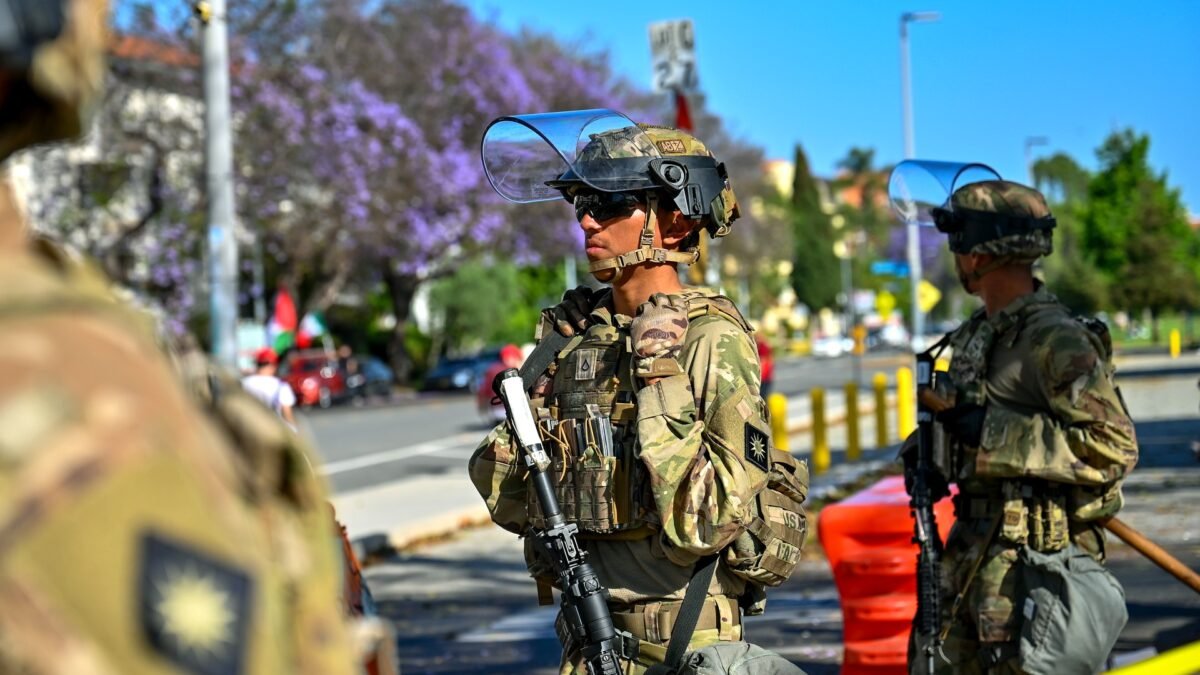
A federal appeals court has ruled that President Donald Trump acted unlawfully when he took control of 4,000 members of the California National Guard and sent them into Los Angeles last year, handing Governor Gavin Newsom and the state of California a landmark victory in a case that has defined the legal limits of presidential power over state troops.
The United States Court of Appeals for the Ninth Circuit ruled 2-1 on Friday, 23 October, that the deployment was not authorised by the federal law the president relied upon, and it affirmed a lower-court order barring the deployment and returning control of the Guard to the governor, according to the Associated Press.
Judge Jennifer Sung wrote the majority opinion, Judge Eric Miller joined it in full and added a short concurrence, and Judge Mark Bennett dissented, according to reports of the published opinion in the case, Newsom v. Trump.
The ruling does not change who commands the California National Guard today. The Guard is no longer federalised or deployed in Los Angeles, a position the panel itself recorded in a separate order issued the same day, after the district court’s injunction barring an extension of the federalisation took effect. What the decision does change is the law that will govern any future attempt: as a published opinion, it binds future Ninth Circuit panels and federal trial courts across the western United States.
Governor Newsom welcomed the ruling in a statement issued by his office on Friday. “Today is a crucial day for the rule of law, upholding the Constitution, and defending democracy,” he said. “Yet another court has issued a complete rejection of Donald Trump’s illegal, authoritarian takeover of our state’s National Guard. California fought back against this potential power grab and in doing so created essential legal precedent that not only protects Californians but all Americans.”
California Attorney General Rob Bonta, who brought the case on behalf of the governor and the state, said in the same statement: “Once again, the courts have rejected the Trump Administration’s attempts to circumvent the law for his own political agenda. Deploying the National Guard in Los Angeles with no rhyme or reason was a clear example of federal overreach, and it will not be tolerated.”
The Justice Department did not immediately respond to a request for comment, according to the Associated Press.
What the court decided
President Trump federalised the Guard under 10 U.S.C. § 12406, a statute that permits a president to call state National Guard units into federal service in three situations: when the United States is invaded or in danger of invasion by a foreign nation, when there is “a rebellion or danger of a rebellion” against the authority of the government, or when the president “is unable with the regular forces to execute the laws of the United States”.
The administration relied principally on the second and third of those routes. The majority held that neither was satisfied on the facts of Los Angeles in June 2025.
On the rebellion claim, the court applied a deliberately deferential test. A president’s emergency determination is subject to judicial review, the panel said, but that review is “highly deferential”: the question is whether the determination “reflects a colorable assessment of the facts and law within a ‘range of honest judgment'”. The majority held that the claim that conditions in Los Angeles on 7 June 2025 amounted to a rebellion failed even that forgiving standard.
“Defendants have not made either of the required threshold showings here,” Judge Sung wrote, according to the Associated Press. “Thus, they have not carried their burden.”
The court was careful to record that the summer of 2025 in Los Angeles was not peaceful throughout. Relying on the district court’s findings, the panel noted protesters who threw rocks and other objects, including a Molotov cocktail, burned a vehicle, looted a petrol station and vandalised property, as well as clashes with officers. But the district court had also found “no evidence of any organized (as opposed to sporadic) violence” and said there could “be no debate that most protesters demonstrated peacefully”. The majority added that while many people protested peacefully, “there were bad actors who committed serious breaches of the peace and acts of violence”. Serious disorder, the court held, is not the same thing as a rebellion.
On the “regular forces” route, the panel’s reasoning turned on an intervening decision of the Supreme Court. In December 2025, in Trump v. Illinois, the Supreme Court held that the president’s federalisation of the Illinois National Guard was illegal, and it read the “regular forces” clause to require two showings: first, that the president has authority to execute the laws in question with the regular military, and second, that he is unable to do so with those forces. The Ninth Circuit panel held that the government had made neither showing for California. The majority read “regular forces” to mean the regular United States military, and concluded that the government had not shown it needed the Guard to enforce federal law.
Because the order therefore exceeded the president’s statutory authority, the panel held that it also intruded on Congress’s power over calling forth the militia, and it described the order as “ultra vires and unconstitutional”. Because the state’s Tenth Amendment claim was, as the government itself had argued below, “wholly derivative” of the statutory claim, the panel held that claim likely succeeds too.
How the case got here
The dispute began in June 2025, when federal immigration agents carried out workplace enforcement operations across Los Angeles on 6 June. Protesters gathered at a garment district raid site and outside the Metropolitan Detention Center in the city centre, and demonstrations continued over the following days.
On 7 June, the president signed a memorandum federalising 4,000 members of the California National Guard for 60 days, according to the opinion, “to protect federal property and personnel”. He did so over Governor Newsom’s objection, in what was reported at the time as the first activation of a state’s National Guard over a governor’s objection in decades.
On 9 June, United States Northern Command announced that about 700 active-duty Marines would join the Guard under Task Force 51. California sued the president, the Secretary of Defense and the Department of Defense in federal court in San Francisco. District Judge Charles Breyer issued a temporary restraining order, which the appeals court treated as a preliminary injunction for the purposes of the appeal.
The administration won the first round in the same appeal. On 19 June 2025, the same three judges, in a stay order, said the president “likely acted within his authority” under the “regular forces” clause and allowed the federalisation to continue. Friday’s opinion expressly revisited that conclusion, explaining that the Supreme Court’s later decision in Illinois, issued after the appeal had been argued, required a different result on that clause.
The Marines were later withdrawn, and the Guard’s federal deployment in Los Angeles came to an end. In a separate published order on Friday, the panel recorded that the California National Guard “is no longer federalized or deployed in Los Angeles” because the district court’s injunction barring the extension of the federalisation took effect, after the appeals court lifted its partial stay with the government’s consent on 31 December 2025.
The procedural endgame was itself contested. After Trump v. Illinois, the Justice Department moved to dismiss its own appeal. The panel refused, by the same 2-1 split, for three reasons: the appeal was not moot, the court had already invested substantial time in the case, and dismissing it would risk discouraging a party from “manipulating the formation of precedent”. The majority cited the president’s 31 December 2025 social media post, in which he said, “We are removing the National Guard from Chicago, Los Angeles, and Portland,” but added that “[w]e will come back, perhaps in a much different and stronger form, when crime begins to soar again — Only a question of time!”
The panel did grant the government’s motion to dismiss a second, unbriefed appeal concerning the extension of the deployment. A third appeal, concerning a separate injunction under the Posse Comitatus Act, which generally bars the use of the military for domestic law enforcement, remains on hold.
The dissent
Judge Bennett, who was nominated to the bench by President Trump, dissented on grounds of judicial restraint rather than by defending the deployment on its merits at length. He argued that the panel should not have decided the appeal at all, given what he called the “unique procedural posture” of the case, with only scant briefing on the effect of Trump v. Illinois.
Bennett wrote that the majority “disregards the cardinal principle of judicial restraint”, and quoted Chief Justice John Roberts’s concurrence in Dobbs: “If it is not necessary to decide more to dispose of a case, then it is necessary not to decide more.” He said the majority had skipped the “onerous” standard that ordinarily governs claims that an official acted beyond statutory authority, a standard the Supreme Court has described as a “Hail Mary pass” that rarely succeeds. “In today’s majority opinion, that Hail Mary pass scores,” he wrote.
On the Tenth Amendment, Bennett was blunt: “The answer is obviously not.” Because the Constitution gives Congress the power to call forth the militia, he said, “control of the National Guard is not a power ‘reserved to the States'”. He also rejected any suggestion of gamesmanship in the government’s change of litigation strategy, writing: “There is nothing wrong or improper about changing one’s litigation strategy based on intervening authority from the Supreme Court.”
Judge Miller’s concurrence added a note of caution of a different kind. He joined the majority in full but wrote that the government had “forfeited twice over” its argument that no claim of this kind was available at all, and that the panel was bound by circuit precedent on the point. He added that “there is room to debate” whether that precedent “is consistent with Supreme Court precedent”. That reservation, although it did not change the outcome, is the kind of point a petition for further review would be expected to seize upon.
Analysis: Why It Matters
A reversal by the same court that first let the deployment stand
The most striking feature of this ruling is who delivered it. The panel that struck the deployment down on Friday is the same panel that, on 19 June 2025, allowed it to continue, holding that the president “likely acted within his authority”. Courts do change their minds, but they rarely do so about the same order, on the same record, within the same appeal. The difference here was not new evidence from Los Angeles. It was new law from Washington: the Supreme Court’s decision in Trump v. Illinois, handed down after the appeal had been argued, rewrote the test for the “regular forces” clause and forced the panel to apply a standard its earlier stay order had not contemplated.
That sequence matters beyond this case. It shows how the litigation over domestic military deployments has become a relay between the Supreme Court and the courts of appeals, with each new ruling changing the ground under the cases still pending. It also means the administration’s early victories in this field are proving to be less durable than they first appeared, because they were decided before the Supreme Court spoke.
The rebellion test now has a floor, even a low one
The majority went out of its way to stress that its review was “highly deferential” and that the president’s “range of discretion in this context is necessarily broad”. That language is not accidental. It is the court insulating its own ruling: by granting the president the widest plausible latitude and still finding the rebellion claim wanting, the panel made it harder to portray the decision as a court substituting its own judgement for the commander-in-chief’s.
But a deferential test with a floor is still a test. The court held that a rebellion requires something more than serious, even violent, disorder — it requires, in the district court’s formulation adopted by the panel, an organised uprising rather than sporadic violence by bad actors within a largely peaceful protest. That distinction will now be quoted back at any future administration that reaches for § 12406 on the basis of street unrest. It does not forbid a president from ever federalising a Guard again. It does require the record to show something that looks like a rebellion, not merely something that looks frightening on television.
The decision is about the next deployment, not the last one
It is easy to misread this ruling as a retrospective scolding with no practical consequence, because the troops have already gone home. That would be a mistake. The Guard’s return to state control at the end of 2025 happened through injunctions and the lifting of a stay, not through a final appellate ruling on the merits. Until Friday, there was no published Ninth Circuit opinion holding that the Los Angeles federalisation itself was unlawful, and therefore no binding precedent to cite the next time a president contemplates the same step in California or a neighbouring state.
There is now. The panel’s refusal to let the Justice Department quietly withdraw its appeal is best understood in that light. Had the appeal been dismissed, the district court’s injunction would have stood without an appellate opinion behind it, and the legal question would have remained open for the next crisis. By insisting on deciding the case, the majority ensured that the next president who considers federalising a western state’s Guard will do so against a published precedent that says the “rebellion” and “regular forces” clauses have real content — and that a court will check whether that content is present.
The politics cut in both directions
For Governor Newsom, who is widely discussed as a potential national figure, the ruling is a clean political win delivered by a court, not by a campaign: a judicial finding that he was right to resist, and that the state’s resistance created precedent protecting “all Americans”, in his phrase. His office’s decision to frame the ruling explicitly as a safeguard “ahead of next month’s elections” — the midterm elections fall on 3 November — makes the intended audience clear. The message to voters is that the courts will, in his office’s words, “swat down any false claims of emergencies and rebellions to militarize our communities”.
For the administration, however, the ruling is not without political utility either. The dissent, and the administration’s underlying argument that courts should not second-guess a president’s emergency judgements, will resonate with supporters who see the judiciary as an obstacle to decisive action. The president’s own December post — that the Guard would return “in a much different and stronger form” when crime soars again — suggests that the White House intends to keep the issue alive rather than concede it. A court defeat on a deployment that has already ended is, for a president running a midterm campaign on order and authority, a grievance that costs nothing in the present and may pay in the future.
What remains genuinely uncertain
Three uncertainties should temper any claim that this question is settled. First, the administration may seek rehearing by the full Ninth Circuit or review by the Supreme Court, and Judge Miller’s concurrence has helpfully marked one route in: whether the circuit’s precedent allowing this kind of claim at all is consistent with recent Supreme Court decisions. Second, the held Posse Comitatus Act appeal, and further proceedings before Judge Breyer, could still shape what the military may actually do once deployed, which is a different question from whether it may be deployed at all. Third, the ruling turns heavily on the specific record of June 2025 — largely peaceful protests with sporadic violence. A future record showing organised, armed defiance of federal authority would present a materially different case under the very test the majority has now set. The court has drawn a line, but it has drawn it on facts that the next crisis may not resemble.
What to Watch Next
- Whether the Justice Department seeks rehearing en banc by the full Ninth Circuit or petitions the Supreme Court, and whether it leans on Judge Miller’s reservation about the availability of the claim.
- What happens to the held Posse Comitatus Act appeal, which concerns the limits on what federalised troops may do domestically, rather than whether they may be called up.
- Whether the administration invokes § 12406 again before or after the 3 November midterm elections, and in which state, given that Friday’s opinion now binds courts across the Ninth Circuit.
- How the remaining proceedings before Judge Breyer in San Francisco develop, and whether they produce further findings about the 2025 deployment.
- Whether other courts of appeals, facing similar challenges in their own circuits, adopt the Ninth Circuit’s reading of “rebellion” and “regular forces”, or whether a split emerges that only the Supreme Court can resolve.
Sources
- Associated Press via FOX 11 Los Angeles — “Trump’s National Guard deployment to LA was unlawful, court rules”
- Office of Governor Gavin Newsom — Governor’s statement on the Ninth Circuit decision (primary source)
- MyNewsLA (Associated Press report) — “Appeals Court Rules Trump’s National Guard Deployment to LA Was Unlawful”

About the Author — Abdul Mannan
Related Articles
Trump Backs Ramaswamy’s Controversial Ohio Ad, Slams Republicans Who Condemned It
President Trump praised Vivek Ramaswamy's attack ad featuring Democratic rival Amy Acton's estranged mother as "very powerful", attacking…
Ukraine Denies Starlink Restoration Claim, Says Speed Restrictions Remain Despite Trump’s Assurances
Ukraine says speed limits on Starlink remain in place, contradicting Trump's claim that Elon Musk had restored the…
Trump Says Musk Has Restored Ukraine’s Starlink Access After Nine-Day Slowdown — but Won’t Say If He Made the Call
Trump said Elon Musk had restored Ukraine's Starlink service but would not say whether he had spoken to…