
Trump Backs Ramaswamy’s Controversial Ohio Ad, Slams Republicans Who Condemned It

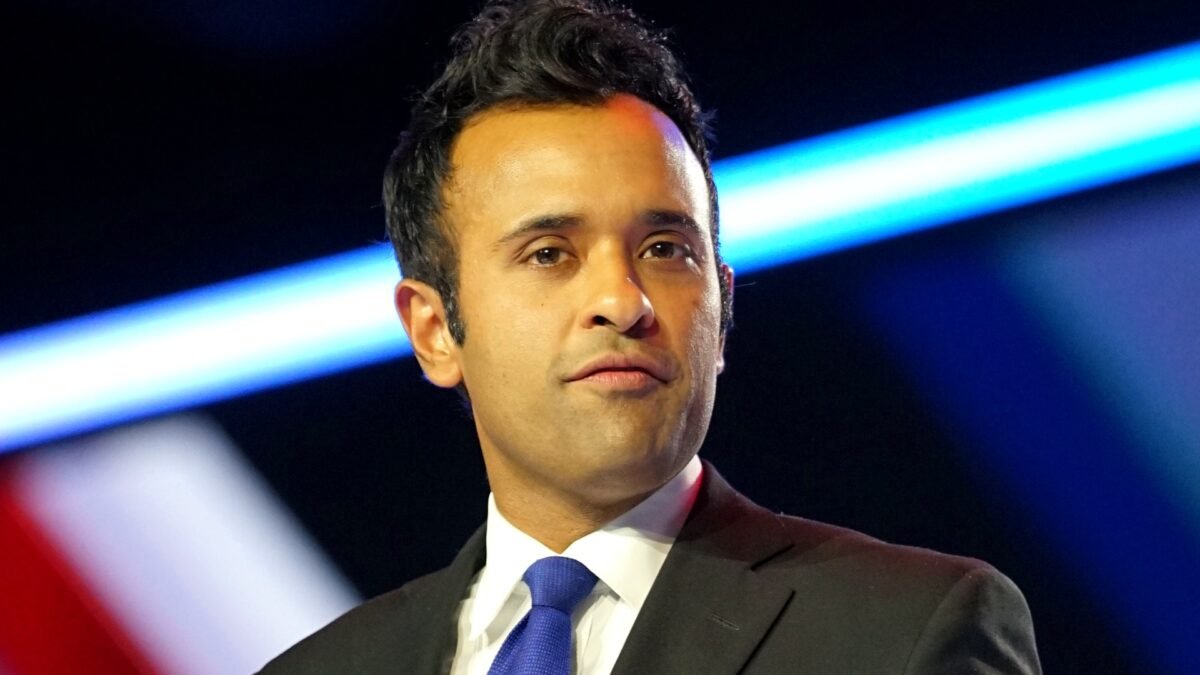
The ad at the centre of the storm
President Donald Trump has thrown his full weight behind one of the most controversial attack advertisements of the 2026 midterm cycle, praising a campaign spot from Ohio Republican gubernatorial nominee Vivek Ramaswamy that features the estranged mother of his Democratic opponent calling her daughter “a liar”. The video, first shared online earlier this week and broadcast on television from Thursday morning, has drawn condemnation from members of Ramaswamy’s own party, including the sitting Republican governor of Ohio. Trump, according to USA Today, has taken the opposite view, calling the ad “very powerful” and publicly rebuking fellow Republicans who criticised it.
Trump first responded to the row in an Oct. 22 post on his social media platform, Truth Social, in which he accused the media of waging a “concerted and well coordinated attack” to get the ad removed, according to USA Today. In the same post, he reserved particular criticism for Ohio Governor Mike DeWine, who had described the ad as “deeply, deeply troubling” and urged Ramaswamy to take it down. Trump called DeWine a RINO — Republican in name only — and “disloyal to the Republican Party”, the Cincinnati Enquirer reported. DeWine, for his part, told reporters that he would still support Ramaswamy and the GOP ticket, while maintaining that the ad was wrong on its face and worse once the backstory was understood.
The president escalated his defence on Thursday night at a campaign rally in Sioux City, Iowa, telling the crowd that Ramaswamy had personally telephoned him to ask whether the ad should be withdrawn under pressure, according to the Wall Street Journal. Trump’s reported advice: leave it up. “So I told him, leave it up and look upstairs and say: ‘thank you, God, very much,'” Trump said at the rally. In a follow-up social media post, Trump even said he wished the mothers of his own opponents would record similar videos, the Journal reported.
A mother’s accusation, a candidate’s trauma
The ad itself is built around Donna Arthur, the birth mother of Democratic gubernatorial candidate Dr. Amy Acton. In the video, Arthur says of her daughter: “It’s not easy for a mother to say this, but Amy has a serious problem. She is a liar.” The spot urges voters not to support Acton in the governor’s race.
What the ad does not spell out is the history behind the estrangement. Acton, who is 60 and served as director of the Ohio Department of Health, has said she has not seen her mother since she was about 12 years old, according to CNN. She has said that the man her mother married — Acton’s stepfather — sexually abused her as a child, and that her mother remained with him. According to court records previously shared with PEOPLE magazine by Acton’s campaign, the stepfather, Cledith Acton, was arrested and charged with raping her in July 1978, when she was 12. The Cincinnati Enquirer reported that Arthur’s husband was charged with rape over the alleged abuse, and that Acton and her mother have not spoken since she was 12.
Speaking to Spectrum News earlier in the week, Acton refused to let the episode pass as ordinary campaign rough-and-tumble. “I won’t normalize somebody who has said that my childhood is just something I’m complaining about, who today just released an ad using my birth mother, who I was removed from at the age of 12 for severe abuse and neglect, and sexual abuse,” she said, according to PEOPLE. Acton’s brother denounced the ad as a “despicable low”, the Wall Street Journal reported.
Ramaswamy’s campaign confirmed on Tuesday, Oct. 20, that it was behind the video, according to PEOPLE. The campaign has refused calls to withdraw it and is spending $4 million to promote the spot, which was first broadcast Thursday morning, ad-tracking firm AdImpact told the Wall Street Journal. Ramaswamy’s team has defended running the ad.
Republicans split: “stop whining” vs. “take it down”
The controversy has exposed a striking fault line inside the Ohio Republican Party. Several prominent Republicans have publicly distanced themselves from the ad, even as the president and vice president demanded unity around it.
Sen. Jon Husted, a key Ohio Republican who is himself contesting one of the country’s most competitive Senate races, told the Associated Press: “I would not have run that ad,” CNN reported. Husted made the statement shortly after appearing at a Cincinnati rally alongside Vance and Ramaswamy. Secretary of State Frank LaRose told a Columbus ABC affiliate that he “probably wouldn’t run an ad like that”, according to CNN. At least one other GOP candidate in Ohio personally asked Ramaswamy not to air the spot, a Republican operative told CNN. Former Gov. John Kasich said the ad “should have never been put together”, telling MS NOW: “This ad in Ohio should be taken off the air, absolutely, and the people connected to it should apologize,” the Cincinnati Enquirer reported.
The condemnation has not been limited to Ohio officials. Several national Republican and conservative figures — including Meghan McCain, Rep. Nancy Mace and former ambassador Nikki Haley — have also criticised the ad, according to PEOPLE.
From the other direction, Vice President JD Vance warned Republicans on Wednesday not to break ranks over the commercial, telling them to “stop whining” about it, CNN reported. Trump, asked by reporters at the White House about the alleged abuse Acton suffered and her long estrangement from her mother, said twice that he knew “nothing about” the backstory, according to USA Today. He argued that the mother had to be taken “seriously” regardless. “Even if it’s a little bit true, you don’t want her as governor,” Trump said, CNN reported. “The mother went very rogue on the daughter,” he added, calling it “a very unusual situation.”
The race behind the row
The ad lands at a fraught moment in the Ohio governor’s contest. Ramaswamy, the biotech entrepreneur who became a national political figure during his 2024 presidential campaign and whom Trump tapped to help lead the Department of Government Efficiency, was endorsed early by Trump for the Ohio primary, according to the Cincinnati Enquirer. For months he has largely run behind in polling, and one GOP operative told CNN there is a sense inside the party that he could further damage the Republican brand with a last-minute stunt to energise his base. “Republicans in the state probably couldn’t be more pissed at him,” the operative said.
Acton, meanwhile, rose to prominence as the state’s health director — the public face of Ohio’s pandemic-era briefings — before entering the governor’s race as the Democratic nominee. The ad’s use of her birth mother touches on the most painful chapter of her biography, which her campaign has previously documented through court records.
The row also plays into a larger pattern of the midterm season: Trump has repeatedly intervened in down-ballot races, often against the advice of party officials worried about swing voters. The president’s willingness to turn an intra-party dispute into a loyalty test — labelling DeWine “disloyal” for condemning an ad most of the state’s Republican establishment has distanced itself from — suggests he intends to keep doing so through the final days of the campaign.
Analysis: Why It Matters
Trump is making cruelty a loyalty test
The most significant fact in this story is not the ad itself but what Trump has done with it. By branding a sitting Republican governor “disloyal” for criticising a spot that exploits an alleged child sexual abuse survivor’s family trauma, the president has redrawn the lines of party loyalty around defending the indefensible — or at least, around never breaking ranks with him. The message to elected Republicans is plain: the cost of moral objection now exceeds the cost of association. Vance’s “stop whining” reinforced it. That is how a party’s immune system gets switched off.
The old guard’s objections are real — and revealing
DeWine, Kasich, Husted and LaRose are not Democrats and not Trump critics by habit; they are the backbone of Ohio’s Republican establishment. Their public discomfort suggests a genuine fear that this ad does lasting damage to the party’s brand, particularly with suburban voters the GOP needs. When an operative admits that “Republicans in the state probably couldn’t be more pissed,” it signals that the backlash is not performative. The establishment believes the stunt could cost more votes than it wins — and it is saying so out loud, which in Trump-era Republican politics is itself a news event.
Trauma is not a tactic — but campaigns keep learning that too late
Campaigns have mined family drama before, but this case crosses a line that even seasoned operatives recognise: weaponising a mother’s voice against a daughter who says she was abused in that mother’s home. Acton’s campaign has court records; the facts of the abuse allegation are not in dispute in the public record. The ad’s power, such as it is, comes entirely from the shock of a mother calling her daughter a liar — shock that evaporates the moment the audience learns why the two are estranged. That is why the ad depends on decontextualisation, and why Trump’s defence amounts to defending the decontextualisation itself.
Acton’s composure is the counterweight
Acton has handled the episode with remarkable steadiness — refusing, in her words, to “normalize” the attack while declining to be drawn into a slanging match with her own mother. Her public record as a physician and health director gives her a credibility reservoir that the ad’s whisper-style accusation struggles to drain. If history is any guide, voters tend to punish the candidate who drags a family’s worst pain onto television. Ramaswamy’s $4 million bet is that shock cuts through; Acton’s bet is that dignity does.
What to watch next
- The ad’s airing life. Ramaswamy’s campaign has refused to pull the spot and is spending heavily to promote it. Watch whether Republican super PACs follow the campaign or the establishment — where the money goes will tell you who the party thinks is right.
- Polling movement. If the ad backfires, expect movement among suburban women and independents first. If it works, Ramaswamy’s base-first strategy may become a template elsewhere.
- Trump vs. DeWine. The president’s “RINO” label on a governor who says he will still support the ticket keeps a feud alive that could complicate get-out-the-vote operations in Ohio.
- Legal exposure. Defamation claims over campaign ads face steep First Amendment hurdles in the US, but Acton’s documented court records give her unusual factual armour if she chooses to respond legally rather than politically.
- The copycat question. Trump’s wish that opponents’ mothers would film similar ads is only half-joking. Whether other campaigns imitate the tactic will show how far the permission structure has shifted.
Sources
- USA Today: “Trump defends controversial ad in Ohio governor’s race” (Oct. 22, 2026)
- CNN: “Key Ohio Republicans criticize Ramaswamy’s ad with Acton’s estranged mother, even as Vance and Trump defend it” (Oct. 20, 2026)
- The Wall Street Journal: “Trump Praises Controversial Ohio Ad Featuring Democrat’s Estranged Mother” (Oct. 23, 2026)
- The Cincinnati Enquirer: “Trump defends Ramaswamy ad, attacks DeWine over criticism” (Oct. 22, 2026)

About the Author — Abdul Mannan
Related Articles
Ukraine Denies Starlink Restoration Claim, Says Speed Restrictions Remain Despite Trump’s Assurances
Ukraine says speed limits on Starlink remain in place, contradicting Trump's claim that Elon Musk had restored the…
Trump Says Musk Has Restored Ukraine’s Starlink Access After Nine-Day Slowdown — but Won’t Say If He Made the Call
Trump said Elon Musk had restored Ukraine's Starlink service but would not say whether he had spoken to…
Federal Judge Curbs DHS Hunt for Noncitizen Voters in Nine States, Ruling Data ‘Flawed’ and Operations Amount to Voter Intimidation
A federal judge in Oakland has curbed Homeland Security's pre-election hunt for noncitizen voters in nine states, ruling…