
Army Whistleblower Says Pentagon Ignored Warnings Before Iranian Drone Killed Six US Soldiers in Kuwait

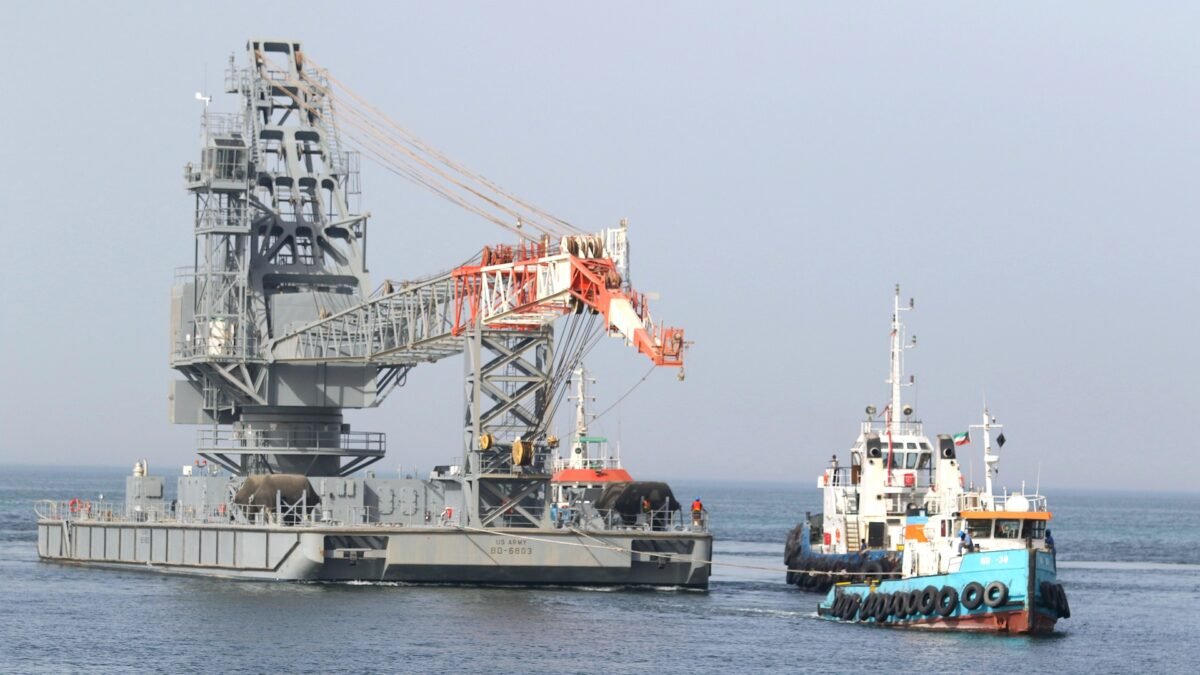
A United States Army major who survived the deadliest Iranian strike on American forces in the war with Iran has filed a formal whistleblower complaint accusing the Pentagon of ignoring repeated warnings that the troops under his command had no protection against drone attacks, according to CNN and CBS News.
Army Major Stephen Ramsbottom, who was wounded when an Iranian drone hit a makeshift American command post at Port Shuaiba in Kuwait on 1 March 2026, killing six of his fellow soldiers, submitted the complaint last week to the House and Senate Armed Services Committees, CNN reported. The disclosure, first reported by CBS, was made public on the same weekend that the network’s 60 Minutes programme broadcast an eight-month investigation into the war, which found that Iran has struck at least 31 American military and diplomatic sites across eight countries, damaging hundreds of buildings and destroying the headquarters of the United States Navy’s Fifth Fleet in Bahrain.
Ramsbottom told 60 Minutes correspondent Norah O’Donnell that the 1 March attack was a failure of planning by the Army and its leadership, including at his own level, and that the lesson had to be learned. He said he had raised the danger from drones with his superiors on more than one occasion before the strike and had been told, in effect, that there was no need to worry about protection. The counter-drone system that military leaders later said they would try to send to the post never arrived, he said, and it is not known whether it was ever ordered or requested.
The complaint turns a single battlefield tragedy into a test of how the Pentagon prepared for a war it knew was coming, how much of its cost it has told the American public, and what happens next, with Democrats preparing wide-ranging investigations into the Trump administration’s handling of the conflict when they take control of Congress in January.
The six soldiers killed at Port Shuaiba were the first American service members to die in the war with Iran, according to CNN. Dozens more were wounded, including Ramsbottom. The Pentagon’s own figures, cited by 60 Minutes, put the total American toll in the conflict so far at 23 service members killed and more than 800 wounded, at a cost of about $47 billion. The programme reported that the true scale of the damage to American bases across the Middle East has never been fully disclosed.
The attack at Port Shuaiba
The war began on 28 February 2026, when the United States and Israel launched a surprise attack on Iran. The first American deaths came within the first 24 hours of the fighting, when an Iranian one-way attack drone struck the Army command post at Port Shuaiba, a civilian port on Kuwait’s Gulf coast about 65 miles from Iran, according to the 60 Minutes transcript published by CBS News.
The post belonged to the Army Reserve’s 103rd Sustainment Command, a logistics formation. About 70 of its soldiers had been sent to the port even as the Pentagon moved 90 per cent of its ground forces out of Kuwait and away from Iran before the war began, fearing retaliatory strikes, CBS reported. The soldiers were working from a quadruple-wide trailer that served as their tactical operations centre.
On the night the war began, Iranian quadcopter drones were seen circling above the port, and soldiers counted five of them, apparently conducting surveillance, according to the broadcast. The men and women of the 103rd spent the night moving in and out of nearby bunkers. At about 9 a.m. the next morning they were given the all-clear and returned to their workspace. About 30 minutes later, the Iranian drone struck.
Ramsbottom, the 103rd’s deputy chief of operations and a combat veteran, told 60 Minutes that he was knocked to the ground and that everything went black. The drone hit the centre of the trailer, he said, directly on target. New video obtained by the programme showed black smoke billowing from the command post. A civilian medic who reached the scene described a building that was no longer there, with people lying on the ground and others carrying bodies through the smoke.
The six soldiers killed were Captain Cody Khork, 35; Sergeant First Class Noah Tietjens, 42; Sergeant First Class Nicole Amor, 39; Sergeant Declan Coady, 20; Major Jeffrey R. O’Brien, 45; and Chief Warrant Officer Three Robert M. Marzan, according to the Associated Press. They were Army Reserve personnel assigned to the 103rd Sustainment Command. Their deaths marked the first American military fatalities in the conflict and, according to CBS, the deadliest single Iranian strike against American forces in the war.
Master Sergeant Amor was still breathing when soldiers loaded her into a sports utility vehicle and drove her to a local Kuwaiti hospital, her husband Joey Amor told 60 Minutes. He said the families had been searching online for hospitals that would take the wounded, which he described as absurd, and that he believed his wife had a chance if there had been a plan. Tina Marzan, the widow of Chief Warrant Officer Marzan, said the drone hit the soldiers directly in a metal shed, that her husband’s hat was found beside him, and that DNA testing was needed to identify him. Michelle Tietjens, the widow of Sergeant First Class Tietjens, described telling their 13-year-old son that his father was not coming home.
The warnings that were raised
At the heart of Ramsbottom’s complaint is a claim that the danger was known, documented and raised through the chain of command before the attack, and that nothing was done about it.
Ramsbottom told 60 Minutes that he had warned Major General John Hinson, the officer who oversaw logistics for United States Central Command, and that he had also raised the drone threat with the unit commander, Brigadier General Clint Barnes. He said he raised the matter twice in meetings, saying he could not see how the troops at the port were protected, and that the response was, in his account, that they did not have to worry about protection.
Six soldiers told 60 Minutes that they had seen American intelligence assessments before the war placing Port Shuaiba on an Iranian list of targets. Ramsbottom said he had seen those reports himself and that there was, in his words, definitely a mark where his unit was. The drone threat was well known, he said, and the soldiers had discussed it openly.
According to Ramsbottom, the post’s defences had been designed against older threats. The site was protected against car bombs and mortar fire, he said, but nothing there was designed to stop an aerial attack. Some of the soldiers described the operations centre as, in effect, a trailer park. In an interview with a CNN affiliate in April, Ramsbottom had made a similar point, saying the facility was well fortified against the kind of threats planners had in mind before Russia’s full-scale invasion of Ukraine, but that it was not prepared for the kind of fight the Army was now facing.
In the week before the attack, the soldiers asked for extra support. Ramsbottom said a command sergeant major had told them the Army would try to get a counter-drone system sent to the site. It never arrived at Shuaiba, he said, and it is not known whether it was ever ordered or requested. His whistleblower complaint, submitted to the leadership of the Senate and House Armed Services Committees and to the ranking member of the Senate Permanent Subcommittee on Investigations, calls for an investigation into the decisions that left the troops exposed to one-way attack drones, according to a statement from his legal representatives, the Compass Rose Legal Group.
The Pentagon declined to answer 60 Minutes whether the 103rd had been denied adequate force protection, and it declined to speak to the programme about Ramsbottom’s filing, according to CBS and the Manhattan Daily, which carried the Associated Press account. 60 Minutes said it had contacted the two generals accused of ignoring the warnings, Major General Hinson and Brigadier General Barnes, and that neither responded.
The day after the attack, Defence Secretary Pete Hegseth insisted at a press conference that the troops at Port Shuaiba had been well protected. He acknowledged that one projectile had made it through, describing it as a weapon that occasionally slips past defences, and said it had hit a tactical operations centre that was fortified, but that these were powerful weapons. Senior Pentagon officials said at the time that the building was fortified, but a source familiar with the site previously told CNN it was only surrounded by concrete barriers that would protect against car bombs, with nothing to shield it from drones or missiles. CNN also previously reported that the attack came quickly and with no warning sirens to alert the troops to evacuate or to get into a bunker.
A post with no doctor and one ambulance
The complaint also describes a medical position that was, on the whistleblower’s account, barely able to cope with a routine accident, let alone a mass-casualty attack.
According to the disclosure obtained by CNN, the installation had no physician, no fixed aid station and only one ambulance when the drone struck. Tanner Carson, one of two civilian medics regularly stationed at the port, told 60 Minutes that they did not have the manpower or equipment for any kind of mass-casualty incident. He said he was surprised in late February to hear that dozens of soldiers from the 103rd were moving in, and he described a site with no resources, no manpower, no transport capability and no supply cache, with the only medical supplies being those carried in his truck.
Master Sergeant Amor had specifically asked Carson whether there was a mass-casualty plan, he said. He told the soldiers that he had enough to get them to hospital and to keep two of them alive at most. In the week before her death, Amor told her husband that she was worried about the safety of her unit. Joey Amor said it was the only time in 15 years that he had heard her speak like that, and that she and the others knew something was coming.
The families of the dead have now waited eight months for a full account. The Army finished its investigation into the attack in June, and the families were only being briefed on its findings in the week of the 60 Minutes broadcast, according to CBS. Tina Marzan said that when she was asked what the Pentagon had told her in the eight months since the attack, her answer was nothing. Asked what her husband deserved after 36 years of service, she said the truth and accountability, and that the Pentagon should own the failure and say that something went wrong and that the planning was not right. Army officials briefed Michelle Tietjens on the results of the investigation the day before the broadcast, CBS reported, and she told the programme that they did not acknowledge any mistakes.
Joey Amor said he had nothing good to say about the 103rd’s command, although he loved its soldiers, and that the command had handled the deaths very poorly. He said individuals in the command had made choices, and that this was not a political matter for him. He said soldiers signing up now had to be able to trust that what happened to his wife would not happen to them. He described shielding his 10-year-old daughter and 18-year-old son from the two soldiers who came to his driveway with the news, and life since then as a nightmare.
Joey Amor said he would not accept an answer that his wife’s death was simply the cost of war, because her death was preventable and leadership should put troops in the best possible position. Senator Richard Blumenthal, a member of the Senate Armed Services Committee and the top Democrat on the Senate’s Permanent Subcommittee on Investigations, has asked Hegseth to appear at a classified briefing to answer questions and to provide all force protection assessments for the facility at Port Shuaiba, according to CNN.
The wider war the Pentagon never fully disclosed
The whistleblower’s complaint reached Congress in the same week that 60 Minutes presented its own assessment of the war as a whole, and the two accounts reinforce each other. The programme’s eight-month investigation, led by O’Donnell, drew on satellite imagery analysis and previously unpublished video footage to document damage to American positions that the Pentagon had not fully disclosed, according to CBS.
The investigation found that since the war began in February, Iran has struck at least 31 American military and diplomatic sites across eight countries, damaging hundreds of buildings and structures, from Saudi Arabia to Kuwait to Bahrain, where the headquarters of the United States Navy’s Fifth Fleet was destroyed. The eight countries named in the reporting were Saudi Arabia, Kuwait, Bahrain, Jordan, Qatar, the United Arab Emirates, Iraq and Oman.
The findings are consistent with an earlier Associated Press satellite-imagery investigation, published on 31 October, which documented more than 115 Iranian or Iran-backed missile and drone strikes damaging or destroying structures at 26 American military sites through August. The 60 Minutes count is higher, and it covers a longer period, but the direction of travel is the same: a sustained Iranian campaign against American bases that began with early-warning radar systems and extended to hangars, air-defence systems, housing and headquarters buildings.
The attacks continued for months after President Donald Trump declared victory on 1 April, 60 Minutes reported. On 17 July, Iranian missiles targeted housing units on an American base in Jordan, killing three more American soldiers. Days before the broadcast, Trump told a radio interviewer that nobody had been killed in the last five months and that the United States controlled the Gulf, according to the programme. The Pentagon’s own database, cited by 60 Minutes, records 23 American service members killed in the conflict, including 11 deaths from enemy fire and 12 from non-hostile circumstances, and more than 800 wounded. The programme reported that, based on its analysis of satellite imagery and video taken in neighbouring countries where American troops are stationed, the true number of casualties and injuries is likely to be higher than the Pentagon’s reported figures.
The cost of the war, according to the latest Pentagon price tag cited by the programme, is about $47 billion. The figure covers a conflict that began with a surprise American and Israeli attack on Iran on 28 February, continued through months of Iranian retaliation against American bases across the Gulf, and is still unresolved. A preliminary agreement to end the war and reopen the Strait of Hormuz, reached in June, collapsed within weeks after Iranian attacks on shipping resumed and the United States reinstated a naval blockade of Iranian ports. In the last few days, Iranian forces have launched fresh drone attacks on American bases in Bahrain, and Tehran has said the strait is closed, while Washington has said it is no longer interested in a deal.
It is important to be clear about what is established and what is not. The figure of 31 sites, the destruction of the Fifth Fleet headquarters and the suggestion that the casualty toll may be higher than the official count are findings of the 60 Minutes investigation, based on its own analysis of satellite imagery and video. They have not been independently confirmed by the Pentagon, which has acknowledged individual attacks and casualties but has not published a full account of the damage to American facilities. The programme’s account should therefore be read as a serious, evidence-based challenge to the official picture, not as an agreed fact. What is not in dispute is that the Pentagon has disclosed the war’s cost and casualties only in part, and that the families of the dead at Port Shuaiba have waited eight months for answers.
Trump’s response and the politics ahead
The White House response to the broadcast was swift and personal. Less than an hour after 60 Minutes laid out its evidence on Sunday evening, Trump posted an artificial-intelligence-generated video on social media, according to the Aaron Parnas newsletter, which covered the broadcast in detail on Monday morning. On Monday, Trump lashed out at the new leadership of CBS News, attacking the programme’s bosses as even worse than their predecessors and disputing its account of American defences, according to The Wrap and Fox News.
Trump claimed that Iran has launched between 8,000 and 9,000 attack drones and roughly 2,000 ballistic missiles since the war began on 28 February, figures that could not be independently verified and that do not distinguish between attacks that were intercepted and those that caused damage or deaths. A CBS insider defended the investigation and pointed to reports of a further Iranian drone attack on an American base in Bahrain the previous day, according to Fox News. The network also directed critics to the broadcast transcript, which describes the satellite imagery and video documenting damage to at least 31 American military and diplomatic sites.
The dispute over the programme is part of a wider confrontation between the president and the network. Trump interviewed with 60 Minutes in April, and the programme’s new leadership, under editor-in-chief Bari Weiss, has been under scrutiny since it took over. The president’s attack on the broadcast followed a pattern seen throughout the war: a challenge to the official account is met with a challenge to the challenger, while the underlying questions about preparation and disclosure go unanswered.
Those questions are now heading for Congress. The whistleblower complaint was submitted to the House and Senate Armed Services Committees, and CNN reported that Democrats are poised to launch wide-ranging investigations into the Trump administration’s handling of the Iran war when they take control of Congress in January. The complaint itself is a protected disclosure, which means it is an allegation that must be examined, not a finding of wrongdoing. As a matter of American military law, a protected disclosure triggers a process, and the public record, as of 16 November, did not establish that the Inspector General had completed a preliminary assessment or opened the independent investigation requested by Ramsbottom’s lawyers.
That distinction matters. Ramsbottom has made similar claims in interviews with several news organisations since the attack, including the Associated Press and The Washington Post, which interviewed surviving soldiers and examined complaints about the command’s preparation and response over the past eight months. The whistleblower complaint gives those claims a formal route into Congress, with legal protection for the officer who made them. It does not, by itself, prove them. What it does prove is that a decorated officer who was wounded in the attack believes the deaths of six of his soldiers were preventable, and that he is willing to put that belief on the record, under his own name, to the committees that oversee the armed forces.
Analysis: Why It Matters
A warning ignored is different from a risk accepted
Every military deployment involves risk, and every commander accepts some of it. The distinction that gives this story its force is between a risk that was weighed and a warning that was set aside. Ramsbottom’s account is not that the Army failed to foresee a drone attack on Port Shuaiba. It is that the danger was foreseen, that it was raised twice in meetings with senior officers, that intelligence assessments placed the port on an Iranian target list, and that the response was, in his words, that there was no need to worry about protection. If that account is accurate, the six deaths at Port Shuaiba were not the price of a calculated gamble. They were the price of a decision not to act on information the Army already held. The Army’s own investigation, completed in June, has not been published, and the families say the briefings they have received acknowledge no mistakes. Until that investigation is made public, or Congress examines it, the public cannot judge whether Ramsbottom’s account is complete. But the fact that a serving major has now made the claim formally, through a protected disclosure to Congress, means the question can no longer be left to the Pentagon alone.
The drone gap is the story of this war
Port Shuaiba was defended against the threats of the last war: car bombs, mortars and the kind of attacks that shaped American planning before Russia’s full-scale invasion of Ukraine. It was not defended against the threat that defines this one: cheap, one-way attack drones that can be launched in large numbers, flown at low altitude and aimed at a specific building. Ramsbottom’s description of the post as a trailer park is not a complaint about comfort. It is a description of a facility whose physical design assumed that the enemy would come by road, not by air. The counter-drone system that was supposed to close that gap never arrived, and nobody can yet say whether it was ever ordered. That failure is not unique to one port in Kuwait. The 60 Minutes finding that Iran has struck 31 American sites across eight countries suggests a campaign that has repeatedly found the same gap, and the Associated Press finding of more than 115 strikes on 26 sites through August points in the same direction. The lesson of Port Shuaiba, if it is learned, is not only about one command post. It is about whether American bases across the Gulf are still built for the war the Pentagon expected, rather than the war Iran is fighting.
The casualty count is a question of trust, not arithmetic
The Pentagon’s figures, 23 killed and more than 800 wounded, are the official record. 60 Minutes says the true toll is likely to be higher. The difference between those two statements is not a matter of counting. It is a matter of whether the American public has been given a full account of a war that has cost $47 billion and is still going on. A government that discloses casualties selectively, and damage to its own bases hardly at all, creates the conditions in which every new revelation feels like a concealment, whether or not it was one. The families at the centre of this story are not asking for a different number. They are asking for the truth, and for accountability. Tina Marzan’s answer, when asked what the Pentagon had told her in eight months, was a single word: nothing. That silence is what turns a dispute about figures into a crisis of trust, and it is the reason the whistleblower complaint matters beyond the six soldiers it names.
The president’s answer reveals the stakes
Trump’s response to the broadcast, an AI-generated video within the hour and an attack on the programme’s leadership the next day, tells its own story. The president did not dispute the specific claims about Port Shuaiba, the missing counter-drone system, or the absence of a doctor and an aid station. He disputed the programme’s credibility and offered his own figures for the scale of the Iranian attacks, figures that could not be independently verified. That is a political response to a factual challenge, and it is a measure of how much is at stake. The Iran war is the largest military undertaking of Trump’s second term, and the claim that it was declared won on 1 April while Iranian strikes continued for months afterwards, killing three more Americans in Jordan in July, cuts directly against the administration’s account of the conflict. The coming congressional investigations will test whether that account survives scrutiny, and the whistleblower complaint gives the investigators a named witness, a paper trail and a set of specific decisions to examine.
What happens next will be decided in January, not in November
The immediate future of this story belongs to Congress. The complaint is now before the armed services committees, and Senator Blumenthal has already asked the Defence Secretary for a classified briefing and for all force protection assessments for Port Shuaiba. When Democrats take control of Congress in January, they will have the power to compel testimony, to demand documents and to hold public hearings. The Army’s June investigation into the attack, the force protection assessments for the port, and the records of whether a counter-drone system was ever ordered are all documents that a committee can obtain. The question is whether the investigation will be a genuine examination of how six soldiers died, or a partisan exercise that produces heat without light. Ramsbottom himself has said that the failure was shared, including at his own level, and the families have said that this is not a political matter for them. That restraint is worth remembering when the hearings begin. The test of the investigation will be whether it answers the question the families have been asking for eight months: what went wrong, and who is going to make sure it does not happen again.
What to Watch Next
- Whether the House and Senate Armed Services Committees open a formal inquiry into Ramsbottom’s complaint, and whether the Inspector General begins the independent investigation his lawyers have requested.
- Whether the Pentagon releases the Army’s June investigation into the Port Shuaiba attack, or the force protection assessments for the facility that Senator Blumenthal has requested.
- Whether the Defence Secretary agrees to appear at a classified briefing on the attack, and what he tells the committees about the missing counter-drone system.
- Whether the two generals named in the complaint, Major General John Hinson and Brigadier General Clint Barnes, respond publicly to the allegation that they ignored warnings about the port’s vulnerability.
- Whether the Pentagon publishes a fuller account of the damage to American bases, including the 60 Minutes finding that the Fifth Fleet headquarters in Bahrain was destroyed, or continues to disclose attacks only one at a time.
- Whether the families of the six soldiers killed at Port Shuaiba receive a fuller briefing on the Army investigation, and whether any officer is held accountable for the decisions that left the post exposed.
- How the congressional investigations into the Iran war develop when Democrats take control of Congress in January, and whether the Port Shuaiba complaint becomes the centrepiece of a wider examination of the war’s planning, cost and disclosure.
Sources
- CNN — Army soldier files whistleblower complaint against the Pentagon over Iranian strike that killed 6 US service members
- CBS News — 60 Minutes Transcript: Families of U.S. military members killed in Iran war want answers from the Pentagon
- Fox News — Trump criticizes ’60 Minutes’ bosses as ‘even worse’ as he challenges Iran war report
- The Wrap — Trump Blasts New ’60 Minutes’ Leadership as ‘Even Worse’
- Manhattan Daily (Associated Press) — Pentagon ignored warnings before Iran drone killed 6 US service members in Kuwait, whistleblower claims
- Addis Standard — Iran struck 31 US military, diplomatic sites across eight countries, new investigation finds

About the Author — Abdul Mannan
Related Articles

Justice Department Warns Senator Warren Over Planned Trump Probes in ‘Tomahawk’ Letter
The Justice Department has warned Senator Elizabeth Warren that her planned investigations of President Donald Trump's associates could…
Iran Launches Second Drone Attack in Three Days on US Base in Bahrain as Hormuz Standoff Deepens
Iran says it fired six drones at a US air defence radar in Bahrain early on Sunday, the…
Trump Says US Needs No Deal With Iran and Pulls Vance Off the Talks
President Donald Trump has told Vice President JD Vance to stop leading negotiations with Iran, declaring that the…